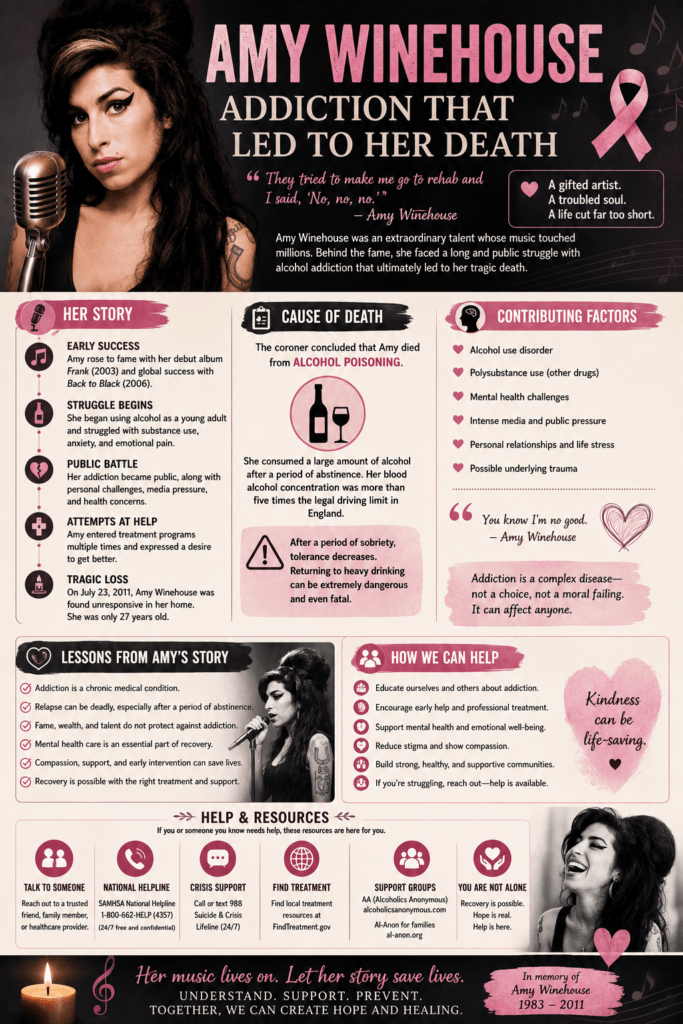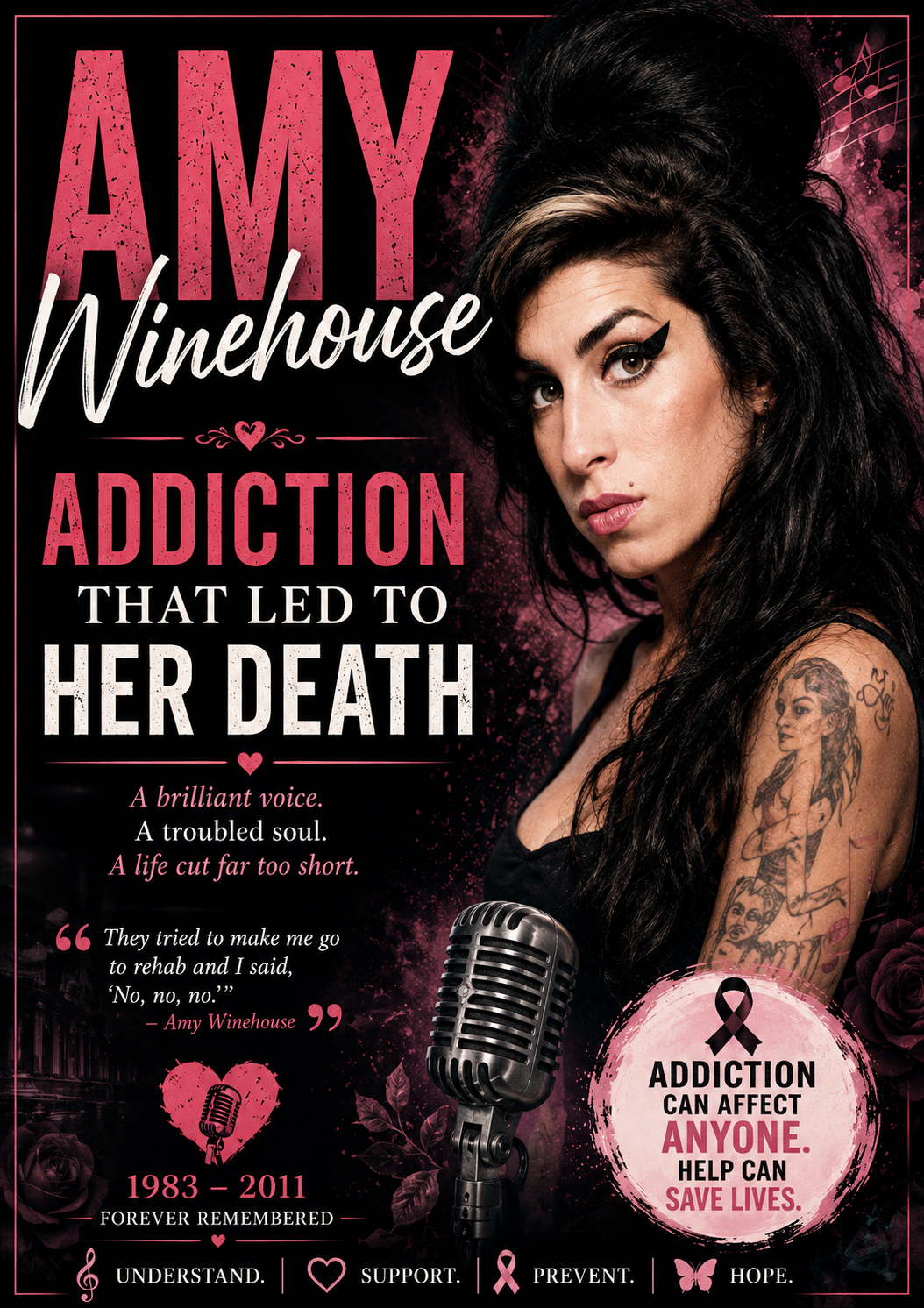
Amy Winehouse was a Grammy Award-winning singer and songwriter whose powerful voice, soulful lyrics, and unique musical style made her one of the most influential artists of her generation. Despite her remarkable success, she struggled publicly with alcohol use disorder and other substance-related challenges. Her battle with addiction was compounded by personal stress, intense media attention, and ongoing health concerns. In July 2011, Winehouse died from alcohol poisoning after returning to heavy drinking following a period of abstinence. Her tragic death highlights the serious health risks associated with alcohol use disorder, the dangers of relapse after a period of sobriety, and the importance of early intervention, evidence-based treatment, and long-term recovery support. Her story continues to educate the public about addiction as a chronic medical condition rather than a personal failure.
Amy Winehouse’s Addiction That Led to Her Death
Amy Winehouse was an internationally acclaimed singer-songwriter known for her distinctive voice and influential albums, particularly Back to Black. While her music earned widespread recognition and numerous awards, she also struggled publicly with substance use disorder, mental health challenges, and intense media scrutiny. Her death in 2011 highlighted the serious health risks associated with alcohol use disorder and underscored the importance of early intervention, comprehensive treatment, and long-term recovery support.
Early Struggles with Substance Use
Amy Winehouse began using alcohol and other substances as a young adult. Over time, heavy alcohol consumption became a significant part of her life, and she also used illicit drugs during certain periods. Friends, family, and healthcare professionals expressed concern about her health as her addiction became increasingly visible.
Like many individuals living with substance use disorder, her addiction was influenced by multiple factors, including psychological stress, personal relationships, possible underlying mental health concerns, and the pressures associated with international fame. Addiction rarely develops because of a single cause; it usually results from a complex interaction of biological, psychological, and social factors.
Attempts at Treatment
Throughout her life, Winehouse reportedly entered treatment programs and received medical care on several occasions. She experienced periods of reduced substance use and expressed interest in improving her health. Recovery from addiction is often a long-term process, and many individuals require multiple treatment episodes before achieving sustained recovery.
Her experience illustrates that treatment should not be viewed as a one-time event but as part of ongoing disease management that may include counseling, medical care, peer support, family involvement, and relapse prevention planning.
Cause of Death
Amy Winehouse died on July 23, 2011, at the age of 27. The official inquest concluded that she died from alcohol poisoning after consuming a large amount of alcohol following a period of abstinence. Her blood alcohol concentration was reported to be more than five times the legal driving limit in England. The death was ruled death by misadventure, meaning an unintended death resulting from a voluntary act. This classification is similar to what many jurisdictions describe as an accidental death.
Why Relapse Can Increase Risk
One of the important lessons from Amy Winehouse’s death is the danger of returning to heavy substance use after a period of abstinence.
After weeks or months without alcohol or drugs, the body’s tolerance decreases. If someone resumes drinking or using substances at the same levels they previously tolerated, the risk of serious poisoning, overdose, or death increases significantly.
This phenomenon is well recognized in addiction medicine and is one reason healthcare providers emphasize gradual recovery, relapse prevention planning, and continued follow-up care.
Risk Factors That May Contribute to Addiction
Several factors can increase vulnerability to substance use disorders, including:
- Genetic predisposition
- Chronic stress
- Trauma or adverse childhood experiences
- Anxiety or depression
- Social isolation
- High-pressure careers
- Easy access to alcohol or drugs
- Limited engagement in ongoing recovery support
While these factors increase risk, they do not determine a person’s future. Many people with similar challenges recover successfully with appropriate treatment and support.
Lessons from Amy Winehouse’s Story
Amy Winehouse’s life teaches several important lessons:
- Addiction is a chronic medical condition, not a personal weakness.
- Alcohol use disorder can be life-threatening even without illicit drug use.
- Recovery often requires ongoing treatment rather than a single rehabilitation stay.
- Relapse should be viewed as a medical event requiring prompt intervention.
- Fame, wealth, and talent do not protect individuals from addiction.
- Family, friends, and healthcare professionals all play important roles in supporting recovery.
Reducing the Risk of Alcohol-Related Deaths
Evidence-based strategies that reduce risk include:
- Seeking professional treatment early.
- Participating in counseling and behavioral therapies.
- Building a strong recovery support network.
- Identifying and managing relapse triggers.
- Treating co-occurring mental health conditions.
- Maintaining regular medical follow-up.
- Developing healthy coping skills for stress.
- Encouraging family education and involvement in recovery.
Conclusion
Amy Winehouse’s death was a tragic reminder of the devastating impact alcohol use disorder can have on individuals, families, and communities. Although she achieved extraordinary artistic success, addiction remained a serious medical illness that required ongoing management. Her story continues to raise awareness that recovery is possible but often requires long-term treatment, compassionate support, and early intervention. By understanding addiction as a treatable chronic disease rather than a personal failure, healthcare professionals, families, and communities can help reduce stigma, improve access to care, and prevent future alcohol-related deaths.
Self-Management Strategies to Understand Amy Winehouse’s Addiction That Led to Her Death
Amy Winehouse’s life and death demonstrate that alcohol use disorder is a chronic, treatable medical condition that can affect anyone, regardless of talent, success, or social status. Her death from alcohol poisoning after returning to heavy drinking following a period of abstinence highlights the importance of relapse prevention, ongoing treatment, and healthy coping strategies. The following self-management strategies can help individuals better understand addiction and reduce the risk of relapse and alcohol-related harm.
1. Learn That Alcohol Use Disorder Is a Chronic Disease
Understanding that alcohol addiction changes brain function can reduce stigma and encourage individuals to seek treatment early. Recovery is often a lifelong process that requires ongoing care and support.
Practice:
- Learn about alcohol use disorder from reputable health organizations.
- Discuss concerns with a healthcare provider or addiction specialist.
- Attend educational workshops or recovery programs.
2. Recognize Personal Triggers
Stressful events, emotional distress, social situations, and environmental cues can trigger cravings or increase the risk of relapse.
Practice:
- Keep a journal to identify situations that increase the urge to drink.
- Develop healthy alternatives for coping with stress.
- Avoid environments where excessive alcohol use is common.
3. Understand the Risks of Reduced Alcohol Tolerance
After a period of abstinence, the body becomes less tolerant to alcohol. Returning to previous drinking levels can result in alcohol poisoning, serious injury, or death.
Practice:
- Understand that your body may no longer tolerate the amount of alcohol you once consumed.
- Seek immediate support if you relapse instead of attempting to manage it alone.
- Remember that relapse is a medical event requiring prompt attention.
4. Build Healthy Stress Management Skills
Many individuals use alcohol to cope with stress, anxiety, sadness, or emotional pain. Learning healthier coping skills can reduce dependence on alcohol.
Practice:
- Exercise regularly.
- Practice mindfulness or meditation.
- Use deep-breathing techniques during stressful situations.
- Spend time outdoors or engage in hobbies that promote relaxation.
5. Follow Your Treatment Plan
Recovery is more successful when treatment is consistent and individualized.
Practice:
- Attend counseling or therapy sessions regularly.
- Take prescribed medications as directed, if appropriate.
- Keep follow-up appointments with healthcare providers.
- Be honest about cravings or setbacks.
6. Develop a Strong Support System
Recovery is easier when individuals stay connected with supportive people who encourage healthy choices.
Practice:
- Maintain relationships with supportive family members and friends.
- Participate in peer recovery groups.
- Reach out to trusted individuals during times of stress instead of isolating yourself.
7. Prioritize Mental Health
Depression, anxiety, trauma, and other mental health conditions often occur alongside alcohol use disorder. Treating both conditions together improves recovery outcomes.
Practice:
- Seek professional help for emotional or mental health concerns.
- Practice healthy sleep habits.
- Recognize early signs of worsening depression or anxiety.
- Do not use alcohol to manage emotional distress.
8. Establish Healthy Daily Routines
A structured lifestyle can reduce opportunities for drinking and promote overall wellness.
Practice:
- Maintain consistent sleep and wake times.
- Eat balanced, nutritious meals.
- Stay physically active.
- Schedule meaningful daily activities that support recovery.
9. Prepare for High-Risk Situations
Planning ahead can reduce the likelihood of relapse when facing social events or stressful circumstances.
Practice:
- Decline invitations where heavy drinking is expected.
- Bring a supportive friend to challenging events.
- Have an exit plan if you begin feeling uncomfortable or tempted to drink.
- Keep emergency support contacts readily available.
10. Practice Self-Compassion After Setbacks
Recovery is rarely a straight path. A lapse or relapse does not mean failure—it signals the need to strengthen the recovery plan.
Practice:
- Seek help immediately after a setback.
- Learn from the experience without self-blame.
- Review triggers with your treatment team.
- Focus on long-term progress rather than perfection.
Key Lessons from Amy Winehouse’s Story
Amy Winehouse’s life illustrates that alcohol addiction can have life-threatening consequences when left untreated or when relapse occurs after a period of abstinence. Her death emphasizes the importance of understanding reduced alcohol tolerance, recognizing relapse warning signs, addressing mental health needs, and maintaining long-term recovery support. Through education, evidence-based treatment, healthy coping skills, and strong social support, individuals can reduce their risk of relapse and build a healthier, more fulfilling future.
Family Support Strategies to Understand Amy Winehouse’s Addiction That Led to Her Death
Amy Winehouse’s life reminds families that alcohol use disorder is a chronic medical condition that can affect anyone, regardless of talent, success, or socioeconomic status. Her death from alcohol poisoning after returning to heavy drinking following a period of abstinence highlights the importance of family education, early intervention, compassionate communication, and ongoing recovery support. While families cannot control a loved one’s choices, they can play a meaningful role in encouraging treatment, recognizing warning signs, and promoting a safe, supportive environment.
1. Learn About Alcohol Use Disorder
Understanding addiction as a chronic brain disease helps families replace blame with empathy and informed support.
How families can help:
- Learn about the causes, symptoms, and treatment of alcohol use disorder.
- Attend family education classes or workshops.
- Discuss concerns with healthcare professionals or addiction specialists.
2. Recognize Early Warning Signs of Relapse
Relapse often begins with emotional and behavioral changes before alcohol use resumes.
Warning signs may include:
- Increased isolation from family and friends.
- Mood swings, anxiety, or depression.
- Changes in sleep or eating habits.
- Secretive behavior or dishonesty.
- Missing therapy sessions or recovery meetings.
- Returning to people or places associated with heavy drinking.
Recognizing these signs early allows families to encourage professional help before the situation worsens.
3. Encourage Ongoing Treatment
Recovery is a lifelong process that often requires continued medical care, counseling, and peer support.
Families can:
- Encourage attendance at therapy and medical appointments.
- Support participation in recovery programs.
- Celebrate recovery milestones while understanding that challenges may still occur.
- Encourage long-term follow-up even when recovery is going well.
4. Communicate with Compassion
People struggling with addiction are more likely to seek help when they feel supported rather than judged.
Helpful communication includes:
- Listening without interrupting.
- Expressing concern calmly and respectfully.
- Using “I” statements, such as “I’m concerned about your health.”
- Avoiding criticism, shame, or blame.
5. Understand the Risks After Abstinence
Amy Winehouse’s death demonstrates that returning to previous levels of alcohol consumption after a period of abstinence can be extremely dangerous because the body loses tolerance.
Families should know:
- Reduced tolerance increases the risk of alcohol poisoning.
- A relapse should be taken seriously and addressed promptly.
- Immediate medical attention is needed if someone shows signs of severe alcohol intoxication.
6. Support Healthy Lifestyle Changes
Healthy daily habits can strengthen recovery and reduce the risk of relapse.
Families can encourage:
- Regular physical activity.
- Nutritious meals.
- Consistent sleep schedules.
- Participation in hobbies and meaningful activities.
- Stress-reduction techniques such as mindfulness or yoga.
7. Encourage Mental Health Care
Depression, anxiety, trauma, and other mental health conditions often occur alongside alcohol use disorder.
Families should:
- Encourage mental health evaluations when appropriate.
- Support counseling and psychiatric care.
- Be attentive to changes in mood or behavior.
- Encourage open conversations about emotional well-being.
8. Establish Healthy Boundaries
Supporting recovery does not mean enabling unhealthy behaviors.
Healthy boundaries include:
- Avoiding excuses for harmful behavior.
- Not providing money that could be used to purchase alcohol.
- Encouraging accountability while remaining supportive.
- Allowing natural consequences without abandoning the individual.
9. Prepare for Alcohol-Related Emergencies
Families should know how to recognize severe alcohol intoxication and respond quickly.
Emergency warning signs include:
- Unresponsiveness or inability to wake the person.
- Slow or irregular breathing.
- Vomiting while unconscious.
- Seizures.
- Blue or pale skin.
- Confusion that progresses to unconsciousness.
If these symptoms occur:
- Call 911 immediately.
- Keep the person on their side to reduce the risk of choking.
- Do not leave them alone or assume they will “sleep it off.”
10. Care for Your Own Well-Being
Supporting a loved one with addiction can be emotionally and physically demanding. Families also need support to remain healthy and resilient.
Self-care strategies include:
- Joining family support groups.
- Seeking individual counseling.
- Maintaining healthy relationships and hobbies.
- Managing stress through exercise, relaxation, or spiritual practices.
- Remembering that recovery is ultimately the individual’s responsibility.
Key Lessons from Amy Winehouse’s Story
Amy Winehouse’s life demonstrates that alcohol use disorder is a serious medical condition that requires ongoing treatment and support. Her death after returning to heavy drinking following a period of abstinence highlights the dangers of reduced alcohol tolerance and the importance of relapse prevention. Families can make a positive difference by learning about addiction, recognizing early warning signs, encouraging professional treatment, maintaining compassionate communication, and responding quickly in emergencies.
Conclusion
Amy Winehouse’s story continues to raise awareness about the devastating impact of alcohol addiction and the importance of family involvement in recovery. Although families cannot control addiction, they can provide encouragement, education, emotional support, and healthy boundaries that promote recovery. By understanding addiction as a chronic disease, supporting evidence-based treatment, recognizing relapse warning signs, and preparing for emergencies, families can help protect their loved ones while fostering hope, healing, and long-term recovery.
Community Resource Strategies to Understand Amy Winehouse’s Addiction That Led to Her Death
Amy Winehouse’s death from alcohol poisoning illustrates that alcohol use disorder is a serious but treatable medical condition that requires ongoing support from healthcare professionals, families, and communities. Her story demonstrates the importance of early intervention, accessible treatment, mental health services, relapse prevention, and public education. Communities play a critical role in reducing stigma, improving access to care, and creating environments that support long-term recovery.
1. Promote Public Education About Alcohol Use Disorder
Community education helps people understand that addiction is a chronic brain disease rather than a personal weakness. Increased awareness encourages earlier treatment and reduces stigma.
Community strategies:
- Host educational seminars at schools, colleges, workplaces, and community centers.
- Invite addiction medicine specialists and recovery advocates to speak.
- Provide educational materials on the risks of excessive alcohol use and available treatment options.
2. Improve Access to Evidence-Based Treatment
Timely access to professional care can reduce the risk of alcohol-related illness and death.
Community resources include:
- Addiction treatment centers.
- Outpatient and intensive outpatient programs.
- Inpatient rehabilitation facilities.
- Licensed mental health counselors and addiction specialists.
- Primary care providers trained to identify and treat alcohol use disorder.
3. Expand Mental Health Services
Many individuals with alcohol use disorder also experience depression, anxiety, trauma, or other mental health conditions. Treating both conditions together improves recovery outcomes.
Community resources include:
- Behavioral health clinics.
- Psychiatric evaluation and medication management.
- Individual and family counseling.
- Crisis intervention services.
- Integrated mental health and addiction treatment programs.
4. Support Recovery Community Organizations
Recovery is strengthened when individuals remain connected to supportive peers who understand the challenges of addiction.
Examples include:
- Peer recovery centers.
- Recovery coaching programs.
- Alcohol recovery support groups.
- Sober recreational activities and community events.
- Recovery-friendly community organizations.
These resources help reduce isolation and encourage long-term engagement in recovery.
5. Strengthen Family Education Programs
Families often need guidance on how to support a loved one living with alcohol use disorder.
Communities can provide:
- Family education workshops.
- Family counseling services.
- Support groups for spouses, parents, siblings, and children.
- Educational materials about relapse prevention, communication, and healthy boundaries.
6. Raise Awareness About Relapse Risks
Amy Winehouse’s death highlights the danger of returning to heavy drinking after a period of abstinence, when alcohol tolerance has decreased.
Community education should emphasize:
- Reduced tolerance after abstinence increases the risk of alcohol poisoning.
- Relapse is a medical event that requires immediate attention.
- Early intervention can prevent life-threatening complications.
7. Promote Healthy Coping Skills
Communities can encourage healthier alternatives to alcohol by offering opportunities that improve physical and emotional well-being.
Examples include:
- Fitness and wellness programs.
- Mindfulness and stress-management classes.
- Art, music, and recreational therapy.
- Volunteer opportunities that promote social connection and purpose.
8. Create Recovery-Friendly Environments
Reducing stigma makes it easier for individuals to seek help before a crisis develops.
Community initiatives may include:
- Recovery-friendly workplaces.
- Public awareness campaigns about addiction and recovery.
- Second-chance employment opportunities.
- Policies that encourage treatment rather than discrimination.
9. Improve Emergency Response and Crisis Services
Communities should ensure that individuals experiencing severe alcohol intoxication or a mental health crisis have immediate access to emergency care.
Important community resources include:
- Emergency departments.
- Local crisis stabilization units.
- Mobile behavioral health crisis teams.
- Community crisis hotlines.
- Emergency medical services (911).
Public education should reinforce that severe alcohol poisoning is a medical emergency requiring immediate professional care.
10. Encourage Long-Term Recovery Support
Recovery is an ongoing process that often continues long after formal treatment has ended.
Communities can help by providing:
- Continuing recovery support groups.
- Employment assistance and vocational rehabilitation.
- Stable housing resources.
- Educational and life-skills programs.
- Mentoring and peer support services.
Key Lessons from Amy Winehouse’s Story
Amy Winehouse’s life demonstrates that alcohol addiction can affect anyone, regardless of talent, fame, or financial success. Her death underscores the dangers of alcohol poisoning, especially after a period of abstinence, and the importance of ongoing treatment, mental health care, and relapse prevention. Her story also reminds communities that compassion, education, and accessible healthcare can save lives by helping individuals seek treatment before addiction becomes fatal.
Conclusion
Amy Winehouse’s legacy extends beyond her extraordinary musical achievements by bringing greater attention to the realities of alcohol use disorder. Communities have an essential role in preventing similar tragedies by expanding access to evidence-based treatment, integrating mental health and addiction services, supporting families, reducing stigma, and promoting recovery-friendly environments. Through education, early intervention, and long-term support, communities can empower individuals to seek help, sustain recovery, and lead healthier, more fulfilling lives.
How Amy Winehouse’s Addiction Struggles Could Be Managed Using Today’s Treatment Strategies
Amy Winehouse was celebrated for her distinctive voice, deeply personal songwriting, and lasting influence on modern music. Alongside her remarkable success, she struggled publicly with alcohol and other substance use, as well as mental and physical health challenges. She died in 2011 from alcohol poisoning after resuming heavy drinking following a period of abstinence. While it is impossible to know how her life might have unfolded with different care, today’s evidence-based addiction treatment strategies offer several approaches that may have improved her chances of achieving long-term recovery and reducing the risk of relapse and alcohol-related harm.
Understanding Her Addiction
Modern addiction medicine recognizes that alcohol use disorder develops through a combination of biological, psychological, environmental, and social factors. In Amy Winehouse’s case, possible contributing factors may have included:
- Severe alcohol use disorder
- Previous use of multiple substances
- High levels of stress associated with fame
- Relationship difficulties
- Possible anxiety, depression, or other mental health concerns
- Public scrutiny and media pressure
- Genetic vulnerability to addiction
Today, addiction is understood as a chronic but treatable medical condition rather than a lack of willpower.
How Today’s Treatment Strategies Could Have Helped
1. Comprehensive Medical and Addiction Assessment
Treatment would begin with a multidisciplinary evaluation to assess:
- Severity of alcohol use disorder
- Physical health
- Liver function
- Nutritional status
- Mental health conditions
- Medication history
- Family and social support
- Risk of relapse
- Recovery goals
This information would guide an individualized treatment plan.
2. Medically Supervised Alcohol Detoxification
For someone with severe alcohol dependence, abrupt cessation can lead to dangerous withdrawal symptoms, including seizures and delirium tremens.
Today’s medically supervised detox programs provide:
- 24-hour monitoring
- Medications to reduce withdrawal symptoms
- Seizure prevention
- Hydration
- Nutritional support
- Thiamine supplementation to reduce the risk of neurological complications
- Transition into ongoing treatment
Detoxification is considered the beginning of recovery rather than the complete treatment.
3. FDA-Approved Medications for Alcohol Use Disorder
Several medications can help reduce cravings and support recovery.
These include:
- Naltrexone to reduce alcohol cravings and decrease the rewarding effects of drinking.
- Acamprosate to help stabilize brain function after stopping alcohol.
- Disulfiram for selected individuals who choose a medication that discourages drinking by causing unpleasant effects if alcohol is consumed.
Medication is most effective when combined with counseling and recovery support.
4. Cognitive Behavioral Therapy (CBT)
CBT helps individuals:
- Identify drinking triggers
- Recognize unhelpful thinking patterns
- Develop healthier coping strategies
- Manage stress and emotions
- Reduce relapse risk
Patients learn practical skills to respond to cravings without returning to alcohol use.
5. Motivational Interviewing
Motivational Interviewing is a collaborative counseling approach that helps individuals:
- Explore personal reasons for change
- Resolve ambivalence about treatment
- Strengthen confidence
- Build commitment to recovery
This technique respects the individual’s autonomy while encouraging positive change.
6. Treatment for Co-Occurring Mental Health Conditions
Many people with alcohol use disorder also experience conditions such as:
- Depression
- Anxiety
- Trauma-related symptoms
- Eating disorders
- Sleep disturbances
Integrated treatment addresses both addiction and mental health simultaneously through psychotherapy, psychiatric evaluation, and appropriate medications when indicated.
7. Nutritional Rehabilitation and Medical Care
Long-term heavy alcohol use can contribute to:
- Malnutrition
- Vitamin deficiencies
- Liver disease
- Heart problems
- Weakened immune function
Today’s treatment often includes:
- Nutritional counseling
- Vitamin replacement
- Regular laboratory monitoring
- Liver function assessment
- Comprehensive medical care
8. Family Therapy and Social Support
Recovery is strengthened when loved ones understand addiction and participate appropriately.
Family therapy can help:
- Improve communication
- Encourage treatment participation
- Reduce enabling behaviors
- Strengthen healthy boundaries
- Recognize early signs of relapse
Supportive relationships often improve long-term recovery outcomes.
9. Relapse Prevention and Continuing Care
Because alcohol use disorder is often a chronic condition, recovery plans include long-term support such as:
- Individual counseling
- Group therapy
- Peer recovery support
- Recovery coaching
- Telehealth follow-up
- Regular appointments with addiction specialists
- Personalized relapse prevention planning
Recovery is viewed as an ongoing process that benefits from continued care.
10. Harm Reduction and Emergency Planning
Modern treatment also emphasizes reducing the risk of serious complications by:
- Educating patients and families about alcohol poisoning
- Recognizing warning signs of relapse
- Developing emergency response plans
- Encouraging prompt medical attention when heavy drinking resumes
- Maintaining close follow-up after periods of abstinence, when tolerance may be reduced
These strategies can improve safety while individuals continue working toward recovery.
How These Strategies Might Have Reduced Risk
Although no treatment can guarantee recovery, earlier or sustained engagement with today’s comprehensive addiction care might have:
- Reduced alcohol cravings
- Improved management of withdrawal symptoms
- Lowered the risk of relapse
- Improved treatment of co-occurring mental health conditions
- Enhanced nutritional and physical health
- Increased family and social support
- Reduced the likelihood of alcohol poisoning
- Improved overall quality of life
Lessons for Others
Amy Winehouse’s story highlights that addiction can affect people regardless of talent, success, or public recognition. It also demonstrates that alcohol use disorder is a serious medical condition that often requires long-term treatment and ongoing support. Today, evidence-based care combines medications for alcohol use disorder, behavioral therapies, treatment of co-occurring mental health conditions, nutritional rehabilitation, family involvement, and continuing care to improve recovery outcomes.
It is important to remember that this discussion is hypothetical. While modern addiction treatment has advanced considerably and has helped many people achieve lasting recovery, no one can know with certainty how any specific individual’s life would have unfolded. The purpose of examining Amy Winehouse’s experience is to better understand the importance of early intervention, compassionate care, and sustained support for individuals living with addiction.
Frequently Asked Questions
Here are some common questions:
1. Who was Amy Winehouse?
Amy Winehouse was a Grammy Award-winning English singer and songwriter known for her powerful voice and critically acclaimed albums, including Back to Black. She became one of the most influential artists of her generation.
2. Did Amy Winehouse struggle with addiction?
Yes. Amy Winehouse struggled publicly with alcohol use disorder and, at times, the use of other substances. Her addiction affected her physical health, personal relationships, and career, despite multiple attempts to seek treatment.
3. What substance contributed to Amy Winehouse’s death?
Amy Winehouse died from alcohol poisoning after consuming a large amount of alcohol following a period of abstinence. Although she had previously used other substances, the official cause of death was acute alcohol toxicity.
4. When did Amy Winehouse die?
Amy Winehouse died on July 23, 2011, at the age of 27.
5. What was the official cause of death?
The official inquest concluded that Amy Winehouse died from accidental alcohol poisoning (recorded as “death by misadventure”), meaning her death resulted from the unintended consequences of voluntary alcohol consumption.
6. Why was returning to alcohol after abstinence so dangerous?
After a period without drinking, the body’s tolerance to alcohol decreases. Consuming the same large amounts previously tolerated can overwhelm the body, increasing the risk of alcohol poisoning, respiratory depression, coma, and death.
7. Can alcohol use disorder be life-threatening?
Yes. Severe alcohol use disorder can lead to alcohol poisoning, liver disease, heart disease, certain cancers, accidents, mental health complications, and premature death if left untreated.
8. What factors may have contributed to Amy Winehouse’s addiction?
Addiction is complex and usually results from multiple interacting factors. Potential contributors may include:
- Genetic vulnerability
- Mental health challenges
- Chronic stress
- Personal relationship difficulties
- Intense media attention
- Easy access to alcohol
- Environmental and social influences
9. Is addiction a personal weakness?
No. Addiction is recognized as a chronic medical condition that affects brain function, decision-making, and behavior. It requires evidence-based treatment and ongoing support, not judgment or blame.
10. What are common warning signs of alcohol relapse?
Warning signs may include:
- Increased stress or anxiety
- Mood changes or depression
- Social withdrawal
- Returning to old drinking environments
- Missing therapy or recovery meetings
- Secretive behavior
- Cravings or talking positively about previous alcohol use
11. Can someone recover from alcohol addiction?
Yes. Many people achieve long-term recovery through evidence-based treatment, counseling, peer support, healthy lifestyle changes, and ongoing relapse prevention. Recovery is possible at any stage of addiction.
12. What treatments are available for alcohol use disorder?
Treatment may include:
- Medical evaluation and supervised detoxification when needed
- Individual counseling
- Cognitive behavioral therapy (CBT)
- Motivational interviewing
- Family therapy
- Peer support groups
- FDA-approved medications for alcohol use disorder, when appropriate
- Long-term relapse prevention planning
13. What can families learn from Amy Winehouse’s story?
Families can learn the importance of:
- Recognizing addiction as a chronic disease
- Encouraging treatment early
- Maintaining compassionate communication
- Supporting long-term recovery
- Understanding the dangers of relapse after abstinence
- Learning to recognize signs of alcohol poisoning
14. What are the signs of alcohol poisoning?
Emergency warning signs include:
- Confusion or inability to stay awake
- Vomiting repeatedly
- Slow or irregular breathing
- Pale, bluish, or cold skin
- Seizures
- Loss of consciousness
- Inability to wake the person
These symptoms require immediate emergency medical attention. Call 911 right away.
15. Why is mental health treatment important in recovery?
Depression, anxiety, trauma, and other mental health conditions often occur alongside alcohol use disorder. Treating both conditions together improves recovery outcomes and lowers the risk of relapse.
16. What role do community resources play in recovery?
Communities can support recovery by providing:
- Addiction treatment programs
- Mental health services
- Peer recovery groups
- Family education programs
- Recovery-friendly workplaces
- Public education that reduces stigma
17. What is the most important lesson from Amy Winehouse’s story?
Amy Winehouse’s life reminds us that addiction can affect anyone, regardless of talent, fame, or success. Her story emphasizes that alcohol use disorder is a serious but treatable medical condition, that relapse after a period of abstinence can be especially dangerous due to reduced tolerance, and that compassionate, evidence-based treatment and long-term support can help people achieve lasting recovery.
Conclusion
Amy Winehouse’s death remains a heartbreaking reminder that alcohol use disorder can have life-threatening consequences if left untreated or inadequately managed. Her experience demonstrates that addiction can affect anyone, regardless of talent, fame, or financial success, and that recovery often requires ongoing medical care, counseling, family support, and relapse prevention strategies. Her legacy has helped increase awareness of the importance of recognizing addiction as a chronic, treatable disease and reducing the stigma that often prevents people from seeking help. By promoting education, improving access to evidence-based treatment, strengthening mental health services, and fostering supportive families and communities, we can honor Amy Winehouse’s legacy while helping prevent future alcohol-related deaths and encouraging hope for lasting recovery.
Video: The Relapse That Killed Amy Winehouse #amywinehouse #alcoholism