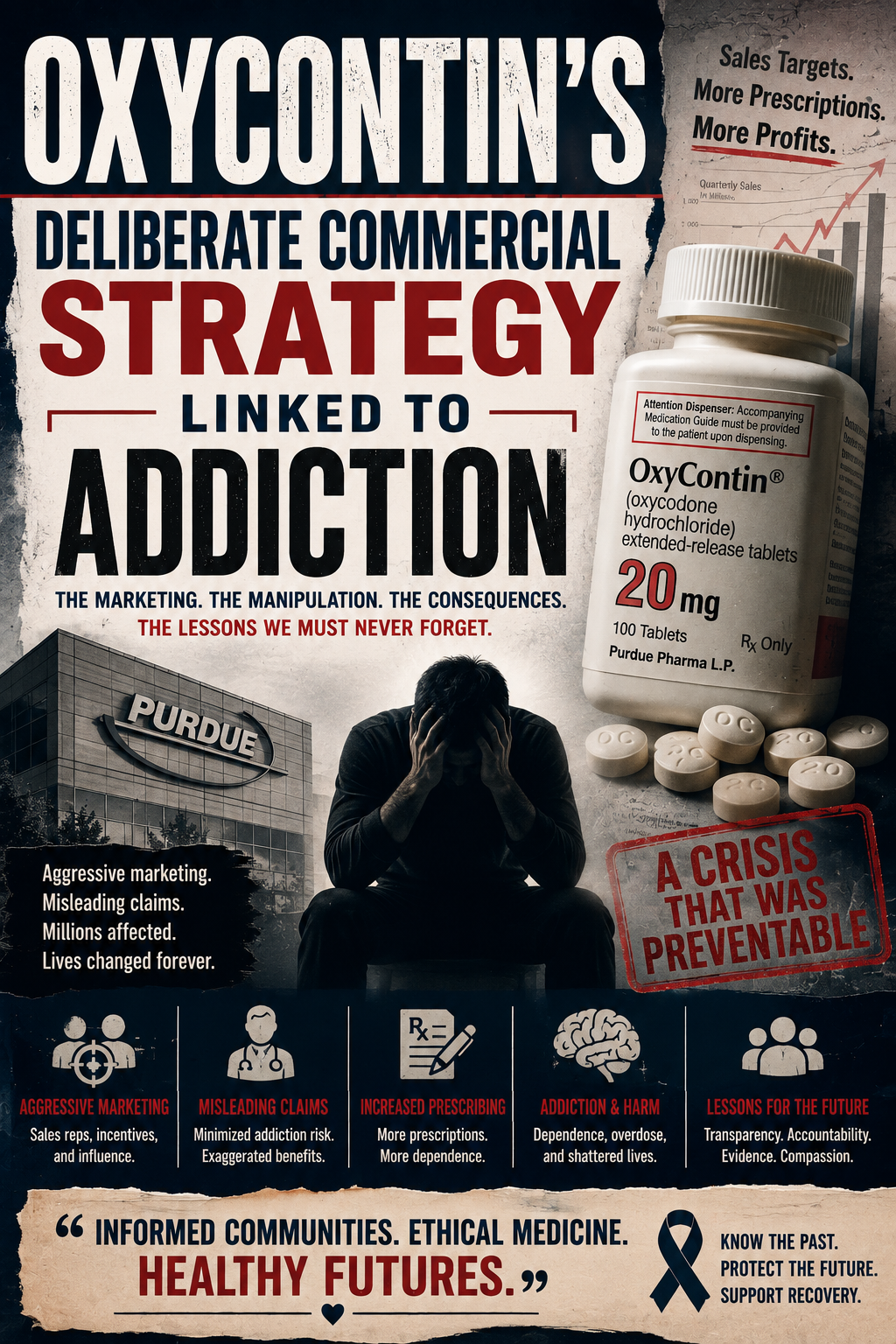
The history of OxyContin has become one of the most significant case studies in public health, pharmaceutical ethics, and addiction medicine. Introduced in 1996 as an extended-release formulation of oxycodone for the management of moderate to severe pain, OxyContin was widely promoted through an aggressive commercial marketing strategy that expanded its use beyond traditional pain populations. Promotional campaigns emphasized the medication’s effectiveness while minimizing concerns about addiction risk, contributing to increased opioid prescribing across the United States. Although OxyContin can be an effective medication for carefully selected patients when prescribed and monitored appropriately, its widespread promotion, combined with evolving prescribing practices and limited understanding of long-term opioid risks, contributed to increased opioid misuse, opioid use disorder, and overdose deaths. Understanding this history provides valuable lessons about evidence-based medicine, ethical pharmaceutical marketing, patient safety, and the importance of balancing effective pain management with addiction prevention.
OxyContin’s Commercial Strategy and Addiction Link
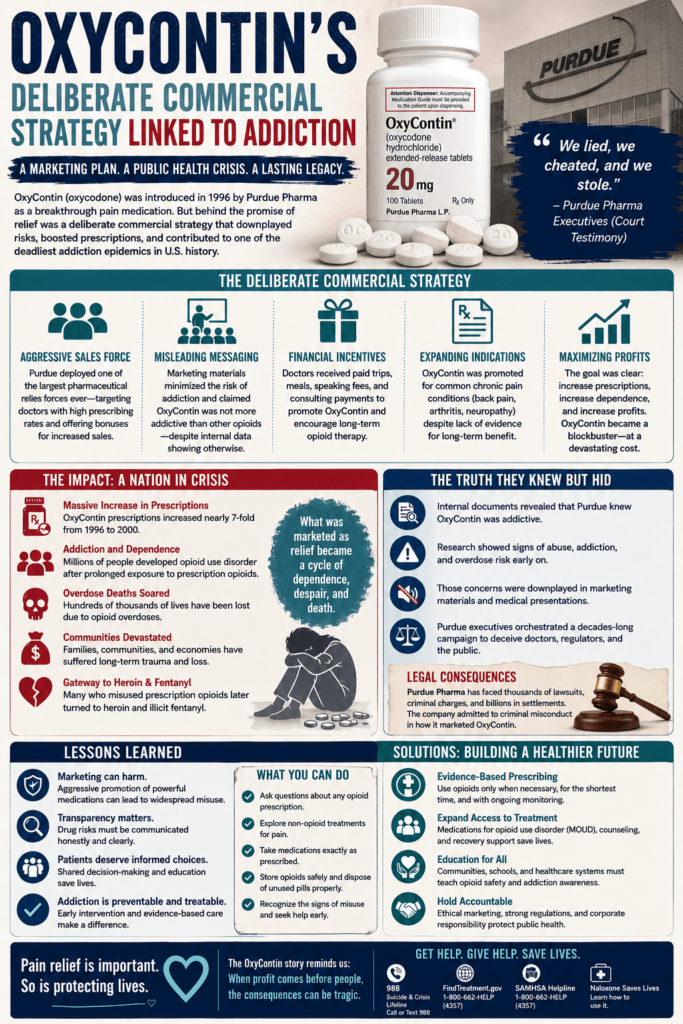
The marketing of OxyContin has become one of the most widely studied examples of how pharmaceutical marketing, prescribing practices, and healthcare systems can contribute to a public health crisis. Introduced in 1996 by Purdue Pharma, OxyContin (extended-release oxycodone) was approved by the FDA for managing moderate to severe pain requiring around-the-clock treatment. However, the company’s marketing strategy and promotion of the drug have been heavily criticized and have led to extensive litigation, regulatory action, and major changes in opioid prescribing practices.
It is important to distinguish between the medication itself and how it was marketed. Oxycodone can be an effective pain medication when prescribed appropriately, but widespread promotion and inappropriate prescribing contributed to increased misuse, addiction, and overdose in many communities.
Marketing Strategy
Investigations, court records, and settlements found that Purdue Pharma used an aggressive commercial strategy to expand OxyContin prescribing.
Key elements included:
- Large sales forces targeting physicians.
- Financial incentives and bonuses for sales representatives.
- Educational events promoting opioid prescribing.
- Distribution of promotional materials emphasizing the drug’s benefits.
- Expansion of marketing beyond cancer pain into broader chronic pain conditions.
The goal was to increase prescriptions and expand the market for long-term opioid therapy.
Claims About Addiction Risk
One of the most controversial aspects of Purdue Pharma’s marketing involved messages suggesting that the risk of addiction was relatively low when OxyContin was prescribed for pain. Critics argued that these claims overstated the medication’s safety and were not adequately supported by high-quality evidence. Subsequent scientific research demonstrated that long-term opioid therapy carries a meaningful risk of opioid use disorder for some patients, particularly with prolonged exposure or higher doses.
Marketing to High-Prescribing Clinicians
Sales representatives often focused on healthcare professionals who prescribed large numbers of pain medications. Marketing efforts included:
- Frequent office visits.
- Sponsored educational programs.
- Promotional materials.
- Speaker programs featuring clinicians.
- Continuing medical education support in some settings.
These approaches were intended to increase clinician familiarity with the product and encourage prescribing.
Expansion of Chronic Pain Treatment
Historically, opioids were used primarily for:
- Cancer pain.
- Postoperative pain.
- End-of-life care.
- Severe acute injuries.
During the late 1990s and early 2000s, opioid prescribing expanded to include many chronic non-cancer pain conditions such as:
- Chronic back pain.
- Osteoarthritis.
- Neck pain.
- Neuropathic pain in selected cases.
This broader use substantially increased opioid exposure across the population.
Impact on the Opioid Epidemic
Greater opioid availability was associated with:
- Increased opioid prescribing.
- Higher rates of opioid misuse.
- More cases of opioid use disorder.
- Rising overdose deaths involving prescription opioids.
- Diversion of medications for nonmedical use.
The opioid epidemic is complex and has been driven by multiple factors, including prescribing practices, socioeconomic conditions, illicit opioid markets, and later the widespread availability of illicitly manufactured fentanyl. Marketing was one important contributing factor, but not the only cause.
Legal Consequences
Purdue Pharma faced thousands of lawsuits from states, local governments, tribes, hospitals, and individuals. The company has admitted to criminal misconduct in prior federal cases involving the marketing of OxyContin, and numerous legal settlements have addressed its role in the opioid crisis. Bankruptcy proceedings and settlement negotiations have sought to provide compensation for communities affected by opioid-related harms, although litigation has continued over aspects of those agreements.
Lessons Learned
The OxyContin experience led to major changes in healthcare and pharmaceutical oversight, including:
- More cautious opioid prescribing.
- Prescription Drug Monitoring Programs (PDMPs).
- Updated opioid prescribing guidelines.
- Greater emphasis on informed consent and patient education.
- Increased screening for opioid use disorder.
- Expanded access to medications for opioid use disorder, such as buprenorphine, methadone, and naltrexone.
- Enhanced FDA scrutiny of opioid labeling and post-marketing safety.
Ethical Considerations
The OxyContin case illustrates several ethical principles in healthcare:
- Beneficence: Medications should provide more benefit than harm.
- Nonmaleficence: Healthcare providers and manufacturers have a responsibility to minimize harm.
- Transparency: Marketing should accurately represent known benefits and risks.
- Informed decision-making: Patients deserve balanced information about treatment options.
- Corporate responsibility: Pharmaceutical companies have an ethical obligation to promote products responsibly and monitor safety concerns.
Public Health Response
In response to the opioid crisis, public health agencies have expanded efforts to:
- Improve safe opioid prescribing.
- Increase access to evidence-based addiction treatment.
- Expand naloxone availability.
- Promote non-opioid pain management when appropriate.
- Improve education for clinicians and patients.
- Strengthen surveillance of prescription and overdose trends.
Conclusion
The history of OxyContin demonstrates how commercial marketing strategies, when combined with incomplete understanding of long-term opioid risks and broad prescribing practices, can contribute to widespread public health consequences. While OxyContin remains an appropriate medication for some carefully selected patients under close medical supervision, its marketing history prompted major reforms in pharmaceutical promotion, opioid prescribing, and addiction treatment. The lessons learned continue to shape pain management practices and emphasize the importance of balancing access to effective pain relief with rigorous patient safety, ethical marketing, and evidence-based medical care.
Self-Management Strategies to Understand OxyContin’s Deliberate Commercial Strategy Linked to Addiction
The history of OxyContin demonstrates how pharmaceutical marketing, prescribing practices, and patient expectations can influence medication use and public health. Understanding this history helps individuals become informed healthcare consumers and make safer decisions about pain management. Although OxyContin (extended-release oxycodone) remains an appropriate medication for certain patients when carefully prescribed and monitored, its marketing history underscores the importance of evidence-based decision-making, informed consent, and personal responsibility in medication use.
1. Educate Yourself About Prescription Opioids
Learn how opioids work by binding to opioid receptors in the brain and spinal cord to reduce pain. Understand that while opioids can provide significant pain relief, they also carry risks such as:
- Tolerance
- Physical dependence
- Opioid use disorder (addiction)
- Overdose
- Respiratory depression
Being informed helps individuals weigh the benefits and risks of opioid therapy with their healthcare provider.
2. Learn the Difference Between Dependence and Addiction
Understanding medical terminology can reduce confusion:
- Physical dependence is the body’s normal adaptation to long-term opioid use and may result in withdrawal symptoms if the medication is stopped suddenly.
- Tolerance means higher doses may be needed over time to achieve the same effect.
- Addiction (opioid use disorder) involves compulsive opioid use despite harmful consequences and loss of control over use.
Recognizing these differences promotes informed discussions with healthcare professionals.
3. Ask Questions Before Starting an Opioid
Become an active participant in your healthcare by asking questions such as:
- Why is this medication recommended?
- Are non-opioid treatments available?
- What are the short- and long-term risks?
- How long should I take this medication?
- What side effects should I watch for?
- How will my pain and function be monitored?
- What is the plan for tapering or discontinuing the medication if it is no longer needed?
Shared decision-making supports safer treatment.
4. Take Medications Exactly as Prescribed
If an opioid is prescribed:
- Follow the prescribed dose and schedule.
- Never increase the dose without consulting your healthcare provider.
- Do not crush, chew, or alter extended-release medications such as OxyContin, as doing so can release a potentially dangerous amount of medication at once.
- Never share prescription opioids with others.
Proper medication use reduces the risk of misuse and overdose.
5. Understand the Influence of Marketing
The OxyContin case illustrates that advertising and promotional messages do not replace scientific evidence. Develop the habit of:
- Seeking information from trusted healthcare professionals.
- Reviewing evidence-based medical resources.
- Being cautious of marketing claims that minimize risks or overstate benefits.
- Asking whether recommendations are supported by current clinical guidelines.
Health decisions should be based on evidence rather than advertising.
6. Monitor Yourself for Warning Signs
If using opioid medications, be aware of signs that may indicate developing problems, including:
- Needing higher doses for the same pain relief.
- Taking medication more often than prescribed.
- Craving the medication.
- Using opioids for reasons other than pain relief.
- Difficulty reducing or stopping use.
- Continuing use despite negative physical, emotional, or social consequences.
Early recognition allows for prompt medical evaluation.
7. Explore Non-Opioid Pain Management
Discuss evidence-based alternatives with your healthcare provider, such as:
- Physical therapy.
- Exercise programs.
- Cognitive Behavioral Therapy (CBT) for chronic pain.
- Acetaminophen or nonsteroidal anti-inflammatory drugs (NSAIDs), when appropriate.
- Heat or cold therapy.
- Mindfulness and relaxation techniques.
- Occupational therapy.
- Interventional pain procedures for selected conditions.
Many individuals benefit from combining several non-opioid approaches.
8. Practice Safe Medication Storage and Disposal
Reduce the risk of diversion by:
- Keeping opioids in a secure location.
- Never sharing medications.
- Properly disposing of unused opioids through authorized medication take-back programs or following FDA disposal recommendations.
Safe storage protects family members and others from accidental exposure or misuse.
9. Develop Healthy Coping Skills
Chronic pain can affect emotional well-being. Instead of relying solely on medication, strengthen healthy coping strategies such as:
- Regular physical activity within your abilities.
- Relaxation techniques.
- Meditation or mindfulness.
- Journaling.
- Spending time with supportive family and friends.
- Participating in enjoyable hobbies.
Addressing emotional health is an important part of pain management.
10. Seek Help Early if Concerns Arise
If you notice increasing reliance on opioids or difficulty controlling use, seek help promptly. Early intervention may include:
- Consultation with your prescribing clinician.
- Pain management specialists.
- Addiction medicine specialists.
- Behavioral health professionals.
- Evidence-based treatment for opioid use disorder, including medications such as buprenorphine, methadone, or naltrexone when appropriate.
Early treatment often improves outcomes and reduces the risk of overdose.
11. Stay Informed About Medication Safety
Medical knowledge evolves over time. Stay updated on:
- New prescribing guidelines.
- Medication safety alerts.
- Changes in treatment recommendations.
- Advances in pain management and addiction treatment.
Reliable information supports safer healthcare decisions.
12. Practice Self-Advocacy
Take an active role in your healthcare by:
- Keeping an up-to-date list of medications.
- Attending follow-up appointments.
- Reporting side effects promptly.
- Asking questions when recommendations are unclear.
- Participating in decisions about your treatment plan.
Being an informed advocate helps ensure that care aligns with your health goals and values.
Conclusion
The history of OxyContin highlights the importance of informed decision-making, evidence-based medicine, and active participation in healthcare. By understanding how commercial marketing influenced opioid prescribing, individuals can become more thoughtful consumers of health information and make safer choices about pain management. Taking medications as prescribed, asking informed questions, recognizing early warning signs of opioid misuse, exploring non-opioid treatments, and seeking help when concerns arise are practical self-management strategies that support both effective pain control and long-term health.
Family Support Strategies to Understand OxyContin’s Deliberate Commercial Strategy Linked to Addiction
The history of OxyContin demonstrates how pharmaceutical marketing, widespread opioid prescribing, and limited understanding of addiction risks contributed to the opioid epidemic. Families who understand this history are better prepared to support loved ones using prescription opioids, recognize early warning signs of opioid misuse, and encourage evidence-based treatment when needed. Learning from the OxyContin experience can help families promote safe medication use while reducing stigma surrounding opioid use disorder.
1. Learn About the History of the Opioid Epidemic
Families should educate themselves about how the opioid epidemic developed, including:
- The medical role of prescription opioids in treating pain.
- How aggressive pharmaceutical marketing influenced prescribing practices.
- The evolution of scientific knowledge regarding opioid addiction risks.
- The transition from prescription opioid misuse to heroin and illicit fentanyl use in many communities.
Understanding this history provides context without assigning blame to individuals living with addiction.
2. Understand That Addiction Is a Medical Condition
Family members should recognize that opioid use disorder is a chronic, treatable medical condition involving changes in brain function. Addiction is not simply a lack of willpower or a moral failing. Viewing addiction through a medical lens promotes empathy, reduces stigma, and encourages timely treatment.
3. Encourage Informed Healthcare Decisions
Support loved ones by encouraging them to ask healthcare providers questions before starting or continuing opioid therapy, such as:
- Why is an opioid recommended?
- Are non-opioid treatments available?
- What are the risks and benefits?
- How long is opioid therapy expected to last?
- How will the medication be monitored?
- What is the plan for reducing or stopping the medication when appropriate?
Families can help ensure that treatment decisions are based on current evidence rather than misconceptions.
4. Promote Safe Medication Use
Families can reduce the risk of misuse by encouraging loved ones to:
- Take opioids exactly as prescribed.
- Never share prescription medications.
- Avoid changing doses without medical guidance.
- Attend scheduled follow-up appointments.
- Discuss side effects or concerns promptly with healthcare providers.
Medication adherence supports both safety and effective pain management.
5. Recognize Early Warning Signs of Opioid Misuse
Family members should watch for behaviors that may suggest opioid misuse, including:
- Taking medication more frequently than prescribed.
- Requesting early prescription refills.
- Visiting multiple healthcare providers for opioid prescriptions.
- Mood changes or increased irritability.
- Excessive sleepiness or confusion.
- Social withdrawal.
- Declining work, school, or family responsibilities.
- Continuing opioid use despite negative consequences.
Recognizing these signs early allows families to encourage professional evaluation before problems become more severe.
6. Encourage Safe Storage and Disposal
Families can help prevent accidental poisoning and diversion by:
- Storing opioids in a locked cabinet or secure container.
- Keeping medications out of reach of children and visitors.
- Properly disposing of unused medications through authorized drug take-back programs or approved disposal methods.
Safe storage reduces opportunities for misuse by others in the household.
7. Support Comprehensive Pain Management
Encourage loved ones to discuss a variety of pain management options with their healthcare team. Depending on the individual’s condition, treatment may include:
- Physical therapy.
- Exercise programs.
- Cognitive Behavioral Therapy (CBT).
- Occupational therapy.
- Non-opioid medications.
- Interventional pain procedures.
- Stress-management techniques.
A multimodal approach can reduce reliance on opioids while improving function and quality of life.
8. Encourage Early Treatment for Opioid Use Disorder
If opioid misuse develops, encourage prompt evaluation by qualified healthcare professionals. Evidence-based treatment may include:
- Medications for opioid use disorder (MOUD), such as buprenorphine, methadone, or naltrexone.
- Individual counseling.
- Behavioral therapies.
- Peer recovery support.
- Family therapy.
- Ongoing medical follow-up.
Early intervention improves recovery outcomes and reduces overdose risk.
9. Foster Open and Compassionate Communication
Create a family environment where concerns about opioid use can be discussed openly without shame or judgment. Effective communication includes:
- Listening with empathy.
- Expressing concern rather than criticism.
- Avoiding blame.
- Encouraging honesty about pain, medication use, and recovery challenges.
Supportive communication strengthens trust and increases willingness to seek help.
10. Learn About Overdose Prevention
Families should become familiar with the signs of an opioid overdose, including:
- Extreme drowsiness or inability to wake the person.
- Slow or stopped breathing.
- Pinpoint pupils.
- Blue or gray lips and fingertips.
- Unresponsiveness.
For individuals at increased risk, families should discuss carrying naloxone with a healthcare provider and understand when and how to use it, and call emergency medical services immediately.
11. Utilize Community and Educational Resources
Families can expand their understanding through:
- Community education programs.
- Hospital-based pain management classes.
- Addiction education workshops.
- Family support groups.
- Public health resources.
- Professional healthcare organizations.
Continuing education helps families stay informed as medical recommendations evolve.
12. Practice Self-Care as a Family
Supporting someone with chronic pain or opioid use disorder can be emotionally challenging. Family members should:
- Maintain their own physical and emotional health.
- Seek counseling or support groups if needed.
- Establish healthy boundaries.
- Continue personal relationships and hobbies.
- Take breaks to prevent caregiver burnout.
Healthy family members are better able to provide consistent and compassionate support.
Conclusion
The history of OxyContin demonstrates how commercial marketing, evolving medical knowledge, and prescribing practices contributed to a complex public health crisis. Families can apply these lessons by becoming informed healthcare partners, supporting evidence-based pain management, recognizing early signs of opioid misuse, encouraging timely treatment, and promoting safe medication practices. Through education, open communication, compassion, and collaboration with healthcare professionals, families can help protect loved ones from opioid-related harm while supporting recovery and long-term health.
Community Resource Strategies to Understand OxyContin’s Deliberate Commercial Strategy Linked to Addiction
The history of OxyContin illustrates how pharmaceutical marketing, prescribing practices, healthcare policies, and social factors contributed to the opioid epidemic. Understanding this history helps communities recognize the importance of evidence-based prescribing, patient education, addiction prevention, and access to treatment. Community resources play a critical role in reducing opioid misuse, preventing overdose, supporting recovery, and educating the public about safe pain management.
1. Expand Public Education About the Opioid Epidemic
Communities should provide educational programs that explain:
- The medical uses of prescription opioids.
- How opioids affect the brain and nervous system.
- The history of OxyContin and opioid prescribing.
- The difference between physical dependence, tolerance, and opioid use disorder.
- Safe medication practices.
- The importance of evidence-based pain management.
Improving public understanding helps individuals make informed healthcare decisions and reduces misinformation.
2. Promote Health Literacy
Community organizations can teach people how to evaluate medical information critically by encouraging them to:
- Use trusted health information sources such as government health agencies and professional medical organizations.
- Discuss treatment options with qualified healthcare professionals.
- Understand the difference between scientific evidence and commercial advertising.
- Ask questions about the benefits, risks, and alternatives to prescribed medications.
Health literacy empowers patients to become active participants in their care.
3. Support Safe Prescribing Practices
Healthcare systems and community clinics should promote:
- Evidence-based opioid prescribing guidelines.
- Shared decision-making between clinicians and patients.
- Careful assessment before initiating long-term opioid therapy.
- Regular follow-up and monitoring.
- Individualized pain management plans.
- Appropriate use of Prescription Drug Monitoring Programs (PDMPs).
Responsible prescribing helps reduce unnecessary opioid exposure while ensuring that patients with legitimate pain needs receive appropriate care.
4. Increase Access to Comprehensive Pain Management
Communities should expand access to multidisciplinary pain management services, including:
- Physical therapy.
- Occupational therapy.
- Cognitive Behavioral Therapy (CBT) for chronic pain.
- Non-opioid medications.
- Interventional pain management.
- Exercise and rehabilitation programs.
- Behavioral health services.
A multimodal approach to pain management can reduce reliance on opioid medications.
5. Strengthen Addiction Treatment Services
Community resources should ensure timely access to evidence-based treatment for opioid use disorder, including:
- Medications for opioid use disorder (MOUD), such as buprenorphine, methadone, and naltrexone.
- Individual and group counseling.
- Peer recovery support.
- Intensive outpatient programs.
- Residential treatment when medically indicated.
- Recovery support services following treatment.
Accessible treatment improves recovery outcomes and reduces overdose deaths.
6. Expand Naloxone Education and Distribution
Communities can reduce overdose fatalities by:
- Providing education on recognizing opioid overdose.
- Increasing public access to naloxone.
- Training family members, first responders, educators, and community organizations in naloxone administration.
- Encouraging individuals at risk of overdose to keep naloxone readily available.
Naloxone has saved thousands of lives and is an important component of overdose prevention.
7. Support Prescription Drug Monitoring Programs (PDMPs)
PDMPs help healthcare professionals identify:
- Duplicate opioid prescriptions.
- Multiple prescribers.
- Potential medication misuse.
- High-risk prescribing patterns.
Appropriate use of PDMPs improves patient safety while supporting responsible prescribing.
8. Offer Community Education for Families
Communities should provide educational workshops that help families understand:
- Opioid safety.
- Warning signs of opioid misuse.
- Safe medication storage and disposal.
- Overdose prevention.
- Available treatment resources.
- Recovery support services.
Educated families are better equipped to recognize problems early and encourage treatment.
9. Reduce Stigma Surrounding Addiction
Community campaigns should emphasize that opioid use disorder is a chronic, treatable medical condition influenced by biological, psychological, and social factors. Reducing stigma encourages individuals to seek treatment without fear of judgment and supports a more compassionate public response to addiction.
10. Expand Recovery Support Services
Recovery extends beyond formal treatment. Communities can strengthen recovery by offering:
- Peer recovery coaching.
- Recovery community organizations.
- Sober social activities.
- Employment assistance.
- Vocational rehabilitation.
- Stable housing programs.
- Transportation assistance.
- Educational opportunities.
These resources help individuals rebuild healthy, productive lives.
11. Encourage Continuing Education for Healthcare Professionals
Healthcare providers should receive ongoing training in:
- Safe opioid prescribing.
- Pain management alternatives.
- Addiction medicine.
- Trauma-informed care.
- Motivational interviewing.
- Overdose prevention.
- Management of opioid use disorder.
Continuing education helps ensure that patient care reflects the latest scientific evidence.
12. Foster Collaboration Across Community Systems
Successful opioid prevention and recovery require collaboration among:
- Healthcare providers.
- Hospitals and clinics.
- Public health departments.
- Pharmacies.
- Schools and universities.
- Mental health agencies.
- Recovery organizations.
- Law enforcement.
- Employers.
- Faith-based and nonprofit organizations.
Coordinated community efforts improve prevention, access to treatment, and long-term recovery support.
Conclusion
The history of OxyContin demonstrates how pharmaceutical marketing, prescribing practices, and evolving medical knowledge contributed to one of the most significant public health crises in modern history. Communities can apply these lessons by promoting health literacy, supporting evidence-based pain management, expanding access to addiction treatment, increasing naloxone availability, reducing stigma, and strengthening recovery services. Through education, collaboration, and a commitment to patient-centered, evidence-based care, communities can help prevent opioid misuse, support individuals affected by opioid use disorder, and reduce the long-term impact of the opioid epidemic.
Frequently Asked Questions
Here are some common questions:
1. What is OxyContin?
OxyContin is the brand name for an extended-release formulation of oxycodone, a prescription opioid approved by the U.S. Food and Drug Administration (FDA) in 1995 and introduced to the U.S. market in 1996. It is intended to treat moderate to severe pain that requires around-the-clock opioid therapy when other treatments are insufficient.
2. Why is OxyContin controversial?
OxyContin became controversial because its manufacturer, Purdue Pharma, used aggressive marketing strategies that encouraged widespread prescribing while promoting messages that minimized the risk of addiction. These marketing practices, along with other factors, contributed to increased opioid prescribing and played a role in the opioid epidemic.
3. What was meant by a “deliberate commercial strategy”?
The phrase refers to Purdue Pharma’s coordinated marketing efforts to increase OxyContin sales. These efforts included expanding the drug’s use for chronic non-cancer pain, maintaining a large sales force, sponsoring educational events, and promoting messages that emphasized benefits while understating addiction risks.
4. Did the marketing strategy alone cause the opioid epidemic?
No. The opioid epidemic resulted from multiple interacting factors, including aggressive pharmaceutical marketing, changes in prescribing practices, inadequate understanding of long-term opioid risks, socioeconomic conditions, limited access to addiction treatment, and, later, the widespread availability of illicit heroin and fentanyl.
5. What marketing practices were criticized?
Investigations and legal proceedings identified practices such as:
- Aggressive promotion to healthcare professionals.
- Marketing that downplayed addiction risk.
- Sales incentives for representatives.
- Expansion of opioid prescribing beyond traditional pain populations.
- Promotional materials emphasizing long-term use despite limited evidence for some chronic pain conditions.
6. Why were addiction risks underestimated?
At the time, many healthcare professionals believed that opioids carried a relatively low risk of addiction when prescribed for pain. Over time, clinical experience and research demonstrated that prolonged opioid therapy could increase the risk of opioid use disorder, particularly with higher doses and longer durations of treatment.
7. Is OxyContin itself an unsafe medication?
Not necessarily. OxyContin can be an effective medication for carefully selected patients when prescribed appropriately, monitored closely, and used exactly as directed. The controversy centers on how the medication was marketed and prescribed, not solely on the medication itself.
8. How does OxyContin increase the risk of addiction?
OxyContin contains oxycodone, which activates opioid receptors in the brain and produces pain relief while increasing dopamine release in the brain’s reward system. Repeated exposure can lead to tolerance, physical dependence, and, in some individuals, opioid use disorder.
9. What legal actions were taken against Purdue Pharma?
Purdue Pharma faced thousands of lawsuits from states, local governments, Native American tribes, hospitals, and individuals. The company admitted to criminal misconduct in earlier federal cases involving its marketing practices and has entered bankruptcy proceedings while negotiating settlements related to opioid-related harms.
10. What lessons did healthcare learn from the OxyContin experience?
Important lessons include:
- The importance of evidence-based prescribing.
- Careful evaluation of long-term medication risks.
- Transparent pharmaceutical marketing.
- Shared decision-making between clinicians and patients.
- Improved monitoring of opioid therapy.
- Earlier recognition and treatment of opioid use disorder.
11. How have opioid prescribing practices changed?
Today, healthcare providers are encouraged to:
- Use non-opioid treatments when appropriate.
- Prescribe the lowest effective opioid dose for the shortest necessary duration.
- Monitor patients regularly.
- Review Prescription Drug Monitoring Program (PDMP) data.
- Educate patients about the benefits, risks, and safe use of medications.
12. What treatments are available for opioid use disorder?
Evidence-based treatments include:
- Medications for opioid use disorder (MOUD), such as buprenorphine, methadone, and extended-release naltrexone.
- Individual counseling.
- Behavioral therapies.
- Peer recovery support.
- Family therapy.
- Ongoing medical follow-up.
13. How can patients protect themselves when prescribed opioids?
Patients should:
- Ask questions about risks and alternatives.
- Take medications exactly as prescribed.
- Never share prescription opioids.
- Store medications securely.
- Properly dispose of unused opioids.
- Report side effects or concerns to their healthcare provider.
14. What role do families play in prevention?
Families can:
- Learn about opioid safety.
- Recognize warning signs of misuse.
- Encourage safe medication practices.
- Support evidence-based treatment.
- Keep naloxone available when appropriate.
- Provide compassionate support without enabling harmful behaviors.
15. What ethical issues did the OxyContin case raise?
The case highlighted the importance of:
- Honest pharmaceutical marketing.
- Corporate accountability.
- Transparency regarding risks and benefits.
- Patient safety.
- Informed consent.
- Responsible prescribing based on scientific evidence.
16. What changes have occurred in public health since the OxyContin crisis?
Public health responses include:
- Expanded naloxone distribution.
- Improved access to addiction treatment.
- Enhanced clinician education.
- Stronger opioid prescribing guidelines.
- Greater use of PDMPs.
- Increased funding for prevention and recovery programs.
17. What is the most important lesson from OxyContin’s history?
The OxyContin experience demonstrates that healthcare decisions should always be guided by high-quality scientific evidence, transparent communication, ethical business practices, and careful monitoring of medication safety. Effective pain management and addiction prevention must be balanced to protect patients and public health.
18. Why is the OxyContin story important in addiction education?
OxyContin’s history is one of the most influential examples of how pharmaceutical marketing, prescribing practices, regulatory oversight, and public health intersect. Studying this case helps healthcare professionals, policymakers, patients, and families better understand opioid use disorder, improve medication safety, promote ethical healthcare practices, and support evidence-based strategies that prevent addiction while ensuring compassionate treatment for people living with pain.
Conclusion
The story of OxyContin demonstrates how commercial marketing, healthcare practices, regulatory oversight, and patient care can intersect to produce profound public health consequences. While multiple factors—including prescribing patterns, socioeconomic influences, and the later emergence of illicit opioids such as fentanyl—contributed to the opioid epidemic, the marketing of OxyContin remains an important example of why transparency, rigorous scientific evidence, and ethical promotion are essential in healthcare. The lessons learned have led to stronger opioid prescribing guidelines, enhanced patient education, expanded access to evidence-based treatment for opioid use disorder, and greater emphasis on responsible pharmaceutical practices. By understanding the history of OxyContin, healthcare professionals, policymakers, patients, and families can make more informed decisions that prioritize patient safety, reduce the risk of addiction, and support compassionate, evidence-based approaches to pain management and recovery.
Video: The Deadly Consequences of OxyContin Abuse #OpioidAddiction #OverdosePrevention