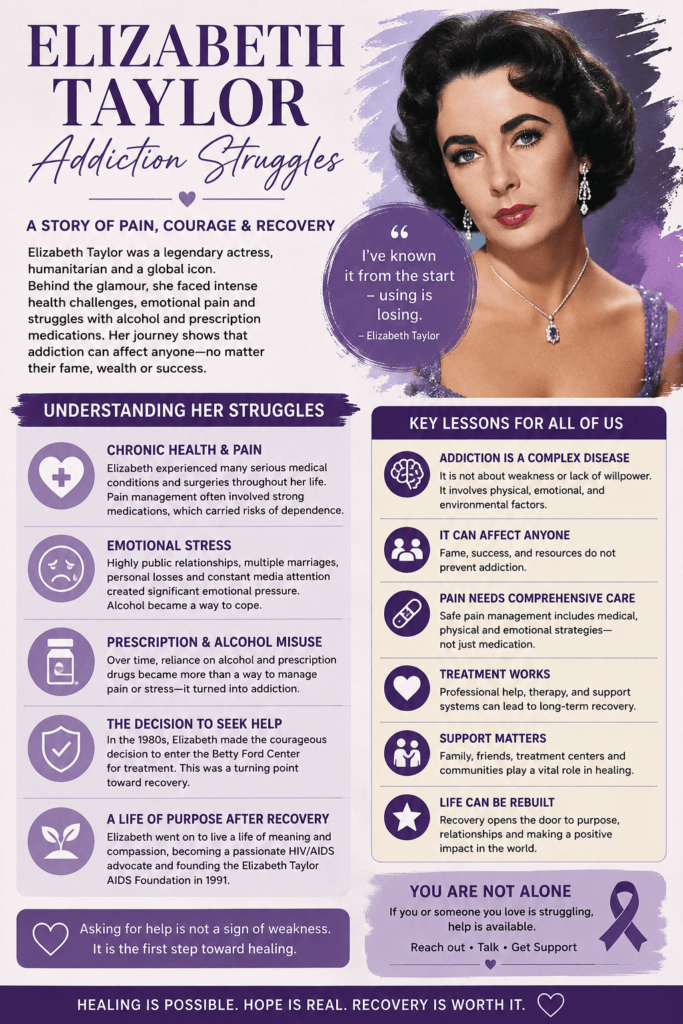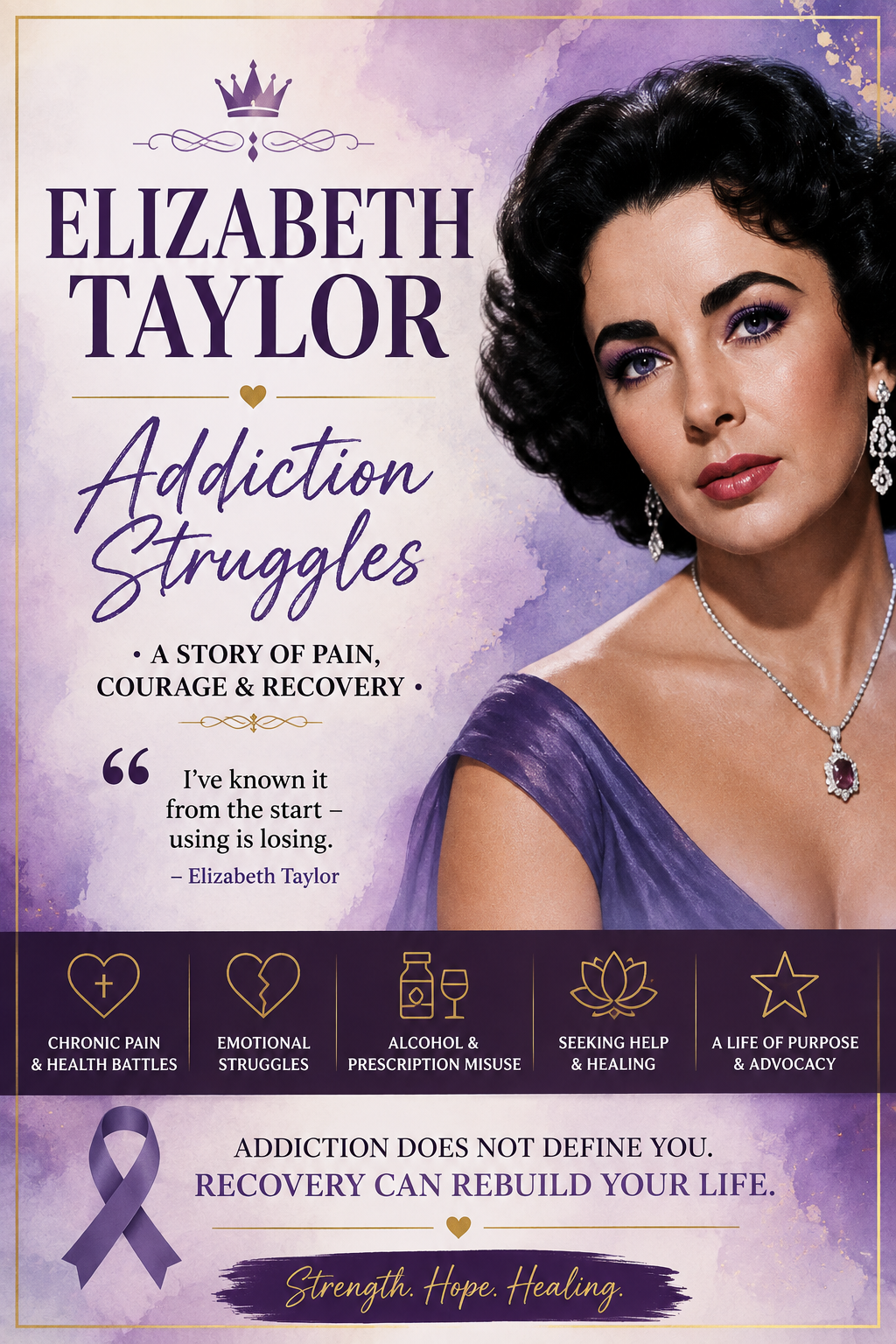
Elizabeth Taylor was one of Hollywood’s most celebrated actresses, but behind her extraordinary career and glamorous public image were significant personal and health challenges. Throughout her life, she experienced serious medical problems, chronic pain, multiple surgeries, emotional stress, and publicly documented struggles involving alcohol and prescription drugs. Eventually, Taylor sought professional treatment at the Betty Ford Center, demonstrating that addiction can affect anyone regardless of fame, wealth, talent, or success. Her experience provides an important opportunity to understand how physical pain, emotional distress, substance use, stigma, and the willingness to seek treatment can intersect in a person’s life.
Elizabeth Taylor’s Addiction Struggles and Recovery
Elizabeth Taylor was one of Hollywood’s most celebrated actresses, winning two Academy Awards and becoming an international icon. Behind her extraordinary career, however, she experienced chronic health problems, emotional turmoil, and struggles involving alcohol and prescription medications. Her experience is an important example of how substance use disorder can affect people regardless of wealth, success, or social status. Historical accounts report that Taylor struggled with alcohol and drugs and eventually received treatment at the Betty Ford Center during the 1980s.
Chronic Pain and Prescription Medication
Taylor experienced numerous illnesses, injuries, surgeries, and chronic health problems throughout her life. These included significant orthopedic problems and later hip replacements, among many other medical challenges. For someone living with persistent pain, medications may begin as legitimate medical treatment but can become problematic when tolerance, psychological dependence, or compulsive use develops.
Taylor’s story therefore highlights an important principle in addiction medicine: substance use disorder does not always begin with recreational drug use. Prescription medications can carry risks when they are used over long periods or in ways other than intended.
Alcohol and Emotional Stress
Taylor’s personal life was frequently scrutinized by the media. She experienced eight marriages to seven men, highly publicized relationships and divorces, significant health problems, and the pressures associated with decades of international fame.
Alcohol can temporarily reduce anxiety, loneliness, physical discomfort, or emotional distress. However, repeated reliance on alcohol as a coping mechanism can reinforce the brain’s reward pathways and gradually make drinking increasingly difficult to control. Taylor’s history illustrates why addiction is better understood as a complex interaction among biological vulnerability, psychological distress, environment, medical problems, and learned behavior rather than simply a failure of willpower.
Entering Treatment
A major turning point came when Taylor sought professional addiction treatment at the Betty Ford Center in the 1980s. Historical accounts describe her struggles with alcohol and drugs and her time receiving treatment there.
Seeking residential treatment was particularly significant during an era when addiction carried considerable stigma. For a celebrity of Taylor’s stature to acknowledge the need for treatment helped demonstrate that receiving professional care for addiction should not be viewed as shameful.
Treatment offered an opportunity to separate from substances, address underlying emotional and behavioral patterns, develop healthier coping strategies, and build a recovery-oriented support system.
Recovery Was More Than Stopping Substances
Taylor’s experience also demonstrates that recovery is broader than simply discontinuing alcohol or medications. Long-term recovery may involve identifying triggers, developing healthier responses to pain and stress, establishing supportive relationships, maintaining appropriate medical care, and rebuilding a meaningful life.
Her later years became increasingly associated with humanitarian work rather than her addiction struggles. Following the AIDS crisis of the 1980s and the death of her friend Rock Hudson, Taylor became a prominent HIV/AIDS advocate. She helped raise substantial funds for research and services and established the Elizabeth Taylor AIDS Foundation in 1991.
Lessons From Elizabeth Taylor’s Story
Taylor’s experience provides several useful lessons for addiction education. Addiction can occur alongside legitimate medical treatment and chronic pain. Fame, financial resources, intelligence, and professional accomplishment do not provide immunity from substance use disorders. Emotional distress and physical pain can become powerful triggers for substance use, while stigma may discourage people from acknowledging that they need help.
Most importantly, asking for treatment is a sign that a person recognizes a serious problem and is willing to address it. Taylor continued living a productive and socially meaningful life after seeking treatment, demonstrating that a person’s addiction history does not have to define their entire identity or legacy.
Her story can therefore be presented not simply as a celebrity addiction story, but as an educational example of chronic pain, prescription medication exposure, alcohol misuse, treatment, recovery, and rebuilding purpose.
Self-Management Strategies to Understand Elizabeth Taylor’s Addiction Struggles
Using Elizabeth Taylor’s experiences as an educational case can help people understand how chronic pain, emotional distress, alcohol or medication misuse, and recovery may interact. Because historical accounts cannot tell us every clinical detail of her experience, the most useful approach is to focus on broader addiction and recovery principles rather than attempting to diagnose her retrospectively.
- Recognize the connection between physical pain and substance use. Taylor experienced significant medical problems and repeated surgeries during her lifetime. Her story can encourage people to examine whether alcohol or medications are being used primarily for their intended purpose or increasingly as a way to escape physical or emotional discomfort.
- Identify personal triggers. Stress, grief, loneliness, relationship difficulties, pain, insomnia, and major life changes can increase vulnerability to substance misuse. Keeping a journal of situations, emotions, cravings, and substance use can reveal patterns that might otherwise be overlooked.
- Monitor prescription medications carefully. Take medications exactly as prescribed and discuss increasing tolerance, cravings, sedation, early refills, or difficulty reducing a medication with a healthcare professional. Never abruptly discontinue medications that can produce dangerous withdrawal without appropriate medical guidance.
- Develop alternatives for managing pain. Depending on the medical condition, comprehensive pain management may include physical therapy, exercise, behavioral interventions, relaxation techniques, appropriate non-opioid medications, and specialist care. The goal is not simply to avoid medication but to find the safest, most effective approach.
- Avoid using alcohol as emotional medicine. Alcohol may temporarily reduce uncomfortable emotions while ultimately worsening sleep, mood, judgment, and coping. Recognizing thoughts such as “I need a drink to relax” can help identify when alcohol is becoming an emotional coping strategy.
- Learn the warning signs of substance use disorder. These can include loss of control, unsuccessful attempts to reduce use, cravings, tolerance, withdrawal, continued use despite consequences, and increasing amounts of time devoted to obtaining, using, or recovering from substances.
- Practice healthier emotional coping skills. Exercise, mindfulness, hobbies, structured routines, supportive relationships, adequate sleep, counseling, and stress-management techniques can provide alternatives to substance use.
- Challenge shame and stigma. Taylor’s decision to enter treatment during the 1980s provides an opportunity to recognize that needing addiction treatment is not incompatible with intelligence, accomplishment, or professional success. Substance use disorders are treatable health conditions.
- Seek professional help early. Waiting for severe consequences is unnecessary. A primary-care clinician, addiction specialist, therapist, or other qualified professional can evaluate substance use and recommend appropriate treatment.
- Build purpose into recovery. Taylor’s later humanitarian advocacy illustrates a broader recovery principle: meaningful activities can help people develop an identity that extends beyond past substance problems. Volunteering, relationships, creative activities, education, spirituality, and advocacy can strengthen a sense of purpose.
Key Takeaway
Elizabeth Taylor’s experience can be used to understand that addiction often develops within a complicated combination of physical pain, emotional stress, medication exposure, coping behaviors, and environmental pressures. Effective self-management means recognizing these factors early, monitoring substance use honestly, developing healthier coping strategies, accepting professional support when necessary, and creating a meaningful life that supports continued recovery.
Family Support Strategies to Understand Elizabeth Taylor’s Addiction Struggles
The addiction and recovery experiences publicly associated with Elizabeth Taylor can help families understand how substance problems may intersect with chronic pain, emotional distress, prescription medications, alcohol use, relationships, and intense life pressures. Families can use these broader lessons without assuming that every historical detail of her private medical experience is known.
- Learn about addiction as a health condition. Families should understand how repeated substance use can affect brain systems involved in reward, motivation, stress, and self-control. Education can replace blame and judgment with more constructive responses.
- Recognize the role of chronic pain. Taylor experienced numerous health problems and surgeries. Families supporting someone with chronic pain should understand that legitimate medical treatment and substance-use risk can coexist. Pain complaints should be taken seriously, and medications should be monitored appropriately with healthcare professionals.
- Watch for behavioral changes. Increasing isolation, mood changes, intoxication, medication misuse, unexplained prescription shortages, declining responsibilities, or continued substance use despite consequences may indicate that additional help is needed.
- Communicate without shaming. Statements such as “I’m concerned about how much you’re drinking lately” are generally more productive than accusations or labels. Calm, specific conversations can make it easier for someone to acknowledge difficulties and consider treatment.
- Understand emotional triggers. Relationship problems, grief, loneliness, occupational pressure, physical illness, and stress may contribute to substance use. Families can encourage healthier ways to manage these experiences rather than focusing exclusively on stopping substance use.
- Encourage professional treatment. Taylor’s decision to seek treatment illustrates an important family lesson: addiction may require professional intervention. Families can help locate qualified clinicians, treatment programs, counseling, or recovery resources while recognizing that they cannot personally provide addiction treatment.
- Avoid enabling behaviors. Supporting someone does not mean protecting them from every consequence of substance use. Providing money for substances, making excuses, repeatedly covering missed responsibilities, or ignoring dangerous behavior can unintentionally allow the problem to continue.
- Establish healthy boundaries. Family members can clearly communicate which behaviors they will and will not accept. Boundaries should focus on safety and personal responsibility rather than punishment or attempts to control another person.
- Support recovery rather than demanding perfection. Recovery can involve setbacks, particularly with chronic conditions. Families can recognize progress, encourage continued treatment, and respond to recurrence of substance use as a signal that the recovery plan may need reassessment.
- Protect the family’s own well-being. Addiction affects the entire family system. Counseling, family therapy, peer support groups, exercise, adequate sleep, social connections, and personal interests can help relatives maintain their physical and emotional health.
Family Takeaway
Elizabeth Taylor’s experience provides families with an important message: addiction can affect highly successful people and can exist alongside legitimate medical problems, emotional distress, and complicated life circumstances. Families are most helpful when they combine compassion with boundaries, encourage evidence-based treatment, avoid enabling harmful behaviors, and care for their own well-being. Recovery is ultimately the individual’s responsibility, but informed and consistent family support can create an environment that makes recovery easier to pursue.
Community Resource Strategies to Understand Elizabeth Taylor’s Addiction Struggles
The experiences publicly associated with Elizabeth Taylor can be used as a community-education example of how substance misuse may intersect with chronic pain, prescription medications, alcohol, emotional stress, stigma, and recovery. Community resources can turn these lessons into practical opportunities for prevention, treatment, and long-term support.
- Provide community addiction education. Hospitals, libraries, schools, universities, and community organizations can offer educational programs explaining substance use disorders, dependence, tolerance, withdrawal, overdose risk, treatment, and recovery. Celebrity experiences should be presented carefully, distinguishing documented facts from speculation.
- Expand access to addiction screening. Primary-care clinics, behavioral-health centers, and community health programs can routinely screen for unhealthy alcohol and drug use. Early identification may allow intervention before serious medical, psychological, occupational, or relationship consequences develop.
- Integrate pain management and addiction services. Taylor’s extensive history of medical problems provides an opportunity to discuss the relationship between chronic pain and substance-use risk. Communities can promote coordinated care among primary care clinicians, pain specialists, pharmacists, behavioral health professionals, and addiction specialists.
- Improve prescription medication education. Pharmacies and healthcare organizations can educate patients on taking medications exactly as prescribed, recognizing adverse effects, avoiding dangerous drug interactions, safely storing medications, and properly disposing of unused medications.
- Increase access to evidence-based treatment. Communities should maintain clear pathways to outpatient treatment, residential programs when appropriate, counseling, peer recovery services, and medications for substance use disorders when clinically indicated. Treatment should be individualized rather than based on a single approach.
- Develop peer-support networks. Recovery groups and peer recovery specialists can provide encouragement from people with lived experience. Options may include Alcoholics Anonymous, SMART Recovery, and other local recovery organizations so individuals can choose support that fits their needs.
- Provide resources for families. Addiction frequently affects the entire household. Community programs can offer family education, counseling, support groups, and training in communication, boundaries, enabling behaviors, relapse warning signs, and appropriate responses to emergencies.
- Reduce addiction stigma. Public-health campaigns can emphasize that seeking treatment should not be viewed as a personal or professional failure. Taylor’s highly public decision to receive addiction treatment during the 1980s can be used to discuss how openness about treatment can challenge stigma.
- Create recovery-friendly communities. Recovery support extends beyond clinical treatment. Employment assistance, stable housing, transportation, educational opportunities, recreational programs, peer mentoring, and meaningful volunteer activities can help people rebuild stability and a sense of purpose.
- Promote accurate media literacy. Celebrity addiction stories can become sensationalized. Community educators should use reputable biographies, historical records, interviews, and health information while avoiding unsupported claims about a person’s diagnoses, medications, or private treatment.
Community Takeaway
Elizabeth Taylor’s experience can help communities recognize that addiction does not discriminate according to fame, wealth, talent, or achievement. Effective community strategies connect prevention, early screening, behavioral healthcare, appropriate pain management, addiction treatment, family education, peer support, and long-term recovery resources. The larger lesson is not simply that a famous person struggled with substances, but that people experiencing addiction deserve accessible treatment, dignity, and opportunities to build meaningful lives in recovery.
Frequently Asked Questions
Here are some common questions:
1. Did Elizabeth Taylor struggle with addiction?
Yes. Elizabeth Taylor publicly acknowledged problems involving alcohol and prescription drugs and sought professional treatment. Her experience became a well-known example of addiction affecting someone despite extraordinary fame, wealth, and professional success.
2. What substances did Elizabeth Taylor struggle with?
Historical accounts commonly describe problematic use of alcohol and prescription medications. When discussing her history educationally, it is important not to speculate about specific diagnoses, medications, or patterns of use that were never publicly confirmed.
3. Did chronic pain contribute to her substance problems?
Taylor experienced numerous illnesses, injuries, surgeries, and chronic health problems. These circumstances required extensive medical care and exposed her to prescription medications. Her experience illustrates how chronic pain and long-term medication use can sometimes increase vulnerability to problematic substance use, although addiction usually involves multiple interacting factors.
4. Did emotional stress play a role?
Taylor lived under intense public scrutiny and experienced complicated relationships, losses, health problems, and the pressures of international celebrity. Emotional distress can contribute to unhealthy substance use when alcohol or medications become ways of coping with difficult feelings.
5. Where did Elizabeth Taylor receive addiction treatment?
Taylor received treatment at the Betty Ford Center in California during the 1980s. Her willingness to enter treatment was particularly notable during a period when addiction carried substantial social stigma.
6. Why was her decision to seek treatment significant?
Taylor was one of the world’s most recognizable celebrities. Publicly acknowledging addiction and receiving treatment helped challenge the misconception that addiction happens only to certain types of people. Her experience demonstrated that seeking professional treatment should not be considered a sign of weakness.
7. Does prescription drug addiction always begin with misuse?
No. Some people first receive potentially addictive medications for legitimate medical reasons. Risk can increase with prolonged exposure, higher doses, certain individual vulnerabilities, or using medication for reasons other than prescribed. Most people who appropriately use prescribed medications do not automatically develop addiction.
8. What can families learn from Elizabeth Taylor’s experience?
Families can learn to recognize changes in substance use, communicate concerns without humiliation or blame, encourage professional assessment, establish healthy boundaries, avoid enabling harmful behaviors, and support recovery while also protecting their own well-being.
9. What can her experience teach people with chronic pain?
Chronic pain deserves appropriate treatment, but pain management should consider both benefits and risks. When potentially addictive medications are necessary, regular communication with healthcare professionals, medication monitoring, and comprehensive approaches to pain management can reduce risk.
10. Did recovery mean that all of Taylor’s problems disappeared?
No. Recovery does not eliminate life’s medical, emotional, or relationship challenges. Instead, recovery involves developing healthier ways to manage those challenges without returning to harmful patterns of substance use.
11. What did Elizabeth Taylor do later in her life?
Taylor became especially prominent for her humanitarian work surrounding HIV/AIDS. She helped establish the American Foundation for AIDS Research (amfAR) and later founded the Elizabeth Taylor AIDS Foundation. Her advocacy became an important part of her later legacy.
12. What is the most important lesson from Elizabeth Taylor’s addiction story?
Her experience demonstrates that addiction can affect anyone and often exists within a complicated combination of physical illness, pain, emotional distress, environmental pressures, and substance exposure. It also demonstrates that seeking treatment can become a turning point rather than the end of someone’s story.
Conclusion
Elizabeth Taylor’s addiction struggles represent only one part of a much larger life and legacy. Her decision to seek professional help demonstrates the importance of recognizing problematic substance use and accepting treatment rather than allowing shame or public expectations to prevent recovery. Her experience also reminds us that addiction is a complex health condition that may develop alongside chronic pain, psychological distress, medical treatment, and difficult life circumstances. Taylor went on to devote significant energy to humanitarian causes, particularly HIV/AIDS advocacy, illustrating how a person’s past struggles do not have to define their future. Her story ultimately offers an important message about treatment, resilience, purpose, and the possibility of rebuilding life beyond addiction.
Video: Elizabeth Taylor’s Journey to Sobriety: A Lesson in Courage #Sobriety #MentalHealth