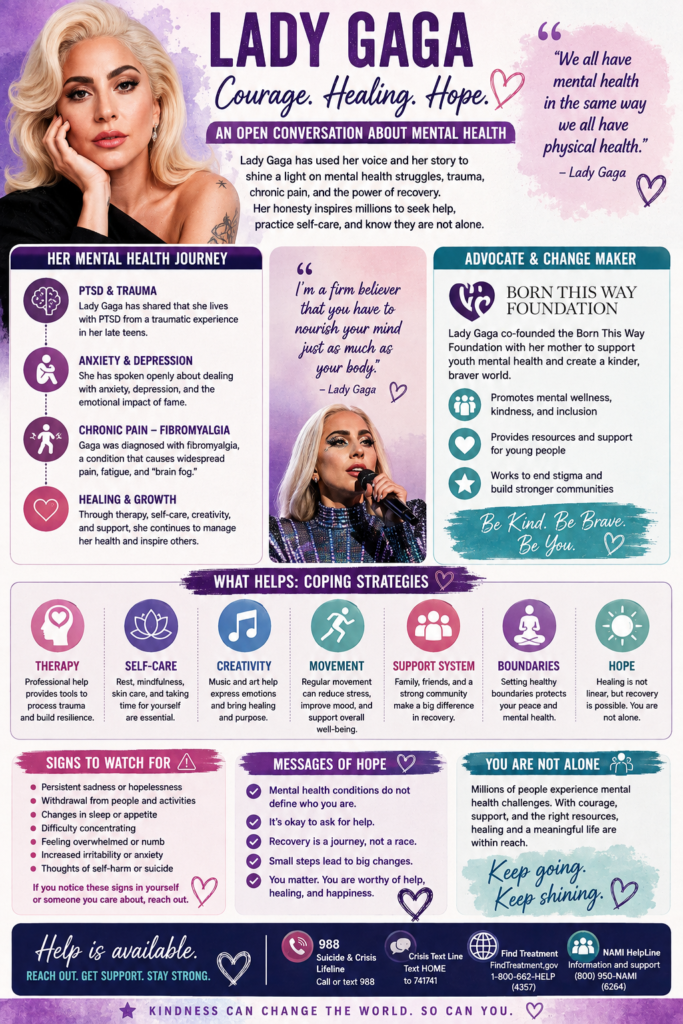
Lady Gaga has become one of the most influential voices in raising awareness about mental health by openly sharing her experiences with post-traumatic stress disorder (PTSD), the effects of trauma, anxiety, depression, and chronic pain associated with fibromyalgia. Throughout her career, she has discussed how traumatic experiences affected both her emotional and physical well-being while emphasizing the importance of seeking professional help and practicing self-care. By speaking candidly about her mental health journey, Lady Gaga has helped reduce stigma, encouraged conversations about emotional wellness, and demonstrated that mental health conditions can affect anyone regardless of fame, talent, or success. Her advocacy reminds us that recovery is an ongoing process supported by evidence-based treatment, compassion, resilience, and strong personal and community support systems.
Lady Gaga’s Mental Health Struggles
Lady Gaga has been open about her mental health experiences, using her platform to increase awareness, reduce stigma, and encourage people to seek professional help. Although she has discussed living with mental health conditions, it is important to recognize that her experiences are personal and should not be generalized to everyone. Her story illustrates that mental health challenges can affect people from all backgrounds and that recovery often involves ongoing treatment, support, and self-care.
Early Experiences
Lady Gaga has shared that she experienced significant emotional challenges during adolescence and early adulthood. She has spoken publicly about:
- Being bullied during her school years.
- Feeling isolated and misunderstood.
- Experiencing intense pressure while building her career.
- Surviving sexual assault at age 19, which she has described as a traumatic event that affected her mental health.
These experiences contributed to emotional distress and highlight how trauma can have long-lasting effects on psychological well-being.
Post-Traumatic Stress Disorder (PTSD)
Lady Gaga has publicly stated that she lives with post-traumatic stress disorder (PTSD) related to past trauma.
PTSD may include symptoms such as:
- Intrusive memories or flashbacks.
- Nightmares.
- Anxiety and hypervigilance.
- Emotional distress when reminded of traumatic events.
- Difficulty sleeping.
- Avoidance of trauma-related reminders.
Not everyone who experiences trauma develops PTSD, but early recognition and treatment can improve recovery.
Chronic Pain and Mental Health
Lady Gaga has also discussed living with fibromyalgia, a chronic condition characterized by widespread musculoskeletal pain, fatigue, sleep disturbances, and cognitive difficulties.
Chronic pain and mental health often influence one another:
- Persistent pain can increase the risk of anxiety and depression.
- Stress and emotional distress may worsen pain symptoms.
- Comprehensive treatment often addresses both physical and emotional health.
Seeking Treatment
Lady Gaga has emphasized the importance of seeking professional help for mental health concerns. She has described using a combination of:
- Mental health counseling.
- Medical care.
- Self-care practices.
- Strong social support.
- Stress-management techniques.
Her openness reinforces that seeking treatment is a sign of strength rather than weakness.
Advocacy Through the Born This Way Foundation
Lady Gaga co-founded the Born This Way Foundation with her mother, Cynthia Germanotta.
The foundation focuses on:
- Youth mental health.
- Kindness and inclusion.
- Emotional well-being.
- Anti-bullying initiatives.
- Building supportive communities.
- Providing mental health education and resources.
Its mission is to empower young people and promote environments where they feel safe seeking support.
Reducing Mental Health Stigma
Throughout interviews, documentaries, and public appearances, Lady Gaga has encouraged honest conversations about:
- Depression.
- Anxiety.
- Trauma.
- PTSD.
- Emotional wellness.
- Seeking therapy and medical care.
By discussing her own experiences, she has helped normalize mental health treatment and challenged misconceptions that emotional struggles represent personal weakness.
Lessons From Lady Gaga’s Story
Her experiences highlight several important principles:
- Mental health disorders can affect anyone regardless of success or fame.
- Trauma can have lasting psychological and physical effects.
- Early intervention improves recovery outcomes.
- Mental health treatment is individualized and may include therapy, medication, lifestyle changes, or a combination of approaches.
- Supportive relationships can play an important role in healing.
- Recovery is often an ongoing process rather than a single event.
Mental Health Strategies Reflected in Her Journey
Lady Gaga’s public discussions emphasize strategies such as:
- Seeking professional treatment.
- Practicing self-care.
- Building supportive relationships.
- Setting healthy boundaries.
- Speaking openly about mental health.
- Advocating for others experiencing similar challenges.
These strategies align with evidence-based approaches that encourage long-term emotional well-being.
Conclusion
Lady Gaga’s willingness to discuss trauma, PTSD, chronic pain, and emotional health has helped increase public understanding of mental illness and reduce stigma surrounding treatment. Her experiences demonstrate that mental health conditions can affect anyone and that seeking professional care, maintaining supportive relationships, and practicing self-care are important components of recovery. Through her advocacy, music, and the Born This Way Foundation, Lady Gaga continues to encourage compassion, resilience, and greater awareness of mental health, inspiring many individuals to seek help and prioritize their well-being.
Self-Management Strategies to Understand Lady Gaga’s Mental Health Struggles
Lady Gaga has spoken openly about living with post-traumatic stress disorder (PTSD), the emotional effects of trauma, anxiety, depression, and the challenges of managing chronic pain associated with fibromyalgia. While every person’s experience with mental health is unique, her story demonstrates the importance of recognizing emotional distress, seeking professional treatment, and developing healthy coping strategies. The following self-management strategies reflect evidence-based approaches that can help individuals facing similar mental health challenges.
1. Learn About Mental Health Conditions
Educate yourself about mental health disorders such as PTSD, anxiety, depression, and chronic pain conditions like fibromyalgia. Understanding how these conditions affect the brain and body can reduce stigma, improve self-awareness, and encourage appropriate treatment. Learning that mental illness is a medical condition—not a personal weakness—can promote hope and self-compassion.
2. Recognize Personal Warning Signs
Pay attention to changes in your emotional, physical, and behavioral health. Common warning signs may include:
- Persistent sadness or hopelessness.
- Increased anxiety or excessive worry.
- Irritability or mood changes.
- Difficulty sleeping or sleeping too much.
- Fatigue or loss of energy.
- Loss of interest in enjoyable activities.
- Difficulty concentrating.
- Avoiding people or social situations.
- Intrusive memories or emotional distress after trauma.
Recognizing these signs early allows you to seek support before symptoms worsen.
3. Seek Professional Help Early
If symptoms begin interfering with work, school, relationships, or daily functioning, consult a qualified healthcare professional. Treatment may include:
- Individual psychotherapy.
- Trauma-focused therapy for PTSD.
- Cognitive Behavioral Therapy (CBT).
- Medication when appropriate.
- Stress-management counseling.
- Treatment for chronic pain if needed.
Early intervention often improves recovery and quality of life.
4. Develop Healthy Coping Skills
Replace unhealthy coping mechanisms with positive strategies such as:
- Deep breathing exercises.
- Mindfulness meditation.
- Progressive muscle relaxation.
- Journaling.
- Listening to music.
- Art or creative expression.
- Spending time in nature.
- Practicing gratitude.
Healthy coping skills can reduce stress and improve emotional resilience.
5. Prioritize Physical Health
Mental and physical health are closely connected. Support your well-being by:
- Exercising regularly within your abilities.
- Eating balanced, nutritious meals.
- Staying hydrated.
- Maintaining consistent sleep routines.
- Limiting alcohol and avoiding illicit drugs.
- Following treatment recommendations for chronic medical conditions.
Healthy lifestyle habits can improve mood, energy, and overall functioning.
6. Build a Strong Support Network
Connect with people who provide encouragement and understanding, including:
- Family members.
- Trusted friends.
- Mental health professionals.
- Support groups.
- Peer mentors.
- Faith or community organizations, if meaningful to you.
Supportive relationships help reduce isolation and promote recovery.
7. Practice Self-Compassion
Mental health recovery is rarely a straight path. Avoid harsh self-criticism when experiencing setbacks. Instead:
- Acknowledge your progress.
- Celebrate small achievements.
- Accept that healing takes time.
- Treat yourself with kindness and patience.
Self-compassion supports resilience and long-term emotional health.
8. Learn Healthy Stress Management
Stress can worsen symptoms of anxiety, depression, PTSD, and chronic pain. Healthy stress-management techniques include:
- Time management.
- Relaxation exercises.
- Yoga or gentle stretching.
- Mindfulness practices.
- Taking breaks when overwhelmed.
- Maintaining realistic expectations.
Managing stress consistently can reduce symptom flare-ups.
9. Create a Personalized Wellness Plan
Develop a written plan that includes:
- Daily self-care activities.
- Personal recovery goals.
- Healthy coping strategies.
- Emergency contacts.
- Warning signs that symptoms are worsening.
- Scheduled healthcare appointments.
- Medication reminders, if prescribed.
A structured wellness plan provides guidance during difficult periods.
10. Set Healthy Boundaries
Protect your mental well-being by learning to:
- Say no when necessary.
- Limit exposure to unhealthy relationships.
- Reduce unnecessary commitments.
- Take breaks from stressful environments.
- Prioritize activities that promote emotional wellness.
Healthy boundaries reduce emotional exhaustion and improve overall well-being.
11. Use Creative Expression
Lady Gaga has often described music and creativity as meaningful parts of her life. Creative activities can help many people express emotions in healthy ways. Consider:
- Writing.
- Painting.
- Playing music.
- Singing.
- Photography.
- Dance.
- Crafting.
Creative expression may complement professional treatment by providing healthy emotional outlets.
12. Stay Hopeful and Continue Learning
Recovery is an ongoing process. Continue learning about mental health, trauma, resilience, and self-care through reliable educational resources. Remaining informed empowers you to make healthy decisions and adapt your wellness plan as your needs evolve.
Conclusion
Lady Gaga’s openness about PTSD, trauma, chronic pain, and emotional well-being demonstrates that mental health challenges can affect anyone, regardless of success or public recognition. Her experiences emphasize the importance of seeking professional treatment, developing healthy coping skills, maintaining supportive relationships, and prioritizing self-care. By recognizing early warning signs, practicing stress management, creating a personalized wellness plan, and seeking help when needed, individuals can strengthen resilience, improve their quality of life, and move toward long-term emotional wellness and recovery.
Family Support Strategies to Understand Lady Gaga’s Mental Health Struggles
Lady Gaga has publicly discussed living with post-traumatic stress disorder (PTSD), the effects of trauma, anxiety, depression, and chronic pain associated with fibromyalgia. Her experiences illustrate how mental health conditions can affect every aspect of a person’s life and highlight the important role families play in providing understanding, encouragement, and practical support. While every individual’s mental health journey is unique, the following family support strategies are based on evidence-based principles that can help families better support loved ones facing similar challenges.
1. Learn About Mental Health Conditions
Family members should educate themselves about PTSD, anxiety, depression, trauma, and chronic pain conditions such as fibromyalgia. Understanding how these conditions affect emotions, behavior, thinking, and physical health can reduce misconceptions and foster greater empathy. Recognizing that mental illness is a medical condition—not a personal weakness—helps create a more supportive home environment.
2. Understand the Impact of Trauma
Trauma can have lasting effects on both emotional and physical health. Families should recognize that trauma responses may include:
- Anxiety or panic.
- Emotional numbness.
- Irritability.
- Sleep disturbances.
- Difficulty concentrating.
- Avoidance of reminders of the traumatic event.
- Hypervigilance or feeling constantly on edge.
Responding with patience rather than judgment can help loved ones feel safer and more supported.
3. Encourage Open and Compassionate Communication
Create a family environment where loved ones feel comfortable discussing their mental health without fear of criticism or shame. Helpful communication strategies include:
- Listening without interrupting.
- Asking open-ended questions.
- Validating emotions without minimizing them.
- Avoiding statements such as “just get over it.”
- Respecting personal boundaries while remaining available.
Open communication strengthens trust and encourages individuals to seek help when needed.
4. Encourage Professional Treatment
Families should support evidence-based treatment by encouraging:
- Regular therapy appointments.
- Medication adherence when prescribed.
- Medical follow-up for chronic health conditions.
- Participation in support groups when appropriate.
- Collaboration with qualified healthcare professionals.
Recovery often requires ongoing care, and family encouragement can improve treatment engagement.
5. Recognize Early Warning Signs
Family members should watch for changes that may indicate worsening mental health, such as:
- Persistent sadness.
- Increased anxiety.
- Withdrawal from family or friends.
- Changes in appetite or sleep.
- Increased irritability.
- Difficulty completing daily responsibilities.
- Expressions of hopelessness.
- Significant decline in physical health.
Recognizing these changes early allows families to encourage timely professional support.
6. Support Healthy Daily Routines
Families can promote emotional wellness by encouraging:
- Regular sleep schedules.
- Balanced nutrition.
- Physical activity appropriate to the person’s abilities.
- Stress-management techniques.
- Participation in enjoyable family activities.
- Time for rest and relaxation.
Healthy routines support both mental and physical well-being.
7. Respect Individual Recovery
Every person’s recovery journey is different. Avoid comparing your loved one to celebrities or other individuals with mental health conditions. Instead, support personalized treatment goals developed with healthcare professionals and celebrate individual progress, regardless of how quickly it occurs.
8. Help Reduce Stress at Home
Stress can worsen symptoms of PTSD, anxiety, depression, and chronic pain. Families can create a calmer environment by:
- Maintaining predictable routines.
- Resolving conflicts respectfully.
- Sharing household responsibilities.
- Encouraging healthy work-life balance.
- Promoting relaxation and positive family interactions.
A supportive home environment can contribute to emotional stability.
9. Encourage Creative Expression
Creative activities can complement professional treatment by providing healthy emotional outlets. Families can encourage interests such as:
- Music.
- Art.
- Writing.
- Photography.
- Dance.
- Crafts.
- Other hobbies that promote self-expression and enjoyment.
These activities may help reduce stress and improve emotional well-being.
10. Know How to Respond During a Mental Health Crisis
Families should learn when immediate professional help is needed. If a loved one expresses suicidal thoughts, talks about self-harm, or appears unable to care for themselves safely, seek emergency mental health services or contact emergency responders without delay. Early intervention during a crisis can save lives.
11. Utilize Community Resources
Families can strengthen their ability to provide support by participating in:
- Family education programs.
- Mental health workshops.
- Community support groups.
- Counseling services.
- Peer-led family support organizations.
- Educational programs offered by mental health advocacy organizations.
These resources reduce isolation and improve understanding of mental illness.
12. Practice Self-Care as a Family Member
Supporting someone with mental health challenges can be emotionally demanding. Family members should:
- Maintain their own physical and emotional health.
- Seek counseling if needed.
- Participate in support groups.
- Continue hobbies and personal relationships.
- Set healthy boundaries to prevent caregiver burnout.
Taking care of yourself allows you to provide more effective, sustainable support.
Conclusion
Lady Gaga’s openness about trauma, PTSD, chronic pain, and emotional health demonstrates that mental health conditions are complex medical issues that often require long-term care and support. Families can make a meaningful difference by educating themselves, encouraging professional treatment, communicating with compassion, recognizing early warning signs, supporting healthy routines, and creating a safe, understanding home environment. By working alongside healthcare professionals and respecting each person’s unique recovery journey, families can help loved ones build resilience, improve emotional well-being, and achieve a better quality of life.
Community Resource Strategies to Understand Lady Gaga’s Mental Health Struggles
Lady Gaga has used her public platform to increase awareness of post-traumatic stress disorder (PTSD), trauma, anxiety, depression, chronic pain associated with fibromyalgia, and the importance of seeking mental health care. Her openness demonstrates that mental health challenges can affect people regardless of age, career success, or social status. Communities play an essential role in reducing stigma, improving access to treatment, and creating supportive environments where individuals can receive evidence-based care. The following community resource strategies can help individuals and families better understand mental health challenges similar to those Lady Gaga has discussed.
1. Expand Public Mental Health Education
Community organizations can offer educational programs that explain:
- Common mental health disorders such as PTSD, anxiety, and depression.
- The effects of trauma on the brain and body.
- The relationship between chronic pain and mental health.
- Early warning signs of emotional distress.
- Evidence-based treatment options.
- The importance of early intervention.
Increasing mental health literacy helps reduce stigma and encourages individuals to seek help sooner.
2. Improve Access to Mental Health Services
Communities should support accessible behavioral healthcare by expanding:
- Community mental health centers.
- Outpatient counseling services.
- Psychiatric care.
- Trauma-informed therapy.
- Telehealth mental health services.
- Crisis stabilization programs.
Reducing barriers such as cost, transportation, and long wait times increases access to appropriate treatment.
3. Promote Trauma-Informed Care
Healthcare systems, schools, workplaces, and community organizations should adopt trauma-informed approaches that recognize the lasting effects of traumatic experiences. Trauma-informed care emphasizes:
- Physical and emotional safety.
- Respect and empathy.
- Collaboration with individuals receiving care.
- Empowerment and choice.
- Avoiding practices that may unintentionally retraumatize individuals.
These principles improve patient engagement and treatment outcomes.
4. Support School and College Mental Health Programs
Educational institutions can help by providing:
- School counselors and psychologists.
- Mental health education.
- Anti-bullying initiatives.
- Stress-management workshops.
- Suicide prevention programs.
- Confidential referral systems for students needing specialized care.
These services promote early identification and intervention among young people.
5. Strengthen Peer Support Programs
Peer support services provide encouragement from individuals with lived experience. Communities can expand access to:
- Peer-led support groups.
- Recovery and wellness centers.
- Community wellness programs.
- Mentorship opportunities.
- Group therapy when appropriate.
Peer support reduces isolation and promotes hope during recovery.
6. Reduce Stigma Through Public Awareness Campaigns
Public education campaigns can emphasize that:
- Mental illness is a medical condition.
- Seeking therapy or medication is a sign of strength.
- Recovery is possible.
- Individuals should not be judged based on their diagnosis.
Open conversations inspired by public figures such as Lady Gaga can encourage more people to seek help.
7. Encourage Healthy Community Activities
Communities can support emotional wellness by providing opportunities for:
- Physical activity.
- Music and art programs.
- Volunteer service.
- Community gardens.
- Mindfulness and meditation classes.
- Social events that encourage healthy relationships and inclusion.
Participation in positive community activities strengthens resilience and reduces social isolation.
8. Improve Crisis Response Services
Communities should ensure access to:
- Mobile crisis response teams.
- Crisis stabilization units.
- Emergency psychiatric services.
- Suicide prevention resources.
- Behavioral health crisis hotlines.
Rapid access to crisis services can prevent mental health emergencies from becoming life-threatening.
9. Promote Workplace Mental Health Programs
Employers can contribute to mental wellness by offering:
- Employee Assistance Programs (EAPs).
- Mental health education.
- Flexible scheduling for treatment appointments.
- Stress-management programs.
- Policies that reduce stigma and encourage help-seeking.
Supportive workplaces improve employee well-being and productivity.
10. Support Family Education Programs
Communities should provide educational opportunities that help families understand:
- PTSD and trauma.
- Depression and anxiety.
- Healthy communication skills.
- Crisis response strategies.
- Available treatment resources.
- Ways to provide effective emotional support.
Educated families are better prepared to assist loved ones while maintaining their own well-being.
11. Encourage Research and Professional Training
Healthcare professionals should receive continuing education on:
- Trauma-informed care.
- PTSD treatment.
- Suicide prevention.
- Integrated behavioral healthcare.
- Chronic pain management.
- Cultural competence.
- Evidence-based psychotherapies.
Ongoing research and training improve the quality of care available in communities.
12. Foster Collaboration Among Community Organizations
Successful mental health support depends on partnerships among:
- Healthcare providers.
- Mental health professionals.
- Schools and universities.
- Public health departments.
- Nonprofit organizations.
- Faith-based organizations.
- Employers.
- Community wellness centers.
- Law enforcement and first responders.
Coordinated systems of care improve access to services and provide more comprehensive support for individuals and families.
Conclusion
Lady Gaga’s willingness to speak openly about trauma, PTSD, chronic pain, and emotional health has helped increase public awareness of mental illness and encouraged more compassionate conversations about seeking treatment. Communities can build upon this awareness by expanding mental health education, improving access to evidence-based care, supporting trauma-informed services, strengthening peer support, reducing stigma, and fostering collaboration across healthcare, educational, and community organizations. These strategies create environments where individuals experiencing similar mental health challenges can access the resources, support, and hope needed to improve their well-being and achieve long-term recovery.
Frequently Asked Questions
Here are some common questions:
1. Who is Lady Gaga?
Lady Gaga is an American singer, songwriter, actor, and philanthropist. In addition to her music and acting career, she has become a leading advocate for mental health awareness and reducing the stigma surrounding mental illness.
2. What mental health conditions has Lady Gaga publicly discussed?
Lady Gaga has publicly shared that she lives with:
- Post-traumatic stress disorder (PTSD)
- Anxiety
- Depression
She has also discussed the emotional effects of trauma and the challenges of managing chronic pain associated with fibromyalgia.
3. What caused Lady Gaga’s PTSD?
Lady Gaga has stated that her PTSD developed after surviving a traumatic sexual assault at age 19. While not everyone who experiences trauma develops PTSD, traumatic events are a major risk factor for the condition.
4. What is PTSD?
Post-traumatic stress disorder (PTSD) is a mental health condition that may develop after experiencing or witnessing a traumatic event. Symptoms can include intrusive memories, nightmares, avoidance of reminders of the trauma, heightened anxiety, emotional distress, and difficulty sleeping.
5. What is fibromyalgia, and how is it related to mental health?
Fibromyalgia is a chronic condition that causes widespread pain, fatigue, sleep disturbances, and cognitive difficulties. Chronic pain and mental health often influence one another, with persistent pain increasing the risk of anxiety and depression, while emotional stress can worsen pain symptoms.
6. How has Lady Gaga managed her mental health?
Lady Gaga has emphasized the importance of:
- Professional mental healthcare
- Therapy
- Medical treatment
- Self-care
- Strong social support
- Healthy coping strategies
- Creative expression through music and art
She has encouraged individuals to seek personalized care that meets their unique needs.
7. What is the Born This Way Foundation?
Born This Way Foundation is a nonprofit organization co-founded by Lady Gaga and her mother, Cynthia Germanotta. The foundation promotes youth mental health, kindness, inclusion, emotional well-being, and supportive communities while working to reduce stigma surrounding mental illness.
8. Why does Lady Gaga speak openly about mental health?
Lady Gaga has said that sharing her experiences helps reduce stigma, encourages people to seek treatment, and reminds others that they are not alone. Her openness has inspired many individuals to have honest conversations about emotional well-being.
9. Can trauma affect physical health?
Yes. Trauma can affect both mental and physical health. Some individuals experience chronic pain, sleep disturbances, fatigue, headaches, gastrointestinal symptoms, or increased stress-related illnesses following traumatic experiences.
10. What are common signs that someone may need mental health support?
Common warning signs include:
- Persistent sadness or hopelessness
- Excessive anxiety or worry
- Changes in sleep or appetite
- Difficulty concentrating
- Withdrawal from family and friends
- Loss of interest in enjoyable activities
- Increased irritability
- Feelings of being overwhelmed
- Thoughts of self-harm or suicide
Professional evaluation is recommended when symptoms interfere with daily life.
11. How can families support someone with mental health challenges?
Families can:
- Learn about mental health conditions.
- Listen without judgment.
- Encourage professional treatment.
- Maintain healthy communication.
- Respect boundaries.
- Support healthy daily routines.
- Participate in family therapy when appropriate.
- Practice self-care while supporting their loved one.
12. Can mental health conditions improve with treatment?
Yes. Many people experience significant improvement with evidence-based treatments such as psychotherapy, medication when appropriate, healthy lifestyle changes, stress management, and strong social support. Recovery is often an ongoing process rather than a single event.
13. What role does self-care play in mental health?
Self-care supports overall emotional well-being by helping individuals manage stress and improve resilience. Examples include:
- Regular exercise.
- Healthy nutrition.
- Adequate sleep.
- Mindfulness or meditation.
- Creative activities.
- Spending time with supportive people.
- Taking breaks when needed.
Self-care complements—but does not replace—professional treatment when mental illness is present.
14. How has Lady Gaga influenced mental health awareness?
Lady Gaga has helped normalize conversations about mental illness by openly discussing her own experiences, supporting research and advocacy through the Born This Way Foundation, and encouraging compassion, kindness, and early intervention.
15. Can successful people experience mental health disorders?
Yes. Mental health conditions can affect anyone regardless of age, profession, financial status, or level of success. Lady Gaga’s experiences demonstrate that mental illness does not discriminate and that seeking help is a sign of strength.
16. What should someone do if they recognize similar symptoms in themselves?
They should seek evaluation from a qualified healthcare professional, such as a primary care clinician, psychologist, psychiatrist, licensed therapist, or other mental health specialist. Early intervention often leads to better outcomes and improved quality of life.
17. What is the most important lesson from Lady Gaga’s story?
Lady Gaga’s journey reminds us that trauma and mental health challenges do not define a person’s future. With evidence-based treatment, supportive relationships, healthy coping strategies, and compassion, individuals can build resilience, manage their symptoms, and lead meaningful, fulfilling lives.
18. Why is Lady Gaga’s story important in mental health education?
Her openness has helped millions of people better understand PTSD, trauma, anxiety, depression, and chronic pain while reducing stigma around seeking treatment. By encouraging kindness, inclusion, and access to professional care, Lady Gaga has become an influential advocate for mental health awareness and a powerful example that healing and hope are possible.
Conclusion
Lady Gaga’s experiences highlight the complex relationship between trauma, mental health, and overall well-being while demonstrating that healing is possible with appropriate treatment and ongoing support. Her willingness to discuss PTSD, anxiety, depression, and chronic pain has inspired millions of people to seek help and has contributed to greater public understanding of mental illness. Through her advocacy, philanthropic work, and commitment to promoting kindness and mental wellness, Lady Gaga continues to encourage individuals and families to recognize the importance of early intervention, professional care, and supportive relationships. Her story serves as a powerful reminder that mental health challenges do not define a person’s potential and that recovery is built through hope, resilience, self-care, and access to compassionate, evidence-based care.
Video: A Star’s Struggle: Gaga’s Mental Health #LadyGaga #AnxietyAwareness