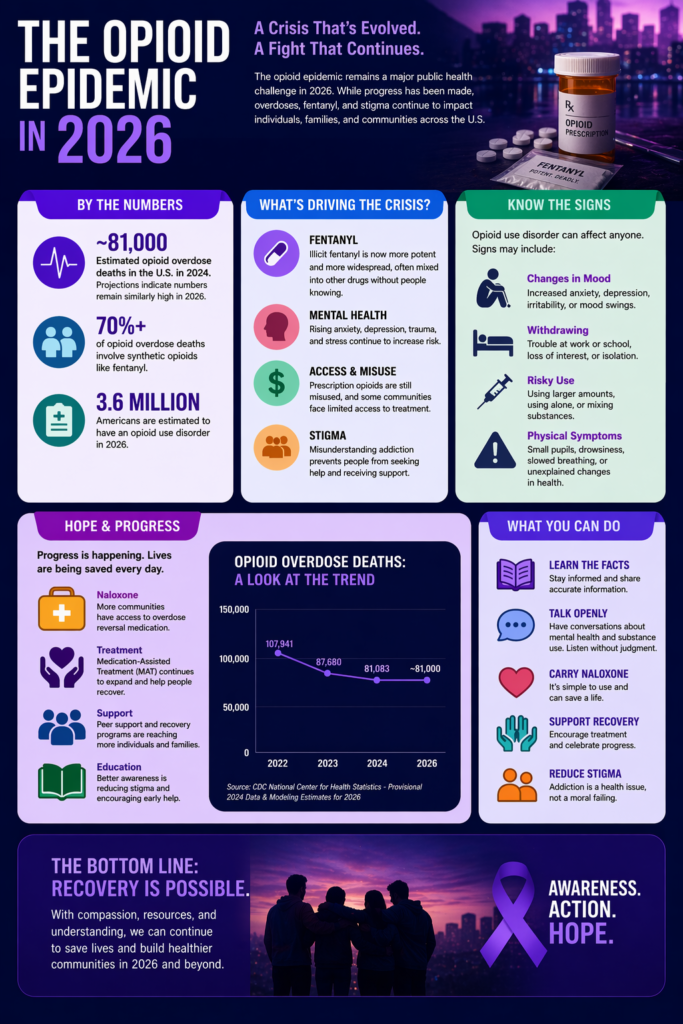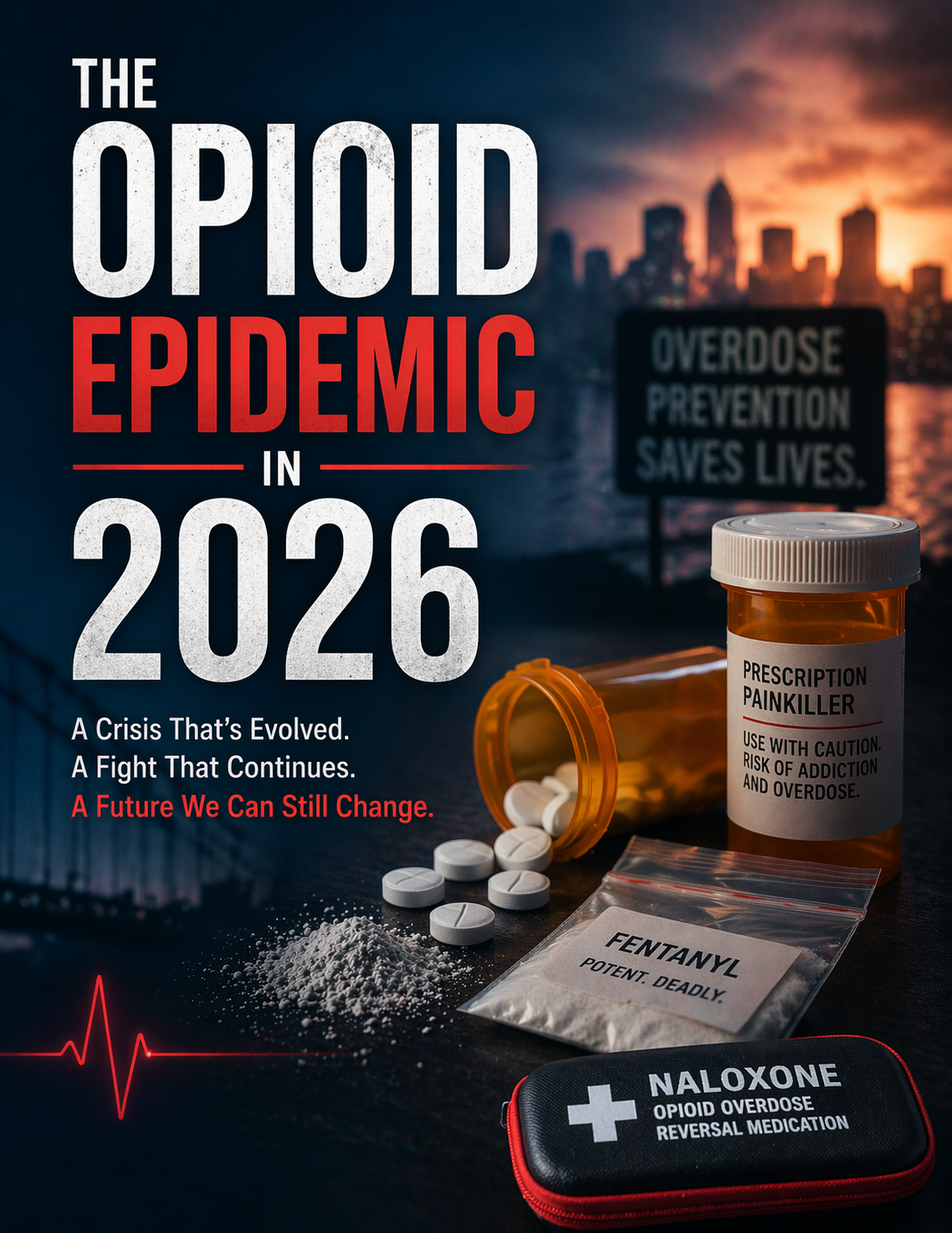
The opioid epidemic in 2026 remains a significant public health crisis, continuing to evolve in both complexity and impact. What began as a surge in prescription painkiller misuse has transformed into a far more dangerous landscape dominated by synthetic opioids like fentanyl. This shift has led to increased overdose rates and heightened risks, affecting individuals across all demographics. Beyond the substances themselves, the epidemic is deeply connected to mental health challenges, socioeconomic factors, and ongoing stigma. Understanding the current state of the crisis requires looking beyond surface-level assumptions and recognizing the multiple factors that contribute to its persistence.
The Opioid Epidemic in 2026: A Crisis Still Unfolding
Despite years of awareness, policy changes, and public health efforts, the opioid epidemic remains one of the most pressing crises in the United States in 2026. What began decades ago with prescription painkillers has evolved into a far more complex and dangerous landscape—dominated by synthetic opioids like fentanyl, rising overdose rates, and deep connections to mental health challenges.
Understanding the current state of the epidemic requires looking beyond statistics and recognizing the human, social, and psychological factors that continue to drive it.
A Changing Crisis
The opioid epidemic has shifted significantly over time. While early waves were largely driven by prescription medications, today’s crisis is fueled by highly potent synthetic opioids. Substances like fentanyl are often mixed into other drugs, sometimes without the user’s knowledge, dramatically increasing the risk of overdose.
This unpredictability makes the current phase of the epidemic especially dangerous. Even individuals who may not consider themselves opioid users can be exposed, highlighting how widespread and complex the issue has become.
The Role of Mental Health
One of the most critical—and often overlooked—aspects of the opioid epidemic is its connection to mental health. Many individuals struggling with opioid use disorder also experience conditions such as depression, anxiety, or trauma.
Substances are often used as a form of self-medication—an attempt to manage emotional pain or distress. However, while opioids may provide temporary relief, they ultimately worsen mental health over time, creating a cycle that is difficult to break without comprehensive support.
Stigma and Barriers to Treatment
Stigma continues to be a major barrier in addressing the opioid epidemic. Misconceptions—such as the belief that addiction is a moral failure—prevent many people from seeking help.
This stigma can also influence how communities and healthcare systems respond. When addiction is misunderstood, resources may be limited, and individuals may feel judged rather than supported.
Reducing stigma is essential for increasing access to treatment and encouraging early intervention.
Access to Treatment and Harm Reduction
In 2026, there has been progress in expanding treatment options, including medication-assisted treatment (MAT), counseling, and community-based programs. Harm reduction strategies—such as naloxone distribution and safe-use education—have also become more widely recognized as life-saving approaches.
However, access remains uneven. Rural areas, underserved communities, and marginalized populations often face significant barriers to care, including cost, transportation, and lack of available services.
The Impact on Families and Communities
The opioid epidemic affects far more than individuals—it impacts families, communities, and entire systems. Families often face emotional, financial, and psychological strain, while communities experience increased healthcare demands, economic challenges, and loss of life.
At the same time, communities have also become centers of resilience—developing support networks, advocacy groups, and recovery programs that offer hope and connection.
Prevention and Education
Prevention efforts are increasingly focused on education, early intervention, and addressing underlying risk factors such as mental health and trauma. Schools, healthcare providers, and community organizations play a key role in helping individuals understand the risks and seek help before substance use escalates.
Accurate information is critical—not only about opioids themselves, but also about the mental health challenges that often accompany them.
Why the Crisis Persists
The opioid epidemic continues because it is not driven by a single cause. It is the result of overlapping factors:
- Biological vulnerability
- Mental health conditions
- Social and economic stressors
- Availability of potent substances
Addressing only one aspect is not enough. A comprehensive approach is required—one that integrates healthcare, education, policy, and community support.
Final Thought
The opioid epidemic in 2026 is not a problem of the past—it is an ongoing crisis that continues to evolve. While progress has been made, much work remains to be done.
Moving forward requires more than awareness. It requires compassion, evidence-based solutions, and a commitment to understanding addiction as a complex health issue. Only then can we begin to reduce its impact and create meaningful pathways to recovery.
Taking Control: Self-Management Strategies for Understanding the Opioid Epidemic in 2026
The opioid epidemic in 2026 is often discussed in terms of statistics, policies, and public health responses. While these are critical, understanding the crisis on a personal level is equally important. Self-management strategies can help individuals better understand the epidemic, recognize risk factors, and make informed decisions about mental health, substance use, and overall well-being.
Self-management is not just about avoiding substances—it’s about developing awareness, coping skills, and informed perspectives that reduce vulnerability and promote healthier choices.
Why Self-Management Matters
The opioid epidemic is influenced by a combination of biological, psychological, and social factors. Stress, trauma, mental health conditions, and misinformation all play a role.
Self-management helps individuals:
- Recognize personal risk factors
- Understand how mental health connects to substance use
- Build resilience against harmful coping patterns
Rather than reacting to crises, self-management encourages proactive awareness and prevention.
Strategy 1: Educate Yourself with Accurate Information
Misinformation is a major contributor to the opioid epidemic. Understanding the reality behind opioids—especially the risks of synthetic substances like fentanyl—can influence safer decisions.
Focus on:
- How opioids affect the brain and body
- The risks of misuse, even in small amounts
- The connection between opioids and mental health
Accurate knowledge reduces the likelihood of risky assumptions.
Strategy 2: Recognize Emotional and Psychological Triggers
Many individuals turn to substances as a way to cope with emotional distress.
Ask yourself:
- How do I respond to stress, anxiety, or sadness?
- Do I rely on external substances or behaviors for relief?
Recognizing these patterns early allows you to address the root causes rather than the symptoms.
Strategy 3: Develop Healthy Coping Mechanisms
Replacing harmful coping strategies is essential.
Effective alternatives include:
- Physical activity to manage stress
- Journaling to process emotions
- Mindfulness or relaxation techniques
- Talking to a trusted person
These strategies provide relief without the long-term risks associated with substance use.
Strategy 4: Challenge Mental Health Myths
Beliefs like “I should handle this on my own” or “needing help means weakness” can prevent people from seeking support.
Self-management involves:
- Questioning these beliefs
- Replacing them with evidence-based understanding
- Accepting that seeking help is a strength
Changing your mindset can directly impact your behavior.
Strategy 5: Set Personal Boundaries and Limits
Awareness of risk includes knowing your limits.
This might involve:
- Avoiding situations where substance use is encouraged
- Being mindful of prescription medication use
- Setting clear boundaries around behaviors that could lead to misuse
Boundaries act as a form of self-protection.
Strategy 6: Seek Support Early
A key myth in addiction is the idea of waiting until things get “serious” before seeking help.
Instead:
- Reach out when you first notice concerns
- Use available resources like counseling or support groups
- Talk openly with trusted individuals
Early support can prevent escalation and make challenges easier to manage.
Strategy 7: Reflect and Monitor Your Behaviors
Self-awareness grows through reflection.
You can:
- Regularly check in with your mental and emotional state
- Notice patterns in your behavior
- Adjust your strategies as needed
This ongoing process helps maintain control and adapt to changing circumstances.
Why These Strategies Work
Self-management strategies focus on both prevention and understanding. They:
- Address underlying mental health factors
- Reduce reliance on harmful coping mechanisms
- Empower individuals to make informed decisions
- Build long-term resilience
By targeting the root causes, these strategies help reduce vulnerability to substance misuse.
Final Thought
The opioid epidemic in 2026 is not just a societal issue—it’s something that can affect individuals in deeply personal ways. Understanding the crisis through a self-management lens allows you to take an active role in protecting your well-being.
Awareness, combined with intentional action, creates the foundation for healthier choices and a stronger ability to navigate the challenges of today’s complex environment.
Stronger Together: Family Support Strategies for Understanding the Opioid Epidemic in 2026
The opioid epidemic in 2026 continues to affect not only individuals but entire families. Behind every statistic is a network of loved ones trying to understand, cope, and respond. Yet many families struggle with confusion, frustration, and misinformation—often shaped by long-standing mental health myths about addiction.
Understanding the opioid epidemic through a family lens is essential. When families shift from blame to informed support, they can play a powerful role in prevention, early intervention, and recovery.
Why Family Understanding Matters
Families are often the first to notice changes in behavior, mood, or health. However, without accurate knowledge, these changes may be misinterpreted as defiance, irresponsibility, or lack of discipline.
Recognizing that opioid use disorder is a complex condition—linked to brain chemistry, mental health, and environmental factors—allows families to respond with empathy rather than judgment. This shift can make it easier for individuals to seek help and stay engaged in recovery.
Strategy 1: Educate the Whole Family
One of the most effective ways to support a loved one is through shared understanding.
Families can:
- Learn about how opioids affect the brain and body
- Understand the risks of substances like fentanyl
- Explore the connection between mental health and substance use
When everyone has accurate information, it reduces fear and prevents harmful assumptions.
Strategy 2: Replace Blame with Compassion
A common reaction to addiction is frustration, often expressed through statements like:
- “Why can’t you just stop?”
- “You’re making bad choices.”
These responses can increase shame and push individuals further into isolation.
Instead, families can ask:
- “What are you going through right now?”
- “How can we support you?”
Compassion does not mean ignoring harmful behavior—it means addressing it in a way that maintains dignity and connection.
Strategy 3: Encourage Open and Honest Communication
Creating a safe space for conversation is essential.
Families can:
- Listen without interrupting or judging
- Validate emotions, even if they don’t understand the behavior
- Use calm, respectful language
Open communication builds trust, which is critical for long-term recovery.
Strategy 4: Set Healthy Boundaries
Support must be balanced with structure.
Healthy boundaries:
- Prevent enabling harmful behaviors
- Protect the well-being of all family members
- Provide consistency and clarity
For example, a boundary might involve not providing money that could be used for substances, while still offering emotional support and encouragement for treatment.
Strategy 5: Support Early Intervention and Treatment
The myth that someone must “hit rock bottom” before getting help can delay life-saving care.
Families can:
- Encourage professional support at the early signs of concern
- Help research treatment options
- Offer to attend appointments or support meetings
Early action can significantly improve outcomes.
Strategy 6: Utilize Community and Professional Resources
Families don’t have to navigate this alone.
Helpful resources include:
- Counseling or family therapy
- Support groups for loved ones
- Local and national addiction services
These resources provide guidance, education, and emotional support for both individuals and families.
Strategy 7: Practice Patience and Self-Care
Supporting someone through addiction can be emotionally exhausting. Families often experience stress, fear, and burnout.
It’s important to:
- Acknowledge your own feelings
- Seek support when needed
- Take time for self-care
A healthy support system for the family strengthens the ability to support the individual.
Why These Strategies Work
Family-based approaches are powerful because they:
- Reduce stigma and shame
- Improve communication and trust
- Encourage early and consistent support
- Address both emotional and practical needs
When families are informed and supportive, recovery becomes more sustainable.
Final Thought
The opioid epidemic in 2026 is not just a public health issue—it’s a deeply personal one that affects families every day. While the challenges are real, so is the potential for positive impact.
By learning, communicating, and supporting with compassion, families can move from confusion and frustration to understanding and strength. In doing so, they become not just witnesses to the crisis—but active participants in the path toward recovery.
Communities on the Front Line: Resource Strategies to Address the Opioid Epidemic in 2026
The opioid epidemic in 2026 continues to challenge communities across the country, evolving in ways that require more than individual solutions. While personal choices and family support are important, the broader environment—access to care, education, and community resources—plays a critical role in shaping outcomes. Communities are not just affected by the epidemic; they are essential to understanding and addressing it.
By developing and strengthening community resource strategies, we can move beyond stigma and toward systems that promote awareness, prevention, and recovery.
Why Community Resources Matter
Addiction does not occur in isolation. It is influenced by factors such as mental health, economic stress, access to healthcare, and social support. When communities lack resources or rely on misinformation, individuals are more likely to fall through the cracks.
Community-based strategies help:
- Increase access to accurate information
- Reduce stigma around addiction and mental health
- Provide early intervention and ongoing support
These efforts create an environment where seeking help is possible—and encouraged.
Strategy 1: Expand Access to Education and Awareness
One of the most powerful tools communities have is education.
Effective initiatives include:
- Public workshops on opioid risks, including synthetic opioids like fentanyl
- School-based programs that connect mental health and substance use
- Community campaigns that challenge myths about addiction
When people understand the science and realities of opioid use, they are better equipped to make informed decisions and support others.
Strategy 2: Increase Availability of Treatment Services
Access to treatment remains uneven in many areas, especially in rural or underserved communities.
Communities can address this by:
- Expanding low-cost or free treatment options
- Supporting medication-assisted treatment (MAT) programs
- Increasing availability of mental health services
Making treatment accessible reduces barriers and encourages individuals to seek help earlier.
Strategy 3: Strengthen Harm Reduction Efforts
Harm reduction focuses on minimizing the negative consequences of substance use, even if use continues.
Community strategies include:
- Distributing naloxone to reverse overdoses
- Providing education on safer use practices
- Supporting needle exchange programs
These approaches save lives and create opportunities for individuals to eventually seek treatment.
Strategy 4: Build Peer Support Networks
Peer support plays a unique and powerful role in recovery.
Communities can:
- Develop local support groups
- Create recovery centers and safe spaces
- Encourage mentorship programs
Hearing from individuals with lived experience helps reduce isolation and provides practical guidance for navigating recovery.
Strategy 5: Collaborate Across Systems
The opioid epidemic intersects with multiple areas, including healthcare, law enforcement, education, and social services.
Effective community responses involve:
- Coordinated efforts between organizations
- Shared data and resources
- Integrated care approaches
Collaboration ensures that individuals receive comprehensive support rather than fragmented services.
Strategy 6: Address Social and Economic Factors
Underlying issues such as unemployment, housing instability, and lack of access to healthcare contribute to substance use risk.
Communities can respond by:
- Expanding job training and employment opportunities
- Supporting affordable housing initiatives
- Improving access to healthcare services
Addressing these root causes reduces vulnerability and supports long-term recovery.
Strategy 7: Support Families and Caregivers
Families are often the first line of support, but they also need guidance and resources.
Community programs can offer:
- Family education workshops
- Counseling and support groups
- Resources for navigating treatment systems
Supporting families strengthens the overall recovery network.
Why These Strategies Work
Community resource strategies are effective because they:
- Address both immediate risks and long-term causes
- Reduce stigma and increase awareness
- Provide accessible pathways to care
- Create a network of support across multiple levels
By focusing on both prevention and recovery, communities can create lasting change.
Final Thought
The opioid epidemic in 2026 is a complex and ongoing challenge—but it is not without solutions. Communities have the power to transform how addiction is understood and addressed.
By investing in education, access, and collaboration, communities can shift from reacting to the crisis to actively shaping healthier, more supportive environments. In doing so, they become a vital force in turning the tide of the epidemic—one resource, one connection, and one life at a time.
Frequently Asked Questions
Here are some common questions:
1. What is the opioid epidemic?
Answer:
The opioid epidemic refers to the widespread misuse of opioid drugs—both prescription painkillers and illegal substances—leading to addiction, overdose, and death. By 2026, the crisis will have evolved, with synthetic opioids like fentanyl playing a major role in overdose rates.
2. Why is the opioid epidemic still a problem in 2026?
Answer:
The crisis persists due to multiple overlapping factors, including:
- The rise of potent synthetic opioids like fentanyl
- Ongoing mental health challenges
- Limited access to treatment in some areas
- The stigma that prevents people from seeking help
Because it is driven by complex causes, it requires comprehensive solutions.
3. What is fentanyl, and why is it so dangerous?
Answer:
Fentanyl is a synthetic opioid that is significantly more potent than many other opioids. It is often mixed into other drugs—sometimes without the user’s knowledge—which greatly increases the risk of accidental overdose.
4. How are mental health and opioid use connected?
Answer:
Many individuals use opioids to cope with mental health issues such as anxiety, depression, or trauma. This is known as self-medication. However, opioid use can worsen these conditions over time, creating a cycle that makes recovery more difficult.
5. Who is affected by the opioid epidemic?
Answer:
The epidemic affects people across all ages, backgrounds, and communities. While certain groups may be at higher risk due to socioeconomic or health factors, opioid use disorder can impact anyone.
6. What are common signs of opioid misuse?
Answer:
Signs may include:
- Changes in mood or behavior
- Increased tolerance (needing more of the drug)
- Withdrawal symptoms when not using
- Social withdrawal or declining responsibilities
- Physical signs like drowsiness or slowed breathing
Recognizing these signs early can help with intervention.
7. Does treatment for opioid addiction work?
Answer:
Yes. Evidence-based treatments—such as medication-assisted treatment (MAT), counseling, and support programs—have been shown to significantly improve recovery outcomes. Recovery is possible, especially with ongoing support.
8. What is naloxone, and how does it help?
Answer:
Naloxone is a medication that can rapidly reverse an opioid overdose by blocking the effects of opioids on the brain. It is a critical tool in saving lives and is increasingly available in communities.
9. Why is stigma a problem in addressing the epidemic?
Answer:
Stigma leads to judgment and misunderstanding, which can prevent individuals from seeking help. It can also influence policies and limit access to treatment. Reducing stigma is essential for improving outcomes and encouraging early support.
10. What can individuals and communities do to help?
Answer:
- Learn and share accurate information
- Support access to treatment and mental health services
- Carry and know how to use naloxone
- Encourage open, nonjudgmental conversations
- Advocate for policies that address addiction as a health issue
Conclusion
Addressing the opioid epidemic in 2026 requires more than awareness—it demands a comprehensive and compassionate approach. By recognizing addiction as a complex health issue rather than a moral failing, society can begin to reduce stigma and improve access to effective treatment and support. Efforts at the individual, family, and community levels must work together to promote education, early intervention, and long-term recovery solutions. While the challenges remain significant, continued understanding and collaboration offer a path forward—one that prioritizes prevention, supports those affected, and ultimately works toward reducing the impact of this ongoing crisis.
Video: How Fentanyl Became the Deadliest Drug #epidemic #2026 #awareness