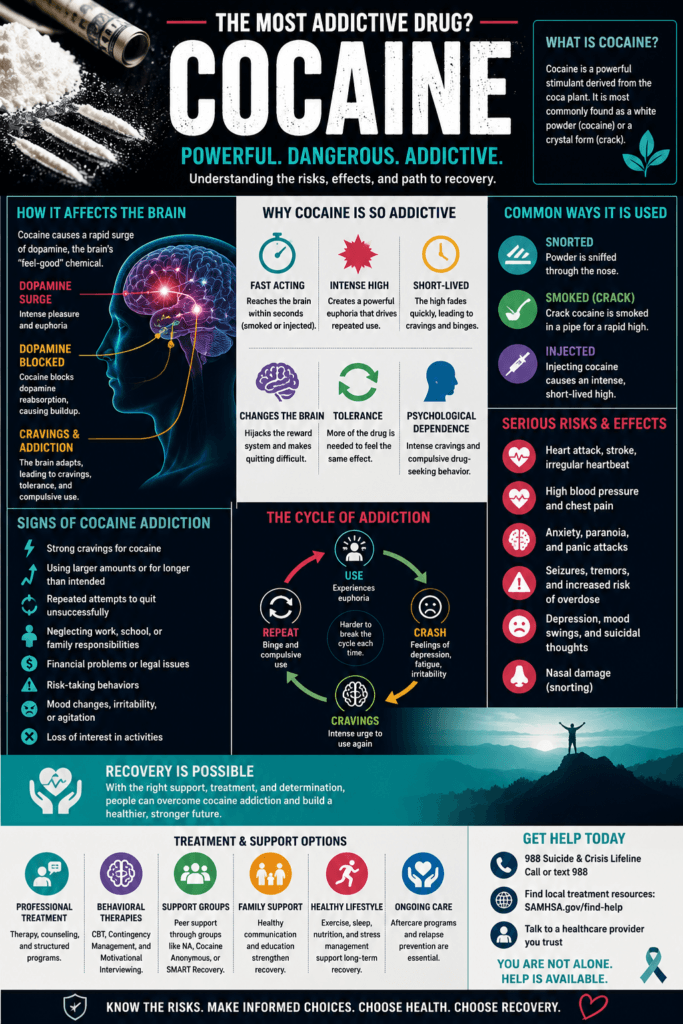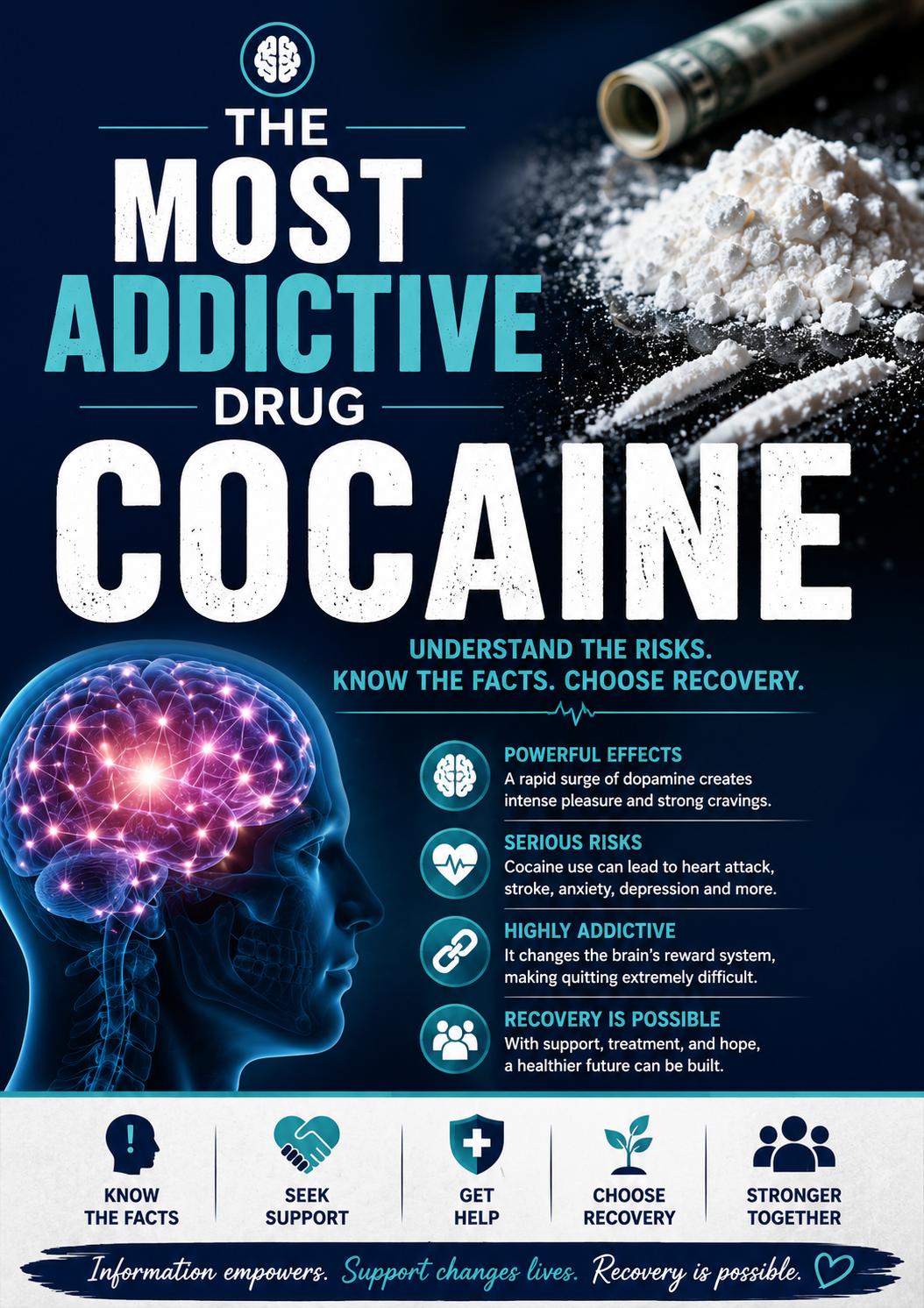
Cocaine is a powerful stimulant that affects the brain’s reward system by causing a rapid buildup of dopamine, the neurotransmitter associated with pleasure, motivation, and reinforcement. This intense but short-lived feeling of euphoria can lead to repeated use, making cocaine one of the most addictive substances. Although no single drug is considered the “most addictive” for every individual, cocaine is consistently recognized as having a high potential for addiction because of its ability to produce powerful cravings and compulsive drug-seeking behavior. Cocaine use can have serious physical, psychological, and social consequences, including heart problems, stroke, anxiety, depression, and strained relationships. Understanding how cocaine affects the brain, recognizing the signs of addiction, and learning about evidence-based treatment options are essential steps in preventing substance misuse and supporting recovery.
The Most Addictive Drug: Cocaine
Cocaine is a powerful stimulant drug that affects the central nervous system. It is derived from the leaves of the coca plant and is commonly found as a white powder or in a processed form known as crack cocaine. Cocaine produces intense feelings of euphoria, increased energy, heightened alertness, and confidence by causing a rapid buildup of dopamine, a neurotransmitter involved in the brain’s reward system. While these effects may last only a short time, they can strongly reinforce repeated use, making cocaine one of the most addictive substances. Although experts do not rank a single drug as “the most addictive” in every situation, cocaine is consistently considered among the most addictive drugs because of its powerful effects on the brain’s reward pathways and its high potential for compulsive use.
How Cocaine Affects the Brain
Normally, dopamine is released into the brain and then recycled after it has sent its message between nerve cells. Cocaine blocks this recycling process, causing dopamine to accumulate in the spaces between neurons. This buildup creates intense pleasure and reinforces the desire to continue using the drug. With repeated use, the brain adapts by becoming less responsive to natural rewards, making it increasingly difficult to experience pleasure without cocaine.
These brain changes can lead to:
- Intense cravings
- Loss of control over drug use
- Reduced enjoyment of everyday activities
- Impaired decision-making
- Increased risk of relapse
- Development of tolerance
Why Cocaine Is Highly Addictive
Several factors contribute to cocaine’s high addiction potential. The drug reaches the brain quickly, especially when smoked or injected, producing an immediate but short-lived “high.” As the pleasurable effects fade, users often experience a “crash” characterized by fatigue, depression, irritability, and cravings, which can lead to repeated use in an attempt to regain the euphoric feeling.
Factors that increase addiction risk include:
- Rapid onset of effects
- Short duration of the high
- Powerful dopamine release
- Frequent binge-use patterns
- Psychological dependence
- Co-occurring mental health disorders
- Early initiation of drug use
- Stressful life circumstances
- Genetic and environmental influences
Signs and Symptoms of Cocaine Addiction
Cocaine addiction affects physical health, emotional well-being, behavior, and relationships. Individuals may continue using cocaine despite experiencing significant negative consequences.
Common signs include:
- Strong cravings for cocaine
- Using larger amounts than intended
- Repeated unsuccessful attempts to quit
- Spending excessive time obtaining or using cocaine
- Neglecting work, school, or family responsibilities
- Financial difficulties related to drug use
- Mood swings and irritability
- Anxiety, panic attacks, or paranoia
- Weight loss and decreased appetite
- Sleep disturbances
- Risk-taking behaviors
Physical and Mental Health Effects
Long-term cocaine use can damage multiple organ systems and significantly increase the risk of medical emergencies.
Potential physical effects include:
- High blood pressure
- Heart attack
- Stroke
- Irregular heart rhythms
- Chest pain
- Seizures
- Respiratory problems (especially with crack cocaine)
- Nasal tissue damage from snorting
- Malnutrition
- Increased risk of infectious diseases if injected
Mental health effects may include:
- Anxiety disorders
- Depression
- Paranoia
- Hallucinations
- Aggressive behavior
- Cognitive impairment
- Difficulty concentrating
- Increased risk of suicidal thoughts
Cocaine Withdrawal
Unlike withdrawal from alcohol or some sedative medications, cocaine withdrawal is generally not life-threatening, but it can be emotionally intense and may increase the risk of relapse.
Common withdrawal symptoms include:
- Fatigue
- Depression
- Anxiety
- Irritability
- Increased appetite
- Difficulty concentrating
- Vivid dreams
- Sleep disturbances
- Strong drug cravings
Because depression and suicidal thoughts can occur during withdrawal, medical evaluation and psychological support are important.
Treatment for Cocaine Addiction
There are currently no medications approved specifically to treat cocaine addiction. However, evidence-based behavioral therapies and supportive care have proven effective.
Treatment may include:
- Cognitive behavioral therapy (CBT)
- Contingency management (motivational incentives)
- Motivational interviewing
- Individual counseling
- Group therapy
- Family therapy
- Treatment for co-occurring mental health disorders
- Peer recovery support
- Intensive outpatient or residential treatment when appropriate
- Relapse prevention planning
Researchers continue to study medications that may help reduce cocaine cravings, but behavioral therapies remain the foundation of treatment.
Can Recovery Happen?
Yes. Recovery from cocaine addiction is possible with appropriate treatment, ongoing support, and commitment. Many individuals achieve long-term recovery by combining professional care with healthy lifestyle changes and strong social support.
Strategies that support recovery include:
- Following a personalized treatment plan
- Avoiding people and places associated with cocaine use
- Building healthy coping skills
- Managing stress through exercise and mindfulness
- Maintaining regular sleep and nutrition
- Participating in recovery support groups
- Working with counselors, healthcare providers, and peer recovery specialists
- Developing meaningful hobbies and positive relationships
Preventing Cocaine Addiction
Prevention efforts focus on education, early intervention, and reducing risk factors before addiction develops.
Effective prevention strategies include:
- Teaching healthy coping skills
- Promoting mental health awareness
- Supporting positive family communication
- Identifying substance use early
- Providing access to counseling and treatment
- Encouraging healthy recreational activities
- Reducing stigma around seeking help
Conclusion
Cocaine is widely recognized as one of the most addictive drugs because it rapidly activates the brain’s reward system, produces intense but short-lived euphoria, and can lead to powerful cravings and compulsive drug use. While addiction can have serious physical, emotional, and social consequences, effective treatment is available. Behavioral therapies, recovery support, and comprehensive care can help individuals overcome cocaine addiction and build healthy, fulfilling lives. Early recognition, compassionate support, and access to evidence-based treatment greatly improve the chances of lasting recovery.
Self-Management Strategies to Understand the Most Addictive Drug: Cocaine
Understanding why cocaine is highly addictive is an important step toward preventing misuse and supporting recovery. Cocaine affects the brain’s reward system by causing a rapid increase in dopamine, creating intense feelings of pleasure that can reinforce repeated use. Self-management strategies help individuals recognize risk factors, build healthy coping skills, and take an active role in protecting their physical and mental health. While these strategies are valuable, they are most effective when combined with professional treatment and support for individuals with cocaine use disorder.
Learn About Cocaine and Its Effects
Educating yourself about how cocaine affects the brain and body can help you make informed decisions and recognize early warning signs of addiction.
Ways to increase your knowledge include:
- Read information from reputable health organizations.
- Learn how cocaine alters the brain’s reward system.
- Understand the short-term and long-term health risks.
- Recognize the signs of dependence and addiction.
- Stay informed about the dangers of cocaine contaminated with substances such as fentanyl.
Identify Personal Triggers
Many people use cocaine in response to certain emotions, environments, or social situations. Identifying your triggers allows you to prepare healthier responses before cravings occur.
Common triggers include:
- Stress or anxiety
- Depression or loneliness
- Social pressure
- Parties or nightlife settings
- Financial or relationship problems
- Boredom
- Exposure to people or places associated with past drug use
Develop Healthy Coping Skills
Replacing unhealthy coping mechanisms with healthier alternatives can reduce the urge to use cocaine during stressful situations.
Healthy coping strategies include:
- Deep breathing exercises
- Mindfulness meditation
- Regular physical activity
- Journaling
- Listening to music
- Reading
- Practicing yoga or stretching
- Spending time outdoors
- Creative hobbies such as art or photography
Build a Structured Daily Routine
Having a predictable schedule can reduce idle time and improve emotional stability. Daily structure supports healthy decision-making and decreases opportunities for impulsive substance use.
Include activities such as:
- Consistent sleep and wake times
- Balanced meals
- Regular exercise
- Work or school responsibilities
- Recovery meetings, if appropriate
- Relaxation and leisure activities
- Time with supportive family and friends
Manage Stress Effectively
Stress is a common trigger for substance use. Learning to manage stress in healthy ways strengthens emotional resilience and reduces the likelihood of turning to cocaine.
Stress-management techniques include:
- Progressive muscle relaxation
- Guided imagery
- Mindfulness practices
- Walking or other exercise
- Time management
- Talking with trusted friends or family
- Seeking counseling when needed
Build a Strong Support Network
Recovery is often easier when you have supportive people to encourage healthy choices. Do not try to manage addiction alone.
Your support network may include:
- Family members
- Trusted friends
- Healthcare providers
- Therapists or counselors
- Peer recovery specialists
- Recovery support groups
- Faith or spiritual communities
Practice Refusal Skills
Preparing responses ahead of time can help you avoid situations where cocaine may be offered.
Examples include:
- Saying “No, thank you” confidently.
- Leaving environments where drugs are present.
- Bring a supportive friend to social events.
- Suggesting alternative activities.
- Avoiding people who encourage substance use.
Monitor Your Mental Health
Depression, anxiety, trauma, and other mental health conditions can increase the risk of cocaine use. Paying attention to emotional well-being allows you to seek help early.
Watch for signs such as:
- Persistent sadness
- Excessive worry
- Mood swings
- Loss of interest in activities
- Difficulty sleeping
- Increased irritability
- Thoughts of self-harm or hopelessness
If these symptoms develop, contact a qualified healthcare professional promptly.
Create a Relapse Prevention Plan
Recovery is an ongoing process. Having a written plan helps you respond quickly if cravings or setbacks occur.
Your plan may include:
- Personal warning signs
- Healthy coping strategies
- Emergency support contacts
- Recovery meeting schedules
- Healthcare provider information
- Steps to take if a relapse occurs
Maintain Physical Health
Good physical health supports brain function and emotional well-being, making recovery more manageable.
Focus on:
- Eating nutritious meals
- Drinking plenty of water
- Exercising regularly
- Getting 7–9 hours of sleep each night
- Attending routine medical appointments
- Avoiding alcohol and other substances that may increase relapse risk
Continue Learning and Growing
Recovery is strengthened by lifelong learning and personal development. Understanding addiction as a chronic but treatable medical condition can reduce stigma and increase motivation.
Ways to continue learning include:
- Reading evidence-based recovery materials
- Attending educational workshops
- Participating in recovery groups
- Learning new life skills
- Setting personal, educational, or career goals
- Celebrating recovery milestones
Know When to Seek Professional Help
If cocaine use becomes difficult to control, seeking help early can improve outcomes. Treatment is available, and recovery is possible.
Professional support may include:
- Addiction medicine specialists
- Primary care providers
- Licensed therapists
- Intensive outpatient or residential treatment programs
- Peer recovery specialists
- Community mental health centers
- Crisis services for urgent mental health or substance use concerns
Conclusion
Self-management plays a critical role in preventing cocaine misuse and supporting long-term recovery. By learning about the effects of cocaine, identifying personal triggers, developing healthy coping skills, managing stress, maintaining a structured routine, and building a strong support network, individuals can reduce their risk of addiction and strengthen their overall well-being. When combined with evidence-based treatment and ongoing support, these self-management strategies empower individuals to make healthier choices, overcome challenges, and achieve lasting recovery.
Family Support Strategies to Understand the Most Addictive Drug: Cocaine
Families play a critical role in preventing cocaine misuse and supporting recovery from cocaine addiction. Understanding how cocaine affects the brain, behavior, and overall health helps family members respond with compassion rather than judgment. Cocaine addiction is a chronic, treatable medical condition that often requires professional care, ongoing support, and patience. By learning about addiction, maintaining healthy communication, and encouraging evidence-based treatment, families can create an environment that promotes recovery while protecting their own well-being.
Learn About Cocaine Addiction
Educating yourself about cocaine addiction helps reduce stigma and prepares you to provide informed support. Understanding that cocaine changes the brain’s reward system can help explain why quitting is often difficult without treatment.
Ways to learn include:
- Read information from reputable health organizations.
- Learn how cocaine affects the brain and body.
- Understand the signs of cocaine use disorder.
- Become familiar with available treatment options.
- Learn about the risks of cocaine contaminated with fentanyl or other substances.
Encourage Open and Respectful Communication
Supportive communication helps build trust and encourages honest conversations about substance use and recovery. Avoid blaming or criticizing your loved one, as this may increase shame and discourage them from seeking help.
Helpful communication strategies include:
- Listen without interrupting.
- Express concern using calm, nonjudgmental language.
- Ask open-ended questions.
- Focus on specific behaviors rather than personal criticism.
- Acknowledge positive efforts and progress.
- Encourage ongoing dialogue about recovery.
Recognize the Warning Signs of Cocaine Addiction
Early recognition of problematic substance use allows families to encourage treatment before complications become more severe.
Possible warning signs include:
- Sudden mood swings or irritability
- Increased energy followed by exhaustion
- Unexplained weight loss
- Financial difficulties
- Secrecy or social withdrawal
- Changes in sleeping patterns
- Declining work or school performance
- Loss of interest in family activities
- Risk-taking behaviors
Encourage Professional Treatment
Recovery from cocaine addiction often requires comprehensive, evidence-based care. Families can provide encouragement while allowing healthcare professionals to guide treatment decisions.
Treatment options may include:
- Addiction medicine evaluations
- Cognitive behavioral therapy (CBT)
- Contingency management
- Individual counseling
- Group therapy
- Family therapy
- Treatment for co-occurring mental health conditions
- Intensive outpatient or residential treatment programs
- Peer recovery support services
Support Healthy Daily Habits
Healthy routines improve physical and emotional well-being and can strengthen recovery efforts. Families can encourage these habits by participating together whenever possible.
Support healthy habits by:
- Preparing nutritious meals.
- Encouraging regular physical activity.
- Promoting consistent sleep schedules.
- Planning enjoyable substance-free activities.
- Supporting hobbies and personal interests.
- Reducing unnecessary household stress.
Establish Healthy Boundaries
Healthy boundaries encourage accountability while protecting the well-being of the entire family. Boundaries are not punishments—they help create a safe and supportive environment.
Healthy boundaries may include:
- Communicating expectations clearly.
- Avoiding financial support that could enable drug use.
- Refusing to cover up substance-related problems.
- Encouraging personal responsibility.
- Protecting children and vulnerable family members.
- Seeking professional guidance when needed.
Prepare for Cravings and Relapse Risks
Recovery is a process, and setbacks can occur. Families who understand relapse as a signal that additional support may be needed are better prepared to respond constructively.
Families can help by:
- Learning common relapse warning signs.
- Encouraging use of coping strategies.
- Supporting attendance at treatment appointments.
- Keeping emergency contact information readily available.
- Remaining calm and supportive if setbacks occur.
- Encouraging prompt re-engagement with treatment.
Encourage Participation in Recovery Support
Ongoing recovery support strengthens long-term success. Families can encourage involvement while respecting their loved one’s privacy and independence.
Helpful recovery resources include:
- Peer recovery specialists
- Recovery support groups
- Family education programs
- Community recovery organizations
- Faith-based recovery programs for those who are interested
- Volunteer opportunities that promote purpose and connection
Care for Your Own Well-Being
Supporting someone with cocaine addiction can be emotionally demanding. Taking care of your own physical and mental health allows you to provide more effective support.
Self-care strategies include:
- Attending family support groups.
- Seeking individual counseling if needed.
- Maintaining friendships and social connections.
- Exercising regularly.
- Practicing stress-management techniques.
- Getting adequate sleep.
- Making time for enjoyable activities.
Be Prepared for Emergencies
Cocaine use can increase the risk of serious medical emergencies, including heart attack, stroke, seizures, and overdose. Because cocaine may be mixed with fentanyl, opioid overdose is also a possibility.
Families should:
- Know the signs of a medical emergency and call emergency services immediately if someone is unresponsive, has difficulty breathing, experiences severe chest pain, has a seizure, or shows signs of a stroke.
- Learn the signs of opioid overdose, such as slowed or stopped breathing and pinpoint pupils, since fentanyl contamination can occur.
- Keep naloxone available if there is a risk of opioid exposure, and know how to use it.
- Stay with the person until emergency responders arrive, whenever it is safe to do so.
Celebrate Recovery Progress
Recovery is built one step at a time. Recognizing positive changes helps reinforce motivation and strengthens confidence.
Celebrate milestones by:
- Acknowledging treatment participation.
- Recognizing healthy lifestyle changes.
- Celebrating recovery anniversaries.
- Encouraging educational or career achievements.
- Supporting new hobbies and interests.
- Expressing hope and confidence in continued recovery.
Conclusion
Family support is an essential part of recovery from cocaine addiction. By learning about the effects of cocaine, recognizing warning signs, encouraging evidence-based treatment, practicing healthy communication, establishing clear boundaries, and promoting healthy daily habits, families can make a meaningful difference in their loved one’s recovery journey. At the same time, prioritizing self-care and seeking support for themselves helps families remain resilient. Together with healthcare professionals, peer recovery specialists, and community resources, informed and compassionate families can foster hope, reduce stigma, and support lasting recovery.
Community Resource Strategies to Understand the Most Addictive Drug: Cocaine
Communities play a critical role in preventing cocaine misuse, supporting individuals with cocaine use disorder, and promoting long-term recovery. Community resources provide education, healthcare, counseling, peer support, employment assistance, housing services, and recovery programs that complement professional treatment. By connecting individuals and families with these services, communities can reduce stigma, improve access to evidence-based care, and create supportive environments that encourage healthy lifestyles and sustained recovery.
Access Addiction Treatment Programs
Community addiction treatment centers provide comprehensive care for individuals affected by cocaine addiction. Although there are currently no medications approved specifically to treat cocaine use disorder, behavioral therapies and supportive services have been shown to improve recovery outcomes.
Treatment services may include:
- Comprehensive substance use assessments
- Individual counseling
- Cognitive behavioral therapy (CBT)
- Contingency management programs
- Motivational interviewing
- Group therapy
- Family therapy
- Intensive outpatient programs (IOPs)
- Residential treatment when appropriate
- Relapse prevention planning
Utilize Community Mental Health Services
Many individuals with cocaine addiction also experience mental health conditions such as anxiety, depression, post-traumatic stress disorder (PTSD), or bipolar disorder. Community mental health centers provide integrated care that addresses both substance use and mental health needs.
Services often include:
- Psychiatric evaluations
- Medication management for co-occurring mental health conditions
- Individual psychotherapy
- Crisis intervention
- Case management
- Trauma-informed care
- Dual diagnosis treatment
Participate in Peer Recovery Programs
Peer recovery specialists and recovery coaches use their lived experience to provide encouragement, mentorship, and practical guidance throughout the recovery process.
Peer services may provide:
- Recovery coaching
- Goal setting
- Resource navigation
- Emotional support
- Recovery planning
- Help accessing employment, education, and housing
- Ongoing encouragement during recovery
Attend Recovery Support Groups
Support groups provide opportunities to connect with others who understand the challenges of addiction and recovery. These groups help reduce isolation while promoting accountability and healthy coping skills.
Benefits include:
- Shared experiences
- Emotional encouragement
- Practical recovery strategies
- Positive social support
- Increased motivation
- Long-term recovery connections
Take Advantage of Community Education Programs
Educational programs help individuals and families better understand cocaine addiction, prevention, treatment options, and recovery.
Educational opportunities may include:
- Community health fairs
- School prevention programs
- Public awareness campaigns
- Recovery workshops
- Family education classes
- Educational webinars
- Local health department presentations
Utilize Employment and Vocational Services
Meaningful employment supports financial stability, self-confidence, and long-term recovery. Many communities offer vocational programs specifically designed for individuals rebuilding their lives after addiction.
Available services may include:
- Job readiness training
- Resume development
- Interview preparation
- Career counseling
- Vocational rehabilitation
- Educational assistance
- Workforce development programs
Seek Housing and Social Support
Stable housing is an important factor in successful recovery. Community organizations can help individuals find safe, supportive living environments.
Housing resources may include:
- Recovery residences
- Transitional housing
- Emergency shelters
- Permanent supportive housing
- Case management services
- Financial assistance programs
Participate in Healthy Community Activities
Positive community involvement helps replace substance use with healthy, meaningful experiences that support overall wellness.
Healthy activities include:
- Exercise classes
- Walking clubs
- Community sports
- Volunteer opportunities
- Art and music programs
- Gardening projects
- Faith-based activities for those who are interested
- Recreation centers and wellness programs
Utilize Crisis and Emergency Resources
Communities provide emergency services for individuals experiencing severe psychological distress, medical complications, or substance use crises.
Important community resources include:
- Emergency medical services (911)
- Hospital emergency departments
- Crisis stabilization units
- Mobile crisis response teams
- Local behavioral health crisis centers
- The 988 Suicide & Crisis Lifeline provides immediate mental health support if someone is experiencing emotional distress or suicidal thoughts
Learn About Harm Reduction Services
Some communities offer harm reduction programs that focus on reducing the health risks associated with substance use while connecting individuals to treatment and recovery services.
Harm reduction resources may include:
- Overdose prevention education
- Naloxone distribution and training
- Drug-checking information where available
- Infectious disease screening
- Referrals to addiction treatment
- Peer outreach services
Encourage Community Advocacy
Community members can help improve recovery opportunities by supporting programs that increase access to treatment and reduce stigma surrounding addiction.
Ways to advocate include:
- Supporting recovery-friendly workplaces
- Promoting addiction education
- Volunteering with recovery organizations
- Participating in community awareness events
- Encouraging policies that expand access to treatment
- Sharing accurate, evidence-based information about cocaine addiction
Conclusion
Community resources are essential in preventing cocaine addiction and supporting long-term recovery. Addiction treatment programs, mental health services, peer recovery support, recovery groups, educational initiatives, housing assistance, employment programs, crisis services, and healthy community activities all contribute to a strong recovery network. By connecting individuals and families with these evidence-based resources, communities can reduce stigma, improve access to care, and promote healthier, more resilient lives. Recovery from cocaine addiction is possible, and a supportive community can make a lasting difference in helping individuals achieve and maintain recovery.
Frequently Asked Questions
Here are some common questions:
1. What is cocaine?
Cocaine is a powerful stimulant drug made from the leaves of the coca plant. It affects the central nervous system by increasing dopamine levels in the brain, producing intense feelings of pleasure, energy, and alertness. Because of its strong effects on the brain’s reward system, cocaine has a high potential for addiction.
2. Is cocaine the most addictive drug?
There is no single drug that is considered the “most addictive” for everyone, as addiction risk varies from person to person. However, cocaine is consistently recognized as one of the most addictive drugs because it rapidly activates the brain’s reward pathways, produces intense cravings, and often leads to compulsive use.
3. Why is cocaine so addictive?
Cocaine blocks the normal recycling of dopamine, causing it to build up in the brain. This produces a short-lived but intense feeling of euphoria. As the effects wear off, many people experience a “crash” and may use cocaine again to recreate the pleasurable feelings, reinforcing the cycle of addiction.
4. What are the short-term effects of cocaine?
Short-term effects may include:
- Intense euphoria
- Increased energy
- Heightened alertness
- Increased heart rate
- Elevated blood pressure
- Dilated pupils
- Decreased appetite
- Restlessness
- Anxiety or irritability
5. What are the long-term health risks of cocaine use?
Long-term cocaine use can cause serious health problems, including:
- Heart attack
- Stroke
- Irregular heart rhythms
- High blood pressure
- Seizures
- Nasal damage from snorting
- Weight loss and malnutrition
- Anxiety and depression
- Paranoia or hallucinations
- Problems with memory, attention, and decision-making
6. What are the signs of cocaine addiction?
Common signs include:
- Strong cravings for cocaine
- Using more cocaine than intended
- Repeated unsuccessful attempts to quit
- Neglecting work, school, or family responsibilities
- Financial or legal problems related to drug use
- Mood swings
- Risk-taking behaviors
- Continuing to use despite harmful consequences
7. Can someone overdose on cocaine?
Yes. Cocaine overdose is a medical emergency and can be life-threatening. Symptoms may include severe chest pain, difficulty breathing, seizures, extreme agitation, high body temperature, stroke, heart attack, or loss of consciousness. Call emergency services immediately if an overdose is suspected.
8. Can cocaine be mixed with other dangerous substances?
Yes. Illicit cocaine may be contaminated with fentanyl or other synthetic opioids without the user’s knowledge, significantly increasing the risk of overdose. This is one reason why any use of illicit cocaine carries serious risks.
9. What happens during cocaine withdrawal?
Although cocaine withdrawal is usually not life-threatening, it can be emotionally challenging. Symptoms may include:
- Fatigue
- Depression
- Anxiety
- Irritability
- Increased appetite
- Sleep problems
- Difficulty concentrating
- Intense cravings
Medical and psychological support can help individuals manage withdrawal safely.
10. Is there a medication that cures cocaine addiction?
Currently, there are no medications approved specifically to treat cocaine use disorder. However, evidence-based behavioral therapies, counseling, peer support, and treatment for co-occurring mental health conditions have been shown to improve recovery outcomes.
11. What treatments are effective for cocaine addiction?
Treatment may include:
- Cognitive behavioral therapy (CBT)
- Contingency management
- Motivational interviewing
- Individual counseling
- Group therapy
- Family therapy
- Intensive outpatient programs
- Residential treatment when appropriate
- Peer recovery support
- Relapse prevention planning
12. Can people recover from cocaine addiction?
Yes. Recovery is possible with appropriate treatment, ongoing support, and healthy lifestyle changes. Many individuals achieve long-term recovery by combining professional treatment with peer support, strong social connections, and effective coping strategies.
13. How can family members help someone with cocaine addiction?
Families can:
- Learn about cocaine addiction.
- Encourage professional treatment.
- Communicate with empathy and respect.
- Avoid enabling drug use.
- Establish healthy boundaries.
- Support participation in recovery programs.
- Celebrate recovery milestones.
- Take care of their own well-being.
14. How can cocaine addiction be prevented?
Prevention strategies include:
- Educating individuals about the risks of cocaine.
- Teaching healthy coping and stress-management skills.
- Promoting mental health awareness.
- Encouraging strong family communication.
- Identifying substance use early.
- Providing access to counseling and support services.
- Reducing stigma around seeking help.
15. When should someone seek professional help?
Professional help should be sought if cocaine use becomes difficult to control, causes problems at work, school, or home, leads to physical or mental health concerns, or continues despite harmful consequences. Immediate medical attention is needed for signs of overdose or if someone experiences chest pain, seizures, difficulty breathing, severe confusion, or loss of consciousness.
16. What message should people remember about cocaine addiction?
Cocaine addiction is a serious but treatable medical condition. Early intervention, evidence-based treatment, family support, peer recovery services, and community resources can help individuals overcome addiction and build healthy, productive lives. Seeking help is a sign of strength, and recovery is possible.
Conclusion
Cocaine addiction is a serious but treatable medical condition that affects individuals, families, and communities. Its powerful effects on the brain’s reward system can make quitting difficult without appropriate support, but recovery is possible through evidence-based treatment, healthy coping strategies, peer support, and strong community resources. Early recognition of warning signs, compassionate family involvement, and access to professional care can greatly improve recovery outcomes. By increasing awareness about the risks of cocaine use and reducing the stigma associated with addiction, individuals are more likely to seek help and remain engaged in treatment. With commitment, support, and comprehensive care, people living with cocaine addiction can achieve lasting recovery and lead healthy, productive, and fulfilling lives
Video: The Impossible Cycle Your Brain Creates #cocaineaddiction #recovery