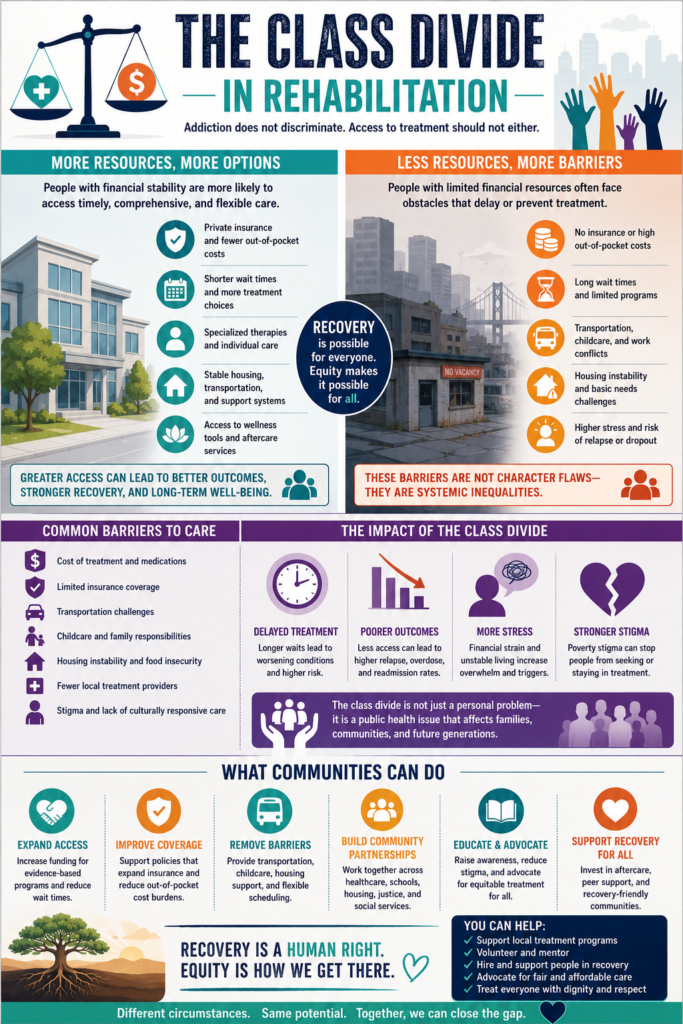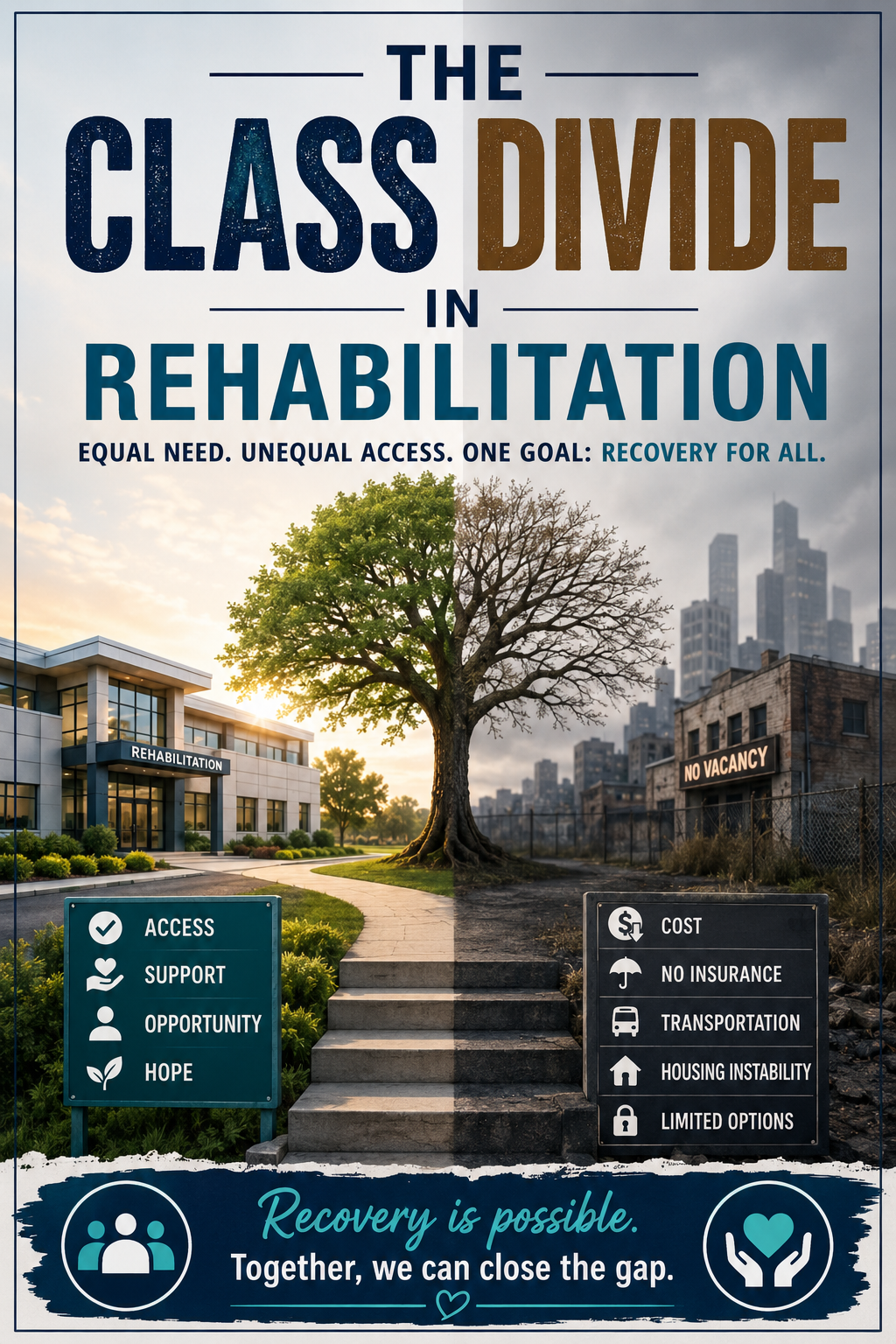
The class divide in rehabilitation refers to differences in access to addiction treatment and recovery services that can arise from socioeconomic factors such as income, education, employment, insurance coverage, housing, and transportation. Although substance use disorders affect people from every social and economic background, not everyone has the same opportunities to receive timely, high-quality, evidence-based care. Individuals with limited financial resources may face barriers such as long wait times, transportation challenges, childcare responsibilities, or a shortage of local treatment providers. Understanding these disparities is essential for healthcare professionals, policymakers, families, and communities because equitable access to rehabilitation can improve treatment engagement, reduce health disparities, and support long-term recovery. Recognizing the role of social determinants of health also helps shift the focus from blame to creating systems that provide fair and compassionate care for everyone.
The Class Divide in Rehabilitation
The class divide in rehabilitation refers to the differences in access, quality, affordability, and outcomes of addiction treatment based on a person’s socioeconomic status. Factors such as income, education, employment, insurance coverage, housing stability, and geographic location can significantly influence the type of care an individual receives and their ability to remain engaged in treatment. While substance use disorder (SUD) affects people from every social and economic background, access to effective treatment is not always equal. Recognizing these disparities is important for developing more equitable systems of care.
What Is the Class Divide in Rehabilitation?
The class divide refers to the gap between individuals with greater financial and social resources and those facing economic hardship. These differences can affect nearly every stage of recovery, from recognizing a need for help to accessing treatment and maintaining long-term recovery.
Factors that contribute to the class divide include:
- Income level
- Health insurance coverage
- Employment status
- Educational opportunities
- Stable housing
- Transportation access
- Availability of local treatment programs
- Access to childcare and family support
How Socioeconomic Status Affects Access to Treatment
People with greater financial resources may have more options when seeking care, while those with fewer resources may encounter barriers such as long wait times, limited provider availability, or transportation challenges. Publicly funded programs and nonprofit organizations provide essential services for many individuals, but demand often exceeds capacity in some communities.
Challenges may include:
- Limited treatment availability in underserved areas
- High out-of-pocket costs for some services
- Difficulty obtaining transportation
- Limited paid leave from work
- Childcare responsibilities
- Long waiting lists for residential programs
Differences in Treatment Options
Individuals with different financial resources may have access to different types of rehabilitation programs. However, it is important to recognize that a higher cost does not necessarily mean higher quality. Many community-based and publicly funded programs provide evidence-based, effective care.
Examples of treatment settings include:
- Outpatient counseling
- Intensive outpatient programs (IOPs)
- Partial hospitalization programs (PHPs)
- Residential rehabilitation
- Hospital-based treatment
- Community mental health centers
- Recovery community organizations
- Telehealth services
The most appropriate treatment depends on a person’s clinical needs rather than income alone.
Insurance and Financial Barriers
Insurance coverage has expanded access to addiction treatment for many people, but financial barriers can still remain.
Potential challenges include:
- Copayments and deductibles
- Limited provider networks
- Prior authorization requirements
- Coverage limitations for certain services
- Costs associated with transportation or childcare during treatment
Many communities also offer publicly funded programs, sliding-scale fees, or financial assistance to help reduce these barriers.
The Impact of Social Determinants of Health
Recovery is influenced by more than medical care alone. Social determinants of health—the conditions in which people are born, live, learn, work, and age—can significantly affect treatment engagement and long-term recovery.
Important factors include:
- Safe and stable housing
- Reliable transportation
- Employment opportunities
- Access to nutritious food
- Educational resources
- Community safety
- Social support
- Access to healthcare
Addressing these factors can improve recovery outcomes.
Stigma and Inequality
Individuals from different socioeconomic backgrounds may experience stigma in different ways. Stigma related to addiction, poverty, or mental illness can discourage people from seeking treatment or remaining engaged in care.
Reducing stigma involves:
- Using person-first language
- Treating addiction as a medical condition
- Promoting recovery success stories
- Expanding community education
- Encouraging respectful, compassionate care
The Role of Community Resources
Community organizations help reduce disparities by providing support beyond medical treatment.
Resources may include:
- Recovery community organizations
- Peer recovery specialists
- Community health centers
- Food assistance programs
- Housing support
- Employment services
- Legal aid
- Transportation assistance
- Childcare resources
These services can address practical barriers that interfere with recovery.
Strategies to Reduce the Class Divide
Healthcare systems, policymakers, and communities can work together to improve equitable access to rehabilitation.
Potential strategies include:
- Expanding access to evidence-based treatment
- Increasing the addiction treatment workforce
- Improving insurance coverage for behavioral health services
- Expanding telehealth where appropriate
- Supporting recovery housing
- Integrating mental health and addiction treatment
- Providing transportation and childcare assistance
- Strengthening peer recovery services
- Investing in prevention and early intervention programs
Recovery Is Possible Across All Income Levels
Recovery is achievable for people from every socioeconomic background. While financial and social barriers can make treatment more difficult to access, many individuals recover successfully through publicly funded programs, nonprofit organizations, community health centers, mutual-support groups, peer recovery services, and evidence-based medical care. The quality of the therapeutic relationship, access to appropriate treatment, social support, and continued engagement often have a greater impact on recovery than the cost of a program.
Conclusion
The class divide in rehabilitation highlights the important role that socioeconomic factors play in access to addiction treatment and recovery support. Differences in income, insurance, housing, transportation, and other social determinants can create barriers that delay or complicate care. However, effective treatment is available through a wide range of public, private, and community-based programs. By expanding access to evidence-based services, addressing social determinants of health, reducing stigma, and strengthening community supports, healthcare systems and communities can help ensure that everyone has a fair opportunity to achieve recovery, regardless of their financial circumstances.
Self-Management Strategies to Understand the Class Divide in Rehabilitation
Understanding the class divide in rehabilitation can help individuals make informed decisions about addiction treatment and recovery. Socioeconomic factors such as income, education, employment, housing, transportation, and insurance can influence access to care, but they do not determine a person’s ability to recover. Self-management involves learning about available resources, advocating for your healthcare needs, and developing practical strategies to overcome barriers. By taking an active role in your recovery, you can improve your ability to access evidence-based treatment and build a strong foundation for long-term wellness.
Learn About Your Treatment Options
Educating yourself about the different levels of addiction treatment can help you identify services that best meet your needs. Recovery is possible through many types of programs, including community-based and publicly funded services.
Take time to learn about:
- Outpatient counseling
- Intensive outpatient programs (IOPs)
- Partial hospitalization programs (PHPs)
- Residential treatment
- Medication for opioid use disorder (MOUD), if appropriate
- Peer recovery support services
- Telehealth treatment options
- Community recovery organizations
Understand Your Insurance and Financial Resources
Knowing what your insurance covers or what financial assistance is available can reduce stress and improve access to care. If you do not have insurance, many communities offer low-cost or sliding-scale treatment programs.
Helpful steps include:
- Review your insurance benefits.
- Ask providers about payment plans.
- Explore Medicaid or other public insurance programs if you qualify.
- Look for community health centers offering reduced-cost services.
- Inquire about nonprofit organizations that provide financial assistance.
Advocate for Yourself
Being your own advocate can help you navigate the healthcare system more effectively. Ask questions, express your concerns, and work with your healthcare team to develop a treatment plan that fits your circumstances.
Self-advocacy strategies include:
- Preparing questions before appointments.
- Asking about all available treatment options.
- Requesting referrals when needed.
- Discussing barriers such as transportation or childcare.
- Keeping copies of important medical records and treatment plans.
Build Healthy Daily Habits
A structured routine supports recovery regardless of financial circumstances. Consistent healthy habits improve physical and emotional well-being while strengthening resilience.
Focus on:
- Maintaining a regular sleep schedule.
- Eating balanced, nutritious meals.
- Staying physically active.
- Drinking enough water.
- Taking prescribed medications as directed.
- Practicing good personal hygiene.
- Scheduling time for relaxation and enjoyable activities.
Develop Healthy Coping Skills
Recovery involves learning healthier ways to manage stress, emotions, and life challenges. Many effective coping strategies are free or inexpensive and can be practiced daily.
Healthy coping skills include:
- Deep breathing exercises.
- Mindfulness meditation.
- Journaling.
- Walking or other physical activity.
- Listening to music.
- Reading.
- Spending time outdoors.
- Practicing gratitude.
- Engaging in creative hobbies.
Build a Strong Support Network
Recovery is strengthened through supportive relationships. A reliable support network can provide encouragement, accountability, and practical assistance during difficult times.
Your support system may include:
- Family members
- Trusted friends
- Healthcare providers
- Therapists
- Peer recovery specialists
- Recovery support groups
- Faith-based communities for those who are interested
- Community organizations
Utilize Community Resources
Many community services are available regardless of income and can help address barriers that affect recovery.
Community resources may include:
- Food assistance programs
- Transportation services
- Recovery community organizations
- Housing assistance
- Employment services
- Vocational rehabilitation
- Community mental health centers
- Public libraries with educational resources
Set Realistic Recovery Goals
Recovery is a long-term process that is best approached through achievable, measurable goals. Small successes build confidence and promote continued progress.
Examples of goals include:
- Attending weekly counseling sessions.
- Participating in recovery meetings.
- Applying for employment or education programs.
- Improving physical health.
- Strengthening family relationships.
- Learning a new coping skill each month.
Monitor Your Progress
Tracking your recovery journey helps identify successes and areas that need additional attention.
Monitor:
- Treatment attendance
- Mood changes
- Stress levels
- Sleep quality
- Substance cravings
- Personal achievements
- Financial goals
- Recovery milestones
Continue Learning About Recovery
Education empowers individuals to make informed decisions and reduces the stigma surrounding addiction. Learning about the social factors that influence access to treatment can also help you identify resources and advocate for yourself.
Ways to continue learning include:
- Reading evidence-based recovery materials.
- Attending educational workshops.
- Participating in webinars.
- Asking healthcare providers questions.
- Learning from peer recovery specialists.
- Staying informed about local recovery services.
Practice Resilience and Self-Compassion
Recovery is rarely a straight path, and setbacks can occur. Recognizing that challenges are part of the recovery process can help you maintain motivation and avoid self-blame.
Practice resilience by:
- Acknowledging your progress.
- Viewing setbacks as opportunities to learn.
- Focusing on what you can control.
- Seeking help early when difficulties arise.
- Celebrating milestones, no matter how small.
Conclusion
Self-management is an important tool for understanding and overcoming the challenges associated with the class divide in rehabilitation. By learning about available treatment options, advocating for your healthcare needs, utilizing community resources, building healthy routines, developing effective coping skills, and maintaining a strong support network, you can reduce barriers to recovery and improve your overall well-being. While socioeconomic factors may influence access to care, they do not define your ability to recover. With determination, informed decision-making, and the support of healthcare professionals, peer recovery specialists, family, and community resources, lasting recovery is achievable for individuals from all backgrounds.
Family Support Strategies to Understand the Class Divide in Rehabilitation
Families play an important role in helping loved ones navigate the challenges of addiction treatment and recovery. Understanding the class divide in rehabilitation allows families to recognize how financial resources, insurance coverage, employment, transportation, housing, education, and other social factors can influence access to care. While these barriers can make treatment more difficult to obtain, they do not determine whether someone can recover. Families who are informed, supportive, and resourceful can help their loved ones overcome obstacles and remain engaged in evidence-based treatment.
Learn About Addiction and Rehabilitation
Educating yourself about substance use disorder and the different types of rehabilitation programs helps families make informed decisions and advocate effectively for their loved ones.
Ways to increase your knowledge include:
- Learn that addiction is a chronic, treatable medical condition.
- Understand the different levels of addiction treatment.
- Learn about medication-assisted treatment when appropriate.
- Explore community-based recovery services.
- Stay informed about local treatment resources and financial assistance programs.
Recognize the Impact of Social and Financial Barriers
Recovery is influenced by more than personal motivation. Economic challenges can affect a person’s ability to begin and continue treatment.
Common barriers include:
- Limited health insurance coverage
- High treatment costs
- Lack of reliable transportation
- Housing instability
- Childcare responsibilities
- Difficulty taking time away from work
- Limited availability of treatment providers in rural or underserved areas
Recognizing these barriers helps families respond with understanding rather than blame.
Encourage Open and Respectful Communication
Supportive communication creates an environment where loved ones feel comfortable discussing treatment needs, financial concerns, and recovery challenges.
Helpful communication strategies include:
- Listen without judgment.
- Ask open-ended questions.
- Express concern with empathy.
- Avoid criticism or shame.
- Encourage honest discussions about barriers to treatment.
- Celebrate progress and recovery milestones.
Help Navigate Available Resources
Families can assist in locating programs and services that make treatment more accessible.
Ways to help include:
- Research treatment centers together.
- Explore insurance benefits.
- Help complete financial assistance applications.
- Identify community mental health centers.
- Locate transportation services.
- Assist with scheduling appointments.
- Connect with peer recovery organizations.
Support Treatment Participation
Consistent participation in treatment improves recovery outcomes. Families can encourage attendance while respecting their loved one’s independence and treatment decisions.
Support may include:
- Providing transportation to appointments.
- Helping organize schedules.
- Offering childcare during treatment sessions.
- Encouraging medication adherence when prescribed.
- Supporting participation in counseling and peer support groups.
Promote Healthy Home Routines
A stable home environment supports recovery regardless of financial circumstances. Healthy routines reduce stress and provide consistency.
Families can encourage:
- Regular sleep schedules
- Nutritious meals
- Physical activity
- Substance-free family activities
- Stress management practices
- Positive daily structure
Encourage Employment and Educational Opportunities
Education and meaningful employment can strengthen recovery by improving financial stability, confidence, and a sense of purpose.
Families can support by:
- Encouraging job training programs.
- Assisting with resume preparation.
- Supporting educational goals.
- Celebrating workplace achievements.
- Encouraging realistic career planning.
Establish Healthy Boundaries
Healthy boundaries protect both the individual in recovery and family members while encouraging accountability.
Examples include:
- Setting clear household expectations.
- Avoiding financial support that enables substance use.
- Encouraging personal responsibility.
- Protecting your own emotional and financial well-being.
- Seeking professional guidance when difficult situations arise.
Participate in Family Support Services
Many rehabilitation programs offer family education and counseling that improve communication and strengthen recovery.
Helpful services include:
- Family therapy
- Caregiver education programs
- Peer-led family support groups
- Parenting classes
- Stress management workshops
- Community recovery events
Practice Self-Care
Supporting someone through recovery can be emotionally demanding. Caring for yourself allows you to remain resilient and better able to provide support.
Healthy self-care strategies include:
- Maintaining regular medical care.
- Getting adequate sleep.
- Exercising regularly.
- Staying connected with friends.
- Seeking counseling if needed.
- Joining caregiver support groups.
- Making time for hobbies and relaxation.
Advocate for Recovery-Friendly Communities
Families can help reduce the class divide by supporting efforts that improve access to addiction treatment and recovery services.
Ways to advocate include:
- Supporting policies that expand access to treatment.
- Promoting recovery education in the community.
- Volunteering with local recovery organizations.
- Encouraging employers to support recovery-friendly workplaces.
- Helping reduce stigma through respectful language and education.
Maintain Hope Throughout Recovery
Recovery often includes challenges, and progress may not always be linear. Families who remain patient and hopeful can provide an important source of motivation.
Remember to:
- Celebrate small achievements.
- Encourage persistence during setbacks.
- Focus on long-term progress.
- Reinforce healthy choices.
- Recognize that recovery is possible regardless of financial circumstances.
Conclusion
Family support is a powerful factor in overcoming the challenges associated with the class divide in rehabilitation. By understanding the financial and social barriers that can affect access to treatment, families can respond with compassion, practical assistance, and informed advocacy. Encouraging evidence-based care, promoting healthy routines, connecting loved ones with community resources, and maintaining open communication all contribute to stronger recovery outcomes. Although socioeconomic circumstances may influence access to services, they do not determine a person’s ability to recover. With supportive families, professional care, peer recovery services, and community resources, individuals from all backgrounds can build healthier, more fulfilling lives in recovery.
Community Resource Strategies to Understand the Class Divide in Rehabilitation
Communities play a critical role in reducing the class divide in rehabilitation by making addiction treatment and recovery services more accessible, affordable, and equitable. While socioeconomic factors such as income, insurance, education, housing, and transportation can influence access to care, strong community resources help bridge these gaps. By connecting individuals and families with evidence-based treatment, social services, peer support, and educational opportunities, communities can improve recovery outcomes and ensure that people from all backgrounds have access to quality care.
Utilize Community Health Centers
Community health centers provide affordable healthcare services regardless of a person’s financial situation. Many offer integrated care that includes primary healthcare, behavioral health services, and substance use treatment.
Services may include:
- Substance use assessments
- Primary healthcare
- Mental health counseling
- Medication management
- Care coordination
- Preventive health services
- Referrals to specialized treatment programs
Access Publicly Funded Addiction Treatment Programs
State and local governments often fund addiction treatment programs for individuals who are uninsured or underinsured. These programs provide evidence-based care regardless of a person’s ability to pay.
Programs may offer:
- Outpatient treatment
- Intensive outpatient programs (IOPs)
- Residential rehabilitation
- Medication for opioid use disorder (MOUD) when appropriate
- Individual and group counseling
- Family therapy
- Relapse prevention services
Connect with Recovery Community Organizations
Recovery community organizations provide peer-led support that complements professional treatment. These organizations help reduce isolation and increase the success of long-term recovery.
Services often include:
- Peer recovery coaching
- Recovery support meetings
- Life skills education
- Employment assistance
- Social activities
- Volunteer opportunities
- Family education
Utilize Community Mental Health Services
Mental health conditions frequently occur alongside substance use disorders. Community behavioral health centers provide comprehensive care that addresses both concerns simultaneously.
Available services include:
- Individual counseling
- Psychiatric evaluations
- Medication management
- Crisis intervention
- Case management
- Dual diagnosis treatment
- Trauma-informed care
Access Transportation Assistance
Transportation barriers often prevent individuals from attending treatment appointments. Many communities offer services that improve access to care.
Transportation resources may include:
- Public transit assistance
- Non-emergency medical transportation
- Volunteer driver programs
- Transportation vouchers
- Mobile treatment services
- Telehealth appointments when appropriate
Explore Housing Support Programs
Safe and stable housing is an important part of long-term recovery. Community organizations help individuals secure housing while participating in treatment.
Housing resources may include:
- Recovery residences
- Transitional housing
- Emergency shelters
- Permanent supportive housing
- Rental assistance programs
- Housing case management
Utilize Employment and Education Programs
Employment and education improve financial stability and increase opportunities for sustained recovery. Community agencies often provide services that help individuals rebuild their careers.
Helpful resources include:
- Job readiness training
- Resume development
- Interview coaching
- Vocational rehabilitation
- GED preparation
- College and workforce development programs
- Financial literacy education
Participate in Family Education Programs
Families benefit from learning about addiction, recovery, and the impact of social and financial barriers on treatment access.
Family programs may include:
- Educational workshops
- Family counseling
- Caregiver support groups
- Parenting classes
- Communication skills training
- Recovery education seminars
Utilize Digital and Telehealth Services
Technology has expanded access to addiction treatment, particularly for individuals in rural or underserved communities. Telehealth can reduce barriers related to transportation, distance, and scheduling.
Digital resources include:
- Virtual counseling
- Online peer support meetings
- Telepsychiatry
- Mobile recovery applications
- Educational webinars
- Recovery text support services
Engage in Community Wellness Programs
Healthy community activities promote physical and emotional well-being while helping individuals build positive social connections.
Community wellness opportunities include:
- Exercise classes
- Walking groups
- Recreation centers
- Community gardens
- Art and music therapy programs
- Volunteer projects
- Mindfulness and yoga classes
- Nutrition education
Advocate for Health Equity
Communities can reduce the class divide by supporting policies and programs that improve equitable access to rehabilitation and recovery services.
Advocacy efforts include:
- Expanding affordable addiction treatment
- Supporting recovery-friendly workplaces
- Increasing funding for behavioral healthcare
- Reducing stigma surrounding addiction
- Promoting culturally responsive care
- Expanding telehealth services
- Encouraging integrated healthcare models
Collaborate Across Community Systems
Successful recovery often depends on coordination between healthcare providers, schools, employers, social service agencies, housing organizations, and the justice system. Collaborative partnerships improve continuity of care and help address the social factors that influence recovery.
Examples of collaboration include:
- Coordinated referrals between agencies
- Shared case management when appropriate
- School and workplace education initiatives
- Partnerships between hospitals and recovery organizations
- Community coalitions focused on prevention and recovery
- Integrated support for housing, employment, and healthcare
Conclusion
Community resources are essential for reducing the class divide in rehabilitation by helping individuals overcome financial, social, and logistical barriers to addiction treatment. Publicly funded treatment programs, community health centers, peer recovery organizations, mental health services, housing assistance, transportation support, employment programs, family education, and telehealth all contribute to a more equitable system of care. By strengthening these resources and promoting collaboration among healthcare and community organizations, communities can improve access to evidence-based treatment, reduce disparities, and support lasting recovery for individuals and families, regardless of socioeconomic status.
Frequently Asked Questions
Here are some common questions:
1. What is the class divide in rehabilitation?
The class divide in rehabilitation refers to differences in access to addiction treatment and recovery services influenced by socioeconomic factors such as income, education, employment, housing, insurance coverage, and transportation. These differences can affect how easily individuals obtain treatment, but they do not determine a person’s ability to recover.
2. Does addiction only affect people with low incomes?
No. Substance use disorders affect people from all socioeconomic backgrounds, cultures, and professions. However, people with fewer financial resources may face greater barriers to accessing timely, evidence-based treatment.
3. Why does socioeconomic status affect rehabilitation?
Socioeconomic status can influence many factors that support recovery, including:
- Health insurance coverage
- Ability to pay for treatment
- Access to transportation
- Stable housing
- Childcare availability
- Employment flexibility
- Availability of treatment providers in the community
These factors can make it easier or harder to begin and continue treatment.
4. Does paying more for rehabilitation guarantee better treatment?
No. Higher-cost rehabilitation programs do not automatically provide better outcomes. Recovery success depends on receiving evidence-based, individualized care that matches a person’s clinical needs, along with ongoing support and engagement in treatment.
5. What are common barriers to rehabilitation?
Common barriers include:
- Lack of insurance or inadequate coverage
- High out-of-pocket costs
- Long waiting lists
- Transportation difficulties
- Childcare responsibilities
- Housing instability
- Limited treatment providers in rural or underserved areas
- Stigma related to addiction
6. What are social determinants of health?
Social determinants of health are the conditions in which people are born, grow, work, live, and age that influence health outcomes. Examples include education, employment, housing, neighborhood safety, access to healthcare, transportation, and social support. These factors can affect a person’s ability to access and remain engaged in rehabilitation.
7. How can community resources reduce the class divide?
Community organizations help reduce barriers by providing services such as:
- Publicly funded treatment programs
- Community health centers
- Peer recovery support
- Mental health counseling
- Transportation assistance
- Housing programs
- Employment services
- Family education
- Recovery support groups
8. What role does health insurance play?
Health insurance often improves access to addiction treatment by helping cover services such as counseling, medication, outpatient care, and residential treatment. However, copayments, deductibles, limited provider networks, or prior authorization requirements may still create financial challenges for some individuals.
9. Can someone recover without expensive treatment?
Yes. Many people achieve lasting recovery through affordable or publicly funded programs, community health centers, peer recovery services, mutual-support groups, and outpatient counseling. Recovery depends more on receiving appropriate, evidence-based care and maintaining engagement than on the cost of treatment.
10. How can families help overcome treatment barriers?
Families can:
- Learn about addiction and recovery.
- Help research affordable treatment options.
- Assist with transportation.
- Encourage treatment participation.
- Support healthy daily routines.
- Help locate community resources.
- Maintain healthy communication.
- Avoid stigma and blame.
11. What role do peer recovery specialists play?
Peer recovery specialists draw on their lived experience to provide encouragement, practical guidance, and support. They help individuals navigate healthcare systems, connect with community resources, build recovery skills, and remain engaged in treatment.
12. What can communities do to improve rehabilitation access?
Communities can:
- Expand affordable treatment programs.
- Increase access to mental healthcare.
- Improve transportation services.
- Support recovery housing.
- Expand telehealth options.
- Reduce stigma through education.
- Promote recovery-friendly workplaces.
- Invest in prevention and early intervention programs.
13. Does living in a rural area affect access to rehabilitation?
It can. Rural communities may have fewer addiction treatment providers, longer travel distances, limited public transportation, and fewer specialized services. Telehealth, mobile treatment programs, and regional partnerships can help improve access in these areas.
14. How does stigma contribute to the class divide?
Stigma may discourage individuals from seeking treatment due to fear of judgment, discrimination, or misunderstanding. People experiencing poverty, homelessness, or mental illness may face additional stigma, creating further barriers to recovery. Education and compassionate, person-centered care can help reduce stigma.
15. What policies can help reduce the class divide in rehabilitation?
Effective strategies include:
- Expanding insurance coverage for addiction treatment.
- Increasing funding for community-based services.
- Supporting recovery housing.
- Improving transportation access.
- Expanding the behavioral health workforce.
- Integrating mental health and substance use treatment.
- Investing in prevention and early intervention.
- Addressing broader social needs such as housing and employment.
16. What is the most important message about the class divide in rehabilitation?
The class divide highlights unequal access to treatment, not unequal potential for recovery. People from every socioeconomic background can recover from substance use disorders when they have access to compassionate, evidence-based care and supportive community resources. Reducing barriers, addressing social determinants of health, and promoting health equity help ensure that everyone has a fair opportunity to achieve lasting recovery.
Conclusion
The class divide in rehabilitation highlights the importance of ensuring that addiction treatment is accessible, affordable, and based on individual clinical needs rather than financial circumstances. While socioeconomic barriers can affect access to care, recovery is possible for people from all backgrounds when they receive evidence-based treatment, supportive healthcare services, peer recovery support, and strong community resources. Expanding public awareness, reducing stigma, strengthening insurance coverage, improving transportation and housing support, and investing in community-based treatment programs can help close the gap in access to rehabilitation. By working together, healthcare providers, families, policymakers, and community organizations can build a more equitable system that gives every individual the opportunity to achieve lasting recovery, improved health, and a better quality of life.
Video: Everyone Deserves a Shot at Recovery #addiction #hope #treatment