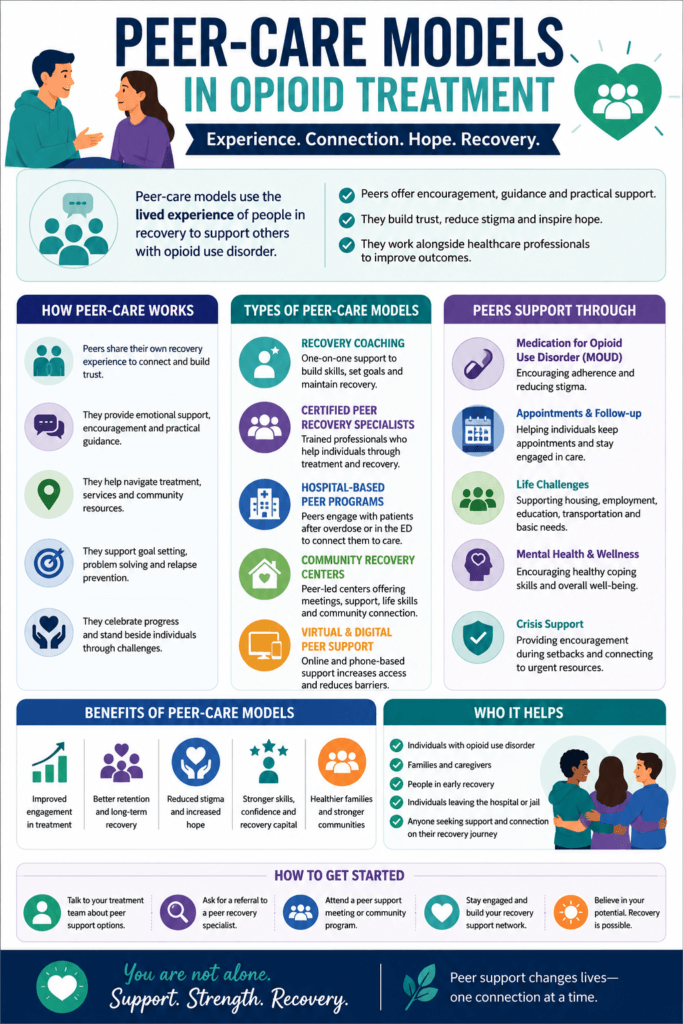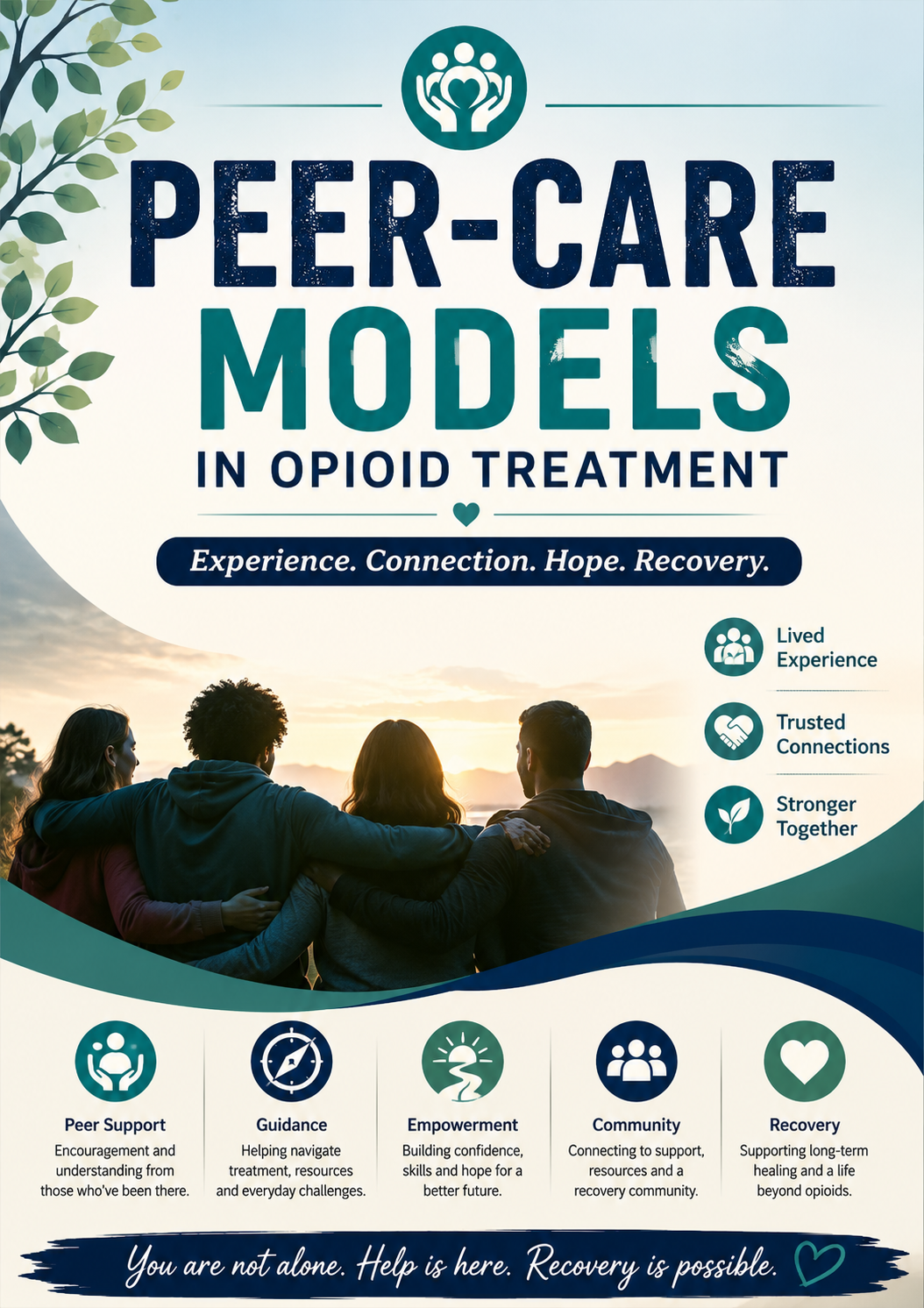
Peer-care models have become an increasingly important component of comprehensive opioid use disorder (OUD) treatment by integrating the lived experiences of individuals in recovery into the healthcare system. Peer recovery specialists, recovery coaches, and peer support workers offer encouragement, practical guidance, and hope to people navigating the challenges of recovery. Their unique ability to connect through shared experience helps build trust, reduce stigma, and motivate individuals to engage in treatment. Working alongside healthcare providers, counselors, and medication for opioid use disorder (MOUD), peer-care models enhance treatment by promoting recovery-focused relationships, improving access to community resources, and supporting long-term wellness. As communities continue to address the opioid crisis, peer support has emerged as an evidence-based strategy that strengthens recovery outcomes and empowers individuals to take an active role in rebuilding their lives.
Peer-Care Models in Opioid Treatment
Peer-care models have become an important part of treating opioid use disorder (OUD). These models involve individuals with lived experience of addiction and recovery, often called peer recovery specialists, peer support specialists, or recovery coaches, who provide guidance, encouragement, and practical assistance to people seeking recovery. Because peers have firsthand knowledge of the challenges associated with opioid addiction, they can build trust, reduce stigma, and inspire hope in ways that complement traditional medical and behavioral health services.
Peer support is not a replacement for professional treatment. Instead, it enhances comprehensive care by working alongside healthcare providers, counselors, case managers, and medication-assisted treatment (MAT) programs. Research has shown that peer involvement can improve treatment engagement, increase retention in care, reduce emergency department visits, and help individuals develop long-term recovery skills.
What Is a Peer-Care Model?
A peer-care model integrates trained individuals with lived recovery experience into addiction treatment programs. Peers provide emotional, informational, and practical support while encouraging individuals to actively participate in their recovery.
Key features include:
- Shared lived experience with addiction and recovery
- Nonjudgmental encouragement and emotional support
- Assistance navigating healthcare and community services
- Recovery planning and goal setting
- Connection to housing, employment, education, and social supports
- Ongoing encouragement during setbacks and recovery milestones
Types of Peer-Care Models
Several peer-care approaches are used in opioid treatment settings.
Recovery Coaching
Recovery coaches help individuals:
- Develop personalized recovery goals
- Build healthy coping strategies
- Identify relapse triggers
- Maintain motivation
- Connect with community resources
- Strengthen accountability
Recovery coaching often continues for months or years, depending on individual needs.
Certified Peer Recovery Specialists
Certified peer specialists receive formal training and certification. Their responsibilities may include:
- Supporting individuals during treatment
- Facilitating recovery groups
- Educating families
- Coordinating community resources
- Assisting with transportation and appointments
- Providing encouragement after discharge
Hospital-Based Peer Programs
Hospitals increasingly employ peer specialists who meet patients after an opioid overdose or substance-related emergency.
These programs often:
- Engage patients while motivation is high
- Explain treatment options
- Arrange a rapid referral to medication treatment
- Assist with follow-up appointments
- Provide overdose education
- Distribute naloxone education and resources
Community Recovery Centers
Recovery community organizations provide peer-led services outside traditional healthcare settings.
Services commonly include:
- Recovery meetings
- Social activities
- Family education
- Employment assistance
- Recovery coaching
- Volunteer opportunities
- Wellness activities
Peer Support During Medication Treatment
Peer-care models work particularly well alongside medications for opioid use disorder (MOUD), including:
- Buprenorphine
- Methadone
- Naltrexone
Peers help individuals by:
- Reducing stigma about medication treatment
- Encouraging medication adherence
- Supporting attendance at clinic appointments
- Helping manage everyday recovery challenges
- Reinforcing healthy lifestyle changes
- Encouraging communication with healthcare providers
Benefits of Peer-Care Models
Peer support offers several advantages throughout recovery.
Improved Treatment Engagement
Individuals may feel more comfortable speaking with someone who has experienced addiction personally.
Benefits include:
- Increased trust
- Greater willingness to seek help
- Reduced fear of judgment
- Better communication with treatment teams
Better Retention in Care
Many people discontinue opioid treatment prematurely. Peer support helps maintain motivation by:
- Providing regular check-ins
- Celebrating progress
- Helping overcome barriers
- Offering practical problem-solving
Reduced Stigma
Peers demonstrate that recovery is achievable.
They help individuals:
- Replace shame with hope
- Develop confidence
- Challenge misconceptions about addiction
- Normalize asking for help
Stronger Recovery Capital
Recovery capital refers to the personal, family, social, and community resources that support lasting recovery.
Peers help build recovery capital through:
- Healthy relationships
- Stable housing connections
- Employment support
- Educational opportunities
- Community involvement
- Recovery-friendly activities
Family Involvement
Many peer-care programs also involve family members.
Family peer specialists may:
- Explain addiction as a chronic medical condition
- Teach healthy communication
- Reduce enabling behaviors
- Encourage healthy boundaries
- Connect families with support groups
- Promote caregiver self-care
Challenges of Peer-Care Models
Although highly valuable, peer-care programs also face challenges.
Potential barriers include:
- Limited funding
- Workforce shortages
- Burnout among peer specialists
- Role confusion within healthcare teams
- Inconsistent certification standards
- Limited availability in rural communities
Addressing these barriers requires continued investment, standardized training, and collaboration between healthcare systems and community organizations.
Best Practices for Successful Peer Programs
Effective peer-care programs typically include:
- Comprehensive training and certification
- Ongoing professional supervision
- Clear ethical guidelines
- Integration into multidisciplinary care teams
- Trauma-informed care principles
- Cultural humility and inclusiveness
- Continuous quality improvement
- Outcome monitoring and evaluation
Future Directions
Peer-care models continue to expand across healthcare systems. Emerging innovations include:
- Telehealth peer recovery services
- Mobile recovery coaching
- Peer support within emergency departments
- Digital recovery communities
- Smartphone recovery applications
- Peer-led harm reduction programs
- Integration into primary care and behavioral health clinics
As opioid treatment evolves, peer-care models are expected to play an increasingly important role in improving access, reducing stigma, and supporting long-term recovery.
Conclusion
Peer-care models have transformed opioid treatment by incorporating the knowledge, empathy, and lived experience of individuals in recovery into clinical care. Working alongside healthcare professionals, peer recovery specialists help people engage in treatment, remain connected to medication and counseling, navigate community resources, and build meaningful lives in recovery. While peer support is not a substitute for medical care, it is a valuable complement that promotes hope, resilience, and sustained recovery. Expanding access to high-quality peer services can strengthen opioid treatment systems and improve outcomes for individuals, families, and communities.
Self-Management Strategies to Understand Peer-Care Models in Opioid Treatment
Understanding peer-care models in opioid treatment can help individuals become active participants in their recovery. Peer support works best when combined with self-management skills, medication when prescribed, counseling, and healthy lifestyle changes. By learning how peer support fits into an overall recovery plan, individuals can build confidence, improve coping skills, and strengthen long-term recovery.
Learn the Role of Peer Support
Take time to understand what peer recovery specialists do and how they differ from healthcare professionals. Peers are individuals with lived experience who provide encouragement, practical guidance, and hope rather than medical or counseling services. Knowing their role helps you set realistic expectations and make the most of the relationship.
Ways to learn about peer support include:
- Ask your treatment team how peer recovery services work.
- Read educational materials from reputable addiction recovery organizations.
- Attend an introductory peer support meeting.
- Ask questions about confidentiality and professional boundaries.
- Learn how peer support complements medication and counseling.
Be an Active Participant in Your Recovery
Recovery is most successful when you take an active role in setting goals and making decisions. Work collaboratively with your peer recovery specialist and healthcare providers to identify priorities that support your physical, emotional, and social well-being.
Active participation may include:
- Setting realistic short-term and long-term recovery goals.
- Tracking your progress regularly.
- Identifying personal strengths and areas for growth.
- Celebrating milestones, no matter how small.
- Asking for help when challenges arise.
Build Healthy Daily Routines
Consistent routines help reduce stress and create stability, making recovery more manageable. Healthy habits support both physical and mental health while decreasing opportunities for relapse.
Healthy routines may include:
- Taking prescribed medications as directed.
- Maintaining regular sleep and wake times.
- Eating balanced, nutritious meals.
- Exercising regularly.
- Staying hydrated.
- Scheduling time for relaxation and hobbies.
Communicate Openly with Your Peer Recovery Specialist
Honest communication allows peers to provide support that is tailored to your needs. Sharing successes, concerns, and setbacks helps strengthen trust and promote effective problem-solving.
Topics to discuss include:
- Cravings or triggers.
- Stressful life events.
- Recovery goals.
- Concerns about treatment.
- Barriers to attending appointments.
- Emotional challenges.
Identify Personal Triggers
Understanding situations, emotions, or environments that increase the risk of opioid use is an important self-management skill. A peer recovery specialist can help you recognize patterns and develop healthier coping strategies.
Common triggers include:
- Stress or anxiety.
- Loneliness.
- Relationship conflict.
- Chronic pain.
- Financial difficulties.
- Certain people or places are associated with past substance use.
Practice Healthy Coping Skills
Developing effective coping strategies reduces reliance on opioids during difficult times. Experiment with different techniques to find what works best for you.
Helpful coping strategies include:
- Deep breathing exercises.
- Mindfulness or meditation.
- Journaling.
- Physical activity.
- Listening to music.
- Creative hobbies.
- Talking with supportive friends or family.
- Participating in recovery meetings.
Stay Engaged in Medication and Treatment
If you are receiving medication for opioid use disorder (MOUD), taking it consistently as prescribed improves recovery outcomes. Peer specialists can encourage adherence, but the responsibility for following your treatment plan remains yours.
Stay engaged by:
- Keeping all medical appointments.
- Taking medications exactly as prescribed.
- Reporting side effects promptly.
- Following counseling recommendations.
- Asking questions whenever something is unclear.
Build a Strong Recovery Support Network
Peer support is one part of a larger recovery community. Expanding your support system increases resilience during difficult periods.
Your support network may include:
- Family members.
- Trusted friends.
- Peer recovery specialists.
- Therapists.
- Healthcare providers.
- Recovery support groups.
- Faith or spiritual communities.
- Community organizations.
Monitor Your Progress
Regular self-reflection helps identify successes, recognize warning signs, and maintain motivation. Keeping track of your recovery journey allows you to adjust strategies as your needs change.
Consider monitoring:
- Days in recovery.
- Mood changes.
- Sleep quality.
- Medication adherence.
- Stress levels.
- Cravings.
- Personal achievements.
- Recovery goals completed.
Prepare for Setbacks
Recovery is rarely a straight path. Challenges or relapses do not mean failure—they are opportunities to learn and strengthen future recovery efforts. Having a plan in place can reduce the impact of setbacks.
Your relapse prevention plan should include:
- Early warning signs of relapse.
- Healthy coping strategies.
- Emergency support contacts.
- Healthcare provider information.
- Peer recovery specialist contact information.
- Steps to quickly re-engage in treatment if needed.
Continue Learning About Recovery
Recovery is an ongoing process, and continued education can improve confidence and decision-making. Staying informed about opioid use disorder, treatment options, and wellness strategies helps you remain engaged in your recovery journey.
Ways to continue learning include:
- Reading evidence-based recovery resources.
- Attending educational workshops.
- Participating in recovery-focused webinars.
- Asking healthcare professionals questions.
- Learning from others’ experiences in recovery.
Key Takeaway
Self-management and peer-care models work together to support lasting recovery from opioid use disorder. By actively participating in treatment, communicating openly with peer recovery specialists, building healthy routines, identifying triggers, practicing effective coping skills, and maintaining a strong support network, individuals can strengthen their recovery and improve their overall quality of life. When combined with professional medical care, counseling, and medication when appropriate, peer support empowers individuals to build resilience, maintain hope, and achieve long-term recovery.
Family Support Strategies to Understand Peer-Care Models in Opioid Treatment
Family members play an essential role in supporting individuals receiving treatment for opioid use disorder (OUD). Understanding peer-care models can help families recognize how peer recovery specialists complement medical treatment, counseling, and medication for opioid use disorder (MOUD). Peer support is not a replacement for healthcare professionals; instead, it provides guidance, encouragement, and practical assistance from someone with lived experience in recovery. When families understand this role, they can better support their loved one’s recovery while fostering a healthier home environment.
Learn About Peer-Care Models Together
Educating yourself about peer care services helps reduce misunderstandings and build confidence in the recovery process. Families who understand how peer specialists contribute to treatment are often better prepared to encourage participation and celebrate progress.
Ways families can learn include:
- Attend educational sessions offered by treatment programs.
- Ask healthcare providers to explain the role of peer recovery specialists.
- Read evidence-based information about opioid use disorder and recovery.
- Learn how peer support works alongside counseling and medication.
- Discuss any questions or concerns openly with the treatment team.
Encourage Participation in Peer Support
Recovery is often strengthened when individuals consistently engage with peer recovery services. Families can provide encouragement without pressuring or controlling their loved one’s decisions.
Supportive actions include:
- Encouraging attendance at peer recovery meetings.
- Offering transportation to appointments when needed.
- Celebrating participation rather than focusing only on outcomes.
- Asking about positive experiences with peer support.
- Respecting your loved one’s privacy regarding peer conversations.
Communicate with Empathy
Supportive communication builds trust and reduces feelings of shame. Family members who listen without judgment create a safe space for honest conversations about recovery.
Helpful communication strategies include:
- Listen more than you speak.
- Use respectful, non-stigmatizing language.
- Ask open-ended questions.
- Validate emotions without encouraging unhealthy behaviors.
- Focus on progress instead of perfection.
- Express hope and encouragement.
Understand the Importance of Medication
Peer-care models often work alongside medications for opioid use disorder, such as buprenorphine, methadone, or naltrexone. Families who understand the purpose of these medications can better support treatment adherence and reduce stigma.
Families can help by:
- Learning how prescribed medications support recovery.
- Encouraging medication adherence as directed by healthcare providers.
- Avoiding myths or misinformation about medication treatment.
- Discussing concerns directly with medical professionals.
- Supporting attendance at medication management appointments.
Promote Healthy Daily Routines
A stable home environment supports recovery and complements the encouragement provided by peer recovery specialists. Families can help establish routines that promote both physical and emotional well-being.
Healthy routines may include:
- Preparing nutritious meals together.
- Encouraging regular sleep schedules.
- Supporting physical activity.
- Planning substance-free family activities.
- Reducing unnecessary stress within the household.
- Creating predictable daily routines.
Recognize Recovery as a Long-Term Process
Recovery from opioid use disorder is an ongoing journey that may include setbacks. Understanding that progress takes time helps families respond with patience and resilience rather than disappointment or blame.
Remember to:
- Celebrate small milestones.
- Expect gradual improvement.
- View setbacks as opportunities to re-engage in treatment.
- Encourage continued participation in peer and professional services.
- Maintain realistic expectations.
Establish Healthy Boundaries
Supporting recovery also means maintaining healthy boundaries that encourage responsibility while avoiding enabling behaviors. Clear boundaries promote accountability and protect the well-being of every family member.
Healthy boundaries include:
- Communicating expectations respectfully.
- Avoiding financial support that could enable substance use.
- Encouraging personal responsibility.
- Protecting your own emotional health.
- Seeking professional guidance when difficult situations arise.
Participate in Family Support Services
Many treatment programs offer family education and support groups that complement peer-care models. These services provide valuable information, emotional support, and practical strategies for helping a loved one in recovery.
Families may benefit from:
- Family counseling.
- Peer-led family support groups.
- Educational workshops.
- Community recovery events.
- Online support communities.
- Caregiver wellness programs.
Encourage Crisis Preparedness
Families should be prepared to respond appropriately if challenges occur during recovery. Developing a plan together promotes confidence and improves safety.
A family recovery plan may include:
- Emergency contact numbers.
- Healthcare provider information.
- Peer recovery specialist contact information.
- Naloxone availability and overdose response education.
- Steps to take if a relapse occurs.
- Local crisis resources.
Practice Self-Care
Supporting someone with opioid use disorder can be emotionally demanding. Family members who care for their own health are better equipped to provide consistent, compassionate support.
Healthy self-care strategies include:
- Getting adequate sleep.
- Exercising regularly.
- Maintaining social connections.
- Managing stress through mindfulness or relaxation techniques.
- Attending counseling if needed.
- Participating in caregiver support groups.
- Pursuing hobbies and enjoyable activities.
Foster Hope and Celebrate Progress
Recovery is built through consistent effort, and positive reinforcement can strengthen motivation. Families can help by recognizing achievements and encouraging continued growth.
Ways to celebrate progress include:
- Acknowledging treatment milestones.
- Praising healthy choices.
- Celebrating anniversaries of recovery.
- Encouraging new educational or career goals.
- Supporting volunteer work or community involvement.
- Reinforcing resilience during difficult times.
Conclusion
Family support is a vital component of successful opioid recovery, and understanding peer-care models allows families to become informed, compassionate partners in the recovery journey. By learning about peer support, encouraging treatment participation, promoting healthy routines, practicing respectful communication, establishing healthy boundaries, and caring for their own well-being, families can strengthen recovery while reducing stigma and fostering hope. When combined with evidence-based medical care, counseling, medication when appropriate, and peer support, an informed and supportive family can make a meaningful difference in long-term recovery outcomes.
Community Resource Strategies to Understand Peer-Care Models in Opioid Treatment
Communities play a vital role in supporting individuals recovering from opioid use disorder (OUD). Peer-care models are most effective when they are connected to a network of community resources that provide healthcare, education, housing, employment assistance, and social support. By understanding and utilizing these resources, individuals and families can strengthen recovery, reduce isolation, and improve long-term health outcomes. Community partnerships also help reduce stigma and increase access to evidence-based treatment and recovery services.
Connect with Recovery Community Organizations
Recovery community organizations provide peer-led services that complement medical treatment and counseling. These organizations offer welcoming environments where individuals can build supportive relationships with others who understand the recovery journey.
Services commonly include:
- Peer recovery coaching
- Recovery support meetings
- Life skills education
- Social and recreational activities
- Volunteer opportunities
- Employment and educational support
- Family education programs
Utilize Medication for Opioid Use Disorder (MOUD) Programs
Many communities offer clinics that provide evidence-based medications such as buprenorphine, methadone, and naltrexone. Peer recovery specialists often work alongside healthcare teams to help individuals remain engaged in treatment and overcome barriers to care.
Community support may include:
- Referrals to certified treatment providers
- Medication education
- Appointment reminders
- Transportation assistance
- Ongoing recovery coaching
- Care coordination
Participate in Peer Support Groups
Peer support groups provide opportunities to connect with others who have lived experience with opioid addiction and recovery. These groups encourage mutual support, accountability, and the sharing of practical coping strategies.
Benefits include:
- Reduced feelings of isolation
- Increased motivation
- Shared problem-solving
- Emotional encouragement
- Healthy social connections
- Opportunities to mentor others over time
Access Behavioral Health Services
Recovery often involves addressing mental health concerns alongside opioid use disorder. Community behavioral health centers provide counseling, psychiatric care, crisis intervention, and case management that work together with peer-care models.
Available services may include:
- Individual counseling
- Group therapy
- Family therapy
- Psychiatric evaluations
- Medication management
- Trauma-informed care
- Dual diagnosis treatment
Engage with Harm Reduction Programs
Harm reduction services help reduce the health risks associated with opioid use while connecting individuals to treatment and peer support. These programs meet people where they are and promote safety without judgment.
Resources may include:
- Naloxone education and distribution
- Overdose prevention training
- Syringe service programs are legally available
- Infectious disease testing
- Referrals to treatment programs
- Peer outreach services
Seek Housing and Employment Assistance
Stable housing and meaningful employment support long-term recovery. Many community organizations partner with peer specialists to help individuals overcome barriers that may interfere with treatment success.
Helpful community resources include:
- Recovery housing
- Transitional housing programs
- Job readiness training
- Resume and interview assistance
- Vocational rehabilitation
- Educational opportunities
- Financial counseling
Utilize Community Health Centers
Community health centers often provide integrated healthcare that addresses physical health, mental health, and substance use disorders in one location. Peer recovery specialists may be available to assist patients in navigating these services.
Integrated care may offer:
- Primary healthcare
- Chronic disease management
- Preventive screenings
- Behavioral health services
- Care coordination
- Health education
- Wellness programs
Participate in Family Education Programs
Community organizations frequently offer educational programs that help families understand opioid use disorder, peer-care models, communication skills, and healthy boundaries.
Family resources often include:
- Educational workshops
- Family support groups
- Parenting classes
- Caregiver counseling
- Stress management programs
- Crisis planning education
Explore Digital and Telehealth Recovery Resources
Technology has expanded access to peer-care services, especially for individuals in rural or underserved communities. Virtual support allows people to remain connected even when transportation or scheduling is challenging.
Digital resources may include:
- Virtual peer recovery coaching
- Online recovery meetings
- Telehealth counseling
- Mobile recovery apps
- Recovery text messaging services
- Educational webinars
- Online wellness communities
Participate in Community Wellness Activities
Recovery is strengthened through healthy engagement with the community. Wellness activities help individuals build positive relationships, reduce stress, and develop meaningful routines.
Community activities may include:
- Fitness and exercise programs
- Walking groups
- Volunteer opportunities
- Faith-based activities
- Art and music programs
- Community gardens
- Recreational sports
- Mindfulness and yoga classes
Advocate for Recovery-Friendly Communities
Community members can help improve access to peer-care services by supporting policies and programs that reduce stigma and expand treatment opportunities.
Ways to advocate include:
- Promoting recovery education
- Supporting recovery-friendly workplaces
- Participating in community awareness events
- Encouraging naloxone training
- Volunteering with recovery organizations
- Supporting funding for peer recovery programs
- Sharing accurate, evidence-based information about opioid use disorder
Conclusion
Community resources are essential partners in peer-care models for opioid treatment. Recovery is strengthened when individuals have access to peer recovery specialists, medication for opioid use disorder, behavioral health services, recovery community organizations, harm reduction programs, housing assistance, employment support, and family education. By actively engaging with these resources, individuals can build a strong recovery network, improve their quality of life, and maintain long-term recovery. Communities that embrace peer-care models and invest in accessible, evidence-based services help create environments where recovery is supported, stigma is reduced, and hope can flourish.
Frequently Asked Questions
Here are some common questions:
1. What are peer-care models in opioid treatment?
Peer-care models involve trained individuals with lived experience of recovery from opioid use disorder who provide emotional support, practical guidance, encouragement, and resource navigation. They work alongside healthcare professionals to complement—not replace—medical treatment and counseling.
2. Who are peer recovery specialists?
Peer recovery specialists, also called peer support specialists or recovery coaches, are individuals who have personal experience with recovery from substance use disorders and receive specialized training to help others navigate their own recovery journey.
3. How do peer-care models help people with opioid use disorder?
Peer-care models help by:
- Building trust through shared lived experience.
- Reducing feelings of isolation and stigma.
- Encouraging treatment participation.
- Providing emotional support.
- Connecting individuals with community resources.
- Promoting long-term recovery.
4. Are peer recovery specialists healthcare providers?
No. Peer recovery specialists are not doctors, nurses, therapists, or counselors. They do not diagnose medical conditions or provide clinical treatment. Instead, they offer support, mentorship, advocacy, and recovery guidance while working as part of a multidisciplinary care team.
5. Can peer support replace medication for opioid use disorder (MOUD)?
No. Peer support is designed to complement evidence-based treatments such as medication for opioid use disorder (MOUD), counseling, and behavioral therapies. It is not a substitute for professional medical care.
6. What medications are commonly used alongside peer-care models?
Peer-care models often support individuals receiving:
- Buprenorphine
- Methadone
- Naltrexone
Peer specialists encourage treatment engagement and help reduce stigma associated with these medications.
7. What kinds of support do peer recovery specialists provide?
They may help individuals:
- Set recovery goals.
- Navigate healthcare systems.
- Find housing and employment resources.
- Access transportation.
- Develop coping skills.
- Build healthy routines.
- Stay motivated during recovery.
- Prepare relapse prevention plans.
8. How do peer-care models reduce stigma?
Because peer specialists have personal recovery experience, they demonstrate that recovery is possible. Their understanding and acceptance help individuals feel respected, reduce shame, and encourage people to seek treatment earlier.
9. Can family members benefit from peer-care programs?
Yes. Many programs include family education and peer support for caregivers. These services help families understand opioid use disorder, improve communication, establish healthy boundaries, and learn how to support recovery without enabling substance use.
10. Where are peer-care models available?
Peer-care services may be offered through:
- Addiction treatment centers
- Hospitals and emergency departments
- Community recovery organizations
- Behavioral health clinics
- Primary care practices
- Recovery community centers
- Telehealth and virtual recovery programs
11. Do peer-care models improve treatment outcomes?
Research suggests that peer support can improve engagement in treatment, increase retention in recovery programs, strengthen social support, and enhance overall quality of life. Outcomes may vary depending on individual needs and the availability of comprehensive, evidence-based care.
12. How can someone become involved in a peer-care program?
Individuals can:
- Ask their healthcare provider for a referral.
- Contact local addiction treatment centers.
- Visit community recovery organizations.
- Speak with a case manager or social worker.
- Explore virtual peer support programs.
- Contact state or local behavioral health agencies to learn about available services.
13. What is the difference between a sponsor and a peer recovery specialist?
A sponsor typically volunteers within a mutual-help program, such as a 12-step fellowship, and provides guidance based on that program’s principles. A peer recovery specialist is usually trained and certified, works within healthcare or community organizations, and provides broader recovery support, resource navigation, and coordination with treatment teams.
14. What should I expect during my first meeting with a peer recovery specialist?
During the first meeting, you can expect to discuss:
- Your recovery goals.
- Current challenges.
- Personal strengths.
- Available treatment options.
- Community resources.
- Ways the peer specialist can support your recovery journey.
The conversation is designed to be supportive, respectful, and centered on your individual needs.
15. Can peer-care models support long-term recovery?
Yes. Peer support can continue after formal treatment ends, helping individuals maintain healthy habits, strengthen coping skills, build supportive relationships, navigate life transitions, and remain connected to recovery resources. When combined with medical care, counseling, and community support, peer-care models can contribute to sustained recovery and improved overall well-being.
Conclusion
Peer-care models represent a valuable addition to opioid treatment by combining professional healthcare with the compassion, understanding, and lived experience of individuals in recovery. While peer support is not a substitute for medical care or counseling, it complements evidence-based treatment by helping individuals remain engaged in care, develop healthy coping skills, navigate community resources, and build confidence in their recovery journey. Families, healthcare professionals, and community organizations all play important roles in supporting these models and creating environments where recovery can thrive. By investing in peer care services and promoting collaboration across treatment settings, communities can reduce stigma, improve treatment retention, and help more individuals achieve lasting recovery and improved quality of life.
Video: Someone Who Understands Makes All the Difference in Opioid Recovery #RecoveryMatters #PeerSupport