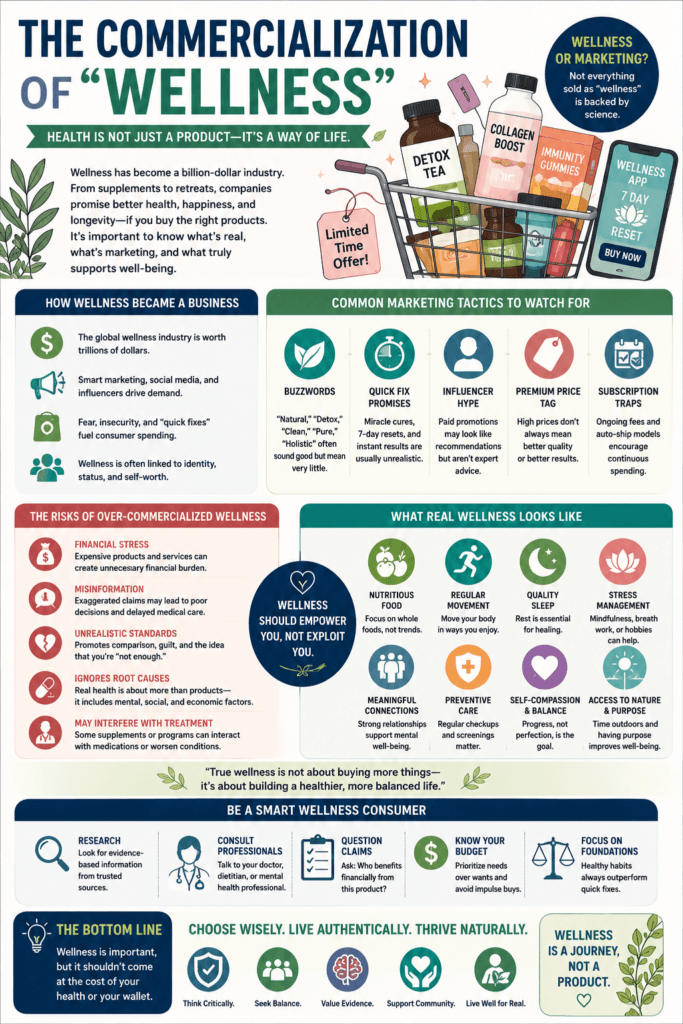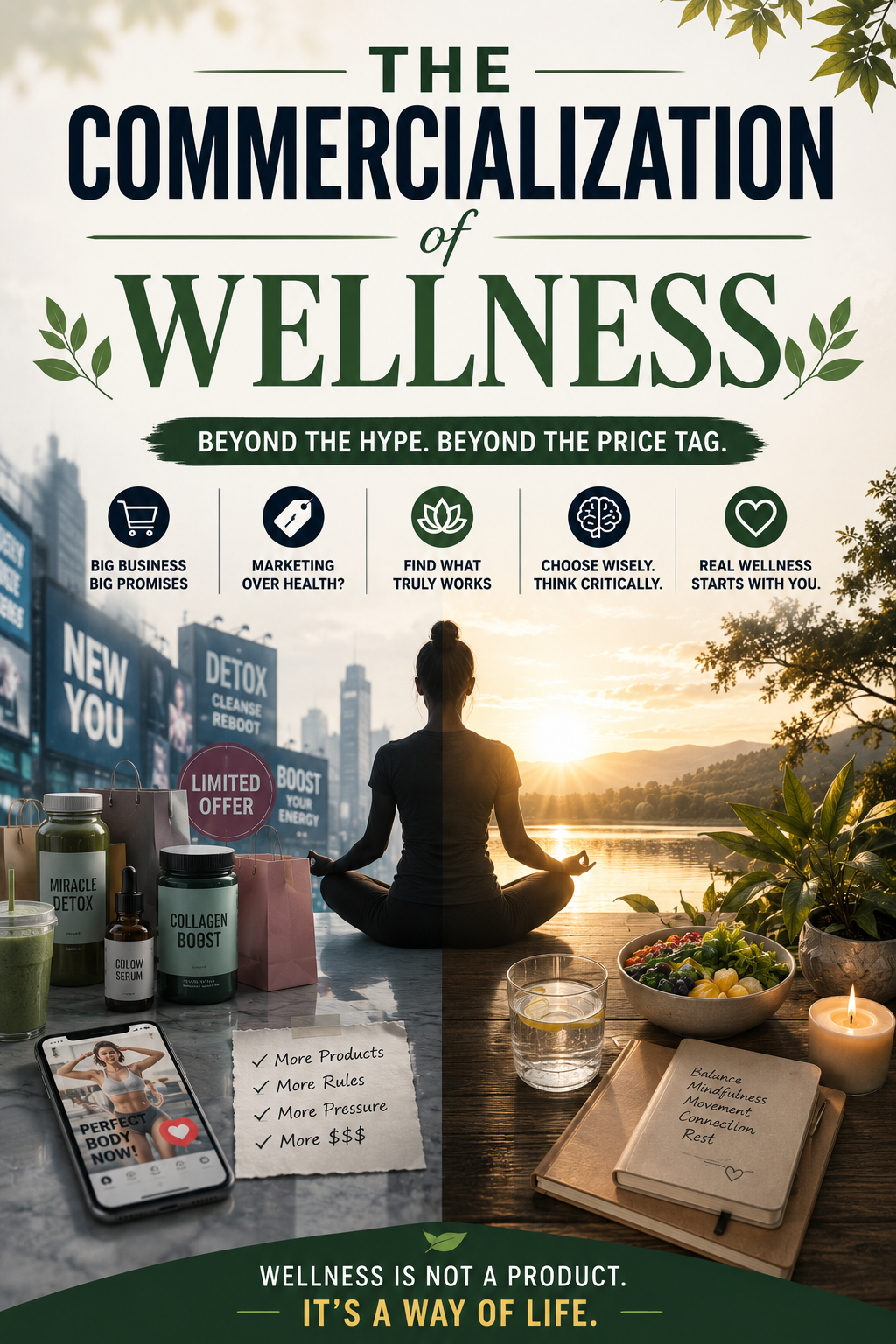
The wellness industry has grown into a multi-billion-dollar global market, offering a wide range of products and services designed to improve health, happiness, and quality of life. From dietary supplements and fitness programs to meditation apps and luxury wellness retreats, consumers have more choices than ever before. While many of these products and services can support healthy living, the commercialization of wellness has also led to misleading marketing, exaggerated health claims, and the promotion of expensive solutions for problems that may be addressed through evidence-based lifestyle practices and medical care. Understanding how wellness is marketed helps individuals make informed decisions, avoid misinformation, and focus on sustainable habits that truly support long-term well-being.
Wellness Commercialization
Wellness was once understood mainly as the ongoing practice of caring for physical, emotional, and social well-being. Today, it has also become a major commercial industry. Companies market supplements, fitness programs, beauty treatments, meditation apps, detox products, luxury retreats, wearable devices, and lifestyle services as pathways to better health. Some of these products can be helpful, but commercialization can also turn ordinary needs—such as rest, movement, connection, and stress management—into expensive problems that consumers are told they must purchase solutions for.
One of the biggest concerns is that wellness marketing often blurs the line between evidence-based healthcare and attractive lifestyle claims. Products may be described as “natural,” “clean,” “healing,” or “detoxifying” without strong scientific support. Influencers, celebrities, and brands can make health claims feel trustworthy even when they are based on testimonials rather than reliable research. This may lead people to spend money on ineffective products or delay seeking appropriate medical or mental health care.
Common Features of Commercialized Wellness
- Expensive supplements, cleanses, retreats, and coaching programs.
- Products marketed as quick fixes for complex health concerns.
- Heavy use of words such as “natural,” “pure,” “toxin-free,” and “holistic.”
- Celebrity or influencer endorsements presented as health expertise.
- Subscription services that encourage continuous purchasing.
- Fear-based messages suggesting the body is damaged, toxic, or inadequate.
- The idea that good health depends mainly on personal discipline and spending power.
Commercialized wellness often promotes an idealized image of health. Social media may present wellness as a perfect morning routine, a certain body type, expensive foods, fashionable workout clothing, or access to exclusive treatments. This can create pressure, shame, and the belief that people are failing if they cannot maintain these routines. It may also ignore factors such as poverty, disability, chronic illness, trauma, work demands, housing, discrimination, and access to healthcare.
Another problem is the moral language sometimes attached to wellness. Food may be labeled “good” or “bad,” bodies may be described as disciplined or unhealthy, and illness may be presented as the result of poor personal choices. This oversimplifies health and can increase stigma. People may blame themselves for conditions influenced by genetics, environment, stress, or limited access to care.
Possible Benefits of the Wellness Industry
The commercialization of wellness is not entirely harmful. It has also helped make some topics more visible and accessible.
- Greater public discussion of mental health and self-care.
- Wider access to fitness, meditation, and stress-management tools.
- Increased interest in sleep, nutrition, and preventive health.
- More options for people seeking community and lifestyle support.
- Greater awareness of burnout and the importance of work-life balance.
The key issue is not whether wellness products exist, but how they are marketed and used. A meditation app may support stress management, but it cannot solve unsafe working conditions. A supplement may correct a medically confirmed deficiency, but it should not be promoted as a cure-all. Exercise can improve health, but it should not be used to shame people or replace treatment for serious illness.
How to Evaluate Wellness Claims
- Ask whether the claim is supported by credible scientific evidence.
- Check whether the seller benefits financially from the recommendation.
- Be cautious of guarantees, miracle cures, and rapid results.
- Look for clear information about risks, costs, and limitations.
- Distinguish personal testimonials from clinical evidence.
- Consult qualified healthcare professionals when claims involve medical treatment.
- Consider whether a free or low-cost alternative could provide the same benefit.
A More Balanced View of Wellness
True wellness is not a product, appearance, or status symbol. It includes access to healthcare, meaningful relationships, adequate rest, safety, nutritious food, movement, purpose, and emotional support. These needs cannot always be solved through individual purchasing decisions. Communities, workplaces, healthcare systems, and public policies also shape well-being.
The commercialization of wellness becomes harmful when it exploits insecurity, spreads misinformation, or suggests that health can be purchased by those who are disciplined or wealthy enough. A healthier approach recognizes that some commercial tools may be useful while maintaining skepticism, prioritizing evidence, and understanding that well-being is influenced by both personal habits and social conditions.
Self-Management Strategies to Understand the Commercialization of “Wellness”
Developing self-management skills can help you navigate the growing wellness industry with confidence and make informed decisions about your health. While many wellness products and services can support healthy living, others rely on exaggerated marketing, misleading claims, or expensive trends that may offer little scientific benefit. Learning to evaluate wellness information critically allows you to focus on practices that truly improve your physical, mental, and emotional well-being.
True wellness is built on consistent, evidence-based habits rather than costly products or quick fixes. A balanced diet, regular physical activity, adequate sleep, stress management, meaningful relationships, and preventive healthcare remain the foundation of good health. By managing your health with realistic expectations and reliable information, you can avoid unnecessary spending and make choices that align with your personal goals and values.
Educate Yourself
Knowledge is your best defense against misleading wellness marketing.
- Learn the difference between evidence-based healthcare and marketing claims.
- Use information from trusted healthcare organizations and qualified professionals.
- Be cautious of products promoted primarily through social media or celebrity endorsements.
- Stay informed about current health research and recommendations.
- Understand that “natural” does not always mean safe or effective.
Evaluate Health Claims Critically
Take time to assess whether wellness claims are supported by evidence.
- Question products that promise rapid or miraculous results.
- Look for scientific studies rather than personal testimonials.
- Check whether claims have been reviewed by reputable health authorities.
- Be cautious of fear-based advertising that exaggerates health risks.
- Avoid products that claim to cure multiple unrelated conditions.
Make Financially Wise Decisions
Wellness should not create unnecessary financial stress.
- Set a budget for health-related purchases.
- Prioritize essentials before buying supplements or wellness gadgets.
- Compare products and prices before making purchases.
- Avoid impulse buying during sales or promotional events.
- Remember that expensive does not always mean more effective.
Focus on Healthy Daily Habits
Many of the most effective wellness practices cost little or nothing.
- Eat a balanced, nutritious diet.
- Engage in regular physical activity.
- Get adequate sleep each night.
- Practice stress management through relaxation techniques.
- Spend time outdoors when possible.
- Stay hydrated throughout the day.
Avoid Comparison
Social media often presents unrealistic images of health and wellness.
- Limit exposure to accounts that promote perfection or unrealistic lifestyles.
- Focus on your personal health goals rather than appearance.
- Recognize that wellness looks different for every individual.
- Celebrate your own progress instead of comparing yourself to others.
- Practice self-compassion during setbacks.
Consult Healthcare Professionals
Professional guidance can help you make informed decisions.
- Discuss supplements with your healthcare provider before using them.
- Seek medical advice for ongoing health concerns.
- Ask questions about treatment options and supporting evidence.
- Use licensed professionals for nutrition, mental health, and medical care.
- Avoid replacing prescribed treatments with unproven wellness products.
Practice Mindful Consumption
Become an intentional consumer rather than an impulsive buyer.
- Ask yourself whether a product meets a genuine need.
- Read ingredient lists and product labels carefully.
- Research companies before making purchases.
- Understand refund policies and subscription terms.
- Consider whether free or lower-cost alternatives are available.
Protect Your Mental Well-Being
Wellness should improve your quality of life, not create additional pressure.
- Set realistic expectations for your health journey.
- Accept that perfection is not required for good health.
- Focus on long-term lifestyle changes rather than quick fixes.
- Practice gratitude for the progress you make.
- Prioritize activities that bring genuine joy and fulfillment.
Build a Personalized Wellness Plan
Your wellness routine should reflect your unique needs and circumstances.
- Set achievable health goals.
- Create a balanced daily routine.
- Include physical, emotional, social, and spiritual well-being.
- Monitor your progress over time.
- Adjust your plan as your health needs change.
Self-management empowers you to take control of your health while avoiding the pressure and misinformation often associated with the commercialization of wellness. By relying on evidence-based information, practicing mindful spending, maintaining healthy lifestyle habits, and seeking guidance from qualified healthcare professionals, you can build a sustainable approach to wellness that supports long-term health rather than short-term trends. Remember, genuine wellness is not measured by the products you buy—it is reflected in the healthy choices you make every day.
Family Support Strategies to Understand the Commercialization of “Wellness”
Families can play an important role in helping one another navigate the growing wellness industry with confidence and critical thinking. As wellness products, services, and social media trends become increasingly popular, family members can work together to distinguish evidence-based health practices from marketing strategies designed to sell products. Open communication and shared decision-making can reduce the risk of misinformation, unnecessary spending, and unrealistic expectations about health and well-being.
Supporting one another also means recognizing that true wellness is not defined by expensive products, strict diets, or perfect lifestyles. Good health is built on balanced nutrition, regular physical activity, quality sleep, stress management, preventive healthcare, and strong relationships. By focusing on these foundational habits, families can create a supportive environment that promotes long-term well-being without feeling pressured by commercial wellness trends.
Encourage Open Communication
Create opportunities to discuss wellness information openly and respectfully.
- Discuss wellness trends on social media.
- Encourage family members to ask questions before purchasing health products.
- Share reliable health information from trusted sources.
- Listen without judgment to different opinions and concerns.
- Discuss both the benefits and limitations of popular wellness products.
Promote Evidence-Based Health Decisions
Help family members make informed choices based on science rather than marketing.
- Consult healthcare professionals before trying new supplements or treatments.
- Research products together before making purchases.
- Verify health claims through reputable medical organizations.
- Be cautious of products promising quick or guaranteed results.
- Teach children and teens how to identify misleading advertisements.
Build Healthy Family Habits
Healthy routines are often more beneficial than expensive wellness products.
- Prepare nutritious meals together.
- Exercise as a family through walks, bike rides, or recreational sports.
- Encourage consistent sleep schedules.
- Practice relaxation techniques such as deep breathing or mindfulness.
- Limit excessive screen time and encourage outdoor activities.
Encourage Financial Responsibility
Wellness should support health without creating financial strain.
- Set a family budget for health-related purchases.
- Compare products before buying.
- Avoid impulse purchases influenced by advertising.
- Discuss the difference between wants and needs.
- Focus on affordable lifestyle habits that improve health.
Support Positive Body Image and Self-Esteem
Commercial wellness often promotes unrealistic standards of beauty and health.
- Celebrate health rather than appearance.
- Avoid criticizing body size or weight.
- Encourage self-acceptance and confidence.
- Teach children that health comes in many shapes and sizes.
- Promote kindness and respect toward others regardless of appearance.
Teach Media and Digital Literacy
Families can reduce the influence of misleading wellness marketing by developing critical thinking skills.
- Explain how influencers earn money through sponsorships and affiliate marketing.
- Discuss how advertisements may exaggerate benefits.
- Encourage fact-checking before sharing health information.
- Evaluate online reviews carefully.
- Recognize emotional marketing tactics designed to create fear or a sense of urgency.
Respect Individual Health Needs
Every family member has different health goals and medical needs.
- Support personalized healthcare decisions.
- Encourage regular medical checkups.
- Recognize that chronic illness or disability may require different approaches.
- Avoid comparing one person’s health journey to another’s.
- Respect personal boundaries regarding diet, exercise, and wellness practices.
Create a Supportive Home Environment
A healthy home promotes lasting wellness without relying on expensive products.
- Keep nutritious foods readily available.
- Encourage regular physical activity.
- Make time for family meals and conversations.
- Support hobbies that reduce stress and increase enjoyment.
- Foster an atmosphere of encouragement rather than perfection.
Model Balanced Wellness
Children and adolescents often learn by observing adults.
- Demonstrate healthy lifestyle habits.
- Practice moderation rather than extreme health practices.
- Talk openly about making informed health decisions.
- Seek professional healthcare when needed.
- Emphasize that wellness is a lifelong journey, not a destination.
Families have the power to create a balanced and realistic understanding of wellness by emphasizing evidence-based health practices, thoughtful decision-making, and mutual support. By encouraging open communication, teaching media literacy, practicing healthy daily habits, and focusing on overall well-being instead of consumer trends, families can protect one another from misleading marketing while building a strong foundation for lifelong health. True wellness grows through consistent care, informed choices, and supportive relationships—not through the purchase of the latest wellness product.
Community Resource Strategies to Understand the Commercialization of “Wellness”
Communities play an essential role in helping individuals make informed decisions about health and wellness. As the wellness industry continues to grow, community resources provide access to evidence-based information that can help people distinguish between scientifically supported health practices and marketing designed to sell products or services. Public health agencies, healthcare organizations, educational institutions, libraries, and nonprofit organizations offer reliable resources that encourage critical thinking and promote healthier lifestyle choices.
Community support also helps reduce the spread of misinformation by providing educational programs, wellness workshops, and opportunities to learn from qualified healthcare professionals. These resources encourage individuals to focus on sustainable habits—such as balanced nutrition, physical activity, mental health care, and preventive medicine—rather than relying on costly trends or products that may not deliver the promised results. By using trusted community resources, individuals and families can make informed decisions that support long-term health and financial well-being.
Utilize Healthcare Professionals
Healthcare providers can help separate evidence-based care from marketing claims.
- Consult physicians for medical concerns and treatment options.
- Seek guidance from registered dietitians for nutrition advice.
- Work with licensed mental health professionals for emotional well-being.
- Ask pharmacists about the safety of supplements and wellness products.
- Discuss potential risks before trying alternative therapies.
Access Public Health Resources
Government and public health organizations provide trustworthy health information.
- Visit local and state health department websites.
- Attend community health education events.
- Review educational materials from reputable public health agencies.
- Learn about preventive healthcare recommendations.
- Stay informed about current health research and public health updates.
Participate in Community Wellness Programs
Many communities offer affordable wellness opportunities supported by qualified professionals.
- Join community fitness classes.
- Attend stress management and mindfulness workshops.
- Participate in nutrition education programs.
- Use local parks and recreation programs for physical activity.
- Take advantage of free health screenings offered by community organizations.
Improve Health Literacy
Developing health literacy helps individuals evaluate wellness information critically.
- Attend health education seminars.
- Participate in workshops on reading nutrition labels and understanding supplements.
- Learn how to evaluate scientific research and health claims.
- Improve digital literacy to identify misleading online advertisements.
- Use libraries and educational institutions as reliable sources of information.
Utilize Consumer Protection Resources
Consumer organizations help protect individuals from misleading health marketing.
- Report deceptive advertising to the appropriate consumer protection agencies.
- Learn about product recalls and safety alerts.
- Verify business credentials before purchasing expensive wellness services.
- Research companies through consumer review organizations.
- Understand your consumer rights regarding refunds and product guarantees.
Support Mental Health and Emotional Well-Being
Wellness includes emotional health, not just physical fitness.
- Participate in community counseling services.
- Join support groups for stress, anxiety, or chronic illness.
- Attend workshops on resilience and healthy coping skills.
- Access crisis services when needed.
- Encourage open discussions that reduce mental health stigma.
Promote Media and Digital Literacy
Communities can help people recognize misleading wellness marketing.
- Attend digital literacy classes.
- Learn to identify sponsored content and influencer advertising.
- Verify health information through reputable sources.
- Encourage fact-checking before sharing health advice online.
- Discuss how social media algorithms can influence health beliefs and purchasing decisions.
Build Supportive Community Connections
Strong social relationships contribute to lasting wellness.
- Volunteer with local community organizations.
- Participate in neighborhood wellness events.
- Join walking groups or recreational sports leagues.
- Support community gardens and healthy food initiatives.
- Build relationships that encourage healthy lifestyle habits rather than consumerism.
Advocate for Evidence-Based Wellness
Communities benefit when health education is based on science and accessibility.
- Encourage schools to teach health and media literacy.
- Support public health campaigns promoting preventive care.
- Advocate for affordable access to healthcare services.
- Promote policies that improve access to nutritious food and safe places for physical activity.
- Encourage organizations to provide accurate, transparent health information.
Community resources empower individuals to make informed, balanced decisions about wellness by providing reliable education, professional guidance, and supportive programs. By using trusted healthcare services, improving health literacy, participating in community wellness initiatives, and developing critical thinking skills, individuals can avoid misleading marketing while focusing on sustainable habits that promote lifelong health. True wellness is strengthened through knowledge, supportive relationships, and access to evidence-based resources—not by the latest commercial trend.
Frequently Asked Questions
Here are some common questions:
1. What does the commercialization of wellness mean?
The commercialization of wellness refers to the marketing and sale of products, services, and experiences that claim to improve health and well-being. This includes supplements, fitness programs, skincare products, meditation apps, wellness retreats, and other lifestyle offerings.
2. Is the wellness industry bad?
No. Many wellness products and services can support healthy lifestyles. The concern is that some companies use misleading marketing, exaggerated health claims, or fear-based advertising to sell products that may not be necessary or supported by scientific evidence.
3. Why has the wellness industry grown so quickly?
Several factors have contributed to its growth, including:
- Increased interest in preventive health.
- Greater awareness of mental health and self-care.
- Social media and influencer marketing.
- Advances in fitness and health technology.
- Consumer demand for natural and holistic approaches to wellness.
4. How can I tell if a wellness claim is trustworthy?
Look for claims that are supported by high-quality scientific research rather than personal testimonials. Check whether the information comes from reputable healthcare organizations or qualified professionals, and be cautious of products that promise quick or guaranteed results.
5. Are “natural” products always safe?
No. The word “natural” does not automatically mean a product is safe, effective, or appropriate for everyone. Natural products can still cause side effects, interact with medications, or lack scientific evidence for their claimed benefits.
6. Why do influencers promote wellness products?
Many influencers receive financial compensation through sponsorships, affiliate marketing, or paid partnerships. While some recommendations may be genuine, others are advertisements and should be evaluated critically.
7. Can expensive wellness products improve my health?
Not necessarily. Higher prices do not guarantee better quality or better health outcomes. Many healthy habits—such as eating nutritious foods, exercising, sleeping well, and managing stress—are more effective than expensive wellness products.
8. What are some warning signs of misleading wellness marketing?
Watch for these red flags:
- Claims of miracle cures or instant results.
- Products that promise to treat a wide range of conditions.
- Fear-based marketing that exaggerates health risks.
- Lack of scientific evidence.
- Heavy reliance on celebrity endorsements or testimonials.
- Pressure to purchase immediately through limited-time offers.
9. What are the foundations of true wellness?
True wellness is based on healthy lifestyle habits, including:
- Balanced nutrition.
- Regular physical activity.
- Quality sleep.
- Stress management.
- Preventive healthcare.
- Strong social connections.
- Emotional and mental well-being.
10. Can wellness products replace medical treatment?
No. Wellness products should never replace evidence-based medical care or prescribed treatments. Always consult a qualified healthcare professional before stopping or changing medical treatment.
11. How can I avoid wasting money on wellness trends?
You can make smarter decisions by:
- Researching products before purchasing.
- Comparing information from trusted sources.
- Setting a budget for wellness spending.
- Consulting healthcare professionals.
- Focusing on long-term healthy habits rather than quick fixes.
12. How does social media influence wellness choices?
Social media can inspire healthy behaviors, but it can also spread misinformation, unrealistic expectations, and sponsored content that appears to be unbiased advice. Learning to recognize advertisements and verify information is essential.
13. Why is critical thinking important when evaluating wellness products?
Critical thinking helps you distinguish between scientific evidence and marketing. Asking questions, reviewing research, and considering the source of information can help you make informed decisions and avoid misleading claims.
14. How can families encourage healthy wellness habits?
Families can:
- Share evidence-based health information.
- Prepare nutritious meals together.
- Exercise regularly as a family.
- Discuss wellness trends openly.
- Encourage preventive healthcare and regular medical checkups.
- Support one another without focusing on perfection or appearance.
15. What is the biggest takeaway about the commercialization of wellness?
The most important lesson is that wellness cannot simply be purchased. While some products and services may be beneficial, lasting health is built through consistent, evidence-based habits, informed decision-making, and access to quality healthcare. By focusing on balanced nutrition, regular physical activity, adequate sleep, stress management, and meaningful relationships, individuals can achieve genuine wellness without being misled by marketing or unnecessary consumer trends.
Conclusion
The commercialization of wellness has raised awareness of the importance of healthy living, but it has also created challenges by encouraging consumers to equate health with products, trends, and costly lifestyle choices. True wellness extends beyond what can be purchased and is built on evidence-based habits such as balanced nutrition, regular physical activity, quality sleep, stress management, preventive healthcare, and meaningful social connections. By developing critical thinking skills, seeking information from trusted healthcare professionals, and making thoughtful decisions about wellness products and services, individuals can protect themselves from misleading marketing while creating a balanced, realistic, and sustainable approach to lifelong health and well-being.
Video: Dermatologists HATE This One Trick (It’s Honesty) #WellnessTruth