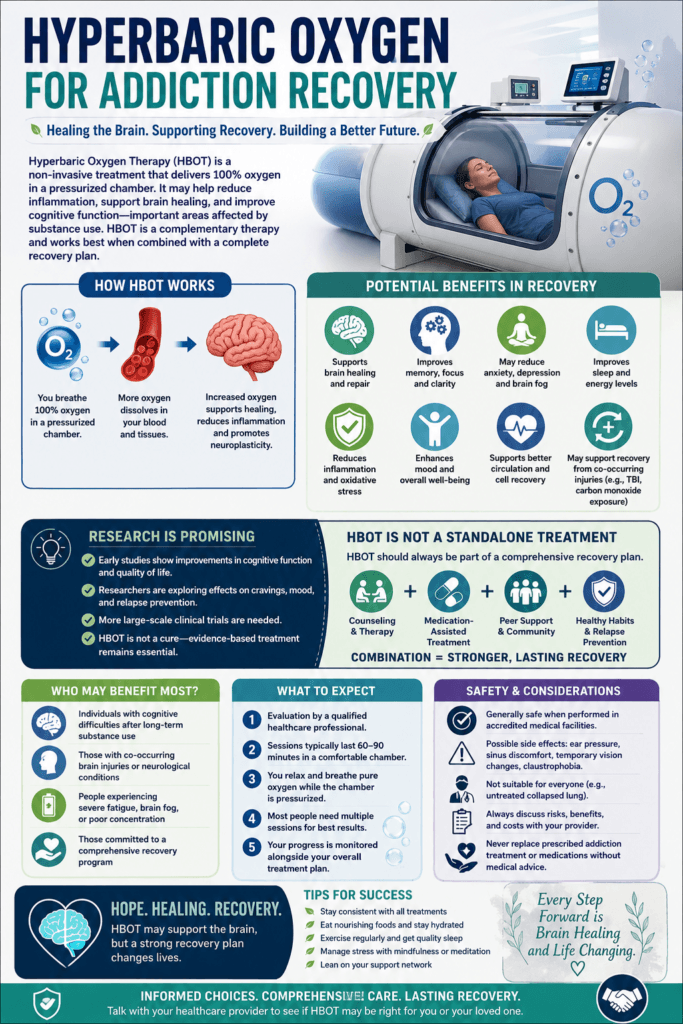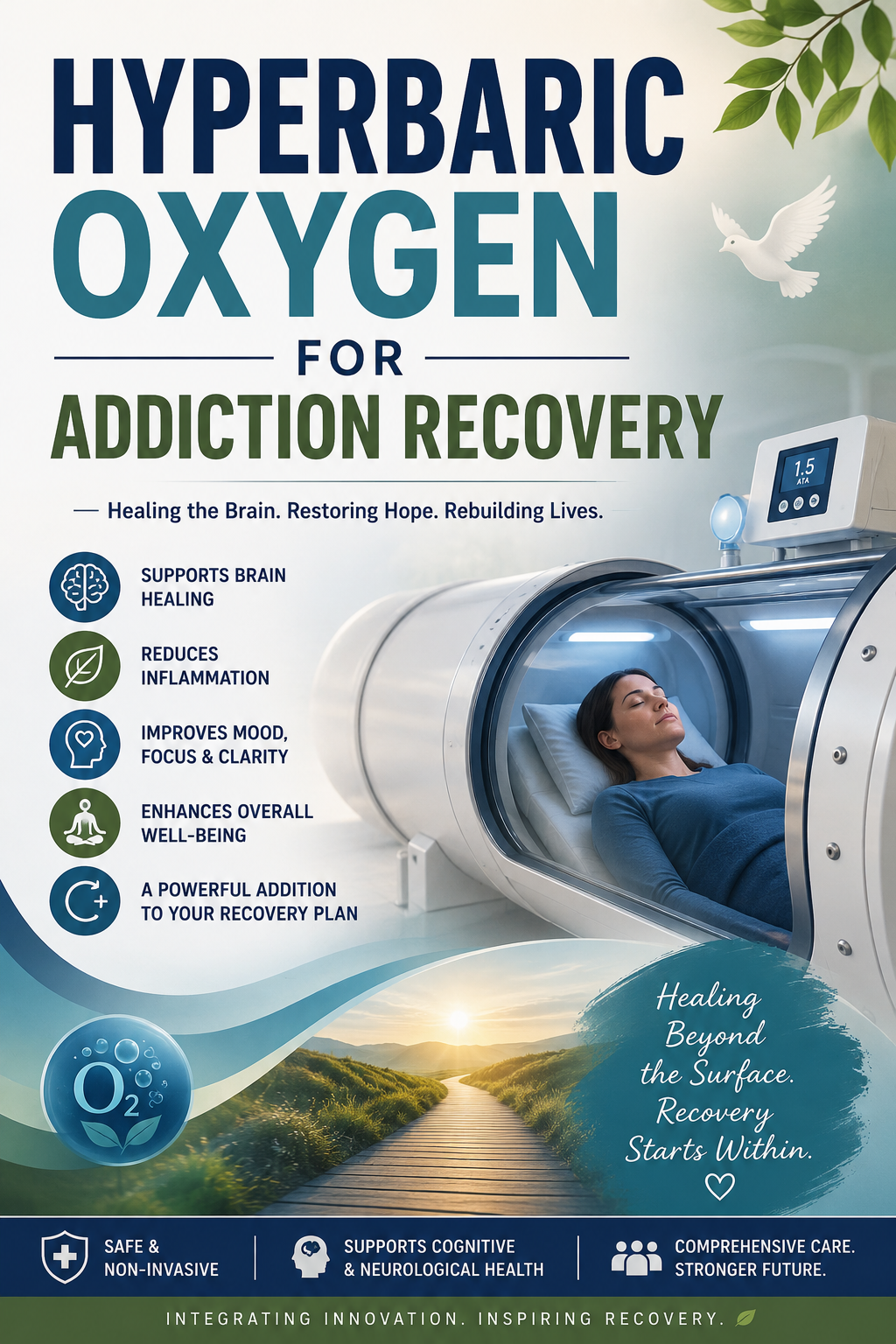
Hyperbaric oxygen therapy (HBOT) is gaining attention as a potential complementary treatment for individuals recovering from substance use disorders. By delivering 100% oxygen in a pressurized chamber, HBOT increases the amount of oxygen available to body tissues, which may help reduce inflammation and support the healing of damaged brain cells. Researchers are investigating whether these effects can improve memory, concentration, emotional regulation, and overall brain function following long-term alcohol or drug use. Although early findings are encouraging, HBOT is not considered a standalone treatment for addiction and should be used only as part of a comprehensive recovery plan that includes evidence-based therapies, counseling, medication-assisted treatment when appropriate, and ongoing recovery support.
Hyperbaric Oxygen for Addiction Recovery
Hyperbaric oxygen therapy (HBOT) is an emerging treatment being studied as a complementary approach to addiction recovery. During HBOT, a person breathes 100% oxygen inside a pressurized chamber, allowing the body to absorb much higher levels of oxygen than normal. This increased oxygen delivery may help reduce inflammation, improve blood flow, and support the body’s natural healing processes. Although HBOT is an established treatment for certain medical conditions, its use in addiction recovery remains an area of ongoing research.
Long-term alcohol and drug use can affect brain function by damaging nerve cells, reducing blood flow, and increasing inflammation. These changes may contribute to problems with memory, attention, decision-making, mood, and emotional regulation. Researchers are investigating whether HBOT may support brain recovery by improving oxygen delivery to damaged tissues and promoting neuroplasticity—the brain’s ability to form new neural connections. While early findings are promising, current evidence is not strong enough to recommend HBOT as a standard treatment for substance use disorders.
Potential Benefits of HBOT
Some studies suggest HBOT may provide supportive benefits during recovery, particularly when combined with evidence-based addiction treatment.
- May improve oxygen delivery to brain tissue.
- May reduce inflammation associated with chronic substance use.
- May support brain healing and neuroplasticity.
- May improve attention, memory, and mental clarity.
- May reduce fatigue and improve overall energy.
- May support better sleep and emotional well-being.
- May help individuals with co-occurring traumatic brain injury (TBI) or other neurological conditions.
What Research Currently Shows
Scientific research is encouraging but still limited.
- Small studies have reported improvements in cognitive functioning.
- Researchers continue to study HBOT’s effects on cravings and mood.
- Larger clinical trials are needed to determine effectiveness.
- Results vary among individuals and different types of substance use disorders.
- HBOT is currently considered an adjunctive, not primary, treatment.
What HBOT Cannot Do
It is important to have realistic expectations about HBOT.
- It is not a cure for addiction.
- It does not eliminate withdrawal symptoms on its own.
- It does not replace counseling or behavioral therapy.
- It cannot substitute for medication-assisted treatment when indicated.
- It should not replace relapse prevention planning or long-term recovery support.
Evidence-Based Treatments That Should Continue
HBOT is most effective when used alongside proven addiction treatments.
- Individual counseling.
- Cognitive behavioral therapy (CBT).
- Medication-assisted treatment (MAT) when appropriate.
- Group therapy and peer support.
- Family therapy.
- Mental health treatment for co-occurring disorders.
- Healthy nutrition, exercise, and adequate sleep.
Possible Risks and Side Effects
HBOT is generally safe when performed by trained professionals, but it carries some risks.
- Ear pressure or discomfort.
- Sinus pain.
- Temporary vision changes.
- Claustrophobia during treatment.
- Rare oxygen toxicity.
- Rare lung injury or barotrauma.
- Not appropriate for everyone, including individuals with an untreated collapsed lung (pneumothorax).
Who May Benefit Most
Researchers believe HBOT may have the greatest potential for individuals who have additional medical conditions affecting the brain or nervous system.
- Individuals recovering from traumatic brain injury.
- People experiencing cognitive difficulties after prolonged substance use.
- Individuals with certain neurological conditions being treated by specialists.
- Patients receiving comprehensive addiction treatment under medical supervision.
Key Takeaway
Hyperbaric oxygen therapy is a promising area of research that may support brain healing and cognitive recovery for some individuals with substance use disorders. However, current scientific evidence is still evolving, and HBOT should not be viewed as a standalone treatment for addiction. The most effective recovery plans continue to combine evidence-based therapies, medication when appropriate, behavioral counseling, healthy lifestyle habits, and ongoing social support. Anyone considering HBOT should discuss the potential benefits, risks, and limitations with a qualified healthcare provider to determine whether it may be an appropriate addition to their personalized recovery plan.
Self-Management Strategies to Understand Hyperbaric Oxygen for Addiction Recovery
Hyperbaric oxygen therapy (HBOT) has gained attention as a possible complementary treatment for addiction recovery, particularly because researchers are studying its potential to support brain healing after prolonged substance use. While early research is promising, HBOT should be viewed as one part of a comprehensive recovery plan rather than a cure for addiction. Practicing good self-management can help you make informed decisions, maximize the benefits of treatment, and maintain long-term recovery.
Recovery involves healing both the brain and the body. Whether or not HBOT is included in your treatment plan, healthy daily habits such as balanced nutrition, regular exercise, quality sleep, stress management, and participation in counseling remain essential. Learning about HBOT from reliable medical sources and working closely with your healthcare team can help you understand its potential benefits and limitations, and determine whether it is appropriate for your individual needs.
Learn About HBOT
Educating yourself helps you make informed healthcare decisions.
- Understand how HBOT works by increasing oxygen delivery to body tissues.
- Learn that HBOT is considered a complementary therapy, not a replacement for addiction treatment.
- Discuss current scientific evidence with your healthcare provider.
- Set realistic expectations about potential benefits.
- Stay informed as new research becomes available.
Continue Evidence-Based Addiction Treatment
HBOT should support—not replace—proven recovery strategies.
- Attend counseling sessions consistently.
- Participate in behavioral therapies such as cognitive behavioral therapy (CBT).
- Take prescribed medications exactly as directed.
- Attend peer support or recovery meetings.
- Follow your personalized recovery plan.
Support Brain Health
Healthy lifestyle choices may complement your recovery efforts.
- Eat a balanced diet rich in fruits, vegetables, whole grains, and lean proteins.
- Stay well hydrated throughout the day.
- Exercise regularly to improve circulation and brain function.
- Prioritize 7–9 hours of quality sleep each night.
- Limit processed foods and excess sugar when possible.
Strengthen Cognitive Recovery
Recovery often includes rebuilding memory, attention, and concentration.
- Read books or educational materials regularly.
- Complete puzzles, memory games, or brain-training exercises.
- Practice mindfulness or meditation to improve focus.
- Keep a daily journal to monitor progress.
- Learn new hobbies or skills to stimulate the brain.
Manage Stress in Healthy Ways
Stress can interfere with recovery and overall healing.
- Practice deep breathing exercises.
- Try yoga or gentle stretching.
- Spend time outdoors when possible.
- Listen to relaxing music.
- Build a consistent daily routine that supports emotional stability.
Monitor Your Progress
Tracking your recovery can help you recognize improvements and challenges.
- Record changes in mood, energy, and concentration.
- Keep track of sleep quality.
- Note any improvements after treatments.
- Share your observations with your healthcare provider.
- Celebrate small milestones throughout recovery.
Know the Safety Considerations
Understanding possible risks helps you use HBOT safely.
- Inform your provider about all medical conditions.
- Report ear pain, vision changes, or unusual symptoms promptly.
- Follow all instructions before and after HBOT sessions.
- Never discontinue prescribed addiction treatment without medical guidance.
- Ask questions whenever you are uncertain about your treatment plan.
Build a Strong Support System
Recovery is more successful when you stay connected with others.
- Maintain regular communication with trusted family members.
- Participate in peer recovery groups.
- Seek encouragement from supportive friends.
- Work closely with your healthcare team.
- Ask for help early if cravings or emotional difficulties increase.
Focus on Long-Term Recovery
HBOT may support healing, but lasting recovery requires ongoing commitment.
- Continue healthy habits even after completing HBOT.
- Follow up regularly with your healthcare providers.
- Develop a relapse prevention plan.
- Practice patience as brain healing takes time.
- Remember that recovery is a lifelong process built on consistent, healthy choices.
Self-management empowers you to take an active role in your recovery and make informed decisions about emerging therapies, such as hyperbaric oxygen therapy. When combined with evidence-based addiction treatment, healthy lifestyle habits, and a strong support network, HBOT may become one component of a comprehensive recovery plan. Working closely with qualified healthcare professionals ensures that your treatment is safe, personalized, and focused on long-term healing and sustained recovery.
Family Support Strategies to Understand Hyperbaric Oxygen for Addiction Recovery
Families play an important role in supporting loved ones throughout addiction recovery. As hyperbaric oxygen therapy (HBOT) gains attention as a potential complementary treatment, family members may have questions about its purpose, benefits, and limitations. Learning about HBOT together can help families make informed decisions and maintain realistic expectations. Although early research suggests HBOT may support brain healing and cognitive recovery, it is not a cure for addiction and should be used alongside evidence-based treatments such as counseling, medication-assisted treatment (when appropriate), and behavioral therapies.
Family support can improve treatment adherence, reduce stress, and encourage healthy lifestyle changes that promote overall recovery. By communicating openly, attending medical appointments when appropriate, and encouraging participation in comprehensive treatment, families can help create a stable and supportive environment that fosters long-term success.
Learn About HBOT Together
Understanding the therapy helps families provide informed support.
- Learn how HBOT works by increasing oxygen delivery to body tissues.
- Understand that HBOT is considered a complementary therapy rather than a primary addiction treatment.
- Review current scientific evidence from reputable medical sources.
- Ask healthcare providers questions about potential benefits and risks.
- Avoid relying on misinformation from social media or unverified websites.
Encourage Comprehensive Addiction Treatment
Recovery is most successful when multiple evidence-based treatments work together.
- Support attendance at counseling and therapy appointments.
- Encourage participation in peer recovery groups.
- Help your loved one follow medication plans as prescribed.
- Reinforce relapse prevention strategies.
- Celebrate progress made through all aspects of recovery, not just HBOT.
Provide Emotional Support
Recovery can be physically and emotionally challenging.
- Listen without judgment or criticism.
- Encourage honest conversations about fears and expectations.
- Offer reassurance during difficult periods.
- Recognize small milestones and improvements.
- Be patient as healing takes time.
Help Maintain Healthy Daily Habits
Lifestyle choices can complement recovery and overall brain health.
- Prepare balanced, nutritious meals together.
- Encourage regular physical activity.
- Promote healthy sleep routines.
- Reduce unnecessary stress within the home.
- Participate in relaxing activities, such as walking, meditation, or shared hobbies.
Assist with Treatment Adherence
Practical support can make treatment easier to maintain.
- Help organize medical appointments.
- Provide transportation to HBOT sessions if needed.
- Assist with scheduling follow-up visits.
- Encourage open communication with healthcare providers.
- Help monitor progress without becoming controlling.
Recognize the Limits of HBOT
Families should maintain realistic expectations about treatment.
- Understand that HBOT does not eliminate addiction.
- Know that recovery still requires behavioral change and ongoing support.
- Avoid expecting immediate improvements in mood or cognition.
- Encourage consistent participation in all recommended treatments.
- Remember that recovery often progresses gradually over months or years.
Monitor for Safety
Family members can help identify potential concerns during treatment.
- Watch for reports of ear discomfort or sinus pressure.
- Encourage prompt reporting of unusual symptoms.
- Remind your loved one to follow medical instructions carefully.
- Attend medical appointments when appropriate to better understand the treatment plan.
- Contact healthcare providers if concerning symptoms develop.
Build a Positive Recovery Environment
A supportive home promotes long-term healing.
- Encourage healthy communication.
- Reduce exposure to alcohol and other substances in the home.
- Support participation in sober recreational activities.
- Promote routines that encourage stability and structure.
- Focus on hope, resilience, and long-term recovery rather than perfection.
Practice Self-Care as a Family Member
Supporting someone in recovery is easier when caregivers also care for themselves.
- Attend family education or support groups.
- Learn healthy boundary-setting skills.
- Maintain your own physical and emotional health.
- Seek counseling if caregiving becomes overwhelming.
- Remember that your well-being also contributes to your loved one’s recovery.
Families are an essential part of successful addiction recovery. By understanding the potential role of hyperbaric oxygen therapy, supporting evidence-based treatment, maintaining realistic expectations, and creating a compassionate, structured home environment, loved ones can help strengthen recovery while promoting hope, resilience, and long-term healing for the entire family.
Community Resource Strategies to Understand Hyperbaric Oxygen for Addiction Recovery
Community resources can help individuals and families better understand the potential role of hyperbaric oxygen therapy (HBOT) in addiction recovery. While HBOT is an established medical treatment for several conditions, its use as a complementary therapy for substance use disorders is still being researched. Healthcare organizations, addiction treatment centers, public health agencies, and community education programs can provide reliable, evidence-based information to help people distinguish scientific findings from misinformation and make informed treatment decisions.
Recovery is most successful when individuals have access to comprehensive support. Community resources can connect people with addiction specialists, mental health professionals, peer recovery groups, and educational programs that explain both traditional and emerging treatment options. These services help ensure that HBOT, if considered, is used as part of a broader recovery plan that includes counseling, medication-assisted treatment when appropriate, relapse prevention, and ongoing support.
Consult Qualified Healthcare Professionals
Medical experts can help determine whether HBOT may be appropriate.
- Speak with an addiction medicine specialist.
- Consult a hyperbaric medicine physician if HBOT is being considered.
- Discuss treatment goals with your primary care provider.
- Ask questions about current research, benefits, and potential risks.
- Seek second opinions when making important treatment decisions.
Utilize Accredited Addiction Treatment Programs
Comprehensive treatment programs provide evidence-based care.
- Enroll in licensed addiction treatment programs.
- Participate in outpatient or residential treatment when appropriate.
- Continue counseling while exploring complementary therapies.
- Work with multidisciplinary treatment teams.
- Develop individualized recovery plans based on your specific needs.
Participate in Community Recovery Support
Peer support strengthens long-term recovery.
- Attend local recovery meetings.
- Join peer support groups for substance use recovery.
- Participate in recovery community centers.
- Connect with sober social activities and volunteer opportunities.
- Build supportive relationships with others in recovery.
Access Educational Resources
Learning from trusted organizations promotes informed decision-making.
- Attend community health seminars on addiction treatment.
- Participate in educational workshops hosted by hospitals or universities.
- Review evidence-based information from reputable medical organizations.
- Learn about both the benefits and limitations of emerging therapies.
- Stay informed as new research becomes available.
Utilize Mental Health Services
Addressing mental health supports overall recovery success.
- Seek counseling for anxiety, depression, or trauma.
- Participate in cognitive behavioral therapy (CBT) or other evidence-based therapies.
- Access psychiatric evaluation when needed.
- Join family counseling programs.
- Develop healthy coping skills through therapy.
Explore Brain Injury and Rehabilitation Resources
Some individuals recovering from substance use disorders may also benefit from neurological rehabilitation.
- Consult specialists if traumatic brain injury (TBI) is present.
- Participate in cognitive rehabilitation programs when recommended.
- Access occupational or speech therapy if appropriate.
- Discuss whether HBOT has a role in treating qualifying neurological conditions.
- Coordinate care among rehabilitation and addiction specialists.
Verify Treatment Providers
Choosing qualified providers helps ensure safe care.
- Select accredited hyperbaric treatment centers.
- Verify provider credentials and certifications.
- Ask about experience treating patients with substance use disorders.
- Review clinic safety protocols.
- Avoid clinics that make unrealistic promises or guarantee addiction cures.
Support Families Through Community Programs
Family education strengthens recovery outcomes.
- Attend family support groups.
- Participate in educational workshops about addiction.
- Learn communication and boundary-setting skills.
- Utilize caregiver support services.
- Share reliable treatment information with other family members.
Advocate for Evidence-Based Care
Communities benefit when treatment decisions are based on science.
- Support research into emerging addiction therapies.
- Encourage responsible public education about HBOT.
- Promote access to comprehensive addiction treatment.
- Help reduce stigma surrounding substance use disorders.
- Encourage healthcare providers to discuss both established and emerging treatment options honestly.
Community resources provide valuable education, professional guidance, and ongoing support for individuals considering hyperbaric oxygen therapy as part of addiction recovery. By working with qualified healthcare providers, participating in evidence-based treatment programs, utilizing peer support, and relying on trustworthy educational resources, individuals and families can make informed decisions about HBOT while maintaining a comprehensive approach to recovery. Strong community partnerships help ensure that emerging therapies are used safely and appropriately, alongside proven treatments that support lasting recovery.
Frequently Asked Questions
Here are some common questions:
1. What is hyperbaric oxygen therapy (HBOT)?
HBOT is a medical treatment in which a person breathes 100% oxygen inside a pressurized chamber. The increased pressure allows more oxygen to dissolve into the bloodstream, helping deliver oxygen to tissues throughout the body.
2. Can HBOT cure addiction?
No. HBOT is not a cure for addiction. It is being studied as a complementary therapy that may support brain healing, but it does not replace evidence-based addiction treatments such as counseling, behavioral therapy, medication-assisted treatment (MAT), and peer support.
3. How might HBOT help people in addiction recovery?
Researchers are investigating whether HBOT may:
- Improve oxygen delivery to brain tissue.
- Reduce inflammation.
- Support neuroplasticity (the brain’s ability to form new connections).
- Improve memory, attention, and concentration.
- Reduce mental fatigue or “brain fog.”
- Support overall cognitive recovery.
4. Is HBOT approved specifically for treating addiction?
No. While HBOT is approved for several medical conditions, it is not currently approved as a standard treatment specifically for substance use disorders. Research is ongoing to better understand its role in addiction recovery.
5. Who might benefit most from HBOT during recovery?
HBOT may be considered for individuals who:
- Have cognitive difficulties after prolonged substance use.
- Have a co-occurring traumatic brain injury (TBI).
- Have certain neurological conditions that may benefit from oxygen therapy.
- Are participating in a comprehensive addiction treatment program.
A healthcare provider can determine whether HBOT is appropriate based on an individual’s medical history.
6. Does HBOT reduce cravings?
Some early studies are exploring whether HBOT may influence cravings and mood, but there is not enough evidence to conclude that it reliably reduces cravings or prevents relapse.
7. How long does a typical HBOT session last?
Most sessions last 60 to 90 minutes, although treatment schedules vary depending on the medical condition being treated and the healthcare provider’s recommendations.
8. How many HBOT sessions are usually needed?
The number of sessions varies based on individual needs and treatment goals. Some medical conditions require only a few sessions, while others may require several weeks of treatment. Your healthcare provider will recommend a personalized treatment plan.
9. Is HBOT safe?
HBOT is generally considered safe when performed in an accredited medical facility under trained healthcare professionals. However, like any medical treatment, it has potential risks and side effects.
10. What are the possible side effects?
Possible side effects include:
- Ear or sinus pressure.
- Temporary vision changes.
- Claustrophobia.
- Fatigue after treatment.
- Rare oxygen toxicity.
- Rare lung injury due to pressure changes.
11. Who should not receive HBOT?
HBOT may not be appropriate for everyone. Certain medical conditions, such as an untreated collapsed lung (pneumothorax), may make HBOT unsafe. A complete medical evaluation is necessary before treatment begins.
12. Can HBOT replace counseling or medication?
No. HBOT should never replace counseling, behavioral therapies, medication-assisted treatment, or other evidence-based recovery services. It is best viewed as a possible addition to a comprehensive treatment plan.
13. Is there strong scientific evidence supporting HBOT for addiction recovery?
Research is promising but still limited. Some small studies suggest improvements in cognitive function and quality of life, but larger, high-quality clinical trials are needed before HBOT can be routinely recommended for addiction treatment.
14. Should I talk to my healthcare provider before trying HBOT?
Yes. A healthcare provider can review your medical history, discuss the potential benefits and risks, determine whether HBOT is appropriate for your situation, and help you decide how it may fit into your overall recovery plan.
15. What is the most important thing to remember about HBOT?
HBOT may support healing for some individuals, but lasting recovery depends on a comprehensive treatment approach that includes:
- Behavioral therapy.
- Medication-assisted treatment when appropriate.
- Mental health care.
- Healthy lifestyle habits.
- Family and community support.
- Long-term relapse prevention.
HBOT should be considered a potential complementary therapy—not a standalone solution—for addiction recovery.
Conclusion
Hyperbaric oxygen therapy represents a promising area of research in addiction recovery, particularly for its potential to support brain healing and cognitive function. However, current scientific evidence is still evolving, and more high-quality clinical studies are needed to determine its effectiveness for treating substance use disorders. Individuals considering HBOT should discuss the potential benefits and risks with qualified healthcare professionals and maintain realistic expectations about its role in recovery. Lasting recovery continues to rely on comprehensive, evidence-based care that combines medical treatment, behavioral therapies, healthy lifestyle habits, family involvement, and community support. When integrated thoughtfully into an individualized treatment plan, HBOT may serve as a valuable complementary tool for some people on their journey toward long-term recovery.
Video: Does Hyperbaric Oxygen Actually Work for Addiction #facts #health #recovery