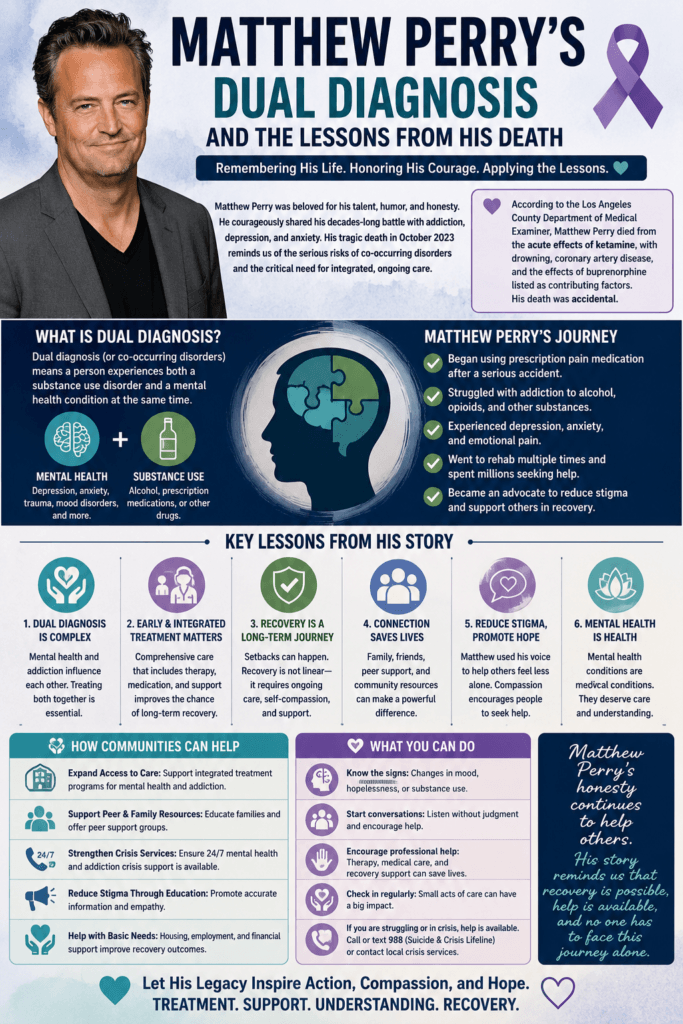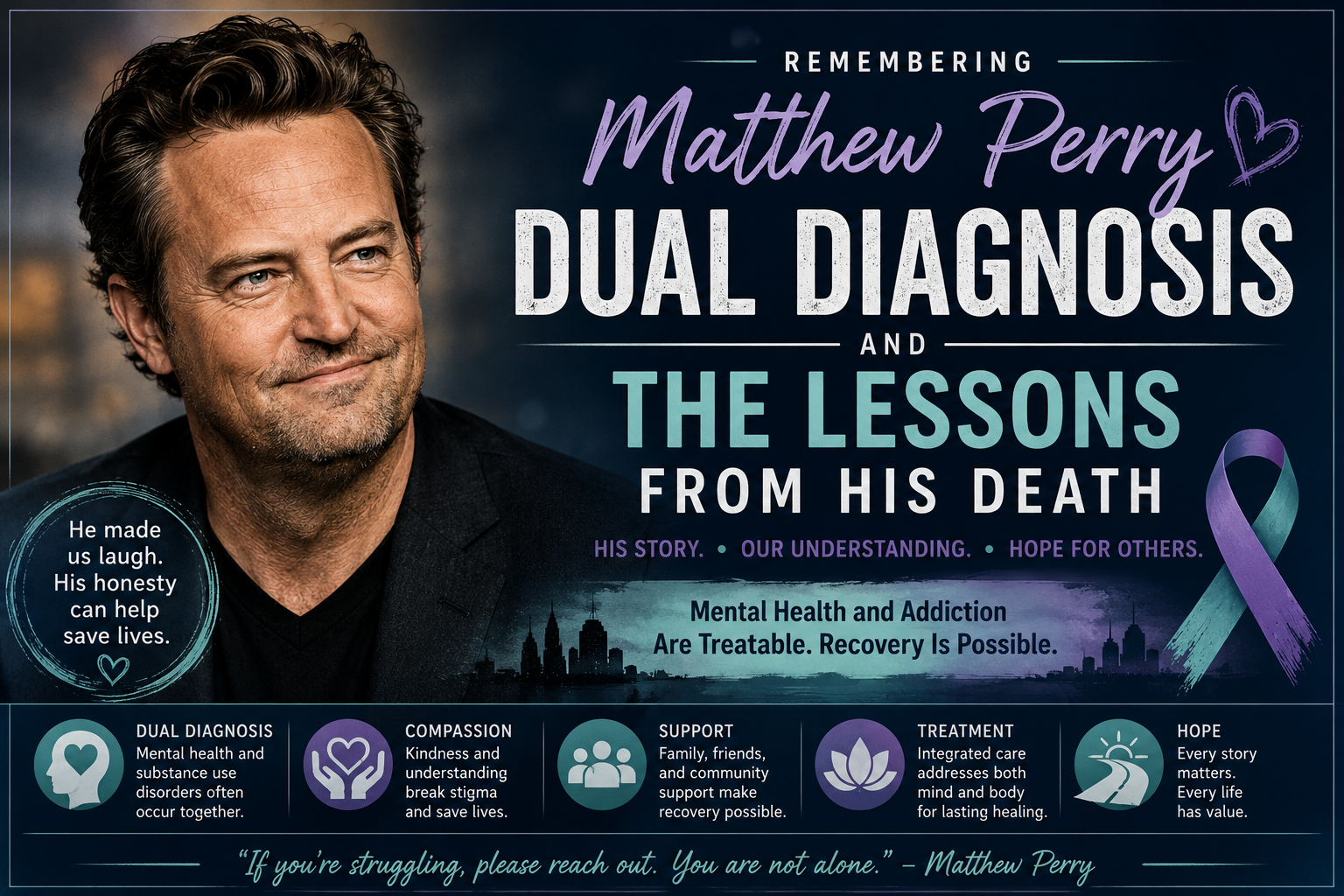
Matthew Perry’s life brought worldwide attention to the challenges of living with both a substance use disorder and mental health concerns, a condition commonly known as dual diagnosis or co-occurring disorders. Throughout his career, Perry openly discussed his struggles with addiction, recovery, and the emotional difficulties he experienced, helping reduce stigma and encouraging others to seek treatment. According to the official medical examiner, his death resulted from the acute effects of ketamine, with additional contributing medical factors. While it would be inaccurate to attribute his death solely to dual diagnosis, his experiences illustrate how complex and interconnected mental health, addiction, chronic medical conditions, and recovery can be. His story serves as an important reminder that effective treatment requires a comprehensive, integrated approach that addresses both mental health and substance use disorders while providing ongoing medical care and long-term recovery support.
Matthew Perry’s Dual Diagnosis of Mental Illness and Addiction: Lessons for Recovery and Prevention
The death of Matthew Perry highlighted the complex relationship between mental health disorders and substance use disorders, often referred to as dual diagnosis or co-occurring disorders. Perry was open about his decades-long struggles with addiction, depression, anxiety, chronic pain, and the challenges of maintaining recovery. His story demonstrates that addiction is a chronic medical condition that often occurs alongside mental health challenges and requires ongoing, comprehensive treatment.
What Is Dual Diagnosis?
Dual diagnosis occurs when a person has both a mental health disorder and a substance use disorder at the same time. These conditions frequently interact with one another.
For example:
- Depression or anxiety may lead someone to misuse alcohol or drugs to temporarily relieve emotional distress.
- Long-term substance use can worsen mood disorders, anxiety, sleep disturbances, and cognitive functioning.
- Each condition can make the other more difficult to treat if addressed separately.
Integrated treatment that addresses both conditions simultaneously is associated with better outcomes than treating either condition alone.
Matthew Perry’s Recovery Journey
Perry publicly discussed his struggles with alcohol and prescription opioid addiction for many years. Following an accident in the late 1990s, he received opioid pain medication, which contributed to dependence. He later described cycles of treatment, relapse, and recovery, including:
- Multiple inpatient rehabilitation stays.
- Detoxification programs.
- Therapy and counseling.
- Participation in recovery support programs.
- Advocacy for reducing stigma surrounding addiction.
He estimated spending millions of dollars on treatment over the course of his life and used his experiences to encourage others to seek help.
Mental Health and Addiction
Although Perry spoke publicly about experiencing depression and anxiety, it is important to recognize that only qualified healthcare professionals can diagnose mental health disorders, and not all details of a person’s medical history are publicly known.
His experiences illustrate several important principles:
- Mental health symptoms may increase vulnerability to substance misuse.
- Addiction can intensify emotional distress.
- Recovery often requires treatment for both conditions simultaneously.
- Long-term monitoring and support remain important even after periods of sobriety.
Circumstances of His Death
According to the official investigation by the Los Angeles County Department of Medical Examiner, Perry died in October 2023 from the acute effects of ketamine, with contributing factors including drowning, coronary artery disease, and the effects of buprenorphine. The medical examiner concluded that the ketamine level found in his system was not consistent with his documented infusion therapy several days earlier, indicating another source.
Importantly, the medical examiner did not conclude that his death was caused simply by “mental illness and addiction.” Rather, his history of addiction and mental health challenges formed part of a much broader clinical picture. It would be inaccurate to state that dual diagnosis alone directly caused his death.
Lessons for Individuals With Dual Diagnosis
Perry’s story highlights several important lessons:
- Recovery is possible, but addiction is often a chronic condition requiring ongoing management.
- Mental health disorders and substance use disorders should be treated together rather than separately.
- Medication should always be used under careful medical supervision.
- Relapse or setbacks should be viewed as signals to seek additional support rather than as personal failures.
- Family, peer support, counseling, and long-term follow-up can all contribute to sustained recovery.
Reducing Stigma
One of Perry’s lasting contributions was his willingness to speak openly about addiction. His honesty helped challenge misconceptions that addiction is a moral failing rather than a treatable medical condition. His advocacy encouraged many people to seek treatment and reminded the public that recovery often involves persistence, compassion, and ongoing care.
Conclusion
Matthew Perry’s life illustrates the challenges many individuals face when living with both addiction and mental health concerns. While his official cause of death involved the acute effects of ketamine and other contributing medical factors, his lifelong experiences underscore the importance of integrated treatment for co-occurring disorders. His openness about recovery continues to raise awareness that addiction and mental illness are treatable health conditions, and that seeking professional help early, maintaining long-term support, and addressing both conditions together can improve health, quality of life, and recovery outcomes.
Self-Management Strategies to Understand Matthew Perry’s Dual Diagnosis and the Lessons From His Death
Matthew Perry’s life and death illustrate the importance of recognizing that substance use disorders and mental health conditions often occur together, a condition known as dual diagnosis or co-occurring disorders. While the official cause of his death was the acute effects of ketamine with other contributing factors identified by the medical examiner, his long history of addiction and mental health challenges highlights why comprehensive, ongoing care is essential. Rather than focusing solely on his death, individuals can learn valuable self-management strategies that promote recovery, reduce relapse risk, and improve overall well-being.
1. Learn About Dual Diagnosis
Understanding that mental health disorders and substance use disorders often influence one another is an important first step. Depression, anxiety, trauma, or other mental health conditions can increase the risk of substance misuse, while substance use can worsen emotional and psychological symptoms.
Self-management tips:
- Learn about co-occurring disorders from reliable health organizations.
- Recognize that addiction is a treatable medical condition, not a personal weakness.
- Understand that successful recovery often requires treating both conditions together.
2. Seek Professional Evaluation Early
If you notice symptoms of depression, anxiety, persistent mood changes, or increasing substance use, seek a professional evaluation as early as possible. Early intervention can improve treatment outcomes and reduce the risk of complications.
Self-management tips:
- Schedule regular appointments with healthcare providers.
- Be honest about both mental health symptoms and substance use.
- Follow recommended treatment plans consistently.
3. Follow an Integrated Treatment Plan
People with dual diagnosis often achieve better outcomes when mental health and substance use disorders are treated at the same time rather than separately.
Your treatment plan may include:
- Individual counseling
- Cognitive Behavioral Therapy (CBT)
- Medication when appropriate
- Medication for addiction treatment (MAT) if indicated
- Peer recovery support
- Family therapy
- Relapse prevention education
4. Take Medications Only as Prescribed
Many people with chronic pain, anxiety, or depression require medications. Using medications exactly as prescribed and maintaining regular communication with healthcare providers reduces the risk of misuse and dangerous interactions.
Self-management tips:
- Never increase or decrease medication doses without medical advice.
- Inform all healthcare providers about every medication you take.
- Report side effects or concerns promptly.
- Avoid using alcohol or illicit drugs with prescription medications unless specifically approved by your healthcare provider.
5. Monitor Your Mental Health Daily
Mental health symptoms often change gradually. Recognizing early warning signs allows you to seek help before symptoms become overwhelming.
Track changes in:
- Mood
- Sleep
- Appetite
- Anxiety levels
- Motivation
- Energy
- Concentration
- Substance cravings
Keeping a journal or using a mood-tracking app can help identify patterns over time.
6. Develop Healthy Coping Skills
Recovery involves replacing substance use with healthier ways of managing stress and emotions.
Healthy coping strategies include:
- Regular physical activity
- Mindfulness meditation
- Deep breathing exercises
- Journaling
- Creative activities
- Spending time outdoors
- Talking with trusted friends or family
- Practicing gratitude
7. Build a Strong Support Network
No one should face recovery alone. A strong support system can provide encouragement, accountability, and practical assistance during difficult times.
Support may come from:
- Family members
- Friends
- Therapists
- Healthcare providers
- Peer support groups
- Recovery coaches
- Faith communities, if desired
Stay connected even when you are feeling well, as ongoing support helps maintain recovery.
8. Recognize Relapse Warning Signs
Relapse often begins before substance use resumes. Identifying emotional and behavioral warning signs can help you take action early.
Common warning signs include:
- Increased isolation
- Mood swings
- Missing therapy or support meetings
- Returning to high-risk environments
- Increased stress
- Difficulty sleeping
- Thoughts of using substances again
If these signs appear, contact your treatment team promptly.
9. Prioritize Overall Wellness
Physical health supports emotional recovery. Healthy daily habits strengthen resilience and reduce stress.
Focus on:
- Nutritious meals
- Regular exercise
- Adequate sleep
- Hydration
- Routine medical care
- Managing chronic medical conditions
- Limiting unnecessary stress
10. Have a Crisis and Safety Plan
Planning ahead can make it easier to respond during periods of emotional distress or intense cravings.
A safety plan should include:
- Emergency contact numbers
- Your healthcare providers’ contact information
- Trusted family members or friends
- Local crisis resources
- Steps to take if cravings or suicidal thoughts increase
If you experience thoughts of harming yourself or believe you are in immediate danger, contact emergency services or your local crisis service immediately.
11. Continue Recovery Even During Success
Recovery is an ongoing process. Feeling better does not mean treatment is no longer necessary.
Continue to:
- Attend counseling sessions.
- Participate in support groups.
- Take prescribed medications as directed.
- Practice healthy coping skills.
- Review recovery goals regularly.
Consistency helps maintain long-term stability.
12. Reduce Stigma by Seeking Help Without Shame
Matthew Perry often spoke openly about addiction to encourage others to seek treatment. His willingness to discuss his struggles helped reduce stigma and reminded people that recovery is possible.
Remember:
- Asking for help is a sign of strength.
- Mental illness and addiction are treatable medical conditions.
- Recovery is rarely a straight path, and setbacks can be opportunities to adjust treatment and continue moving forward.
Key Takeaway
Matthew Perry’s life demonstrates how challenging it can be to live with both addiction and mental health concerns. Although his official cause of death involved the acute effects of ketamine with additional contributing medical factors, his experiences reinforce the importance of recognizing and treating co-occurring disorders. Self-management involves seeking early professional care, following an integrated treatment plan, using medications safely, monitoring mental health, building healthy coping skills, maintaining strong support systems, recognizing relapse warning signs, and committing to ongoing recovery. These strategies can help individuals improve their quality of life, strengthen resilience, and support long-term physical and emotional well-being.
Family Support Strategies to Understand Matthew Perry’s Dual Diagnosis and the Lessons From His Death
Matthew Perry’s life demonstrates the challenges of living with both a substance use disorder and mental health concerns, a combination known as dual diagnosis or co-occurring disorders. While the official cause of his death was the acute effects of ketamine with other contributing medical factors identified by the medical examiner, his lifelong struggles with addiction and mental health highlight the importance of comprehensive, ongoing care. Families can learn valuable lessons from his experience by understanding how to provide compassionate, informed, and consistent support for loved ones facing similar challenges.
1. Learn About Dual Diagnosis
Educate yourself about how mental health disorders and substance use disorders often occur together and influence one another. Understanding this relationship helps families recognize that recovery requires treating both conditions simultaneously.
Ways to help:
- Attend educational programs about addiction and mental health.
- Read reliable information from healthcare organizations.
- Ask healthcare providers questions about treatment and recovery.
2. Encourage Comprehensive Professional Treatment
Support your loved one in seeking treatment that addresses both mental health and substance use rather than focusing on only one condition.
Treatment may include:
- Medical evaluation
- Individual counseling
- Psychiatric care
- Medication management
- Medication for addiction treatment (when appropriate)
- Group therapy
- Family therapy
- Recovery support programs
Integrated treatment improves the chances of long-term recovery.
3. Promote Honest and Open Communication
Create an environment where your loved one feels safe discussing emotional struggles, cravings, treatment challenges, or fears without fear of criticism or shame.
Ways to help:
- Listen without interrupting.
- Avoid judgmental language.
- Validate feelings while encouraging healthy choices.
- Ask how you can best support their recovery.
4. Recognize That Recovery Is a Long-Term Journey
Matthew Perry spoke openly about experiencing periods of recovery as well as setbacks. Families should understand that addiction is often a chronic condition requiring ongoing management, much like diabetes or hypertension.
Remember:
- Recovery rarely follows a straight path.
- Setbacks do not erase previous progress.
- Continued treatment and support are often necessary throughout life.
5. Learn the Warning Signs of Relapse
Families who recognize early warning signs may encourage intervention before a return to substance use occurs.
Possible warning signs include:
- Social withdrawal
- Increased anxiety or depression
- Mood swings
- Missing therapy appointments
- Returning to unhealthy relationships
- Changes in sleep or appetite
- Increased secrecy
- Talking about hopelessness
Respond calmly and encourage professional help rather than reacting with anger or blame.
6. Support Safe Medication Use
Many individuals with dual diagnosis require medications for mental health conditions, chronic pain, or addiction treatment. Families can encourage safe medication practices while respecting the individual’s treatment plan.
Ways to help:
- Encourage medication adherence as prescribed.
- Support attendance at follow-up appointments.
- Encourage open communication with healthcare providers about side effects or concerns.
- Avoid sharing medications or encouraging changes without medical guidance.
7. Encourage Healthy Daily Routines
Healthy routines strengthen both physical and emotional recovery.
Encourage:
- Consistent sleep schedules
- Nutritious meals
- Regular exercise
- Stress management
- Meaningful hobbies
- Social connection
- Time for relaxation and self-care
Healthy lifestyle habits complement professional treatment and improve resilience.
8. Participate in Family Therapy
Family therapy helps everyone understand addiction and mental illness while improving communication and rebuilding trust.
Benefits include:
- Better conflict resolution
- Stronger family relationships
- Healthier boundaries
- Shared recovery goals
- Improved understanding of relapse prevention
9. Avoid Enabling Behaviors
Supporting a loved one does not mean shielding them from the consequences of harmful behavior. Healthy boundaries encourage accountability while maintaining compassion.
Avoid:
- Making excuses for substance use.
- Providing money that could support drug or alcohol use.
- Ignoring concerning behaviors.
- Taking over responsibilities that the individual can manage independently.
Instead, offer encouragement while promoting responsibility and treatment engagement.
10. Develop a Family Crisis Plan
Families should know what steps to take if their loved one experiences a mental health crisis, severe relapse, overdose, or expresses suicidal thoughts.
A crisis plan may include:
- Emergency contact numbers
- Healthcare provider information
- Local crisis services
- Treatment facility contacts
- Naloxone availability when appropriate for opioid overdose risk
Having a plan allows families to respond quickly and effectively during emergencies.
11. Take Care of Your Own Well-Being
Supporting someone with a dual diagnosis can be emotionally demanding. Family members should also prioritize their own health and seek support when needed.
Self-care may include:
- Joining family support groups
- Individual counseling
- Stress management activities
- Maintaining friendships and hobbies
- Setting healthy boundaries
- Seeking respite when overwhelmed
Healthy caregivers are better able to provide consistent support.
12. Help Reduce Stigma and Promote Hope
Matthew Perry openly discussed his struggles to encourage others to seek treatment and reduce the stigma surrounding addiction and mental illness. Families can continue this legacy by promoting understanding and compassion.
Encourage your loved one by reminding them that:
- Recovery is possible.
- Asking for help demonstrates courage.
- Mental illness and addiction are treatable medical conditions.
- Progress is measured over time, not by perfection.
Key Takeaway
Matthew Perry’s life reminds us that dual diagnosis requires ongoing, comprehensive care and strong support systems. Although his official cause of death involved the acute effects of ketamine with additional contributing medical factors, his experiences highlight the challenges of living with both addiction and mental health concerns. Families play an essential role by learning about dual diagnosis, encouraging integrated treatment, recognizing relapse warning signs, supporting safe medication use, participating in family therapy, maintaining healthy boundaries, preparing for crises, and practicing self-care. Through compassion, education, and partnership with healthcare professionals, families can help create an environment that supports long-term recovery, resilience, and hope.
Community Resource Strategies to Understand Matthew Perry’s Dual Diagnosis and the Lessons From His Death
Matthew Perry’s life and death brought increased public attention to the challenges of living with co-occurring mental health and substance use disorders, commonly known as dual diagnosis. While the official cause of his death was the acute effects of ketamine, with additional contributing medical factors identified by the medical examiner, his decades-long history of addiction and mental health struggles underscores the importance of comprehensive, community-based care. Communities play a critical role in supporting individuals with dual diagnosis by providing access to integrated treatment, education, peer support, crisis services, and long-term recovery resources. These strategies help individuals receive coordinated care and reduce the risk of relapse, overdose, and other serious complications.
1. Utilize Integrated Behavioral Health Treatment Programs
Community treatment centers that provide integrated care treat mental health disorders and substance use disorders simultaneously. This approach improves treatment outcomes because both conditions are addressed together rather than separately.
Services may include:
- Comprehensive mental health evaluations
- Substance use assessments
- Individual counseling
- Psychiatric care
- Medication management
- Medication for addiction treatment (MAT)
- Relapse prevention planning
- Case management
Integrated care helps individuals receive coordinated treatment tailored to their unique needs.
2. Access Community Mental Health Centers
Community mental health centers provide affordable services for individuals living with depression, anxiety, trauma, bipolar disorder, schizophrenia, and other mental health conditions that may occur alongside addiction.
Available services often include:
- Individual therapy
- Family counseling
- Psychiatric evaluations
- Medication management
- Crisis intervention
- Support groups
- Care coordination
Early treatment of mental health conditions may reduce the likelihood of worsening symptoms and improve recovery outcomes.
3. Participate in Peer Recovery Support Programs
Peer support groups connect individuals with others who have lived experience with addiction and recovery. These programs provide encouragement, accountability, and hope.
Examples include:
- Twelve-Step recovery meetings
- SMART Recovery®
- Recovery Dharma
- Celebrate Recovery
- Local peer recovery organizations
Peer support can reduce isolation and strengthen long-term recovery.
4. Encourage Family Education and Support Programs
Families are important partners in recovery. Community organizations frequently offer educational workshops and support groups that help families better understand dual diagnosis and learn effective ways to support loved ones.
Topics often include:
- Addiction education
- Mental health awareness
- Healthy communication
- Boundary setting
- Relapse prevention
- Stress management
- Caregiver self-care
Educated families are better equipped to provide informed and compassionate support.
5. Utilize Crisis Intervention Services
Individuals with dual diagnosis may experience mental health crises, severe relapse, or suicidal thoughts. Communities should promote awareness of crisis services and encourage their use when immediate help is needed.
Community crisis resources include:
- Mobile crisis response teams
- Behavioral health crisis centers
- Emergency departments
- Emergency medical services
- Suicide prevention and crisis services
Prompt intervention can stabilize individuals and connect them with ongoing treatment.
6. Promote Safe Medication Management
Many individuals with dual diagnosis require medications for mental health conditions, chronic pain, or addiction treatment. Community healthcare providers, pharmacists, and treatment programs can educate patients about medication safety.
Community education should emphasize:
- Taking medications only as prescribed
- Avoiding alcohol or illicit substances while using prescribed medications unless approved by a healthcare provider
- Informing providers about all medications and supplements being used
- Attending regular follow-up appointments
Safe medication practices help reduce the risk of harmful drug interactions and overdose.
7. Expand Recovery Community Organizations
Recovery community organizations provide practical support that extends beyond formal treatment.
Services often include:
- Recovery coaching
- Employment assistance
- Housing referrals
- Transportation support
- Educational opportunities
- Volunteer programs
- Social recovery events
These resources help individuals rebuild stable, healthy, and meaningful lives.
8. Increase Public Education to Reduce Stigma
Matthew Perry openly discussed his addiction and recovery to encourage others to seek help. Communities can continue this effort by promoting accurate information about addiction and mental illness.
Educational initiatives may include:
- School programs
- Community workshops
- Public awareness campaigns
- Healthcare seminars
- Employer education
- Social media outreach
Reducing stigma encourages earlier treatment and increases public understanding that addiction and mental illness are treatable medical conditions.
9. Improve Access to Continuing Care
Recovery continues long after inpatient treatment or rehabilitation ends. Community resources should encourage long-term engagement in care.
Continuing care may include:
- Outpatient counseling
- Psychiatric follow-up
- Medication management
- Peer support meetings
- Recovery coaching
- Wellness programs
- Family therapy
Ongoing support reduces the likelihood of relapse and promotes sustained recovery.
10. Address Social Determinants of Health
Stable housing, employment, education, transportation, and financial security contribute significantly to successful recovery.
Communities can support recovery by providing:
- Affordable housing programs
- Employment assistance
- Vocational training
- Educational opportunities
- Transportation services
- Food assistance
- Financial counseling
Meeting these basic needs allows individuals to focus more fully on their recovery.
11. Encourage Collaboration Among Healthcare Providers
Individuals with dual diagnosis often receive care from multiple professionals, including primary care providers, psychiatrists, therapists, addiction specialists, and social workers.
Effective collaboration helps:
- Coordinate treatment plans
- Improve medication safety
- Monitor progress
- Identify relapse risks early
- Provide comprehensive, person-centered care
Integrated communication among providers supports safer and more effective treatment.
12. Promote Hope Through Recovery Advocacy
Community organizations, healthcare professionals, and individuals in recovery can share stories of hope and resilience to encourage treatment seeking and long-term recovery.
Recovery advocacy helps:
- Normalize seeking help
- Reduce shame
- Increase public awareness
- Encourage early intervention
- Inspire individuals and families to remain engaged in treatment
Hope is a powerful component of successful recovery.
Key Takeaway
Matthew Perry’s life highlights the challenges of living with co-occurring mental health and substance use disorders and the importance of ongoing, integrated care. Although his official cause of death was the acute effects of ketamine with additional contributing medical factors—not simply dual diagnosis—his experiences demonstrate why addiction and mental health conditions should be treated together. Community resources, including integrated treatment programs, mental health services, peer recovery groups, crisis intervention, family education, recovery support organizations, and public awareness initiatives, provide the foundation for comprehensive care. By improving access to these resources and reducing stigma, communities can help individuals with dual diagnosis build healthier lives, strengthen recovery, and reduce the risk of future crises.
Frequently Asked Questions
Here are some common questions:
1. What is dual diagnosis?
Dual diagnosis, also called co-occurring disorders, refers to having both a mental health disorder and a substance use disorder at the same time. These conditions often influence one another and are most effectively treated through integrated care.
2. Did Matthew Perry have a dual diagnosis?
Matthew Perry publicly discussed his long history of addiction and his experiences with depression and anxiety. While he openly described mental health struggles, only qualified healthcare professionals can diagnose specific mental health conditions. His experiences are widely used to illustrate the challenges of co-occurring mental health and substance use disorders.
3. What was the official cause of Matthew Perry’s death?
According to the Los Angeles County Department of Medical Examiner, Matthew Perry died from the acute effects of ketamine. Contributing factors included drowning, coronary artery disease, and the effects of buprenorphine. His death was ruled an accidental overdose.
4. Did dual diagnosis directly cause Matthew Perry’s death?
No. It would not be accurate to say that dual diagnosis directly caused his death. However, his long history of addiction and mental health challenges demonstrates how co-occurring disorders can complicate recovery and require ongoing, comprehensive treatment.
5. Why is Matthew Perry’s story important?
Matthew Perry openly shared his recovery journey to reduce stigma surrounding addiction and mental health. His honesty encouraged many individuals to seek treatment and helped increase public awareness that addiction is a treatable medical condition.
6. Why do mental illness and addiction often occur together?
Mental health disorders and substance use disorders share many biological, psychological, and environmental risk factors. Some individuals use substances to cope with emotional distress, while prolonged substance use can worsen or trigger mental health symptoms.
7. What is integrated treatment?
Integrated treatment addresses both mental health and substance use disorders simultaneously through coordinated care.
Treatment may include:
- Individual counseling
- Psychiatric care
- Medication management
- Medication for addiction treatment (MAT), when appropriate
- Cognitive Behavioral Therapy (CBT)
- Peer support
- Family therapy
- Relapse prevention planning
8. Can people recover from dual diagnosis?
Yes. Many individuals successfully recover from co-occurring disorders through comprehensive treatment, ongoing support, healthy lifestyle changes, and long-term follow-up care. Recovery is often a lifelong process rather than a single event.
9. What are common warning signs that someone may need professional help?
Warning signs may include:
- Increasing substance use
- Persistent sadness or anxiety
- Mood swings
- Isolation
- Difficulty functioning at work or school
- Changes in sleep or appetite
- Loss of interest in activities
- Thoughts of self-harm or suicide
Anyone experiencing these symptoms should seek evaluation from a qualified healthcare professional.
10. How can families support someone with dual diagnosis?
Families can help by:
- Learning about addiction and mental health
- Encouraging professional treatment
- Communicating without judgment
- Participating in family therapy
- Supporting medication adherence
- Recognizing relapse warning signs
- Maintaining healthy boundaries
- Taking care of their own well-being
11. What community resources are available for dual diagnosis?
Helpful community resources include:
- Community mental health centers
- Integrated addiction treatment programs
- Peer recovery support groups
- Crisis intervention services
- Recovery community organizations
- Family education programs
- Medication-assisted treatment clinics
- Recovery housing
- Outpatient counseling services
These resources provide ongoing support throughout recovery.
12. What lessons can healthcare professionals learn from Matthew Perry’s story?
Healthcare professionals are reminded of the importance of:
- Screening for both mental health and substance use disorders
- Coordinating care among providers
- Monitoring medication safety
- Providing compassionate, evidence-based treatment
- Supporting long-term recovery rather than focusing only on short-term stabilization
13. How can stigma affect recovery?
Stigma may discourage individuals from seeking treatment because of fear, shame, or discrimination. Reducing stigma through education and compassionate conversations encourages earlier intervention and improves access to care.
14. Why is long-term recovery support important?
Addiction and many mental health disorders are chronic conditions that often require ongoing management. Continued counseling, peer support, medical follow-up, relapse prevention, and healthy lifestyle habits help reduce the risk of relapse and improve long-term outcomes.
15. What is the most important lesson from Matthew Perry’s life?
Matthew Perry’s legacy extends beyond his acting career. His openness about addiction and recovery reminds us that recovery is possible, but it often requires continuous medical care, mental health treatment, family support, community resources, and compassion. Although his official cause of death was the acute effects of ketamine with other contributing medical factors, his story emphasizes the importance of recognizing co-occurring disorders, seeking help early, reducing stigma, and supporting individuals throughout their recovery journey.
Conclusion
Matthew Perry’s legacy extends beyond his accomplishments as an actor to his willingness to speak honestly about addiction and recovery. His experiences highlight the importance of recognizing that substance use disorders and mental health conditions often occur together and require coordinated, evidence-based treatment. Although his official cause of death involved the acute effects of ketamine with other contributing medical factors, his life underscores the need for early intervention, integrated healthcare, continued recovery support, and compassion for individuals facing co-occurring disorders. By learning from his experiences, healthcare professionals, families, and communities can help reduce stigma, encourage timely treatment, and promote a greater understanding that recovery is an ongoing journey requiring hope, persistence, and comprehensive care. His openness continues to inspire conversations that may encourage others to seek help before a crisis occurs.
Video: Matthew Perry Had Two Battles, Not One #Addiction #MentalHealth