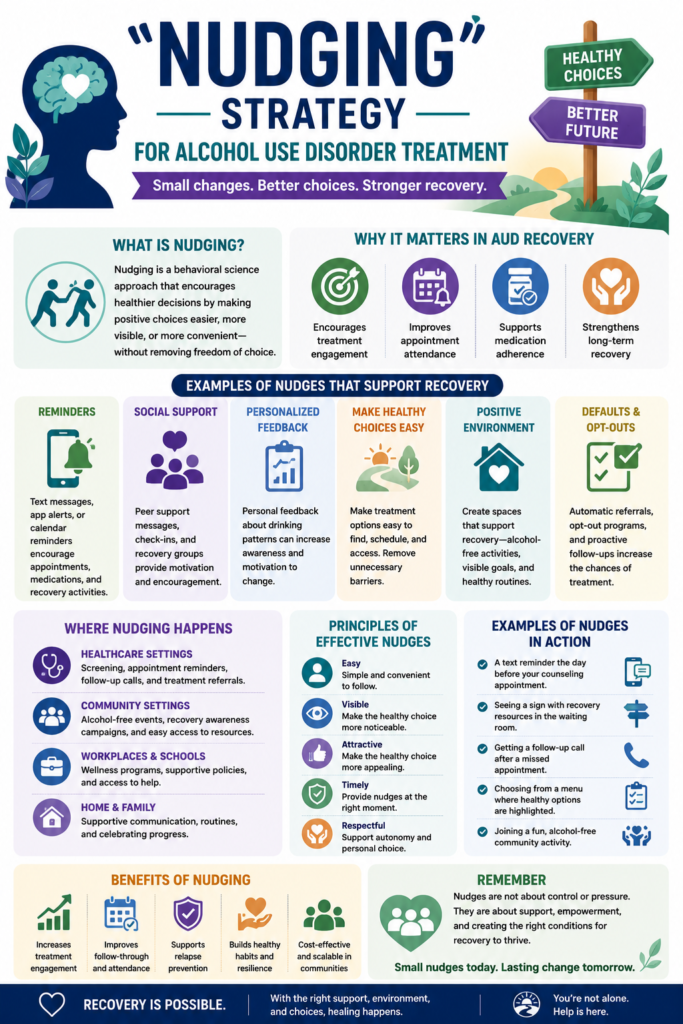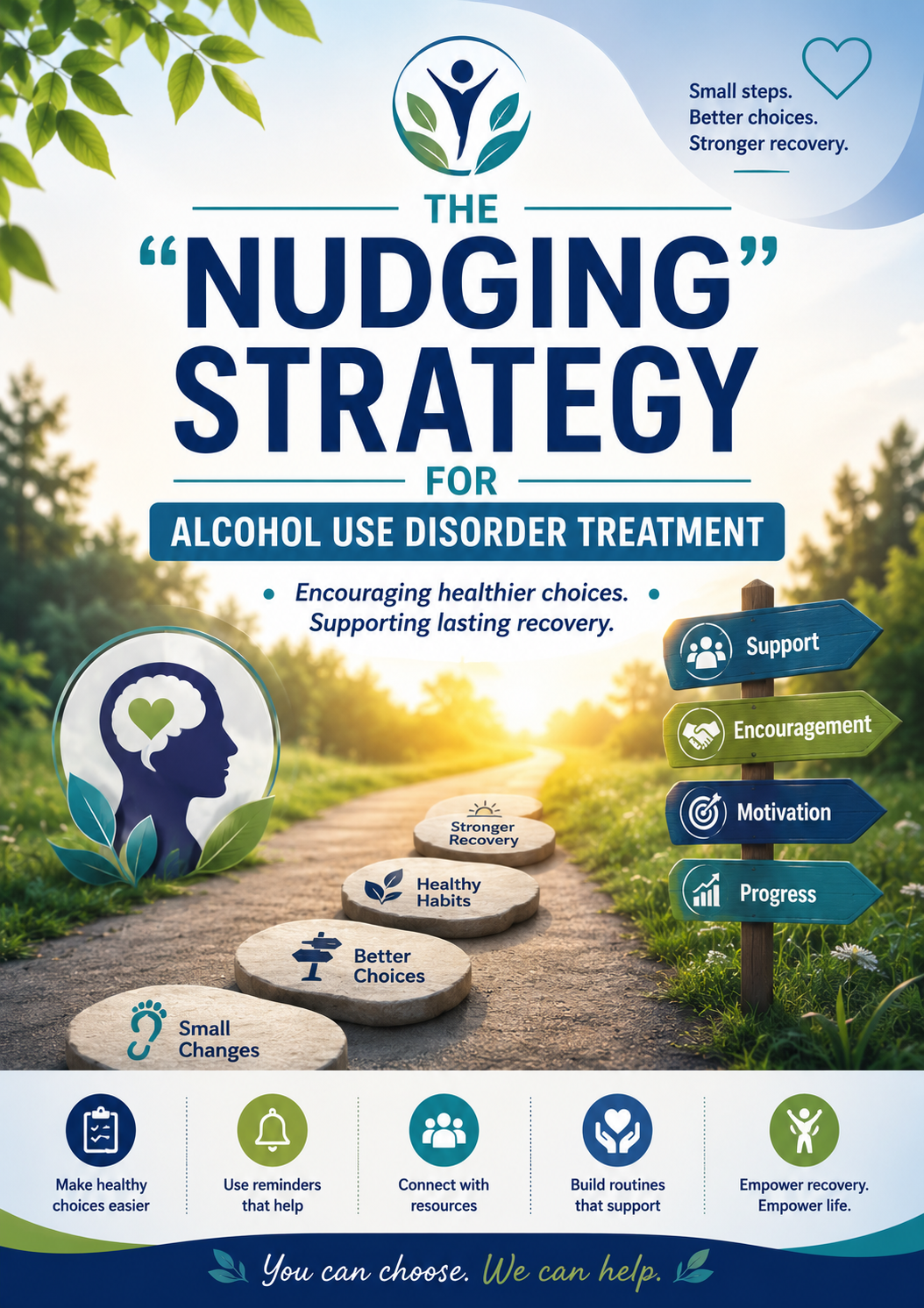
Alcohol use disorder (AUD) is a complex condition influenced by biological, psychological, social, and environmental factors. While traditional treatment approaches often focus on counseling, medication, and behavioral therapies, emerging research in behavioral economics has highlighted the value of “nudging” strategies in supporting recovery. A nudge is a subtle change in the environment, routine, or decision-making process that encourages healthier choices without restricting personal freedom. Examples include appointment reminders, recovery-focused text messages, alcohol-free social opportunities, and visual cues that promote positive behaviors. By making healthy choices easier and more accessible, nudging strategies can help individuals engage in treatment, maintain recovery goals, and reduce the risk of relapse. Understanding how nudges influence behavior can provide valuable insights into supporting long-term recovery from alcohol use disorder.
Nudging Strategies for Alcohol Use Disorder Treatment
Introduction
“Nudging” is a behavioral science strategy that helps people make healthier choices without removing their freedom to choose. Rather than forcing behavior change, nudges subtly guide individuals toward decisions that improve health and well-being. In alcohol use disorder (AUD) treatment, nudging can encourage individuals to seek treatment, reduce alcohol consumption, attend appointments, take medications, and engage in recovery-supportive behaviors. These strategies are based on the understanding that people do not always make decisions through careful reasoning alone; emotions, habits, environment, and cognitive biases often influence behavior.
What Is a Nudge?
A nudge is a small change in how choices are presented that makes a healthier option easier to choose, more visible, or more appealing. People maintain complete freedom of choice, but the environment is designed to support better decisions.
Examples include:
- Automated appointment reminders
- Personalized feedback about drinking patterns
- Recovery-focused text messages
- Making treatment referrals easier to access
- Offering alcohol-free options more prominently
How Nudging Can Support Alcohol Use Disorder Treatment
1. Encouraging Treatment Engagement
Many individuals delay treatment because of fear, denial, stigma, or uncertainty. Simple nudges such as text reminders, follow-up phone calls, and easy online scheduling can increase treatment participation.
2. Increasing Medication Adherence
Individuals prescribed medications such as Naltrexone or Acamprosate may benefit from:
- Medication reminder apps
- Pill organizers
- Automated refill reminders
- Supportive messages from healthcare providers
These nudges help people remain consistent with treatment.
3. Promoting Self-Awareness
Many individuals underestimate their alcohol consumption. Personalized assessments that compare drinking patterns with recommended guidelines can increase awareness and motivation for change.
4. Strengthening Recovery Habits
Recovery behaviors can become easier through environmental nudges such as:
- Scheduling support group meetings on calendars
- Setting exercise reminders
- Creating visible recovery goals
- Removing alcohol-related cues from the home
5. Supporting Relapse Prevention
Technology can provide recovery-focused nudges during vulnerable times. Smartphone applications may offer:
- Daily check-ins
- Motivational messages
- Coping strategies
- Crisis support contacts
- Progress tracking
Examples of Effective Nudges
Healthcare Settings
- Automatic screening for alcohol misuse during medical visits
- Default referrals to behavioral health services
- Appointment reminders
- Simplified access to treatment resources
Community Settings
- Increased visibility of alcohol-free activities
- Public health campaigns promoting moderation
- Peer recovery outreach programs
- Workplace wellness initiatives
Individual Recovery
- Daily recovery affirmations
- Journaling prompts
- Habit-tracking apps
- Reward systems for recovery milestones
Benefits of Nudging
Nudging strategies can:
- Increase treatment participation
- Improve medication adherence
- Reduce missed appointments
- Encourage healthier choices
- Support long-term recovery
- Reduce relapse risk
- Empower individuals without coercion
Limitations of Nudging
Nudges are not a substitute for comprehensive treatment. Individuals with severe alcohol use disorder may require:
- Medical detoxification
- Counseling
- Medication treatment
- Peer support
- Mental health services
- Long-term recovery planning
Nudges work best when integrated into a broader treatment approach.
Ethical Considerations
Ethical nudges should:
- Respect personal autonomy
- Be transparent and honest
- Promote the individual’s well-being
- Avoid manipulation or coercion
- Support informed decision-making
The goal is to make healthier choices easier, not to force behavior change.
Conclusion
Nudging strategies offer a promising approach to improving alcohol use disorder treatment and recovery outcomes. By making healthy choices more accessible, visible, and convenient, nudges can help individuals engage in treatment, adhere to medication regimens, build recovery habits, and reduce the risk of relapse. When combined with evidence-based treatment, counseling, peer support, and community resources, nudging can be a valuable tool for promoting lasting recovery and improving quality of life.
Self-Management Strategies to Understand the “Nudging” Strategy for Alcohol Use Disorder Treatment
Nudging is a behavioral science approach that helps individuals make healthier choices by changing the environment, routines, or decision-making process without removing personal freedom. For people recovering from alcohol use disorder (AUD), nudging can make recovery-supportive behaviors easier, more automatic, and more consistent. Understanding how nudges work can help individuals actively use them to strengthen recovery and reduce the risk of relapse.
1. Learn How Nudges Influence Behavior
Understand that decisions are often influenced by habits, emotions, convenience, and environmental cues. Nudges work by making healthy choices easier and unhealthy choices more difficult. Recognizing these influences can help you intentionally create a recovery-friendly environment.
2. Identify Personal Drinking Triggers
Take time to recognize situations, emotions, places, or people that increase the urge to drink. Common triggers include:
- Stress
- Loneliness
- Social gatherings
- Financial problems
- Certain locations
- Specific times of day
Awareness of triggers allows you to develop positive nudges that support healthier responses.
3. Modify Your Environment
Create an environment that supports recovery by:
- Removing alcohol from your home
- Avoiding high-risk situations
- Displaying recovery goals where they are visible
- Keeping healthy beverages easily accessible
- Creating alcohol-free social spaces
Small environmental changes can significantly influence behavior.
4. Use Technology as a Recovery Nudge
Set up reminders that encourage recovery behaviors:
- Appointment reminders
- Medication alerts
- Daily recovery affirmations
- Sobriety tracking apps
- Exercise reminders
- Recovery meeting notifications
These prompts can help maintain focus on recovery goals.
5. Establish Structured Daily Routines
Consistent routines reduce impulsive decision-making. Schedule:
- Wake-up times
- Meals
- Exercise
- Recovery meetings
- Counseling appointments
- Relaxation activities
A structured day leaves less room for alcohol-related behaviors.
6. Use Visual Recovery Cues
Place positive reminders in frequently seen locations:
- Motivational quotes
- Recovery milestone trackers
- Family photos
- Goal statements
- Gratitude journals
Visual cues can reinforce commitment during challenging moments.
7. Reward Positive Behaviors
Create healthy rewards for recovery achievements, such as:
- Attending meetings
- Completing counseling sessions
- Reaching sobriety milestones
- Practicing coping skills
Positive reinforcement strengthens healthy habits over time.
8. Track Your Progress
Monitor:
- Alcohol-free days
- Mood changes
- Cravings
- Sleep quality
- Stress levels
- Recovery accomplishments
Tracking helps increase self-awareness and motivation while identifying patterns that may require attention.
9. Build Accountability Systems
Recovery is often stronger when others are involved. Consider:
- Accountability partners
- Sponsors
- Peer recovery coaches
- Family support
- Recovery groups
Regular check-ins act as social nudges that encourage continued progress.
10. Prepare for High-Risk Situations
Develop plans before encountering challenging situations. Examples include:
- Bringing a supportive friend
- Having an exit strategy
- Practicing refusal skills
- Identifying alcohol-free alternatives
Preparation makes healthy decisions easier when temptation occurs.
11. Focus on Small, Achievable Goals
Large recovery goals can feel overwhelming. Break goals into manageable steps, such as:
- One alcohol-free day at a time
- Attending one support meeting per week
- Completing daily self-care activities
- Practicing one coping skill each day
Small successes create momentum and confidence.
12. Practice Mindfulness Before Decisions
When experiencing cravings, pause and ask yourself:
- What am I feeling right now?
- What triggered this urge?
- What are the consequences of drinking?
- What healthier choice can I make?
This brief pause serves as a self-generated nudge toward healthier decision-making.
13. Celebrate Recovery Identity
Begin to view yourself as a person in recovery rather than someone trying to avoid alcohol. Recovery-focused thinking can influence daily choices and strengthen motivation.
Conclusion
Self-management of alcohol use disorder can be strengthened through strategic nudges that make healthy choices easier and more automatic. By modifying the environment, using reminders, building routines, tracking progress, preparing for challenges, and creating positive reinforcement systems, individuals can harness the power of nudging to support long-term recovery. When combined with counseling, peer support, medical treatment, and healthy lifestyle habits, nudging strategies can help transform small daily decisions into lasting positive change.
Family Support Strategies to Understand the “Nudging” Strategy for Alcohol Use Disorder Treatment
Families can play a powerful role in supporting recovery from alcohol use disorder (AUD). One effective approach is the use of “nudges”—small, supportive changes in the environment or daily routine that encourage healthier choices without pressure, punishment, or control. Understanding how nudging works can help families create a recovery-friendly atmosphere that promotes positive behaviors while respecting their loved one’s autonomy.
1. Learn What Nudging Means
Family members should understand that nudging is not forcing, nagging, or controlling. A nudge gently encourages healthy choices by making them easier, more convenient, or more visible. The goal is to support recovery while allowing the individual to make their own decisions.
2. Create a Recovery-Friendly Home Environment
Families can reduce alcohol-related cues by:
- Removing alcohol from the home
- Avoiding alcohol-centered gatherings
- Stocking appealing nonalcoholic beverages
- Displaying recovery goals and motivational messages
- Creating spaces for relaxation and healthy activities
These environmental changes make healthy choices easier.
3. Encourage Healthy Daily Routines
Help establish routines that support recovery, such as:
- Regular meal times
- Consistent sleep schedules
- Exercise activities
- Family dinners
- Scheduled recovery meetings
Structured routines reduce opportunities for impulsive drinking and strengthen healthy habits.
4. Use Positive Reminders Instead of Criticism
Supportive reminders can act as effective nudges:
- “Your support group meets tonight.”
- “How did your counseling session go?”
- “Would you like to take a walk together?”
Encouragement is generally more effective than criticism or confrontation.
5. Celebrate Recovery Successes
Recognize progress, including:
- Attending treatment appointments
- Reaching sobriety milestones
- Practicing coping skills
- Completing recovery goals
Positive reinforcement strengthens motivation and confidence.
6. Offer Healthy Alternatives
Families can gently encourage healthier activities by suggesting:
- Outdoor activities
- Family game nights
- Exercise programs
- Volunteer opportunities
- Hobbies and creative pursuits
Replacing drinking-related activities with rewarding alternatives supports recovery.
7. Model Healthy Behaviors
Family members can serve as positive role models by:
- Managing stress in healthy ways
- Communicating respectfully
- Practicing self-care
- Limiting alcohol use around the recovering individual
Healthy behaviors often influence others through observation.
8. Support Treatment Participation
Help make treatment participation easier by:
- Providing transportation when needed
- Assisting with scheduling
- Encouraging attendance at appointments
- Offering childcare if necessary
Reducing practical barriers can improve treatment engagement.
9. Encourage Use of Recovery Tools
Families can support the use of:
- Recovery apps
- Journals
- Medication reminders
- Recovery workbooks
- Support group participation
These tools provide ongoing recovery-focused nudges.
10. Avoid Enabling Behaviors
Effective nudges support responsibility rather than removing consequences. Family members should avoid:
- Covering up alcohol-related problems
- Making excuses for harmful behavior
- Providing money that could be used for alcohol
- Protecting the individual from all consequences
Healthy support promotes accountability and growth.
11. Practice Open, Nonjudgmental Communication
Create opportunities for honest conversations about:
- Recovery goals
- Challenges
- Triggers
- Stressors
- Successes
Listening without criticism encourages trust and openness.
12. Help Prepare for High-Risk Situations
Families can help develop plans for:
- Holidays
- Social gatherings
- Stressful life events
- Celebrations where alcohol is present
Preparation serves as a proactive nudge toward healthy decision-making.
13. Take Care of Yourself
Family members should also prioritize their own well-being by:
- Attending support groups
- Seeking counseling if needed
- Maintaining boundaries
- Practicing self-care
Healthy families are better equipped to provide effective support.
Conclusion
Family members can use nudging strategies to create an environment that encourages recovery without coercion or control. Through positive reinforcement, healthy routines, supportive communication, and recovery-friendly environments, families can help make healthy choices easier and more accessible. When combined with professional treatment, peer support, and personal commitment, family-based nudges can strengthen recovery, reduce relapse risk, and promote long-term wellness for individuals living with alcohol use disorder.
Community Resource Strategies to Understand the “Nudging” Strategy for Alcohol Use Disorder Treatment
Communities play an important role in helping individuals recover from alcohol use disorder (AUD). One promising approach is the use of “nudging” strategies—small environmental, social, or behavioral changes that encourage healthier decisions without restricting personal choice. Community resources can use nudges to increase treatment engagement, reduce alcohol-related harm, support recovery, and promote long-term wellness. Understanding how these strategies work can help communities create supportive environments that make recovery easier and more accessible.
1. Provide Public Education Campaigns
Community organizations can offer educational programs that explain:
- What is alcohol use disorder
- How behavioral change occurs
- The role of nudges in recovery
- Available treatment resources
- The importance of early intervention
Education increases awareness and encourages individuals to seek help sooner.
2. Use Recovery-Focused Media Messaging
Local media, social media campaigns, and public service announcements can convey positive recovery messages that gently encourage healthier choices and participation in treatment.
Examples include:
- Recovery success stories
- Information about support services
- Messages promoting alcohol-free activities
- Reminders that recovery is possible
3. Expand Access to Screening Programs
Community health fairs, primary care clinics, pharmacies, and wellness events can offer alcohol screenings and brief interventions. Making screenings routine and easily accessible serves as a powerful nudge toward treatment.
4. Promote Peer Recovery Support Services
Peer recovery specialists can provide:
- Encouragement
- Recovery coaching
- Resource navigation
- Accountability
- Emotional support
Seeing others successfully manage recovery can motivate individuals to engage in treatment.
5. Increase Visibility of Treatment Resources
Communities can make recovery resources easier to find by:
- Posting resource directories
- Creating online treatment portals
- Distributing brochures
- Offering centralized referral systems
Easy access reduces barriers to care.
6. Encourage Alcohol-Free Community Activities
Communities can organize:
- Family events
- Recreation programs
- Wellness classes
- Sports leagues
- Volunteer opportunities
- Recovery-friendly celebrations
These activities provide positive alternatives to alcohol-centered socializing.
7. Partner With Healthcare Providers
Healthcare systems can use nudges such as:
- Automated appointment reminders
- Follow-up calls
- Online scheduling
- Treatment referrals during routine visits
These small interventions often increase treatment participation.
8. Support Recovery-Friendly Workplaces
Employers can encourage recovery through:
- Employee assistance programs
- Flexible treatment schedules
- Mental health education
- Wellness initiatives
Workplace support can serve as a positive nudge toward treatment engagement.
9. Collaborate With Faith-Based Organizations
Faith communities can provide:
- Recovery ministries
- Support groups
- Educational workshops
- Mentorship programs
Compassionate support from trusted community leaders can encourage individuals to seek help.
10. Utilize Technology-Based Nudges
Communities can promote recovery tools such as:
- Recovery smartphone apps
- Text-message support programs
- Virtual support groups
- Telehealth services
- Online recovery communities
Technology provides ongoing recovery reminders and support.
11. Reduce Environmental Alcohol Cues
Community leaders can support policies that:
- Promote responsible alcohol advertising
- Increase the availability of alcohol-free events
- Encourage healthy community spaces
- Reduce exposure to alcohol-related triggers
These environmental changes make healthier choices easier.
12. Support Transportation and Access Services
Transportation barriers often prevent treatment participation. Communities can provide:
- Transportation vouchers
- Ride programs
- Mobile treatment services
- Telehealth options
Reducing logistical barriers nudges individuals toward treatment completion.
13. Encourage Family Education Programs
Family education programs help loved ones understand:
- Alcohol use disorder
- Recovery processes
- Behavioral nudges
- Effective support strategies
Educated families can reinforce community recovery efforts.
14. Promote Recovery-Friendly Policies
Community leaders can advocate for:
- Expanded treatment access
- Recovery housing
- Peer support services
- Behavioral health integration
- Anti-stigma initiatives
Supportive policies create environments that encourage recovery.
15. Foster Community Recovery Networks
Communities can develop partnerships among:
- Treatment providers
- Healthcare systems
- Recovery organizations
- Schools
- Employers
- Faith communities
Strong recovery networks provide multiple positive nudges that support long-term success.
Conclusion
Community-based nudging strategies can make healthy choices easier, more visible, and more accessible for individuals living with alcohol use disorder. Through education, peer support, recovery-friendly activities, healthcare partnerships, technology, and supportive policies, communities can create environments that naturally encourage treatment engagement and recovery. When combined with evidence-based treatment and personal commitment, these small but meaningful interventions can lead to significant improvements in health, recovery outcomes, and overall quality of life.
Frequently Asked Questions
Here are some common questions:
1. What is a nudging strategy?
Answer: A nudging strategy is a behavioral science approach that encourages healthier choices by making them easier, more visible, or more convenient without forcing anyone to change their behavior.
2. How does nudging help people with alcohol use disorder (AUD)?
Answer: Nudges help individuals make recovery-supportive decisions by reducing barriers to treatment, increasing awareness of healthy options, and reinforcing positive behaviors that support sobriety.
3. Does nudging take away personal freedom?
Answer: No. Nudging preserves freedom of choice. Individuals can still make their own decisions, but the environment is designed to make healthier choices easier.
4. What is an example of a recovery-related nudge?
Answer: Examples include appointment reminders, medication alerts, recovery-focused text messages, visible recovery goals, and easy access to treatment resources.
5. How is nudging different from forcing someone into treatment?
Answer: Nudging encourages voluntary behavior change through support and convenience, while forcing treatment removes or limits personal choice.
6. Why is nudging effective?
Answer: People often make decisions based on habits, emotions, convenience, and environmental cues. Nudges work by influencing these factors in positive ways.
7. Can nudging reduce alcohol consumption?
Answer: Yes. Nudges can increase awareness of drinking patterns, encourage healthier habits, improve treatment participation, and support recovery efforts that reduce alcohol use.
8. What role do reminders play in nudging?
Answer: Reminders help individuals remember appointments, medications, recovery meetings, and recovery goals, making it easier to stay engaged in treatment.
9. How can smartphone apps be used as nudges?
Answer: Recovery apps can provide daily motivation, sobriety tracking, medication reminders, coping skills, and access to support resources.
10. Can families use nudging strategies?
Answer: Yes. Families can create recovery-supportive environments, encourage healthy routines, celebrate progress, and offer positive reminders without being controlling.
11. Can healthcare providers use nudging strategies?
Answer: Yes. Providers may use appointment reminders, follow-up calls, automated scheduling systems, screening tools, and treatment referrals to encourage engagement.
12. What are environmental nudges?
Answer: Environmental nudges involve changing surroundings to support healthier choices, such as removing alcohol from the home, increasing access to healthy activities, or displaying recovery goals.
13. Can nudging help prevent relapse?
Answer: Yes. Recovery reminders, support systems, structured routines, and trigger management strategies can help individuals make healthier decisions during vulnerable moments.
14. How do recovery support groups act as nudges?
Answer: Support groups provide encouragement, accountability, social connection, and positive role models that reinforce recovery behaviors.
15. Are nudges effective for everyone?
Answer: Not always. Individual responses vary, but nudges are generally most effective when combined with evidence-based treatment, counseling, and support services.
16. Can communities use nudging strategies?
Answer: Yes. Communities can promote alcohol-free events, increase visibility of treatment resources, support peer recovery programs, and provide public education campaigns.
17. What is personalized feedback as a nudge?
Answer: Personalized feedback provides individuals with information about their drinking patterns and health risks, helping them make more informed decisions about alcohol use.
18. Can nudging improve treatment attendance?
Answer: Yes. Appointment reminders, transportation assistance, simplified scheduling, and follow-up contacts have been shown to improve attendance and treatment retention.
19. What are the benefits of nudging in AUD treatment?
Answer: Benefits may include:
- Increased treatment engagement
- Better appointment attendance
- Improved medication adherence
- Reduced relapse risk
- Stronger recovery habits
- Greater long-term recovery success
20. What are the limitations of nudging?
Answer: Nudges alone are usually not enough to treat alcohol use disorder. Individuals with moderate to severe AUD often need counseling, peer support, medication, behavioral therapies, and comprehensive treatment services.
21. Is nudging evidence-based?
Answer: Yes. Nudging is based on behavioral economics and psychology research that demonstrates how small changes in choice environments can influence decision-making and health behaviors.
22. Can nudging reduce stigma around treatment?
Answer: Yes. Making treatment more accessible, normalizing help-seeking, and promoting positive recovery messages can encourage individuals to seek care without feeling judged.
23. What are some workplace nudges for AUD recovery?
Answer: Employee wellness programs, recovery-friendly policies, confidential support services, and educational resources can encourage employees to seek help and remain engaged in recovery.
24. How can individuals create their own recovery nudges?
Answer: Individuals can:
- Set phone reminders
- Track recovery goals
- Remove alcohol cues
- Schedule healthy activities
- Create accountability partnerships
- Display motivational messages
25. What is the most important thing to remember about nudging?
Answer: Nudging is not about controlling behavior. It is about creating supportive environments that make healthy choices easier, more attractive, and more sustainable while respecting individual autonomy and personal choice.
Conclusion
Nudging strategies offer a practical and effective way to support individuals recovering from alcohol use disorder by encouraging healthier choices through small, intentional changes in their environment and daily routines. Rather than relying solely on willpower, nudges help make recovery-supportive behaviors more convenient, visible, and rewarding. When combined with evidence-based treatments, counseling, peer support, family involvement, and community resources, these strategies can improve treatment engagement, strengthen healthy habits, and reduce the risk of relapse. Although nudging is not a replacement for comprehensive treatment, it can serve as a valuable tool for promoting lasting behavior change. By creating environments that naturally encourage recovery, individuals, families, healthcare providers, and communities can work together to support long-term health, wellness, and sustained sobriety.
Video: The Sobriety Trick That Actually Works #AlcoholRecovery #RecoveryTips