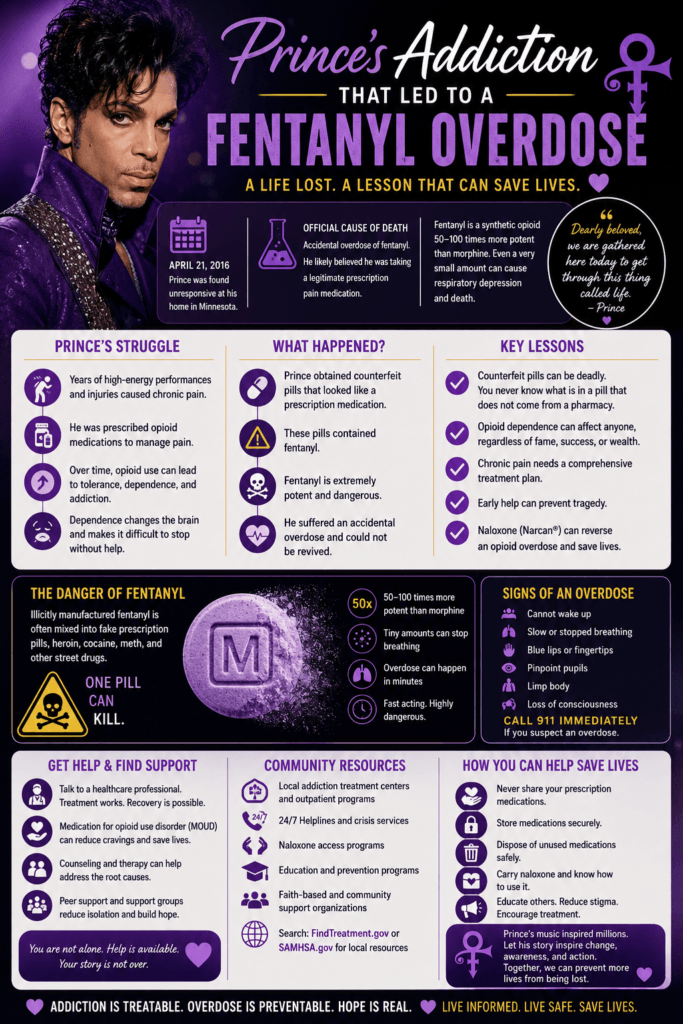
Prince’s accidental death from a fentanyl overdose became one of the most widely recognized examples of the dangers associated with opioid misuse and counterfeit medications. According to the official investigation, he died after ingesting fentanyl, likely believing he was taking a legitimate prescription pain medication. His death highlighted how chronic pain, opioid dependence, and the growing presence of illicitly manufactured fentanyl can combine to create life-threatening situations. Although Prince was an internationally celebrated musician, his experience demonstrates that opioid use disorder can affect anyone, regardless of fame, wealth, or success. His story underscores the importance of safe prescribing practices, evidence-based pain management, early recognition of opioid misuse, and timely access to effective addiction treatment.
Prince’s Struggle with Opioid Dependence
Prince reportedly developed chronic pain after years of energetic performances that included dancing, jumping, and wearing high-heeled boots. Like many individuals living with chronic pain, he is believed to have used prescription opioid medications to manage his symptoms. Over time, repeated opioid use can lead to physical dependence, meaning the body adapts to the medication and experiences withdrawal symptoms if it is stopped suddenly.
Dependence is not the same as addiction, but long-term opioid use can increase the risk of developing an opioid use disorder, particularly when medications are taken outside of medical supervision or when counterfeit pills enter the supply.
What Happened?
On April 21, 2016, Prince was found unresponsive at his home in Minnesota. The official investigation determined that he died from an accidental fentanyl overdose. Authorities later found counterfeit pills containing fentanyl that resembled prescription pain medications. Because fentanyl is approximately 50 to 100 times more potent than morphine, even a very small amount can cause fatal respiratory depression.
There was no evidence that Prince knowingly intended to take fentanyl. The presence of counterfeit pills highlights one of the greatest dangers of the current opioid crisis: illicitly manufactured fentanyl is often disguised as legitimate prescription medications.
Lessons From Prince’s Death
Prince’s death demonstrates several important public health lessons:
- Counterfeit pills can be deadly. Pills obtained outside a licensed pharmacy may contain fentanyl without the user’s knowledge.
- Chronic pain requires careful management. Individuals with long-term pain should work closely with healthcare providers to explore both medication and non-medication treatment options.
- Opioid dependence can affect anyone. Success, wealth, and fame do not protect individuals from substance use disorders.
- Early intervention saves lives. Recognizing signs of opioid misuse and seeking treatment early can reduce the risk of overdose.
- Naloxone can reverse opioid overdoses. Having naloxone available and knowing how to use it can save lives during an opioid emergency.
Warning Signs of Opioid Use Disorder
Individuals may benefit from professional evaluation if they experience:
- Taking larger amounts of opioids than intended.
- Difficulty cutting back despite wanting to stop.
- Strong cravings for opioids.
- Spending significant time obtaining or using opioids.
- Continuing opioid use despite problems at work, home, or in relationships.
- Developing tolerance or experiencing withdrawal symptoms.
Recovery Is Possible
Opioid use disorder is a treatable medical condition. Effective treatment may include:
- Medication for opioid use disorder (such as buprenorphine or methadone, when appropriate).
- Behavioral therapies, including cognitive behavioral therapy.
- Individual and family counseling.
- Peer recovery support.
- Relapse prevention planning.
- Ongoing medical and mental health care.
Conclusion
Prince’s death was a tragic reminder of the dangers posed by fentanyl and counterfeit opioid pills. His experience underscores the importance of safe prescribing, careful pain management, awareness of counterfeit medications, and timely access to evidence-based addiction treatment. It also reinforces a critical public health message: opioid use disorder is a medical condition that can affect anyone, and early treatment, education, and compassionate support can save lives.
Self-Management Strategies to Understand Prince’s Addiction That Led to a Fentanyl Overdose
Prince’s accidental death from a fentanyl overdose highlights the serious risks associated with opioid dependence, chronic pain, and counterfeit medications. According to the official investigation, he died after ingesting fentanyl, likely believing he was taking a prescription pain medication. His story demonstrates that opioid use disorder can affect anyone, regardless of success, wealth, or public recognition. While no one can know every detail of Prince’s personal experience, his death provides valuable lessons about preventing opioid misuse, recognizing warning signs, and seeking treatment early.
1. Learn About Opioid Use Disorder
Understanding how opioids affect the brain helps explain why dependence and addiction can develop.
Self-management tips:
- Learn the difference between physical dependence, tolerance, and addiction.
- Understand that opioid use disorder is a chronic, treatable medical condition.
- Recognize that addiction results from changes in brain function, not a lack of willpower.
2. Use Prescription Medications Exactly as Directed
Prescription opioids can be effective for managing certain types of pain when used appropriately.
Practice safe medication use by:
- Taking medications only as prescribed.
- Never increasing the dose without consulting your healthcare provider.
- Attending regular follow-up appointments.
- Discussing any concerns about pain control or side effects with your medical team.
3. Never Take Pills That Are Not Prescribed to You
One of the major lessons from Prince’s death is the danger of counterfeit pills.
Protect yourself by:
- Using medications only from licensed pharmacies.
- Never purchasing pills online or from friends or acquaintances.
- Recognizing that counterfeit pills may contain fentanyl without your knowledge.
- Understanding that pills that look identical to legitimate prescriptions can still be dangerous.
4. Explore Non-Opioid Pain Management Options
For many people, chronic pain can be managed with a combination of treatments rather than relying solely on opioids.
Discuss options with your healthcare provider, such as:
- Physical therapy
- Exercise programs
- Heat or cold therapy
- Cognitive behavioral therapy (CBT)
- Mindfulness and relaxation techniques
- Non-opioid pain medications
- Interventional pain management when appropriate
5. Recognize Early Warning Signs of Opioid Misuse
Early recognition can prevent opioid use disorder from becoming more severe.
Warning signs include:
- Taking more medication than prescribed.
- Running out of medication early.
- Strong cravings for opioids.
- Needing higher doses to achieve the same effect.
- Continuing opioid use despite negative consequences.
- Experiencing withdrawal symptoms when medication is unavailable.
If you notice these signs, seek professional help promptly.
6. Monitor Your Mental Health
Living with chronic pain can increase the risk of depression, anxiety, stress, and emotional distress, which may contribute to substance misuse.
Support your mental health by:
- Talking openly with healthcare providers about emotional symptoms.
- Seeking counseling when needed.
- Managing stress through healthy coping skills.
- Maintaining social connections with supportive family and friends.
7. Build Healthy Coping Skills
Learning healthier ways to manage pain and stress can reduce reliance on substances.
Healthy coping strategies include:
- Regular physical activity within your abilities
- Deep breathing exercises
- Meditation or mindfulness
- Journaling
- Creative hobbies
- Listening to music
- Spending time in nature
- Maintaining a consistent daily routine
8. Keep Regular Medical Appointments
Ongoing medical care helps monitor pain, medication effectiveness, and potential risks.
Regular follow-up appointments allow healthcare providers to:
- Adjust treatment plans.
- Evaluate medication safety.
- Monitor for signs of dependence.
- Recommend additional therapies if needed.
9. Know the Signs of an Opioid Overdose
Recognizing an overdose quickly can save a life.
Signs may include:
- Extreme sleepiness or inability to wake up
- Slow, shallow, or stopped breathing
- Blue or gray lips and fingertips
- Pinpoint pupils
- Limp body
- Loss of consciousness
If an overdose is suspected, call emergency services immediately and administer naloxone if it is available.
10. Learn About Naloxone
Naloxone is a medication that can rapidly reverse the effects of an opioid overdose.
If you or someone you know is at risk of an opioid overdose:
- Ask a healthcare provider or pharmacist about naloxone.
- Learn how to recognize an overdose.
- Teach family members how to use naloxone in an emergency.
- Remember that emergency medical care is still necessary after naloxone is given.
11. Seek Treatment Early
Recovery is most successful when treatment begins early.
Effective treatment may include:
- Medication for opioid use disorder (such as buprenorphine or methadone, when appropriate)
- Individual counseling
- Cognitive behavioral therapy
- Peer recovery support groups
- Family involvement
- Relapse prevention planning
- Ongoing medical and mental health care
Seeking help early can greatly reduce the risk of overdose and improve long-term recovery.
12. Reduce Stigma and Ask for Help
Prince’s death reminds us that opioid use disorder can affect anyone, regardless of background or accomplishments.
Remember:
- Addiction is a medical condition, not a moral failing.
- Asking for help is a sign of strength.
- Early treatment saves lives.
- Recovery is possible with appropriate medical care, support, and commitment.
Key Takeaway
Prince’s accidental fentanyl overdose illustrates the dangers of opioid dependence, counterfeit medications, and untreated substance use disorders. His story emphasizes the importance of using prescription medications safely, avoiding pills from unverified sources, recognizing early signs of opioid misuse, managing chronic pain through a comprehensive treatment plan, monitoring mental health, learning about naloxone, and seeking professional treatment as soon as concerns arise. These self-management strategies can help individuals reduce the risk of overdose, improve overall well-being, and support long-term recovery from opioid use disorder.
Family Support Strategies to Understand Prince’s Addiction That Led to a Fentanyl Overdose
Prince’s accidental death from a fentanyl overdose serves as a powerful reminder that opioid use disorder can affect anyone, regardless of fame, success, or financial resources. According to the official investigation, he died after ingesting fentanyl, likely believing he was taking a legitimate prescription pain medication. His story highlights the dangers of counterfeit pills, chronic pain, and opioid dependence, while emphasizing the critical role families can play in recognizing warning signs, encouraging treatment, and supporting long-term recovery.
1. Learn About Opioid Use Disorder
Families should understand that opioid use disorder is a chronic medical condition that changes how the brain processes reward, motivation, and decision-making. Learning about addiction helps reduce stigma and promotes compassionate support.
Ways to help:
- Learn the difference between physical dependence, tolerance, and addiction.
- Understand that recovery often requires long-term treatment.
- Seek information from trusted healthcare professionals and reputable organizations.
2. Encourage Safe Pain Management
Many people begin using opioids to manage legitimate pain. Families can encourage loved ones to work closely with healthcare providers to ensure medications are used safely.
Support by:
- Encouraging regular medical follow-up.
- Discussing non-opioid pain management options with healthcare providers.
- Supporting adherence to prescribed treatment plans.
- Encouraging honest conversations about pain and medication concerns.
3. Warn About the Dangers of Counterfeit Pills
Prince’s death highlights the growing danger of counterfeit medications containing fentanyl.
Families should encourage loved ones to:
- Take medications only as prescribed.
- Use medications obtained from licensed pharmacies.
- Never share prescription medications.
- Avoid pills purchased online or from unofficial sources, as they may contain fentanyl or other dangerous substances.
Education about counterfeit drugs can help prevent accidental overdoses.
4. Recognize Early Warning Signs of Opioid Misuse
Families often notice changes before the individual recognizes a problem.
Possible warning signs include:
- Running out of medication early
- Increasing doses without medical approval
- Mood swings or irritability
- Social withdrawal
- Sleep disturbances
- Declining work or school performance
- Secretive behavior
- Strong focus on obtaining medication
Approach these concerns calmly and encourage professional evaluation.
5. Promote Open, Nonjudgmental Communication
A supportive home environment encourages individuals to discuss struggles before a crisis develops.
Helpful communication strategies include:
- Listening without interrupting.
- Avoiding blame or criticism.
- Expressing concern with compassion.
- Asking how you can support treatment and recovery.
- Reinforcing that addiction is a treatable medical condition.
6. Encourage Early Professional Treatment
The earlier opioid use disorder is identified, the better the chances for successful recovery.
Treatment may include:
- Medical evaluation
- Medication for opioid use disorder (such as buprenorphine or methadone, when appropriate)
- Individual counseling
- Cognitive behavioral therapy (CBT)
- Pain management specialists
- Mental health services
- Peer recovery support groups
Families can offer practical support by helping schedule appointments or providing transportation when needed.
7. Learn About Overdose Prevention
Families should know how to recognize an opioid overdose and respond quickly.
Signs of overdose include:
- Extreme drowsiness or inability to wake up
- Slow or stopped breathing
- Pinpoint pupils
- Blue or gray lips and fingernails
- Loss of consciousness
If an overdose is suspected:
- Call emergency services immediately.
- Administer naloxone if available.
- Stay with the individual until help arrives.
Prompt action can save a life.
8. Keep Naloxone Available
If a loved one is at risk for an opioid overdose, families should discuss obtaining naloxone with a healthcare provider or pharmacist.
Families should:
- Learn how to administer naloxone.
- Ensure household members know where it is stored.
- Understand that naloxone is a temporary emergency treatment and does not replace medical care.
9. Encourage Healthy Daily Habits
Recovery is strengthened by healthy lifestyle routines that support both physical and emotional well-being.
Encourage:
- Balanced nutrition
- Regular physical activity
- Adequate sleep
- Stress reduction techniques
- Participation in enjoyable hobbies
- Social engagement with supportive individuals
These habits complement professional treatment and help reduce the risk of relapse.
10. Set Healthy Boundaries Without Enabling
Families can provide support while also encouraging accountability.
Healthy boundaries include:
- Refusing to provide money that could be used to obtain drugs.
- Encouraging responsibility for treatment participation.
- Avoiding making excuses for harmful behaviors.
- Supporting recovery rather than substance use.
Compassion and accountability can coexist.
11. Participate in Family Education and Counseling
Family involvement often improves recovery outcomes.
Family therapy can help:
- Improve communication.
- Rebuild trust.
- Resolve conflict.
- Develop relapse prevention strategies.
- Reduce caregiver stress.
Learning together strengthens the recovery process for everyone.
12. Take Care of Yourself as a Caregiver
Supporting a loved one with opioid use disorder can be emotionally challenging.
Families should:
- Join caregiver or family support groups.
- Seek counseling if needed.
- Practice stress management.
- Maintain healthy relationships and personal interests.
- Remember that self-care allows you to provide more effective support.
Healthy caregivers are an important part of a strong recovery network.
Key Takeaway
Prince’s accidental fentanyl overdose underscores the dangers of opioid dependence and counterfeit medications while reminding us that addiction can affect anyone. Families can make a meaningful difference by learning about opioid use disorder, encouraging safe pain management, recognizing warning signs early, promoting open communication, supporting evidence-based treatment, preparing for overdose emergencies with naloxone, maintaining healthy boundaries, and participating in family education. Through compassion, knowledge, and collaboration with healthcare professionals, families can help reduce overdose risk, strengthen recovery, and provide hope for individuals living with opioid use disorder.
Community Resource Strategies to Understand Prince’s Addiction That Led to a Fentanyl Overdose
Prince’s accidental death from a fentanyl overdose highlighted the devastating impact of the opioid epidemic and the growing danger of counterfeit pills containing illicitly manufactured fentanyl. According to the official investigation, he likely believed he was taking a legitimate prescription pain medication. His death serves as an important public health lesson about opioid use disorder, chronic pain management, overdose prevention, and the need for accessible community resources. Communities play a vital role in preventing opioid-related deaths by providing education, treatment, recovery support, and emergency services.
1. Expand Access to Opioid Use Disorder Treatment
Communities should ensure that evidence-based treatment for opioid use disorder is readily available and affordable. Early access to treatment can reduce the risk of overdose and improve long-term recovery.
Community treatment services may include:
- Addiction medicine specialists
- Outpatient treatment programs
- Residential rehabilitation programs
- Medication for opioid use disorder (MOUD)
- Individual and group counseling
- Recovery case management
Timely treatment helps individuals receive comprehensive care before addiction becomes life-threatening.
2. Improve Chronic Pain Management Resources
Many individuals first receive opioids to treat legitimate pain. Communities can support safer pain management by expanding access to multidisciplinary pain care.
Community resources may include:
- Pain management clinics
- Physical therapy
- Occupational therapy
- Behavioral pain management
- Exercise and wellness programs
- Integrative therapies such as mindfulness and relaxation training
Offering multiple treatment options may reduce reliance on long-term opioid therapy.
3. Increase Public Education About Counterfeit Pills
Prince’s death demonstrates the serious danger of counterfeit medications that contain fentanyl.
Community education campaigns should teach people:
- Never take medications that are not prescribed to them.
- Obtain medications only from licensed pharmacies.
- Counterfeit pills may look identical to legitimate prescription drugs.
- Even one counterfeit pill containing fentanyl can cause a fatal overdose.
Public awareness can help prevent accidental poisonings.
4. Expand Naloxone Distribution Programs
Naloxone is a lifesaving medication that can reverse an opioid overdose when administered promptly.
Communities can increase safety by:
- Offering free or low-cost naloxone kits.
- Training community members to recognize overdoses.
- Teaching families, schools, workplaces, and organizations how to administer naloxone.
- Making naloxone available in public settings where permitted.
Broader naloxone access has been associated with reductions in opioid overdose deaths.
5. Strengthen Peer Recovery Support Programs
Peer recovery organizations connect individuals with people who have lived experience recovering from opioid use disorder.
Examples include:
- Recovery community organizations
- Peer recovery coaches
- SMART Recovery®
- Twelve-Step recovery groups
- Recovery Dharma
- Faith-based recovery programs
Peer support helps reduce isolation, improve motivation, and encourage long-term engagement in recovery.
6. Promote Mental Health Services
Mental health conditions often occur alongside opioid use disorder. Communities should improve access to behavioral health care that addresses both conditions together.
Available services may include:
- Individual therapy
- Psychiatric evaluation
- Medication management
- Crisis counseling
- Trauma-informed care
- Family therapy
Integrated care improves recovery outcomes for people with co-occurring disorders.
7. Support Family Education Programs
Families are often the first to recognize changes in behavior. Community education programs help families understand addiction and respond effectively.
Educational topics include:
- Opioid use disorder
- Safe medication practices
- Overdose prevention
- Communication skills
- Healthy boundaries
- Relapse warning signs
- Caregiver self-care
Educated families become valuable partners in recovery.
8. Encourage Safe Medication Disposal
Unused prescription opioids can contribute to misuse and accidental poisoning.
Communities can provide:
- Medication take-back events
- Permanent drug disposal boxes
- Public education on safe storage
- Information about proper disposal methods
Removing unused medications from homes helps reduce diversion and misuse.
9. Address Social Determinants of Health
Stable housing, employment, transportation, and financial security support long-term recovery.
Community resources may include:
- Employment assistance
- Housing programs
- Vocational rehabilitation
- Transportation services
- Food assistance
- Financial counseling
- Educational opportunities
Meeting these basic needs allows individuals to focus more fully on recovery.
10. Expand Crisis Response Services
Communities should provide rapid access to emergency behavioral health and overdose response services.
Resources include:
- Mobile crisis teams
- Behavioral health crisis centers
- Emergency departments
- Emergency medical services
- Poison control centers
- Local crisis hotlines
Rapid intervention can prevent overdose deaths and connect individuals with ongoing treatment.
11. Encourage Collaboration Among Healthcare Providers
Effective opioid use disorder treatment often requires coordinated care among multiple professionals.
Healthcare collaboration may involve:
- Primary care providers
- Addiction medicine specialists
- Pain management specialists
- Psychiatrists
- Therapists
- Pharmacists
- Social workers
Working together helps improve medication safety, treatment continuity, and overall patient outcomes.
12. Reduce Stigma Through Community Awareness
Prince’s death reminds us that addiction can affect people from every background, profession, and socioeconomic status.
Community leaders can reduce stigma by:
- Promoting addiction as a treatable medical condition.
- Sharing evidence-based education.
- Encouraging early treatment.
- Supporting recovery-friendly workplaces and schools.
- Celebrating recovery success stories.
Reducing stigma encourages more individuals to seek help before an overdose occurs.
Key Takeaway
Prince’s accidental fentanyl overdose underscores the dangers of opioid dependence, counterfeit medications, and the ongoing opioid crisis. His death highlights the importance of community resources that provide comprehensive pain management, evidence-based addiction treatment, mental health services, overdose prevention education, naloxone distribution, peer recovery support, family education, and coordinated healthcare. By expanding access to these services and reducing stigma, communities can help prevent opioid-related deaths, support recovery, and improve the health and well-being of individuals and families affected by opioid use disorder.
Frequently Asked Questions
Here are some common questions:
1. What happened to Prince?
Prince died on April 21, 2016, from an accidental fentanyl overdose. The official investigation concluded that he ingested fentanyl, likely believing he was taking a legitimate prescription pain medication. His death highlighted the dangers of counterfeit pills containing illicitly manufactured fentanyl.
2. Was Prince addicted to fentanyl?
There is no confirmed evidence that Prince knowingly sought fentanyl. Reports indicate he had been using opioid pain medications to manage chronic pain and likely consumed counterfeit pills that contained fentanyl. This illustrates the risks associated with opioid dependence and counterfeit medications.
3. Why was Prince taking pain medication?
Years of energetic performances contributed to chronic hip pain and other physical injuries. Like many individuals with chronic pain, he reportedly used prescription opioid medications to help manage his symptoms.
4. What is fentanyl?
Fentanyl is a synthetic opioid that is approximately 50 to 100 times more potent than morphine. It is used medically to treat severe pain but can be extremely dangerous when used without medical supervision or when it is present in counterfeit drugs.
5. Why are counterfeit pills so dangerous?
Counterfeit pills are manufactured illegally and may contain fentanyl or other substances in unpredictable amounts. Because they often look identical to legitimate prescription medications, people may unknowingly take a life-threatening dose.
6. What is opioid use disorder (OUD)?
Opioid use disorder is a chronic, treatable medical condition characterized by the compulsive use of opioids despite harmful consequences. It affects brain circuits involved in reward, motivation, and self-control, but recovery is possible with appropriate treatment.
7. Can anyone develop opioid dependence?
Yes. Opioid dependence can develop in anyone, regardless of age, occupation, wealth, or social status. Prince’s death demonstrates that addiction and overdose can affect people from all walks of life.
8. What are the warning signs of opioid misuse?
Common warning signs include:
- Taking more medication than prescribed
- Running out of prescriptions early
- Strong cravings for opioids
- Mood or personality changes
- Sleepiness or impaired concentration
- Continuing opioid use despite health, work, or relationship problems
- Withdrawal symptoms when opioids are unavailable
Recognizing these signs early allows individuals to seek treatment before the condition worsens.
9. What are the signs of an opioid overdose?
Signs of an opioid overdose include:
- Extreme drowsiness or inability to wake up
- Slow, shallow, or stopped breathing
- Pinpoint pupils
- Blue or gray lips and fingertips
- Limp body
- Loss of consciousness
If an overdose is suspected, call emergency services immediately and administer naloxone if it is available.
10. What is naloxone?
Naloxone is a medication that can rapidly reverse the effects of an opioid overdose by restoring normal breathing. It is an emergency treatment and should always be followed by immediate medical care.
11. How is opioid use disorder treated?
Evidence-based treatment may include:
- Medication for opioid use disorder (such as buprenorphine or methadone, when appropriate)
- Individual counseling
- Cognitive behavioral therapy (CBT)
- Peer recovery support
- Family involvement
- Mental health treatment
- Relapse prevention planning
Combining medication with behavioral therapies often leads to the best outcomes.
12. How can families help someone struggling with opioid addiction?
Families can:
- Learn about opioid use disorder.
- Encourage professional evaluation and treatment.
- Communicate with compassion rather than judgment.
- Learn to recognize overdose signs.
- Keep naloxone available if appropriate.
- Support healthy boundaries while encouraging recovery.
Family involvement can improve treatment engagement and long-term recovery.
13. What community resources are available for opioid addiction?
Helpful resources include:
- Addiction treatment centers
- Community mental health clinics
- Medication for opioid use disorder (MOUD) programs
- Peer recovery organizations
- Crisis intervention services
- Family education programs
- Local naloxone distribution programs
These services provide comprehensive support for individuals and families affected by opioid use disorder.
14. What lessons can be learned from Prince’s death?
Prince’s death emphasizes the importance of:
- Safe prescribing and medication use
- Avoiding pills obtained from unverified sources
- Recognizing opioid misuse early
- Improving access to evidence-based treatment
- Expanding naloxone availability
- Increasing public awareness about counterfeit fentanyl-containing pills
These lessons continue to inform overdose prevention efforts.
15. Is recovery from opioid use disorder possible?
Yes. Opioid use disorder is a treatable medical condition, and many people achieve long-term recovery with comprehensive care. Early intervention, medication when appropriate, counseling, strong family and community support, and ongoing recovery planning significantly improve outcomes. Seeking help early can reduce the risk of overdose and help individuals regain their health, relationships, and quality of life.
Conclusion
Prince’s legacy extends far beyond his extraordinary contributions to music. His tragic death serves as a powerful reminder of the devastating impact of fentanyl and counterfeit prescription pills during the ongoing opioid epidemic. While his death was ruled an accidental fentanyl overdose, it also highlights the need for greater awareness of opioid safety, comprehensive pain management, overdose prevention, and accessible treatment for opioid use disorder. By learning from his experience, healthcare professionals, families, communities, and individuals can promote early intervention, reduce stigma surrounding addiction, encourage the availability of naloxone, and support evidence-based recovery services. These efforts can help prevent future overdose deaths and provide hope for those affected by opioid addiction.
Video: Prince’s Death Shows Why This Drug Matters #Fentanyl #NaloxoneAwareness #SaveLives