Reality dating programs such as The Bachelor combine romance, competition, rejection, social status, physical attraction, and dramatic uncertainty into an emotionally intense environment. For viewers, the repeated cycle of anticipation, conflict, romantic validation, and cliffhangers can make these programs particularly engaging. But does that make The Bachelor a “recipe for addiction”? And does hypergamy—the preference for a partner perceived as having higher social, financial, or relational status—play a role?
It is important to distinguish compelling entertainment from a clinical disorder. Watching a dating show frequently does not automatically constitute addiction, and hypergamy itself is not an addiction or psychiatric diagnosis. However, examining these concepts can reveal how reward-seeking, social comparison, fantasy, and repetitive media consumption may influence behavior and expectations about relationships.
Is “The Bachelor” a Recipe for Addiction? Examining Hypergamy’s Influence
Understanding the Appeal of The Bachelor
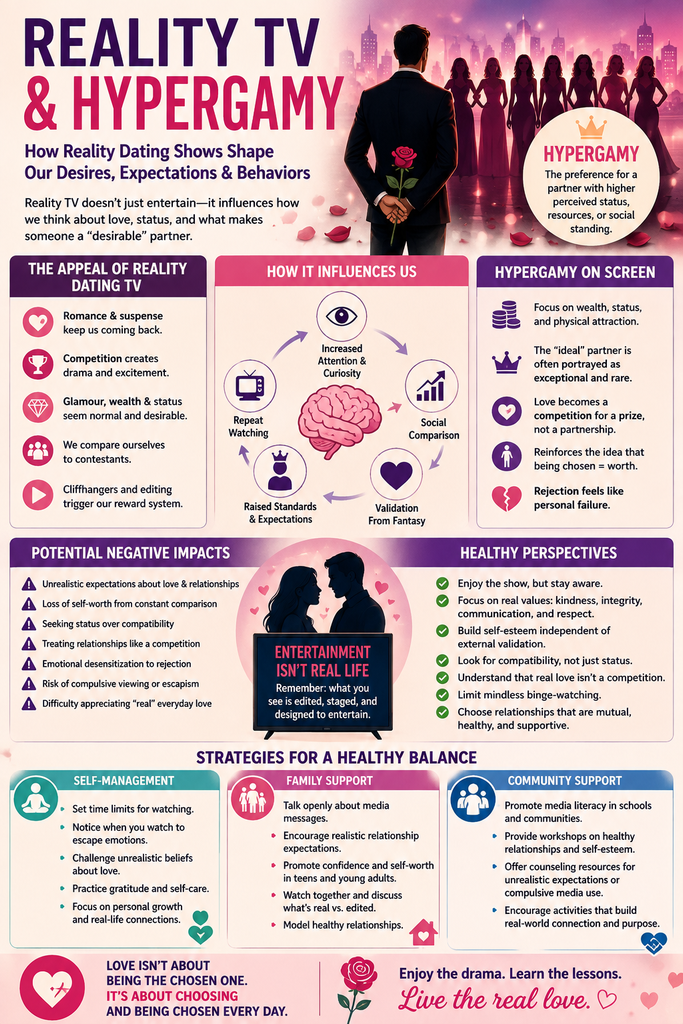
The Bachelor franchise places one highly sought-after romantic partner at the center of a competition involving numerous potential partners. Contestants experience dates, ceremonies, rejection, uncertainty, and eventual selection, creating an environment that maintains emotional suspense.
For viewers, several psychological factors can make the format difficult to turn away from:
- Romantic suspense and anticipation
- Competition for a desirable partner
- Emotional highs and lows
- Attractive people and luxurious settings
- Social comparison
- Identification with particular contestants
- Cliffhangers and unresolved storylines
- Online discussions and social-media engagement
These elements can activate normal reward and attention processes. They do not mean that viewers are literally becoming addicted to the program.
What Is Hypergamy?
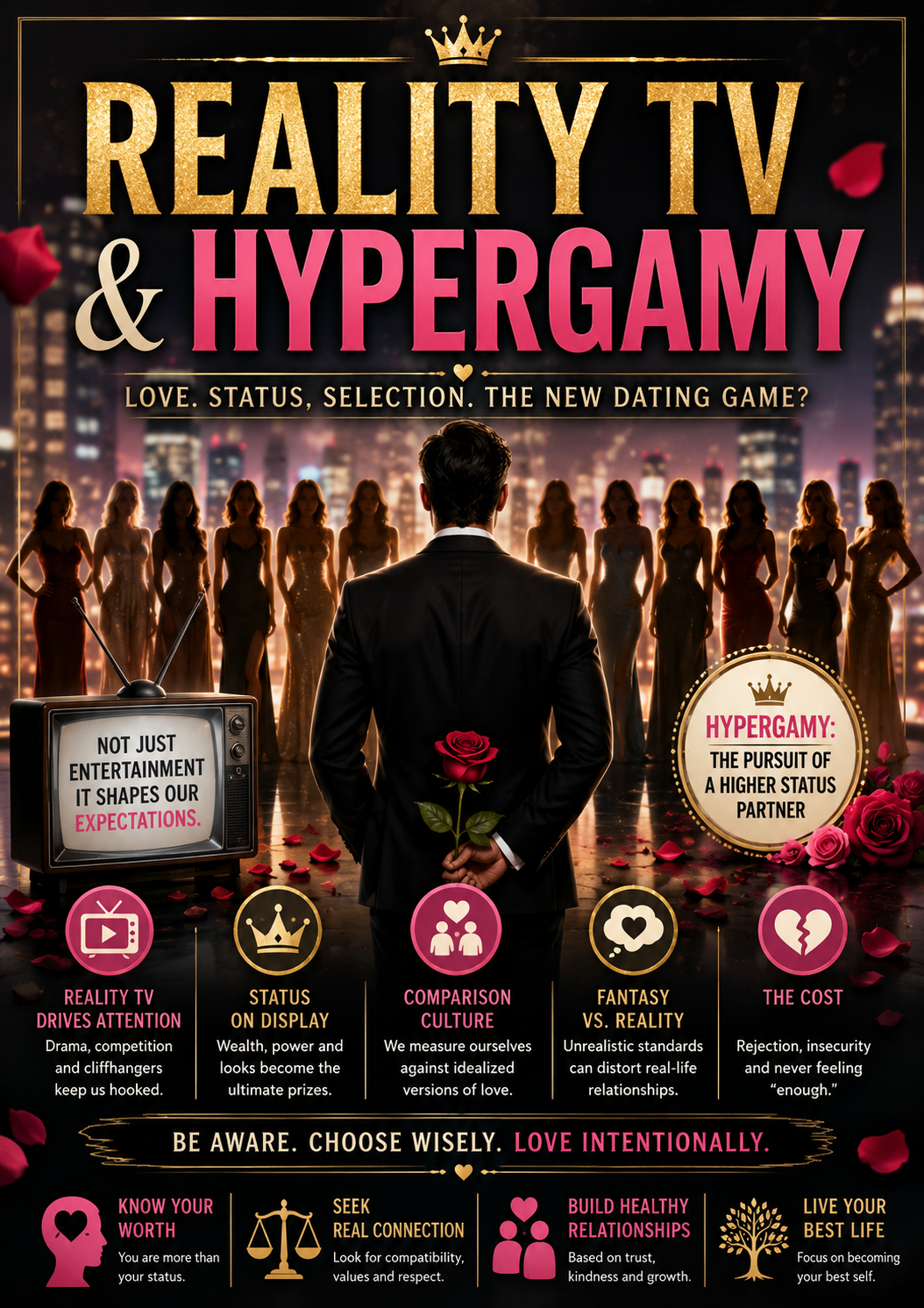
Hypergamy generally refers to seeking or selecting a romantic partner with greater socioeconomic status or other highly valued characteristics. Historically, discussions of hypergamy have focused heavily on wealth and social class, although modern relationship preferences are considerably more complicated.
People may value education, income, attractiveness, emotional stability, intelligence, ambition, kindness, family compatibility, or many other characteristics when choosing partners.
Reality television can exaggerate these dynamics. A central romantic figure may be portrayed as unusually desirable, while contestants compete for that person’s attention and validation.
This can unintentionally communicate ideas such as:
- A desirable partner must have exceptional status.
- Romantic success means being “chosen.”
- Competition proves someone’s romantic value.
- Luxury represents relationship success.
- Rejection indicates personal inadequacy.
- Finding the “perfect” partner creates lasting happiness.
Real relationships are far more complex.
Could Reality Dating Television Become Compulsive?
Most people can enjoy reality television without significant problems. Concern becomes more appropriate when media consumption begins interfering with everyday functioning.
Potential signs of problematic viewing might include:
- Regularly watching longer than intended
- Losing substantial sleep because of viewing
- Neglecting school, work, relationships, or responsibilities
- Feeling unable to reduce viewing despite wanting to
- Constantly checking related social-media content
- Using reality television primarily to escape emotional distress
- Becoming excessively preoccupied with contestants
- Experiencing significant distress when unable to watch
Rather than automatically calling these behaviors “addiction,” clinicians would consider their frequency, severity, motivation, and impact on functioning.
Social Comparison and Romantic Expectations
Reality television presents a highly constructed version of relationships. Contestants may experience expensive trips, elaborate dates, beautiful locations, designer clothing, and unusually concentrated romantic attention.
Repeated exposure can influence expectations when viewers compare ordinary relationships with highly produced television experiences.
Someone might wonder:
Why doesn’t my partner plan extravagant dates? Why isn’t my relationship this exciting? Why haven’t I found someone this successful or attractive?
The problem is not enjoying fantasy. Difficulty can develop when entertainment becomes the standard against which everyday life is judged.
Healthy relationships are usually built through communication, compatibility, respect, trust, shared responsibilities, intimacy, and the ability to handle ordinary life—not constant romantic spectacle.
Self-Management Strategies
Mindful viewing allows people to enjoy entertainment while maintaining realistic expectations about relationships.
Helpful strategies include:
- Set reasonable limits on television and social-media consumption.
- Avoid sacrificing sleep to binge-watch episodes.
- Notice when viewing becomes an emotional escape rather than entertainment.
- Separate entertainment narratives from real relationship expectations.
- Reduce social-media comparison with contestants and influencers.
- Identify qualities that genuinely matter in a long-term partner.
- Focus on compatibility rather than status alone.
- Maintain hobbies, friendships, exercise, and offline activities.
- Take periodic breaks from reality television.
- Pay attention to feelings of inadequacy triggered by comparison.
- Seek professional support if media use begins interfering with daily functioning.
A helpful question is: “Am I watching because I enjoy this, or because I feel unable to stop?”
Family Support Strategies
Family members can encourage healthy media habits without criticizing someone’s entertainment choices. Ridiculing a person for enjoying reality television may create defensiveness rather than reflection.
Families can:
- Discuss how reality television differs from everyday relationships.
- Encourage conversations about healthy relationship qualities.
- Avoid shaming someone for their viewing preferences.
- Plan activities that do not involve screens.
- Encourage healthy sleep and daily routines.
- Discuss unrealistic beauty and lifestyle standards.
- Talk openly about social-media comparison.
- Model respectful and emotionally healthy relationships.
- Encourage professional help if media use becomes seriously disruptive.
Parents can particularly help adolescents and young adults understand that edited television does not provide a complete model for romantic relationships.
Community Support Strategies
Media literacy can help people become more thoughtful consumers of reality television and social media. Schools, colleges, healthcare organizations, and community groups can teach people how entertainment is constructed to attract and maintain attention.
Helpful community approaches include:
- Promote digital and media literacy.
- Teach healthy relationship skills.
- Provide education about problematic digital-media use.
- Encourage realistic conversations about dating and intimacy.
- Address harmful gender stereotypes.
- Promote healthy self-esteem independent of romantic status.
- Provide counseling resources for problematic media behaviors.
- Encourage community activities that build offline social connections.
- Educate young people about advertising, editing, and influencer culture.
- Challenge the idea that wealth or appearance determines the value of someone’s relationships.
Hypergamy Is Not the Same as Addiction
This distinction is essential.
Wanting a successful, attractive, financially secure, or socially respected partner is not inherently pathological. Likewise, watching people compete for such a partner does not automatically create addictive behavior.
Problems may arise when status becomes the primary measure of another person’s worth or when entertainment repeatedly reinforces unrealistic expectations that contribute to dissatisfaction, compulsive comparison, or unhealthy relationship decisions.
The healthier goal is not eliminating standards. It is developing balanced standards.
Building Healthier Relationship Expectations
Instead of asking only, “What does this person have?” a healthier approach asks, “What kind of relationship can we build together?”
Long-term compatibility may involve:
- Emotional maturity
- Mutual respect
- Honesty
- Shared values
- Reliability
- Healthy communication
- Appropriate boundaries
- Financial responsibility
- Affection and intimacy
- Conflict-resolution skills
- Mutual support
- Commitment to personal growth
Financial security and ambition can certainly matter, but they are only parts of a much larger picture of relationships.
Conclusion
The Bachelor is not inherently a “recipe for addiction,” and hypergamy should not be treated as a psychiatric disorder. Reality dating television, however, provides an interesting example of how romantic competition, status, uncertainty, social comparison, fantasy, and repeated rewards can capture attention and potentially influence relationship expectations.
For most viewers, the program remains entertainment. Concern becomes more appropriate when watching, social-media engagement, romantic comparison, or fantasy begins interfering with sleep, responsibilities, emotional health, or real-world relationships.
Self-management can encourage mindful viewing, families can promote realistic conversations about relationships, and communities can strengthen media literacy and education on healthy relationships. Ultimately, the healthiest message may be simple: enjoy the fantasy without allowing a highly produced television romance to define what love, personal worth, or a successful relationship should look like.
Frequently Asked Questions
Here are some common questions:
1. What is hypergamy?
Hypergamy generally refers to seeking a romantic partner perceived as having higher social, financial, educational, or other valued status. Partner selection is complex, however, and preferences for successful or financially secure partners do not automatically represent unhealthy behavior.
2. How does reality TV relate to hypergamy?
Some reality dating programs emphasize wealth, attractiveness, luxury, popularity, and competition for a highly desirable partner. These storylines can reinforce the idea that securing a high-status partner signifies romantic success.
3. Does watching reality dating TV cause hypergamy?
No. There is insufficient evidence to conclude that watching reality dating shows directly causes someone to become hypergamous. Media may influence attitudes and expectations, but family experiences, culture, personality, socioeconomic circumstances, and personal values also shape partner preferences.
4. Why are reality dating shows so compelling?
They combine uncertainty, competition, attraction, conflict, rejection, emotional highs and lows, and cliffhangers. These features encourage viewers to anticipate what happens next and can make programs highly engaging.
5. Can someone become addicted to reality TV?
Enjoying or binge-watching reality television does not automatically mean someone has an addiction. Viewing becomes concerning when it feels difficult to control and repeatedly interferes with sleep, work, school, relationships, emotional well-being, or other responsibilities.
6. Is hypergamy a mental health disorder?
No. Hypergamy is not a psychiatric diagnosis or substance use disorder. It is a social and relational concept that describes certain patterns of partner preference.
7. Can reality TV create unrealistic relationship expectations?
It can contribute to them for some viewers. Reality dating shows frequently present extraordinary dates, attractive contestants, luxury settings, intense romance, and accelerated commitments. Real relationships generally develop under very different circumstances.
8. How can social comparison affect viewers?
Constant comparison with attractive, wealthy, or highly curated television personalities may contribute to feelings of inadequacy or dissatisfaction in susceptible viewers. Remembering that reality television is selected, edited, and produced for entertainment can help maintain perspective.
9. Can reality dating shows affect self-esteem?
Potentially. A viewer who repeatedly connects personal worth with appearance, wealth, popularity, or romantic validation may experience increased insecurity. Healthy self-esteem is better supported by a broader sense of identity and personal values.
10. Is wanting a financially successful partner unhealthy?
Not necessarily. Financial responsibility, education, ambition, and career stability can be reasonable considerations when selecting a partner. Problems may arise when status becomes more important than compatibility, respect, emotional safety, shared values, or character.
11. What are healthy self-management strategies for viewers?
Viewers can set reasonable screen-time limits, protect their sleep, reduce excessive social media comparison, maintain offline interests, and remind themselves that television relationships are created for entertainment. It can also help to identify the characteristics they genuinely value in a real-life partner.
12. How can families encourage healthier perspectives?
Families can discuss the difference between entertainment and everyday relationships without criticizing someone’s viewing choices. Conversations about respect, communication, self-worth, compatibility, boundaries, and realistic relationship expectations can be especially valuable for adolescents and young adults.
13. How can communities help?
Schools, colleges, healthcare organizations, and community programs can promote media literacy, digital wellness, healthy relationship education, self-esteem, and critical thinking about messages involving wealth, appearance, gender roles, and romantic success.
14. What qualities matter in healthy relationships beyond status?
Important qualities can include:
- Trust and honesty
- Mutual respect
- Emotional maturity
- Communication
- Shared values
- Reliability
- Healthy boundaries
- Conflict-resolution skills
- Affection and intimacy
- Mutual support and personal growth
15. Should viewers stop watching reality dating programs?
Not necessarily. Most people can enjoy reality television as entertainment. The goal is mindful viewing rather than automatically avoiding the genre. Problems deserve attention when viewing becomes compulsive or significantly affects everyday functioning.
16. What is the main takeaway about reality TV and hypergamy?
Reality TV can dramatize love, wealth, beauty, status, competition, and validation, but entertainment should not be mistaken for a blueprint for real relationships. Healthy partnerships are less about being selected as the ultimate “prize” and more about two people continually choosing compatibility, respect, communication, trust, and mutual commitment.
Video: The Bachelor: Why it’s actually a trap for your brain #psychology #realitytv #dating