Stopping alcohol can bring major improvements in physical and emotional health, but recovery sometimes comes with an unexpected change: an intense desire for sweets. Candy, cookies, ice cream, soda, and other sugary foods may suddenly become much more appealing. Some people even describe feeling as though sugar has “replaced” alcohol.
This does not mean that everyone recovering from alcohol use disorder will develop a problem with sugar. Early recovery involves significant changes in eating patterns, sleep, stress, habits, and the brain’s reward system. Understanding these changes can help people respond to cravings without shame while keeping the primary goal—remaining free from alcohol—at the center of recovery.
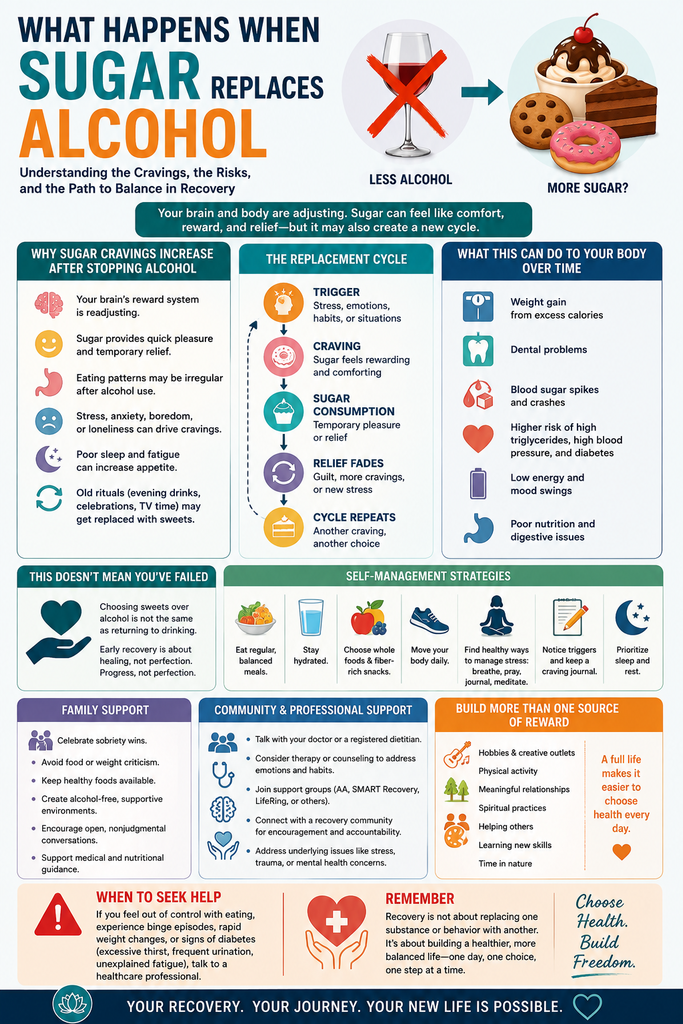
Why Can Sugar Cravings Increase After Stopping Alcohol?
Alcohol affects reward pathways involving dopamine and other brain signaling systems. When someone who has been drinking heavily stops, the brain and body must adjust to functioning without alcohol. During this period, ordinary rewards may feel different, and highly palatable foods can become especially attractive.
Sweet foods can provide a quick and pleasurable experience. Eating them may temporarily improve mood or provide comfort during stressful moments.
Several factors may contribute to increased sugar cravings:
- Changes in reward-seeking behavior
- Irregular eating patterns established during heavy drinking
- Hunger that was previously overlooked or suppressed
- Stress, anxiety, boredom, or loneliness
- Poor sleep
- Habitual desire for an evening “reward”
- Greater awareness of appetite after alcohol cessation
- Using food as an alternative coping strategy
Craving sweets in recovery should not automatically be labeled a new addiction. It may be part of a larger adjustment process.
Replacing the Alcohol Ritual
Sometimes the issue is not only sugar—it is the ritual.
Someone who used to pour a drink after work may now reach for ice cream. A person accustomed to drinking while watching television may begin snacking throughout the evening. Someone who celebrated with alcohol may replace the drink with dessert.
The behavior can follow a familiar pattern:
Trigger → craving → sweet food → pleasure or relief → repetition
In many cases, choosing dessert instead of returning to alcohol may initially be a practical harm-reduction strategy. Early recovery is not the time to demand perfection.
However, as sobriety becomes more stable, a person can gradually develop a broader range of coping strategies instead of depending heavily on any single source of comfort.
What Happens to the Body?
Consuming large amounts of added sugar frequently can affect overall health over time. Depending on the person’s overall diet, activity level, medical history, and quantity consumed, excessive added sugar may contribute to:
- Weight gain
- Dental problems
- Higher triglycerides
- Difficulty managing blood glucose
- Poor overall nutritional quality
- Energy fluctuations when sugary foods replace balanced meals
This does not mean someone in alcohol recovery needs to eliminate sugar completely.
A balanced approach is generally more sustainable than moving immediately from strict alcohol abstinence to an extremely restrictive diet. Nutrition can improve gradually as recovery stabilizes.
Is Sugar as Dangerous as Alcohol?
It is important not to exaggerate the comparison.
Sugar and alcohol are not equivalent substances. Alcohol use disorder can cause intoxication, dangerous withdrawal, accidents, liver disease, cardiovascular problems, cancers, overdose-related risks when combined with other substances, and serious social consequences.
Eating sweets does not reproduce those same risks.
The concern is primarily behavioral when a person notices that the same pattern of using something to escape uncomfortable emotions is appearing in another area of life.
Instead of asking only, “Am I eating too much sugar?”, it may be useful to ask, “What am I asking sugar to do for me?”
Self-Management Strategies
Nutrition during recovery should support sobriety rather than become another source of guilt or rigid control. Small, sustainable changes can help regulate hunger and reduce reliance on sweets.
Try these strategies:
- Eat regular meals rather than waiting until extreme hunger develops.
- Include protein, fiber-rich carbohydrates, fruits, vegetables, and healthy fats.
- Keep fruit or other nutritious snacks easily available.
- Drink enough water throughout the day.
- Notice when sugar cravings occur and what emotions or situations precede them.
- Develop an alternative evening ritual to replace drinking.
- Prioritize adequate sleep, as fatigue can affect appetite and food choices.
- Use walking, exercise, music, hobbies, relaxation, or social connection for additional sources of reward.
- Avoid labeling foods as completely “good” or “bad.”
- Allow nutritional improvements to happen gradually.
- Discuss significant changes in appetite, weight, or blood sugar with a healthcare professional.
- Protect sobriety as the immediate priority.
A simple craving journal can also help. Record the time, situation, emotion, hunger level, craving, and response. Patterns may become easier to recognize after several weeks.
Family Support Strategies
Family members may notice increased consumption of sweets and become concerned about weight or health. However, repeatedly criticizing someone’s eating habits during early alcohol recovery can create unnecessary shame and conflict.
Families can help by:
- Celebrating progress in alcohol recovery.
- Avoiding jokes about weight gain or sugar consumption.
- Keeping balanced meals and convenient nutritious foods available.
- Participating in walks or other enjoyable physical activities together.
- Creating alcohol-free family celebrations.
- Offering emotional support during difficult evenings or stressful situations.
- Asking what kind of support the person wants, rather than policing food choices.
- Encouraging medical or nutritional guidance when concerns become significant.
- Recognizing that recovery develops gradually.
The goal should be supporting healthier behaviors—not replacing alcohol-related shame with food-related shame.
Community and Professional Support Strategies
Recovery often becomes stronger when people do not have to manage every challenge alone.
Helpful resources may include:
- Primary care professionals
- Addiction medicine specialists
- Registered dietitians, particularly those familiar with substance use recovery
- Therapists and counselors
- Outpatient or residential treatment programs
- Peer recovery specialists
- Alcoholics Anonymous or other mutual-help programs
- SMART Recovery and other recovery-support communities
- Community wellness and exercise programs
Healthcare professionals can also screen for diabetes, nutritional deficiencies, liver disease, abnormal cholesterol or triglycerides, and other health concerns when clinically appropriate.
Build More Than One Source of Reward
Alcohol may once have been used for relaxation, celebration, stress relief, social confidence, or escape. Removing it leaves a space that needs to be filled.
Food may occupy some of that space temporarily, but long-term recovery becomes stronger when the person develops multiple healthy sources of pleasure and meaning.
These might include:
- Exercise
- Cooking
- Music
- Gardening
- Volunteering
- Spiritual practices
- Creative activities
- Recovery meetings
- Spending time outdoors
- Friendships and family relationships
- Learning new skills
- Meaningful work
Recovery is not simply removing alcohol. It is creating a life in which alcohol becomes less necessary as a source of relief or reward.
When Should Sugar Consumption Become a Concern?
Consider professional guidance when eating feels uncontrollable, causes substantial distress, involves repeated binge episodes, leads to significant medical problems, or becomes associated with extreme restriction, purging, or other concerning behaviors.
A healthcare professional can also evaluate persistent excessive thirst, frequent urination, unexplained weight changes, or other symptoms that could indicate a blood glucose problem.
Importantly, people who drink heavily should not assume that stopping alcohol suddenly is always safe. Alcohol withdrawal can be medically dangerous and, in severe cases, life-threatening. Individuals at risk for significant withdrawal should seek medical guidance rather than attempting unsupported detoxification.
Conclusion
When sugar seems to replace alcohol, it does not necessarily mean recovery has failed or that one addiction has simply become another. Increased interest in sweets can reflect changes in appetite, reward, habits, stress management, and daily routines as the body and brain adjust to life without alcohol.
Early recovery should prioritize safety and continued freedom from alcohol. Over time, balanced meals, regular sleep, physical activity, emotional coping skills, family support, and professional guidance can help reduce excessive reliance on sugar.
The larger goal is not perfect eating. It is learning how to experience stress, pleasure, celebration, and difficult emotions without needing one substance—or one behavior—to manage them all.
Recovery begins by removing alcohol, but it grows by building healthier ways to find comfort, reward, connection, and meaning.
Frequently Asked Questions
Here are some common questions:
1. Why do some people crave sugar after they stop drinking alcohol?
After stopping alcohol, appetite, eating habits, stress responses, and the brain’s reward system may change. Sweet foods provide a quick source of pleasure and comfort, making them especially appealing during early recovery.
2. Does alcohol turn into sugar in the body?
No. Alcohol is metabolized primarily in the liver and does not simply “turn into sugar.” However, alcohol use can affect nutrition, appetite, metabolism, and blood glucose regulation, which may influence eating patterns after drinking stops.
3. Is it normal to eat more sweets during early alcohol recovery?
It can happen. Some people notice increased interest in candy, desserts, soda, or other highly palatable foods after stopping alcohol. This does not automatically mean they have developed another addiction.
4. Can sugar activate the brain’s reward system?
Yes. Enjoyable foods, particularly highly palatable ones, engage the brain’s reward pathways. However, sugar and alcohol are not equivalent substances, and eating sweets should not automatically be described as having the same effects or risks as alcohol addiction.
5. Is eating sugar better than returning to alcohol?
For someone recovering from alcohol use disorder, preventing a return to harmful drinking is generally the more immediate priority. Eating dessert is not equivalent to alcohol relapse. Nutrition can often be addressed gradually as recovery stabilizes.
6. Can sugar become a replacement coping mechanism?
Yes. Someone who previously used alcohol to manage stress, boredom, loneliness, or difficult emotions may begin relying heavily on food for similar emotional relief. Recognizing this pattern can help the person develop additional coping strategies.
7. What is the sugar replacement cycle?
A possible pattern is:
- Trigger: Stress, boredom, loneliness, fatigue, or an old drinking routine
- Craving: Desire for something pleasurable or comforting
- Sugar: Eating sweets provides temporary satisfaction
- Relief: Mood or discomfort temporarily improves
- Return: The effect fades, and another craving may eventually occur
The goal is not necessarily to eliminate sweets but to develop multiple healthy ways of responding to triggers.
8. Can eating too much added sugar affect recovery health?
Regularly consuming excessive added sugar can contribute to dental problems, weight gain, elevated triglycerides, poor diet quality, and difficulty managing blood glucose. Overall eating patterns and individual medical conditions also matter.
9. Should someone eliminate all sugar after quitting alcohol?
Usually, extreme restriction is unnecessary unless a healthcare professional recommends dietary changes for a specific medical reason. A balanced and sustainable eating pattern may be easier to maintain than immediately imposing another rigid set of rules during early recovery.
10. What foods can help manage cravings?
Regular meals containing protein, fiber-rich carbohydrates, fruits, vegetables, and healthy fats can help prevent extreme hunger. Fruit, yogurt, nuts, whole grains, and other nutrient-rich foods can also provide alternatives when appropriate.
11. Can dehydration feel like a craving?
Sometimes thirst, fatigue, hunger, and cravings can be difficult to distinguish. Staying adequately hydrated is a simple way to support overall health during recovery.
12. Does poor sleep increase cravings for sweets?
Sleep deprivation can influence appetite and food preferences. Improving sleep may therefore help some people better manage hunger and cravings while also supporting emotional regulation and recovery.
13. What can someone do instead of reaching for sweets every time they feel stressed?
Alternatives can include taking a walk, exercising, calling a supportive person, attending a recovery meeting, listening to music, practicing relaxation techniques, working on a hobby, or eating a balanced meal if actual hunger is contributing.
14. How can families help without becoming the “food police”?
Families can provide nutritious foods, prepare balanced meals, participate in healthy activities, and avoid criticizing weight or food choices. Most importantly, they can continue supporting sobriety rather than turning eating into another source of shame.
15. When should someone talk with a healthcare professional?
Professional guidance may be appropriate when eating feels uncontrollable, binge episodes occur, weight changes are significant, or the person develops symptoms such as excessive thirst or frequent urination. A primary care professional or registered dietitian can evaluate individual nutritional and metabolic concerns.
16. What community resources can support healthier recovery?
Addiction treatment programs, therapists, peer recovery specialists, registered dietitians, primary care professionals, and mutual-help communities such as Alcoholics Anonymous or SMART Recovery can provide different forms of support.
17. Can suddenly stopping alcohol be dangerous?
Yes. People who are physically dependent on alcohol can experience potentially life-threatening withdrawal, including seizures and delirium. Someone who drinks heavily or has experienced withdrawal before should seek medical guidance rather than assuming that stopping abruptly at home is safe.
18. What is the main goal when sugar seems to replace alcohol?
The goal is progress rather than dietary perfection. Maintaining alcohol recovery comes first, while healthier eating, exercise, sleep, stress management, and additional sources of pleasure can gradually become part of a more balanced lifestyle.
Video: Sugar Cravings in Alcohol Recovery