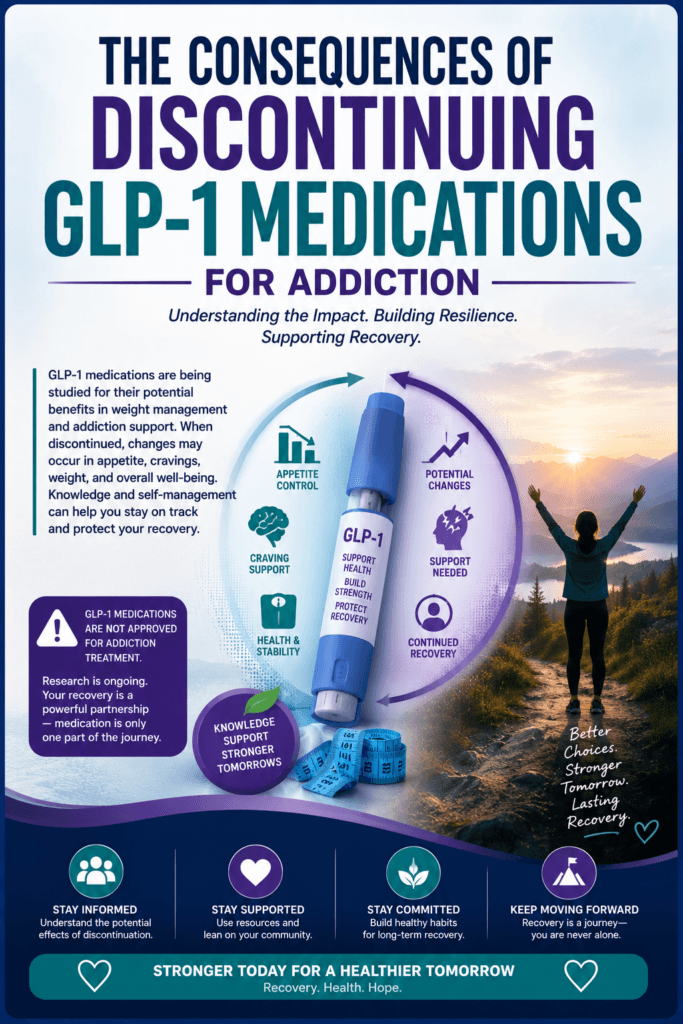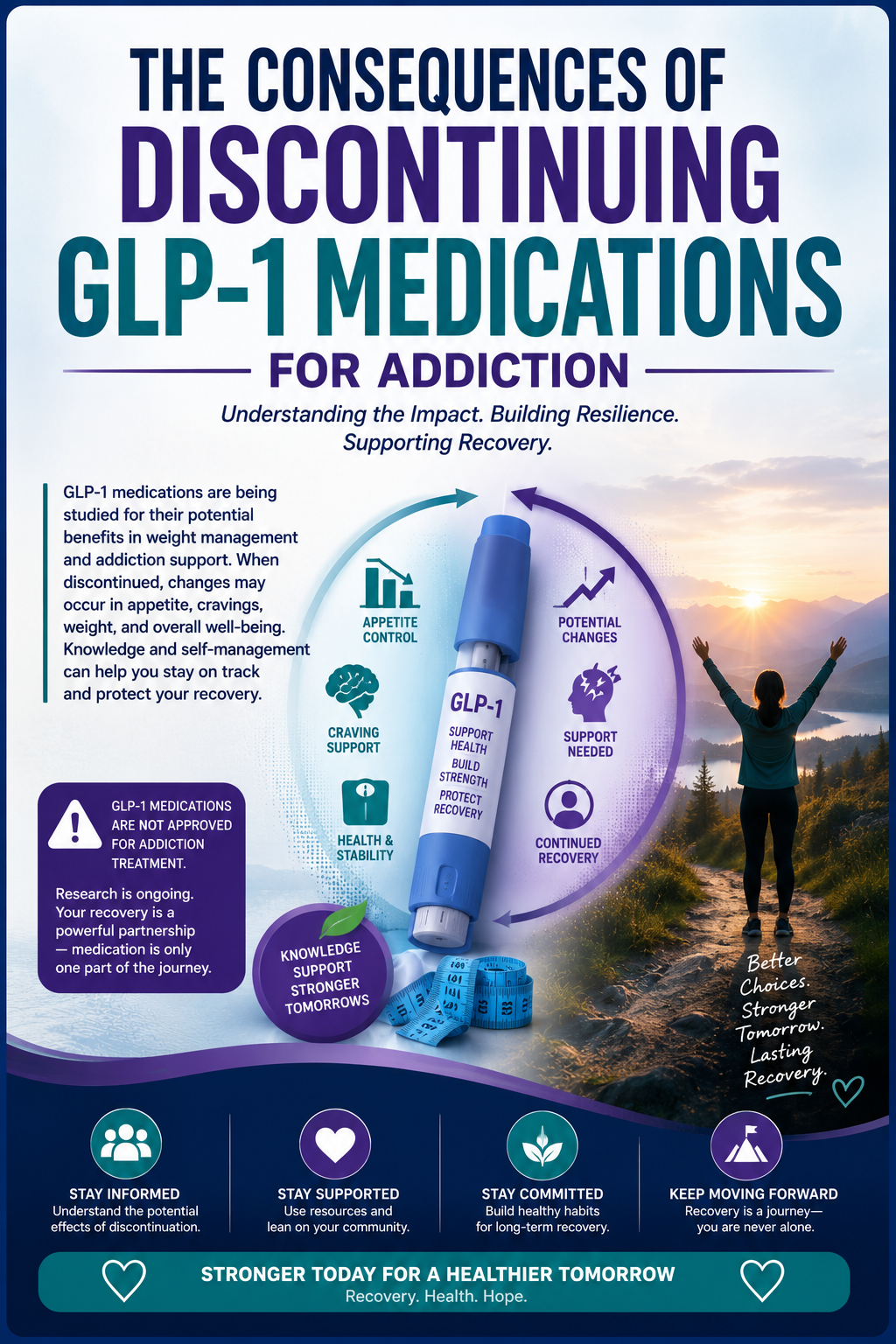
Glucagon-like peptide-1 (GLP-1) receptor agonists have transformed the treatment of type 2 diabetes and obesity by improving blood glucose control, promoting weight loss, and reducing appetite. Medications such as Ozempic, Wegovy, and Mounjaro are also being studied for their potential effects on the brain’s reward system, with early research suggesting they may reduce cravings and compulsive behaviors associated with alcohol, nicotine, opioids, stimulants, and certain behavioral addictions. However, these medications are not currently FDA-approved for the treatment of substance use disorders, and research is ongoing to determine their effectiveness and long-term role in addiction care. When GLP-1 medications are discontinued, some individuals may experience increased appetite, weight regain, worsening metabolic control, or changes in cravings. Understanding these potential consequences helps patients, families, and healthcare professionals prepare for medication transitions while emphasizing that comprehensive addiction treatment extends beyond medication alone.
The Consequences of Discontinuing GLP-1 Medications for Addiction
Glucagon-like peptide-1 (GLP-1) receptor agonists, including Ozempic, Wegovy, and Mounjaro, were developed to treat type 2 diabetes and obesity. Researchers are now studying whether these medications may also help reduce cravings and compulsive behaviors associated with alcohol, nicotine, opioids, stimulants, and certain behavioral addictions. Although early research is promising, GLP-1 medications are not currently FDA-approved for the treatment of substance use disorders, and evidence is still evolving.
As with many chronic medical treatments, discontinuing GLP-1 medications may have important consequences. Individuals who stop these medications may experience the return of cravings, weight regain, worsening metabolic health, or reduced control over addictive behaviors. The effects vary depending on the individual, the reason for treatment, and whether other recovery supports remain in place.
How GLP-1 Medications May Affect Addiction
GLP-1 receptors are found not only in the digestive system but also in brain regions involved in reward, motivation, and impulse control. Researchers believe these medications may:
- Reduce the rewarding effects of addictive substances
- Decrease cravings
- Improve impulse control
- Reduce compulsive behaviors
- Support healthier decision-making
Because these effects may diminish after stopping treatment, some individuals could notice changes in appetite, cravings, or addictive behaviors.
1. Return of Cravings
One of the most commonly reported effects after stopping GLP-1 medications is the gradual return of appetite and food cravings. Researchers are also investigating whether cravings for alcohol, nicotine, or other substances may similarly increase in some people after discontinuation, although more evidence is needed.
Individuals may notice:
- Increased thoughts about food or substances
- Stronger urges to engage in addictive behaviors
- More difficulty resisting triggers
- Increased emotional eating or compulsive behaviors
2. Weight Regain
Clinical studies have shown that many people regain a significant portion of lost weight after discontinuing GLP-1 medications if lifestyle changes alone do not fully compensate.
Weight regain may:
- Reduce self-confidence
- Increase stress
- Trigger emotional eating
- Worsen obesity-related health conditions
- Complicate recovery for individuals whose eating behaviors are linked to addiction
3. Loss of Appetite Control
GLP-1 medications slow stomach emptying and promote fullness.
After discontinuation, individuals may experience:
- Increased hunger
- Larger portion sizes
- More frequent snacking
- Reduced feelings of fullness
- Greater difficulty following healthy eating plans
These changes may increase the risk of overeating or binge eating in susceptible individuals.
4. Increased Risk of Relapse
For people recovering from addiction, cravings often contribute to relapse. If GLP-1 medications were helping reduce cravings, stopping them could remove one supportive factor.
Potential risks include:
- Greater vulnerability to environmental triggers
- Increased impulsive decision-making
- Emotional distress
- Higher relapse risk if behavioral supports are not maintained
Importantly, medications should never be viewed as the sole protection against relapse. Counseling, peer support, and relapse prevention remain essential.
5. Changes in Blood Sugar and Metabolic Health
For people taking GLP-1 medications to manage diabetes or prediabetes, stopping treatment may result in:
- Higher blood glucose levels
- Increased A1C over time
- Reduced insulin sensitivity
- Worsening metabolic control
These changes can indirectly affect mood, energy, and overall health.
6. Emotional and Psychological Effects
Some individuals report emotional changes after discontinuing treatment, including:
- Frustration
- Anxiety about weight regain
- Lower motivation
- Feelings of disappointment
- Increased stress
These emotional challenges may make recovery more difficult if not addressed through healthy coping strategies.
7. Return of Compulsive Eating Behaviors
Research suggests GLP-1 medications may reduce binge eating or compulsive eating in some individuals.
After stopping treatment, some people may experience:
- More frequent binge eating episodes
- Emotional eating
- Increased food preoccupation
- Loss of portion control
Behavioral therapy remains important whether or not medication is continued.
8. Importance of Gradual Transition
Individuals should never stop GLP-1 medications without consulting their healthcare provider.
Healthcare professionals may recommend:
- Transition planning
- Nutrition counseling
- Increased physical activity
- Behavioral therapy
- Monitoring weight and blood sugar
- Continued follow-up appointments
Planning ahead may reduce unwanted effects after discontinuation.
9. Continue Behavioral Therapy
If GLP-1 medications are discontinued, behavioral treatment becomes even more important.
Helpful approaches include:
- Cognitive Behavioral Therapy (CBT)
- Motivational Interviewing (MI)
- Contingency Management (for stimulant use disorders)
- Mindfulness-based relapse prevention
- Recovery coaching
- Family therapy
Behavioral interventions help individuals maintain healthy habits regardless of medication status.
10. Strengthen Recovery Supports
Recovery is most successful when multiple forms of support are in place.
Important supports include:
- Peer recovery groups
- Family involvement
- Exercise programs
- Nutrition education
- Stress-management techniques
- Mental health treatment
- Recovery community organizations
These resources can help individuals navigate changes if medication is stopped.
Current State of Research
Research on GLP-1 receptor agonists for addiction is encouraging but still preliminary. Early studies suggest these medications may reduce alcohol use, nicotine cravings, and other compulsive behaviors in some people, but larger clinical trials are needed to determine:
- Which individuals benefit most
- Optimal treatment duration
- Long-term safety
- Relapse rates after discontinuation
- How best to combine GLP-1 medications with behavioral therapies
At present, GLP-1 medications should not replace established, evidence-based treatments for substance use disorders.
Conclusion
Discontinuing GLP-1 medications may lead to the return of hunger, weight regain, and, for some individuals, increased cravings or compulsive behaviors. However, the extent to which stopping these medications affects recovery from substance use disorders remains under investigation, and current evidence is not sufficient to conclude that discontinuation directly causes relapse. Recovery from addiction requires a comprehensive approach that includes evidence-based counseling, healthy lifestyle changes, relapse prevention planning, peer and family support, and, when appropriate, FDA-approved medications for specific substance use disorders. Anyone considering stopping a GLP-1 medication should work closely with their healthcare provider to develop a safe, individualized plan that supports both metabolic health and long-term recovery.
Self-Management Strategies to Understand the Consequences of Discontinuing GLP-1 Medications for Addiction
Glucagon-like peptide-1 (GLP-1) receptor agonists, including medications such as Ozempic, Wegovy, and Mounjaro, have transformed the treatment of obesity and type 2 diabetes by reducing appetite, improving blood sugar control, and promoting weight loss. Researchers are also studying whether GLP-1 medications may reduce cravings and compulsive behaviors associated with alcohol, nicotine, opioids, stimulants, and other addictive disorders. Although these medications are not currently FDA-approved for treating substance use disorders, early research is promising. If a GLP-1 medication is discontinued, individuals may experience changes in appetite, weight, cravings, or emotional well-being. Practicing effective self-management strategies can help maintain recovery, support healthy habits, and reduce the risk of relapse during this transition.
1. Never Stop Medication Without Medical Guidance
Discontinuing a GLP-1 medication should always be discussed with your healthcare provider.
Self-management strategies include:
- Schedule a follow-up appointment before stopping treatment.
- Ask about expected changes after discontinuation.
- Discuss alternative treatment options if needed.
- Continue regular medical monitoring.
Professional guidance helps reduce complications and supports a safe transition.
2. Monitor Cravings Daily
If GLP-1 medications were helping reduce food or substance cravings, it is important to recognize changes early.
Keep a daily journal of:
- Food cravings
- Alcohol or drug cravings
- Emotional triggers
- Stress levels
- Times when cravings are strongest
- Successful coping strategies
Tracking patterns helps identify early warning signs and allows for timely intervention.
3. Maintain Healthy Eating Habits
Appetite often increases after discontinuing GLP-1 medications.
Helpful strategies include:
- Eat balanced meals rich in protein and fiber.
- Include fruits, vegetables, and whole grains.
- Limit highly processed foods and sugary beverages.
- Practice portion control.
- Plan meals and healthy snacks ahead of time.
Good nutrition supports both physical health and recovery.
4. Stay Physically Active
Exercise supports brain health, reduces stress, and helps manage weight after stopping GLP-1 therapy.
Aim for:
- At least 150 minutes of moderate physical activity each week.
- Strength training two or more days per week.
- Walking, cycling, swimming, or other enjoyable activities.
- Daily movement to reduce sedentary behavior.
Regular exercise can also improve mood and reduce cravings.
5. Develop Alternative Coping Skills
Many individuals use food or substances to cope with stress. Building healthier coping skills reduces the likelihood of relapse.
Healthy alternatives include:
- Deep breathing exercises
- Meditation
- Yoga
- Journaling
- Listening to music
- Reading
- Spending time in nature
- Creative hobbies
Replacing unhealthy habits with positive activities strengthens long-term recovery.
6. Recognize Relapse Warning Signs
Learning to recognize early warning signs allows individuals to seek help before a relapse occurs.
Possible warning signs include:
- Increased cravings
- Emotional eating
- Isolation
- Mood changes
- Skipping recovery meetings
- Returning to high-risk environments
- Loss of motivation
Responding early often prevents setbacks from becoming relapses.
7. Continue Behavioral Therapy
Medication works best when combined with behavioral treatment, and therapy remains valuable even if medication is discontinued.
Helpful therapies include:
- Cognitive Behavioral Therapy (CBT)
- Motivational Interviewing (MI)
- Contingency Management (for stimulant use disorders)
- Mindfulness-Based Relapse Prevention
- Individual counseling
- Group therapy
Behavioral therapies help strengthen coping skills and maintain recovery.
8. Build a Strong Recovery Support Network
Recovery is more successful when individuals remain connected to supportive people.
Support may come from:
- Family members
- Friends
- Therapists
- Recovery coaches
- Sponsors
- Faith communities
- Peer support groups
Strong social support reduces isolation and promotes accountability.
9. Monitor Weight and Overall Health
Stopping GLP-1 medications may result in weight regain or changes in metabolic health.
Self-monitoring includes:
- Checking weight regularly without becoming overly focused on daily fluctuations.
- Monitoring blood sugar if recommended.
- Recording blood pressure.
- Keeping routine healthcare appointments.
- Reporting significant changes to your healthcare provider.
Early intervention can prevent small problems from becoming larger health concerns.
10. Prioritize Sleep
Poor sleep can increase cravings, emotional distress, and impulsive decision-making.
Healthy sleep habits include:
- Maintaining a consistent bedtime.
- Limiting caffeine late in the day.
- Avoiding screens before bed.
- Creating a quiet, comfortable sleep environment.
- Aiming for 7–9 hours of sleep each night.
Quality sleep supports emotional regulation and recovery.
11. Practice Stress Management
Stress is one of the most common relapse triggers.
Effective stress-management techniques include:
- Mindfulness meditation
- Progressive muscle relaxation
- Prayer or spiritual practices
- Regular physical activity
- Time management
- Relaxation breathing
- Spending time with supportive people
Reducing stress lowers the risk of returning to unhealthy behaviors.
12. Set Realistic Expectations
Weight changes or increased hunger after stopping GLP-1 medications do not mean you have failed.
Remember:
- Recovery is a long-term process.
- Appetite changes are common.
- Healthy habits remain effective.
- Progress is measured over months, not days.
- Every positive choice contributes to long-term success.
Patience and persistence are essential for lasting recovery.
13. Continue Participating in Recovery Programs
Even if medication changes, recovery support should remain consistent.
Consider participating in:
- Alcoholics Anonymous (AA)
- Narcotics Anonymous (NA)
- SMART Recovery
- Recovery Dharma
- Celebrate Recovery
- Local recovery community organizations
Regular participation reinforces healthy coping skills and provides encouragement.
14. Know When to Seek Professional Help
Contact your healthcare provider promptly if you experience:
- Rapid weight regain
- Significant increases in cravings
- Symptoms of depression or anxiety
- Thoughts of returning to substance use
- Loss of control over eating
- Difficulty managing daily responsibilities
Seeking help early often prevents more serious setbacks.
Conclusion
Discontinuing GLP-1 medications may lead to increased appetite, weight regain, and, in some individuals, a return of cravings or compulsive behaviors. While research into the effects of GLP-1 medications on addiction is still evolving, individuals can take proactive steps to protect their recovery by practicing healthy self-management. Working closely with healthcare providers, maintaining nutritious eating habits, staying physically active, monitoring cravings, participating in counseling and peer support, managing stress, and recognizing early warning signs can help individuals navigate this transition successfully. Recovery is built through consistent daily choices, comprehensive support, and evidence-based care, allowing individuals to continue moving toward improved health and long-term well-being.
Family Support Strategies to Understand the Consequences of Discontinuing GLP-1 Medications for Addiction
Glucagon-like peptide-1 (GLP-1) receptor agonists, including Ozempic, Wegovy, and Mounjaro, have become important treatments for obesity and type 2 diabetes. Researchers are also investigating whether these medications may reduce cravings and compulsive behaviors associated with alcohol, nicotine, opioids, stimulants, and certain behavioral addictions. While early studies are encouraging, GLP-1 medications are not currently FDA-approved for the treatment of substance use disorders. If a loved one discontinues a GLP-1 medication, families may notice changes in appetite, weight, mood, or cravings. Understanding these possible changes allows families to provide informed, compassionate, and effective support while recognizing that long-term recovery depends on comprehensive medical care, counseling, and healthy lifestyle habits.
1. Learn About GLP-1 Medications
Education helps families understand what to expect if a medication is discontinued.
Families should understand that:
- GLP-1 medications primarily treat obesity and type 2 diabetes.
- They may reduce appetite and food cravings.
- Researchers are studying their effects on addictive behaviors.
- Stopping treatment may result in increased hunger or the return of some cravings.
- Medication is only one component of recovery.
Knowledge helps families respond with understanding rather than fear.
2. Encourage Ongoing Medical Supervision
Family members should encourage their loved one to consult their healthcare provider before stopping a GLP-1 medication.
Supportive actions include:
- Helping schedule follow-up appointments.
- Attending appointments when invited.
- Encouraging honest communication with healthcare providers.
- Supporting adherence to individualized treatment plans.
Professional guidance helps ensure a safe and appropriate transition.
3. Recognize That Appetite Changes Are Common
Families should understand that increased hunger after discontinuing GLP-1 therapy is a common physiological response rather than a lack of willpower.
Helpful strategies include:
- Avoid criticizing eating habits.
- Encourage balanced meals and healthy snacks.
- Support mindful eating.
- Keep nutritious foods readily available at home.
Compassion helps reduce shame and promotes healthier choices.
4. Watch for Changes in Cravings
Some individuals may notice increased cravings for food or, in some cases, stronger urges related to addictive behaviors after stopping a GLP-1 medication. While research on substance cravings is still evolving, families can help by noticing changes early.
Watch for:
- Increased food preoccupation
- Emotional eating
- Returning to unhealthy routines
- Greater difficulty resisting triggers
- Increased discussions about alcohol, nicotine, or other substances
Early recognition allows timely intervention.
5. Support Healthy Daily Routines
Daily structure helps reduce stress and supports recovery.
Families can encourage:
- Regular meal times
- Physical activity
- Adequate sleep
- Medication adherence for other prescribed treatments
- Time for counseling or recovery meetings
- Healthy recreational activities
Consistent routines improve emotional and physical well-being.
6. Encourage Continued Behavioral Therapy
Behavioral therapy remains important regardless of medication status.
Families should encourage participation in:
- Cognitive Behavioral Therapy (CBT)
- Motivational Interviewing (MI)
- Family therapy
- Individual counseling
- Group therapy
- Relapse prevention programs
These therapies help strengthen coping skills and reduce relapse risk.
7. Maintain Open and Supportive Communication
Effective communication creates a safe environment for discussing challenges.
Families should:
- Listen without interrupting.
- Express empathy rather than judgment.
- Ask open-ended questions.
- Encourage honest conversations about cravings and emotions.
- Celebrate progress, even when it seems small.
Supportive communication builds trust and resilience.
8. Learn the Warning Signs of Relapse
Families who recognize relapse warning signs can encourage early intervention.
Possible warning signs include:
- Increased isolation
- Mood swings
- Skipping therapy or recovery meetings
- Returning to high-risk environments
- Increased impulsive behavior
- Loss of interest in healthy activities
- Secretive behavior
Recognizing these signs early may help prevent a full relapse.
9. Promote Healthy Stress Management
Stress often contributes to relapse and unhealthy eating behaviors.
Families can encourage:
- Relaxation techniques
- Deep breathing exercises
- Mindfulness meditation
- Outdoor activities
- Exercise
- Family meals
- Hobbies and creative activities
Healthy coping strategies benefit the entire household.
10. Help Reduce Weight-Related Stigma
If weight regain occurs after stopping a GLP-1 medication, family attitudes can significantly affect emotional well-being.
Families should:
- Avoid commenting negatively about weight.
- Focus on overall health rather than appearance.
- Reinforce healthy behaviors instead of numbers on a scale.
- Celebrate improvements in strength, energy, and recovery.
Reducing stigma promotes self-esteem and long-term motivation.
11. Encourage Participation in Peer Recovery Programs
Community support complements professional treatment.
Families can encourage participation in:
- Alcoholics Anonymous (AA)
- Narcotics Anonymous (NA)
- SMART Recovery
- Recovery Dharma
- Celebrate Recovery
- Local recovery community organizations
These programs provide accountability, encouragement, and shared experiences.
12. Support Overall Physical Health
Families can help create an environment that promotes wellness.
Supportive actions include:
- Preparing nutritious meals together.
- Encouraging regular exercise.
- Supporting smoking cessation efforts if applicable.
- Promoting regular healthcare appointments.
- Encouraging hydration and healthy sleep habits.
Physical health supports emotional stability and recovery.
13. Practice Healthy Boundaries
Support should encourage recovery without enabling unhealthy behaviors.
Families should:
- Maintain consistent expectations.
- Encourage personal responsibility.
- Avoid rescuing loved ones from every consequence.
- Support treatment while respecting autonomy.
- Seek guidance if boundaries become difficult to maintain.
Healthy boundaries foster independence and accountability.
14. Care for Your Own Well-Being
Supporting someone through recovery can be emotionally demanding.
Family members should:
- Attend family support groups such as Al-Anon or Nar-Anon if appropriate.
- Seek counseling when needed.
- Maintain personal friendships and hobbies.
- Practice stress management.
- Recognize their own emotional needs.
Healthy caregivers are better equipped to provide long-term support.
Conclusion
Families play an essential role in supporting loved ones who discontinue GLP-1 medications, particularly as researchers continue to study their potential effects on cravings and addictive behaviors. Although these medications are not currently approved for treating substance use disorders, stopping them may be accompanied by increased appetite, weight regain, or changes in cravings for some individuals. By learning about GLP-1 medications, encouraging ongoing medical care, promoting healthy routines, supporting behavioral therapy, recognizing relapse warning signs, and maintaining compassionate communication, families can help create a stable, supportive recovery environment. Combined with evidence-based treatment, healthy boundaries, and strong community support, informed family involvement can help individuals successfully navigate medication changes while continuing their journey toward long-term recovery and improved overall health.
Community Resource Strategies to Understand the Consequences of Discontinuing GLP-1 Medications for Addiction
Glucagon-like peptide-1 (GLP-1) receptor agonists, including medications such as Ozempic, Wegovy, and Mounjaro, have significantly improved the treatment of obesity and type 2 diabetes by regulating appetite, improving blood glucose control, and promoting weight loss. Researchers are also investigating whether GLP-1 medications may reduce cravings and compulsive behaviors associated with alcohol, nicotine, opioids, stimulants, and behavioral addictions. Although these medications are not currently FDA-approved for the treatment of substance use disorders, early research is promising. If individuals discontinue GLP-1 therapy, community resources can provide education, counseling, recovery support, nutritional guidance, and healthcare services to help minimize potential effects such as increased appetite, weight regain, emotional distress, or the return of cravings.
1. Access Addiction Medicine Specialists
Addiction medicine specialists can evaluate individuals who are concerned about changes in cravings or recovery after stopping GLP-1 medications.
Specialists can provide:
- Comprehensive addiction assessments
- Medication evaluations
- Individualized treatment plans
- Relapse prevention strategies
- Coordination of medical and behavioral health care
Professional guidance ensures treatment decisions are based on the latest evidence.
2. Utilize Primary Care and Endocrinology Services
Primary care providers and endocrinologists play an important role in monitoring health after discontinuing GLP-1 medications.
Services include:
- Blood glucose monitoring
- Weight management
- Blood pressure evaluation
- Medication adjustments
- Nutrition referrals
- Long-term health monitoring
Regular medical follow-up helps identify and address health changes early.
3. Participate in Behavioral Health Programs
Behavioral therapies remain essential whether or not GLP-1 medications are being used.
Community resources include:
- Cognitive Behavioral Therapy (CBT)
- Motivational Interviewing (MI)
- Dialectical Behavior Therapy (DBT)
- Contingency Management (particularly for stimulant use disorders)
- Trauma-informed counseling
These therapies help individuals manage cravings, strengthen coping skills, and reduce relapse risk.
4. Join Peer Recovery Support Groups
Peer support groups provide encouragement, accountability, and shared experiences.
Examples include:
- Alcoholics Anonymous (AA)
- Narcotics Anonymous (NA)
- SMART Recovery
- Celebrate Recovery
- Recovery Dharma
- Refuge Recovery
Participation helps individuals remain connected during medication transitions.
5. Utilize Registered Dietitians and Nutrition Programs
Stopping GLP-1 medications may increase hunger and make healthy eating more challenging.
Community nutrition resources include:
- Registered dietitians
- Diabetes education programs
- Community nutrition classes
- Healthy cooking workshops
- Weight management programs
Nutrition professionals help individuals develop sustainable eating plans that support both metabolic health and recovery.
6. Participate in Physical Activity Programs
Exercise supports physical health, emotional well-being, and relapse prevention.
Community resources may include:
- Fitness centers
- YMCA and community recreation centers
- Walking clubs
- Group exercise classes
- Yoga and Pilates programs
- Adaptive exercise programs
Regular physical activity can improve mood, reduce stress, and help manage weight after medication discontinuation.
7. Access Mental Health Services
Emotional challenges may occur after stopping GLP-1 medications, particularly if weight regain or increased cravings develop.
Community mental health resources include:
- Community mental health centers
- Psychologists
- Psychiatrists
- Licensed counselors
- Licensed clinical social workers
Treating anxiety, depression, trauma, or other mental health conditions supports long-term recovery.
8. Participate in Family Education Programs
Families often benefit from learning about medication changes and addiction recovery.
Helpful programs include:
- Family counseling
- Al-Anon
- Nar-Anon
- Parent education workshops
- Community health education seminars
Educated families can provide more effective and compassionate support.
9. Learn About Relapse Prevention Resources
Community organizations frequently offer education that helps individuals recognize relapse warning signs and develop coping strategies.
These programs often teach:
- Trigger identification
- Stress management
- Craving management
- Emergency coping plans
- Recovery planning
- Healthy decision-making
Relapse prevention education strengthens long-term recovery.
10. Utilize Recovery Community Organizations
Recovery community organizations provide ongoing support after formal treatment ends.
Services often include:
- Recovery coaching
- Peer mentoring
- Employment assistance
- Educational workshops
- Volunteer opportunities
- Social recovery activities
- Recovery advocacy
These organizations promote resilience and continued engagement in recovery.
11. Access Crisis Intervention Services
Every community should have resources available for behavioral health emergencies.
Important services include:
- Emergency departments
- Mobile crisis response teams
- Local behavioral health crisis centers
- The 988 Suicide & Crisis Lifeline
- Emergency medical services (911 for life-threatening emergencies)
Knowing where to seek immediate help can be lifesaving during a crisis.
12. Promote Community Education About GLP-1 Medications
Community education reduces misconceptions and encourages informed healthcare decisions.
Educational topics should include:
- The approved uses of GLP-1 medications
- Current research on addiction
- Potential effects of discontinuation
- Healthy lifestyle strategies
- Importance of professional medical supervision
- Evidence-based addiction treatments
Public education helps reduce stigma and misinformation.
13. Encourage Participation in Clinical Research
Because research on GLP-1 medications and addiction is still developing, some individuals may be eligible for clinical trials.
Participation may provide:
- Access to emerging therapies
- Close medical supervision
- Opportunities to contribute to scientific knowledge
- Improved understanding of future treatment approaches
Clinical trial participation should always be discussed with a qualified healthcare provider.
14. Build Long-Term Recovery Networks
Recovery is strengthened by consistent community involvement rather than relying on medication alone.
Long-term community supports include:
- Alumni recovery programs
- Sober living communities
- Faith-based recovery groups
- Volunteer organizations
- Continuing education programs
- Vocational rehabilitation services
- Community wellness initiatives
These resources help individuals maintain purpose, accountability, and healthy social connections.
Conclusion
Community resources play a vital role in helping individuals navigate the potential consequences of discontinuing GLP-1 medications while maintaining progress in addiction recovery. Although these medications are not currently FDA-approved for treating substance use disorders, ongoing research suggests they may influence cravings and reward pathways in some individuals. Access to addiction medicine specialists, primary care providers, behavioral health services, nutrition programs, peer recovery groups, family education, mental health counseling, and wellness initiatives provides a strong foundation for continued recovery. By combining evidence-based medical care with comprehensive community support, individuals can successfully manage medication transitions, address challenges early, and continue building healthier, more resilient lives.
Frequently Asked Questions
Here are some common questions:
1. What are GLP-1 medications?
Glucagon-like peptide-1 (GLP-1) receptor agonists are medications primarily used to treat type 2 diabetes and obesity. They help regulate blood sugar, slow stomach emptying, reduce appetite, and promote weight loss. Common examples include semaglutide (marketed as Ozempic® and Wegovy®) and tirzepatide (marketed as Mounjaro® and Zepbound®).
2. Are GLP-1 medications approved to treat addiction?
No. GLP-1 medications are not currently approved by the U.S. Food and Drug Administration (FDA) for the treatment of substance use disorders. Researchers are studying whether they may help reduce cravings and addictive behaviors, but additional clinical trials are needed before they can be recommended as standard addiction treatments.
3. Why are researchers interested in GLP-1 medications for addiction?
GLP-1 receptors are found in brain regions involved in reward, motivation, and impulse control. Early research suggests these medications may:
- Reduce cravings
- Decrease compulsive behaviors
- Lower the rewarding effects of some substances
- Improve impulse control
These findings are promising but remain under investigation.
4. What can happen after stopping a GLP-1 medication?
Some individuals may experience:
- Increased appetite
- Weight regain
- Increased food cravings
- Changes in blood sugar control
- Emotional distress related to weight changes
Whether discontinuation increases cravings for alcohol, nicotine, or other substances is still being studied, and current evidence is not yet conclusive.
5. Can stopping GLP-1 medications increase the risk of addiction relapse?
Possibly for some individuals, but this has not been definitively established. If GLP-1 medications were helping reduce cravings, stopping them could remove one supportive factor. However, relapse is influenced by many factors, including stress, mental health, environmental triggers, and the availability of counseling and recovery support.
6. Why do many people regain weight after stopping GLP-1 medications?
GLP-1 medications reduce appetite and increase feelings of fullness. After discontinuation, hunger often returns, making it more difficult to maintain previous eating patterns. Without continued lifestyle interventions, many people regain some or much of the weight they lost during treatment.
7. Will everyone experience increased cravings after discontinuing GLP-1 therapy?
No. Individual responses vary depending on factors such as:
- Overall health
- Lifestyle habits
- Mental health
- Recovery supports
- Length of treatment
- Underlying medical conditions
Some people experience minimal changes, while others notice significant increases in appetite or cravings.
8. Should someone stop taking a GLP-1 medication suddenly?
No. Individuals should never discontinue a GLP-1 medication without consulting their healthcare provider. A medical professional can help determine whether stopping treatment is appropriate and develop a plan to monitor weight, blood sugar, and any changes in appetite or cravings.
9. How can someone reduce the effects of discontinuation?
Helpful strategies include:
- Following a healthy eating plan
- Exercising regularly
- Monitoring cravings
- Managing stress
- Attending counseling
- Participating in peer recovery groups
- Keeping regular healthcare appointments
- Developing a relapse prevention plan
These approaches help support long-term health and recovery.
10. Are GLP-1 medications a cure for addiction?
No. There is currently no cure for addiction. Addiction is a chronic but treatable medical condition. If future research confirms benefits of GLP-1 medications, they would likely serve as one component of a comprehensive treatment plan rather than a standalone solution.
11. What role does behavioral therapy play after stopping GLP-1 medications?
Behavioral therapy remains one of the most effective tools for maintaining recovery.
Common therapies include:
- Cognitive Behavioral Therapy (CBT)
- Motivational Interviewing (MI)
- Contingency Management (particularly for stimulant use disorders)
- Mindfulness-based relapse prevention
- Family therapy
- Group counseling
These therapies help individuals develop healthy coping skills regardless of medication use.
12. What community resources can help during this transition?
Helpful community resources include:
- Addiction treatment centers
- Community mental health clinics
- Registered dietitians
- Recovery coaches
- Alcoholics Anonymous (AA)
- Narcotics Anonymous (NA)
- SMART Recovery
- Recovery community organizations
- Family support groups such as Al-Anon and Nar-Anon
These services provide education, encouragement, and long-term support.
13. How important is family support after discontinuing GLP-1 medications?
Family support can make a significant difference. Families can:
- Encourage healthy routines
- Promote medical follow-up
- Recognize early warning signs
- Support participation in counseling
- Provide encouragement without judgment
- Help reduce stigma related to weight regain or addiction
A supportive home environment strengthens recovery.
14. What warning signs should prompt someone to contact a healthcare provider?
Seek professional guidance if any of the following occur:
- Rapid weight regain
- Significant increases in cravings
- Loss of control over eating
- Return to substance use
- Symptoms of depression or anxiety
- Thoughts of self-harm or suicide
- Difficulty managing daily responsibilities
Early intervention often prevents more serious complications.
15. What is the most important message about discontinuing GLP-1 medications?
The most important message is that GLP-1 medications should never be viewed as the only strategy for managing addiction or recovery. While research suggests they may influence appetite, reward pathways, and cravings, they are not FDA-approved for treating substance use disorders, and the effects of discontinuation on addiction outcomes are still being studied. Anyone considering stopping a GLP-1 medication should work closely with a qualified healthcare provider. Long-term recovery is best supported through a comprehensive plan that includes medical care, healthy lifestyle habits, behavioral therapy, relapse prevention, family involvement, and strong community support.
Conclusion
Discontinuing GLP-1 medications may result in physiological and behavioral changes, including increased hunger, weight regain, and, for some individuals, a return of cravings or compulsive behaviors. Although early studies suggest GLP-1 receptor agonists may influence the brain pathways involved in addiction, the full effects of stopping these medications on substance use disorder recovery remain under investigation. For this reason, decisions about discontinuing GLP-1 therapy should always be made in partnership with a qualified healthcare provider. Long-term recovery is best supported by a comprehensive, individualized treatment plan that includes evidence-based behavioral therapies, healthy lifestyle habits, relapse-prevention strategies, mental health care, family involvement, and community support. As scientific knowledge continues to evolve, GLP-1 medications may become an important component of addiction treatment for selected individuals, but they should currently be viewed as a potential adjunct—not a replacement—for established, evidence-based approaches to recovery
Video: Stopping GLP 1s and Addiction #selfimprovement #motivation