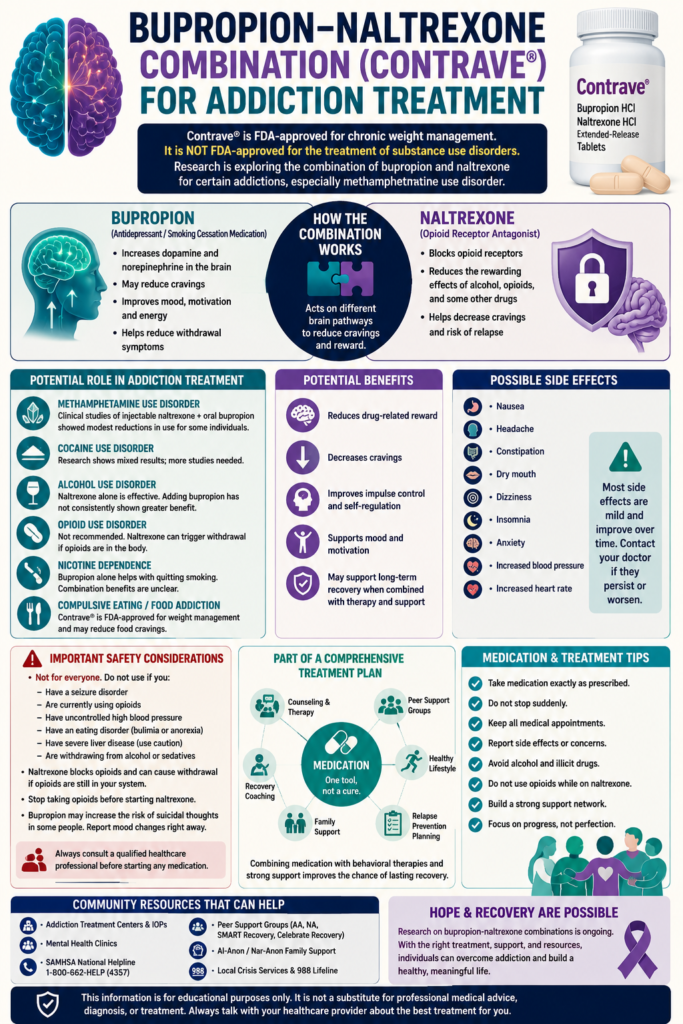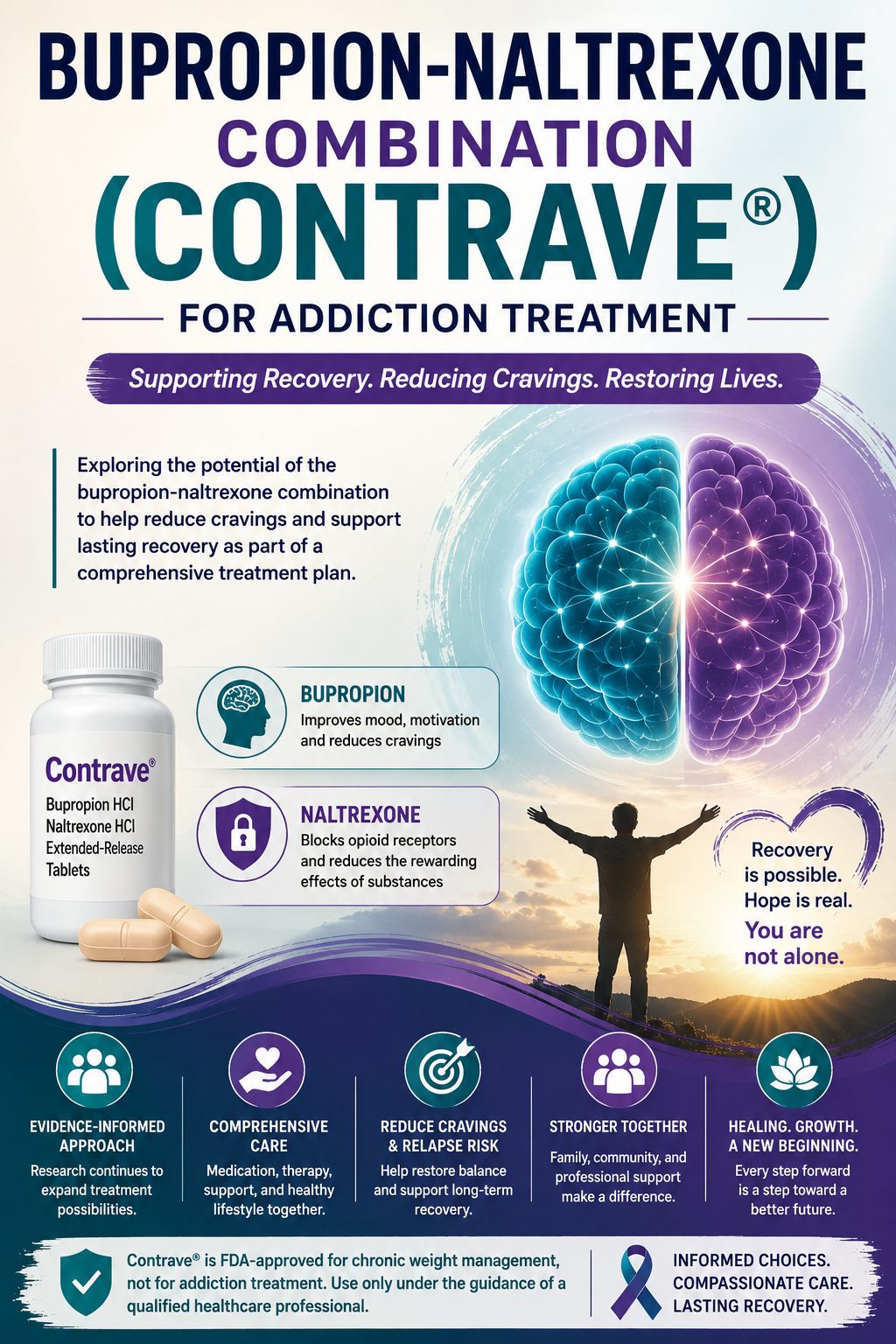
The bupropion-naltrexone combination (Contrave®) has attracted growing interest in addiction medicine because of its potential to influence the brain’s reward and craving pathways. Contrave combines bupropion, which increases dopamine and norepinephrine activity, with naltrexone, an opioid receptor blocker that reduces the rewarding effects of alcohol and opioids. Although Contrave® is FDA-approved for chronic weight management and is not approved by the U.S. Food and Drug Administration (FDA) for the treatment of substance use disorders, researchers have investigated similar combinations of bupropion and naltrexone for conditions such as methamphetamine use disorder, with encouraging but still limited results. Understanding how these medications work, their potential benefits, their limitations, and the importance of combining medication with behavioral therapies helps individuals and families make informed decisions about evidence-based addiction treatment.
Bupropion-Naltrexone Combination (Contrave®) for Addiction Treatment
Contrave® is a prescription medication that combines bupropion (an antidepressant and smoking cessation medication) and naltrexone (an opioid receptor antagonist). The U.S. Food and Drug Administration (FDA) has approved Contrave for chronic weight management in adults with obesity or overweight and certain weight-related conditions. It is not FDA-approved for the treatment of substance use disorders. However, researchers have investigated whether the combination of bupropion and naltrexone—or the individual medications—may be beneficial for certain addictions because they affect the brain’s reward and craving pathways.
Although evidence is growing, the effectiveness of the combination varies depending on the specific substance or behavior being treated.
How Does the Combination Work?
Bupropion
Bupropion increases the activity of the neurotransmitters dopamine and norepinephrine, which are involved in motivation, attention, and reward. It is FDA-approved to treat major depressive disorder, seasonal affective disorder, and to help people quit smoking.
Potential benefits include:
- Reducing nicotine cravings
- Improving mood
- Decreasing withdrawal symptoms
- Increasing energy and motivation
Naltrexone
Naltrexone blocks opioid receptors, reducing the rewarding effects of opioids and alcohol. It is FDA-approved for:
- Alcohol use disorder (AUD)
- Opioid use disorder (OUD) after complete detoxification
Potential benefits include:
- Reducing cravings
- Decreasing the pleasurable effects of alcohol and opioids
- Lowering the risk of relapse
Why Combine Them?
Researchers believe the combination may:
- Reduce drug-related reward
- Decrease cravings
- Improve impulse control
- Reduce compulsive behaviors
- Support long-term behavior change
The two medications act on different brain pathways, which may provide complementary effects.
Potential Role in Addiction Treatment
1. Methamphetamine Use Disorder
The strongest evidence for the bupropion-naltrexone combination comes from research on methamphetamine use disorder. A large clinical trial found that extended-release injectable naltrexone combined with oral bupropion helped some adults with moderate-to-severe methamphetamine use disorder achieve meaningful reductions in use compared with placebo.
However:
- The benefit was modest, not universal.
- The regimen studied was not the commercial Contrave product. It used extended-release injectable naltrexone plus sustained-release bupropion at specific research doses.
- This approach is not currently FDA-approved for methamphetamine use disorder.
2. Cocaine Use Disorder
Research has explored the combination for cocaine addiction, but findings have been mixed. Some studies suggest possible benefits in selected patients, while others show little improvement. At present, there is no FDA-approved medication for cocaine use disorder.
3. Alcohol Use Disorder
Naltrexone alone is an established, FDA-approved treatment for alcohol use disorder. Adding bupropion has not consistently demonstrated superior outcomes over naltrexone alone, so the combination is not routinely recommended for alcohol dependence.
4. Opioid Use Disorder
Contrave should not be used to treat opioid use disorder.
Important reasons include:
- Naltrexone can trigger precipitated withdrawal if opioids are still present in the body.
- Patients must be fully opioid-free before receiving naltrexone.
- Evidence-based medications such as buprenorphine, methadone, and extended-release naltrexone remain the recommended treatments.
5. Nicotine Dependence
Bupropion alone is FDA-approved for smoking cessation. Naltrexone has been studied as an add-on therapy, but evidence has not shown enough consistent benefit for routine use.
6. Food Addiction and Compulsive Eating
Contrave is FDA-approved for chronic weight management and can reduce appetite and food cravings in appropriate patients. Some researchers believe it may also help people with binge eating or compulsive eating behaviors, though treatment decisions should be individualized.
Benefits Being Studied
Potential advantages include:
- Reduced cravings
- Less reward from addictive substances
- Improved self-control
- Better treatment adherence
- Reduced compulsive behaviors
- Possible support for long-term recovery in selected populations
Possible Side Effects
Common side effects include:
- Nausea
- Constipation
- Headache
- Dry mouth
- Dizziness
- Insomnia
- Anxiety
- Increased blood pressure
- Increased heart rate
Most side effects improve as the body adjusts, but persistent symptoms should be discussed with a healthcare provider.
Important Safety Considerations
This medication is not appropriate for everyone.
It should generally be avoided or used with caution in individuals with:
- Seizure disorders (bupropion increases seizure risk)
- Current opioid use
- Abrupt withdrawal from alcohol or sedatives
- Uncontrolled hypertension
- Eating disorders such as bulimia or anorexia nervosa
- Severe liver disease (particularly affecting naltrexone use)
Bupropion also carries an FDA boxed warning about suicidal thoughts and behaviors in children, adolescents, and young adults taking antidepressants. Patients should be monitored closely, especially when starting therapy or changing doses.
Role Within Comprehensive Addiction Care
Medication alone is rarely sufficient for treating addiction. If this combination is used in carefully selected patients, it should be part of a comprehensive treatment plan that includes:
- Individual counseling
- Cognitive behavioral therapy (CBT)
- Contingency management (especially for stimulant use disorders)
- Peer support groups
- Family involvement
- Recovery coaching
- Relapse prevention planning
- Regular follow-up with healthcare providers
Current Research
The most promising evidence supports injectable naltrexone plus oral bupropion for certain patients with methamphetamine use disorder. Researchers continue to study:
- Optimal dosing
- Which patients benefit most
- Long-term outcomes
- Use alongside behavioral therapies
- Potential applications for other stimulant use disorders
Further studies are needed before the medication combination becomes a standard treatment for most addictions.
Conclusion
The bupropion-naltrexone combination (Contrave®) is FDA-approved for chronic weight management, not for addiction treatment. Nevertheless, research suggests that combining these two medications may help reduce cravings and substance use in some people with methamphetamine use disorder, particularly when using the research regimen of injectable naltrexone and oral bupropion. Evidence for alcohol, opioid, cocaine, and nicotine use disorders is either limited or does not support routine use of the combination. Individuals with substance use disorders should work with an addiction specialist to determine the most appropriate evidence-based treatment, which may include FDA-approved medications, counseling, behavioral therapies, and ongoing recovery support tailored to their specific needs.
Self-Management Strategies to Understand the Bupropion-Naltrexone Combination (Contrave®) for Addiction Treatment
The combination of bupropion and naltrexone (Contrave®) has gained attention for its potential role in treating certain addictive behaviors. Although Contrave is FDA-approved for chronic weight management, it is not FDA-approved for the treatment of substance use disorders. Research has shown promising results for the combination of extended-release injectable naltrexone and oral bupropion in some individuals with methamphetamine use disorder, but its use for addiction remains limited and should only occur under the guidance of qualified healthcare professionals. Individuals interested in this therapy should understand how it works, follow medical recommendations, and actively participate in comprehensive recovery programs.
1. Learn How the Medication Works
Understanding how each medication affects the brain helps individuals make informed treatment decisions.
- Bupropion increases dopamine and norepinephrine activity, helping reduce cravings, improve mood, and decrease withdrawal symptoms.
- Naltrexone blocks opioid receptors, reducing the rewarding effects of alcohol and opioids and helping decrease cravings.
Learning how these medications work reinforces the importance of using them exactly as prescribed.
2. Work Closely With Your Healthcare Provider
Medication should always be supervised by a healthcare professional experienced in addiction treatment.
Self-management strategies:
- Attend all scheduled appointments.
- Report new symptoms promptly.
- Discuss all prescription and over-the-counter medications.
- Never adjust the dose without medical approval.
- Inform your provider about any history of seizures, liver disease, or opioid use.
3. Take Medication Exactly as Prescribed
Medication works best when taken consistently.
Tips include:
- Take medication at the same time each day.
- Use a pill organizer.
- Set reminders on your phone.
- Never double doses if one is missed unless instructed by your provider.
- Do not stop medication abruptly without medical guidance.
Consistency improves treatment effectiveness and reduces complications.
4. Understand That Medication Is Only One Part of Recovery
Medication alone rarely treats addiction successfully.
Successful recovery also includes:
- Individual counseling
- Cognitive behavioral therapy (CBT)
- Peer recovery groups
- Recovery coaching
- Relapse prevention planning
- Healthy lifestyle changes
Recovery involves treating the whole person—not just reducing cravings.
5. Monitor Cravings and Triggers
Keeping track of situations that increase cravings helps individuals prepare healthier responses.
Self-management strategies:
- Keep a recovery journal.
- Identify emotional triggers such as stress or loneliness.
- Recognize environmental triggers.
- Develop coping plans before entering high-risk situations.
Understanding triggers improves relapse prevention.
6. Build Healthy Daily Routines
Structured routines reduce boredom and improve emotional stability.
Healthy habits include:
- Regular sleep schedule
- Nutritious meals
- Daily exercise
- Stress management
- Consistent work or school routines
- Scheduled recovery activities
Routine strengthens long-term recovery.
7. Watch for Side Effects
Being aware of potential side effects helps individuals recognize when medical attention is needed.
Common side effects include:
- Nausea
- Constipation
- Dry mouth
- Headache
- Insomnia
- Dizziness
- Anxiety
- Increased blood pressure
- Increased heart rate
Report severe or persistent symptoms to your healthcare provider immediately.
8. Avoid Opioids While Taking Naltrexone
Naltrexone blocks opioid receptors and can cause precipitated withdrawal if opioids are still in the body.
Important reminders:
- Inform all healthcare providers that you take naltrexone.
- Do not use illicit opioids.
- Discuss pain management options before any surgery or emergency procedure.
- Never attempt to override naltrexone by taking large amounts of opioids, as this greatly increases the risk of overdose if the medication wears off.
9. Support Physical Health
Healthy lifestyle choices improve recovery outcomes and overall well-being.
Focus on:
- Regular physical activity
- Balanced nutrition
- Adequate hydration
- Weight management
- Smoking cessation if applicable
- Regular medical checkups
Physical health supports brain healing during recovery.
10. Manage Stress in Healthy Ways
Stress is a common relapse trigger.
Healthy stress-management techniques include:
- Mindfulness meditation
- Deep breathing exercises
- Yoga
- Walking
- Listening to music
- Spending time outdoors
- Talking with supportive friends or family
Replacing unhealthy coping strategies strengthens recovery.
11. Build a Strong Support System
Recovery is more successful when individuals receive ongoing encouragement.
Support systems may include:
- Family members
- Friends
- Therapists
- Peer recovery groups
- Recovery coaches
- Faith communities
- Healthcare professionals
Strong support reduces isolation and increases accountability.
12. Develop a Relapse Prevention Plan
Recovery requires preparation for difficult situations.
A relapse prevention plan should include:
- Personal warning signs
- High-risk situations
- Healthy coping strategies
- Emergency support contacts
- Recovery meeting schedule
- Healthcare provider information
- Steps to take if cravings increase
Planning ahead improves confidence and reduces the risk of relapse.
13. Monitor Mood and Mental Health
Because bupropion is an antidepressant, mood changes should be monitored closely, especially during the first few weeks of treatment or after dose adjustments.
Self-management strategies:
- Track mood in a journal or mobile app.
- Report worsening depression, anxiety, agitation, or suicidal thoughts immediately.
- Continue attending mental health appointments.
- Maintain healthy sleep and stress-management habits.
Early recognition of mood changes allows for prompt medical intervention.
14. Practice Patience Throughout Recovery
Recovery takes time. Improvements in cravings, mood, and daily functioning often occur gradually.
Remember to:
- Celebrate small victories.
- Focus on consistent progress.
- Learn from setbacks without giving up.
- Recognize that recovery is a lifelong process.
Conclusion
Understanding the bupropion-naltrexone combination (Contrave®) helps individuals make informed decisions about addiction treatment while recognizing its current role and limitations. Although Contrave is FDA-approved for chronic weight management rather than substance use disorders, research suggests that combinations of bupropion and naltrexone may benefit some individuals with methamphetamine use disorder when used under specialized medical supervision. Successful recovery depends on much more than medication—it requires professional care, healthy daily routines, counseling, stress management, relapse prevention planning, and strong social support. By actively participating in treatment and practicing consistent self-management, individuals can strengthen their recovery and improve their overall quality of life.
Family Support Strategies to Understand the Bupropion-Naltrexone Combination (Contrave®) for Addiction Treatment
The combination of bupropion and naltrexone (Contrave®) has attracted interest because of its effects on the brain’s reward and craving pathways. Although Contrave® is FDA-approved for chronic weight management, it is not FDA-approved for the treatment of substance use disorders. Research has shown promising results using extended-release injectable naltrexone combined with oral bupropion for some individuals with methamphetamine use disorder, but this differs from the commercially available Contrave product. Families play an important role by learning about the medication, supporting treatment adherence, encouraging healthy lifestyle changes, and maintaining realistic expectations about recovery.
1. Learn About the Medication
Understanding how the medication works helps families provide informed support.
Families should know that:
- Bupropion helps regulate dopamine and norepinephrine, which may reduce cravings and improve mood.
- Naltrexone blocks opioid receptors, reducing the rewarding effects of opioids and alcohol.
- Contrave itself is approved for weight management, not addiction treatment.
- Medication is only one part of a comprehensive recovery plan.
Education helps families communicate accurately and reduce misconceptions about treatment.
2. Encourage Professional Medical Care
Medication should always be prescribed and monitored by qualified healthcare professionals.
Family support strategies:
- Encourage attendance at medical appointments.
- Support open communication with healthcare providers.
- Help keep track of follow-up visits.
- Remind loved ones to discuss side effects or concerns with their clinician.
Professional supervision improves medication safety and effectiveness.
3. Support Medication Adherence
Taking medication consistently is essential for achieving the intended therapeutic effects.
Families can help by:
- Encouraging medications to be taken as prescribed.
- Helping establish a daily routine.
- Using calendars or medication reminder apps if appropriate.
- Avoiding criticism if a dose is missed and encouraging the individual to follow medical guidance.
Supportive reminders are more effective than pressure or punishment.
4. Understand That Medication Is Not a Cure
Families should recognize that medication alone does not eliminate addiction.
Recovery also requires:
- Counseling
- Behavioral therapy
- Recovery support groups
- Lifestyle changes
- Relapse prevention planning
- Long-term follow-up care
Viewing medication as one component of recovery encourages realistic expectations.
5. Encourage Healthy Daily Habits
Healthy routines strengthen recovery and improve overall well-being.
Families can encourage:
- Regular exercise
- Nutritious meals
- Consistent sleep schedules
- Stress-reduction activities
- Substance-free recreational activities
- Daily structure and routine
Healthy lifestyles complement medical treatment.
6. Watch for Side Effects
Families may notice medication side effects before the individual recognizes them.
Common side effects include:
- Nausea
- Headache
- Dry mouth
- Constipation
- Difficulty sleeping
- Anxiety
- Dizziness
Families should encourage prompt communication with healthcare providers if side effects become severe or persistent.
7. Monitor Emotional Well-Being
Because bupropion is an antidepressant, families should be attentive to significant mood or behavioral changes.
Watch for:
- Increased irritability
- Severe anxiety
- Agitation
- Depression
- Social withdrawal
- Suicidal thoughts or behaviors, especially when starting treatment or changing doses
Any concerning symptoms should be reported to a healthcare professional immediately.
8. Support Relapse Prevention
Recovery is an ongoing process, and families can help reduce relapse risk.
Family support strategies:
- Help identify high-risk situations.
- Encourage healthy coping skills.
- Participate in relapse prevention planning if invited.
- Reinforce positive recovery behaviors.
- Encourage early intervention if warning signs appear.
Relapse prevention works best when everyone understands the recovery plan.
9. Respect Healthy Boundaries
Support should encourage independence rather than create dependence.
Families should:
- Encourage personal responsibility.
- Avoid enabling substance use.
- Allow natural consequences when appropriate.
- Maintain clear and consistent household expectations.
- Balance compassion with accountability.
Healthy boundaries promote long-term recovery.
10. Encourage Participation in Therapy and Recovery Groups
Medication works best when combined with behavioral treatment.
Families can encourage participation in:
- Individual counseling
- Cognitive behavioral therapy (CBT)
- Peer recovery support groups
- Family therapy
- Recovery coaching
- Educational workshops
Behavioral therapies help individuals develop healthier coping skills.
11. Communicate With Compassion
Positive communication builds trust and strengthens relationships.
Helpful communication techniques include:
- Listen without interrupting.
- Avoid blame or criticism.
- Use respectful language.
- Express encouragement and hope.
- Celebrate progress rather than focusing only on setbacks.
Supportive communication reduces stress and promotes recovery.
12. Take Care of Yourself
Supporting someone with addiction can be emotionally demanding. Family members should prioritize their own well-being.
Self-care strategies include:
- Attending Al-Anon or Nar-Anon meetings.
- Seeking individual counseling if needed.
- Maintaining hobbies and friendships.
- Practicing stress management.
- Learning healthy coping skills.
Healthy caregivers are better able to provide consistent support.
13. Understand Opioid Safety
Because naltrexone blocks opioid receptors, families should understand important safety precautions.
Families should know that:
- Opioids should not be used while taking naltrexone unless directed by a healthcare professional.
- Naltrexone can trigger withdrawal if opioids are still in the body.
- Emergency healthcare providers should be informed if the individual is taking naltrexone.
- Individuals who stop taking naltrexone may have reduced opioid tolerance, increasing overdose risk if they return to opioid use.
Understanding these precautions can help families respond appropriately during medical emergencies.
14. Foster Hope and Patience
Recovery often occurs gradually and may include setbacks. Families should focus on long-term progress rather than expecting immediate results.
Families can:
- Celebrate recovery milestones.
- Encourage perseverance.
- Recognize that healing takes time.
- Reinforce positive lifestyle changes.
- Maintain realistic expectations.
Patience and encouragement strengthen long-term recovery.
Conclusion
Family support is an important part of recovery for individuals receiving treatment that may include bupropion and naltrexone. Although Contrave® is FDA-approved for chronic weight management and not for addiction treatment, research continues to explore related medication combinations for certain substance use disorders, particularly methamphetamine use disorder. Families who educate themselves, encourage professional care, support medication adherence, promote healthy routines, recognize side effects, and maintain healthy boundaries can create a positive recovery environment. When combined with evidence-based treatment, counseling, and ongoing support, informed family involvement helps individuals build resilience, reduce the risk of relapse, and work toward lasting recovery.
Community Resource Strategies to Understand the Bupropion-Naltrexone Combination (Contrave®) for Addiction Treatment
The bupropion-naltrexone combination (Contrave®) has received attention for its potential role in addressing cravings and compulsive behaviors. Contrave® is FDA-approved for chronic weight management, but it is not FDA-approved for the treatment of substance use disorders. Research has shown encouraging results with extended-release injectable naltrexone combined with oral bupropion for some individuals with methamphetamine use disorder, but this is a different treatment regimen than the commercially available Contrave®. Community resources play an essential role in helping individuals understand treatment options, access evidence-based care, and build the long-term support needed for successful recovery.
1. Access Evidence-Based Addiction Treatment Programs
Community addiction treatment centers provide comprehensive care that combines medication management, behavioral therapies, and recovery planning.
Community resources include:
- Outpatient addiction treatment programs
- Intensive Outpatient Programs (IOPs)
- Partial Hospitalization Programs (PHPs)
- Residential rehabilitation centers
- Hospital-based addiction medicine clinics
These programs evaluate whether medication-assisted treatment or other therapies are appropriate for each individual.
2. Utilize Addiction Medicine Specialists
Addiction medicine specialists have advanced training in diagnosing and treating substance use disorders.
Benefits include:
- Comprehensive medical evaluations
- Medication management
- Monitoring for side effects
- Individualized treatment planning
- Coordination with mental health professionals
Specialists can determine whether medications such as bupropion, naltrexone, or other evidence-based treatments are appropriate.
3. Participate in Behavioral Therapy Programs
Behavioral therapies remain one of the most important components of addiction treatment, regardless of medication use.
Community resources include:
- Cognitive Behavioral Therapy (CBT)
- Contingency Management (especially for stimulant use disorders)
- Motivational Interviewing (MI)
- Dialectical Behavior Therapy (DBT)
- Trauma-informed counseling
These therapies help individuals identify triggers, develop healthier coping skills, and prevent relapse.
4. Access Community Mental Health Services
Many individuals with addiction also experience depression, anxiety, trauma, or other mental health conditions. Treating both addiction and mental health conditions together improves recovery outcomes.
Available resources include:
- Community mental health centers
- Psychiatrists
- Psychologists
- Licensed clinical social workers
- Licensed professional counselors
Integrated care provides more comprehensive treatment.
5. Participate in Peer Recovery Support Groups
Peer support offers encouragement, accountability, and practical recovery advice from individuals with similar experiences.
Examples include:
- Alcoholics Anonymous (AA)
- Narcotics Anonymous (NA)
- SMART Recovery
- Celebrate Recovery
- Recovery Dharma
- Refuge Recovery
These groups complement professional treatment by providing long-term social support.
6. Utilize Family Education Programs
Community organizations often provide educational programs that teach families how medications, counseling, and recovery services work together.
Examples include:
- Al-Anon Family Groups
- Nar-Anon Family Groups
- Family counseling
- Parent education workshops
- Community recovery education seminars
Educated families are better prepared to support recovery while maintaining healthy boundaries.
7. Learn About Medication Safety
Community pharmacists and healthcare providers are valuable sources of medication education.
Important topics include:
- Proper medication use
- Potential drug interactions
- Possible side effects
- Safe medication storage
- Importance of taking medications as prescribed
- Opioid safety while taking naltrexone
Medication education helps reduce preventable complications.
8. Participate in Recovery Community Organizations
Recovery community organizations provide ongoing support after formal treatment ends.
Services may include:
- Recovery coaching
- Peer mentoring
- Educational workshops
- Employment assistance
- Volunteer opportunities
- Recovery-friendly social events
Long-term engagement promotes continued personal growth and accountability.
9. Utilize Wellness Programs
Healthy lifestyles strengthen recovery by improving both physical and mental health.
Community wellness resources include:
- Fitness centers
- Walking clubs
- Nutrition education
- Yoga classes
- Meditation groups
- Smoking cessation programs
- Stress management workshops
These activities complement medical and psychological treatment.
10. Access Employment and Educational Resources
Stable employment and continued education improve self-esteem, financial security, and quality of life during recovery.
Community resources include:
- Vocational rehabilitation programs
- Workforce development centers
- Career counseling
- Resume workshops
- Community colleges
- Adult education programs
Meaningful work and education provide structure and purpose.
11. Utilize Crisis and Emergency Services
Communities should ensure that individuals and families know where to seek immediate help during a behavioral health emergency.
Important resources include:
- Emergency departments
- Mobile crisis response teams
- Local behavioral health crisis centers
- The 988 Suicide & Crisis Lifeline
- Emergency medical services (911 for life-threatening emergencies)
Rapid access to emergency services can save lives during overdose, mental health crises, or severe relapse.
12. Promote Community Education to Reduce Stigma
Stigma often prevents individuals from seeking treatment. Community education helps increase understanding that addiction is a treatable medical condition.
Community education efforts include:
- Public awareness campaigns
- School prevention programs
- Community health fairs
- Recovery awareness events
- Healthcare education seminars
- Sharing evidence-based recovery information
Reducing stigma encourages earlier treatment and stronger community support.
13. Encourage Participation in Research Studies
Because the use of bupropion combined with naltrexone for addiction treatment is still being investigated, eligible individuals may consider participating in clinical research.
Potential benefits include:
- Access to emerging treatments
- Close medical monitoring
- Contributing to scientific knowledge
- Helping improve future addiction care
Participation should always be voluntary and discussed with healthcare providers.
14. Foster Long-Term Recovery Support
Recovery continues long after treatment ends. Communities can help individuals maintain progress by providing ongoing resources and opportunities for personal growth.
Long-term supports include:
- Alumni recovery programs
- Sober living environments
- Peer recovery coaching
- Continuing counseling
- Volunteer work
- Mentorship programs
- Community service opportunities
Long-term engagement strengthens resilience and reduces relapse risk.
Conclusion
Community resources are essential for helping individuals understand the potential role of bupropion and naltrexone in addiction treatment while recognizing the current evidence and limitations. Although Contrave® is FDA-approved for chronic weight management rather than substance use disorders, research continues to evaluate related medication combinations for conditions such as methamphetamine use disorder. By providing access to addiction medicine specialists, behavioral therapies, mental health services, peer recovery groups, family education, wellness programs, employment assistance, and long-term recovery organizations, communities create an environment that supports informed decision-making and lasting recovery. When combined with professional medical care and individualized treatment planning, these resources empower individuals and families to build healthier, more fulfilling lives.
Frequently Asked Questions
Here are some common questions:
1. What is Contrave®?
Contrave® is a prescription medication that combines bupropion hydrochloride and naltrexone hydrochloride in an extended-release tablet. It is FDA-approved for chronic weight management in adults with obesity or overweight who have certain weight-related medical conditions. It is not FDA-approved for the treatment of substance use disorders.
2. Can Contrave® be used to treat addiction?
Contrave® itself is not approved to treat addiction. However, researchers have studied combinations of oral bupropion and extended-release injectable naltrexone for methamphetamine use disorder, with encouraging but modest results. More research is needed before this approach becomes a standard treatment.
3. How do bupropion and naltrexone work together?
The medications affect different brain pathways involved in reward and cravings.
- Bupropion increases dopamine and norepinephrine activity, which may improve mood and reduce cravings.
- Naltrexone blocks opioid receptors, reducing the rewarding effects of alcohol, opioids, and some addictive behaviors.
Together, they may help reduce cravings and improve self-control in certain individuals.
4. Is Contrave® approved by the FDA for methamphetamine use disorder?
No. Although clinical studies have shown promising results using extended-release injectable naltrexone combined with oral bupropion, there is currently no FDA-approved medication specifically for methamphetamine use disorder.
5. Which addictions have researchers studied with this medication combination?
Researchers have investigated the combination for:
- Methamphetamine use disorder
- Cocaine use disorder
- Nicotine dependence
- Alcohol use disorder
- Food addiction and binge eating behaviors
The strongest evidence to date is for methamphetamine use disorder, but additional studies are still needed.
6. Can Contrave® treat opioid use disorder?
No. Contrave® should not be used as a treatment for opioid use disorder. Evidence-based medications such as buprenorphine, methadone, and extended-release naltrexone remain the recommended treatments for opioid use disorder.
7. Why must people stop opioids before taking naltrexone?
Naltrexone blocks opioid receptors. If opioids are still present in the body, taking naltrexone can cause precipitated withdrawal, which is a sudden and severe withdrawal syndrome. Healthcare providers ensure patients are opioid-free before starting naltrexone.
8. What are the most common side effects?
Common side effects include:
- Nausea
- Headache
- Dry mouth
- Constipation
- Dizziness
- Insomnia
- Anxiety
- Increased blood pressure
- Increased heart rate
Many side effects improve as the body adjusts, but persistent or severe symptoms should be reported to a healthcare provider.
9. Who should not take Contrave®?
Contrave® may not be appropriate for individuals with:
- Seizure disorders
- Current opioid use
- Eating disorders such as bulimia or anorexia nervosa
- Uncontrolled high blood pressure
- Severe liver disease
- Recent withdrawal from alcohol or sedatives without medical supervision
A healthcare provider should evaluate whether the medication is safe for each individual.
10. Can Contrave® be used by itself to treat addiction?
No. Medication alone is usually not enough. Recovery is most successful when medication is combined with:
- Individual counseling
- Cognitive behavioral therapy (CBT)
- Peer support groups
- Family involvement
- Relapse prevention planning
- Healthy lifestyle changes
11. How long might someone need to take this medication?
The duration depends on the individual’s medical condition, treatment goals, response to therapy, and any side effects. Decisions about starting, continuing, or stopping medication should always be made with a qualified healthcare provider.
12. Can people drink alcohol while taking Contrave®?
Alcohol use should be discussed with a healthcare provider. Drinking alcohol while taking bupropion may increase the risk of certain side effects, including seizures in susceptible individuals. Individuals being treated for alcohol use disorder should follow the treatment plan recommended by their clinician.
13. Does Contrave® cure addiction?
No. There is currently no cure for addiction. Addiction is a chronic but treatable medical condition. Medications may help reduce cravings and support recovery, but long-term success also depends on behavioral therapy, healthy lifestyle changes, ongoing support, and relapse prevention.
14. What community resources can support recovery?
Helpful recovery resources include:
- Addiction treatment centers
- Addiction medicine specialists
- Community mental health clinics
- Alcoholics Anonymous (AA)
- Narcotics Anonymous (NA)
- SMART Recovery
- Family support groups such as Al-Anon and Nar-Anon
- Recovery community organizations
- The 988 Suicide & Crisis Lifeline for behavioral health crises
These resources provide education, counseling, peer support, and long-term recovery assistance.
15. What is the most important message about the bupropion-naltrexone combination?
The most important message is that Contrave® is approved for chronic weight management—not for treating substance use disorders. While research involving oral bupropion and extended-release injectable naltrexone has shown promise for some people with methamphetamine use disorder, treatment decisions should be individualized and guided by qualified healthcare professionals. Comprehensive care—including medication when appropriate, counseling, behavioral therapies, family support, and community resources—offers the best opportunity for achieving and maintaining long-term recovery.
Conclusion
The bupropion-naltrexone combination (Contrave®) represents an evolving area of research in addiction medicine, but it should not be viewed as a standalone solution for substance use disorders. While studies have shown promising results with extended-release injectable naltrexone combined with oral bupropion for some individuals with methamphetamine use disorder, the commercially available Contrave® product remains approved only for chronic weight management. Effective addiction treatment requires a comprehensive approach that includes professional medical care, counseling, behavioral therapies, relapse prevention planning, healthy lifestyle changes, and strong family and community support. As research continues to advance, medication combinations like bupropion and naltrexone may expand treatment options for certain individuals, but treatment decisions should always be individualized and guided by qualified healthcare professionals to ensure the safest and most effective path toward long-term recovery.
Video: Contrave Wasn’t Designed for This #methamphetamine #hope