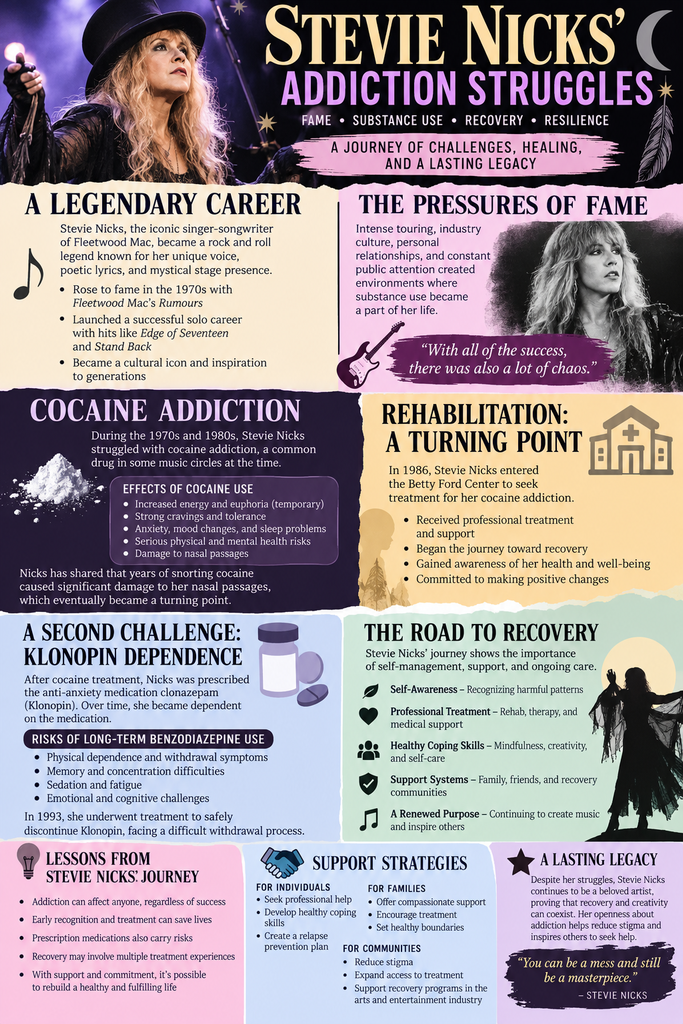
Stevie Nicks, the legendary Fleetwood Mac singer-songwriter, captivated audiences with her powerful voice and unforgettable music. Behind her success, she struggled with cocaine addiction and prescription medication dependence, which affected her health and personal well-being. Her journey through rehabilitation and recovery highlights the dangers of substance use, the importance of professional treatment, and the power of resilience. Her experiences also demonstrate how self-management, family encouragement, and community support can help individuals overcome addiction and rebuild healthier, fulfilling lives.
Stevie Nicks’ Rise to Fame and Addiction Struggles
Born Stephanie Lynn Nicks on May 26, 1948, in Phoenix, Arizona, Stevie Nicks became one of rock music’s most influential female performers.
She gained international recognition as a member of Fleetwood Mac, contributing to the band’s extraordinary success with albums such as Rumors.
Her solo career further established her as an accomplished singer-songwriter, with hits like “Edge of Seventeen” and “Stand Back.”
However, the pressures of fame, demanding touring schedules, personal relationships, and the drug culture surrounding the music industry contributed to her substance use.
During the 1970s and 1980s, cocaine became a significant part of her life. Nicks has openly discussed how her cocaine use escalated into addiction and eventually required professional treatment.
Her experiences demonstrate that even highly successful individuals can develop substance use disorders when repeated exposure, environmental influences, and psychological factors reinforce drug use.
Cocaine Addiction: The Hidden Cost of Rock-and-Roll Fame
During Fleetwood Mac’s peak popularity, cocaine use was common in some entertainment circles.
Nicks has described using cocaine extensively while recording, touring, and performing.
Cocaine is a powerful central nervous system stimulant that increases dopamine signaling in the brain, producing temporary feelings of energy, confidence, and euphoria.
Repeated exposure can alter reward processing and contribute to compulsive drug-seeking behavior.
Common signs of cocaine addiction
- Strong cravings and urges to use cocaine.
- Difficulty controlling the amount or frequency of use.
- Increased tolerance to the drug’s effects.
- Continuing use despite negative consequences.
- Anxiety, irritability, or depression when not using.
- Sleep disturbances and physical exhaustion.
- Neglecting important responsibilities.
- Repeated unsuccessful attempts to stop.
Prolonged cocaine use can also cause cardiovascular complications, nasal tissue damage, mood disturbances, and potentially life-threatening medical emergencies.
Damage to Stevie Nicks’ nasal passages
Nicks has publicly described developing significant damage to her nasal passages from years of intranasal cocaine use.
She has recounted being warned by a physician that continuing to use cocaine could cause severe health consequences.
Repeated snorting of cocaine causes blood vessel constriction, reducing oxygen delivery to nasal tissues. Over time, this can produce chronic inflammation, ulceration, and tissue injury.
Her experience highlights the serious physical damage associated with prolonged cocaine exposure.
Rehabilitation and the Beginning of Recovery
In 1986, Stevie Nicks entered the Betty Ford Center for treatment of cocaine addiction.
Her decision followed years of substance use and growing concerns about her health.
Rehabilitation provided an opportunity to interrupt her cocaine use and begin addressing the behaviors associated with addiction.
However, recovery from one substance does not eliminate the possibility of developing dependence on another.
Following cocaine rehabilitation, Nicks experienced a second major challenge involving the prescription benzodiazepine clonazepam, commonly known by the brand name Klonopin.
Clonazepam Dependence: A Second Addiction Challenge
After treatment for cocaine addiction, Nicks was prescribed clonazepam to manage anxiety and related symptoms.
She has described becoming dependent on the medication and experiencing significant difficulties during prolonged use.
Clonazepam is a benzodiazepine that enhances the effects of gamma-aminobutyric acid (GABA), an inhibitory neurotransmitter that reduces nervous system activity.
Although benzodiazepines can be effective for certain medical conditions, long-term use may lead to tolerance and physical dependence.
Potential risks of prolonged benzodiazepine use
- Sedation and fatigue.
- Memory and concentration difficulties.
- Impaired coordination.
- Physical dependence.
- Withdrawal symptoms when doses are reduced.
- Increased risk of falls and accidents.
- Dangerous interactions with alcohol or opioids.
Physical dependence can develop even when benzodiazepines are taken as prescribed. It is not, by itself, proof of a substance use disorder.
Nicks has described her clonazepam experience as deeply disruptive to her emotional well-being and creative life.
Her second rehabilitation experience
In 1993, Nicks underwent treatment to discontinue clonazepam after years of use.
She has discussed the difficulties of benzodiazepine withdrawal and the emotional challenges associated with recovery.
Her experience illustrates why benzodiazepines should not be discontinued abruptly after prolonged regular use.
Sudden withdrawal can cause severe anxiety, insomnia, autonomic symptoms, and potentially life-threatening seizures.
Medical supervision generally recommends a gradual, individualized taper.
Self-Management Strategies: Lessons From Stevie Nicks’ Recovery
Self-management is an important component of long-term addiction recovery. It involves recognizing harmful behaviors, developing healthier coping strategies, and maintaining ongoing medical and psychological care.
1. Recognize substance use warning signs
Early identification of addiction-related behaviors can help prevent worsening complications.
Important warning signs include:
- Increasing drug use or difficulty reducing consumption.
- Strong cravings.
- Using substances to cope with emotional distress.
- Continued use despite medical problems.
- Neglecting personal relationships or responsibilities.
- Experiencing withdrawal symptoms.
- Repeated unsuccessful attempts to stop.
Recognizing these patterns can encourage individuals to seek professional assessment.
2. Seek evidence-based addiction treatment
Treatment should be individualized according to the substance involved, medical history, and psychiatric needs.
Helpful approaches include:
- Cognitive behavioral therapy (CBT): Identifies harmful thought patterns and develops healthier coping strategies.
- Contingency management: Uses structured incentives to reinforce recovery-related behaviors, particularly for stimulant use disorders.
- Motivational interviewing: Strengthens motivation and readiness for change.
- Medically supervised benzodiazepine tapering: Reduces withdrawal risks through individualized dose reductions.
- Integrated mental health care: Addresses anxiety, depression, trauma, and other co-occurring conditions.
Currently, no medication is FDA-approved specifically for cocaine use disorder, although research continues.
3. Understand prescription medication risks
Nick’s experience with clonazepam highlights the importance of monitoring medications that carry dependence risks.
Patients should:
- Discuss treatment goals with their prescribing clinician.
- Understand medication benefits and potential adverse effects.
- Avoid changing doses without medical guidance.
- Attend regular medication reviews.
- Ask about non-benzodiazepine treatment alternatives when appropriate.
- Report sedation, cognitive changes, or withdrawal symptoms.
4. Develop healthy coping mechanisms
Substance use may become a way to manage stress, emotional pain, or overwhelming responsibilities.
Healthier coping strategies include:
- Mindfulness and relaxation exercises.
- Regular physical activity.
- Consistent sleep routines.
- Creative expression through music, writing, or art.
- Individual or group counseling.
- Maintaining supportive relationships.
- Scheduling rest during demanding work periods.
5. Create a relapse prevention plan
A relapse prevention plan helps individuals recognize early warning signs and respond effectively.
Important components include:
- Identifying high-risk situations.
- Developing strategies for managing cravings.
- Maintaining treatment appointments.
- Establishing supportive social connections.
- Monitoring emotional well-being.
- Creating a plan for obtaining additional help during difficult periods.
Key lesson: Successful recovery often requires ongoing self-awareness, professional treatment, and sustainable lifestyle changes rather than relying on determination alone.
Family Support Strategies: Helping Loved Ones Through Addiction
Stevie Nicks’ experiences demonstrate that substance dependence can affect not only the individual but also family members, friends, and professional relationships.
Although the specific details of her family’s involvement in treatment are private, her story offers important lessons about supporting someone experiencing cocaine addiction or prescription medication dependence.
1. Encourage compassionate communication
Families can create a supportive environment by approaching addiction with empathy rather than blame.
Helpful strategies include:
- Listening without judgment.
- Expressing concern about specific behaviors.
- Avoiding criticism and shame.
- Encouraging honest discussions about substance use.
- Recognizing progress toward recovery.
- Supporting professional treatment when needed.
2. Learn about addiction and medication dependence
Understanding the differences between addiction, physical dependence, and withdrawal can help families respond appropriately.
Family members should recognize that:
- Cocaine use disorder involves changes in reward processing and behavior.
- Benzodiazepine dependence can occur during prescribed treatment.
- Withdrawal symptoms may require medical supervision.
- Recovery often involves emotional and physical challenges.
- Relapse is possible but not inevitable.
3. Encourage professional treatment
Families can help individuals access appropriate care by:
- Assisting with treatment referrals.
- Offering transportation to appointments.
- Encouraging participation in counseling.
- Supporting medically supervised medication tapering.
- Helping coordinate follow-up care.
- Participating in family therapy when appropriate.
4. Establish healthy boundaries
Supporting someone with addiction does not require accepting unsafe or harmful behavior.
Healthy boundaries may include:
- Refusing to finance illicit substance purchases.
- Establishing expectations about household safety.
- Protecting children from substance-related risks.
- Encouraging personal responsibility.
- Seeking counseling when family conflict becomes overwhelming.
5. Support long-term emotional recovery
Recovery can involve periods of anxiety, emotional distress, and uncertainty.
Families can provide encouragement by:
- Celebrating meaningful recovery milestones.
- Encouraging healthy hobbies and interests.
- Respecting the individual’s privacy.
- Providing reassurance during difficult periods.
- Avoiding unrealistic expectations about recovery timelines.
Key lesson: Compassionate family support can strengthen recovery while respecting personal autonomy and maintaining healthy boundaries.
Community Support Strategies: Creating Environments That Encourage Recovery
Stevie Nicks’ experiences highlight the importance of accessible addiction treatment, responsible prescribing practices, and recovery-supportive communities.
1. Expand access to addiction treatment
Communities should promote affordable, evidence-based treatment services.
Important resources include:
- Outpatient and residential addiction programs.
- Cognitive behavioral therapy.
- Contingency management programs.
- Psychiatric and medical evaluations.
- Supervised medication tapering services.
- Long-term recovery support.
2. Improve prescription medication education
Nick’s experiences with clonazepam demonstrate the importance of educating patients about medications that can produce physical dependence.
Community initiatives should include:
- Education about benzodiazepine benefits and risks.
- Encouraging regular medication reviews.
- Promoting shared decision-making.
- Providing access to nonpharmacologic anxiety treatments.
- Training healthcare professionals in safe tapering practices.
- Discouraging abrupt discontinuation after prolonged use.
3. Reduce stigma surrounding addiction
Stigma can discourage individuals from acknowledging substance-related problems or seeking treatment.
Communities can help by:
- Promoting accurate information about substance use disorders.
- Sharing recovery experiences with appropriate consent.
- Using respectful, person-first language.
- Supporting confidential treatment access.
- Challenging stereotypes about addiction.
- Encouraging compassionate healthcare practices.
4. Support recovery in the entertainment industry
Musicians and entertainment professionals may face unique occupational pressures.
Recovery-supportive workplaces can provide:
- Confidential mental health services.
- Substance-free backstage environments.
- Reasonable scheduling accommodations for treatment.
- Education about occupational stress.
- Access to addiction specialists.
- Peer mentorship and recovery support.
5. Strengthen peer recovery networks
Peer support can reduce isolation and encourage long-term engagement in recovery.
Community resources include:
- Narcotics Anonymous.
- SMART Recovery.
- Recovery community organizations.
- Certified peer recovery specialists.
- Support groups for families.
- Mental health counseling services.
These resources can complement professional treatment and help individuals maintain meaningful social connections.
Lessons From Stevie Nicks’ Addiction and Recovery Journey
Stevie Nicks’ experiences provide several important lessons about substance dependence, treatment, and resilience.
1. Fame and success do not prevent addiction.
Despite her extraordinary musical achievements, Nicks experienced serious consequences from cocaine use and prescription medication dependence.
2. Addiction can cause significant physical harm.
Her reported nasal tissue damage demonstrates the risks of prolonged intranasal cocaine use.
3. Recovery from one substance does not eliminate other risks.
After receiving treatment for cocaine addiction, Nicks experienced significant difficulties with clonazepam dependence.
4. Prescription medications require appropriate monitoring.
Benzodiazepines can be beneficial when prescribed appropriately, but prolonged use requires careful assessment of benefits, risks, and treatment alternatives.
5. Recovery may involve multiple treatment experiences.
Nicks underwent treatment for cocaine use in 1986 and later received treatment to discontinue clonazepam in 1993.
6. Creativity and personal identity can continue after addiction.
Nicks maintained her musical career following treatment, demonstrating that substance use is not necessary for artistic expression.
Addiction Recovery Resources
SAMHSA National Helpline
1-800-662-HELP (4357)
Confidential information and referrals for substance use treatment.
Search for substance use and mental health treatment services in the United States.
Evidence-informed mutual support for people addressing addictive behaviors.
Conclusion: Stevie Nicks’ Journey From Addiction to Recovery
Stevie Nicks’ journey reveals the complicated relationship between fame, substance use, prescription medication dependence, and personal resilience.
Her struggles with cocaine addiction and subsequent clonazepam dependence resulted in significant physical and emotional challenges. Yet her willingness to seek treatment and continue pursuing her musical career demonstrates the possibility of meaningful change after addiction.
Self-management strategies, including recognizing warning signs, building healthy coping skills, engaging in professional treatment, and maintaining relapse-prevention plans, can strengthen recovery.
Families can support recovery through compassionate communication, encouragement of treatment, education, and healthy boundaries. Communities can help by expanding access to evidence-based addiction services, improving medication safety education, reducing stigma, and creating recovery-supportive environments.
Nicks’ experiences also highlight an important distinction between addiction and physical dependence. Both may require medical attention, but appropriate treatment depends on the individual’s circumstances and the substances involved.
The central lesson from Stevie Nicks’ journey is that addiction does not have to end a person’s creativity, purpose, or potential. With appropriate treatment, supportive relationships, and continued commitment to health, recovery can create opportunities for renewed independence and personal growth.
Frequently Asked Questions and Answers
Stevie Nicks’ Cocaine Addiction
1. What substances did Stevie Nicks struggle with?
Stevie Nicks has publicly discussed her struggles with cocaine addiction and dependence on clonazepam (Klonopin), a prescription benzodiazepine. Cocaine use became a significant problem during her years with Fleetwood Mac, while clonazepam dependence developed after she received treatment for cocaine addiction.
2. How did Stevie Nicks develop cocaine addiction?
During the 1970s and 1980s, cocaine use was widespread in some parts of the entertainment industry. Nicks has described how the pressures of touring, recording, performing, and the rock-and-roll lifestyle contributed to her drug use.
Over time, repeated cocaine exposure developed into addiction, creating serious risks to her physical health and emotional well-being.
3. How did cocaine affect Stevie Nicks’ health?
Nicks has described developing significant nasal damage after years of snorting cocaine. Repeated intranasal cocaine use constricts blood vessels, reducing oxygen delivery to nasal tissues.
Potential complications include:
- Chronic nasal irritation and inflammation.
- Recurrent nosebleeds.
- Damage to nasal cartilage and surrounding tissues.
- Nasal septal perforation.
- Chronic sinus problems.
- Increased cardiovascular risks.
Her experience demonstrates that cocaine can cause serious physical damage beyond its addictive effects.
4. Did Stevie Nicks almost die from cocaine use?
Nicks has described receiving serious medical warnings about the damage caused by her cocaine use. In interviews, she has recalled being warned that continued use could result in life-threatening complications.
Although these warnings influenced her decision to seek treatment, they should not be interpreted as evidence of a documented near-fatal overdose.
5. When did Stevie Nicks enter rehabilitation for cocaine addiction?
Stevie Nicks entered the Betty Ford Center in 1986 to receive treatment for cocaine addiction.
Her rehabilitation marked an important turning point in addressing her cocaine use and its effects on her health and career.
6. Did Stevie Nicks successfully overcome cocaine addiction?
Nicks has publicly described stopping cocaine use following her 1986 rehabilitation experience.
However, she later experienced a separate period of dependence on the prescription benzodiazepine clonazepam.
Her story illustrates that overcoming one substance-related problem does not eliminate the possibility of developing dependence on another medication.
Klonopin Dependence and Prescription Medication Risks
7. Why was Stevie Nicks prescribed Klonopin?
After cocaine rehabilitation, Nicks was prescribed clonazepam, commonly known as Klonopin, to manage anxiety and related symptoms.
She has described experiencing significant difficulties during prolonged use and later undergoing treatment to discontinue the medication.
8. What is Klonopin, and why can it cause dependence?
Klonopin is the brand name for clonazepam, a benzodiazepine used to treat certain seizure disorders and panic disorder.
It enhances the activity of gamma-aminobutyric acid (GABA), an inhibitory neurotransmitter that reduces nervous system excitability.
Long-term use can produce physical dependence, even when the medication is taken as prescribed.
Physical dependence is not necessarily the same as addiction, which involves problematic patterns of use and impaired control.
9. How did Klonopin dependence affect Stevie Nicks?
Nicks has described prolonged clonazepam use as negatively affecting her energy, emotional well-being, and creativity.
Potential effects of long-term benzodiazepine use include:
- Sedation and fatigue.
- Memory and concentration difficulties.
- Impaired coordination.
- Emotional blunting in some individuals.
- Physical dependence.
- Withdrawal symptoms during dose reduction.
The severity of these effects varies from person to person.
10. When did Stevie Nicks receive treatment for Klonopin dependence?
In 1993, Nicks underwent treatment to discontinue clonazepam after years of use.
She has described the withdrawal experience as physically and emotionally difficult.
Benzodiazepine withdrawal requires careful medical management because abrupt discontinuation after prolonged regular use can cause severe symptoms, including seizures.
11. Can Klonopin withdrawal be dangerous?
Yes. Benzodiazepine withdrawal can be medically serious, particularly after prolonged use or high doses.
Possible withdrawal symptoms include:
- Severe anxiety.
- Insomnia.
- Tremors.
- Sweating and increased heart rate.
- Sensory disturbances.
- Agitation.
- Seizures.
- Delirium in severe cases.
A gradual, individualized taper supervised by a healthcare professional is generally recommended. Patients should not abruptly discontinue clonazepam without medical guidance.
Recovery, Self-Management, and Family Support
12. What motivated Stevie Nicks to seek addiction treatment?
Nicks has explained that worsening health concerns and recognizing the effects of substance use motivated her to seek professional help. She has emphasized the importance of personally recognizing the need for change. In interviews, she described making her own decisions to enter rehabilitation.
13. What self-management strategies can people learn from Stevie Nicks’ recovery?
Individuals recovering from addiction can benefit from:
- Recognizing substance use triggers and warning signs.
- Seeking professional treatment.
- Developing healthier coping mechanisms.
- Practicing mindfulness and stress management.
- Maintaining consistent sleep and exercise routines.
- Monitoring prescription medications.
- Building supportive relationships.
- Developing a relapse prevention plan.
These are general recovery strategies, not a documented list of Nick’s personal practices.
14. How can families support someone struggling with cocaine addiction?
Families can provide encouragement and practical assistance by:
- Communicating without judgment.
- Encouraging professional addiction treatment.
- Learning about substance use disorders.
- Helping identify environmental triggers.
- Participating in family counseling when appropriate.
- Establishing healthy boundaries.
- Supporting long-term recovery goals.
Family members should also prioritize their own mental and emotional health.
15. How can families help someone experiencing prescription benzodiazepine dependence?
Family members can help by encouraging medication reviews, supporting medical appointments, monitoring concerning symptoms, and providing emotional reassurance.
They should avoid pressuring someone to stop benzodiazepines abruptly.
The American Society of Addiction Medicine recommends individualized, medically supervised tapering for patients at risk of withdrawal.
16. What role do communities play in addiction recovery?
Communities can support individuals through:
- Affordable addiction treatment services.
- Mental health counseling.
- Peer recovery support groups.
- Prescription medication safety education.
- Substance use prevention programs.
- Recovery-supportive workplaces.
- Public campaigns that reduce addiction stigma.
These resources help individuals maintain recovery while rebuilding personal and professional relationships.
17. Can someone recover from cocaine addiction and continue a successful career?
Yes. Many individuals achieve long-term recovery while maintaining meaningful careers, relationships, and personal goals.
Stevie Nicks continued recording and performing after her rehabilitation experiences. In a 2014 interview, she described the emotional and creative difficulties associated with clonazepam use and reflected on the period after she stopped cocaine.
Her experiences show that creativity and professional success don’t require substance use.
18. What is the difference between addiction and physical dependence?
Addiction, clinically diagnosed as a substance use disorder, involves impaired control over substance use, continued use despite harmful consequences, and other behavioral symptoms.
Physical dependence occurs when the body adapts to repeated exposure to a substance, producing withdrawal symptoms when it is reduced or discontinued.
A patient taking clonazepam exactly as prescribed may develop physical dependence without meeting diagnostic criteria for addiction.
This distinction is particularly important when discussing Nick’s prescription medication experiences.
19. Can recovery from prescription medication dependence take longer than recovery from illicit drug use?
Yes. Recovery timelines depend on the substance, duration of exposure, dosage, individual physiology, and co-occurring conditions.
Nicks has described her clonazepam withdrawal treatment as more difficult than her earlier cocaine rehabilitation.
Benzodiazepine tapering may require months or longer, depending on the patient’s response. Current clinical guidelines emphasize gradual dose reductions and individualized monitoring.
20. What is the most important lesson from Stevie Nicks’ addiction struggles?
Stevie Nicks’ experiences demonstrate that substance dependence can affect anyone, regardless of talent, fame, or professional accomplishments.
Her struggles with cocaine addiction and clonazepam dependence highlight the importance of early intervention, careful medication management, professional treatment, and supportive relationships.
Video: Stevie Nicks Got Sober, and Her Music Came Back #stevienicks #sobriety