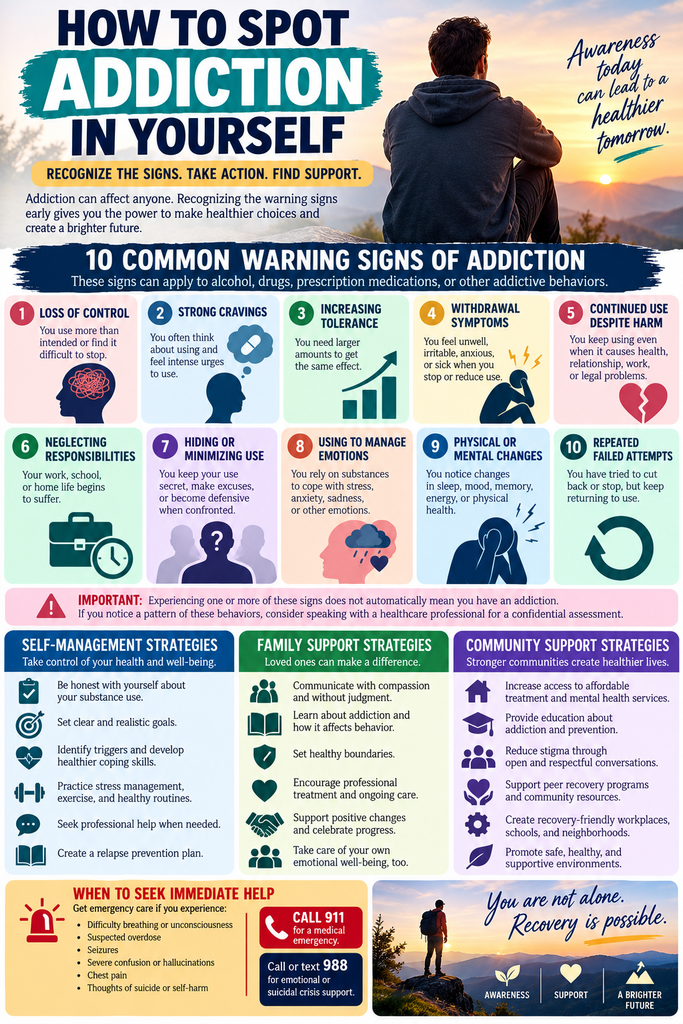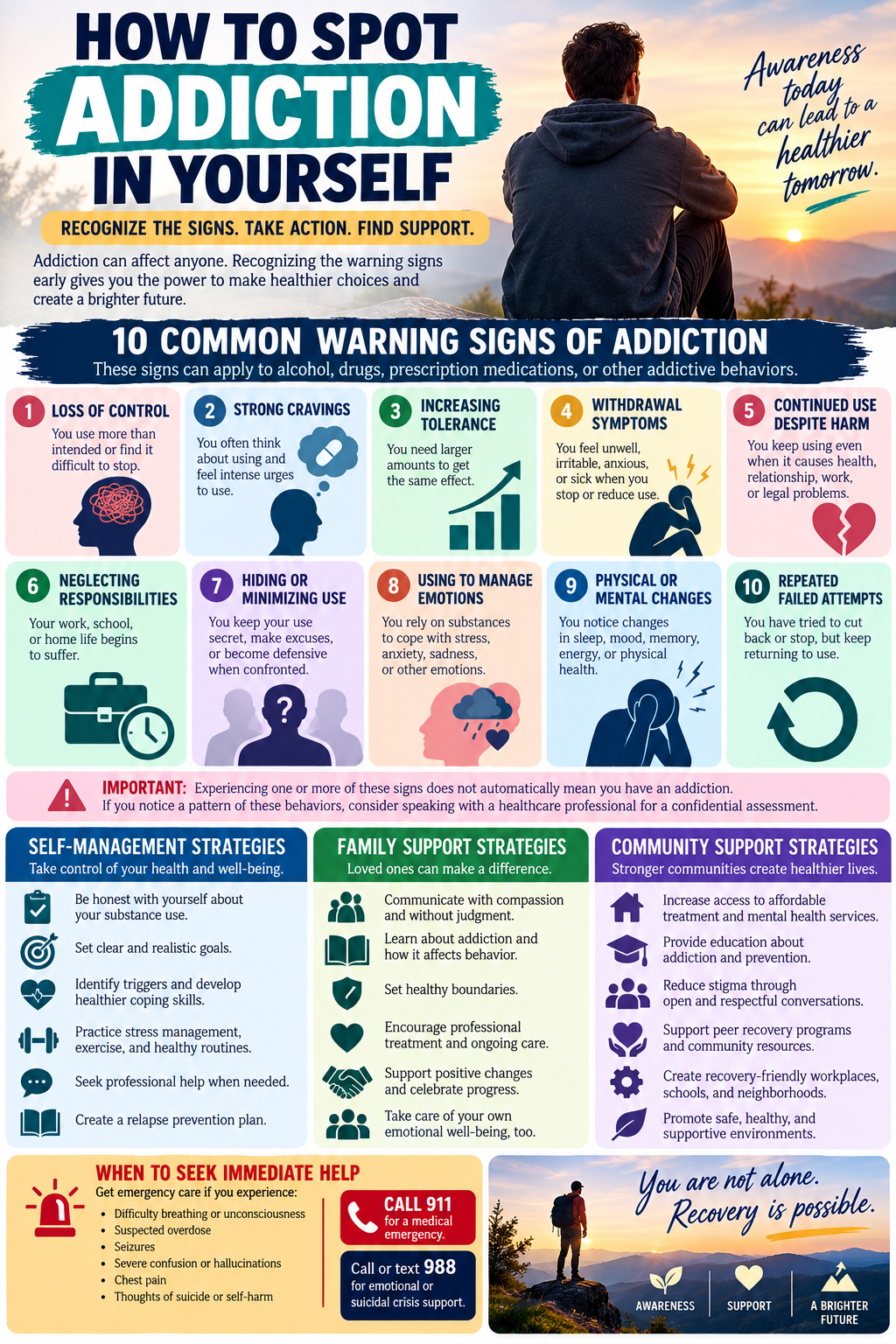
Addiction does not always begin with obvious warning signs. What starts as occasional drinking, recreational drug use, prescription medication misuse, or a seemingly harmless behavior can gradually develop into a pattern that becomes difficult to control. Many individuals struggling with addiction continue working, maintaining relationships, and fulfilling daily responsibilities while privately experiencing cravings, emotional distress, and increasing dependence. Recognizing addiction in yourself requires honesty, self-awareness, and an understanding of how substance use or compulsive behaviors affect your physical health, mental well-being, and daily life. By exploring the warning signs of addiction and applying self-management, family support, and community-based strategies, individuals can identify problems earlier, seek appropriate treatment, and begin building a healthier future.
Understanding Addiction: When Does a Habit Become a Problem?
Addiction is a complex condition involving changes in brain reward, motivation, learning, and behavioral control.
For substances such as alcohol, opioids, cocaine, nicotine, and cannabis, clinicians use established diagnostic criteria to identify substance use disorders.
A substance use disorder develops when repeated substance use causes clinically significant impairment or distress.
Unlike occasional use, problematic substance use may involve difficulty controlling consumption, persistent cravings, and continued use despite harmful consequences.
Addiction is not simply a lack of willpower. Genetic vulnerability, environmental exposure, trauma, mental health conditions, social influences, and repeated substance use can all contribute.
Importantly, not everyone who uses a substance develops an addiction, and not every repetitive behavior qualifies as a clinical disorder.
1. You Find It Difficult to Control Your Substance Use
One of the earliest warning signs is losing control over how much or how often you use a substance.
You may intend to have one or two drinks but end up consuming more than planned. You might promise yourself that you will stop using a drug, only to return to it despite your intentions.
Warning signs include:
- Using larger amounts than originally intended.
- Spending more time drinking or using drugs than planned.
- Repeatedly attempting to cut back without success.
- Making rules about substance use and frequently breaking them.
- Feeling unable to relax or function without the substance.
- Continuing use even after deciding to stop.
Occasional overuse does not automatically establish an addiction diagnosis, but repeated difficulty controlling use deserves attention.
2. You Experience Strong Cravings or Urges
Cravings are powerful desires to use a substance or engage in a particular behavior.
They may be triggered by stress, certain environments, emotional distress, or reminders of previous substance use.
Common experiences include:
- Frequently thinking about the next opportunity to use.
- Feeling distracted by cravings.
- Becoming irritable when the substance is unavailable.
- Planning daily activities around substance use.
- Feeling intense urges during stressful situations.
- Using substances to relieve uncomfortable emotions.
Cravings can occur even after prolonged periods of abstinence.
3. You Need Increasing Amounts to Feel the Same Effect
Tolerance occurs when repeated exposure reduces a substance’s effects, leading some individuals to use larger amounts.
For example, someone who previously felt intoxicated after two drinks may gradually require more alcohol to experience similar effects.
Signs of tolerance include:
- Increasing the amount consumed.
- Using substances more frequently.
- Feeling that previous amounts no longer work.
- Escalating doses without medical guidance.
- Experiencing diminished effects from usual quantities.
Tolerance alone does not prove addiction. It can also occur during appropriately prescribed medical treatment.
However, increasing use combined with impaired control and harmful consequences may indicate a substance use disorder.
4. You Experience Withdrawal Symptoms When You Stop
Withdrawal occurs when the body adapts to repeated substance exposure and reacts when that substance is reduced or discontinued.
Symptoms vary depending on the substance.
Possible withdrawal symptoms include:
- Anxiety or irritability.
- Sweating and tremors.
- Nausea or vomiting.
- Sleep disturbances.
- Fatigue and difficulty concentrating.
- Muscle aches.
- Restlessness.
- Depressed mood.
Withdrawal from alcohol or benzodiazepines can be medically dangerous and may cause seizures or delirium.
Important: Individuals with significant alcohol or benzodiazepine dependence should seek medical guidance before abruptly stopping.
Physical dependence and withdrawal do not automatically establish addiction, particularly when medications are taken as prescribed.
5. You Continue Using Despite Negative Consequences
A major warning sign of addiction is continuing substance use even when it causes harm.
Examples include:
- Drinking despite worsening liver disease.
- Using cocaine despite cardiovascular symptoms.
- Continuing opioid misuse after an overdose.
- Smoking despite respiratory problems.
- Using substances despite repeated relationship conflicts.
- Continuing use after legal or employment consequences.
The pattern of continued use despite recognizable harm is an important feature of substance use disorders.
6. Your Responsibilities and Relationships Begin to Suffer
Addiction can gradually interfere with daily functioning.
Some individuals experience obvious disruptions, while others maintain outward stability despite significant internal struggles.
Warning signs include:
- Missing work or arriving late.
- Declining academic or job performance.
- Neglecting household responsibilities.
- Withdrawing from friends and family.
- Increased arguments about substance use.
- Losing interest in previously enjoyable activities.
- Prioritizing substance use over important commitments.
Maintaining employment or family responsibilities does not necessarily mean substance use is harmless.
7. You Hide, Minimize, or Justify Your Substance Use
Secrecy and rationalization may develop when individuals feel ashamed, fear criticism, or recognize that their behavior is becoming difficult to control.
Examples include:
- Hiding alcohol or drugs.
- Drinking or using substances alone to avoid questions.
- Underreporting how much you consume.
- Making excuses for repeated use.
- Becoming defensive when others express concern.
- Comparing your substance use with people who use more.
- Believing you cannot have an addiction because you remain successful.
These behaviors aren’t diagnostic on their own, but they can signal that you need a closer assessment.
8. You Rely on Substances to Manage Emotions
Using alcohol or drugs to cope with stress, anxiety, loneliness, trauma, or sadness may increase addiction risk.
Substances may provide temporary relief while contributing to longer-term emotional difficulties.
Common patterns include:
- Drinking after every stressful workday.
- Using drugs to avoid painful memories.
- Taking extra sedating medication to escape anxiety.
- Using stimulants to manage exhaustion.
- Feeling unable to socialize without alcohol.
- Turning to substances whenever uncomfortable emotions arise.
Healthy coping strategies and appropriate mental health treatment can reduce reliance on substances.
9. Your Physical or Mental Health Is Changing
Substance use disorders may produce physical, emotional, and behavioral changes.
Possible warning signs include:
- Unexplained weight changes.
- Persistent fatigue.
- Sleep disturbances.
- Frequent headaches.
- Memory or concentration problems.
- Mood swings.
- Increased anxiety or depression.
- Gastrointestinal complaints.
- Recurrent injuries or accidents.
These symptoms can have many causes. A medical evaluation is important rather than assuming addiction is responsible.
10. You Have Tried to Stop but Keep Returning to Use
Repeated unsuccessful attempts to reduce or discontinue substance use are an important warning sign.
You may genuinely want to stop but struggle with cravings, withdrawal symptoms, emotional distress, or environmental triggers.
A return to use does not mean recovery is impossible.
It may mean you need additional treatment, medication, stronger support systems, or changes to your recovery plan.
Self-Assessment: Could Your Substance Use Be Becoming a Problem?
The following questions can help identify patterns that deserve further attention.
Personal reflection checklist
0 of 10 answered
1. Do I regularly use more alcohol or drugs than I intended? Yes No Not sure
2. Have I tried unsuccessfully to cut back or stop? Yes No Not sure
3. Do I experience strong cravings or spend considerable time thinking about using? Yes No Not sure
4. Has my substance use interfered with work, school, or family responsibilities? Yes No Not sure
5. Do I continue using despite health, emotional, or relationship problems? Yes No Not sure
6. Have I reduced activities I once enjoyed because of substance use? Yes No Not sure
7. Do I use substances in physically dangerous situations? Yes No Not sure
8. Have I needed increasing amounts to achieve the same effect? Yes No Not sure
9. Do I experience withdrawal symptoms when reducing or stopping? Yes No Not sure
10. Have people close to me expressed concern about my substance use? Yes No Not sure
If you recognize recurring patterns, consider discussing them with a healthcare professional. Validated screening tools such as AUDIT-C, DAST-10, and other substance-specific assessments may be appropriate.
Self-Management Strategies: Taking the First Steps Toward Recovery
Recognizing problematic substance use is an important beginning. Self-management strategies can help individuals understand their behaviors and prepare for meaningful change.
1. Practice honest self-reflection
Self-awareness helps you see how substance use affects your daily life.
Helpful steps include:
- Keep a record of how often and how much you use.
- Identifying situations that trigger cravings.
- Noticing emotional changes before and after use.
- Evaluating the effects on relationships and responsibilities.
- Setting realistic health goals.
2. Seek professional assessment
A healthcare professional can evaluate substance use patterns, medical risks, mental health conditions, and treatment needs.
An assessment may include:
- Reviewing substance use history.
- Screening for substance use disorders.
- Evaluating withdrawal risks.
- Assessing co-occurring psychiatric conditions.
- Discussing appropriate treatment options.
- Developing an individualized care plan.
3. Learn healthy coping skills
Replacing substance-related coping patterns with healthier strategies can strengthen recovery.
Examples include:
- Mindfulness and relaxation exercises.
- Regular physical activity.
- Journaling.
- Creative hobbies.
- Consistent sleep routines.
- Cognitive behavioral therapy.
- Spending time with supportive individuals.
4. Consider evidence-based treatment
Treatment depends on the substance involved and the individual’s medical circumstances.
Options may include:
- Alcohol use disorder: Naltrexone, acamprosate, or disulfiram when appropriate.
- Opioid use disorder: Buprenorphine, methadone, or extended-release naltrexone for selected patients.
- Tobacco use disorder: Nicotine replacement therapy, varenicline, or bupropion.
- Stimulant use disorder: Contingency management and behavioral therapies.
- Behavioral addictions: Disorder-specific psychological treatments and support services.
5. Develop a personalized recovery plan
A recovery plan can include:
- Clear and achievable goals.
- Treatment appointments.
- Coping strategies for cravings.
- Supportive emergency contacts.
- Healthy daily routines.
- Strategies for preventing recurrence of substance use.
- A plan for seeking additional help when needed.
Key message: Recognizing addiction early creates opportunities to address problems before additional health, relationship, or financial consequences develop.
Family Support Strategies: How Loved Ones Can Help
Family members often notice behavioral changes before an individual recognizes a problem.
However, family support should emphasize compassion, education, and safety rather than confrontation or punishment.
1. Encourage open communication
Helpful approaches include:
- Expressing concern without judgment.
- Asking open-ended questions.
- Listening carefully.
- Avoiding blame and humiliation.
- Encouraging honest conversations about substance use.
2. Learn about addiction
Families should understand that substance use disorders involve biological, psychological, and environmental factors.
Education can help reduce misconceptions and improve communication.
3. Establish healthy boundaries
Boundaries may involve:
- Avoiding financial support for harmful substance use.
- Establishing household safety expectations.
- Protecting children from substance-related risks.
- Encouraging responsibility for personal behavior.
- Seeking counseling when needed.
4. Encourage treatment participation
Families can assist by:
- Helping identify treatment providers.
- Offering transportation to appointments.
- Supporting medication adherence when appropriate.
- Participating in family therapy.
- Encouraging continued treatment after setbacks.
5. Support family well-being
Family members may experience anxiety, stress, and emotional exhaustion.
Resources such as Al-Anon, Nar-Anon, SMART Recovery Family & Friends, and individual counseling can provide additional support.
Community Support Strategies: Creating Pathways to Recovery
Communities play an essential role in preventing substance use disorders, improving access to treatment, and reducing stigma.
1. Expand access to affordable treatment
Communities can provide:
- Outpatient and residential addiction treatment.
- Medication treatment for opioid and alcohol use disorders.
- Integrated mental health services.
- Peer recovery support.
- Recovery housing.
- Telehealth addiction services.
2. Promote addiction education
Educational initiatives can help people recognize warning signs earlier.
Programs may include:
- School-based substance use prevention.
- Workplace wellness programs.
- Parent education workshops.
- Public health awareness campaigns.
- Community addiction screening events.
3. Reduce stigma
Stigma may discourage people from acknowledging addiction or seeking treatment.
Communities can reduce stigma by:
- Using respectful, person-first language.
- Promoting accurate information.
- Encouraging confidential treatment access.
- Sharing recovery stories with consent.
- Supporting recovery-friendly workplaces.
4. Strengthen overdose prevention
Community harm reduction programs can reduce preventable deaths.
Important interventions include:
- Naloxone distribution.
- Overdose recognition training.
- Education about fentanyl contamination.
- Rapid access to medications for opioid use disorder.
- Emergency treatment referrals.
5. Support long-term recovery
Stable housing, employment, healthcare, and meaningful social connections strengthen recovery.
Community programs can offer:
- Job training and employment assistance.
- Recovery community centers.
- Peer mentorship.
- Educational opportunities.
- Transportation assistance.
- Family counseling and support groups.
When Should You Seek Immediate Help?
Some substance-related symptoms require urgent medical attention.
Seek emergency care for:
- Suspected overdose.
- Difficulty breathing or unconsciousness.
- Seizures.
- Severe confusion or hallucinations.
- Chest pain after stimulant use.
- Severe alcohol or benzodiazepine withdrawal symptoms.
- Thoughts of suicide or immediate risk of self-harm.
Call 911 for a medical emergency in the United States. For an emotional or suicidal crisis, call or text 988.
Addiction Treatment and Recovery Resources
SAMHSA National Helpline
1-800-662-HELP (4357)
Free, confidential referrals and information about addiction treatment.
Locate substance use and mental health treatment services.
Evidence-informed recovery meetings and self-management resources.
Conclusion: Recognizing Addiction Is the Beginning of Change
Addiction often develops gradually, making early warning signs difficult to recognize. Increasing tolerance, cravings, withdrawal symptoms, secrecy, emotional dependence, and continued use despite harmful consequences may indicate that substance use is becoming problematic.
Recognizing these patterns does not require shame or self-judgment. Instead, self-awareness creates an opportunity to seek information, obtain professional assessment, and make healthier decisions.
Self-management strategies help individuals identify triggers, develop coping skills, and establish recovery goals. Families support recovery through compassionate communication, healthy boundaries, and encouragement to seek treatment. Communities strengthen recovery by expanding access to evidence-based care, reducing stigma, and providing supportive environments.
Recovery is not defined by perfection. It is a process of recognizing harmful patterns, making informed choices, and developing the support needed for long-term health and stability.
The most important step is recognizing when substance use is beginning to control your decisions rather than allowing you to control your life. Awareness opens the door to treatment, healing, and lasting change.
Frequently Asked Questions and Answers
Recognizing the Early Warning Signs
1. How can I tell if I am developing an addiction?
You may be developing a substance use disorder if you repeatedly struggle to control substance use, experience strong cravings, or continue using despite harmful consequences.
Common warning signs include:
- Using more than originally intended.
- Repeated unsuccessful attempts to stop.
- Spending excessive time obtaining or using substances.
- Neglecting responsibilities.
- Continuing use despite health or relationship problems.
- Experiencing cravings or withdrawal symptoms.
A healthcare professional can determine whether these symptoms meet diagnostic criteria for a substance use disorder.
2. What are the earliest signs of addiction?
Early warning signs may include increasing substance use, frequently thinking about the next opportunity to use, relying on substances to manage emotions, and making unsuccessful attempts to reduce consumption.
Some individuals also begin hiding their substance use or becoming defensive when others express concern.
Recognizing these patterns early can help prevent further complications.
3. Can I have an addiction even if I have a job and a stable family life?
Yes. Individuals with substance use disorders may continue working, maintaining relationships, and fulfilling responsibilities.
Outward stability does not necessarily indicate that substance use is harmless.
A person may privately experience cravings, withdrawal symptoms, impaired control, or health problems while maintaining a seemingly normal daily routine.
4. How do I know whether my substance use is recreational or an addiction?
Recreational substance use does not automatically meet the criteria for addiction.
However, substance use becomes concerning when it involves impaired control, repeated unsuccessful attempts to stop, or continued use despite harmful consequences.
The distinction depends on patterns of behavior, functional impairment, and clinical assessment rather than simply how frequently someone uses a substance.
5. Is thinking about alcohol or drugs frequently a sign of addiction?
Frequent thoughts about alcohol or drugs may indicate cravings, particularly when these thoughts interfere with concentration, responsibilities, or relationships.
Cravings are one of the recognized diagnostic features of substance use disorders.
However, occasional thoughts about substance use do not automatically indicate addiction.
Physical and Psychological Signs
6. What physical symptoms may indicate addiction?
Physical symptoms vary by substance.
Possible signs include:
- Changes in sleep patterns.
- Unexplained weight changes.
- Tremors or sweating.
- Persistent fatigue.
- Nausea or gastrointestinal problems.
- Increased tolerance.
- Withdrawal symptoms.
- Changes in coordination or concentration.
These symptoms can have other medical causes and should be evaluated appropriately.
7. What is the difference between tolerance, dependence, and addiction?
Tolerance occurs when repeated exposure reduces a substance’s effects, sometimes leading to increased consumption.
Physical dependence develops when the body adapts to a substance and experiences withdrawal symptoms when it is reduced or discontinued.
Addiction, or substance use disorder, involves problematic substance use characterized by impaired control and clinically significant harm or distress.
Tolerance and physical dependence can occur during appropriate medical treatment without addiction.
8. Can anxiety or depression be signs of addiction?
Yes. Anxiety, depression, irritability, and mood changes may occur alongside substance use disorders.
Some substances temporarily relieve emotional discomfort but can worsen symptoms over time.
Mental health conditions may also exist independently of substance use.
A comprehensive assessment can help identify whether symptoms are substance-induced, related to an underlying psychiatric condition, or influenced by both.
9. Why do I feel uncomfortable when I stop drinking or using drugs?
Discomfort after stopping may reflect withdrawal.
Withdrawal symptoms can include anxiety, irritability, insomnia, sweating, nausea, tremors, and cravings.
The severity depends on the substance, amount used, duration of use, and individual medical factors.
Alcohol and benzodiazepine withdrawal can cause seizures and other life-threatening complications. Individuals with significant physical dependence should seek medical guidance before abruptly stopping.
10. Can addiction develop without physical withdrawal symptoms?
Yes. Physical withdrawal is not required for a diagnosis of substance use disorder.
Some individuals experience significant cravings, impaired control, and harmful consequences without prominent physical withdrawal.
Addiction is diagnosed by evaluating the overall pattern of substance use and its effects on daily functioning.
Self-Assessment and Personal Awareness
11. What questions should I ask myself to recognize addiction?
Consider asking yourself:
- Do I use more than I planned?
- Have I repeatedly tried to stop without success?
- Do I feel strong cravings?
- Do I use substances to escape emotional problems?
- Has my use affected my health or relationships?
- Do I hide or minimize my substance use?
- Have I neglected responsibilities because of substances?
- Do I continue using despite negative consequences?
Answering yes to several questions suggests a professional substance use assessment may help.
12. Are there screening tools that can help identify addiction?
Yes. Healthcare professionals use validated screening instruments to identify problematic substance use.
Examples include:
- AUDIT-C: Screens for unhealthy alcohol use.
- DAST-10: Screens for problems related to drug use.
- CAGE: A brief questionnaire historically used to identify possible alcohol-related problems.
- TAPS: Screens for tobacco, alcohol, prescription medication misuse, and other substance use.
These instruments help identify potential problems but do not replace a comprehensive diagnostic assessment.
13. Why do people sometimes deny having an addiction?
Denial or minimization may result from shame, fear of consequences, stigma, limited insight, or difficulty recognizing gradual behavioral changes.
Some individuals compare their substance use with people experiencing more severe problems and conclude that their own behavior is harmless.
Compassionate self-reflection and professional assessment can help individuals evaluate their substance use more accurately.
14. Can using alcohol or drugs to cope with stress lead to addiction?
Yes. Repeatedly using substances to manage anxiety, sadness, trauma, loneliness, or occupational stress may increase addiction risk.
Substance use can become negatively reinforced when it temporarily reduces uncomfortable emotions.
Over time, individuals may increasingly rely on substances instead of developing healthier coping strategies.
Counseling, stress management, and treatment of underlying mental health conditions can reduce this risk.
Self-Management and Recovery Strategies
15. What should I do if I recognize signs of addiction in myself?
First, seek a confidential assessment from a qualified healthcare professional.
Helpful actions include:
- Honestly reviewing substance use patterns.
- Identifying triggers and cravings.
- Discussing withdrawal risks before stopping.
- Exploring evidence-based treatment options.
- Developing healthier coping strategies.
- Creating a personalized recovery plan.
- Seeking support from trusted individuals.
Early intervention may prevent additional health and social consequences.
16. Can I overcome addiction without professional treatment?
Some individuals reduce or stop problematic substance use without formal treatment. However, others benefit substantially from professional care, especially when dependence is severe, withdrawal is dangerous, or co-occurring psychiatric conditions are present.
Evidence-based treatments may include behavioral therapy, medications, structured recovery programs, and peer support.
Professional assessment helps determine the safest and most appropriate approach.
17. What self-management strategies can help prevent relapse?
Helpful relapse prevention strategies include:
- Recognizing high-risk situations.
- Developing coping skills for cravings.
- Maintaining healthy sleep and exercise routines.
- Participating in ongoing counseling when needed.
- Building supportive relationships.
- Avoiding environments associated with substance use.
- Following prescribed treatment plans.
- Seeking help promptly after a return to use.
Relapse is possible but not inevitable. A return to substance use should prompt reassessment and support rather than shame.
Family and Community Support
18. How can family members help me recognize and address addiction?
Family members may notice behavioral changes that are hard to see on your own.
Supportive family involvement includes:
- Communicating without judgment.
- Expressing concerns about specific behaviors.
- Encouraging professional treatment.
- Supporting healthy routines.
- Establishing appropriate boundaries.
- Participating in family counseling when beneficial.
Families should encourage accountability while respecting personal autonomy.
19. What community resources are available if I think I have an addiction?
Community resources include addiction treatment centers, mental health clinics, peer recovery organizations, and public health programs.
In the United States, helpful services include:
- SAMHSA National Helpline: 1-800-662-HELP (4357).
- FindTreatment.gov: A directory of treatment providers.
- SMART Recovery: Evidence-informed mutual-support programs.
- Alcoholics Anonymous: Peer support for alcohol-related problems.
- Narcotics Anonymous: Peer support for drug-related problems.
If you experience a suspected overdose, seizures, severe withdrawal, or another medical emergency, call 911.
20. What is the most important lesson about recognizing addiction in yourself?
Recognizing addiction begins with understanding patterns of impaired control, cravings, and continued substance use despite harmful consequences.
Addiction does not always produce obvious disruptions, and individuals may experience significant problems while maintaining employment, relationships, and daily responsibilities.
Self-awareness, professional assessment, family encouragement, and community support can help individuals recognize substance-related difficulties and access appropriate treatment.
Video: