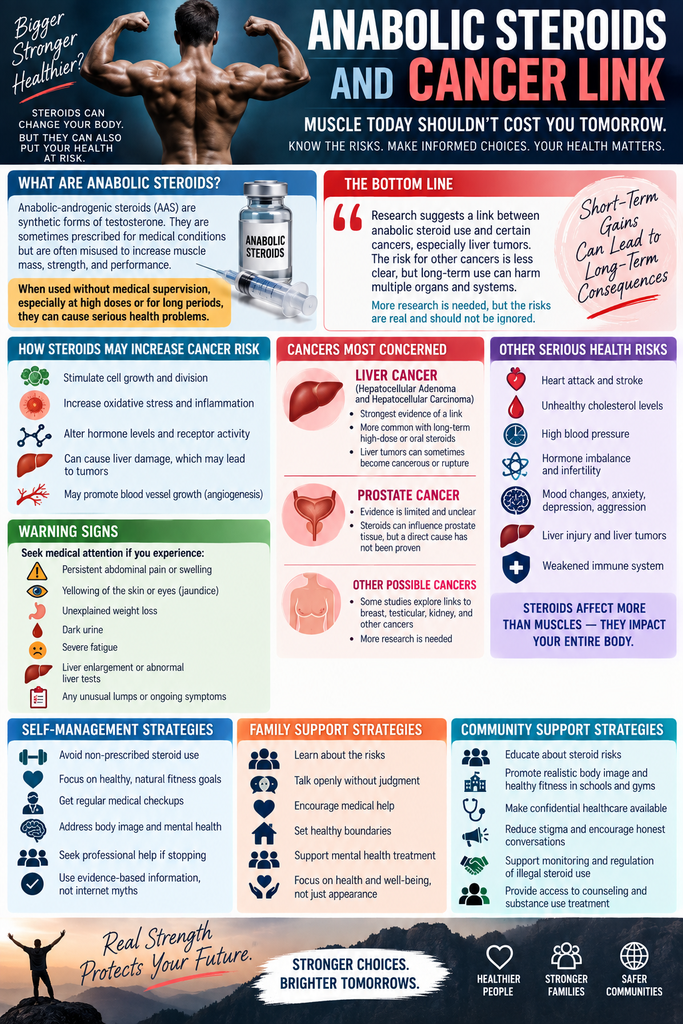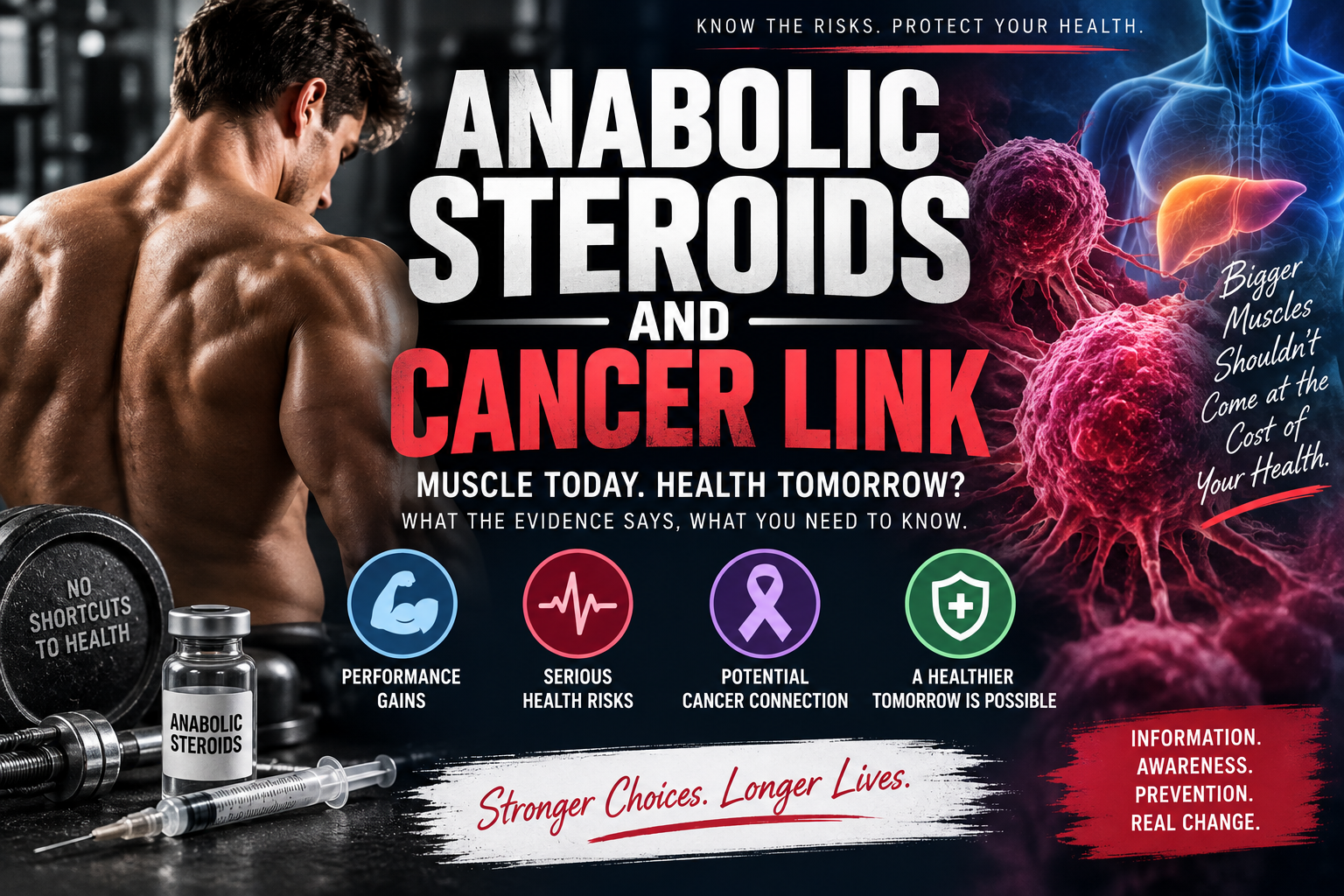
Anabolic-androgenic steroids (AAS) are synthetic derivatives of testosterone that may be prescribed for specific medical conditions but are also misused to increase muscle mass, strength, or physical appearance. When used without medical supervision—particularly at supraphysiologic doses, for long periods, or in combinations sometimes called “stacking”—these drugs can cause serious health problems. One concern is their possible relationship with certain tumors and cancers, particularly those involving the liver.
It is important to describe this connection accurately. Research does not show that everyone who uses anabolic steroids will develop cancer, nor does it prove that AAS misuse broadly causes every type of cancer. The strongest tumor-related concern involves the liver, while evidence concerning cancers such as prostate, breast, testicular, or kidney cancer is much less certain. A 2024 cohort study, for example, did not find an increased short-term overall cancer risk among male androgen users, but the researchers cautioned that the sample size, participants’ ages, and follow-up period meant that a longer-term risk could not be ruled out.
How Anabolic Steroids Affect the Body
Anabolic steroids interact with androgen receptors throughout the body. Although people may misuse them primarily for their muscle-building effects, their biological activity is not limited to skeletal muscle.
High-dose or prolonged AAS exposure has been associated with cardiovascular, endocrine, reproductive, psychological, and liver complications. Oral 17-alpha-alkylated anabolic steroids are particularly concerning for liver toxicity.
Potential complications of steroid misuse include:
- Liver injury and cholestasis
- Abnormal cholesterol levels
- High blood pressure and cardiovascular complications
- Suppression of natural testosterone production
- Infertility and sexual dysfunction
- Mood and behavioral changes
- Anxiety or depression, particularly during withdrawal
- Hepatocellular adenomas and other liver tumors
- Possible malignant transformation of certain liver lesions
Understanding these risks does not mean frightening someone who has used steroids. It means recognizing that AAS are potent hormones that can affect multiple organ systems.
Anabolic Steroids and Liver Tumors
The clearest cancer-related concern involves the liver.
Anabolic-androgenic steroids have been associated with hepatocellular adenomas, which are generally benign liver tumors, as well as reported cases of hepatocellular carcinoma (HCC), the most common primary liver cancer. A 2026 clinical review describes supraphysiologic AAS exposure as an underrecognized cause of primary hepatocellular tumors, particularly hepatocellular adenoma and HCC.
This relationship is particularly important because an adenoma is not always harmless. Certain hepatocellular adenomas have a greater potential for malignant transformation, and liver tumors can also rupture and cause serious internal bleeding.
Case reports have documented hepatocellular carcinoma developing within pre-existing hepatic adenomas among anabolic-steroid users, including recreational bodybuilders.
However, the absolute cancer risk for people misusing anabolic steroids remains difficult to quantify. Much of the literature consists of case reports and observational evidence rather than large, long-term controlled studies.
What About Prostate Cancer?
Because anabolic steroids are related to testosterone, people often assume that steroid use automatically causes prostate cancer. The evidence is more complicated.
Androgens can influence prostate tissue and are important in the biology of established prostate cancer. However, research has not established that medically supervised testosterone replacement at physiologic levels causes prostate cancer.
This should also not be confused with bodybuilding-related AAS misuse. People misusing anabolic steroids may expose themselves to doses substantially above normal physiological testosterone levels and frequently use several compounds simultaneously. Long-term cancer data for these patterns remain limited.
The safest conclusion is therefore that the liver-tumor association is better documented, while links between AAS misuse and many other cancers remain uncertain and require further research.
Why Someone May Continue Steroids Despite Knowing the Risks
Simply telling someone that anabolic steroids are dangerous may not make them stop.
For some users, muscularity can become closely connected with identity, confidence, athletic performance, or self-esteem. Others may experience intense dissatisfaction with their appearance or fear losing the physique they developed while using steroids.
Chronic AAS users can also experience withdrawal symptoms when stopping, including anxiety and depression.
This is why conversations about steroid misuse should examine the person’s reasons for using rather than focusing exclusively on the substance.
Self-Management Strategies
Someone currently using non-prescribed anabolic steroids should be encouraged to discuss their use honestly with a qualified healthcare professional. Abruptly stopping after prolonged heavy use can produce significant hormonal and psychological symptoms, so individualized medical guidance is preferable.
Helpful self-management strategies include:
- Be honest about steroid exposure. Tell clinicians exactly which substances are being used, including injectable and oral steroids, supplements, and other performance-enhancing drugs.
- Avoid increasing doses or adding additional substances. “Stacking” compounds does not make steroid use safe.
- Recognize psychological triggers. Identify whether body dissatisfaction, competitive pressure, social media, gym culture, or fear of losing muscle is driving continued use.
- Seek professional help when stopping. Long-term users may experience endocrine and psychological problems after discontinuation.
- Prioritize sustainable training. Build exercise goals around health, function, and realistic progress rather than extreme muscularity.
- Address body-image concerns. Counseling can be especially valuable when appearance becomes a major source of distress or compulsive behavior.
- Attend medical follow-up. A clinician can determine what laboratory testing, cardiovascular assessment, hormonal evaluation, or liver assessment is appropriate based on the person’s exposure and symptoms.
People should not rely on internet “post-cycle therapy” protocols as substitutes for individualized medical care.
Warning Signs That Should Not Be Ignored
A person with a history of AAS use should seek medical evaluation for concerning symptoms rather than assuming they are simply consequences of training.
Symptoms such as yellowing of the skin or eyes, dark urine, persistent abdominal pain or swelling, unexplained weight loss, severe fatigue, or a noticeable abdominal mass deserve medical attention.
Sudden severe abdominal pain, fainting, or symptoms suggesting internal bleeding require emergency evaluation because certain liver tumors can rupture.
Importantly, liver tumors may sometimes develop without obvious early symptoms. A recent review also notes that traditional tumor markers can sometimes remain normal in androgen-associated liver tumors, emphasizing the importance of an accurate steroid-use history when clinicians evaluate suspicious findings.
Family Support Strategies
Families often respond to steroid misuse with anger because they are frightened about the person’s health. Confrontation alone, however, may cause someone to hide their use.
Families can provide healthier support by:
- Learning about anabolic steroids and their medical risks.
- Discussing concerns without ridicule or body shaming.
- Encouraging an honest conversation with a healthcare professional.
- Avoiding criticism about physical appearance.
- Watching for significant depression, anxiety, aggression, or behavioral changes.
- Encouraging healthy exercise rather than extreme physique expectations.
- Supporting counseling when body image or self-esteem drives steroid use.
- Setting boundaries when steroid-related behavior negatively affects the household.
- Remaining involved during treatment and recovery when the individual welcomes that involvement.
Families should also understand that losing muscle after stopping steroids can be psychologically difficult for someone whose identity has become connected to muscularity.
Community Support Strategies
Steroid misuse is not solely an individual problem. Athletic environments, gyms, social media, competitive bodybuilding, and cultural expectations surrounding masculinity and appearance can influence attitudes toward performance-enhancing drugs.
Communities can help by:
- Providing accurate education about anabolic steroids.
- Teaching young athletes about realistic muscle development.
- Making confidential medical care available to people using performance-enhancing drugs.
- Training healthcare professionals to ask about AAS use without judgment.
- Providing mental-health and body-image resources.
- Challenging unrealistic appearance standards on social media.
- Supporting substance-use treatment when compulsive steroid use develops.
- Encouraging coaches and trainers to promote health rather than extreme physique expectations.
A nonjudgmental approach is especially important. Clinical guidance notes that directly asking about anabolic steroid use in a nonjudgmental manner is one of the most useful ways clinicians can identify it.
Cancer Prevention Starts With Honest Conversations
One challenge surrounding anabolic steroids is that people may hide their use from healthcare providers because they fear judgment or legal, athletic, or social consequences.
That secrecy can make medical care more difficult.
Someone who has used anabolic steroids should feel able to tell a healthcare professional what was taken, approximately how much, how frequently, for how long, and whether other hormones or performance-enhancing drugs were also used.
This information can help clinicians determine whether further evaluation is appropriate.
The Bigger Picture
The relationship between anabolic steroids and cancer should neither be exaggerated nor ignored.
Current evidence most clearly raises concern about liver tumors, including hepatocellular adenomas and reported hepatocellular carcinomas, particularly with prolonged or high-dose exposure. Evidence linking anabolic steroid misuse with many other cancers remains limited or uncertain, and more long-term research is needed.
For individuals, the goal should be honest medical assessment, healthier approaches to exercise and body image, and professional assistance when stopping long-term steroid use. Families can encourage treatment without shame while maintaining appropriate boundaries. Communities can reduce harm through education, confidential healthcare, mental-health support, and realistic conversations about body image and performance.
Muscle growth may be the reason someone begins using anabolic steroids, but the effects of these hormones extend far beyond muscle. Understanding those risks early creates an opportunity to make healthier decisions before potentially serious complications develop.
Frequently Asked Questions
Here are some common questions:
1. Can anabolic steroids cause cancer?
The relationship is complex. Long-term or high-dose anabolic-androgenic steroid (AAS) exposure has been associated with certain liver tumors, including hepatocellular adenomas and reported cases of hepatocellular carcinoma. However, evidence does not establish that anabolic steroids cause cancer in every user or broadly increase the risk of every cancer type.
2. Which cancer has the strongest connection with anabolic steroid use?
The strongest tumor-related evidence involves the liver. Long-term AAS exposure, particularly involving certain oral anabolic steroids, has been associated with benign liver tumors called hepatocellular adenomas and, less commonly, malignant liver tumors.
3. Are hepatocellular adenomas cancer?
Usually not. Hepatocellular adenomas are generally benign liver tumors. However, some can grow, rupture, and cause internal bleeding, or undergo malignant transformation into hepatocellular carcinoma. A person with a suspected liver mass requires medical evaluation.
4. Do anabolic steroids cause prostate cancer?
A direct causal relationship between anabolic steroid misuse and prostate cancer has not been established. Androgens influence prostate tissue and established prostate cancer biology, but that is different from proving that nonmedical anabolic steroid use causes prostate cancer. Long-term research on very high-dose AAS misuse remains limited.
5. Can anabolic steroids cause testicular cancer?
There is currently insufficient evidence to conclude that anabolic steroids directly cause testicular cancer. Steroid misuse can, however, cause testicular shrinkage, reduced sperm production, infertility, and suppression of natural testosterone production. These effects should not be confused with cancer.
6. Can steroids increase breast cancer risk?
The evidence connecting AAS misuse directly with breast cancer is limited. Steroids can disrupt normal hormone balance, but hormonal changes alone do not prove that a person will develop breast cancer.
7. Why are oral anabolic steroids particularly concerning for the liver?
Certain oral anabolic steroids are chemically modified so they can survive metabolism through the liver. This characteristic can also make some of these drugs particularly stressful to liver tissue and increase the potential for liver injury.
8. Does using a higher steroid dose increase the danger?
Generally, greater exposure—including high doses, prolonged use, and combinations of multiple performance-enhancing substances—can increase the likelihood of adverse effects. However, researchers cannot provide a simple dose at which cancer will or will not occur.
9. Does “stacking” anabolic steroids make them safer?
No. Combining several steroids does not eliminate their health risks. Stacking may increase overall drug exposure and can make it more difficult to determine which substance is causing a complication.
10. What warning signs of liver problems should steroid users recognize?
Concerning symptoms can include persistent upper abdominal pain or swelling, yellowing of the skin or eyes, dark urine, unexplained weight loss, severe fatigue, nausea, or an abdominal mass. Some liver problems initially produce few symptoms, so absence of symptoms does not guarantee that the liver is healthy.
11. Should everyone who has ever used anabolic steroids be screened for cancer?
Not necessarily. There is no universal recommendation that every person with any history of AAS exposure receive routine cancer imaging. A healthcare professional can consider the person’s substances, doses, duration of use, symptoms, examination findings, and other risk factors when determining whether laboratory tests or imaging are appropriate.
12. Can liver tumors improve after anabolic steroids are stopped?
Some androgen-associated hepatocellular adenomas may decrease in size after the hormonal exposure is discontinued, but this cannot be assumed. Larger or suspicious tumors may require ongoing imaging, specialist evaluation, or treatment because of the risks of bleeding or malignant transformation.
13. Can someone become dependent on anabolic steroids?
Yes. Some people develop patterns of compulsive AAS use despite physical, psychological, or social consequences. Stopping prolonged use can also produce symptoms such as fatigue, decreased libido, anxiety, and depression. Professional medical and mental-health support may therefore be helpful.
14. What self-management strategies can reduce harm?
Avoiding non-prescribed anabolic steroids is the safest approach. Someone already using them should be honest with their healthcare professional, avoid escalating or combining substances, address body-image or performance pressures, obtain appropriate medical monitoring, and seek professional guidance when discontinuing long-term use.
15. How can families support someone misusing anabolic steroids?
Families can learn about AAS, discuss concerns without ridicule or body shaming, encourage medical evaluation, support healthier exercise goals, establish appropriate boundaries, and watch for significant depression or behavioral changes when steroid use is reduced or stopped.
16. How can communities help prevent anabolic steroid misuse?
Schools, gyms, athletic programs, healthcare organizations, and coaches can provide evidence-based education, promote realistic body expectations, discourage performance-enhancing drug misuse, make confidential medical and mental-health care accessible, and reduce stigma that prevents users from discussing their steroid use.
17. Are bodybuilding supplements the same as anabolic steroids?
No. Ordinary protein powders, creatine, vitamins, and similar products are not anabolic steroids. However, some bodybuilding products sold as supplements have contained undeclared or steroid-like substances. Products marketed with extreme muscle-building claims should therefore be approached cautiously.
18. Does medically prescribed testosterone carry the same risks as bodybuilding steroid abuse?
Not necessarily. Medically indicated testosterone therapy is generally intended to restore testosterone to an appropriate physiological range and is monitored by a healthcare professional. Nonmedical AAS use may involve substantially higher doses and multiple compounds. The risks and exposures therefore should not automatically be treated as equivalent.
19. If someone previously used anabolic steroids, should they tell their doctor?
Yes. A clinician benefits from knowing which drugs were used, approximate doses, duration, frequency, and whether several substances were combined. This information can guide decisions about liver, cardiovascular, hormonal, reproductive, and mental health evaluations.
20. What is the main message about anabolic steroids and cancer?
The evidence should neither be exaggerated nor dismissed. The most established tumor concern involves liver tumors, while evidence for many other cancers remains uncertain. Avoiding nonmedical anabolic steroid use, discussing past or current exposure honestly with healthcare professionals, and seeking evaluation for concerning symptoms are sensible ways to protect long-term health.
Video: Why you need to check your liver now #steroidsideeffects #gymlife