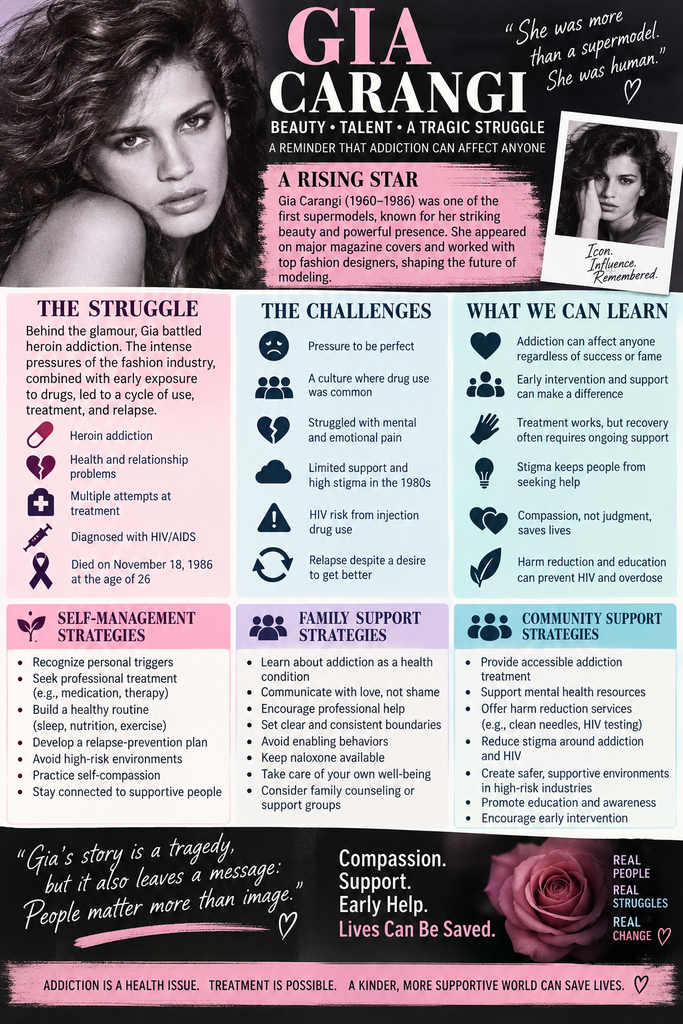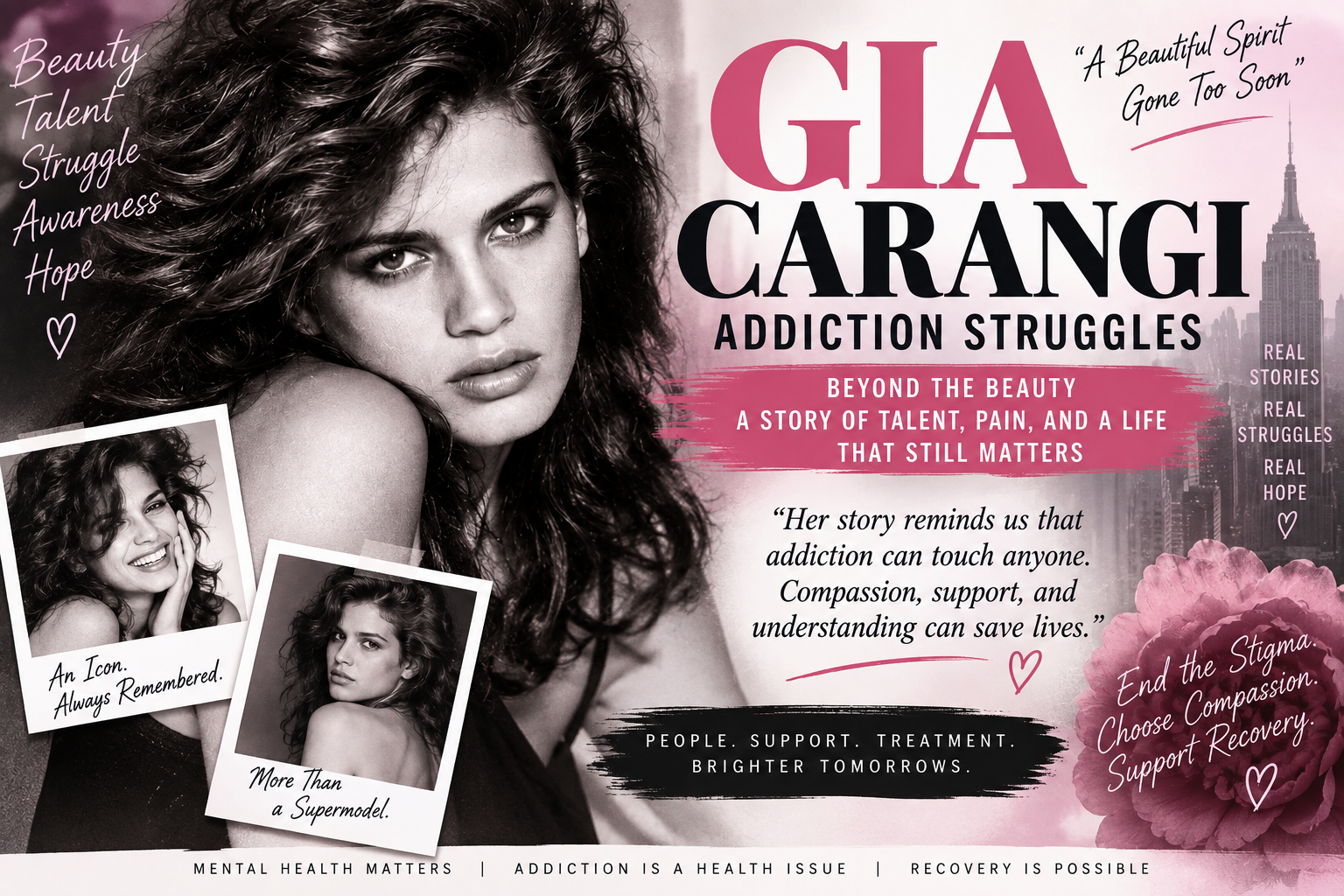
Gia Carangi became one of the most recognizable fashion models of the late 1970s and early 1980s. Often described as one of the first supermodels, she appeared in major fashion magazines and worked with leading photographers. Behind her rapid rise to fame, however, Carangi experienced severe substance use problems, particularly heroin addiction. Her health, relationships, and career deteriorated as her addiction progressed. She died from AIDS-related complications in 1986 at only 26 years old.
Gia’s story is especially tragic because it occurred during a period when addiction and HIV/AIDS were heavily stigmatized and effective treatment and harm-reduction resources were far more limited than they are today. Looking at her life through a modern health perspective can help families understand addiction without reducing a person’s entire identity to the disease.
Gia Carangi’s Rise to Fame
Born in Philadelphia in 1960, Gia entered modeling as a teenager and quickly attracted attention for her distinctive appearance and personality. Her success took her into the intense New York fashion world, where parties and drugs were readily available.
Accounts of the modeling industry during this period describe environments where cocaine and other drugs were common. Carangi eventually developed a serious heroin addiction. Her substance use began interfering with photo shoots, reliability, relationships, and her ability to maintain her career.
Her experience illustrates an important principle: success does not protect someone from addiction. A person can appear confident, talented, financially successful, or glamorous while privately experiencing serious problems.
When Addiction Began Taking Control
As Gia’s heroin use intensified, the consequences became increasingly visible. Reports describe missed or disrupted modeling assignments and injection-related injuries. In 1981, she required surgery after repeatedly injecting into the same area of her hand.
She attempted treatment and made efforts to return to modeling, but relapse remained a significant problem. By 1984, family pressure contributed to another rehabilitation attempt. After leaving treatment, however, she returned to heroin use.
Gia’s experience demonstrates why addiction should not simply be interpreted as a lack of willpower. Substance use disorders can involve powerful changes in motivation, reward, decision-making, habits, and responses to stress. Treatment frequently requires continuing support rather than a single episode of care.
Self-Management Strategies
If someone facing circumstances similar to Gia’s were receiving care today, self-management would be one part of a much larger treatment plan. Severe opioid addiction generally requires professional treatment rather than attempting recovery alone.
Helpful self-management strategies can include:
- Recognize personal triggers. Loneliness, grief, stress, rejection, relationships, parties, and environments where drugs are readily available can increase vulnerability.
- Seek professional addiction treatment. Opioid use disorder is a medical condition for which effective treatments are available.
- Develop a relapse-prevention plan. Identify warning signs, high-risk situations, supportive contacts, and specific actions to take when cravings increase.
- Change the environment. Separating from people and settings strongly associated with drug use can support recovery.
- Build healthy daily routines. Sleep, nutrition, exercise, meaningful activities, and structured schedules can help stabilize life during recovery.
- Address emotional health. Therapy can help people work through grief, trauma, anxiety, depression, relationship problems, and other difficulties that may coexist with substance use.
- Stay connected. Isolation can increase vulnerability. Regular contact with treatment professionals and supportive people can provide accountability and encouragement.
For opioid use disorder specifically, medications such as buprenorphine and methadone are evidence-based treatments and can substantially reduce overdose risk. Recovery planning should be individualized with qualified clinicians.
Family Support Strategies
Gia’s family reportedly attempted to help her and encouraged treatment. Her experience demonstrates one of the most painful realities families encounter: loving someone does not give you control over their addiction.
Families can still become powerful sources of support.
Helpful strategies include:
- Learn about addiction as a health condition rather than viewing it solely as bad behavior.
- Communicate concern without humiliation or threats.
- Encourage evidence-based professional treatment.
- Avoid providing money or resources that directly support continued substance use.
- Establish clear and consistent boundaries.
- Recognize relapse warning signs without assuming relapse means treatment has permanently failed.
- Keep naloxone available when opioid use or overdose is a risk.
- Participate in family counseling or support programs.
- Protect your own mental and physical well-being.
Family support should combine compassion with boundaries. Supporting recovery is different from protecting someone from every consequence of continued drug use.
Community Support Strategies
Gia’s story also raises questions about the responsibility of the environments surrounding vulnerable people.
Accounts of her career describe a fashion culture where drug use could be normalized and where signs of her deteriorating condition were sometimes concealed rather than addressed. One former partner later summarized the problem by saying people were more concerned with hiding Gia’s injection marks than helping her.
A healthier community response today can include:
- Providing accessible addiction and mental-health treatment.
- Offering harm-reduction education and naloxone.
- Connecting people with peer recovery specialists.
- Supporting recovery-friendly workplaces.
- Teaching employers how to recognize concerning behavioral changes.
- Creating sober social activities and recovery communities.
- Providing HIV and hepatitis testing and prevention services.
- Reducing stigma surrounding addiction and treatment.
- Encouraging early intervention rather than waiting for someone’s life to collapse.
Industries involving young people, intense competition, travel, appearance pressures, and irregular schedules can also benefit from confidential mental-health and substance-use resources.
Addiction, Injection Drug Use, and HIV
Gia’s story cannot be separated from the early HIV/AIDS epidemic. She was eventually diagnosed with AIDS and died from AIDS-related complications on November 18, 1986.
Today, we know much more about preventing HIV transmission. Sharing needles and other injection equipment can transmit HIV and viral hepatitis. Sterile injection equipment, HIV testing, medications that prevent HIV, and effective HIV treatment have dramatically changed what is possible.
This is also why harm reduction should not be confused with approving of drug use. Keeping someone alive and reducing the risk of infection create additional opportunities for that person to eventually enter treatment and recovery.
What Gia’s Relapses Can Teach Families
Gia reportedly made multiple attempts to recover but returned to heroin. Her experience demonstrates why relapse requires a clinical response rather than simply condemnation.
When relapse occurs, the treatment plan may need to change. Clinicians may need to reassess medications, treatment intensity, co-occurring psychiatric conditions, housing stability, relationships, triggers, and the person’s recovery environment.
A relapse can be extremely dangerous with opioids because tolerance may decrease during abstinence. Returning to a previously tolerated amount can therefore increase overdose risk.
Looking Beyond the Supermodel
Gia Carangi should be remembered as more than a famous model who became addicted to heroin. She was a young woman with extraordinary professional success whose substance use eventually overwhelmed many areas of her life.
Her story also reflects the limitations of the period in which she lived. Addiction treatment, opioid medications, overdose prevention, HIV knowledge, harm reduction, and public understanding of substance use disorders have advanced considerably since the 1980s.
For individuals, Gia’s journey emphasizes the importance of recognizing problems early and accepting professional help. For families, it demonstrates the importance of compassionate support combined with healthy boundaries. For communities, it raises a greater responsibility: when someone is visibly struggling, hiding the problem is not the same as helping them.
Gia Carangi died at 26, but her story can still contribute to conversations about addiction, stigma, HIV prevention, relapse, treatment, and recovery. The lesson should not be that addiction inevitably ends in tragedy. Instead, it should remind us why early intervention, evidence-based treatment, harm reduction, supportive families, and compassionate communities matter.
Frequently Asked Questions
Here are some common questions:
1. Who was Gia Carangi?
Gia Carangi was an American fashion model who became internationally successful during the late 1970s and early 1980s. She appeared in major fashion magazines and worked with prominent photographers and designers. She is frequently described as one of the earliest supermodels.
2. What addiction did Gia Carangi struggle with?
Gia developed a severe addiction to heroin. Her substance use became progressively more disruptive and affected her health, relationships, reliability, and modeling career.
3. When did Gia Carangi begin using drugs?
Accounts of Gia’s life describe drug use becoming increasingly serious as her modeling career progressed in New York. Cocaine and other substances were present in parts of the fashion and nightlife culture of that era, and Gia eventually became dependent on heroin.
4. Did the pressures of modeling cause her addiction?
It would be inaccurate to identify one cause. Addiction typically develops through an interaction of biological, psychological, social, and environmental factors. The pressures and drug availability surrounding Gia may have contributed to her vulnerability, but they should not be presented as the sole cause.
5. Did Gia Carangi ever receive treatment for addiction?
Yes. Gia made multiple attempts to obtain treatment and experienced periods when she tried to stop using drugs. Unfortunately, she also experienced relapse. Her experience demonstrates why substance use disorders frequently require continuing treatment and long-term support rather than a single rehabilitation stay.
6. Why couldn’t Gia simply stop using heroin?
Opioid addiction is not simply a failure of willpower. Repeated opioid use can affect brain systems involved in reward, motivation, stress, habits, and decision-making. Today, opioid use disorder is recognized as a treatable medical condition.
7. What self-management strategies could help someone experiencing a similar addiction today?
Helpful strategies include recognizing triggers, avoiding high-risk environments, establishing structured routines, addressing emotional and mental-health concerns, developing a relapse-prevention plan, and maintaining contact with supportive people. However, severe opioid addiction should not be managed through self-help alone. Professional treatment is strongly recommended.
8. Are medications available for heroin addiction today?
Yes. Evidence-based medications for opioid use disorder include buprenorphine, methadone, and naltrexone. Treatment may also include counseling, behavioral therapies, peer support, harm-reduction services, and treatment for co-occurring medical or psychiatric conditions.
9. How could Gia’s family have supported her recovery?
Families cannot force another person to recover, but they can encourage treatment, communicate without shame, establish healthy boundaries, avoid enabling continued drug use, learn about addiction, participate in family counseling, and maintain naloxone when opioid overdose is possible.
10. What should families do after a relapse?
Relapse should be taken seriously without automatically treating it as proof that recovery has failed. The treatment plan may need reassessment, including medications, counseling, triggers, mental health, living environment, and level of care. Opioid relapse is particularly dangerous because reduced tolerance can increase overdose risk.
11. How can communities help people struggling with heroin addiction?
Communities can expand evidence-based addiction treatment, distribute naloxone, provide sterile injection equipment and infectious-disease testing, offer peer recovery services, create recovery-friendly environments, and reduce stigma that prevents people from asking for help.
12. How was Gia Carangi’s addiction connected with HIV/AIDS?
Gia was diagnosed with HIV/AIDS during the early years of the AIDS epidemic. Injection drug use can transmit HIV when contaminated needles or other injection equipment are shared. Her experience highlights why sterile equipment, HIV testing, prevention, and treatment are important components of harm reduction.
13. Did Gia Carangi die from a heroin overdose?
No. Gia died on November 18, 1986, at age 26, from AIDS-related complications. Her history of injection drug use is an important part of understanding her vulnerability to HIV, but her death should not incorrectly be described as a heroin overdose.
14. What can Gia’s story teach us about stigma?
Her story demonstrates how stigma can make an already serious health problem more difficult. People experiencing addiction need accountability and appropriate boundaries, but humiliation and rejection can discourage treatment. Compassion does not mean ignoring dangerous behavior; it means responding in ways that increase the opportunity for treatment and survival.
15. What is the most important lesson from Gia Carangi’s addiction struggles?
Gia’s life reminds us that beauty, talent, fame, and professional success do not protect someone from addiction. Her story should not be reduced to tragedy. It can encourage earlier intervention, better treatment, harm reduction, family education, and compassionate community support.
16. Where can someone struggling with heroin or opioid addiction find help?
In the United States, SAMHSA’s FindTreatment.gov can help locate substance-use treatment. People at risk for opioid overdose and their families should also learn how to obtain and use naloxone. If an overdose is suspected, call 911 immediately and administer naloxone if available.
Video: She had the world at her feet until addiction took over #giacarangi #addiction #shorts