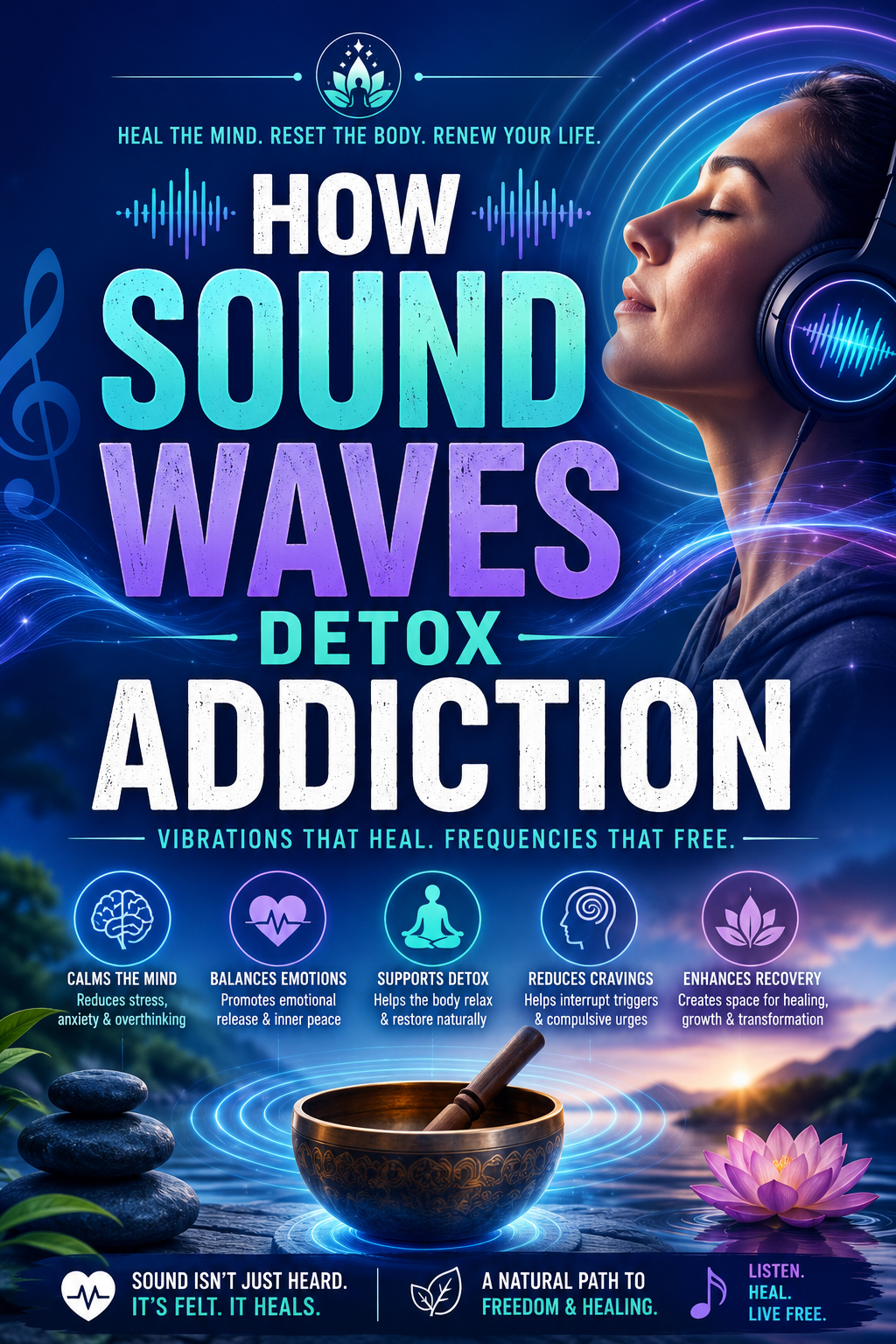
The idea that sound waves can “detox” addiction has gained attention through social media, wellness programs, and alternative health practices. While sound-based therapies—including music therapy, singing bowls, binaural beats, vibroacoustic therapy, and guided sound meditation—may promote relaxation, reduce stress, and improve emotional well-being, there is currently no scientific evidence that sound waves remove drugs or alcohol from the body or cure substance use disorders. Medical detoxification is a carefully supervised healthcare process that allows the body to safely eliminate substances while managing withdrawal symptoms. However, complementary sound-based therapies may play a valuable supportive role by helping individuals manage anxiety, improve sleep, enhance mindfulness, and cope with stress during recovery. Understanding the difference between evidence-based addiction treatment and complementary wellness practices allows individuals and families to make informed decisions while building a comprehensive recovery plan.
How Sound Waves May Support Recovery From Addiction
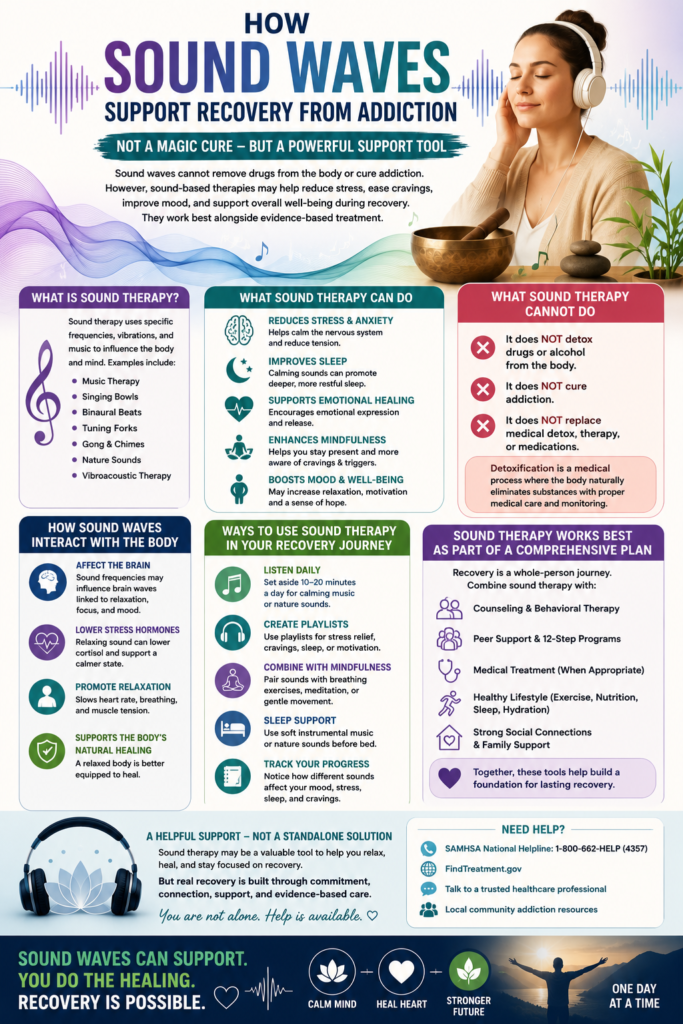
The idea that sound waves can “detox” addiction is a common claim on social media and in some wellness circles, but there is no scientific evidence that sound waves can remove drugs from the body or cure addiction. Addiction is a complex chronic medical condition involving changes in brain function, behavior, and environment. While sound-based therapies cannot detoxify the body, they may serve as a complementary wellness practice that supports relaxation, stress reduction, and emotional well-being during recovery.
What Is Sound Therapy?
Sound therapy is a broad term that includes practices such as:
- Singing bowls
- Tuning forks
- Gongs
- Chimes
- Nature sounds
- Music therapy
- Guided meditation with sound
- Binaural beats (listening to slightly different frequencies in each ear)
- Vibroacoustic therapy (low-frequency sound vibrations delivered through specialized equipment)
These approaches are intended to promote relaxation and improve emotional well-being rather than directly treat addiction.
How Might Sound Therapy Support Recovery?
Reducing Stress
Stress is a common trigger for substance use and relapse. Listening to calming sounds or participating in structured sound therapy sessions may help reduce stress, lower heart rate, and encourage relaxation.
Improving Sleep
Many people in early recovery struggle with insomnia or poor-quality sleep. Relaxing music or guided sound meditation before bedtime may improve sleep for some individuals, although results vary.
Supporting Mindfulness
Sound-based meditation encourages individuals to focus attention on the present moment. Mindfulness practices can help people recognize cravings without immediately acting on them.
Decreasing Anxiety
Music and calming sounds may reduce anxiety and improve mood, making it easier for some individuals to participate in counseling and recovery activities.
Enhancing Emotional Expression
Music therapy, led by trained therapists, can help individuals explore difficult emotions, process trauma, and develop healthy coping skills.
What Does the Research Say?
Research suggests that music therapy has the strongest evidence among sound-based interventions for people with substance use disorders. Studies have found that music therapy may:
- Improve engagement in treatment
- Reduce anxiety and stress
- Enhance mood
- Encourage emotional expression
- Increase motivation for recovery
Research on binaural beats, singing bowls, and vibroacoustic therapy is more limited. Some small studies suggest potential benefits for relaxation or anxiety, but there is no high-quality evidence that these therapies detoxify the body or treat addiction on their own.
What Does “Detox” Actually Mean?
Medical detoxification is the process by which the body naturally eliminates alcohol or drugs while healthcare professionals manage withdrawal symptoms and monitor for complications. Detox may include:
- Medical supervision
- Intravenous fluids when needed
- Medications to reduce withdrawal symptoms
- Monitoring of heart rate, blood pressure, and breathing
- Treatment of complications
Sound waves do not speed up the body’s elimination of drugs or alcohol.
Can Sound Therapy Replace Addiction Treatment?
No. Sound therapy should not replace evidence-based addiction treatment. Effective recovery often includes:
- Behavioral therapy
- Individual and group counseling
- Peer recovery support
- Treatment for co-occurring mental health conditions
- Medications for substance use disorders, when appropriate
- Healthy lifestyle changes
Sound therapy may be used as a complementary practice alongside these treatments if an individual finds it relaxing or meaningful.
Safety Considerations
Sound therapy is generally considered low risk for most people when used appropriately. However:
- It should not delay or replace medical treatment.
- Very loud sounds can damage hearing.
- Individuals with certain neurological or hearing conditions should discuss sound-based therapies with their healthcare provider.
- Expectations should remain realistic—sound therapy supports wellness but does not cure addiction.
Conclusion
Sound waves do not detoxify the body or cure addiction, despite claims that may appear online. However, sound-based approaches such as music therapy, mindfulness practices, and relaxing sound environments may help reduce stress, improve sleep, ease anxiety, and support emotional healing during recovery. When used alongside evidence-based medical care, counseling, peer support, and healthy lifestyle habits, sound therapy may become one helpful component of a comprehensive recovery plan.
Self-Management Strategies for Understanding How Sound Waves May Support Addiction Recovery
While some websites and social media posts claim that sound waves can “detox” addiction, there is no scientific evidence that sound waves remove drugs from the body or cure substance use disorders. However, sound-based practices may help some people manage stress, anxiety, and cravings as part of a comprehensive recovery plan. The following self-management strategies can help you use sound therapy safely and realistically.
1. Understand What Sound Therapy Can and Cannot Do
Learn the difference between medical detoxification and sound therapy. Your body naturally eliminates drugs and alcohol through the liver, kidneys, and other organs. Sound therapy may promote relaxation, but it does not speed up detoxification or replace medical treatment.
2. Use Sound Therapy as a Complementary Tool
If you enjoy calming sounds, use them to support your recovery—not as your only treatment. Sound therapy works best alongside counseling, recovery meetings, healthy lifestyle habits, and medical care when appropriate.
3. Create a Relaxation Routine
Set aside 10–20 minutes each day to listen to calming music, nature sounds, or guided meditation. A regular relaxation routine may help lower stress, improve focus, and support emotional well-being.
4. Practice Mindful Listening
Instead of simply having music in the background, focus your attention on the sounds, rhythms, and breathing. Mindful listening can help redirect your attention away from cravings and reduce emotional reactivity.
5. Use Music to Manage Cravings
Create a personalized playlist of calming or uplifting songs that help you feel grounded. Listening to music during moments of stress or craving may provide a healthy distraction while you use other coping skills.
6. Improve Your Sleep Environment
If approved by your healthcare provider, consider using soft instrumental music, white noise, or nature sounds as part of a healthy bedtime routine. Better sleep can improve mood, reduce stress, and support recovery.
7. Combine Sound Therapy with Other Healthy Habits
Pair relaxing sounds with deep breathing, stretching, yoga, meditation, or progressive muscle relaxation. Combining these techniques may enhance relaxation and improve overall emotional resilience.
8. Be Cautious of Extraordinary Claims
Avoid products or programs that promise to “detox addiction,” “erase cravings instantly,” or “cure substance use disorders” using sound frequencies alone. Look for information supported by scientific research and discuss new therapies with your healthcare provider.
9. Continue Evidence-Based Treatment
If you are receiving treatment for a substance use disorder, continue attending counseling sessions, peer support meetings, and medical appointments. Do not stop prescribed medications or other treatments in favor of sound therapy alone.
10. Track What Works for You
Keep a journal of your recovery activities. Record when you use sound therapy, your stress level, sleep quality, mood, and cravings. This can help you determine whether sound-based practices are a helpful addition to your overall recovery plan.
Conclusion
Sound therapy is not a method of detoxifying the body or curing addiction, but it may support recovery by promoting relaxation, reducing stress, improving sleep, and encouraging mindfulness. When combined with evidence-based treatment, healthy coping skills, regular exercise, balanced nutrition, and strong social support, sound-based practices can become one of many tools that contribute to long-term recovery. The most effective recovery plans are comprehensive, individualized, and guided by qualified healthcare professionals.
Family Support Strategies for Understanding How Sound Waves May Support Addiction Recovery
Families often look for every possible way to help a loved one recover from addiction. While sound therapy—including music therapy, singing bowls, nature sounds, binaural beats, or guided meditation—may promote relaxation and emotional well-being, there is no scientific evidence that sound waves can “detox” the body or cure addiction. Families can best support recovery by understanding the role of complementary therapies while encouraging evidence-based treatment.
1. Learn the Facts Together
Educate yourself and your loved one about the difference between medical detoxification and complementary wellness therapies. Understanding that sound therapy may help reduce stress but does not remove drugs from the body helps set realistic expectations.
2. Encourage Open Conversations
Create a safe, supportive environment where your loved one feels comfortable discussing different recovery strategies. Listen respectfully to their interests while encouraging decisions based on scientific evidence rather than marketing claims or social media trends.
3. Support Evidence-Based Treatment
Encourage your loved one to continue participating in counseling, behavioral therapy, peer support groups, and medical treatment when appropriate. If they enjoy sound therapy, help them view it as an addition to—not a replacement for—their recovery plan.
4. Create a Calm Home Environment
A peaceful home can support recovery. Playing soft instrumental music, nature sounds, or other relaxing audio during family relaxation time may help reduce stress and encourage emotional well-being for everyone in the household.
5. Participate in Relaxation Activities Together
Join your loved one in healthy stress-management activities such as guided meditation, gentle yoga, breathing exercises, or listening to calming music. Participating together strengthens relationships while promoting healthy coping skills.
6. Help Manage Stress and Triggers
Recognize that stress is a common trigger for substance use and relapse. Encourage healthy coping strategies, provide emotional support during difficult times, and help identify situations that increase the risk of returning to substance use.
7. Avoid Unrealistic Expectations
Be cautious of programs or products that claim sound frequencies can “erase addiction,” “detox the brain,” or “eliminate cravings overnight.” Recovery is a gradual process that involves medical care, emotional healing, behavioral change, and ongoing support.
8. Encourage Professional Guidance
If your loved one wants to explore complementary therapies, encourage them to discuss these options with their healthcare provider or addiction treatment team. Professionals can help determine whether these practices can be safely incorporated into an individualized treatment plan.
9. Celebrate Healthy Progress
Recognize improvements such as attending therapy sessions, managing cravings, improving sleep, practicing relaxation techniques, or maintaining sobriety. Positive reinforcement builds confidence and encourages continued recovery.
10. Care for Yourself
Supporting someone with addiction can be emotionally demanding. Family members should also prioritize their own well-being by seeking counseling if needed, joining family support groups, practicing healthy stress-management techniques, and maintaining social connections. Taking care of yourself enables you to provide consistent, compassionate support.
Conclusion
Although sound waves do not detoxify the body or cure addiction, sound-based therapies may help some individuals reduce stress, improve relaxation, enhance sleep, and support emotional healing during recovery. Families can play an important role by encouraging evidence-based treatment, maintaining realistic expectations, participating in healthy coping activities, and creating a supportive home environment. When combined with professional care, counseling, peer support, and healthy lifestyle habits, these complementary approaches may strengthen the foundation for long-term recovery and overall well-being.
Community Resource Strategies for Understanding How Sound Waves May Support Addiction Recovery
Community resources can help individuals and families understand the role of complementary therapies, including sound-based interventions, in addiction recovery. While some programs promote sound waves as a way to “detox” addiction, there is no scientific evidence that sound waves remove drugs from the body or cure substance use disorders. Medical detoxification remains the standard of care for managing withdrawal from alcohol and certain drugs. However, sound-based approaches, such as music therapy and relaxation techniques, may complement evidence-based treatment by helping reduce stress, improve emotional well-being, and encourage engagement in recovery.
1. Attend Community Health Education Programs
Hospitals, recovery organizations, public health departments, and community health centers often provide educational workshops on addiction treatment and complementary wellness therapies. These programs help explain the difference between evidence-based treatment and supportive practices such as music therapy and mindfulness.
2. Utilize Addiction Treatment Centers
Community substance use treatment programs can explain which complementary therapies may be beneficial and how they fit into a comprehensive treatment plan. Healthcare professionals can help individuals make informed decisions while avoiding treatments that lack scientific support.
3. Participate in Music Therapy Programs
Some hospitals, behavioral health programs, and rehabilitation centers offer music therapy led by board-certified music therapists. Music therapy has been shown to improve emotional expression, reduce anxiety, increase treatment engagement, and enhance overall well-being for many individuals in recovery.
4. Access Mental Health Services
Community mental health centers provide counseling and treatment for anxiety, depression, trauma, and other conditions that often occur alongside substance use disorders. Addressing these underlying conditions may reduce stress and improve recovery outcomes more effectively than relying solely on complementary therapies.
5. Join Peer Recovery Support Groups
Recovery organizations offer opportunities to share experiences, learn healthy coping strategies, and receive encouragement from others with lived experience. These groups reinforce that recovery is built through multiple evidence-based approaches rather than a single intervention.
6. Promote Health Literacy
Libraries, schools, community colleges, and public health agencies can provide educational resources to help individuals critically evaluate health claims. Learning to distinguish between scientific evidence and unsupported marketing claims helps prevent misinformation about “sound wave detox” programs.
7. Encourage Mindfulness and Wellness Programs
Community centers, recreation facilities, and wellness organizations may offer yoga, meditation, breathing exercises, and relaxation classes that incorporate calming music or nature sounds. These activities can help reduce stress and improve emotional resilience as part of a broader recovery plan.
8. Collaborate with Healthcare Professionals
Primary care providers, addiction medicine specialists, psychologists, licensed counselors, and board-certified music therapists can work together to determine whether sound-based therapies may benefit an individual’s overall recovery plan while ensuring evidence-based treatment remains the foundation of care.
9. Support Safe and Ethical Wellness Programs
Communities can encourage wellness programs to clearly explain the purpose and limitations of sound-based therapies. Programs should avoid making unsupported claims that sound frequencies can detoxify the body, eliminate addiction, or replace medical treatment.
10. Expand Access to Comprehensive Recovery Services
Communities should continue investing in proven recovery resources, including medication-assisted treatment, behavioral therapy, peer recovery coaching, housing assistance, employment services, transportation, and family education. Complementary wellness practices may enhance recovery, but they are most effective when integrated into a comprehensive system of care.
Conclusion
Sound-based therapies may provide meaningful benefits for relaxation, stress reduction, emotional expression, and overall wellness, but they do not detoxify the body or cure addiction. Community resources can help individuals and families understand the appropriate role of these complementary practices while promoting evidence-based treatment, accurate health education, and comprehensive recovery services. Through collaboration among healthcare providers, behavioral health professionals, recovery organizations, and community leaders, individuals can access balanced, scientifically grounded care that supports long-term recovery and improved quality of life.
Frequently Asked Questions
Here are some common questions:
1. Can sound waves detox addiction?
No. There is no scientific evidence that sound waves remove drugs or alcohol from the body or cure addiction. Medical detoxification is a biological process that may require professional medical supervision, depending on the substance and the individual’s health.
2. What is sound therapy?
Sound therapy is a complementary wellness practice that uses sound, music, or vibrations to promote relaxation and emotional well-being. Examples include music therapy, singing bowls, tuning forks, nature sounds, binaural beats, and vibroacoustic therapy.
3. Can sound therapy help people in recovery?
Yes, it may help some individuals manage stress, anxiety, sleep problems, and emotional distress. These benefits can support recovery when used alongside evidence-based addiction treatment.
4. Does sound therapy replace medical detox?
No. Sound therapy should never replace medical detoxification or professional addiction treatment. Withdrawal from alcohol, benzodiazepines, and some other substances can be dangerous and may require medical supervision.
5. What is the difference between detoxification and relaxation?
Detoxification refers to the body’s natural process of eliminating drugs or alcohol, often with medical support during withdrawal. Relaxation techniques, including sound therapy, help reduce stress but do not speed up or replace detoxification.
6. What types of sound therapy are commonly used?
Common approaches include:
- Music therapy
- Guided meditation with calming sounds
- Nature sounds
- Singing bowls
- Tuning forks
- Gongs and chimes
- Binaural beats
- Vibroacoustic therapy
7. Which sound therapy has the strongest scientific evidence?
Among sound-based interventions, music therapy has the strongest evidence. Studies suggest it can improve mood, reduce anxiety, increase treatment engagement, and help people express emotions during recovery.
8. Can sound therapy reduce cravings?
Some individuals report that calming sounds or music help distract them from cravings or reduce stress-related triggers. However, there is no strong evidence that sound therapy directly eliminates cravings or treats addiction.
9. Can sound therapy improve sleep during recovery?
Possibly. Relaxing music, nature sounds, or guided meditation may help some people fall asleep more easily and improve sleep quality, although results vary from person to person.
10. Can sound therapy help with anxiety?
Yes. Many people find that calming sounds reduce stress and anxiety, which are common challenges during recovery. Lower stress may make it easier to participate in counseling and other recovery activities.
11. Is sound therapy safe?
For most people, sound therapy is considered low risk when used appropriately. However, extremely loud sounds can damage hearing, and people with certain medical conditions should consult their healthcare provider before beginning specialized therapies.
12. Can I use sound therapy at home?
Yes. Many people listen to calming music, white noise, nature sounds, or guided meditation recordings at home as part of a healthy relaxation routine.
13. Should I stop my addiction treatment if sound therapy helps me?
No. Continue all recommended medical care, counseling, medications, and recovery support. Sound therapy should be viewed as a complementary practice, not a replacement for evidence-based treatment.
14. Why do some programs claim sound frequencies can detox addiction?
Some wellness programs use marketing language that overstates the benefits of sound frequencies. While sound may promote relaxation, there is no reliable scientific evidence that specific frequencies detoxify the brain or eliminate addiction.
15. Can sound therapy help with stress-related relapse prevention?
It may help. Because stress is a common relapse trigger, relaxation techniques such as music, mindfulness, and calming sounds can be useful tools within a broader relapse prevention plan.
16. What other therapies work well with sound therapy?
Sound therapy may complement:
- Individual counseling
- Group therapy
- Cognitive behavioral therapy (CBT)
- Mindfulness practices
- Exercise
- Yoga
- Peer recovery support
- Healthy sleep and nutrition
17. How often should someone use sound therapy?
There is no standard schedule. Many people benefit from listening to calming sounds for 10–20 minutes daily or using them during times of stress, meditation, or before bedtime.
18. Who should provide music therapy?
When using music therapy as part of addiction treatment, it is best delivered by a board-certified music therapist, who is trained to use music-based interventions to support physical and emotional health.
19. What is the biggest takeaway about sound waves and addiction?
Sound waves do not detoxify the body or cure addiction. However, sound-based therapies may help reduce stress, improve emotional well-being, enhance relaxation, and support participation in recovery when used alongside evidence-based treatment.
20. What is the best approach to long-term recovery?
The most effective recovery plan combines evidence-based medical care, counseling, behavioral therapies, peer support, healthy lifestyle habits, relapse prevention strategies, and, when appropriate, complementary practices such as sound therapy. Together, these approaches address the physical, emotional, psychological, and social aspects of recovery, providing the strongest foundation for long-term success.
Conclusion
Sound-based therapies should be viewed as complementary wellness tools rather than treatments that detoxify the body or cure addiction. Although relaxing music, guided meditation, music therapy, and other sound interventions may help reduce stress, improve mood, encourage emotional healing, and support participation in recovery, they cannot replace medical detoxification, counseling, behavioral therapy, or other evidence-based addiction treatments. Lasting recovery is best achieved through a comprehensive, individualized approach that addresses the physical, psychological, and social aspects of substance use disorders. As research into complementary therapies continues to evolve, sound-based practices may remain valuable additions to recovery when used alongside scientifically supported medical care, healthy lifestyle habits, peer support, and ongoing guidance from qualified healthcare professionals.
Video: Sound Healing That Actually Works #StressRelief #MindfulnessMoments #RecoveryJourney