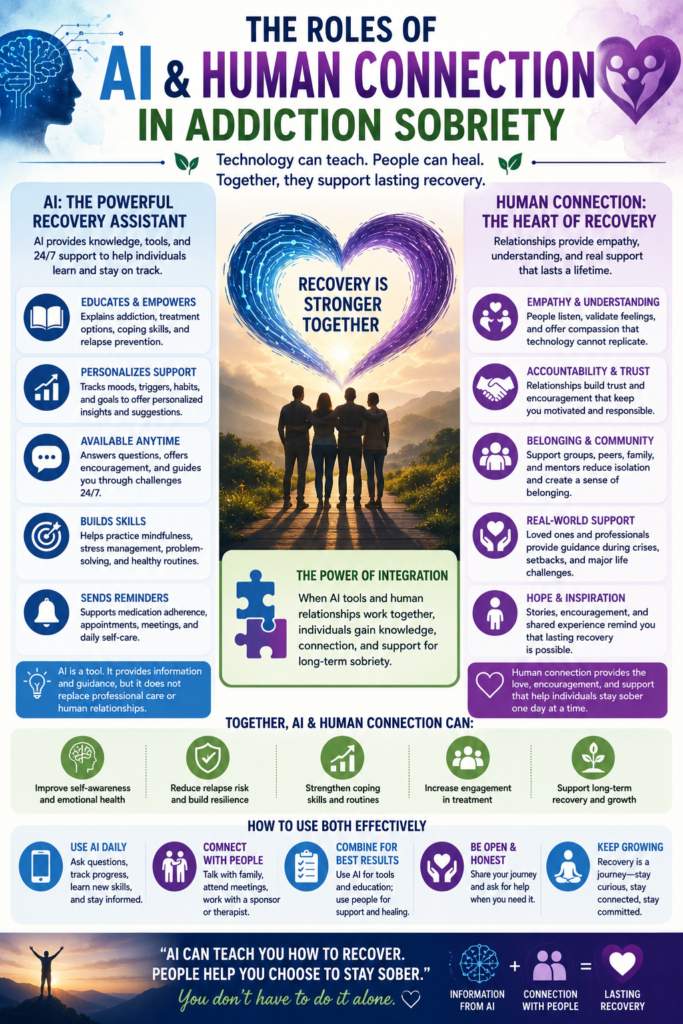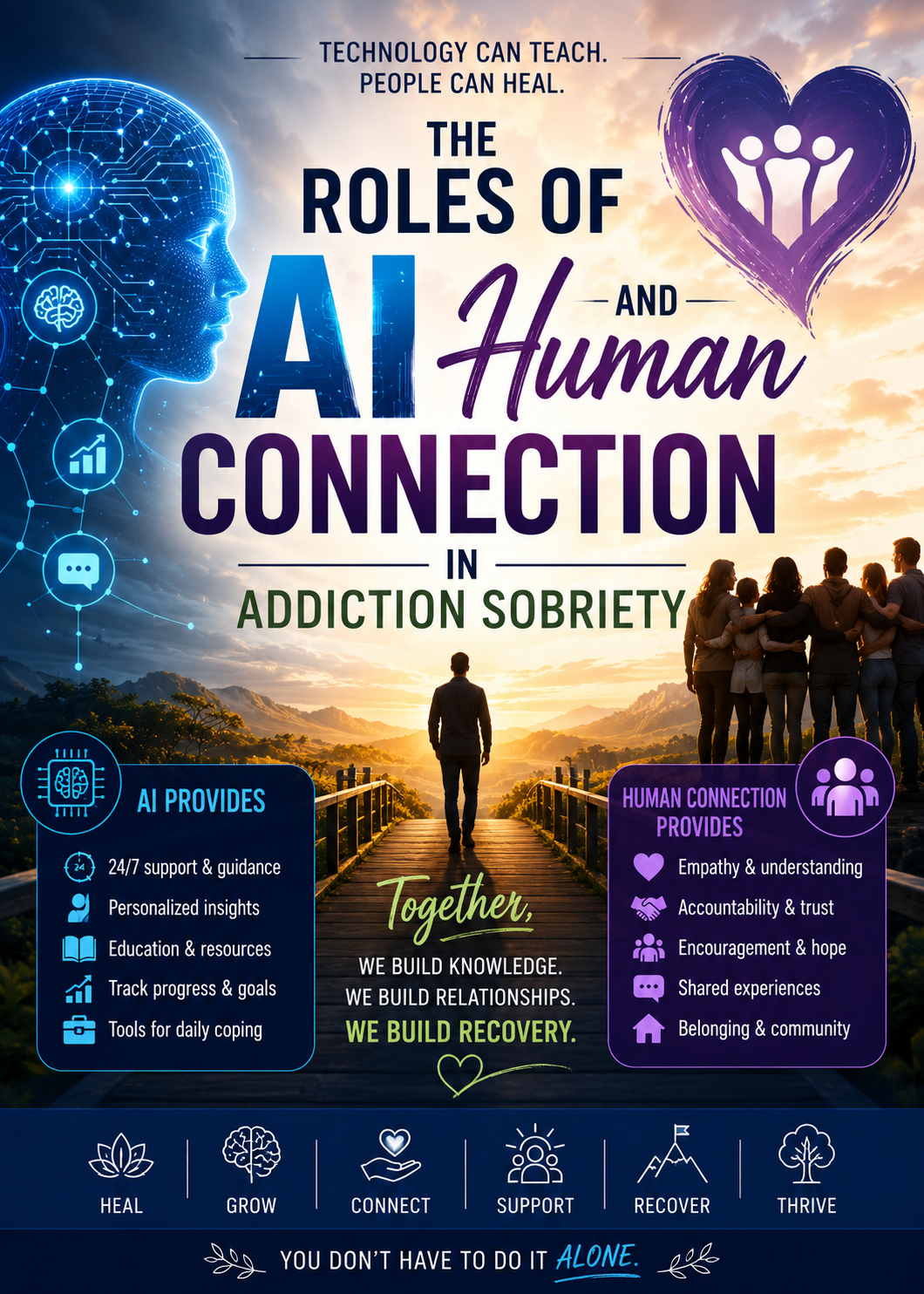
Artificial intelligence (AI) is becoming an increasingly valuable tool in addiction recovery by expanding access to education, self-management resources, and personalized support. AI can help individuals better understand addiction, recognize relapse triggers, develop coping strategies, monitor recovery progress, and reinforce healthy daily habits at any time of the day. However, while technology can improve access to information and recovery tools, it cannot replace the empathy, trust, accountability, and sense of belonging that come from genuine human relationships. Family members, healthcare professionals, peer recovery specialists, sponsors, and supportive communities provide emotional support and shared experiences that are essential for long-term sobriety. Understanding the complementary roles of AI and human connection allows individuals, families, and communities to use technology wisely while preserving the personal relationships that remain at the heart of lasting recovery.
How AI Can Teach People How to Stay Sober, but Human Connection Helps People Remain Sober
Artificial intelligence (AI) is rapidly changing healthcare, including addiction treatment. AI can provide education, answer questions, identify patterns, remind people to take medications, suggest coping strategies, and offer support at any time of day. These capabilities make AI a valuable tool for helping people learn the skills needed for recovery. However, maintaining long-term sobriety typically requires something AI cannot fully provide: genuine human connection, shared experience, trust, and meaningful relationships.
How AI Can Help People Learn Recovery Skills
AI can serve as a personalized educational resource by helping individuals understand:
- The science of addiction and recovery
- How cravings develop and how to manage them
- Common relapse triggers
- Healthy coping strategies
- Stress management techniques
- Sleep, nutrition, and exercise recommendations
- Medication education
- Goal setting and progress tracking
Because AI is available 24 hours a day, it can provide immediate guidance during moments of uncertainty, reinforce recovery concepts, and help people practice problem-solving before challenges become crises.
AI Can Improve Access to Information
Many people hesitate to ask sensitive questions because of embarrassment or fear of being judged. AI provides a private, nonjudgmental environment where individuals can ask questions about addiction, relapse, medications, withdrawal, or recovery without worrying about stigma. This may encourage people to seek accurate information earlier.
AI Can Support Recovery Between Appointments
AI can complement professional care by helping individuals:
- Practice coping skills
- Prepare for therapy sessions
- Review relapse prevention plans
- Track moods and triggers
- Reinforce healthy habits
- Encourage adherence to treatment plans
For people in rural or underserved areas, AI may also improve access to educational resources when addiction specialists are not readily available.
Why Human Connection Matters
While AI can provide knowledge and encouragement, recovery is more than acquiring information. Long-term sobriety often depends on meaningful relationships that foster accountability, belonging, and hope.
Human connection offers experiences that AI cannot fully replicate, including:
- Genuine empathy grounded in lived experience
- Physical presence during difficult moments
- Emotional warmth and compassion
- Shared celebrations and setbacks
- Mutual trust developed over time
- Community and a sense of belonging
These relationships help reduce loneliness—a major risk factor for relapse—and provide motivation to continue recovery.
The Importance of Peer Support
Many people describe peer recovery specialists, sponsors, counselors, family members, and recovery groups as turning points in their recovery journey. Individuals who have experienced addiction themselves can offer practical guidance, hope, and understanding that often resonate deeply.
Support from others may include:
- Accountability
- Encouragement during cravings
- Help navigating stressful situations
- Celebrating recovery milestones
- Reminding someone they are not alone
AI Cannot Replace Therapeutic Relationships
Although AI can simulate conversation and offer evidence-based information, it cannot replace the therapeutic alliance developed between patients and healthcare professionals. Therapists, physicians, counselors, peer recovery coaches, and family members can interpret body language, respond to complex emotions, understand personal history, and adapt care to changing circumstances in ways that AI cannot fully achieve.
The Best Approach: AI Plus Human Support
Rather than viewing AI and human care as competing approaches, they work best together.
AI can help people:
- Learn recovery skills
- Build knowledge
- Reinforce healthy behaviors
- Access support between appointments
- Stay organized and informed
Human relationships help people:
- Feel understood
- Build resilience
- Develop accountability
- Heal emotionally
- Strengthen long-term motivation
- Maintain a sense of community
Together, AI and human support create a more comprehensive recovery system than either could provide alone.
Looking Ahead
As AI continues to evolve, it will likely become an increasingly valuable tool in addiction education, early intervention, and recovery support. It may help identify relapse risks, personalize educational content, and improve access to care. However, successful long-term recovery will continue to depend on meaningful human relationships, compassionate healthcare professionals, supportive families, peer recovery communities, and social connections that foster trust and belonging.
Conclusion
AI can be an excellent teacher, coach, and educational companion, helping people understand addiction and develop the skills needed to begin recovery. But knowledge alone is rarely enough to sustain lifelong sobriety. Lasting recovery is strengthened by authentic human connection—relationships that provide empathy, accountability, encouragement, and hope. The future of addiction care is likely to combine the strengths of both: AI to educate, guide, and reinforce recovery skills, and people to provide the compassion and connection that help individuals remain sober for the long term.
Self-Management Strategies: The Roles of AI and Human Connection in Addiction Sobriety
Recovery from addiction requires knowledge, healthy habits, emotional resilience, and supportive relationships. Artificial intelligence (AI) can be a powerful tool for learning recovery skills, tracking progress, and providing encouragement. However, long-term sobriety is strengthened through meaningful human connections with healthcare professionals, family members, peers, and recovery communities. Combining both technology and personal relationships creates a balanced approach to recovery.
1. Use AI to Build Recovery Knowledge
AI can explain addiction, answer questions about cravings, provide coping strategies, and educate you about medications, relapse prevention, nutrition, sleep, and stress management. Use AI as a reliable educational tool while confirming important medical decisions with your healthcare provider.
Human Connection Role: Discuss what you learn with your counselor, sponsor, or recovery coach. Personal conversations help apply information to your unique situation.
2. Track Your Recovery Progress
Use AI-powered journals or apps to record cravings, mood, sleep, stress levels, exercise, medication adherence, and recovery milestones. Identifying patterns can help you recognize early warning signs of relapse.
Human Connection Role: Share your progress with trusted people who can celebrate successes, provide accountability, and help problem-solve challenges.
3. Develop Healthy Coping Skills
Ask AI to suggest evidence-based coping techniques for managing cravings, anxiety, boredom, or stress. Practice skills such as deep breathing, mindfulness, journaling, gratitude exercises, and problem-solving.
Human Connection Role: Practice these skills with a therapist, support group, or trusted family member who can provide encouragement and feedback.
4. Create a Structured Daily Routine
Use AI to organize healthy schedules that include sleep, exercise, meals, counseling appointments, recovery meetings, and relaxation activities.
Human Connection Role: Invite family or friends to exercise with you, prepare healthy meals together, or attend recovery meetings for additional motivation.
5. Identify and Manage Triggers
AI can help you recognize emotional, environmental, and social triggers by reviewing your recovery journal and helping you develop coping plans.
Human Connection Role: Talk openly with your sponsor, therapist, or loved ones about triggers so they can help you avoid high-risk situations and provide support during difficult moments.
6. Strengthen Communication Skills
AI can help you practice difficult conversations, develop healthier responses to conflict, and improve emotional awareness.
Human Connection Role: Real growth comes from applying these communication skills in real relationships with family members, friends, coworkers, and recovery peers.
7. Stay Connected During Difficult Moments
AI can provide immediate reminders of coping strategies when cravings occur, especially outside normal office hours.
Human Connection Role: When cravings become overwhelming, contact a trusted friend, sponsor, counselor, or crisis resource. Speaking with another person often provides emotional support and accountability that technology alone cannot offer.
8. Continue Learning Throughout Recovery
Recovery is an ongoing process. Use AI to stay informed about new addiction research, healthy lifestyle habits, relapse prevention strategies, and recovery tools.
Human Connection Role: Attend educational workshops, therapy sessions, peer support meetings, and community recovery events to learn from professionals and people with lived experience.
9. Build a Strong Recovery Network
AI can remind you to attend appointments, schedule recovery meetings, and maintain healthy habits.
Human Connection Role: A strong support network—including family, friends, healthcare providers, peer recovery specialists, sponsors, and recovery groups—provides empathy, encouragement, accountability, and a sense of belonging that AI cannot replace.
10. View AI as a Tool, Not a Substitute
Use AI to complement your recovery by providing education, organization, motivation, and self-reflection.
Human Connection Role: Long-term recovery depends on authentic relationships, trust, compassion, and shared experiences. Human connection helps individuals feel understood, supported, and motivated to continue growing throughout recovery.
Conclusion
AI has the potential to transform addiction recovery by making evidence-based education, coping strategies, and recovery planning available anytime and anywhere. It can help individuals understand addiction, recognize triggers, monitor progress, and strengthen healthy habits. However, sobriety is sustained not only by knowledge but also by meaningful relationships. Family members, healthcare professionals, sponsors, peer recovery groups, and supportive friends provide empathy, accountability, hope, and encouragement that technology cannot fully replicate. The strongest recovery plans combine the strengths of both—using AI as a knowledgeable guide and human connection as the foundation for lasting healing, resilience, and lifelong sobriety.
Family Support Strategies to Understand the Roles of AI and Human Connection in Addiction Sobriety
Families are often one of the most important sources of strength during addiction recovery. As artificial intelligence (AI) becomes more common in healthcare, it can provide education, recovery tools, and day-to-day guidance. However, AI cannot replace the empathy, trust, encouragement, and accountability that family members and other supportive people provide. Understanding the strengths and limitations of both AI and human relationships allows families to support recovery more effectively.
1. Learn About AI Together
Take time to understand how AI can support addiction recovery. AI can explain addiction, answer questions about treatment, teach coping skills, provide medication information, and help organize recovery goals. Learning together helps families use technology appropriately while recognizing that AI is an educational tool—not a substitute for professional care or family support.
2. Encourage Evidence-Based Treatment
Support your loved one in using AI as a supplement to counseling, medical care, recovery meetings, and other evidence-based treatments. Encourage them to discuss any information obtained from AI with their healthcare providers before making changes to their treatment plan.
3. Keep Communication Open
Create a safe environment where your loved one feels comfortable discussing what they are learning from AI and how they are feeling throughout recovery. Honest conversations help families clarify misunderstandings, celebrate progress, and address concerns before they become larger problems.
4. Use AI to Support Family Education
Families can use AI to better understand topics such as relapse prevention, medication-assisted treatment, withdrawal, mental health conditions, and healthy communication techniques. Increased knowledge helps reduce stigma and promotes informed decision-making.
5. Prioritize Personal Connection
Although AI can answer questions instantly, it cannot replace a caring conversation, a reassuring hug, shared laughter, or emotional support during difficult moments. Make time for regular family meals, walks, hobbies, and meaningful conversations that strengthen relationships and reduce isolation.
6. Encourage Accountability Through Relationships
AI can provide reminders for medications, appointments, and healthy habits, but family members provide accountability through genuine concern and encouragement. Regularly check in with your loved one, celebrate recovery milestones, and offer support during setbacks without judgment.
7. Participate in Recovery Activities Together
Attend family education programs, counseling sessions, recovery meetings, or wellness activities together when appropriate. Shared participation demonstrates commitment, improves understanding of addiction, and strengthens trust within the family.
8. Help Balance Technology with Real-Life Interaction
Encourage your loved one to use AI for learning and organization while also spending time with supportive people. Recovery thrives when technology enhances—not replaces—face-to-face relationships with family, friends, sponsors, therapists, and peer support groups.
9. Recognize the Emotional Needs AI Cannot Meet
AI can provide information and structured guidance, but it cannot fully understand personal history, recognize nonverbal emotional cues, or offer genuine human compassion. Families should remain attentive to their loved ones’ emotional needs by listening, expressing empathy, and offering consistent encouragement.
10. Care for Your Own Well-Being
Supporting someone in recovery can be emotionally demanding. Family members should also prioritize self-care by seeking counseling if needed, attending family support groups, maintaining healthy routines, and building their own support network. Healthy caregivers are better equipped to provide steady, compassionate support over the long term.
Conclusion
AI is becoming an increasingly valuable resource for addiction recovery by offering education, recovery planning, self-monitoring tools, and immediate access to evidence-based information. These tools can empower individuals and families to better understand addiction and strengthen daily recovery habits. However, lasting sobriety depends on more than knowledge alone. Human connection provides empathy, trust, accountability, encouragement, and hope—qualities that technology cannot fully replicate. Families play a vital role by combining the practical benefits of AI with the compassion and emotional support that only meaningful relationships can provide. Together, technology and strong family connections create a comprehensive, person-centered foundation for lifelong recovery.
Community Resource Strategies to Understand the Roles of AI and Human Connection in Addiction Sobriety
Communities play a vital role in helping individuals understand how artificial intelligence (AI) and human connection can work together to support addiction recovery. AI can improve access to education, recovery tools, and personalized guidance, while community organizations provide the relationships, accountability, and sense of belonging that are essential for long-term sobriety. By integrating technology with compassionate, person-centered care, communities can strengthen recovery services and improve outcomes for individuals and families affected by substance use disorders.
1. Promote AI Education Through Community Programs
Hospitals, public health departments, libraries, schools, and recovery organizations can offer educational workshops that explain how AI can support addiction recovery. These programs should emphasize that AI can provide information, coping strategies, and self-management tools, but does not replace professional treatment or human relationships.
2. Expand Access to Evidence-Based Treatment
Community addiction treatment centers can incorporate AI tools that reinforce learning between appointments while continuing to provide counseling, medication management, behavioral therapies, and peer recovery services. AI should complement—not replace—evidence-based care.
3. Strengthen Peer Recovery Programs
Peer recovery specialists and mutual-support groups provide lived experience, encouragement, accountability, and hope. Communities should continue investing in peer support programs because human connection remains one of the strongest protective factors against relapse.
4. Improve Digital Health Literacy
Community colleges, libraries, and health organizations can teach individuals how to use AI responsibly. Educational programs should explain how to identify reliable information, recognize misinformation, protect personal privacy, and understand the limitations of AI-generated advice.
5. Encourage Collaboration Between Technology and Healthcare Professionals
Healthcare providers, addiction counselors, psychologists, recovery coaches, and social workers can demonstrate how AI supports recovery planning, education, and symptom tracking while ensuring that important medical decisions remain guided by qualified professionals.
6. Build Recovery Communities
Recovery thrives when individuals feel connected. Communities can strengthen sobriety by expanding recovery community centers, sober social events, volunteer opportunities, mentorship programs, and support groups that help individuals develop meaningful relationships and reduce social isolation.
7. Support Telehealth and AI-Assisted Recovery
Telehealth services combined with AI-powered educational tools can improve access to addiction treatment for individuals living in rural or underserved areas. These technologies can help bridge gaps in care while maintaining regular contact with healthcare professionals.
8. Involve Families in Recovery Education
Community organizations can provide educational workshops that teach families how AI supports recovery while reinforcing the importance of empathy, healthy communication, and emotional support. Well-informed families are better prepared to encourage both technology-assisted learning and meaningful personal connections.
9. Encourage Healthy Social Engagement
Communities can offer wellness programs, recreational activities, fitness classes, faith-based groups, educational seminars, and volunteer opportunities that foster healthy relationships. These social connections help reduce loneliness, increase self-esteem, and strengthen long-term recovery.
10. Continue Investing in Comprehensive Recovery Services
Although AI has tremendous potential to improve addiction care, communities should continue expanding access to proven recovery resources, including behavioral health services, medication-assisted treatment, housing assistance, employment support, transportation, vocational rehabilitation, and peer recovery coaching. Technology is most effective when integrated into a comprehensive system of care centered on human relationships.
Conclusion
Artificial intelligence is transforming addiction recovery by expanding access to education, self-management tools, and personalized recovery support. It can help individuals better understand addiction, develop healthy coping skills, monitor progress, and reinforce treatment plans. However, AI cannot replace the compassion, trust, accountability, and sense of belonging that come from genuine human relationships. Communities play a critical role in bringing these strengths together by integrating innovative technology with evidence-based treatment, peer support, family involvement, and recovery-oriented social services. By embracing both AI and human connection, communities can create a more accessible, compassionate, and effective system of care that supports lifelong sobriety and improved quality of life.
Frequently Asked Questions
Here are some common questions:
1. How can AI help someone in addiction recovery?
AI can provide education about addiction, answer recovery-related questions, suggest evidence-based coping strategies, track recovery progress, remind individuals about medications or appointments, and reinforce healthy habits between healthcare visits.
2. Can AI replace addiction counselors or therapists?
No. AI can supplement recovery by providing information and support, but it cannot replace licensed healthcare professionals who provide individualized assessment, therapy, diagnosis, and treatment planning.
3. Why is human connection so important in recovery?
Recovery is strengthened by supportive relationships that provide empathy, trust, accountability, encouragement, and a sense of belonging. Family members, friends, counselors, sponsors, and peer recovery groups offer emotional support that technology cannot fully replicate.
4. What are the advantages of using AI during recovery?
AI offers:
- 24/7 availability
- Immediate access to educational information
- Personalized recovery reminders
- Goal tracking
- Coping skill suggestions
- Journaling and self-monitoring tools
- Support between appointments
5. What are AI’s limitations in addiction recovery?
AI cannot provide a genuine emotional connection, interpret complex personal experiences, recognize subtle emotional cues, respond to emergencies as a healthcare professional would, or replace real-life relationships or clinical judgment.
6. Can AI help prevent relapse?
AI may help identify patterns, track triggers, reinforce coping strategies, and remind individuals to practice healthy habits. However, relapse prevention is most effective when AI is combined with counseling, peer support, and ongoing medical care.
7. Why are peer recovery specialists valuable?
Peer recovery specialists have lived experience with addiction and recovery. They provide hope, practical guidance, accountability, and encouragement based on a firsthand understanding of recovery challenges.
8. How can families use AI to support recovery?
Families can use AI to learn about addiction, medications, relapse prevention, communication skills, and recovery strategies. This knowledge can improve understanding while allowing families to provide compassionate, informed support.
9. Should someone rely only on AI for recovery advice?
No. AI should be viewed as an educational and self-management tool. Important medical decisions should always be made with qualified healthcare professionals who understand an individual’s medical history and treatment needs.
10. Can AI help people who live in rural or underserved areas?
Yes. AI and telehealth technologies can improve access to educational resources and recovery support for people who have limited access to addiction specialists or treatment centers.
11. How does human connection reduce relapse risk?
Supportive relationships reduce isolation, increase accountability, encourage healthy decision-making, provide emotional comfort during stressful situations, and help individuals remain engaged in treatment and recovery activities.
12. What role do healthcare professionals play alongside AI?
Healthcare professionals diagnose substance use disorders, develop individualized treatment plans, prescribe medications when appropriate, monitor progress, provide therapy, and help individuals navigate complex medical and emotional challenges that AI cannot manage independently.
13. Can AI improve motivation for recovery?
AI may increase motivation by helping individuals set realistic goals, celebrate milestones, monitor progress, and provide encouragement. However, lasting motivation often grows through supportive relationships and meaningful life experiences.
14. Is privacy important when using AI?
Yes. Individuals should avoid sharing unnecessary personal or sensitive information with AI platforms and, whenever possible, use trusted applications that prioritize data privacy and security.
15. What human qualities cannot be replaced by AI?
AI cannot fully replace empathy, compassion, unconditional support, shared life experiences, physical presence, trust developed over time, or the emotional connection that comes from meaningful relationships.
16. How can AI and human connection work together?
AI can educate, organize, and reinforce recovery skills, while family members, healthcare providers, sponsors, peer recovery specialists, and friends provide emotional support, accountability, and encouragement. Together, they create a more comprehensive recovery system.
17. Can AI help people between therapy sessions?
Yes. AI can reinforce skills learned during therapy, answer general educational questions, encourage healthy coping strategies, provide reminders, and help individuals prepare for future appointments.
18. Why is community involvement important?
Recovery communities provide opportunities to build healthy friendships, participate in peer support, volunteer, attend educational events, and reduce the isolation that often contributes to relapse.
19. What is the future of AI in addiction treatment?
Researchers expect AI to improve personalized recovery planning, early identification of relapse risk, patient education, digital health monitoring, and access to care. Even as technology advances, it is expected to complement—not replace—human-centered addiction treatment.
20. What is the most important takeaway?
AI is a powerful educational and self-management tool that can help individuals learn recovery skills, monitor progress, and access support at any time. However, long-term sobriety depends on more than knowledge alone. Human connection provides empathy, accountability, hope, encouragement, and a sense of belonging that are essential for lasting recovery. The strongest recovery outcomes come from combining innovative technology with compassionate healthcare professionals, supportive families, peer recovery networks, and engaged communities.
Conclusion
The future of addiction recovery will likely combine the strengths of advanced technology with the enduring value of human connection. AI can serve as an effective educational companion by providing evidence-based information, recovery planning tools, self-monitoring, and immediate guidance between healthcare visits. At the same time, meaningful relationships with family, friends, counselors, peer recovery specialists, and recovery communities provide the compassion, encouragement, accountability, and hope that technology cannot fully replicate. Lasting sobriety is built not only on knowledge but also on trust, belonging, and emotional support. By integrating AI into comprehensive, person-centered addiction treatment while maintaining strong human connections, individuals can benefit from innovative technology without losing the relationships that are fundamental to lifelong recovery and overall well-being.
Video: AI Helps Sobriety—But Only With Human Support #RecoveryJourney #Sobriety