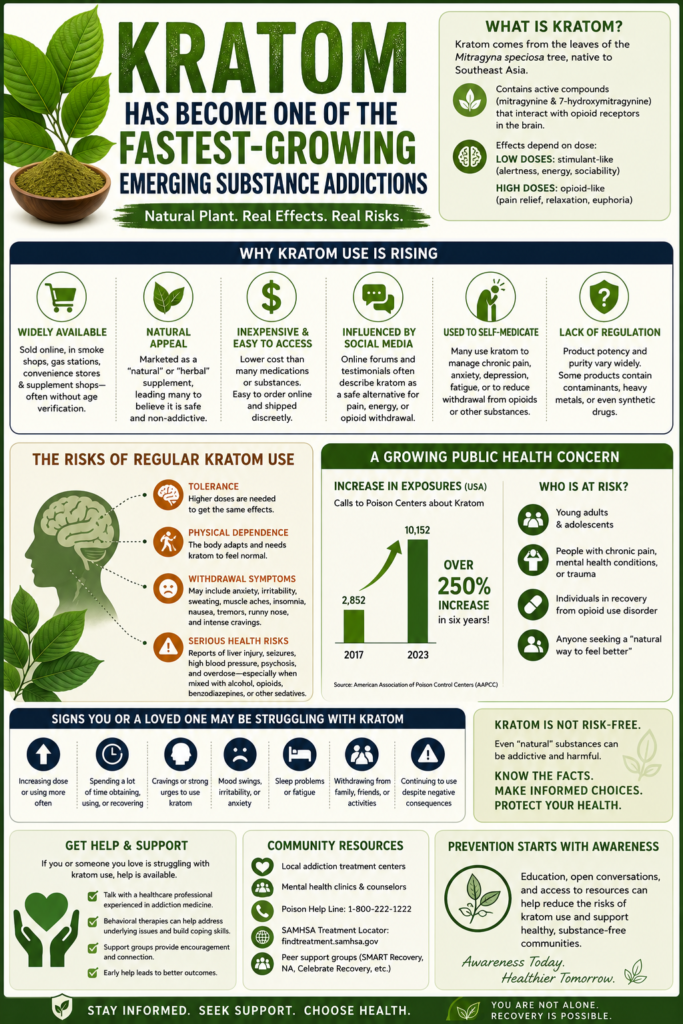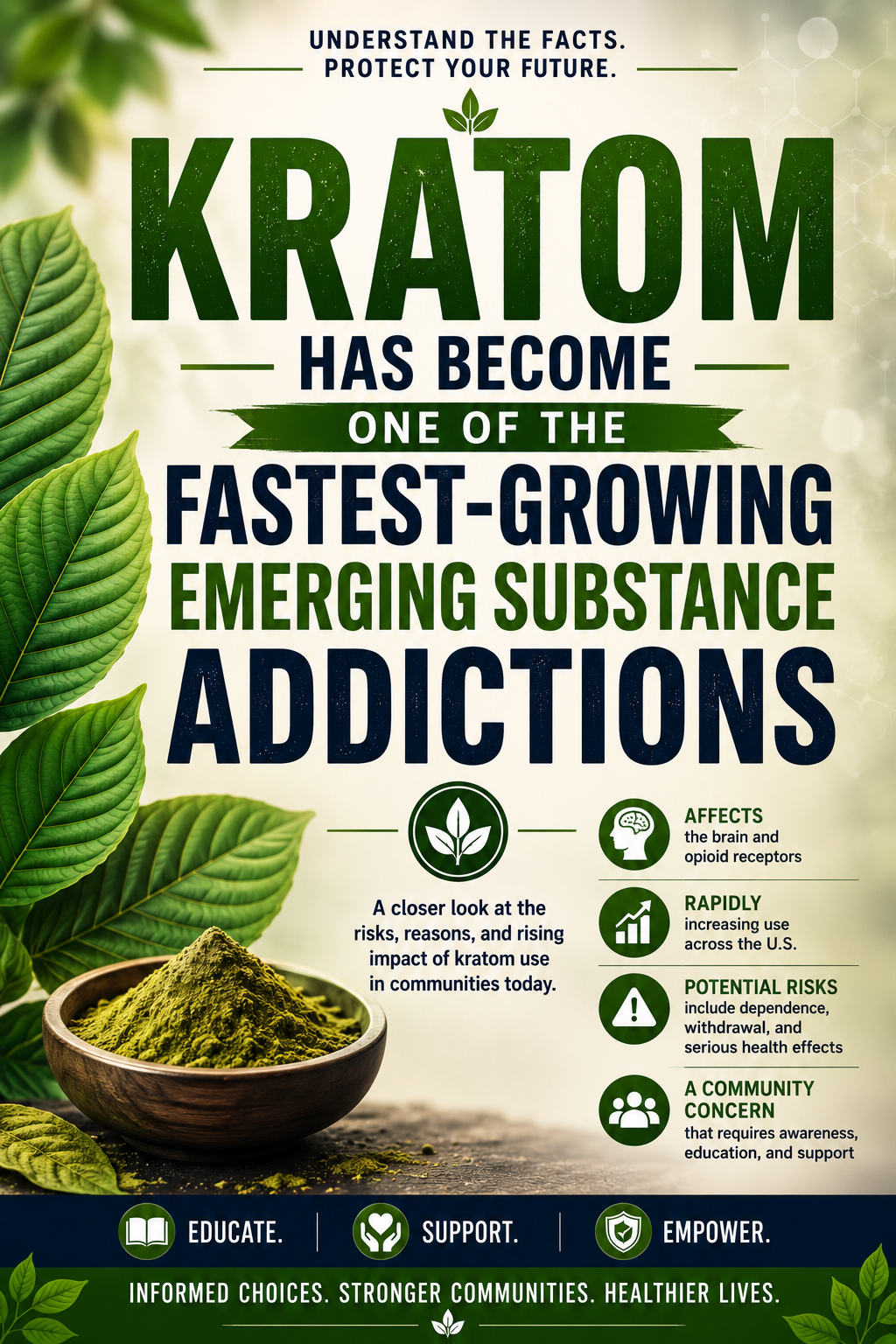
Kratom has emerged as one of the fastest-growing substances of concern in addiction medicine due to its increasing availability, widespread marketing as a natural herbal product, and growing use for pain relief, increased energy, anxiety management, and opioid withdrawal symptoms. Derived from the leaves of the Mitragyna speciosa tree native to Southeast Asia, kratom contains compounds that interact with opioid receptors in the brain, producing stimulant-like effects at lower doses and opioid-like effects at higher doses. Although many people believe that natural products are inherently safe, regular kratom use can lead to tolerance, physical dependence, withdrawal symptoms, and, in some individuals, substance use disorder. As public awareness and use continue to grow, it is important to understand the science behind kratom, its potential health risks, and the role of evidence-based prevention and treatment in promoting informed decision-making and long-term recovery.
Why Kratom Has Become a Growing Addiction Concern
Kratom has become one of the fastest-growing substances of concern in addiction medicine because it is widely available, relatively inexpensive, and often marketed as a “natural” herbal supplement. Derived from the leaves of the Mitragyna speciosa tree native to Southeast Asia, kratom contains active compounds—primarily mitragynine and 7-hydroxymitragynine—that interact with opioid receptors in the brain. Although some people use kratom to relieve pain, improve mood, increase energy, or reduce opioid withdrawal symptoms, repeated use can lead to tolerance, physical dependence, and, in some individuals, addiction.
Why Is Kratom Becoming More Popular?
Several factors have contributed to kratom’s rapid rise in popularity:
- Marketed as a “natural” herbal supplement
- Widely available without a prescription
- Relatively inexpensive
- Used by some people for pain relief and mood enhancement
- Promoted online as an alternative to opioids
The Myth That “Natural” Means Safe
One reason kratom use has grown rapidly is the widespread belief that “natural” means “safe.” Unlike prescription medications, many kratom products are sold as dietary supplements or herbal products with limited regulatory oversight. Product strength can vary significantly, and some products have been found to contain contaminants or adulterants.
Potential contaminants include:
- Heavy metals
- Harmful bacteria
- Synthetic drugs or other undisclosed substances
These inconsistencies increase the risk of unexpected side effects and other health complications.
How Kratom Affects the Body
Kratom produces different effects depending on the amount consumed.
Lower doses may cause:
- Increased energy
- Greater alertness
- Improved sociability
- Mild stimulant effects
Higher doses may cause:
- Pain relief
- Relaxation
- Euphoria
- Sedation
- Opioid-like effects
These pleasurable effects may encourage repeated use, particularly among people living with chronic pain, anxiety, depression, or opioid withdrawal.
Tolerance, Dependence, and Withdrawal
With regular use, the body adapts to kratom. Over time, larger amounts may be needed to achieve the same effects, increasing the risk of physical dependence.
Common withdrawal symptoms include:
- Muscle aches
- Anxiety
- Irritability
- Insomnia
- Sweating
- Nausea
- Tremors
- Restlessness
- Intense cravings
Although kratom withdrawal is often less severe than withdrawal from heroin or fentanyl, it can still interfere with daily life and increase the likelihood of continued use.
Easy Access Increases Risk
Another reason kratom use continues to grow is its easy accessibility. It is commonly sold without a prescription in:
- Online stores
- Smoke shops
- Convenience stores
- Gas stations
- Specialty supplement stores
Because it is sold openly, many people assume it is harmless. However, serious adverse effects have been reported, especially when kratom is combined with alcohol or other drugs.
Potential health risks include:
- Liver injury
- Seizures
- Heart rhythm abnormalities
- Overdose risk
- Increased danger when combined with alcohol, opioids, benzodiazepines, or other sedatives
The Influence of Social Media
Social media and online forums have also contributed to kratom’s growing popularity. Many users describe kratom as a “safe alternative” to opioids or prescription pain medications. While some individuals report positive personal experiences, anecdotal stories do not replace scientific research. Researchers continue to study kratom’s long-term safety, effectiveness, and potential therapeutic uses.
Treatment for Kratom Dependence
Healthcare providers are seeing increasing numbers of patients seeking help for kratom dependence. Treatment should be individualized and supervised by qualified professionals.
Treatment may include:
- Comprehensive medical assessment
- Behavioral counseling
- Management of withdrawal symptoms
- Relapse prevention planning
- Peer recovery support
- Medications used to treat opioid use disorder when clinically appropriate
Is Kratom the “Number One” Emerging Addiction?
Although kratom is one of the most frequently discussed emerging substances in addiction medicine, describing it as the “number one new substance addiction” is not supported by a universal ranking. Its use and the number of people seeking treatment have increased substantially, making it an important public health concern, but the prevalence of substance use disorders varies across regions and populations.
Key Takeaways
Evidence-based treatment, behavioral therapy, and ongoing recovery support remain the most effective approaches for individuals struggling with kratom dependence.
Kratom is increasingly used because it is inexpensive, widely available, and marketed as natural.
Its active compounds act on opioid receptors and can produce stimulant or opioid-like effects.
Regular use can lead to tolerance, dependence, withdrawal, and addiction.
Product quality is inconsistent, increasing the risk of contamination and unexpected side effects.
Social media has contributed to misconceptions about kratom’s safety.
Early evaluation by a healthcare professional can improve recovery outcomes.
Self-Management Strategies for Understanding Why Kratom Addiction Is Growing
Understanding why kratom has become one of the fastest-growing emerging substance addictions can help individuals make informed decisions about their health and reduce the risk of developing dependence. Although some people use kratom for pain relief, increased energy, or to manage opioid withdrawal, regular use can lead to tolerance, physical dependence, and addiction. The following self-management strategies can promote awareness and support healthier choices.
1. Learn the Facts About Kratom
Educate yourself about how kratom affects the brain and body. Understand that although it comes from a plant, its active compounds interact with opioid receptors and can produce stimulant-like effects at lower doses and opioid-like effects at higher doses.
2. Avoid Assuming “Natural” Means Safe
Recognize that many natural products can have significant health risks. Kratom products vary in strength and purity, and some have been found to contain contaminants or other substances that may increase health risks.
3. Monitor Your Use Honestly
If you use kratom, keep track of how often you take it, how much you use, and why you are using it. Increasing doses, using more frequently, or feeling unable to stop may be early signs of developing tolerance or dependence.
4. Recognize Warning Signs of Dependence
Pay attention to symptoms such as cravings, needing larger amounts to achieve the same effect, withdrawal symptoms when stopping, difficulty cutting back, or continuing to use despite negative consequences. Identifying these signs early allows you to seek help before the problem worsens.
5. Address the Underlying Reason for Use
Many individuals begin using kratom to manage chronic pain, anxiety, depression, fatigue, or opioid withdrawal. Work with a healthcare professional to identify safer, evidence-based treatments for these underlying conditions instead of relying solely on kratom.
6. Develop Healthy Stress-Management Skills
Practice coping strategies that reduce stress without relying on substances. Regular exercise, mindfulness meditation, deep breathing, journaling, hobbies, adequate sleep, and spending time with supportive friends or family can improve emotional well-being.
7. Be Cautious About Online Health Claims
Social media and online forums often contain personal testimonials that may not accurately reflect scientific evidence. Rely on trusted healthcare professionals and reputable medical organizations when making decisions about kratom use.
8. Avoid Mixing Kratom with Other Substances
Using kratom with alcohol, opioids, benzodiazepines, or other sedatives can increase the risk of serious side effects, overdose, and respiratory depression. Always discuss supplement and medication use with your healthcare provider.
9. Seek Professional Help Early
If you notice withdrawal symptoms, increasing use, or difficulty stopping, speak with a healthcare provider experienced in addiction medicine. Early intervention can make recovery easier and reduce the risk of long-term complications.
10. Build a Long-Term Recovery Plan
If you decide to stop using kratom, focus on sustainable recovery by participating in counseling, peer support groups, healthy lifestyle changes, and regular medical follow-up. Recovery is a gradual process that benefits from ongoing support and realistic goals.
Conclusion
Kratom’s growing popularity is influenced by its easy availability, “natural” reputation, and opioid-like effects, but these same factors can contribute to misuse and addiction. By understanding the risks, monitoring your own behavior, addressing underlying health concerns, and seeking evidence-based care when needed, you can make informed decisions that protect your physical and mental health. Self-awareness, education, and early intervention are key components of preventing dependence and supporting long-term well-being.
Family Support Strategies for Understanding Why Kratom Addiction Is Growing
Families play a critical role in recognizing the risks associated with kratom use and supporting loved ones who may be developing dependence. Although kratom is often marketed as a natural herbal product, it can affect the brain’s opioid receptors and may lead to tolerance, physical dependence, and addiction in some individuals. By learning about kratom and responding with compassion rather than judgment, families can help promote early intervention and long-term recovery.
1. Educate the Entire Family
Learn about how kratom works, why people use it, and the potential risks of regular use. Understanding that “natural” does not always mean “safe” helps family members have informed and supportive conversations without relying on myths or misinformation.
2. Encourage Open, Nonjudgmental Communication
Create a safe space where your loved one feels comfortable discussing kratom use, stress, chronic pain, or emotional struggles. Listen with empathy, avoid blaming language, and focus on understanding their experiences rather than criticizing their choices.
3. Recognize Early Warning Signs
Watch for changes that may indicate developing dependence, including increasing kratom use, spending excessive money on products, mood swings, irritability, withdrawal from family activities, sleep disturbances, declining work or school performance, or withdrawal symptoms when not using kratom.
4. Support Professional Evaluation
Encourage your loved one to speak with a healthcare provider if kratom use becomes difficult to control or begins affecting daily life. A medical evaluation can identify underlying physical or mental health conditions and help develop an individualized treatment plan.
5. Avoid Enabling Behaviors
Offer emotional support without unintentionally supporting continued substance use. Avoid providing money specifically for kratom, making excuses for harmful behaviors, or minimizing concerns about dependence. Healthy boundaries can encourage responsibility while maintaining a caring relationship.
6. Encourage Healthy Alternatives
Support activities that improve physical and emotional health, such as regular exercise, nutritious meals, quality sleep, counseling, hobbies, volunteer work, and spending time together as a family. Healthy routines can reduce stress and improve recovery outcomes.
7. Address Underlying Challenges
Many people use kratom to manage chronic pain, anxiety, depression, fatigue, or opioid withdrawal. Encourage treatment for these underlying conditions through evidence-based medical care rather than relying solely on kratom for symptom relief.
8. Participate in Family Counseling
If kratom use has affected family relationships, consider attending family therapy or educational programs together. Counseling can improve communication, rebuild trust, reduce conflict, and teach effective coping strategies for everyone involved.
9. Prepare for Recovery as a Process
Recovery from substance dependence often includes setbacks. Celebrate progress, encourage persistence, and avoid viewing relapse as failure. Continued support and patience can strengthen motivation and improve long-term outcomes.
10. Care for Yourself
Supporting someone with substance use challenges can be emotionally demanding. Family members should prioritize their own well-being by maintaining healthy routines, seeking counseling if needed, joining family support groups, and staying connected with supportive friends and relatives. Caring for yourself helps you remain a steady source of support for your loved one.
Conclusion
Kratom’s increasing popularity is largely driven by its easy availability, perceived natural safety, and opioid-like effects. However, repeated use can lead to dependence and addiction for some individuals. Families can make a meaningful difference by learning the facts about kratom, maintaining open communication, encouraging professional treatment, setting healthy boundaries, and supporting recovery with compassion and patience. Working together with healthcare professionals creates the strongest foundation for long-term recovery and improved family well-being.
Community Resource Strategies for Understanding Why Kratom Addiction Is Growing
Communities play an essential role in educating the public about kratom and its potential risks. Although some individuals use kratom for pain relief, increased energy, or to manage opioid withdrawal symptoms, regular use may lead to tolerance, physical dependence, and addiction. By providing access to reliable information, evidence-based treatment, and supportive recovery services, communities can help individuals make informed decisions and reduce substance-related harm.
1. Utilize Local Health Department Resources
Many state and local health departments provide educational materials on emerging substances, including kratom. These resources often explain how kratom affects the brain, potential health risks, and current scientific findings in easy-to-understand language.
2. Connect with Addiction Treatment Programs
Substance use treatment centers can provide professional assessments for individuals concerned about kratom dependence. These programs offer counseling, behavioral therapies, recovery planning, and referrals for medical care when appropriate.
3. Participate in Community Education Events
Attend workshops, health fairs, webinars, and educational seminars hosted by hospitals, universities, recovery organizations, and community health centers. These events help increase awareness of kratom’s effects and dispel common myths.
4. Access Mental Health Services
Many individuals begin using kratom to cope with chronic pain, anxiety, depression, trauma, or stress. Community mental health centers can provide evidence-based treatment for these underlying conditions, reducing reliance on substances for symptom relief.
5. Join Peer Recovery Support Groups
Peer support groups provide encouragement, shared experiences, and practical coping strategies for individuals recovering from substance use disorders. Speaking with others who have faced similar challenges can reduce isolation and strengthen long-term recovery.
6. Seek Guidance from Healthcare Professionals
Primary care providers, addiction medicine specialists, pharmacists, and behavioral health clinicians can explain the potential risks of kratom use, evaluate symptoms of dependence, and recommend appropriate treatment options based on individual needs.
7. Promote School and Workplace Education
Schools, colleges, and employers can include information about kratom in substance use education programs. Increasing awareness among students and employees helps individuals recognize the risks of emerging substances before problems develop.
8. Encourage Responsible Media Literacy
Community organizations can teach individuals how to evaluate health information critically. Encouraging people to rely on scientific research and trusted healthcare sources rather than social media testimonials helps reduce the spread of misinformation about kratom.
9. Advocate for Harm Reduction and Prevention
Communities can support initiatives that increase access to addiction treatment, mental health services, overdose education, and prevention programs. Public awareness campaigns can emphasize that early intervention is often more effective than waiting until dependence becomes severe.
10. Strengthen Community Partnerships
Collaboration among healthcare providers, schools, public health agencies, recovery organizations, law enforcement, faith-based organizations, and local leaders creates a coordinated response to emerging substance use trends. Working together allows communities to identify problems early, expand educational outreach, and improve access to care.
Conclusion
Kratom has become one of the fastest-growing emerging substances of concern because of its widespread availability, perception as a “natural” product, and opioid-like effects at higher doses. Communities can help reduce the risks associated with kratom by providing accurate education, expanding access to evidence-based treatment, supporting mental health services, and promoting prevention initiatives. Through collaboration and informed public outreach, community resources can empower individuals and families to make healthier decisions and support lasting recovery for those affected by substance use disorders.
Frequently Asked Questions
Here are some common questions:
1. What is kratom?
Kratom is a tropical tree (Mitragyna speciosa) native to Southeast Asia. Its leaves contain compounds that affect the brain and can produce stimulant-like effects at lower doses and opioid-like effects at higher doses.
2. Why has kratom become so popular?
Kratom has gained popularity because it is widely available, relatively inexpensive, marketed as a natural product, and used by some individuals for pain relief, increased energy, anxiety management, or to help manage opioid withdrawal symptoms.
3. Is kratom addictive?
Yes. Regular or heavy kratom use can lead to tolerance, physical dependence, and, in some individuals, substance use disorder. The risk varies depending on the dose, frequency of use, and individual factors.
4. Why do people think kratom is safe?
Many people believe kratom is safe because it is plant-based and sold as an herbal supplement. However, “natural” does not always mean harmless, and kratom can produce significant side effects and dependence.
5. How does kratom affect the brain?
Kratom’s primary active compounds, mitragynine and 7-hydroxymitragynine, interact with opioid receptors in the brain. At lower doses, kratom may increase alertness and energy, while higher doses can produce pain relief, relaxation, and euphoria.
6. Can someone become physically dependent on kratom?
Yes. Regular use can cause the body to adapt to the drug, leading to physical dependence. Stopping suddenly may result in withdrawal symptoms.
7. What are common kratom withdrawal symptoms?
Withdrawal symptoms may include anxiety, irritability, muscle aches, sweating, nausea, insomnia, restlessness, tremors, fatigue, and strong cravings. The severity varies from person to person.
8. Why do some people use kratom to stop opioids?
Some individuals use kratom in an attempt to reduce opioid withdrawal symptoms or avoid using prescription or illicit opioids. However, kratom itself can cause dependence, and self-treatment without medical supervision carries risks.
9. Is kratom approved by the U.S. Food and Drug Administration (FDA) to treat addiction or pain?
No. The FDA has not approved kratom to treat opioid use disorder, chronic pain, anxiety, or any other medical condition.
10. Are all kratom products the same?
No. Kratom products can vary significantly in strength, purity, and chemical composition. Some products have been found to contain contaminants such as heavy metals, bacteria, or undeclared substances.
11. Can kratom cause serious health problems?
Yes. Reported complications include liver injury, seizures, elevated blood pressure, abnormal heart rhythms, confusion, and, in some cases, overdose. The risk may increase when kratom is combined with alcohol or other drugs.
12. Is it dangerous to mix kratom with other substances?
Yes. Combining kratom with alcohol, opioids, benzodiazepines, or other sedating medications may increase the risk of excessive sedation, respiratory depression, and other serious adverse effects.
13. What are the warning signs of kratom addiction?
Warning signs include needing larger amounts to achieve the same effects, unsuccessful attempts to quit, cravings, withdrawal symptoms, neglecting responsibilities, continuing use despite negative consequences, and spending excessive time obtaining or using kratom.
14. How is kratom dependence treated?
Treatment may include medical evaluation, behavioral therapies, counseling, peer support, management of withdrawal symptoms, and treatment of underlying mental health or chronic pain conditions. Some individuals may benefit from medications used to treat opioid use disorder, depending on their clinical situation.
15. Can someone recover from kratom addiction?
Yes. Many people successfully recover with early intervention, professional treatment, counseling, family support, and long-term recovery planning.
16. Why is kratom considered an emerging public health concern?
Its increasing use, easy availability, inconsistent product quality, potential for dependence, and limited public understanding have made kratom an important concern for healthcare providers and public health officials.
17. Who may be at greater risk for kratom dependence?
People with chronic pain, a history of substance use disorder, untreated anxiety or depression, or those using kratom frequently or in high doses may have a greater risk of developing dependence.
18. How can families help someone struggling with kratom use?
Families can educate themselves about kratom, encourage open communication, support professional evaluation, avoid enabling behaviors, and participate in family counseling or recovery support when appropriate.
19. Where can someone find help for kratom dependence?
Help is available through primary care providers, addiction medicine specialists, behavioral health professionals, substance use treatment programs, peer recovery groups, and community mental health centers.
20. What is the most important message about kratom?
Kratom may seem appealing because it is marketed as a natural product, but it is not without risks. Understanding its effects, recognizing the signs of dependence, seeking evidence-based medical advice, and accessing treatment early can help prevent serious health consequences and support long-term recovery.
Conclusion
Kratom’s growing popularity highlights the need for greater public education, ongoing scientific research, and access to evidence-based addiction treatment. While some individuals report perceived benefits, kratom is not without risks, and regular use may result in dependence, withdrawal, and significant health complications. Individuals considering or currently using kratom should seek information from qualified healthcare professionals rather than relying solely on marketing claims or anecdotal experiences. Families, healthcare providers, and community organizations all play an important role in promoting awareness, reducing stigma, and encouraging early intervention when problems arise. By combining accurate education, compassionate support, and comprehensive treatment services, communities can help reduce the harms associated with kratom use and support individuals in achieving healthier, substance-free lives.
Video: Kratom Feels Safe Until This Happens #addiction #shorts