Mental health is an essential part of overall health, influencing how individuals think, feel, behave, and cope with life’s challenges. While occasional stress, sadness, or anxiety are normal responses to difficult situations, persistent or worsening emotional symptoms may indicate the need for professional evaluation and treatment. Recognizing the warning signs that suggest someone may benefit from mental health care is an important step toward preventing symptoms from becoming more severe and improving long-term well-being. Seeking professional help is not a sign of weakness but a proactive decision that can provide effective treatment, healthy coping strategies, and support for recovery. Early intervention often leads to better outcomes, allowing individuals to regain emotional stability, strengthen relationships, and improve their quality of life.
7 Red Flags That Mean Your Mental Health Needs Professional Help
Everyone experiences stress, sadness, anxiety, or emotional ups and downs from time to time. However, when these feelings become persistent or intense, or begin to interfere with daily life, they may signal that professional support is needed. Seeking help early can prevent symptoms from worsening and improve long-term emotional, physical, and social well-being. Mental health professionals provide evidence-based treatments that help individuals regain stability, improve coping skills, and enhance their quality of life.
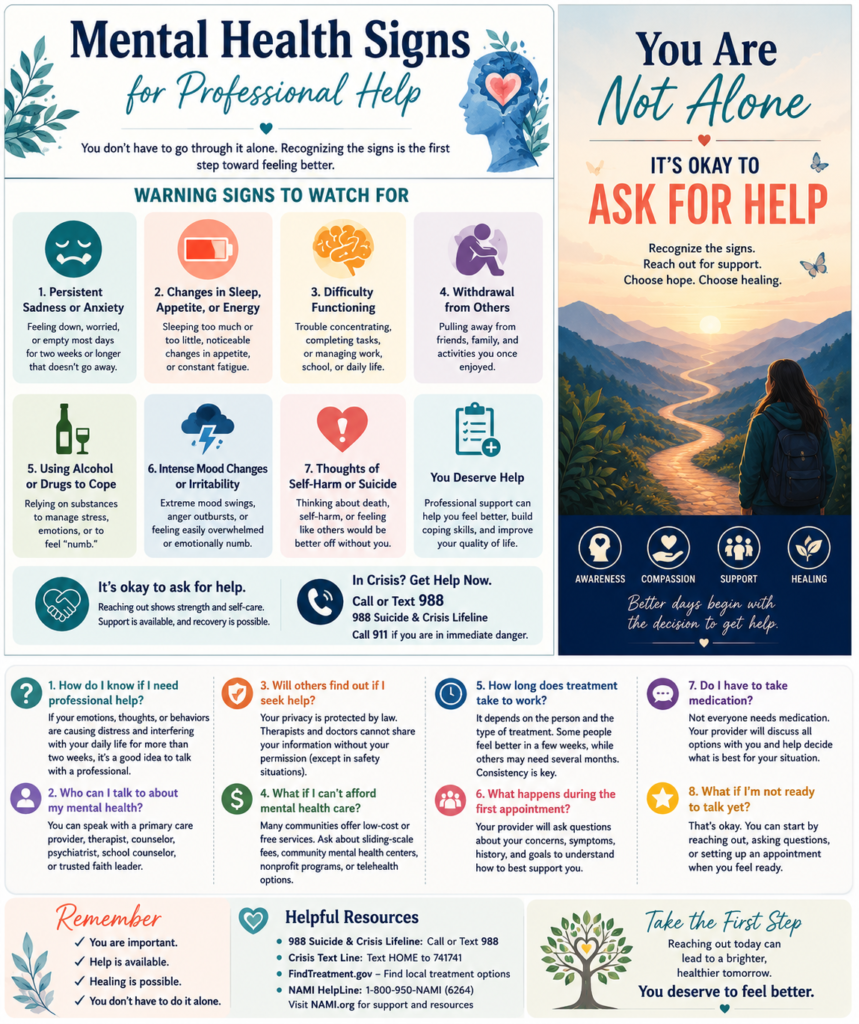
1. Persistent Sadness, Anxiety, or Emotional Distress
Feeling sad, anxious, or overwhelmed for a few days after a stressful event is normal. However, if these emotions last for two weeks or longer, occur most days, or seem unrelated to specific events, they may indicate a mental health condition such as depression or an anxiety disorder.
Warning signs include:
- Persistent sadness or hopelessness
- Excessive worry or fear
- Frequent crying
- Feeling emotionally numb
- Loss of motivation
- Feeling overwhelmed most days
These symptoms should not be ignored, especially if they continue despite rest or positive life changes.
2. Daily Life Is Becoming Difficult
One of the clearest indicators that professional help is needed is when mental health symptoms interfere with normal functioning.
Examples include:
- Difficulty getting out of bed
- Missing work or school
- Declining job performance
- Trouble managing household responsibilities
- Difficulty concentrating
- Poor decision-making
- Declining personal hygiene
- Withdrawing from daily activities
When emotional struggles begin affecting responsibilities, early treatment is recommended.
3. Changes in Sleep, Appetite, or Energy
Mental health conditions often affect physical health.
Watch for:
- Sleeping too much
- Difficulty falling asleep
- Frequent nighttime waking
- Persistent fatigue
- Loss of appetite
- Overeating
- Significant weight changes
- Low energy nearly every day
Physical symptoms that persist without another medical explanation should be evaluated by a healthcare provider.
4. Withdrawing from Family, Friends, and Activities
People experiencing depression, anxiety, burnout, or other mental health conditions often begin isolating themselves.
Signs include:
- Avoiding phone calls
- Canceling social plans
- Losing interest in hobbies
- Spending excessive time alone
- Feeling disconnected from others
- Reduced participation in family activities
Social withdrawal can increase feelings of loneliness and worsen emotional distress.
5. Using Alcohol or Drugs to Cope
Some individuals attempt to numb emotional pain with alcohol, prescription medications, or illicit drugs. While these substances may provide temporary relief, they often worsen depression, anxiety, sleep disturbances, and overall mental health.
Warning signs include:
- Drinking more frequently
- Using substances to relax or sleep
- Increasing dosage over time
- Feeling unable to cope without alcohol or drugs
- Hiding substance use from others
Co-occurring mental health and substance use disorders often require integrated treatment that addresses both conditions simultaneously.
6. Extreme Mood or Personality Changes
Significant emotional or behavioral changes may indicate an underlying mental health condition.
Examples include:
- Severe irritability
- Angry outbursts
- Persistent hopelessness
- Emotional numbness
- Panic attacks
- Intense mood swings
- Increased impulsivity
- Reckless behavior
- Loss of interest in personal relationships
Family members are often the first to notice these changes and should encourage compassionate conversations and professional evaluation.
7. Thoughts of Self-Harm, Suicide, or Feeling Like a Burden
This is the most serious warning sign and requires immediate attention.
Seek emergency help if someone:
- Talks about wanting to die
- Expresses hopelessness
- Feels they are a burden to others
- Talks about self-harm
- Gives away valued possessions
- Says others would be better off without them
- Makes plans for suicide
These statements should always be taken seriously. Immediate intervention can save lives.
In the United States, anyone experiencing suicidal thoughts or an emotional crisis can call or text 988 to reach the 988 Suicide & Crisis Lifeline. If there is immediate danger, call 911 or go to the nearest emergency department.
Additional Warning Signs
Other indicators that professional support may be beneficial include:
- Persistent anxiety or panic attacks
- Difficulty managing stress
- Frequent physical complaints without a clear medical cause
- Trouble maintaining relationships
- Feeling emotionally exhausted every day
- Increased absenteeism from work or school
- Memory or concentration problems
- Feeling detached from reality
- Hearing or seeing things others do not
Why Early Treatment Matters
Seeking professional help early often leads to better outcomes. Treatment may include:
- Individual psychotherapy
- Cognitive Behavioral Therapy (CBT)
- Medication when appropriate
- Stress management techniques
- Mindfulness training
- Family counseling
- Support groups
- Lifestyle modifications
- Treatment for co-occurring substance use disorders
Mental health conditions are highly treatable, and many people experience significant improvement with appropriate care.
Reducing the Stigma Around Mental Health Care
Seeking help for emotional distress is a sign of strength, not weakness. Just as people seek medical care for heart disease, diabetes, or broken bones, mental health conditions deserve the same attention and professional treatment. Early intervention can reduce suffering, improve relationships, enhance work performance, and prevent symptoms from worsening. By recognizing these seven red flags and encouraging timely support, individuals, families, and communities can help promote recovery, resilience, and lifelong emotional well-being.
Family Support Strategies to Help a Family Member Get Mental Health Professional Help
Family members often play a vital role in recognizing when a loved one is struggling with their mental health and encouraging them to seek professional care. Many people delay treatment because of fear, stigma, denial, financial concerns, or uncertainty about where to begin. A supportive family can help reduce these barriers by offering understanding, practical assistance, and ongoing encouragement. While family members cannot force someone to accept help in most situations, they can create an environment that makes seeking treatment feel safe and supported.
1. Recognize the Warning Signs Early
Learn to identify changes in your loved one’s behavior, emotions, and daily functioning. Early recognition often leads to earlier treatment and better outcomes.
Watch for signs such as:
- Persistent sadness or hopelessness
- Increased anxiety or panic attacks
- Withdrawal from family and friends
- Changes in sleep or appetite
- Declining work or school performance
- Loss of interest in hobbies
- Irritability or frequent mood swings
- Difficulty concentrating
- Increased alcohol or drug use
- Talking about feeling worthless or like a burden
Recognizing these changes allows families to offer support before the situation becomes more severe.
2. Start a Compassionate Conversation
Choose a calm, private setting and express your concerns with empathy rather than criticism.
Helpful conversation starters include:
- “I’ve noticed you haven’t seemed like yourself lately, and I’m concerned about you.”
- “You seem to be carrying a lot right now. How have you been feeling?”
- “I’m here to listen without judging you.”
- “You don’t have to handle this by yourself.”
Allow your loved one to talk openly without interrupting or immediately offering solutions. Sometimes simply being heard is the first step toward accepting help.
3. Listen Without Judgment
Many people fear they will be criticized or misunderstood if they admit they are struggling.
Practice active listening by:
- Maintaining eye contact.
- Avoiding interruptions.
- Acknowledging their feelings.
- Asking open-ended questions.
- Avoiding minimizing statements such as:
- “It’s all in your head.”
- “Everyone feels stressed.”
- “Just think positively.”
- “You’ll get over it.”
Instead, respond with empathy:
- “That sounds incredibly difficult.”
- “Thank you for trusting me.”
- “I’m glad you told me.”
- “We’ll work through this together.”
4. Normalize Professional Mental Health Care
Help reduce stigma by reminding your loved one that mental health conditions are medical conditions, not personal failures.
Explain that professionals are trained to help people manage:
- Depression
- Anxiety disorders
- Trauma
- Burnout
- Bipolar disorder
- Schizophrenia
- Substance use disorders
- Grief
- Chronic stress
Seeking treatment is a sign of strength and self-care, just like seeing a doctor for a physical illness.
5. Offer Practical Assistance
When someone is struggling emotionally, even simple tasks may feel overwhelming. Offering practical help can make seeking care more manageable.
You can help by:
- Finding therapists or psychiatrists who accept their insurance.
- Helping schedule appointments.
- Providing transportation.
- Assisting with paperwork.
- Helping organize medications.
- Offering childcare during appointments.
- Accompany them to appointments if they request your support.
Small acts of assistance can remove barriers that might otherwise delay treatment.
6. Encourage Healthy Daily Habits
Professional treatment works best when combined with healthy lifestyle habits.
Encourage your loved one to:
- Maintain regular sleep routines.
- Eat balanced meals.
- Stay physically active.
- Spend time outdoors.
- Limit alcohol and recreational drug use.
- Practice relaxation techniques.
- Stay socially connected.
- Participate in enjoyable hobbies.
Offer to join them in these activities, as shared experiences often feel less overwhelming.
7. Be Patient With the Recovery Process
Recovery rarely happens overnight. There may be setbacks, medication adjustments, or changes in treatment plans.
Support recovery by:
- Celebrating small improvements.
- Encouraging consistency with treatment.
- Avoiding unrealistic expectations.
- Remaining hopeful during difficult periods.
- Offering reassurance without pressuring them to “get better” quickly.
Patience helps build trust and reinforces that your support is unconditional.
8. Respect Their Independence
While encouragement is important, adults generally have the right to make their own healthcare decisions unless they are at immediate risk of harming themselves or others.
Instead of demanding treatment, try asking:
- “What kind of support would feel most helpful?”
- “Would you like me to help you find someone to talk to?”
- “Would you feel comfortable if I went with you to your first appointment?”
Supporting autonomy often increases willingness to accept help.
9. Know When Immediate Action Is Needed
Some situations require urgent professional intervention.
Seek emergency help immediately if your loved one:
- Talks about suicide or self-harm.
- Has a suicide plan or access to lethal means.
- Experiences hallucinations or severe confusion.
- Becomes unable to care for basic needs.
- Behaves in ways that place themselves or others at immediate risk.
If you believe there is an immediate danger, stay with the person if it is safe to do so and contact emergency services. In the United States, you can also call or text 988 to reach the 988 Suicide & Crisis Lifeline for immediate crisis support.
10. Take Care of Your Own Mental Health
Supporting someone with a mental health condition can be emotionally demanding. Family members should also care for their own well-being.
Healthy caregiver strategies include:
- Setting realistic boundaries.
- Taking regular breaks.
- Maintaining hobbies and friendships.
- Seeking counseling if needed.
- Joining family or caregiver support groups.
- Practicing stress management techniques.
- Getting adequate sleep and exercise.
Taking care of yourself allows you to provide more effective and sustainable support.
Building a Family Culture That Supports Mental Health
Families create an important foundation for emotional healing by fostering trust, open communication, and acceptance. Regular conversations about mental health, expressing empathy instead of judgment, and encouraging professional care can help reduce stigma and make it easier for loved ones to ask for help. Recovery is often a gradual process, but consistent family support can improve treatment engagement, strengthen resilience, and remind individuals that they are not alone. By working together with healthcare professionals and community resources, families become valuable partners in promoting long-term mental wellness and recovery.
Community Resource Strategies to Help Someone Get Mental Health Professional Help
Community resources play a critical role in helping individuals access mental health care, especially when symptoms begin interfering with daily life. Many people face barriers such as stigma, financial concerns, transportation challenges, lack of insurance, or uncertainty about where to seek help. Community organizations, healthcare providers, schools, workplaces, and nonprofit agencies can bridge these gaps by offering education, screening, referrals, and treatment services. Connecting individuals with appropriate resources early can improve recovery, reduce the risk of crisis, and strengthen long-term mental well-being.
1. Start with a Primary Care Provider
Primary care providers are often the first point of contact for someone experiencing mental health concerns. They can:
- Screen for depression, anxiety, and other mental health conditions.
- Rule out medical conditions that may mimic mental health symptoms.
- Discuss treatment options.
- Prescribe medication when appropriate.
- Refer patients to psychiatrists, psychologists, therapists, or counselors.
Encouraging someone to schedule a primary care appointment is often the first step toward receiving professional help.
2. Utilize Community Mental Health Centers
Community mental health centers provide affordable or low-cost behavioral health services for individuals and families.
Services may include:
- Mental health assessments
- Individual counseling
- Family therapy
- Psychiatric evaluations
- Medication management
- Crisis intervention
- Substance use treatment
- Case management
Many centers offer sliding-scale fees based on income, making care more accessible.
3. Encourage Use of Employee Assistance Programs (EAPs)
Many employers provide Employee Assistance Programs that offer confidential mental health services at no cost to employees.
EAPs commonly provide:
- Short-term counseling
- Stress management resources
- Referrals to mental health professionals
- Financial counseling
- Legal consultation
- Work-life balance support
These programs can help individuals seek assistance before problems become more severe.
4. Connect with School and University Resources
Students can often access mental health services through their educational institutions.
Available resources may include:
- School counselors
- College counseling centers
- Student wellness programs
- Crisis intervention services
- Academic accommodations
- Peer support groups
- Stress management workshops
Early support can improve both emotional health and academic success.
5. Participate in Peer Support Groups
Peer support groups provide opportunities to connect with others facing similar mental health challenges.
Benefits include:
- Reduced isolation
- Shared coping strategies
- Emotional encouragement
- Increased hope
- Improved confidence in recovery
- Accountability for treatment goals
Peer support complements, but does not replace, professional mental health care.
6. Utilize Faith-Based and Spiritual Communities
Many faith communities offer emotional and practical support while encouraging individuals to seek professional care when needed.
Resources may include:
- Pastoral counseling
- Support groups
- Volunteer assistance
- Meal delivery
- Community outreach
- Prayer groups
- Family support programs
Spiritual support can be an important source of comfort when combined with evidence-based mental health treatment.
7. Access Telehealth Mental Health Services
Telehealth has expanded access to mental health care, particularly for individuals in rural areas or those with transportation or mobility challenges.
Benefits include:
- Virtual therapy appointments
- Psychiatric consultations
- Medication follow-up visits
- Flexible scheduling
- Increased privacy
- Reduced travel time
Telehealth can make treatment more convenient and accessible.
8. Use Crisis Services When Immediate Help Is Needed
If someone is experiencing severe emotional distress or a mental health crisis, immediate support is available.
Crisis resources include:
- Mobile crisis response teams
- Local crisis stabilization centers
- Hospital emergency departments
- Crisis hotlines
- Community behavioral health crisis centers
In the United States, individuals experiencing suicidal thoughts or emotional crises can call or text 988 to reach the 988 Suicide & Crisis Lifeline. If there is an immediate risk of harm, call 911 or go to the nearest emergency department.
9. Explore Nonprofit and Advocacy Organizations
Many nonprofit organizations provide education, referrals, support groups, and financial assistance for individuals living with mental health conditions.
These organizations often offer:
- Educational materials
- Family support programs
- Community awareness events
- Online resources
- Advocacy services
- Recovery education
- Peer mentoring
Such organizations help reduce stigma and connect individuals with local treatment options.
10. Address Practical Barriers to Care
Community agencies can help reduce obstacles to receiving treatment.
Available assistance may include:
- Transportation services
- Childcare assistance
- Health insurance enrollment support
- Financial assistance programs
- Housing resources
- Employment services
- Food assistance
- Care coordination
Reducing these barriers increases the likelihood that individuals will begin and continue treatment.
11. Promote Mental Health Education and Screening
Many communities offer free or low-cost mental health education and screening events through hospitals, libraries, schools, workplaces, and public health agencies.
These programs help individuals:
- Recognize early warning signs
- Understand available treatments
- Learn healthy coping strategies
- Reduce stigma surrounding mental illness
- Receive referrals for professional evaluation
Early screening often leads to earlier diagnosis and more effective treatment.
12. Build a Strong Community Support Network
Recovery is strengthened when individuals have multiple sources of support. Encourage the development of a network that may include:
- Family members
- Friends
- Healthcare providers
- Therapists
- Peer support specialists
- Faith leaders
- Coworkers
- Teachers or school counselors
- Community volunteers
A strong support system provides encouragement, accountability, and practical help throughout the recovery process.
Creating a Community That Supports Mental Health
Communities play an essential role in promoting mental wellness by increasing awareness, reducing stigma, and improving access to quality mental health care. When healthcare providers, schools, workplaces, nonprofit organizations, faith communities, and public agencies work together, individuals are more likely to recognize when they need help and feel supported in seeking treatment. By connecting people with professional services, peer support, crisis resources, and practical assistance, communities can foster resilience, encourage recovery, and improve the overall health and well-being of their members. Early intervention, compassionate outreach, and accessible resources can make a lasting difference in helping individuals live healthier, more fulfilling lives.
Self-Management Strategies to Seek Mental Health Professional Help
Seeking professional help for your mental health is an important act of self-care and strength. Many people hesitate to reach out because of fear, stigma, uncertainty, or the hope that their symptoms will improve on their own. While self-care practices can support emotional well-being, persistent or worsening symptoms often require the guidance of a trained mental health professional. Taking an active role in recognizing your needs, preparing for treatment, and following through with care can improve recovery and help you regain control of your mental health.
1. Recognize When You Need Help
The first step is honestly evaluating how your mental health is affecting your daily life. Consider seeking professional help if you experience:
- Persistent sadness, anxiety, or hopelessness lasting more than two weeks
- Difficulty functioning at work, school, or home
- Loss of interest in activities you once enjoyed
- Frequent panic attacks or overwhelming worry
- Changes in sleep, appetite, or energy
- Increased alcohol or drug use to cope
- Difficulty concentrating or making decisions
- Feelings of worthlessness or excessive guilt
Recognizing these warning signs early can prevent symptoms from worsening.
2. Accept That Asking for Help Is a Strength
Mental health conditions are medical conditions—not personal failures or signs of weakness. Just as you would seek treatment for diabetes, asthma, or a broken bone, it is appropriate to seek care for emotional or psychological concerns.
Remind yourself:
- Recovery is possible.
- Millions of people benefit from therapy each year.
- Seeking treatment shows courage and self-awareness.
- Early intervention often leads to better outcomes.
Replacing self-criticism with self-compassion can make it easier to take the next step.
3. Learn About Your Treatment Options
Understanding the types of mental health professionals and services available can reduce uncertainty.
You may benefit from:
- A primary care provider for an initial evaluation
- A psychologist or licensed therapist for counseling
- A psychiatrist or psychiatric nurse practitioner for medication evaluation
- A clinical social worker or licensed counselor for therapy and support
- Peer support groups for shared experiences and encouragement
Learning about these options helps you choose the care that best fits your needs.
4. Track Your Symptoms
Keeping a record of your symptoms can help you recognize patterns and provide valuable information during your appointment.
Record details such as:
- Mood changes
- Sleep patterns
- Appetite changes
- Stressful events
- Anxiety levels
- Energy level
- Substance use
- Physical symptoms
- Activities that improve or worsen your mood
A symptom journal helps both you and your healthcare provider better understand your condition.
5. Schedule the Appointment Promptly
Avoid delaying treatment while waiting for symptoms to improve on their own.
Helpful strategies include:
- Call your healthcare provider today.
- Scheduling an online appointment.
- Ask a trusted friend or family member to help make the call.
- Use your health insurance provider’s directory.
- Exploring telehealth options if transportation is difficult.
Taking one small action today often makes the process feel less overwhelming.
6. Prepare for Your First Appointment
Being prepared allows you to get the most from your visit.
Bring:
- A list of your symptoms
- Current medications and supplements
- Medical history
- Mental health history
- Family history of mental illness
- Questions about treatment options
- Insurance information
Honesty during your appointment helps your provider develop the most effective treatment plan.
7. Practice Healthy Daily Habits
Professional treatment works best when combined with healthy lifestyle choices.
Support your recovery by:
- Getting 7–9 hours of sleep each night
- Eating balanced meals
- Exercising regularly
- Staying hydrated
- Limiting alcohol and recreational drug use
- Practicing mindfulness or relaxation exercises
- Maintaining a consistent daily routine
These habits can improve both physical and emotional health.
8. Build a Support Network
Recovery is often easier with encouragement from others.
Reach out to:
- Family members
- Trusted friends
- Support groups
- Faith leaders
- Coworkers
- Mentors
Let someone know that you are seeking help so they can encourage you throughout your treatment journey.
9. Stay Engaged in Treatment
Mental health recovery takes time, and improvement may occur gradually.
To stay engaged:
- Attend appointments consistently.
- Complete recommended therapy exercises.
- Take medications exactly as prescribed.
- Discuss side effects with your provider.
- Be honest if your symptoms change.
- Celebrate small improvements along the way.
Recovery is rarely a straight line, but consistency increases the likelihood of long-term success.
10. Know When Immediate Help Is Needed
Some situations require emergency intervention rather than waiting for a scheduled appointment.
Seek immediate help if you experience:
- Thoughts of suicide or self-harm
- A suicide plan or intent
- Hallucinations or severe confusion
- Inability to care for your basic needs
- Extreme emotional distress that feels unmanageable
If you are in the United States, call or text 988 to reach the 988 Suicide & Crisis Lifeline for immediate support. If you or someone else is in immediate danger, call 911 or go to the nearest emergency department.
11. Be Patient With Yourself
Healing takes time, and progress may happen gradually. Some treatments begin working quickly, while others require adjustments before the best approach is found.
Remember to:
- Celebrate small victories.
- Avoid comparing your recovery to others.
- Give yourself permission to rest.
- Continue practicing healthy coping skills.
- Recognize that setbacks do not mean failure.
Self-compassion is an important part of long-term recovery.
Taking the First Step Toward Better Mental Health
Seeking professional help is one of the most important investments you can make in your overall health and well-being. By recognizing early warning signs, overcoming stigma, learning about available resources, preparing for appointments, and actively participating in treatment, you become a partner in your own recovery. Mental health challenges are common, treatable, and nothing to be ashamed of. With professional guidance, healthy lifestyle habits, and support from trusted individuals, many people experience significant improvement and go on to lead fulfilling, productive, and meaningful lives. Taking the first step today can open the door to hope, healing, and lasting emotional wellness.
Frequently Asked Questions
Here are some common questions:
1. How do I know if I need professional mental health help?
Answer:
You should consider seeking professional help if emotional or behavioral symptoms last more than two weeks, interfere with your daily life, affect your work or relationships, or make it difficult to care for yourself. Early treatment often leads to better recovery.
2. What are some warning signs that I should not ignore?
Answer:
Common warning signs include:
- Persistent sadness or hopelessness
- Excessive anxiety or panic attacks
- Loss of interest in activities
- Changes in sleep or appetite
- Difficulty concentrating
- Extreme mood swings
- Social withdrawal
- Increased alcohol or drug use
- Feeling overwhelmed most days
- Thoughts of self-harm or suicide
3. Is it normal to need help for my mental health?
Answer:
Yes. Mental health conditions are common and can affect anyone regardless of age, gender, occupation, or background. Seeking professional help is a responsible step toward improving your health and well-being.
4. Does asking for help mean I’m weak?
Answer:
No. Asking for help demonstrates strength, courage, and self-awareness. Just as people seek medical care for physical illnesses, seeking treatment for mental health concerns is an important part of maintaining overall health.
5. Who should I talk to first?
Answer:
You can begin by speaking with:
- Your primary care provider
- A psychologist or therapist
- A psychiatrist
- A licensed counselor
- A psychiatric nurse practitioner
- A trusted school counselor
- An Employee Assistance Program (EAP) counselor
- A trusted family member or friend who can help you find care
6. What happens during the first mental health appointment?
Answer:
During the first visit, your healthcare provider will usually ask about:
- Your symptoms
- Medical history
- Mental health history
- Family history
- Current medications
- Stressors in your life
- Sleep, appetite, and daily functioning
- Your treatment goals
This information helps develop an individualized treatment plan.
7. Will I automatically be prescribed medication?
Answer:
No. Medication is only one treatment option and is not appropriate for everyone. Many people benefit from counseling, psychotherapy, stress management techniques, lifestyle changes, or a combination of treatments. Your provider will discuss the best approach based on your individual needs.
8. Can therapy really help?
Answer:
Yes. Evidence-based therapies such as Cognitive Behavioral Therapy (CBT), Dialectical Behavior Therapy (DBT), interpersonal therapy, and trauma-focused therapies have helped millions of people improve their mental health, develop healthy coping skills, and strengthen relationships.
9. What if I can’t afford therapy?
Answer:
Many affordable options are available, including:
- Community mental health centers
- Sliding-scale counseling services
- Employee Assistance Programs (EAPs)
- College counseling centers
- Nonprofit organizations
- Telehealth services
- Medicaid or other insurance-covered services
Financial assistance may also be available in your community.
10. Can I receive mental health treatment online?
Answer:
Yes. Telehealth allows many individuals to receive therapy and psychiatric care from home through secure video or telephone appointments. Online treatment has increased access for people with transportation, mobility, or scheduling challenges.
11. How long does treatment usually take?
Answer:
Recovery varies from person to person. Some individuals notice improvement after several therapy sessions, while others benefit from longer-term treatment. The length of treatment depends on the diagnosis, severity of symptoms, treatment goals, and individual progress.
12. Can family members help during treatment?
Answer:
Yes. Family members often play an important role by:
- Offering emotional support
- Encouraging treatment participation
- Helping with appointments
- Learning about mental health conditions
- Supporting healthy daily routines
- Watching for worsening symptoms
Healthy family involvement can improve treatment outcomes.
13. What if I’m embarrassed to tell someone I’m struggling?
Answer:
Many people feel hesitant because of stigma, but mental health conditions are common and treatable. Talking with someone you trust is often the first step toward feeling better. Most healthcare professionals provide compassionate, confidential care without judgment.
14. Can lifestyle changes improve my mental health?
Answer:
Yes. Healthy habits can complement professional treatment, including:
- Regular exercise
- Quality sleep
- Balanced nutrition
- Stress management
- Mindfulness or meditation
- Limiting alcohol and drug use
- Maintaining supportive relationships
These habits work best when combined with professional care if symptoms are significant.
15. When should someone seek emergency mental health care?
Answer:
Immediate help is needed if someone:
- Has thoughts of suicide or self-harm
- Has a suicide plan or intent
- Experiences hallucinations or severe confusion
- Becomes unable to care for themselves
- Behaves in ways that place themselves or others at immediate risk
In the United States, call or text 988 to reach the 988 Suicide & Crisis Lifeline. If there is immediate danger, call 911 or go to the nearest emergency department.
16. Can mental health conditions be successfully treated?
Answer:
Yes. Many mental health conditions respond well to evidence-based treatment. Therapy, medication when appropriate, healthy lifestyle changes, social support, and ongoing follow-up help many people recover and lead fulfilling, productive lives.
17. What should I do while waiting for my appointment?
Answer:
While waiting to see a mental health professional:
- Maintain a regular sleep schedule.
- Eat balanced meals.
- Stay physically active.
- Avoid alcohol and recreational drugs.
- Practice relaxation techniques.
- Stay connected with supportive people.
- Keep a journal of your symptoms and emotions.
- Reach out for immediate help if your symptoms worsen or you begin having thoughts of self-harm.
18. What is the most important message about seeking professional mental health help?
Answer:
Seeking professional mental health care is a proactive step toward healing, not a sign of failure. Early recognition of symptoms and timely intervention can improve emotional well-being, strengthen relationships, enhance daily functioning, and reduce the risk of a mental health crisis. No one has to face mental health challenges alone. With professional care, healthy coping strategies, and support from family and the community, recovery is possible, and a healthier, more hopeful future is within reach.
Conclusion
Recognizing the signs that professional mental health support is needed can make a meaningful difference in a person’s recovery and overall well-being. Symptoms such as persistent sadness, overwhelming anxiety, social withdrawal, significant changes in sleep or appetite, difficulty managing daily responsibilities, substance use as a coping strategy, or thoughts of self-harm should never be ignored. Seeking help from a healthcare provider or mental health professional allows individuals to receive accurate assessment, evidence-based treatment, and ongoing support tailored to their needs. With early intervention, compassionate care, and the support of family, friends, and community resources, recovery is possible. Prioritizing mental health encourages resilience, promotes healthier relationships, and empowers individuals to live fuller, more balanced lives.
Video: Notice These Before It Gets Worse #mentalhealthawareness #recovery #shorts