When we hear an inspiring addiction recovery story, it can sound as though one dramatic moment changed everything. Someone entered rehab, stopped using substances, rebuilt relationships, and created an entirely different life.
But successful recovery stories are rarely that simple.
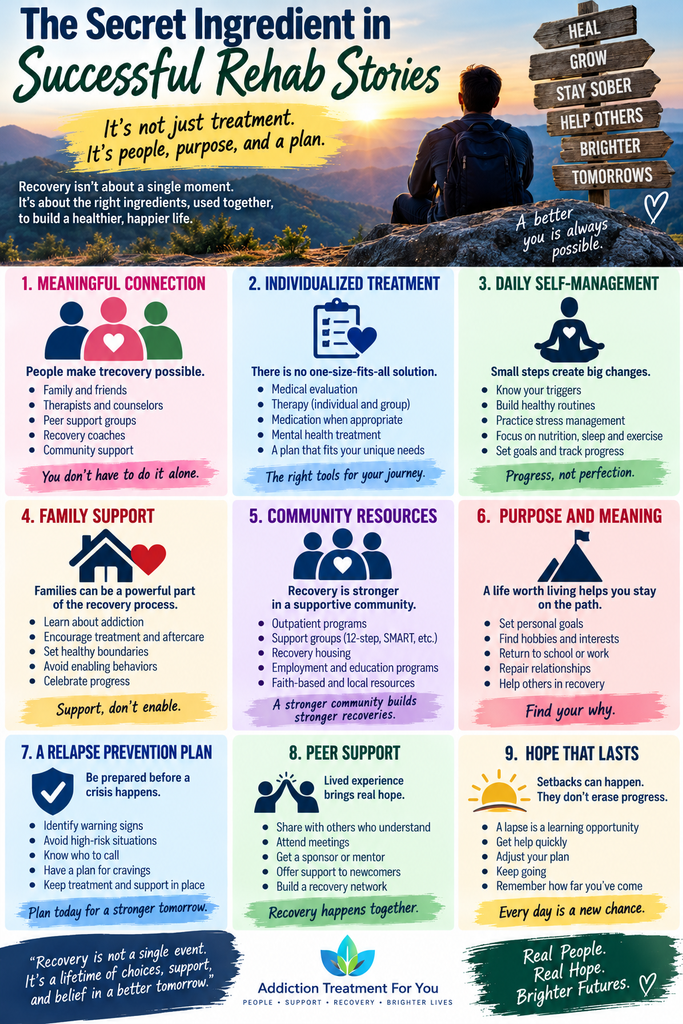
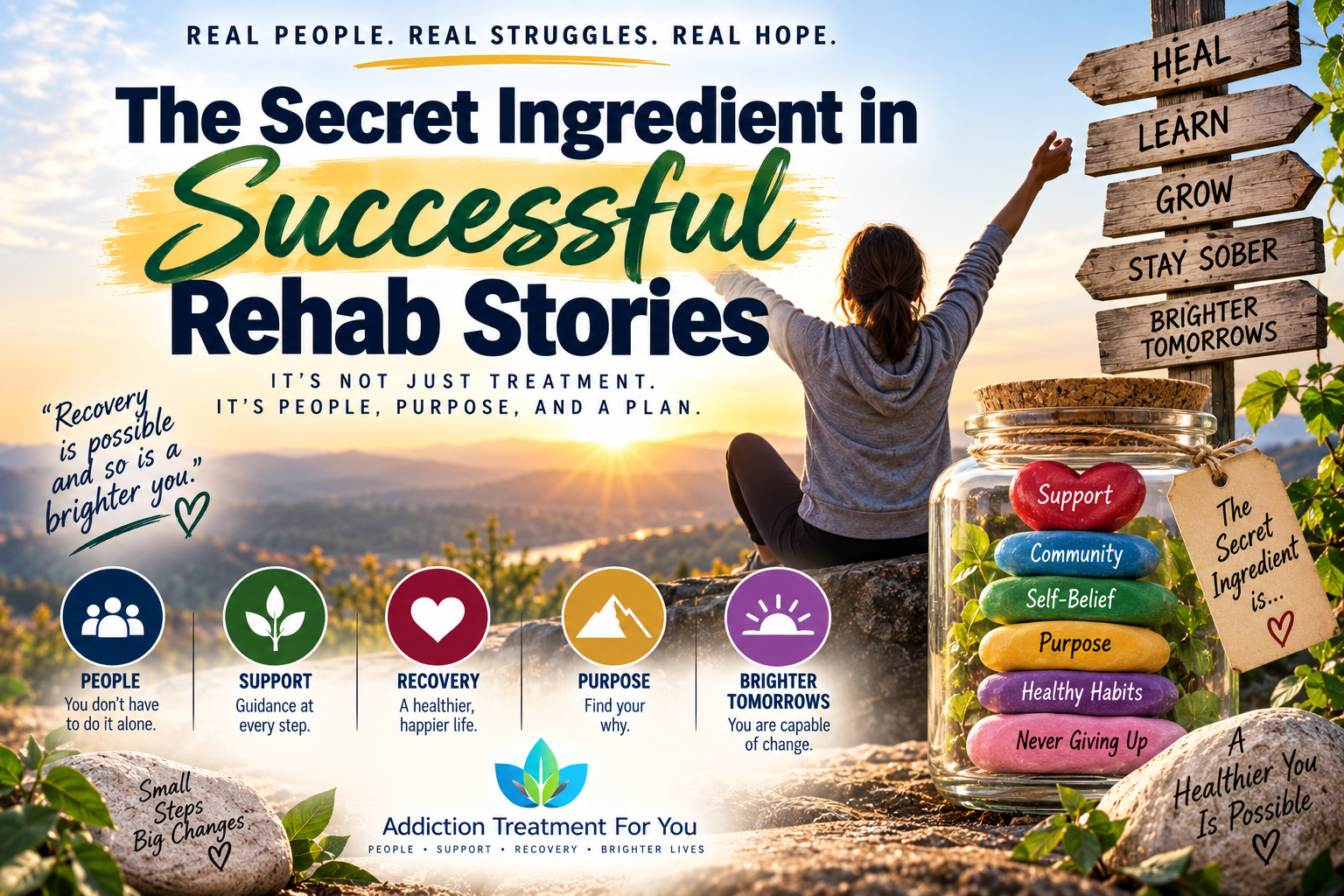
There is no single secret medication, therapy, treatment center, or motivational speech that guarantees lasting recovery. If there is a “secret ingredient,” it is often continued engagement in recovery supported by meaningful human connection.
Treatment can begin the process. What happens afterward—when someone encounters stress, cravings, loneliness, relationship problems, financial pressures, celebrations, grief, and ordinary life—often determines whether recovery continues to grow.
Successful rehab is therefore not simply about completing a program. It is about building a life that makes continued recovery possible.
Rehab Is the Beginning, Not the Finish Line
People sometimes view rehabilitation like completing a course: enter treatment, finish the program, and return home “fixed.”
Substance use disorders usually require a different perspective.
Recovery may involve ongoing treatment, behavioral changes, medications when clinically appropriate, peer support, healthier relationships, relapse-prevention planning, and improvements in housing, employment, physical health, and mental health.
Finishing residential treatment can be an enormous accomplishment.
But the more important question is:
What happens the day after rehab ends?
A strong recovery plan prepares for that day.
The Secret Ingredient: Connection
Addiction frequently thrives in isolation.
People may withdraw from family, hide substance use, lose friendships, or spend increasing amounts of time around people who reinforce substance use.
Recovery requires reversing that process.
Connection may come from:
- Family members
- Friends
- Therapists
- Physicians and addiction specialists
- Recovery coaches
- Peer-support groups
- Sponsors or mentors
- Faith communities
- Community organizations
- Other people in recovery
Connection provides something that willpower alone cannot always provide: someone notices when you begin disappearing.
A supportive person may recognize increasing isolation, missed appointments, hopelessness, cravings, or renewed contact with high-risk environments before a return to substance use occurs.
Successful Recovery Requires More Than Motivation
Motivation matters, but motivation naturally changes.
Someone may leave treatment feeling determined never to use substances again. Months later, they may encounter a breakup, death, job loss, chronic pain, loneliness, or another stressful situation.
Recovery cannot depend exclusively on feeling motivated every morning.
Instead, successful recovery involves developing systems that continue to function when motivation is low.
These systems may include:
- Regular therapy appointments
- Medication management when appropriate
- Recovery meetings
- Daily routines
- Exercise and sleep schedules
- Supportive relationships
- Relapse-prevention plans
- Scheduled medical follow-up
- Meaningful work or volunteering
- Emergency plans for cravings
Structure turns recovery from an intention into a daily practice.
Self-Management Strategy #1: Know Your Triggers
Triggers are situations, thoughts, emotions, people, or environments associated with substance use.
Common triggers may include:
- Stress
- Loneliness
- Anger
- Relationship conflict
- Celebrations
- Boredom
- Chronic pain
- Certain friends
- Specific neighborhoods or locations
- Easy access to substances
- Sleep deprivation
- Depression or anxiety symptoms
The goal is not necessarily to eliminate every trigger.
That may be impossible.
The goal is to recognize triggers early enough to choose a different response.
Self-Management Strategy #2: Create a Relapse-Prevention Plan
A relapse-prevention plan should be created before a crisis occurs.
Someone can identify:
- Personal warning signs
- High-risk situations
- People to contact
- Places to avoid
- Coping strategies
- Treatment providers
- Recovery meetings
- Medication plans
- Emergency resources
- Steps to take after a lapse
A written plan reduces the number of decisions someone has to make while overwhelmed.
Self-Management Strategy #3: Treat Mental Health Alongside Addiction
Substance use may coexist with depression, anxiety, trauma-related symptoms, ADHD, bipolar disorder, or other mental-health conditions.
Ignoring significant psychiatric symptoms can make recovery more difficult.
Integrated treatment may involve:
- Individual therapy
- Psychiatric evaluation
- Appropriate medication
- Trauma-informed care
- Cognitive behavioral approaches
- Stress-management skills
- Sleep treatment
- Mindfulness or relaxation techniques
Treating mental health and substance use together can help address some of the reasons a person previously relied on substances.
Self-Management Strategy #4: Build a Life Worth Protecting
Stopping substance use creates space.
That space needs something meaningful to replace it.
Recovery can involve rebuilding:
- Physical health
- Relationships
- Career goals
- Education
- Hobbies
- Spirituality
- Financial stability
- Parenting
- Community involvement
- Self-respect
A meaningful recovery life provides reasons to continue protecting progress.
The goal eventually becomes larger than:
“I don’t want to use.”
It becomes:
“I don’t want to lose the life I’m building.”
The Family’s Role in Successful Rehab Stories
Families can become one of recovery’s greatest strengths, but they may need to change their own behavior as well.
Before treatment, families may have spent years responding to crises.
They may have:
- Paid debts
- Provided money
- Covered missed responsibilities
- Made excuses
- Rescued someone from consequences
- Constantly checked whether the person was using
- Threatened consequences they never enforced
These behaviors often develop from fear and love.
Recovery gives families an opportunity to move from crisis management to healthy support.
Family Support Strategies
Families can strengthen recovery by:
- Learning about substance use disorders.
- Participating in family education or counseling.
- Communicating calmly and directly.
- Encouraging continued treatment.
- Supporting medication when prescribed.
- Establishing reasonable boundaries.
- Avoiding financial enabling.
- Recognizing progress.
- Encouraging healthy routines.
- Developing their own support network.
- Creating substance-free family activities.
- Learning the warning signs of relapse.
- Keeping overdose-response resources available when appropriate.
Family recovery matters because addiction can affect the entire household.
Support Without Surveillance
After someone returns from rehab, families may understandably become afraid.
Every late arrival may create suspicion.
Every mood change may look like relapse.
Constant surveillance, however, can damage trust.
Families need a balance between awareness and control.
Instead of:
“Are you using again?”
A more productive conversation might begin with:
“You’ve seemed more isolated lately. How are you doing with your recovery?”
Recovery works better when people can discuss difficulties before those difficulties become emergencies.
Community Support: Recovery Needs Somewhere to Live
Imagine completing an excellent rehabilitation program and returning to an environment filled with substances, unemployment, unsafe housing, untreated mental illness, isolation, and no transportation to treatment.
Motivation alone cannot eliminate these barriers.
Successful recovery requires communities that make healthier choices realistically available.
Community resources may include:
- Outpatient addiction treatment
- Intensive outpatient programs
- Medication treatment
- Recovery housing
- Peer recovery services
- Mental-health clinics
- Primary care
- Transportation assistance
- Employment programs
- Educational opportunities
- Legal assistance
- Family-support groups
- Mutual-help organizations
- Faith-based recovery resources
- Harm-reduction programs
Recovery is easier to sustain when treatment is connected to real-world needs.
Medication Can Be Part of a Successful Recovery Story
For some substance use disorders, particularly opioid use disorder, medication can be an important evidence-based component of treatment.
Medications such as buprenorphine, methadone, and naltrexone may be used depending on the person’s circumstances and clinical needs.
Medication should not be viewed as evidence that someone has “failed” at recovery.
For appropriate patients, medication can reduce risks and support stability while other aspects of recovery develop.
Treatment should be individualized rather than based on the idea that every person must recover in exactly the same way.
Peer Support: The Power of “I’ve Been There”
Professional treatment provides clinical expertise.
Peer support provides another kind of expertise: lived experience.
Someone in early recovery may benefit tremendously from hearing:
“I understand.”
“I’ve experienced cravings too.”
“Here’s what helped me.”
“You don’t have to handle tonight alone.”
Peer support may come through 12-step programs, SMART Recovery, recovery community organizations, peer recovery specialists, or other mutual-support groups.
No single program is appropriate for everyone. The important factor is finding supportive connections that reinforce recovery rather than substance use.
What About Relapse?
Successful recovery stories do not always follow a straight line.
A return to substance use should be taken seriously, particularly because overdose risk may increase after a period of abstinence due to reduced tolerance.
But a lapse does not mean every previous improvement has disappeared.
It means the recovery plan needs immediate attention.
Questions may include:
- What happened before the return to use?
- Which warning signs were missed?
- Did treatment intensity need adjustment?
- Were medications stopped?
- Did mental-health symptoms worsen?
- Did someone become isolated?
- Did housing or relationships become unstable?
- What additional support is needed now?
The goal is to respond quickly rather than allowing shame to turn one episode into prolonged disengagement from recovery.
Why Aftercare Matters
One of the biggest mistakes in addiction treatment is treating discharge as the end of care.
Good discharge planning begins before someone leaves rehab.
A continuing-care plan might include:
- A scheduled outpatient appointment
- Medication prescriptions and follow-up
- Therapy
- Peer-support meetings
- Recovery housing
- Transportation arrangements
- Family involvement
- Primary-care follow-up
- Mental-health treatment
- Employment or educational support
- Crisis contacts
- Overdose-prevention education
The transition from structured treatment into everyday life is a critical period.
People should not have to rebuild their entire support system after walking out of the treatment center.
The Role of Purpose
Long-term recovery often involves answering a question that substances once overshadowed:
What do I want my life to become?
Purpose does not need to involve something extraordinary.
It may mean becoming a dependable parent.
Returning to school.
Repairing relationships.
Helping other people in recovery.
Going back to work.
Creating art.
Taking care of physical health.
Being present for family.
Purpose transforms recovery from avoiding something into moving toward something.
The Real Secret Behind Successful Rehab Stories
There is no magical ingredient that guarantees recovery.
But successful recovery stories frequently contain the same building blocks:
- Connection
- Continued treatment
- Accountability
- Healthy boundaries
- Individualized care
- Family involvement
- Community support
- Mental-health treatment
- Meaningful routines
- Peer connection
- Relapse-prevention planning
- Purpose
- Hope
The secret is not finding one perfect intervention.
It is creating enough layers of support that one difficult day does not have to become the end of recovery.
Conclusion
Successful rehab stories are rarely created by rehab alone.
Treatment may open the door, but long-term recovery develops through what happens afterward: attending appointments when motivation fades, calling someone when cravings begin, accepting help, repairing relationships, treating mental health conditions, setting boundaries, finding purpose, and staying connected with people who support healthier choices.
Self-management gives individuals practical tools. Families provide encouragement and accountability without enabling. Communities provide treatment, peer support, housing, healthcare, employment resources, and opportunities to reconnect with meaningful life.
Perhaps the real secret ingredient in successful rehab stories is not extraordinary willpower.
It is connection combined with continued action.
Recovery becomes stronger when a person no longer has to depend on a single treatment center, a single family member, a single meeting, or a single burst of motivation to survive a difficult moment.
The strongest recovery stories are built one healthy decision—and one supportive connection—at a time.
Frequently Asked Questions
Here are some common questions:
1. What is the secret ingredient in successful rehab stories?
There is no single secret that guarantees recovery. However, many successful recovery journeys share an important combination: continued engagement in treatment and meaningful connection with supportive people.
Professional treatment may initiate the recovery process, but long-term progress is often strengthened by family support, peer relationships, healthy routines, appropriate medical care, a sense of purpose, and continued follow-up.
2. Does completing rehab mean someone is recovered?
Not necessarily. Completing a rehabilitation program can be an important milestone, but recovery usually continues after discharge.
Depending on individual needs, continuing care may include:
- Outpatient treatment
- Individual or group therapy
- Medication when clinically appropriate
- Peer-support meetings
- Recovery coaching
- Mental-health treatment
- Family counseling
- Recovery housing
- Primary healthcare
- Relapse-prevention planning
Rehab can open the door to recovery, but the person still needs support when returning to everyday life.
3. Why is connection so important in recovery?
Substance use can lead to secrecy and isolation. Recovery often requires rebuilding connection.
Supportive relationships provide encouragement, accountability, perspective, and practical assistance. They may also help someone recognize warning signs before a difficult situation becomes a crisis.
Connection can come from family members, friends, therapists, healthcare professionals, peer-support groups, recovery coaches, mentors, or community organizations.
4. Can someone recover through willpower alone?
Willpower and motivation can help, but substance use disorders are complex health conditions. Recovery should not depend entirely on someone’s ability to remain highly motivated every day.
Stress, cravings, depression, anxiety, relationship problems, grief, and unexpected life events can challenge even a highly motivated person.
Successful recovery usually benefits from systems and routines that remain available when motivation is low.
5. Why is individualized treatment important?
People develop substance-related problems for different reasons and have different medical, psychological, family, cultural, and social circumstances.
One person may need residential treatment, while another may benefit from outpatient treatment. Some people may need medication, psychiatric care, trauma treatment, recovery housing, or intensive family involvement.
There is no single recovery pathway that works for everyone.
6. What self-management skills can improve recovery?
Helpful self-management strategies may include:
- Identifying triggers
- Recognizing early warning signs
- Following a relapse-prevention plan
- Maintaining treatment appointments
- Taking prescribed medications correctly
- Developing healthy sleep routines
- Exercising regularly when medically appropriate
- Eating nutritious meals
- Managing stress
- Avoiding high-risk situations
- Developing meaningful goals
- Asking for help early
Small behaviors practiced consistently can become powerful recovery tools.
7. What is a relapse-prevention plan?
A relapse-prevention plan identifies situations that could increase the likelihood of returning to substance use and establishes specific actions to take when warning signs appear.
A plan might identify:
- Personal triggers
- Early warning signs
- High-risk people or environments
- Healthy coping strategies
- People to contact
- Treatment providers
- Support meetings
- Medication needs
- Emergency resources
- Steps to take following a lapse
The best time to develop a crisis plan is before the crisis happens.
8. What role does family play in successful recovery?
Families can provide emotional encouragement, stability, practical assistance, and accountability.
Helpful family support may include:
- Learning about addiction and recovery
- Encouraging continued treatment
- Attending family counseling
- Supporting healthy routines
- Maintaining appropriate boundaries
- Recognizing progress
- Avoiding enabling behaviors
- Learning relapse warning signs
- Creating substance-free activities
- Developing their own support systems
Recovery can affect the entire family, so family members may also need healing and support.
9. What is the difference between supporting and enabling?
Support helps recovery move forward. Enabling can unintentionally protect unhealthy behavior from reasonable consequences.
Support might mean driving someone to treatment.
Enabling might mean repeatedly giving money that is used to obtain substances.
Support might involve listening during a difficult evening.
Enabling might involve lying to an employer to conceal repeated substance-related absences.
Healthy support combines compassion with appropriate boundaries.
10. Why is aftercare important after rehab?
Leaving a highly structured treatment environment and returning to everyday life can be challenging.
Aftercare provides continuity.
A strong discharge plan may arrange treatment appointments, medications, counseling, peer support, transportation, housing, mental-health care, employment assistance, and other services before someone leaves rehabilitation.
Recovery should not have to restart every time someone moves from one level of care to another.
11. Can medications be part of successful recovery?
Yes. Medication can be an important part of evidence-based treatment for some substance use disorders.
For opioid use disorder, medications such as buprenorphine, methadone, and naltrexone may be appropriate depending on the individual’s medical circumstances.
Using prescribed medication for addiction treatment does not mean someone is “cheating” at recovery. Treatment should be based on clinical needs rather than stigma.
12. Why should mental health be treated alongside addiction?
Depression, anxiety, trauma-related symptoms, ADHD, bipolar disorder, and other psychiatric conditions can coexist with substance use disorders.
If significant mental health symptoms remain untreated, they may complicate recovery.
Integrated treatment can help people develop healthier ways of managing emotional distress without returning to substances.
13. How does peer support help?
Peer support allows people to connect with others who have lived experience of addiction and recovery.
Someone may find reassurance in hearing:
“I’ve experienced cravings too.”
“I understand why this is difficult.”
“Here’s what helped me.”
Peer support may come from 12-step groups, SMART Recovery, recovery community organizations, recovery coaches, or other mutual-support programs.
No single peer-support model is appropriate for everyone.
14. Why is purpose important in recovery?
Stopping substance use removes something that may have occupied a significant part of someone’s life.
Recovery becomes stronger when that space is filled with meaningful activities and relationships.
Purpose may involve:
- Parenting
- Employment
- Education
- Volunteering
- Spirituality
- Creative activities
- Physical health
- Relationships
- Helping others
- Community involvement
Eventually, recovery can become less about avoiding substances and more about protecting a meaningful life.
15. Does relapse mean rehab failed?
No. A return to substance use should be taken seriously, but it does not automatically mean all previous treatment or progress was meaningless.
Instead, it may indicate that the treatment plan needs reassessment.
Questions should include:
- What triggered the return to use?
- Were warning signs missed?
- Did treatment stop too soon?
- Did mental-health symptoms worsen?
- Was medication discontinued?
- Did the person become isolated?
- Is a higher level of care needed?
The priority should be rapid re-engagement with care rather than shame.
16. Why can relapse be especially dangerous after abstinence?
Tolerance to certain substances, particularly opioids, can decrease during periods of abstinence. Returning to a previously tolerated amount may therefore increase overdose risk.
This is one reason relapse-prevention planning, overdose education, naloxone access when opioid exposure is possible, and rapid reconnection with treatment are important.
17. What community resources can strengthen recovery?
Recovery is easier when communities provide practical pathways to healthier living.
Helpful resources may include:
- Outpatient addiction treatment
- Intensive outpatient programs
- Medication treatment
- Mental-health clinics
- Peer recovery organizations
- Recovery housing
- Primary healthcare
- Transportation assistance
- Employment services
- Educational programs
- Family-support groups
- Mutual-help organizations
- Faith-based resources when desired
- Harm-reduction and overdose-prevention services
Community support can address barriers that motivation alone cannot solve.
18. How can families recognize that someone may be struggling again?
Warning signs vary, but families may notice increasing isolation, missed treatment appointments, major changes in routine, reconnecting with high-risk environments, worsening mental-health symptoms, secrecy, or abandonment of recovery activities.
One warning sign does not necessarily mean someone has returned to substance use.
Rather than immediately accusing the person, families can open a conversation:
“I’ve noticed you’ve been pulling away lately. How are you doing with your recovery?”
19. What makes a successful rehab program?
Quality treatment should be individualized and based on the person’s clinical needs rather than promising a universal cure.
Important characteristics may include:
- Comprehensive assessment
- Evidence-based treatment
- Qualified healthcare professionals
- Mental-health services
- Medication when appropriate
- Family involvement when beneficial
- Relapse-prevention planning
- Discharge planning
- Connection with continuing care
- Respectful, person-centered treatment
Be cautious of programs that promise guaranteed recovery or claim that one method works for everyone.
20. How long does recovery take?
There is no universal timetable.
Some people experience rapid improvements while others need extended treatment and multiple levels of support. Recovery may also change as someone’s health, relationships, employment, housing, and mental-health needs change.
The goal is not to finish recovery as quickly as possible.
The goal is to build changes that can be sustained.
21. What should someone do if they are struggling after leaving rehab?
They should reach out early rather than waiting until the situation becomes a crisis.
Possible steps include contacting:
- Their treatment provider
- Therapist
- Physician
- Recovery coach
- Sponsor or mentor
- Peer-support group
- Trusted family member
- Mental-health professional
- Local addiction-treatment service
Asking for additional support is not evidence that recovery has failed. It is often an important recovery skill.
22. What is the biggest lesson from successful rehab stories?
Successful recovery rarely comes from one dramatic breakthrough.
It is usually built through repeated actions:
showing up, accepting help, managing triggers, staying connected, repairing relationships, treating mental health, developing purpose, and returning to support quickly when difficulties arise.
Self-management gives individuals the skills to recognize and respond to risk. Families provide connection without enabling. Communities provide professional treatment, peer support, housing, healthcare, employment assistance, and opportunities for meaningful participation.
The “secret ingredient” is therefore not a miracle treatment.
It is connection combined with continued action.
Rehab may start the journey. A supportive recovery system helps someone continue it.
Video: How To Build A Life You Don’t Want To Escape #soberlife #healing