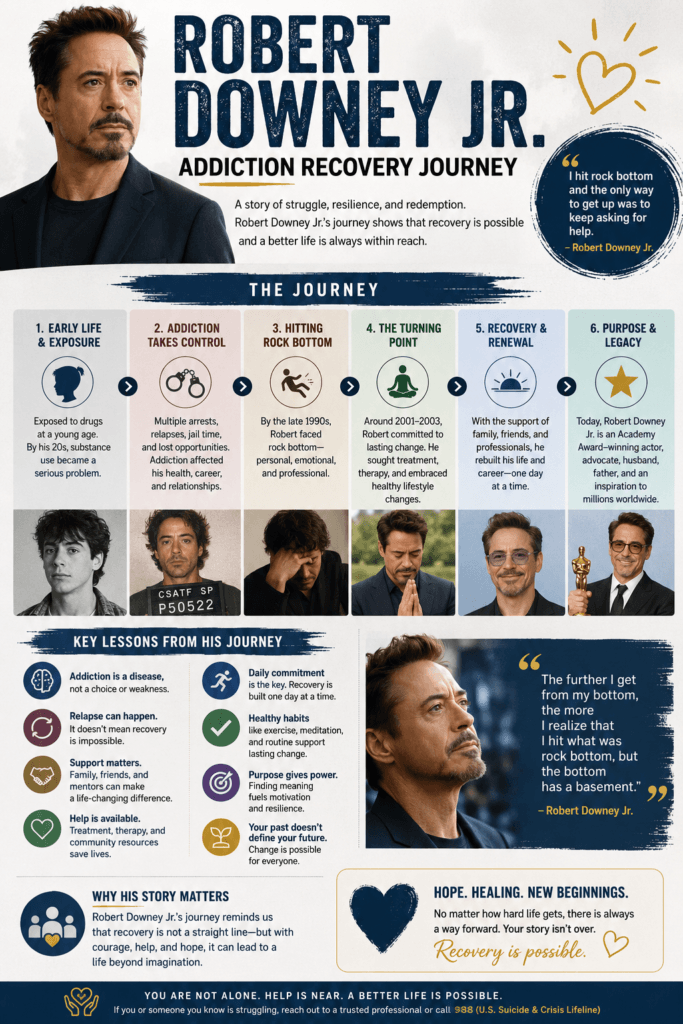
Robert Downey Jr.’s addiction recovery journey is one of the most well-known examples of resilience and transformation in modern entertainment. Despite achieving early success as an actor, he struggled for years with severe substance use disorder involving alcohol and multiple drugs. His addiction led to repeated arrests, incarceration, damaged relationships, and significant setbacks in his career. However, through professional treatment, personal accountability, healthy lifestyle changes, and the support of family and trusted friends, he achieved long-term recovery and rebuilt both his personal life and professional reputation. His story demonstrates that addiction is a chronic but treatable medical condition and that lasting recovery is possible with persistence, evidence-based care, and a strong support system.
Robert Downey Jr.’s Addiction Recovery Journey
Robert Downey Jr. is widely recognized as one of Hollywood’s greatest comeback stories. His recovery demonstrates that addiction is a chronic medical condition that often involves relapse, treatment, accountability, and long-term lifestyle changes rather than a single event or quick fix.
Early Exposure to Substance Use
Downey has publicly shared that he was exposed to drugs at a very young age by his father, filmmaker Robert Downey Sr. Early exposure to alcohol and drugs increases the risk of developing substance use disorders later in life because the developing brain is especially vulnerable. As his acting career accelerated during the 1980s and early 1990s, his substance use progressed from experimentation to dependence on alcohol, cocaine, heroin, and other drugs.
Addiction Takes Control
By the mid-1990s, Downey’s addiction severely affected nearly every aspect of his life. He experienced:
- Multiple arrests for drug possession.
- Numerous probation violations.
- Court-ordered rehabilitation programs.
- Time spent in jail and prison.
- Loss of major acting opportunities.
- Difficulty obtaining insurance required for film productions.
- Damaged personal and professional relationships.
One of his most publicized incidents occurred in 1996, when he was arrested while possessing heroin, cocaine, and a firearm. Another involved entering a neighbor’s home while intoxicated and falling asleep in a child’s bedroom. These highly public events illustrated how addiction can impair judgment and place individuals in dangerous situations.
Multiple Relapses
Like many people living with severe substance use disorder, Downey experienced repeated relapses despite rehabilitation attempts. His experience highlights an important principle in addiction medicine:
Relapse does not mean treatment has failed. Instead, it often signals that treatment needs to be adjusted or intensified.
Recovery frequently requires multiple treatment episodes before long-term sobriety is achieved.
Turning Point
Around 2001–2003, Downey committed to lasting recovery. Rather than relying on one intervention, he adopted several long-term recovery strategies, including:
- Professional addiction treatment
- Psychotherapy
- Personal accountability
- Structured daily routines
- Healthy exercise and meditation practices
- Strong family support
- Avoiding environments associated with drug use
- Building healthier relationships
He has also credited his wife, Susan Downey, and supportive friends—including actor Mel Gibson—with believing in him during a time when much of Hollywood had stopped offering opportunities. Gibson helped secure Downey’s role in The Singing Detective, which became an important step in rebuilding his career.
Career Comeback
Following sustained sobriety, Downey rebuilt his professional reputation through reliability and consistent performance.
Major milestones included:
- The Singing Detective (2003)
- Kiss Kiss Bang Bang (2005)
- Zodiac (2007)
- Iron Man (2008)
- Leading the Marvel Cinematic Universe for over a decade
- Winning the Academy Award for Best Supporting Actor for Oppenheimer in 2024, reflecting both his artistic achievements and remarkable personal turnaround.
Recovery Lessons
Robert Downey Jr.’s story illustrates several evidence-based recovery principles:
- Addiction can affect anyone, regardless of wealth, intelligence, or success.
- Recovery often involves setbacks before long-term stability.
- Professional treatment and ongoing support improve outcomes.
- Family members and trusted friends can play an important role in recovery while maintaining healthy boundaries.
- Long-term recovery requires daily commitment rather than a one-time decision.
- People with severe addiction can rebuild meaningful careers, relationships, and purpose with sustained recovery efforts.
Hope for Others
Downey’s recovery journey reminds us that addiction is treatable. Although recovery is rarely linear, many individuals achieve lasting sobriety through evidence-based treatment, medication when appropriate, counseling, peer support, healthy lifestyle changes, and strong social connections. His experience demonstrates that a person’s past does not determine their future and that meaningful recovery is possible even after years of severe addiction and repeated setbacks.
Self-Management Strategies to Understand Robert Downey Jr.’s Addiction Recovery Journey
Robert Downey Jr.’s recovery journey demonstrates that overcoming addiction is not about willpower alone. Long-term recovery requires ongoing self-management, healthy routines, accountability, and a willingness to make lasting lifestyle changes. Although every person’s recovery is unique, many of the strategies reflected in his journey align with evidence-based approaches used in addiction treatment today.
1. Accept Addiction as a Chronic Disease
The first step in recovery is recognizing that addiction is a chronic medical condition rather than a moral failing. Downey’s repeated relapses illustrate that recovery often involves setbacks before lasting success. Accepting addiction as a disease encourages individuals to seek treatment instead of hiding their struggles.
Self-management tips:
- Acknowledge the need for professional help.
- Learn about the science of addiction.
- View relapse as a signal to strengthen recovery efforts rather than as personal failure.
2. Commit to Lifelong Recovery
Recovery is an ongoing process that requires daily attention. Downey’s long-term sobriety reflects years of consistent healthy choices rather than a single treatment program.
Self-management tips:
- Develop a daily recovery routine.
- Set short-term and long-term recovery goals.
- Celebrate milestones while remaining committed to continued growth.
3. Identify Personal Triggers
Stress, certain people, places, emotions, and memories can trigger cravings. Recognizing these triggers allows individuals to prepare healthy coping strategies before high-risk situations occur.
Self-management tips:
- Keep a journal to identify triggers.
- Avoid environments associated with past substance use.
- Develop an action plan for managing cravings.
4. Build Healthy Daily Habits
Replacing unhealthy behaviors with positive routines helps retrain the brain’s reward system. Downey has credited exercise, meditation, and structured living as important parts of maintaining recovery.
Healthy habits include:
- Regular physical activity
- Nutritious meals
- Adequate sleep
- Mindfulness or meditation
- Consistent daily schedules
- Relaxation techniques
5. Participate in Professional Treatment
Recovery often requires ongoing support from healthcare professionals. Counseling, behavioral therapies, and medication-assisted treatment (when appropriate) help address both addiction and underlying mental health concerns.
Self-management tips:
- Attend counseling consistently.
- Follow treatment recommendations.
- Discuss any concerns openly with healthcare providers.
6. Develop Healthy Coping Skills
Many individuals use substances to cope with stress, anxiety, depression, or emotional pain. Learning healthier coping strategies reduces the risk of relapse.
Examples include:
- Deep breathing exercises
- Journaling
- Yoga
- Creative hobbies
- Listening to music
- Spending time outdoors
- Talking with supportive friends or family
7. Build a Strong Support Network
Recovery is strengthened through positive relationships. Downey has spoken about the importance of support from his wife, family, friends, and colleagues during his recovery.
Self-management tips:
- Stay connected with supportive family members.
- Participate in peer recovery groups.
- Seek mentors who encourage healthy choices.
- Distance yourself from individuals who encourage substance use.
8. Practice Accountability
Accountability helps maintain motivation and reinforces healthy behaviors. Individuals who regularly monitor their progress are often better equipped to recognize early warning signs of relapse.
Self-management tips:
- Track recovery goals.
- Attend follow-up appointments.
- Be honest about struggles and successes.
- Ask trusted individuals for regular check-ins.
9. Manage Stress Effectively
Stress is one of the most common relapse triggers. Developing healthy stress-management techniques improves emotional resilience.
Stress-management strategies:
- Exercise regularly.
- Practice mindfulness meditation.
- Maintain work-life balance.
- Engage in enjoyable hobbies.
- Spend time with supportive loved ones.
10. Find Purpose Beyond Recovery
Recovery becomes more sustainable when individuals build meaningful lives that extend beyond simply avoiding substances. Downey rebuilt his career, strengthened family relationships, and pursued creative opportunities that reinforced his sense of purpose.
Self-management tips:
- Pursue education or career goals.
- Volunteer within the community.
- Develop meaningful hobbies.
- Focus on personal growth and lifelong learning.
- Set goals that reflect personal values.
11. Prepare for Relapse Prevention
Recovery includes planning for difficult situations before they occur. Having a relapse prevention plan increases confidence and reduces impulsive decision-making.
Include in a relapse prevention plan:
- Personal warning signs
- Coping strategies
- Emergency support contacts
- Healthcare provider information
- Recovery meeting schedule
- Safe places to go during a crisis
12. Practice Patience and Self-Compassion
Healing takes time. Physical, emotional, and social recovery often occur gradually over months and years. Being patient with the recovery process helps reduce discouragement and supports long-term success.
Self-management tips:
- Focus on progress rather than perfection.
- Learn from setbacks without giving up.
- Practice positive self-talk.
- Recognize that recovery is a lifelong journey.
Conclusion
Robert Downey Jr.’s recovery journey illustrates that lasting sobriety is achieved through consistent self-management rather than a single event. His experience highlights the importance of accepting addiction as a chronic disease, seeking professional treatment, developing healthy routines, managing stress, building strong support systems, and maintaining accountability. These strategies not only reduce the risk of relapse but also help individuals rebuild their health, relationships, careers, and overall quality of life. His story offers hope that, with commitment and evidence-based support, long-term recovery is achievable even after years of severe addiction and repeated setbacks.
Family Support Strategies to Understand Robert Downey Jr.’s Addiction Recovery Journey
Robert Downey Jr.’s recovery journey demonstrates that family support can be a powerful influence on long-term recovery when paired with professional treatment, accountability, and healthy boundaries. While family members cannot cure addiction, they can create an environment that encourages healing, resilience, and sustained recovery. His experience highlights how supportive relationships, particularly with his wife and loved ones, contributed to rebuilding his personal and professional life.
1. Learn About Addiction as a Chronic Disease
Families should understand that addiction is a chronic brain disease rather than a lack of willpower or a moral failing. Learning about the biology of addiction, relapse, and recovery helps reduce stigma and promotes compassion.
Family support strategies:
- Learn how addiction affects the brain and behavior.
- Understand that recovery is often a long-term process.
- Recognize that relapse may occur and should prompt renewed treatment rather than blame.
2. Encourage Professional Treatment
Family members should encourage their loved one to participate in evidence-based treatment, including counseling, behavioral therapies, peer support groups, and medication-assisted treatment when appropriate.
Family support strategies:
- Offer transportation to appointments if needed.
- Encourage consistent attendance at therapy and recovery meetings.
- Support healthcare recommendations without attempting to replace professional care.
3. Provide Emotional Support Without Enabling
Supportive families offer encouragement while maintaining healthy boundaries. Emotional support helps individuals feel accepted, but enabling behaviors may unintentionally allow addiction to continue.
Healthy support includes:
- Listening without judgment.
- Expressing hope and encouragement.
- Celebrating recovery milestones.
- Offering reassurance during difficult times.
Avoid enabling by:
- Not providing money that may be used for substances.
- Refusing to cover up consequences of substance use.
- Allowing the individual to take responsibility for their actions.
4. Promote Healthy Communication
Open and respectful communication strengthens trust and reduces misunderstandings during recovery.
Family support strategies:
- Use calm, respectful language.
- Express concerns using “I” statements.
- Listen actively without interrupting.
- Avoid criticism, shaming, or blaming.
5. Encourage Healthy Daily Routines
Families can help create an environment that supports recovery by encouraging healthy habits that reduce stress and improve overall well-being.
Examples include:
- Eating nutritious meals together.
- Exercising as a family.
- Maintaining consistent sleep schedules.
- Participating in enjoyable substance-free activities.
- Encouraging hobbies and personal interests.
6. Recognize Triggers and Warning Signs
Family members often notice changes in behavior before the individual does. Recognizing early warning signs allows families to respond quickly and encourage additional support.
Possible warning signs include:
- Increased isolation.
- Mood swings or irritability.
- Missing therapy appointments.
- Returning to high-risk environments.
- Changes in sleeping or eating habits.
- Reconnecting with people associated with past substance use.
7. Establish Healthy Boundaries
Healthy boundaries protect both the individual in recovery and family members. Boundaries encourage accountability while reducing family stress.
Examples include:
- Clearly communicating household expectations.
- Avoiding financial support that enables substance use.
- Refusing to participate in dishonest behavior.
- Maintaining consistent consequences for unsafe actions.
8. Support Positive Social Connections
Healthy relationships strengthen recovery. Robert Downey Jr. has acknowledged the positive influence of supportive people in his life who encouraged accountability and believed in his ability to recover.
Family support strategies:
- Encourage friendships that support sobriety.
- Promote participation in peer recovery groups.
- Include the individual in healthy family and community activities.
9. Celebrate Progress
Recovery is built through many small successes. Recognizing progress helps build confidence and reinforces positive behaviors.
Celebrate achievements such as:
- Days, months, or years of sobriety.
- Completing treatment goals.
- Returning to work or school.
- Improving relationships.
- Developing healthier coping skills.
10. Practice Patience During Recovery
Healing takes time. Families should recognize that recovery involves physical, emotional, and psychological changes that may continue for years.
Family support strategies:
- Be patient with gradual progress.
- Encourage perseverance after setbacks.
- Focus on long-term improvement rather than perfection.
- Offer consistent encouragement throughout recovery.
11. Take Care of Your Own Well-Being
Supporting someone with addiction can be emotionally exhausting. Family members are better able to help when they also care for their own physical and mental health.
Self-care strategies include:
- Attending family support groups such as Al-Anon or Nar-Anon.
- Seeking individual counseling if needed.
- Maintaining personal hobbies and friendships.
- Managing stress through exercise, mindfulness, or relaxation techniques.
- Asking for help when feeling overwhelmed.
12. Inspire Hope Through Recovery Stories
Robert Downey Jr.’s journey reminds families that meaningful recovery is possible, even after years of severe addiction and repeated setbacks. His story demonstrates that people can rebuild their health, relationships, careers, and sense of purpose with sustained effort and appropriate support.
Families can use stories like his to:
- Encourage optimism without creating unrealistic expectations.
- Reinforce that setbacks do not define the future.
- Emphasize the value of persistence, treatment, and accountability.
- Inspire loved ones to continue working toward long-term recovery.
Conclusion
Robert Downey Jr.’s recovery journey highlights the important role families can play in supporting lasting recovery. By learning about addiction, encouraging professional treatment, maintaining healthy boundaries, communicating with compassion, recognizing warning signs, and caring for their own well-being, families create a supportive environment that promotes healing. Although recovery is ultimately the individual’s responsibility, consistent family support can strengthen resilience, reduce the risk of relapse, and help loved ones rebuild healthier, more fulfilling lives together.
Community Resource Strategies to Understand Robert Downey Jr.’s Addiction Recovery Journey
Robert Downey Jr.’s recovery journey demonstrates that long-term recovery from addiction is rarely accomplished alone. While personal commitment is essential, recovery is often strengthened through community resources that provide medical care, counseling, peer support, education, employment assistance, and opportunities to rebuild meaningful lives. His experience illustrates how a strong support system can help individuals overcome setbacks and maintain lasting recovery.
1. Access Evidence-Based Addiction Treatment
Community addiction treatment programs provide comprehensive care tailored to an individual’s needs. Treatment may include medical detoxification, counseling, medication-assisted treatment (MAT) when appropriate, relapse prevention planning, and long-term recovery support.
Community resources include:
- Outpatient addiction treatment programs
- Intensive outpatient programs (IOPs)
- Residential rehabilitation centers
- Hospital-based addiction services
- Certified addiction counselors
These services help individuals develop coping skills, address underlying causes of addiction, and build a foundation for sustained recovery.
2. Utilize Mental Health Services
Many individuals with substance use disorders also experience mental health conditions such as depression, anxiety, trauma-related disorders, or bipolar disorder. Integrated treatment addresses both conditions simultaneously and improves recovery outcomes.
Community resources include:
- Licensed psychologists
- Psychiatrists
- Licensed professional counselors
- Community mental health centers
- Trauma-informed therapy programs
Treating co-occurring mental health conditions reduces relapse risk and promotes overall well-being.
3. Participate in Peer Recovery Support Groups
Peer support groups provide encouragement, accountability, and hope through shared experiences. Members learn practical recovery skills while developing relationships with others who understand the challenges of addiction.
Examples include:
- Alcoholics Anonymous (AA)
- Narcotics Anonymous (NA)
- SMART Recovery
- Celebrate Recovery
- Refuge Recovery
- Recovery Dharma
Participation in peer support can reduce feelings of isolation and strengthen long-term recovery.
4. Engage in Family Education Programs
Addiction affects the entire family. Community organizations often provide educational programs that teach family members how to support recovery while maintaining healthy boundaries.
Family resources include:
- Al-Anon Family Groups
- Nar-Anon Family Groups
- Family counseling services
- Parent education programs
- Family recovery workshops
These programs help families improve communication, reduce enabling behaviors, and strengthen relationships.
5. Develop Recovery-Friendly Social Networks
Building healthy relationships is an important part of recovery. Community organizations offer safe environments where individuals can participate in meaningful, substance-free activities.
Examples include:
- Community recreation centers
- Faith-based organizations
- Volunteer opportunities
- Recovery community organizations
- Fitness and wellness programs
- Hobby and educational clubs
Positive social connections reduce loneliness and reinforce healthy behaviors.
6. Utilize Employment and Educational Resources
Stable employment and education improve self-esteem, financial stability, and long-term recovery. Many community agencies assist individuals returning to work after addiction treatment.
Available resources may include:
- Job training programs
- Career counseling
- Resume workshops
- Vocational rehabilitation services
- Adult education programs
- College support services
Meaningful employment provides structure, purpose, and financial independence.
7. Create a Relapse Prevention Network
Community resources help individuals prepare for high-risk situations before relapse occurs.
Relapse prevention resources include:
- Recovery coaches
- Peer support specialists
- Crisis hotlines
- Relapse prevention workshops
- Recovery planning groups
- Ongoing counseling services
Having multiple sources of support allows individuals to seek help early when challenges arise.
8. Participate in Wellness Programs
Recovery involves improving physical, emotional, and spiritual health. Many communities offer affordable wellness services that complement addiction treatment.
Examples include:
- Exercise classes
- Yoga programs
- Mindfulness training
- Nutrition education
- Smoking cessation programs
- Stress management workshops
Healthy lifestyles improve brain function, reduce stress, and strengthen resilience.
9. Reduce Stigma Through Community Education
One of the greatest barriers to treatment is stigma. Community education helps people understand that addiction is a treatable medical condition rather than a moral failure.
Communities can:
- Offer public education campaigns.
- Host addiction awareness events.
- Share recovery success stories.
- Promote compassionate, person-first language.
- Encourage early intervention and treatment.
Reducing stigma makes it easier for individuals to seek help without fear of judgment.
10. Encourage Long-Term Recovery Support
Recovery continues long after formal treatment ends. Ongoing community involvement helps individuals maintain healthy habits and remain connected to supportive resources.
Long-term recovery supports include:
- Alumni recovery programs
- Recovery community centers
- Sober living homes
- Volunteer opportunities
- Mentorship programs
- Continuing education and life-skills classes
These resources reinforce accountability and provide encouragement throughout the recovery journey.
11. Promote Crisis and Emergency Resources
Community crisis services provide immediate assistance during emergencies involving substance use or mental health concerns.
Important resources include:
- Emergency departments
- Mobile crisis response teams
- Local behavioral health crisis centers
- The 988 Suicide & Crisis Lifeline
- Emergency medical services (911 for life-threatening emergencies)
Knowing where to seek immediate help can save lives during an overdose, severe relapse, or mental health crisis.
12. Inspire Hope Through Recovery Role Models
Robert Downey Jr.’s story serves as an example that recovery is possible even after years of severe addiction, repeated relapses, legal problems, and career setbacks. Community organizations can use recovery stories to inspire individuals while emphasizing that every recovery journey is unique.
Recovery role models can:
- Reduce feelings of hopelessness.
- Encourage treatment engagement.
- Demonstrate that relapse does not have to define the future.
- Show that meaningful careers, healthy relationships, and personal fulfillment can be rebuilt over time.
Conclusion
Robert Downey Jr.’s addiction recovery journey highlights the value of combining personal commitment with strong community support. Access to evidence-based treatment, mental health services, peer support groups, family education, employment assistance, wellness programs, and long-term recovery resources creates an environment where healing is more likely to succeed. Communities that reduce stigma, encourage early treatment, and provide comprehensive recovery services help individuals build healthier lives and demonstrate that recovery is possible for people from all walks of life.
Frequently Asked Questions
Here are some common questions:
1. Who is Robert Downey Jr.?
Robert Downey Jr. is an Academy Award-winning actor best known for portraying Iron Man in the Marvel Cinematic Universe. He is also recognized for one of Hollywood’s most remarkable addiction recovery journeys.
2. What substances did Robert Downey Jr. struggle with?
He has publicly discussed struggling with alcohol and multiple illicit drugs, including cocaine and heroin. His substance use disorder significantly affected his personal life, health, and acting career.
3. When did Robert Downey Jr.’s addiction begin?
Downey has shared that he was introduced to drugs at a very young age. Early exposure, combined with other personal and environmental factors, contributed to the development of substance use disorder later in life.
4. How did addiction affect his career?
His addiction led to repeated arrests, incarceration, probation violations, loss of acting opportunities, difficulty obtaining film insurance, and damaged professional relationships. At one point, many believed his acting career was over.
5. Was recovery immediate for Robert Downey Jr.?
No. His recovery involved multiple treatment attempts and setbacks over several years. His journey demonstrates that recovery is often a gradual process requiring persistence and ongoing support.
6. What helped Robert Downey Jr. achieve long-term recovery?
Several factors contributed to his recovery, including:
- Professional addiction treatment
- Counseling and therapy
- Personal accountability
- Healthy daily routines
- Exercise and meditation
- Strong family support
- Avoiding high-risk situations
- Long-term commitment to sobriety
7. What role did family support play in his recovery?
Downey has credited his wife, Susan Downey, with providing encouragement, accountability, and stability during his recovery. Positive relationships helped him rebuild both his personal and professional life.
8. Did Robert Downey Jr. return to acting after recovery?
Yes. Following sustained recovery, he rebuilt his career with films such as Kiss Kiss Bang Bang, Zodiac, Iron Man, and Oppenheimer. His success illustrates that recovery can lead to renewed opportunities and personal growth.
9. What can people learn from Robert Downey Jr.’s recovery journey?
His story teaches that:
- Addiction is a treatable medical condition.
- Recovery often includes setbacks.
- Seeking professional help is a sign of strength.
- Healthy support systems improve recovery outcomes.
- Long-term recovery is possible with commitment and perseverance.
10. Does relapse mean recovery has failed?
No. Addiction specialists recognize relapse as a possible part of the recovery process for some individuals. Rather than indicating failure, relapse may signal the need to reassess and strengthen the treatment plan.
11. Why is accountability important during recovery?
Accountability helps individuals stay focused on recovery goals, recognize early warning signs of relapse, maintain healthy routines, and remain engaged with treatment and supportive relationships.
12. How do healthy routines support recovery?
Regular exercise, nutritious eating, adequate sleep, stress management, and structured daily schedules improve physical and mental health while reducing the risk of relapse.
13. What community resources can support recovery?
Helpful community resources include:
- Outpatient addiction treatment programs
- Residential rehabilitation centers
- Peer support groups such as Alcoholics Anonymous (AA), Narcotics Anonymous (NA), and SMART Recovery
- Community mental health centers
- Recovery community organizations
- Family support groups such as Al-Anon and Nar-Anon
14. Can people fully rebuild their lives after addiction?
Yes. Although recovery requires time and ongoing effort, many individuals restore their health, relationships, careers, and overall quality of life. Robert Downey Jr.’s experience is one example of how meaningful recovery is possible.
15. What message of hope does Robert Downey Jr.’s journey provide?
His recovery demonstrates that no matter how severe addiction becomes, lasting recovery is achievable through evidence-based treatment, personal responsibility, supportive relationships, and continued commitment. His story reminds individuals and families that addiction does not have to define a person’s future and that hope, healing, and renewed purpose are possible.
Conclusion
Robert Downey Jr.’s recovery journey offers hope to individuals and families affected by addiction by showing that even after years of setbacks, meaningful recovery is achievable. His experience highlights the importance of seeking professional treatment, maintaining healthy daily habits, building supportive relationships, and remaining committed to lifelong recovery. While every person’s path to recovery is unique, his story reinforces that relapse does not define a person’s future and that healing often requires patience, resilience, and ongoing support. Today, Robert Downey Jr.’s life serves as a powerful reminder that recovery can lead not only to sobriety but also to renewed purpose, restored relationships, and lasting personal and professional success.
Video: Robert Downey Jr. On Why He Nearly Didn’t Survive His Addiction #sobriety #realstory #transformation