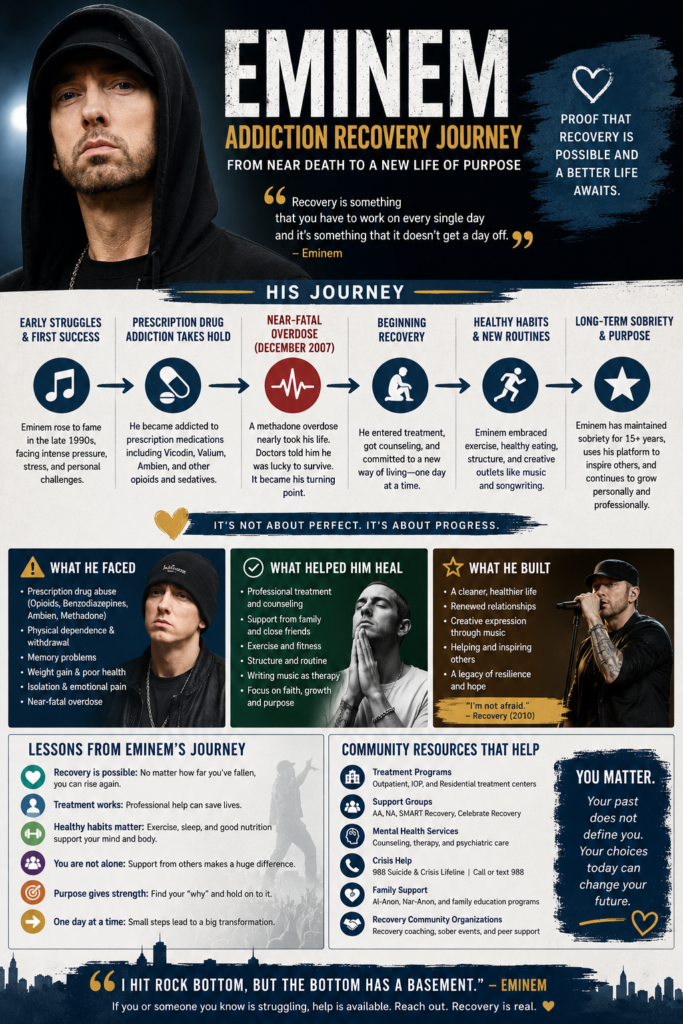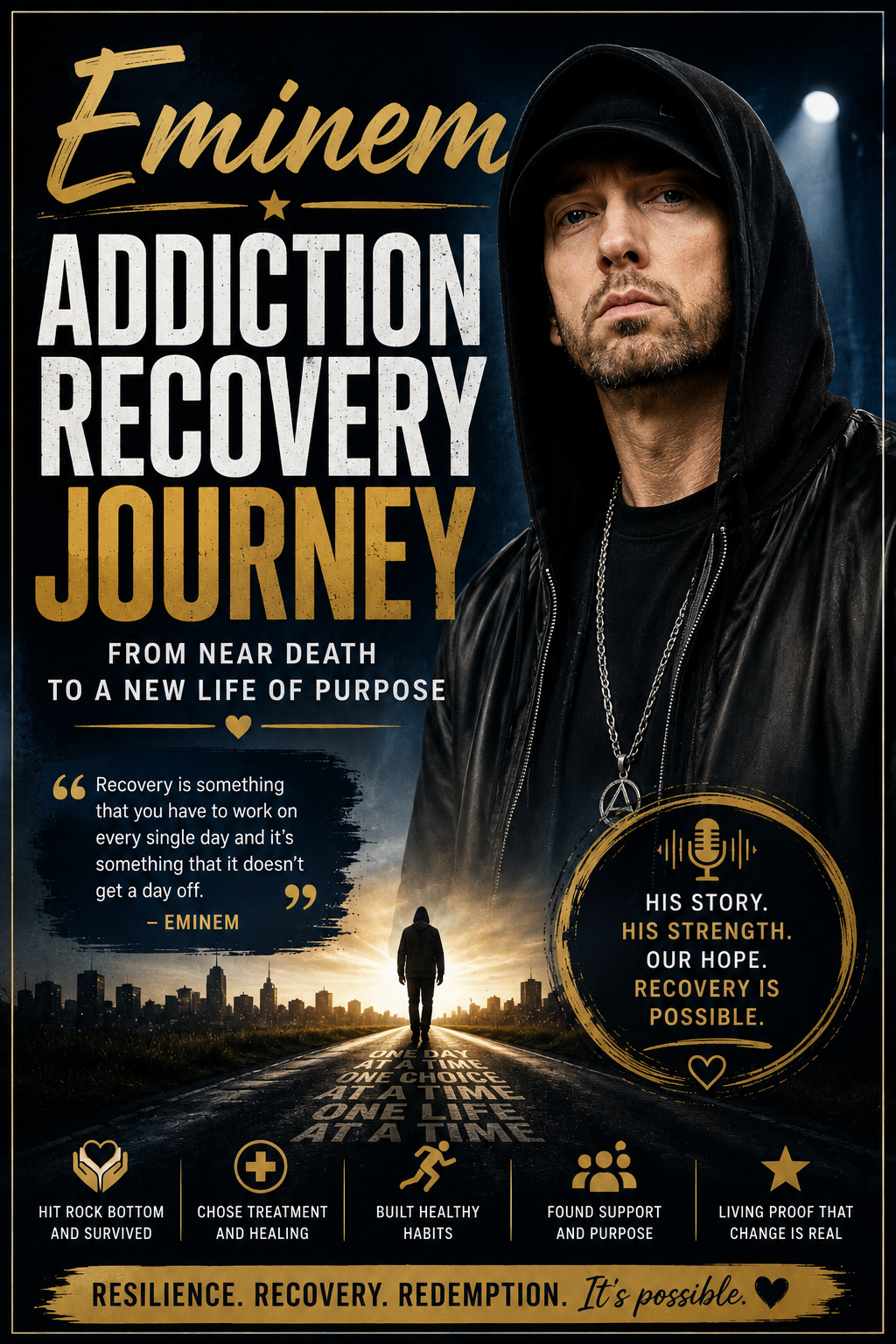
Eminem, one of the most successful and influential rappers in music history, has spoken openly about his struggle with prescription drug addiction and the challenging path to recovery. At the height of his addiction, he developed a dependence on medications, experienced serious health consequences, and survived a near-fatal overdose in 2007. His recovery journey demonstrates that substance use disorders can affect anyone, regardless of fame, talent, or financial success. Through professional treatment, commitment to sobriety, healthy lifestyle changes, and ongoing support, Eminem rebuilt both his personal life and career. His story highlights the importance of seeking help, remaining dedicated to long-term recovery, and recognizing that recovery is a continuous process requiring resilience, accountability, and perseverance.
Eminem’s Addiction Recovery Journey
Eminem, born Marshall Bruce Mathers III, has been open about his struggle with prescription drug addiction and his long-term recovery. His journey illustrates how addiction can affect even highly successful individuals and demonstrates that recovery is possible through medical treatment, lifestyle changes, accountability, and ongoing commitment. Eminem has publicly celebrated more than a decade of sobriety, becoming an inspiration to many people facing substance use disorders.
Early Success and Increasing Substance Use
As Eminem’s career rapidly expanded in the late 1990s and early 2000s, the pressures of fame, demanding work schedules, chronic stress, and personal challenges contributed to increasing substance use. Initially, he used prescription medications for legitimate medical reasons, but over time his use progressed into dependence.
He has publicly discussed becoming addicted to several prescription medications, including:
- Vicodin (hydrocodone)
- Valium (diazepam)
- Ambien (zolpidem)
- Methadone and other opioids
Over time, he developed tolerance, meaning larger amounts of medication were needed to achieve the same effects. This is a common feature of opioid and sedative dependence.
Addiction Takes Control
As his addiction worsened, it affected nearly every aspect of his life. Eminem has described periods of severe physical dependence, memory problems, weight gain, exhaustion, and difficulty functioning without drugs.
Consequences included:
- Declining physical health
- Difficulty sleeping without medication
- Impaired memory and concentration
- Reduced creative productivity
- Emotional instability
- Increased isolation
Although he continued recording music, addiction gradually became the central focus of his daily life.
Near-Fatal Overdose
In December 2007, Eminem experienced a near-fatal methadone overdose. He has shared that doctors told him the amount of methadone in his system was equivalent to taking multiple bags of heroin and that he was fortunate to survive. The overdose became the turning point that motivated him to pursue recovery more seriously.
This event highlights an important lesson in addiction medicine: prescription medications can be just as dangerous as illicit drugs when misused or taken outside medical supervision.
Beginning Recovery
Following the overdose, Eminem entered treatment and committed himself to recovery. He has explained that recovery required rebuilding both his physical health and his thinking patterns.
His recovery involved:
- Medical care following the overdose
- Addiction treatment
- Counseling and recovery support
- Learning healthy coping skills
- Establishing structured daily routines
- Avoiding situations associated with substance use
- Rebuilding physical fitness
Recovery did not happen overnight. Like many individuals with substance use disorders, he had to relearn how to live without relying on drugs.
Healthy Lifestyle Changes
One of the major components of Eminem’s recovery has been improving his physical health.
He has discussed:
- Regular running and cardiovascular exercise
- Strength training
- Healthy eating habits
- Maintaining structured daily schedules
- Focusing on overall wellness
Exercise became an important outlet for managing stress, improving mood, and supporting long-term sobriety.
Music as Part of Recovery
Eminem has used songwriting as a healthy way to process emotions and reflect on his recovery. Albums such as Relapse (2009) and Recovery (2010) explore themes of addiction, relapse, accountability, healing, and personal growth.
Through his music, he has openly acknowledged mistakes, described the challenges of recovery, and encouraged others to keep moving forward despite setbacks.
Long-Term Sobriety
Eminem has publicly celebrated many years of sobriety and has shared recovery milestone tokens with fans on social media. His long-term recovery reflects the importance of consistent daily effort rather than a one-time event.
His experience demonstrates that recovery includes:
- Daily commitment
- Healthy routines
- Personal accountability
- Strong support systems
- Continued self-awareness
- Long-term lifestyle changes
Lessons from Eminem’s Recovery
His journey offers several important lessons:
- Prescription drug addiction can become life-threatening.
- Addiction affects people regardless of fame, wealth, or success.
- A near-fatal overdose can become a turning point, but early treatment is far safer than waiting for a crisis.
- Professional treatment and ongoing recovery support improve long-term outcomes.
- Exercise, structure, and healthy coping skills can strengthen recovery.
- Recovery is a lifelong process that requires continued commitment.
Hope for Individuals and Families
Eminem’s recovery journey provides hope for individuals and families affected by addiction. His experience shows that even after severe prescription drug dependence and a life-threatening overdose, recovery is possible with evidence-based treatment, healthy lifestyle changes, supportive relationships, and perseverance.
His story also reminds families that addiction is a treatable medical condition, not a personal failure. With compassion, professional care, and sustained commitment, individuals can rebuild their health, relationships, careers, and sense of purpose while maintaining long-term recovery.
Self-Management Strategies to Understand Eminem’s Addiction Recovery Journey
Eminem’s addiction recovery journey demonstrates that long-term sobriety requires daily self-management, healthy lifestyle changes, and a commitment to ongoing personal growth. After surviving a near-fatal prescription drug overdose in 2007, he rebuilt his health through professional treatment, structured routines, physical fitness, and healthier coping mechanisms. While every recovery journey is unique, the following self-management strategies reflect evidence-based practices that can help individuals understand and apply lessons from his experience.
1. Accept Addiction as a Chronic Medical Condition
Recovery begins by recognizing that addiction is a chronic brain disease rather than a lack of willpower or a moral failing. Eminem has openly acknowledged his addiction and the need for long-term recovery.
Self-management strategies:
- Learn about the science of addiction.
- Accept that recovery requires ongoing effort.
- Replace self-blame with self-compassion and accountability.
2. Seek Professional Treatment
Professional treatment provides the tools needed to begin and maintain recovery. Evidence-based care may include counseling, behavioral therapies, medication-assisted treatment (when appropriate), and relapse prevention planning.
Self-management strategies:
- Follow treatment recommendations consistently.
- Attend counseling appointments.
- Be honest with healthcare providers about challenges and progress.
- Continue treatment even after feeling better.
3. Establish a Structured Daily Routine
A predictable daily schedule helps reduce idle time, improve emotional stability, and lower the risk of relapse. Eminem has described the importance of structure in maintaining his recovery.
Healthy routine examples:
- Wake up and go to bed at consistent times.
- Schedule meals and exercise.
- Plan work, hobbies, and relaxation.
- Include time for recovery activities each day.
4. Replace Unhealthy Habits with Healthy Ones
Recovery involves replacing substance use with behaviors that support physical and emotional well-being. Eminem has credited exercise as an important part of his recovery.
Healthy alternatives include:
- Walking or running
- Strength training
- Yoga or stretching
- Reading
- Creative writing
- Listening to music
- Spending time outdoors
5. Develop Healthy Coping Skills
Many individuals use substances to manage stress, anxiety, or emotional pain. Learning healthier coping strategies reduces dependence on drugs or alcohol.
Examples include:
- Deep breathing exercises
- Mindfulness meditation
- Journaling
- Talking with supportive friends or family
- Practicing gratitude
- Relaxation techniques
6. Identify Personal Triggers
Understanding situations, emotions, or environments that increase cravings allows individuals to prepare healthy responses before relapse occurs.
Common triggers include:
- Stress
- Fatigue
- Loneliness
- Conflict
- Negative emotions
- Certain people or places
- Celebrations involving alcohol or drugs
Self-management tip: Keep a journal to identify patterns and create strategies to avoid or manage triggers.
7. Prioritize Physical Health
Recovery improves when physical health is strengthened. Exercise, balanced nutrition, and quality sleep support brain healing and emotional stability.
Healthy habits include:
- Regular cardiovascular exercise
- Strength training
- Nutritious meals
- Drinking enough water
- Getting 7–9 hours of sleep each night
- Limiting caffeine if it disrupts sleep
8. Build a Strong Support Network
Recovery is more successful when individuals have supportive relationships. Trusted family members, friends, counselors, and peer support groups provide encouragement and accountability.
Self-management strategies:
- Stay connected with positive influences.
- Attend recovery support meetings.
- Ask for help during difficult times.
- Avoid relationships that encourage substance use.
9. Practice Accountability
Taking responsibility for recovery strengthens long-term success. Accountability helps individuals recognize warning signs early and remain committed to healthy choices.
Ways to stay accountable:
- Track recovery goals.
- Celebrate sobriety milestones.
- Keep regular appointments with healthcare providers.
- Check in with a trusted mentor or sponsor.
10. Use Creative Outlets for Emotional Expression
Eminem has used songwriting and music to process emotions throughout his recovery. Creative activities provide healthy ways to express difficult feelings without turning to substances.
Creative outlets include:
- Writing
- Music
- Painting
- Photography
- Crafts
- Playing an instrument
- Poetry
11. Create a Relapse Prevention Plan
Planning ahead helps individuals respond effectively when cravings or high-risk situations arise.
A relapse prevention plan should include:
- Personal triggers
- Warning signs
- Healthy coping strategies
- Emergency contacts
- Recovery meeting schedule
- Healthcare provider information
- Steps to take if relapse occurs
12. Practice Patience and Self-Compassion
Recovery is a lifelong journey with periods of growth and challenges. Healing physically, emotionally, and mentally takes time.
Self-management strategies:
- Focus on progress rather than perfection.
- Learn from setbacks instead of giving up.
- Practice positive self-talk.
- Recognize that every sober day is an accomplishment.
Conclusion
Eminem’s addiction recovery journey shows that lasting sobriety is built through consistent self-management, professional treatment, healthy routines, and personal accountability. His commitment to exercise, structured living, creative expression, and long-term recovery demonstrates that meaningful change is possible even after severe prescription drug addiction and a near-fatal overdose. By accepting addiction as a chronic medical condition, identifying triggers, developing healthy coping skills, building supportive relationships, and practicing patience, individuals can strengthen their recovery and create healthier, more fulfilling lives. His story offers hope that recovery is not only possible but can also lead to renewed purpose, resilience, and lasting success.
Family Support Strategies to Understand Eminem’s Addiction Recovery Journey
Eminem’s addiction recovery journey demonstrates that while recovery is ultimately the responsibility of the individual, family support can play a vital role in achieving and maintaining long-term sobriety. After surviving a near-fatal prescription drug overdose in 2007, he committed to rebuilding his life through treatment, healthier routines, and personal accountability. His experience shows that families can encourage recovery by providing support, maintaining healthy boundaries, and fostering an environment that promotes healing rather than enabling substance use.
1. Learn About Addiction as a Chronic Disease
Understanding addiction as a chronic brain disease helps family members replace blame and frustration with empathy and informed support. Education reduces stigma and prepares families to respond more effectively during recovery.
Family support strategies:
- Learn how addiction affects the brain and behavior.
- Understand that recovery is a lifelong process.
- Recognize that relapse may occur and often signals the need for additional treatment rather than punishment.
2. Encourage Professional Treatment
Families should encourage their loved one to participate in evidence-based treatment, including counseling, behavioral therapies, medication-assisted treatment (when appropriate), and peer support programs.
Family support strategies:
- Encourage attendance at therapy sessions.
- Offer transportation to appointments if needed.
- Support treatment recommendations from healthcare providers.
- Reinforce the importance of continuing care after initial treatment.
3. Offer Emotional Support Without Enabling
Compassion and encouragement help individuals feel accepted and motivated, but support should not protect them from the natural consequences of substance use.
Healthy support includes:
- Listening without judgment.
- Offering encouragement during recovery.
- Celebrating progress and sobriety milestones.
- Expressing confidence in their ability to recover.
Avoid enabling by:
- Not providing money that could be used to purchase drugs or alcohol.
- Refusing to make excuses for substance-related behavior.
- Encouraging personal responsibility for recovery.
4. Promote Healthy Communication
Open, respectful communication strengthens trust and helps families work together throughout the recovery process.
Family support strategies:
- Use calm and respectful language.
- Listen actively before responding.
- Express concerns using “I” statements rather than criticism.
- Encourage honest conversations about struggles and successes.
5. Encourage Healthy Daily Routines
Structured daily habits improve both physical and emotional health. Eminem has spoken about the importance of exercise and routine in maintaining his recovery.
Families can encourage:
- Regular exercise
- Healthy meals
- Consistent sleep schedules
- Relaxation techniques
- Shared family activities that do not involve alcohol or drugs
6. Recognize Triggers and Warning Signs
Family members are often among the first to notice changes that may indicate increased relapse risk.
Possible warning signs include:
- Social withdrawal
- Mood swings or irritability
- Missing treatment appointments
- Returning to unhealthy friendships
- Increased stress or anxiety
- Changes in eating or sleeping habits
- Loss of interest in recovery activities
Early recognition allows families to encourage professional support before a crisis develops.
7. Establish Healthy Boundaries
Healthy boundaries protect both the individual in recovery and family members. Clear expectations promote accountability and reduce unhealthy family dynamics.
Examples include:
- Clearly communicating household rules.
- Refusing to support dishonest behavior.
- Avoiding financial assistance that enables substance use.
- Maintaining consistent consequences for unsafe actions.
8. Support Positive Social Connections
Recovery is strengthened through healthy relationships. Families can encourage involvement in recovery-oriented communities and supportive friendships.
Examples include:
- Recovery support groups
- Volunteer activities
- Faith-based organizations
- Community events
- Recreational clubs
- Educational programs
Positive social networks reduce isolation and reinforce healthy choices.
9. Celebrate Recovery Milestones
Acknowledging progress reinforces motivation and reminds individuals that recovery is built one day at a time.
Celebrate achievements such as:
- Days, months, and years of sobriety
- Completing treatment goals
- Returning to work or school
- Rebuilding family relationships
- Achieving personal wellness goals
Celebrations do not need to be elaborate; sincere recognition and encouragement can have a meaningful impact.
10. Encourage Healthy Stress Management
Stress is a common relapse trigger. Families can help create a calm and supportive home environment while encouraging healthy coping skills.
Stress-management strategies include:
- Walking or exercising together
- Practicing mindfulness or meditation
- Participating in enjoyable hobbies
- Maintaining open communication
- Encouraging regular relaxation and self-care
11. Take Care of Your Own Well-Being
Supporting someone with addiction can be emotionally challenging. Family members should also prioritize their own physical and mental health.
Self-care strategies include:
- Attending Al-Anon or Nar-Anon support groups
- Seeking individual counseling
- Maintaining hobbies and friendships
- Practicing stress-reduction techniques
- Asking for help when feeling overwhelmed
A healthy family is better equipped to provide consistent support.
12. Inspire Hope Through Recovery Stories
Eminem’s recovery journey reminds families that meaningful recovery is possible, even after severe addiction and a life-threatening overdose. His success illustrates that people can rebuild their health, relationships, careers, and sense of purpose through sustained effort and evidence-based treatment.
Families can use stories like his to:
- Encourage optimism while maintaining realistic expectations.
- Reinforce that setbacks do not determine the future.
- Emphasize the value of perseverance and professional treatment.
- Inspire loved ones to continue working toward long-term recovery.
Conclusion
Eminem’s addiction recovery journey demonstrates that family support is an important part of long-term recovery when combined with professional treatment, personal accountability, and healthy boundaries. By learning about addiction, encouraging evidence-based care, promoting healthy routines, recognizing relapse warning signs, and maintaining open communication, families can create an environment that supports healing. Although recovery is ultimately the individual’s responsibility, compassionate and informed family involvement can strengthen resilience, reduce the risk of relapse, and help loved ones build healthier, more meaningful lives.
Community Resource Strategies to Understand Eminem’s Addiction Recovery Journey
Eminem’s addiction recovery journey highlights the importance of combining personal determination with strong community support. After surviving a near-fatal prescription drug overdose in 2007, he committed to rebuilding his life through treatment, healthier routines, and long-term recovery. His experience demonstrates that recovery is not achieved through willpower alone but is strengthened by access to healthcare, peer support, mental health services, and community resources. These services help individuals develop coping skills, maintain sobriety, and rebuild meaningful lives.
1. Access Evidence-Based Addiction Treatment
Professional treatment is the foundation of recovery for many individuals with substance use disorders. Community treatment programs provide comprehensive care that addresses the physical, psychological, and social aspects of addiction.
Community resources include:
- Outpatient addiction treatment programs
- Intensive outpatient programs (IOPs)
- Residential rehabilitation centers
- Hospital-based addiction services
- Certified addiction medicine specialists
These programs provide individualized treatment plans, counseling, relapse prevention education, and ongoing recovery support.
2. Utilize Mental Health Services
Many individuals with addiction also experience co-occurring mental health conditions such as depression, anxiety, trauma-related disorders, or bipolar disorder. Treating both conditions together leads to better recovery outcomes.
Community resources include:
- Community mental health centers
- Licensed psychologists
- Psychiatrists
- Licensed professional counselors
- Trauma-informed therapy programs
Integrated care helps individuals manage emotional challenges while reducing the risk of relapse.
3. Participate in Peer Recovery Support Groups
Peer support groups connect individuals with others who have experienced similar recovery journeys. Sharing experiences provides encouragement, accountability, and practical coping strategies.
Examples include:
- Alcoholics Anonymous (AA)
- Narcotics Anonymous (NA)
- SMART Recovery
- Celebrate Recovery
- Recovery Dharma
- Refuge Recovery
These programs foster hope and remind participants that they are not alone in recovery.
4. Utilize Medication-Assisted Treatment (When Appropriate)
For individuals recovering from opioid or alcohol use disorders, medication-assisted treatment (MAT) may be an important component of care. When combined with counseling and behavioral therapies, MAT can reduce cravings, prevent relapse, and improve long-term recovery outcomes.
Examples include:
- Buprenorphine
- Methadone
- Extended-release naltrexone
Treatment decisions should always be made in consultation with qualified healthcare professionals.
5. Participate in Family Education Programs
Addiction affects entire families. Community-based family education programs help loved ones better understand addiction while learning healthy ways to provide support.
Available resources include:
- Al-Anon Family Groups
- Nar-Anon Family Groups
- Family counseling services
- Parent education programs
- Family recovery workshops
These programs strengthen communication, reduce enabling behaviors, and promote healthier family relationships.
6. Engage in Recovery Community Organizations
Recovery community organizations provide long-term support after formal treatment ends. These organizations encourage healthy lifestyles and continued personal growth.
Examples include:
- Recovery community centers
- Peer recovery coaching
- Sober social events
- Volunteer opportunities
- Mentorship programs
- Recovery advocacy organizations
Long-term engagement helps reduce isolation and reinforces healthy decision-making.
7. Utilize Wellness and Fitness Programs
Eminem has publicly credited exercise as an important part of maintaining his recovery. Community wellness programs help individuals improve both physical and mental health.
Community wellness resources include:
- Fitness centers
- Walking groups
- Yoga classes
- Nutrition education
- Mindfulness workshops
- Smoking cessation programs
Regular physical activity supports brain healing, reduces stress, and improves mood.
8. Access Employment and Educational Resources
Employment and education provide structure, financial stability, and renewed purpose during recovery.
Community resources include:
- Job placement services
- Vocational rehabilitation
- Career counseling
- Adult education programs
- Community colleges
- Resume and interview workshops
Meaningful work often strengthens self-confidence and supports long-term sobriety.
9. Develop a Relapse Prevention Network
Recovery is strengthened by planning ahead for difficult situations. Community resources help individuals build a network of support before relapse occurs.
A relapse prevention network may include:
- Addiction counselors
- Primary care providers
- Peer recovery coaches
- Sponsors
- Family members
- Trusted friends
- Recovery support meetings
Having multiple sources of support allows individuals to seek help early when challenges arise.
10. Reduce Stigma Through Community Education
Stigma often prevents people from seeking treatment. Communities can promote understanding by recognizing addiction as a treatable medical condition rather than a personal weakness.
Community education efforts include:
- Public awareness campaigns
- School education programs
- Recovery awareness events
- Community health fairs
- Educational workshops
- Sharing recovery success stories
Reducing stigma encourages earlier intervention and greater acceptance of individuals in recovery.
11. Utilize Crisis and Emergency Resources
Immediate assistance can save lives during overdose situations, severe relapse, or mental health crises.
Important community resources include:
- Emergency medical services (911 for life-threatening emergencies)
- Emergency departments
- Mobile crisis response teams
- Local behavioral health crisis centers
- The 988 Suicide & Crisis Lifeline
- Poison centers for medication emergencies
Knowing where to seek emergency help improves safety for individuals and families.
12. Inspire Hope Through Recovery Role Models
Recovery stories like Eminem’s can motivate individuals to seek help and remain committed to treatment. While every person’s journey is unique, stories of long-term recovery demonstrate that meaningful change is possible.
Community organizations can use recovery stories to:
- Encourage treatment participation.
- Reduce shame and stigma.
- Promote resilience after setbacks.
- Reinforce the value of persistence and accountability.
- Inspire individuals to pursue healthier lifestyles.
Conclusion
Eminem’s addiction recovery journey illustrates that lasting sobriety is strengthened by both personal commitment and comprehensive community support. Access to evidence-based treatment, mental health services, peer recovery groups, family education, wellness programs, employment assistance, and long-term recovery organizations creates an environment where individuals can successfully rebuild their lives. Communities that reduce stigma, promote early intervention, and provide accessible recovery resources empower individuals and families to overcome addiction and achieve lasting health, resilience, and hope.
Frequently Asked Questions
Here are some common questions:
1. Who is Eminem?
Eminem, whose real name is Marshall Bruce Mathers III, is an award-winning rapper, songwriter, and producer. In addition to his successful music career, he is recognized for openly sharing his recovery from prescription drug addiction, inspiring many people affected by substance use disorders.
2. What substances was Eminem addicted to?
Eminem has publicly discussed becoming addicted to several prescription medications, including opioids and sedatives such as Vicodin (hydrocodone), Valium (diazepam), Ambien (zolpidem), and methadone. His dependence gradually became life-threatening.
3. How did Eminem’s addiction begin?
His addiction began with the use of prescription medications for legitimate medical reasons. Over time, increased tolerance and dependence led him to misuse these medications, illustrating how prescription drug use can progress into addiction when not carefully managed.
4. What was the turning point in Eminem’s recovery?
A near-fatal methadone overdose in December 2007 became the major turning point in his life. Surviving the overdose motivated him to seek professional treatment and commit to long-term recovery.
5. Did Eminem receive professional treatment?
Yes. Following his overdose, Eminem sought professional treatment and worked to rebuild his physical and emotional health. His recovery included medical care, counseling, healthier routines, and ongoing commitment to sobriety.
6. How long has Eminem been sober?
Eminem has publicly celebrated many years of sobriety and has shared recovery milestone tokens with fans. His continued recovery demonstrates the importance of maintaining healthy habits and remaining committed to lifelong sobriety.
7. What lifestyle changes helped Eminem stay sober?
Several positive lifestyle changes supported his recovery, including:
- Regular exercise and running
- Healthy eating habits
- Structured daily routines
- Creative expression through music
- Personal accountability
- Avoiding high-risk situations
- Focusing on long-term wellness
These habits helped improve both his physical and mental health.
8. How did music contribute to his recovery?
Music became a healthy outlet for emotional expression. Through albums such as Relapse and Recovery, Eminem explored themes of addiction, healing, accountability, and hope. Songwriting allowed him to process difficult emotions without returning to substance use.
9. What lessons can people learn from Eminem’s recovery journey?
His experience teaches that:
- Addiction can affect anyone, regardless of success or fame.
- Prescription medications can become addictive when misused.
- Seeking professional treatment is a sign of strength.
- Healthy routines and exercise support recovery.
- Recovery is built one day at a time.
- Long-term sobriety is possible with persistence and support.
10. Is relapse considered a failure?
No. Addiction specialists recognize that relapse can occur during recovery for some individuals. Rather than indicating failure, a relapse often signals the need to strengthen treatment, coping skills, or support systems.
11. Why is physical fitness important during recovery?
Exercise helps reduce stress, improve mood, promote better sleep, and restore healthy brain function. Eminem has credited regular running and fitness as important components of maintaining his long-term sobriety.
12. How can families support someone recovering from addiction?
Families can support recovery by:
- Learning about addiction as a chronic disease.
- Encouraging professional treatment.
- Maintaining healthy boundaries.
- Providing emotional support without enabling.
- Recognizing relapse warning signs.
- Celebrating recovery milestones.
- Practicing patience throughout the recovery process.
13. What community resources are available for addiction recovery?
Helpful community resources include:
- Outpatient addiction treatment programs
- Residential rehabilitation centers
- Community mental health centers
- Alcoholics Anonymous (AA)
- Narcotics Anonymous (NA)
- SMART Recovery
- Recovery community organizations
- Al-Anon and Nar-Anon family support groups
- The 988 Suicide & Crisis Lifeline for mental health crises
These resources provide education, counseling, peer support, and long-term recovery assistance.
14. Why is Eminem’s recovery story important?
His story demonstrates that even severe prescription drug addiction and a life-threatening overdose do not have to define a person’s future. His recovery encourages individuals to seek help early, remain committed to treatment, and believe that meaningful change is possible.
15. What message of hope does Eminem’s recovery provide?
Eminem’s recovery journey reminds individuals and families that addiction is a treatable medical condition. With evidence-based treatment, healthy lifestyle changes, supportive relationships, and perseverance, people can rebuild their health, careers, relationships, and sense of purpose. His experience shows that recovery is not about being perfect—it is about making consistent, healthy choices one day at a time.
Conclusion
Eminem’s addiction recovery journey is a powerful example that lasting recovery is possible even after severe substance use and life-threatening setbacks. His willingness to discuss his experiences has helped reduce stigma surrounding addiction and encouraged others to seek treatment. While every person’s recovery journey is unique, Eminem’s story underscores the value of evidence-based treatment, strong support systems, healthy coping strategies, and a long-term commitment to sobriety. His transformation serves as a reminder that addiction does not define a person’s future and that, with determination, professional care, and ongoing support, individuals can rebuild their health, relationships, and purpose while inspiring hope in others facing similar challenges.
Video: The Routine That Turned Eminem’s Life Around #sobriety #strength #discipline