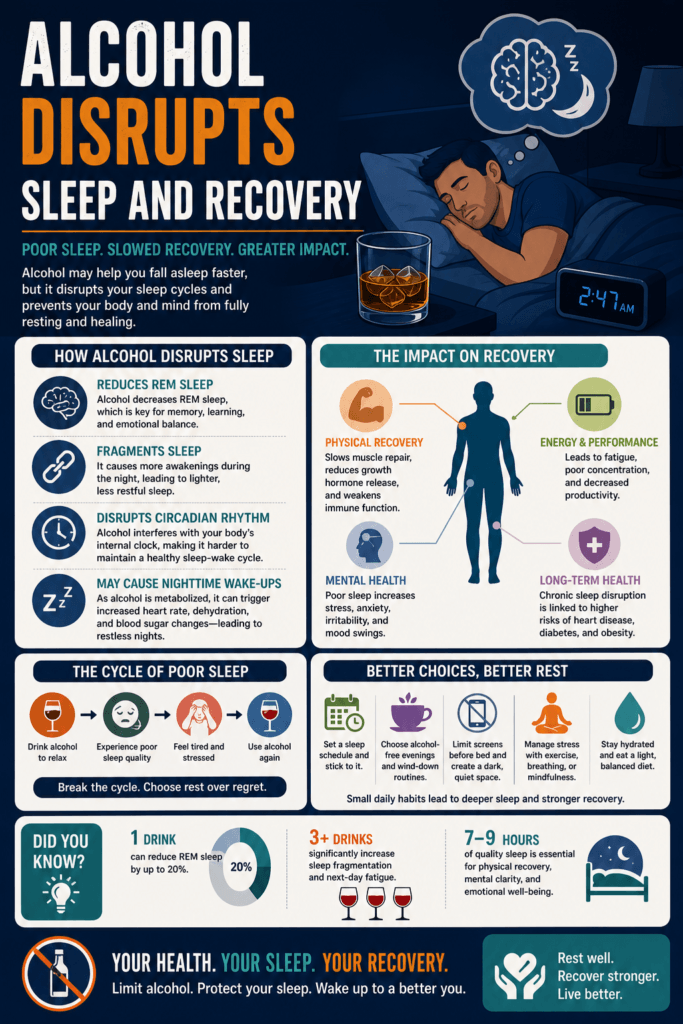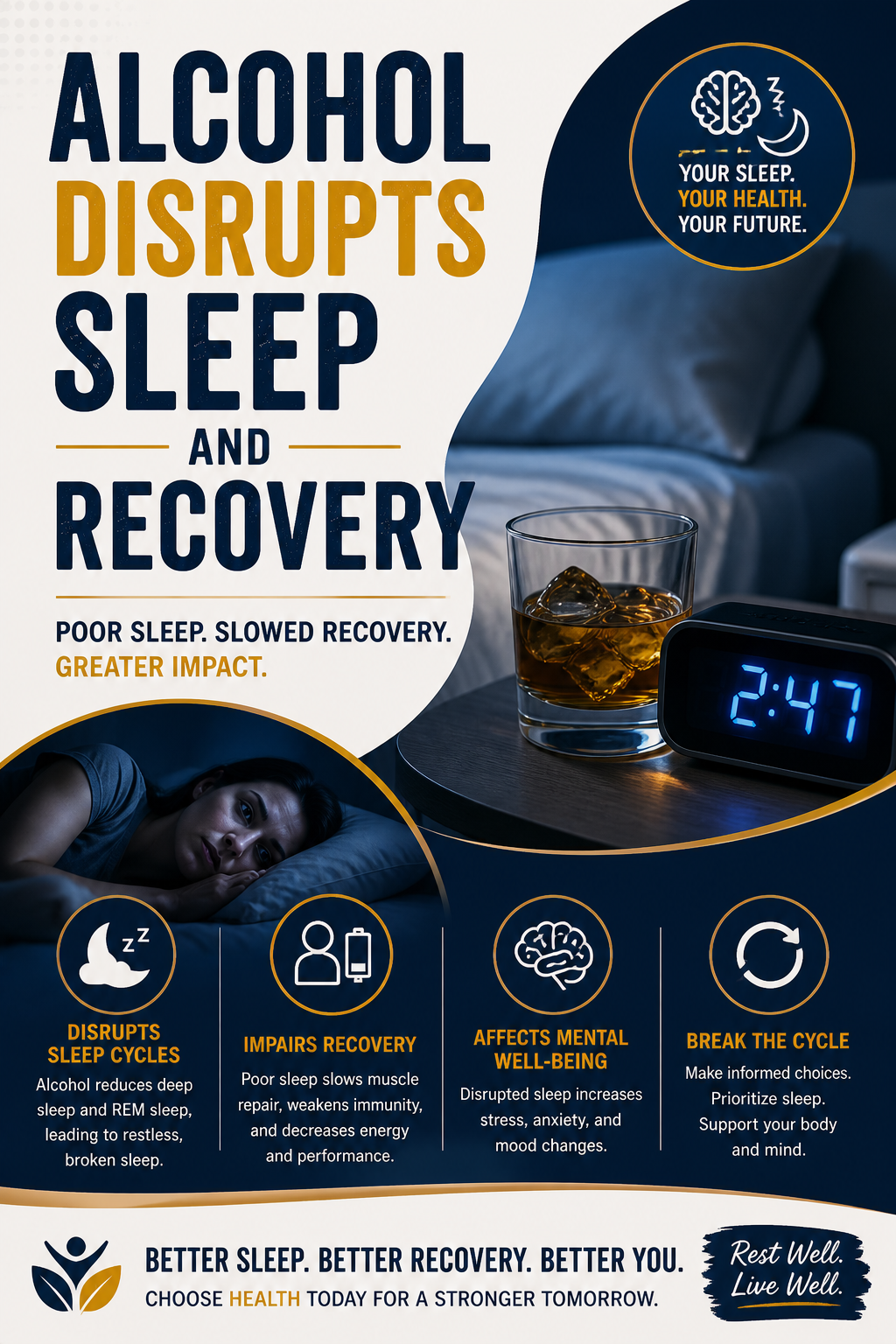
Although alcohol is commonly believed to promote relaxation and improve sleep, it actually has the opposite effect on the body’s natural sleep processes. While drinking alcohol may help a person fall asleep more quickly, it disrupts normal sleep patterns by reducing deep, restorative sleep and interfering with the body’s recovery during the night. Poor sleep quality can impair physical healing, memory, concentration, emotional well-being, and overall health. Understanding the relationship between alcohol and sleep can help individuals make healthier choices that support lasting wellness and recovery.
Alcohol Disrupts Sleep and Recovery: What You Need to Know
Alcohol is often associated with relaxation—many people turn to a drink in the evening to unwind or even to help them fall asleep. However, while alcohol may make you feel drowsy at first, its overall impact on sleep and recovery is far from beneficial. In reality, alcohol can significantly disrupt sleep quality and interfere with the body’s ability to rest, repair, and recover.
How Alcohol Affects Sleep Cycles
Sleep is not a single, uniform state—it consists of multiple stages, including light sleep, deep sleep, and REM (rapid eye movement) sleep. Each stage plays a critical role in physical and mental recovery.
Alcohol interferes with these stages by:
- Reducing REM sleep, which is essential for memory, learning, and emotional regulation
- Fragmenting sleep, causing frequent awakenings throughout the night
- Disrupting circadian rhythms, the body’s natural sleep-wake cycle
While alcohol may help you fall asleep faster, it leads to poorer quality sleep overall.
The Impact on Physical Recovery
Sleep is when the body repairs tissues, regulates hormones, and restores energy levels. When alcohol disrupts sleep, it also slows these recovery processes.
Effects include:
- Reduced muscle recovery after physical activity
- Impaired immune function, making the body more vulnerable to illness
- Hormonal imbalances, including decreased growth hormone production
This is especially important for individuals focused on fitness, healing, or overall health.
Mental and Emotional Consequences
Poor sleep doesn’t just affect the body—it also impacts the mind.
Alcohol-related sleep disruption can lead to:
- Increased anxiety and irritability
- Difficulty concentrating and making decisions
- Mood instability and emotional fatigue
Over time, this cycle can contribute to ongoing stress and decreased mental well-being.
Why Alcohol Causes Nighttime Wake-Ups
As the body metabolizes alcohol during the night, it can trigger:
- Increased heart rate
- Dehydration
- Disruptions in blood sugar levels
These changes often lead to waking up in the middle of the night or experiencing restless, unrefreshing sleep.
The Cycle of Fatigue and Dependence
Because alcohol disrupts sleep, it can create a cycle:
- Drink to relax or fall asleep
- Experience poor sleep quality
- Feel fatigued the next day
- Use alcohol again to cope
This pattern can increase reliance on alcohol and negatively affect long-term health.
Healthier Alternatives for Better Sleep
Instead of relying on alcohol, consider habits that support natural sleep and recovery:
- Establish a consistent sleep schedule
- Create a relaxing bedtime routine
- Limit screen time before bed
- Practice relaxation techniques like deep breathing or meditation
- Avoid caffeine and heavy meals late in the evening
These strategies promote deeper, more restorative sleep.
Conclusion
Although alcohol may seem like a quick fix for falling asleep, it ultimately disrupts the body’s natural sleep processes and slows recovery. From fragmented sleep cycles to impaired physical and mental restoration, the effects can accumulate over time.
Prioritizing healthy sleep habits and reducing alcohol intake can significantly improve both rest and recovery. By understanding the true impact of alcohol on sleep, individuals can make more informed choices that support long-term health and well-being.
Take Control: Self-Management Strategies to Address How Alcohol Disrupts Sleep and Recovery
Alcohol’s impact on sleep and recovery is often underestimated. While it may seem to help you relax or fall asleep faster, it actually disrupts sleep cycles and interferes with the body’s ability to repair and restore itself. The good news is that with the right self-management strategies, you can take control of your habits, improve sleep quality, and support overall recovery.
Why Self-Management Matters
Self-management is about making intentional choices that support your health and well-being. When it comes to alcohol and sleep, this means recognizing patterns, setting boundaries, and building habits that promote restorative rest.
Benefits of self-management include:
- Improved sleep quality and consistency
- Better physical recovery and energy levels
- Reduced reliance on alcohol for relaxation
- Enhanced mental clarity and emotional balance
1. Track Your Sleep and Drinking Patterns
Awareness is the first step toward change.
Try:
- Keeping a simple sleep journal
- Noting when and how much alcohol you consume
- Observing how you feel the next morning
Over time, patterns become clear—helping you connect alcohol use with disrupted sleep.
2. Set Clear Limits on Alcohol Intake
Creating boundaries can significantly improve sleep quality.
Strategies include:
- Limiting alcohol to certain days of the week
- Reducing the number of drinks per occasion
- Avoiding alcohol at least 3–4 hours before bedtime
These limits give your body time to process alcohol before sleep.
3. Replace the “Nightcap” Habit
Many people rely on alcohol as part of their nighttime routine. Replacing it with healthier alternatives can make a big difference.
Consider:
- Herbal tea or warm non-caffeinated drinks
- Reading or journaling
- Gentle stretching or relaxation exercises
These alternatives help signal your body that it’s time to wind down—without disrupting sleep.
4. Build a Consistent Sleep Routine
Consistency supports your body’s natural circadian rhythm.
Key habits:
- Go to bed and wake up at the same time each day
- Create a calming pre-sleep routine
- Keep your sleep environment dark, quiet, and cool
A stable routine reduces the need for external sleep aids like alcohol.
5. Use Relaxation Techniques for Stress Management
Stress is a common reason people turn to alcohol at night.
Healthier coping strategies include:
- Deep breathing exercises
- Meditation or mindfulness
- Progressive muscle relaxation
These techniques calm the nervous system and promote natural sleep readiness.
6. Pay Attention to Physical Recovery Needs
Sleep is essential for recovery—especially after physical or mental exertion.
Support recovery by:
- Staying hydrated (especially if alcohol was consumed)
- Eating balanced meals
- Allowing enough time for rest and recovery
Recognizing how alcohol affects recovery can motivate healthier choices.
7. Set Realistic and Gradual Goals
Change doesn’t have to happen all at once.
Start with:
- Reducing alcohol intake gradually
- Choosing alcohol-free nights
- Celebrating small improvements in sleep quality
Sustainable change is built through consistent, manageable steps.
8. Reflect and Adjust Regularly
Self-management is an ongoing process.
Take time to:
- Reflect on what’s working and what’s not
- Adjust habits based on how your body responds
- Stay flexible and patient with yourself
This helps maintain long-term progress.
Conclusion
Understanding how alcohol disrupts sleep and recovery is only the first step—taking action is what creates real change. Through self-management strategies like tracking habits, setting limits, and building healthier routines, individuals can improve both sleep quality and overall well-being.
By making intentional choices and prioritizing rest, you can break the cycle of disrupted sleep and move toward a more balanced, energized, and restorative lifestyle.
Rest Together: Family Support Strategies to Address How Alcohol Disrupts Sleep and Recovery
Alcohol’s impact on sleep and recovery doesn’t just affect individuals—it can influence the well-being of the entire household. When one person struggles with disrupted sleep due to alcohol use, it can lead to fatigue, mood changes, and reduced daily functioning that ripple through family life. The good news is that families can play a powerful role in supporting healthier habits, improving sleep quality, and encouraging long-term recovery.
Why Family Support Matters
Sleep and recovery are deeply connected to daily routines, stress levels, and environment—all areas where family influence is strong. Supportive families can:
- Encourage healthier nighttime habits
- Reduce reliance on alcohol for relaxation
- Create a stable, sleep-friendly environment
- Strengthen accountability and motivation
When families work together, positive changes are more sustainable.
1. Encourage Open and Supportive Conversations
Talking about alcohol and sleep should be approached with understanding—not judgment.
Families can:
- Share observations about sleep patterns and energy levels
- Discuss how alcohol may be affecting rest and recovery
- Encourage honest, pressure-free dialogue
Open communication builds trust and helps individuals feel supported rather than criticized.
2. Create a Sleep-Friendly Home Environment
The home environment plays a major role in sleep quality.
Family strategies include:
- Keeping evenings calm and low-stimulation
- Reducing noise, bright lights, and screen use before bed
- Establishing consistent household routines
A shared commitment to better sleep benefits everyone.
3. Replace Evening Drinking with Healthier Routines
Many people use alcohol as a way to unwind. Families can help shift this habit.
Try:
- Family wind-down activities like reading or watching calm content
- Herbal tea or non-alcoholic beverages as alternatives
- Gentle stretching or relaxation exercises together
Replacing the “nightcap” with healthier rituals supports natural sleep.
4. Support Consistent Sleep Schedules
Irregular sleep patterns can worsen the effects of alcohol on rest.
Families can:
- Encourage going to bed and waking up at similar times
- Align routines when possible (e.g., shared quiet hours)
- Avoid late-night disruptions
Consistency helps regulate the body’s internal clock.
5. Model Healthy Behaviors
Family members influence each other through daily actions.
Supportive modeling includes:
- Practicing responsible alcohol use
- Prioritizing sleep and recovery
- Demonstrating healthy stress management techniques
Leading by example reinforces positive habits.
6. Recognize and Address Stress Together
Stress is a common reason people turn to alcohol at night.
Families can:
- Talk openly about daily stressors
- Encourage healthier coping strategies like exercise or mindfulness
- Offer emotional support during difficult times
Reducing stress lowers the need to rely on alcohol for relaxation.
7. Celebrate Progress, Not Perfection
Change takes time, and small improvements matter.
Families should:
- Acknowledge efforts to reduce alcohol use
- Celebrate better sleep habits and routines
- Stay patient and supportive during setbacks
Positive reinforcement builds motivation and confidence.
8. Encourage Professional Support When Needed
If alcohol use is significantly affecting sleep and recovery, additional help may be beneficial.
Families can:
- Suggest speaking with a healthcare provider
- Support participation in counseling or treatment programs
- Remain involved and encouraging throughout the process
Seeking help is a sign of strength, not weakness.
Conclusion
Alcohol-related sleep disruption is a challenge that can be addressed more effectively with strong family support. Through open communication, shared routines, and a commitment to healthier habits, families can help create an environment that promotes better sleep and recovery.
When families work together, they not only improve rest—they strengthen relationships, support well-being, and build a healthier future for everyone involved.
Community Matters: Strategies to Address How Alcohol Disrupts Sleep and Recovery
Alcohol’s impact on sleep and recovery is not just an individual concern—it’s a broader public health issue that affects workplaces, families, and entire communities. Disrupted sleep linked to alcohol use can lead to fatigue, reduced productivity, mental health challenges, and increased healthcare needs. Community resource strategies play a vital role in raising awareness, promoting healthier habits, and providing support systems that help individuals make informed choices about alcohol use and sleep health.
Why Community-Based Strategies Are Important
Many people are unaware of how significantly alcohol affects sleep quality and recovery. Community-level efforts help:
- Increase public awareness and education
- Provide access to supportive resources
- Reduce stigma around reducing alcohol use
- Encourage healthier lifestyle habits
When communities prioritize sleep health, they create environments that support overall well-being.
1. Promote Public Education Campaigns
Education is the foundation of prevention.
Communities can:
- Launch awareness campaigns about alcohol’s effects on sleep cycles
- Share information through social media, local events, and health organizations
- Provide easy-to-understand resources about healthy sleep habits
Informed individuals are more likely to make healthier choices.
2. Partner with Healthcare Providers
Healthcare professionals are key to spreading accurate information.
Community strategies include:
- Encouraging providers to discuss alcohol and sleep during routine visits
- Offering workshops or seminars led by sleep specialists
- Integrating sleep education into primary care and wellness programs
These partnerships ensure consistent, evidence-based messaging.
3. Support Workplace Wellness Programs
Workplaces are powerful settings for promoting health.
Employers can:
- Offer wellness programs focused on sleep and recovery
- Provide education about the impact of alcohol on performance and rest
- Encourage healthy work-life balance and stress management
Improving sleep health can enhance productivity and reduce burnout.
4. Expand Access to Mental Health and Support Services
Stress and mental health challenges often contribute to alcohol use.
Communities should:
- Provide accessible counseling and behavioral health services
- Support programs that address stress, anxiety, and sleep issues
- Offer group support or peer-led programs
Addressing underlying issues reduces reliance on alcohol as a coping tool.
5. Create Alcohol-Free Social Opportunities
Social environments often revolve around alcohol, especially in the evenings.
Communities can:
- Host alcohol-free events and activities
- Promote wellness-focused gatherings (e.g., fitness classes, meditation groups)
- Encourage inclusive spaces where alcohol is not the focus
These options provide healthier ways to relax and connect.
6. Encourage Healthy Lifestyle Programs
Sleep and recovery are influenced by overall lifestyle habits.
Community initiatives may include:
- Fitness and recreation programs
- Nutrition and wellness education
- Sleep hygiene workshops
These programs reinforce habits that support natural sleep and recovery.
7. Reduce Stigma Around Behavior Change
People may hesitate to reduce alcohol use due to social pressure or stigma.
Communities can:
- Normalize conversations about sleep health and alcohol use
- Promote positive messaging around moderation and well-being
- Highlight success stories of improved sleep and recovery
A supportive culture makes change more achievable.
8. Foster Collaboration Across Community Sectors
Effective strategies require coordinated efforts.
Key partners include:
- Public health agencies
- Schools and universities
- Employers and local businesses
- Nonprofit and wellness organizations
Collaboration strengthens outreach and ensures resources reach diverse populations.
Conclusion
Understanding how alcohol disrupts sleep and recovery is essential—but turning that understanding into action requires strong community support. Through education, accessible resources, and supportive environments, communities can help individuals make healthier choices that improve sleep, recovery, and overall quality of life.
When communities invest in sleep health and responsible alcohol use, they create a ripple effect—leading to healthier individuals, stronger relationships, and more resilient populations.
Frequently Asked Questions
Here are some common questions:
1. Does alcohol really affect sleep quality?
Yes. While alcohol may help you fall asleep faster, it disrupts the natural sleep cycle—especially deep sleep and REM sleep—leading to poorer overall sleep quality.
2. Why does alcohol make me feel sleepy at first?
Alcohol has sedative effects that slow brain activity, which can make you feel drowsy. However, this effect is short-lived and does not lead to restorative sleep.
3. How does alcohol disrupt sleep cycles?
Alcohol:
- Reduces REM sleep (important for memory and mood)
- Causes fragmented sleep with frequent awakenings
- Alters circadian rhythms
This results in lighter, less refreshing sleep.
4. Can alcohol cause me to wake up during the night?
Yes. As your body metabolizes alcohol, it can trigger:
- Increased heart rate
- Dehydration
- Restlessness
These factors often lead to waking up in the middle of the night.
5. Does alcohol affect physical recovery?
Yes. Poor sleep caused by alcohol can:
- Slow muscle repair
- Reduce energy levels
- Weaken immune function
This impacts overall physical recovery and performance.
6. How does alcohol impact mental recovery?
Disrupted sleep can lead to:
- Difficulty concentrating
- Increased stress and anxiety
- Mood swings
Mental clarity and emotional stability depend heavily on quality sleep.
7. Is one drink before bed harmful?
Even small amounts of alcohol can affect sleep quality, especially if consumed close to bedtime. Sensitivity varies, but sleep disruption can still occur.
8. How long before bed should I avoid alcohol?
It’s generally recommended to avoid alcohol at least 3–4 hours before bedtime to reduce its impact on sleep.
9. Does alcohol cause insomnia?
Yes, alcohol can contribute to insomnia by disrupting sleep patterns and making it harder to stay asleep throughout the night.
10. Why do I feel tired even after sleeping when I drink?
Because alcohol reduces deep and REM sleep, your body doesn’t fully recover—even if you sleep for several hours.
11. Can alcohol worsen sleep disorders?
Yes. Alcohol can worsen conditions like:
- Sleep apnea
- Insomnia
- Restless sleep
It may increase breathing disruptions and further reduce sleep quality.
12. Is alcohol a good long-term solution for sleep problems?
No. Relying on alcohol for sleep can create a cycle of dependency and worsening sleep quality over time.
13. What are better alternatives to improve sleep?
Healthier options include:
- Maintaining a consistent sleep schedule
- Practicing relaxation techniques
- Limiting screen time before bed
- Creating a calm sleep environment
14. How quickly can sleep improve after reducing alcohol?
Many people notice improvements within a few days to weeks after reducing or eliminating alcohol, depending on their habits.
15. What is the most important takeaway?
Alcohol may help you fall asleep, but it prevents your body from getting the deep, restorative sleep needed for proper recovery.
Conclusion
Recognizing the connection between alcohol, sleep disruption, and impaired recovery is a crucial step toward healthier habits. Although alcohol may seem like a short-term solution for relaxation, its long-term effects can lead to poor sleep quality, fatigue, and reduced physical and mental performance. By prioritizing healthy sleep routines and being mindful of alcohol consumption, individuals can improve both rest and recovery. Small, intentional changes can lead to more restorative sleep, better energy levels, and overall improved quality of life.
Video: The Sleep Hack That Backfires Every Time #sleep #alcohol #tips