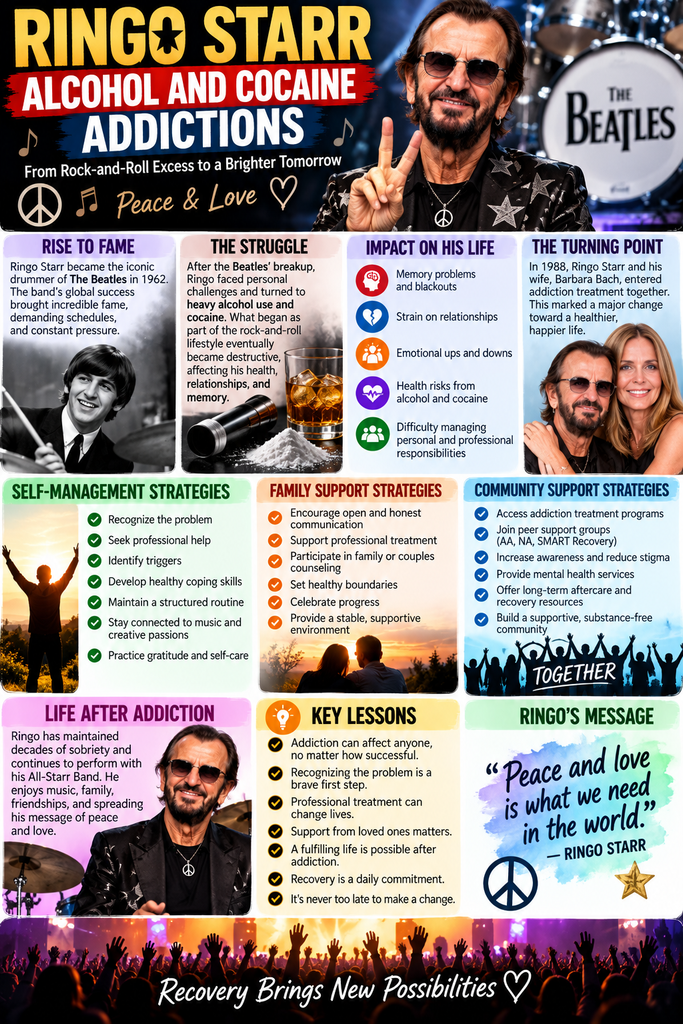
Ringo Starr is a legendary drummer for The Beatles, recognized worldwide. His distinctive drumming style, humor, and musical contributions helped shape one of history’s most influential bands. However, behind his international fame, Starr experienced serious struggles with alcohol and cocaine that affected his personal life, relationships, and emotional well-being.
During the years following the Beatles’ breakup, Starr became increasingly involved in a lifestyle marked by heavy drinking and drug use. What initially seemed connected to the excitement and excesses of celebrity life eventually developed into destructive patterns that threatened his health and marriage.
By the late 1980s, Starr recognized that his substance use had become unmanageable. In 1988, he and his wife, Barbara Bach, entered addiction treatment together, marking a major turning point in their lives.
His recovery journey demonstrates that addiction can affect even the most successful individuals. It also highlights how professional treatment, personal accountability, supportive relationships, and healthier routines can help individuals rebuild their lives.
Ringo Starr’s story is not simply about addiction. It is about recognizing destructive behaviors, accepting help, rebuilding relationships, and discovering that a fulfilling life is possible without alcohol or drugs.
Ringo Starr’s Rise to Fame and the Pressures of Celebrity Life
Born Richard Starkey on July 7, 1940, in Liverpool, England, Ringo Starr became the Beatles’ drummer in 1962. Alongside John Lennon, Paul McCartney, and George Harrison, he helped create music that transformed popular culture.
The Beatles achieved extraordinary fame, which brought demanding performance schedules, constant media attention, and intense public expectations.
After the group broke up in 1970, Starr pursued a solo career, releasing successful songs and collaborating with other musicians.
Despite his professional achievements, he experienced personal challenges and periods of instability.
Several factors may contribute to substance use problems among high-profile entertainers:
- Constant public scrutiny: Celebrity lifestyles can involve significant pressure and limited privacy.
- Unstructured schedules: Touring, recording, and social events may disrupt healthy routines.
- Easy access to substances: Alcohol and drugs may be readily available in certain entertainment environments.
- Emotional challenges: Stress, loneliness, and relationship difficulties can contribute to unhealthy coping behaviors.
- Normalization of excessive drinking: Heavy alcohol use may become socially accepted within particular professional circles.
These factors help explain the broader risks associated with celebrity culture, although they should not be treated as proven causes of Starr’s individual addiction.
Ringo Starr’s Struggles With Alcohol Addiction
Starr has publicly acknowledged that alcohol became a serious problem in his life.
During the 1970s and 1980s, his drinking reportedly escalated, affecting his memory, behavior, and personal relationships.
He later described experiencing significant gaps in his memory during periods of heavy substance use.
Alcohol can impair judgment, emotional regulation, coordination, and decision-making. With repeated heavy consumption, individuals may develop tolerance, dependence, and alcohol use disorder.
Common warning signs of problematic alcohol use include:
- Drinking larger amounts than intended.
- Difficulty controlling or reducing consumption.
- Experiencing blackouts or memory gaps.
- Continuing to drink despite relationship problems.
- Neglecting personal or professional responsibilities.
- Using alcohol to cope with stress or emotional discomfort.
- Experiencing withdrawal symptoms when alcohol use stops.
- Repeated unsuccessful attempts to quit.
For Starr, recognizing the destructive effects of drinking became an important step toward seeking professional treatment.
Ringo Starr’s Cocaine Use and the Dangers of Combining Substances
In addition to alcohol, Starr has discussed his past cocaine use.
Cocaine is a powerful stimulant that can produce temporary feelings of increased energy, confidence, and alertness. However, repeated use can contribute to dependence, cardiovascular complications, sleep disturbances, anxiety, and other serious health problems.
Combining cocaine with alcohol is particularly dangerous because the body can form cocaethylene, a metabolite associated with increased cardiovascular toxicity.
Potential health risks of combining alcohol and cocaine include:
- Increased heart rate and blood pressure.
- Greater risk of abnormal heart rhythms.
- Increased risk of heart attack or stroke.
- Impaired judgment and risk-taking behavior.
- Anxiety, irritability, and sleep disturbances.
- Greater potential for harmful patterns of substance use.
Starr’s history illustrates why addressing multiple substances together is important during addiction treatment.
The Turning Point: Entering Rehabilitation in 1988
One of the most significant moments in Starr’s recovery occurred in 1988, when he and Barbara Bach sought professional addiction treatment.
Their decision represented a major change from years of destructive substance use toward a more structured and health-focused lifestyle.
Treatment can help individuals understand addiction, recognize triggers, manage cravings, and develop strategies to prevent recurrence.
Although the specific details of Starr’s treatment should not be assumed beyond his public accounts, rehabilitation programs commonly involve:
- Comprehensive substance use assessments.
- Medically supervised withdrawal management when necessary.
- Individual and group counseling.
- Education about addiction and relapse prevention.
- Development of healthier coping strategies.
- Family or couples counseling when appropriate.
- Planning for ongoing support after treatment.
Starr has continued to speak positively about sobriety, and his long-running musical career demonstrates that creative fulfillment can continue after leaving alcohol and drugs behind.
Self-Management Strategies: Lessons From Ringo Starr’s Recovery
Self-management is essential to maintaining long-term sobriety. It involves recognizing personal triggers, developing healthier coping mechanisms, and making daily choices that support physical and emotional well-being.
Starr has described sobriety as a daily commitment. In a 2018 interview, he explained that his life had become unmanageable before treatment and that recovery allowed him to enjoy life without alcohol.
His experience illustrates the importance of consistency and accountability.
Practical self-management strategies
- Recognize addiction warning signs: Acknowledge when substance use begins affecting health, relationships, and responsibilities.
- Seek professional treatment: Get medical and behavioral healthcare rather than relying solely on willpower.
- Identify personal triggers: Recognize situations, emotions, or relationships associated with previous alcohol or drug use.
- Develop healthier coping mechanisms: Practice mindfulness, exercise, creative activities, and stress management.
- Establish consistent routines: Maintain regular sleep, nutritious meals, physical activity, and meaningful daily responsibilities.
- Avoid high-risk environments: Reduce exposure to situations that strongly encourage substance use.
- Build accountability: Maintain contact with counselors, trusted friends, or recovery support groups.
- Practice relapse prevention: Develop a plan for responding to cravings, stress, or a return to substance use.
- Celebrate progress: Recognize improvements in physical health, emotional stability, and personal relationships.
Alcohol withdrawal can be medically dangerous for people with significant physical dependence. Professional evaluation is important before abruptly stopping heavy alcohol consumption.
Rebuilding a Meaningful Life Without Substances
After entering recovery, Starr returned to performing and developed his All-Starr Band project.
In a 2019 interview, he linked his renewed energy and musical productivity to his sobriety.
His experience shows that recovery doesn’t require abandoning creativity or professional ambitions. Instead, sobriety can create opportunities to reconnect with meaningful interests.
For individuals recovering from addiction, enjoyable activities can provide structure, personal satisfaction, and healthier sources of motivation.
Family Support Strategies: The Importance of Barbara Bach
Family relationships can significantly influence addiction recovery.
Starr’s relationship with Barbara Bach is central to his story. The couple married in 1981 and entered rehabilitation together in 1988 after recognizing their serious alcohol-related problems.
Their decision to seek treatment together highlights how shared commitment can support meaningful lifestyle changes.
However, family support alone cannot treat addiction, and relatives should not be expected to take responsibility for another person’s recovery.
Practical family support strategies
- Encourage honest communication: Discuss addiction-related concerns without humiliation or unnecessary confrontation.
- Support professional treatment: Help loved ones locate appropriate rehabilitation programs and counseling services.
- Participate in family counseling: Address communication problems, emotional distress, and relationship challenges.
- Set healthy boundaries: Avoid enabling harmful behaviors while staying compassionate.
- Recognize recovery progress: Celebrate meaningful improvements without expecting perfection.
- Promote healthier activities: Encourage shared hobbies, exercise, and substance-free social experiences.
- Respect individual responsibility: Understand that each person must participate actively in their own treatment.
- Seek personal support: Family members may benefit from counseling or support groups such as Al-Anon.
Healing Relationships After Addiction
Substance use disorders can damage trust and create emotional distance between family members.
Rebuilding relationships often requires time, consistent behavior, accountability, and respectful communication.
In Starr’s case, his continued marriage and public reflections on sobriety demonstrate how relationships can remain meaningful after addiction treatment.
However, relationship repair is not guaranteed, and safety must remain a priority when substance use has been associated with threatening or abusive behavior.
Community Support Strategies: Building a Foundation for Lasting Sobriety
Community support provides individuals with opportunities to maintain recovery through social connection, treatment resources, and practical assistance.
For individuals who have experienced addiction, isolation can make emotional difficulties harder to manage. Supportive communities can encourage accountability and reduce stigma.
Starr and Bach also established the Lotus Foundation, which has supported charitable causes including assistance for people affected by substance use problems.
Practical community support strategies
- Addiction treatment services: Provide access to medical care, counseling, and rehabilitation programs.
- Peer recovery groups: Encourage participation in Alcoholics Anonymous, Narcotics Anonymous, SMART Recovery, or other supportive communities.
- Mental health services: Address anxiety, depression, trauma, and other conditions that may complicate recovery.
- Recovery coaching: Offer guidance, accountability, and assistance navigating treatment resources.
- Family education programs: Teach relatives how to support recovery while maintaining healthy boundaries.
- Community wellness activities: Promote exercise, music, volunteering, and other substance-free social opportunities.
- Public education campaigns: Reduce stigma by explaining addiction as a treatable health condition.
- Continuing care programs: Help individuals maintain connections with treatment providers after rehabilitation.
Community support is especially important for individuals facing barriers like treatment costs, transportation, housing instability, or limited access to healthcare.
What Ringo Starr’s Recovery Teaches Us About Long-Term Sobriety
Starr’s recovery offers several lessons for individuals and families affected by addiction.
1. Fame and success do not prevent addiction. Substance use disorders can affect people from every background, including successful entertainers.
2. Recognizing the problem is an important turning point. Acknowledging the consequences of substance use can motivate individuals to seek professional treatment.
3. Recovery requires ongoing commitment. Completing rehabilitation often marks the start of a longer process of healthier behaviors and ongoing support.
4. Supportive relationships can strengthen recovery. Family members, friends, and peers can offer encouragement, but they cannot replace appropriate treatment.
5. Creative fulfillment can continue after addiction. Starr’s post-recovery musical career demonstrates that sobriety can coexist with artistic achievement and meaningful professional goals.
6. Recovery is possible even after years of substance use. Starr’s publicly reported decades of sobriety illustrate the potential for lasting change.
Ringo Starr’s Life After Addiction: Music, Peace, and Love
After rehabilitation, Starr continued recording, touring, and collaborating with fellow musicians.
His All-Starr Band became a major part of his later career, bringing together performers from different musical backgrounds.
In July 2025, Starr publicly reflected on about 37 years of sobriety and expressed gratitude for the changes in his life.
His message of “peace and love” has become closely associated with his public identity.
Although every recovery journey is different, Starr’s experience demonstrates that a fulfilling life after addiction can include meaningful work, relationships, creativity, and personal growth.
Conclusion: Ringo Starr’s Journey From Addiction to Recovery
Ringo Starr’s struggles with alcohol and cocaine reveal the difficult realities that can exist behind celebrity success. Despite international fame and musical accomplishments, substance use created serious challenges that eventually led him to seek professional treatment.
His decision to enter rehabilitation with Barbara Bach in 1988 marked an important turning point. Through sustained commitment to sobriety, supportive relationships, and renewed involvement in music, Starr rebuilt important aspects of his life.
His story highlights the value of self-management strategies, compassionate family support, and accessible community recovery resources.
Most importantly, it reminds us that addiction does not have to determine a person’s future.
Recovery is not about erasing the past. It is about making healthier choices, rebuilding meaningful relationships, and discovering new possibilities for the future.
Frequently Asked Questions and Answers
1. Did Ringo Starr struggle with alcohol and cocaine addiction?
Yes. Ringo Starr has publicly discussed his struggles with heavy alcohol consumption and cocaine use during the 1970s and 1980s. Despite his worldwide success as the drummer for the Beatles, substance use became a serious problem in his personal life. In 1988, he entered rehabilitation with his wife, Barbara Bach, beginning a major turning point in his recovery.
2. When did Ringo Starr’s addiction problems begin?
Starr’s substance use developed during his years in the music industry and became particularly problematic following the Beatles’ breakup in 1970. Throughout the 1970s and 1980s, heavy drinking and drug use became increasingly disruptive. The exact beginning of his addiction cannot be established from public accounts.
3. What substances did Ringo Starr struggle with?
Starr has publicly acknowledged problems involving alcohol and cocaine. Alcohol is a central nervous system depressant, while cocaine is a powerful stimulant. Both substances can produce dependence and serious health consequences. Combining alcohol and cocaine can also increase cardiovascular risks.
4. How did alcohol addiction affect Ringo Starr’s life?
Starr has described periods of heavy drinking that affected his memory, behavior, and relationships. He experienced blackouts and later acknowledged that substance use had become destructive. His experiences illustrate how alcohol dependence can affect individuals regardless of their professional achievements or financial resources.
5. Did Ringo Starr experience memory loss because of his drinking?
Yes. Starr has publicly discussed experiencing significant memory gaps during periods of heavy alcohol and drug use. Alcohol-related blackouts occur when intoxication interferes with the brain’s ability to form new memories. Repeated blackouts are a serious warning sign of hazardous alcohol consumption.
6. Why did Ringo Starr use alcohol and cocaine?
Starr’s substance use occurred within a celebrity environment where alcohol and drugs were readily available. However, addiction develops through a combination of biological, psychological, social, and environmental factors. It would be inaccurate to attribute his addiction to one specific cause without clear evidence.
7. When did Ringo Starr enter rehabilitation?
Ringo Starr entered addiction rehabilitation in 1988, alongside his wife, Barbara Bach. Their decision to seek professional treatment together marked an important transition toward sobriety and healthier living.
8. Did Barbara Bach struggle with addiction too?
Yes. Barbara Bach has been publicly associated with Starr’s recovery journey, and the couple entered rehabilitation together in 1988 to address their substance use problems. Their experience highlights the importance of recognizing harmful patterns and seeking professional assistance.
9. How did Barbara Bach help Ringo Starr overcome addiction?
Bach and Starr decided to seek rehabilitation together, creating an opportunity for shared support and lifestyle changes. Their relationship has remained an important part of Starr’s life.
However, addiction recovery requires individual participation, and a spouse cannot guarantee another person’s sobriety. Professional treatment and personal commitment remain essential.
10. Has Ringo Starr remained sober since rehabilitation?
Starr has repeatedly stated in public interviews that he has maintained sobriety since 1988. His accounts describe decades without alcohol or recreational drug use.
His experience demonstrates that sustained recovery is possible, even after years of serious substance-related problems.
11. How did sobriety change Ringo Starr’s life?
Following rehabilitation, Starr continued building his musical career, strengthening personal relationships, and pursuing healthier routines.
In 1989, he launched his All-Starr Band, which became a major part of his post-recovery career. His continued musical activity illustrates how sobriety can support creativity, productivity, and meaningful personal goals.
12. Did Ringo Starr’s addiction affect his music career?
His substance use contributed to difficult periods in his personal and professional life. However, Starr continued recording and performing throughout different stages of his career.
After rehabilitation, he returned to touring with renewed focus, showing that recovery can create opportunities for professional growth and renewed motivation.
13. What are the dangers of combining alcohol and cocaine?
Combining alcohol and cocaine can produce a substance called cocaethylene, which is associated with increased cardiovascular toxicity.
Potential complications include:
- Increased heart rate and blood pressure.
- Abnormal heart rhythms.
- Greater risk of heart attack and stroke.
- Impaired judgment and risk-taking behavior.
- Anxiety, agitation, and sleep disturbances.
- Increased risk of overdose and other serious medical complications.
Using alcohol and cocaine together is particularly dangerous because their combined effects can increase health risks.
14. What self-management strategies can help someone recovering from alcohol and cocaine addiction?
Self-management involves building healthy routines, recognizing triggers, and staying actively engaged in recovery.
Helpful strategies include:
- Acknowledging problematic substance use.
- Seeking professional addiction treatment.
- Identifying emotional and environmental triggers.
- Practicing stress-management techniques.
- Maintaining consistent sleep and nutrition.
- Participating in counseling or recovery support groups.
- Developing a personalized relapse-prevention plan.
- Pursuing meaningful hobbies and activities.
- Maintaining accountability and supportive relationships.
For alcohol use disorder, medications such as naltrexone or acamprosate may be appropriate. For cocaine use disorder, behavioral treatments, particularly contingency management, have demonstrated effectiveness.
15. How important is family support during addiction recovery?
Family support can improve treatment engagement and help individuals maintain healthier routines.
Family members can encourage professional treatment, communicate without judgment, establish healthy boundaries, and participate in family counseling when appropriate.
Starr and Bach’s shared decision to seek rehabilitation demonstrates one way loved ones can support each other through recovery.
16. Can couples recover from addiction together?
Yes. Couples can support each other’s recovery when both individuals are committed to treatment and maintaining healthier behaviors.
However, each person needs an individualized recovery plan. Couples counseling, communication skills, and clear boundaries can strengthen relationships.
Joint treatment is not appropriate in every situation, particularly when relationships involve coercion, violence, or serious safety concerns.
17. What role does community support play in long-term sobriety?
Community support helps individuals maintain recovery by reducing isolation and providing access to treatment, education, and encouragement.
Useful resources include:
- Alcoholics Anonymous (AA).
- Narcotics Anonymous (NA).
- SMART Recovery.
- Addiction treatment centers.
- Mental health counseling.
- Peer recovery coaching.
- Community wellness programs.
- Family education and support groups.
Long-term recovery often benefits from continued connections with supportive people and services.
18. Did Ringo Starr replace addiction with healthier activities?
Following rehabilitation, Starr remained active in music, touring, and charitable work.
Creative expression, physical activity, social connections, and meaningful responsibilities can help individuals develop healthier routines during recovery.
Although these activities cannot replace professional addiction treatment, they can strengthen overall well-being and provide positive sources of motivation.
19. Why is professional treatment important for alcohol and cocaine addiction?
Professional treatment helps individuals address substance dependence, recognize triggers, and develop effective coping strategies.
Treatment may include medical assessment, withdrawal management, behavioral therapy, relapse prevention, and ongoing recovery support.
Alcohol withdrawal can be life-threatening in people with significant physical dependence. Anyone at risk of severe withdrawal should seek medical guidance before abruptly stopping alcohol consumption.
20. Can someone recover after years of substance abuse?
Yes. Many individuals achieve long-term recovery after years or even decades of problematic substance use.
Starr’s publicly described sobriety since 1988 provides an example of sustained recovery following serious alcohol and cocaine problems.
Recovery experiences vary, and some individuals may need repeated treatment episodes or ongoing support.
21. What warning signs suggest someone may need addiction treatment?
Common warning signs include:
- Difficulty controlling alcohol or drug consumption.
- Increasing tolerance or withdrawal symptoms.
- Continuing substance use despite harmful consequences.
- Memory blackouts or risky behavior.
- Relationship conflicts associated with substance use.
- Neglecting important responsibilities.
- Strong cravings or compulsive substance-seeking.
- Repeated unsuccessful attempts to quit.
Early assessment and treatment can help prevent more serious complications.
22. Can alcohol and cocaine addiction affect mental health?
Yes. Alcohol and cocaine use can contribute to anxiety, depression, sleep disturbances, irritability, and emotional instability.
Substance use disorders may also occur alongside independent mental health conditions.
Integrated treatment can help address both addiction and co-occurring psychiatric concerns when present.
However, these general risks should not be interpreted as evidence that Starr experienced any particular psychiatric diagnosis.
23. What can families learn from Ringo Starr and Barbara Bach’s recovery?
Their experience demonstrates that addiction can affect relationships but that professional treatment and sustained personal commitment may create opportunities for meaningful change.
Families can learn the importance of:
- Recognizing substance use problems early.
- Encouraging treatment without judgment.
- Supporting healthy lifestyle changes.
- Maintaining clear personal boundaries.
- Seeking family counseling when appropriate.
- Understanding that recovery requires continued effort.
Family members should also protect their own physical and emotional well-being.
24. What is Ringo Starr’s message about life after addiction?
Starr has frequently expressed gratitude for his sobriety and has become closely associated with the message of “peace and love.”
His later career shows that people can keep pursuing meaningful goals, maintaining relationships, and finding personal fulfillment after addiction treatment.
His public reflections emphasize the value of living without alcohol and drugs.
25. What is the most important lesson from Ringo Starr’s addiction and recovery journey?
Ringo Starr’s experience demonstrates that addiction can affect anyone, regardless of fame, talent, or financial success.
His decision to seek rehabilitation in 1988, alongside Barbara Bach, became a turning point that let him pursue a healthier life.
Video: