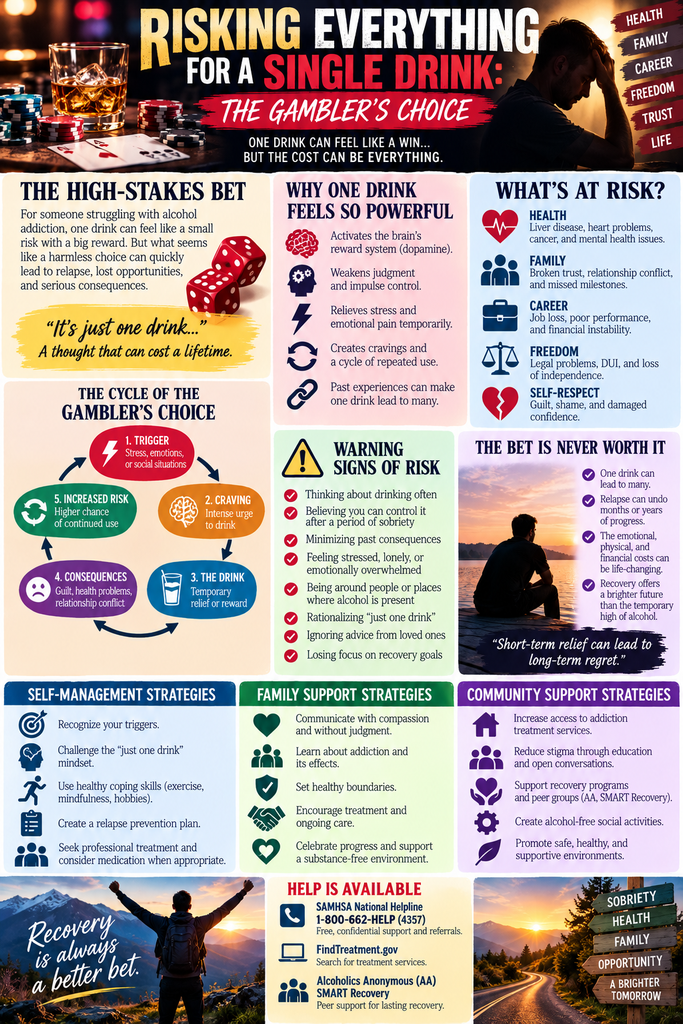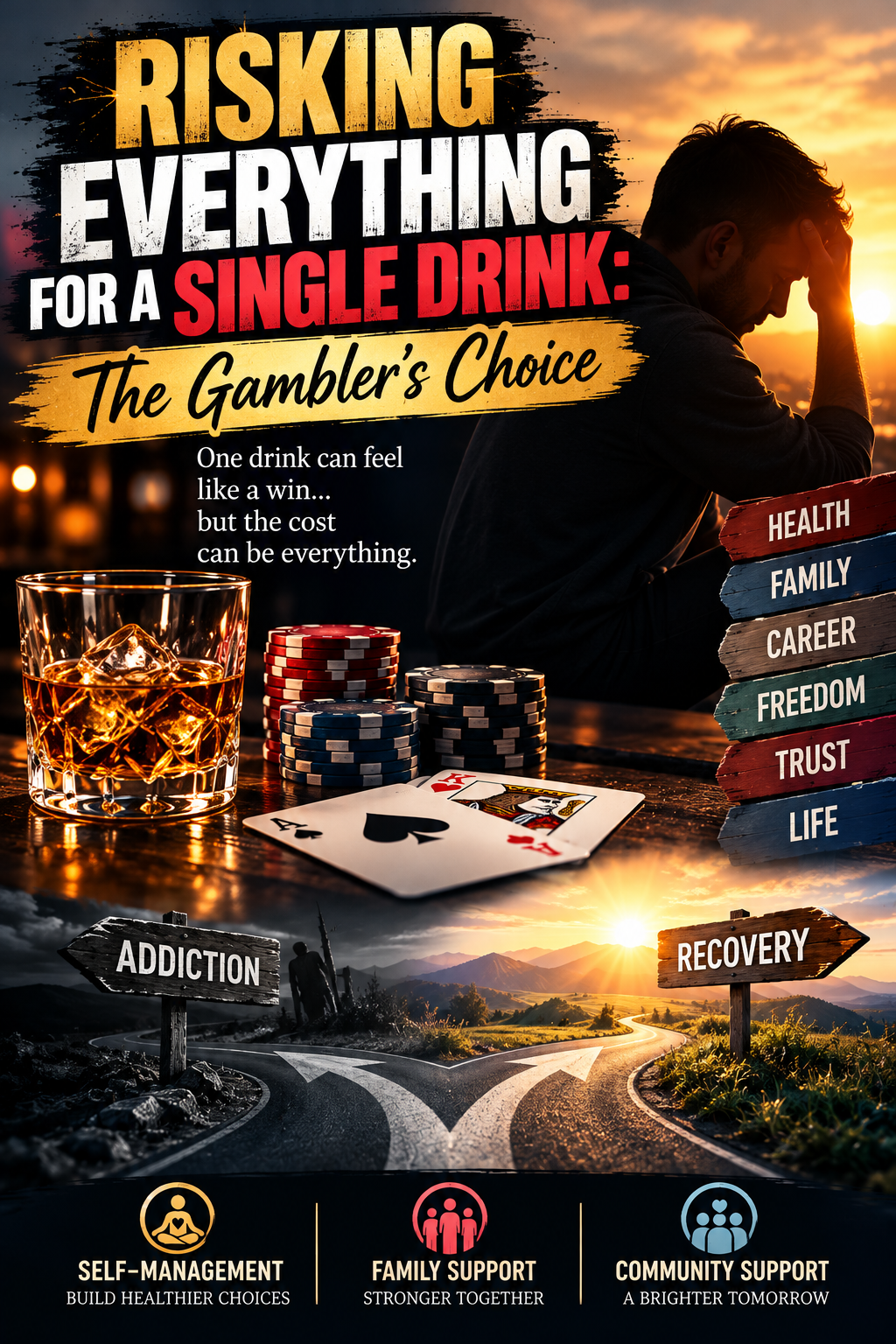
Imagine standing at a crossroads where a single decision could threaten everything you have worked so hard to build—your family, career, financial stability, physical health, relationships, and even your life. For someone struggling with alcohol addiction, the temptation to have just one drink can feel like a high-stakes gamble, where a moment of pleasure or emotional relief may outweigh years of personal progress and recovery. Although individuals may recognize the devastating consequences of returning to alcohol use, powerful cravings, emotional distress, unresolved trauma, and changes in the brain’s reward system can make resisting temptation extremely difficult. Alcohol use disorder affects motivation, impulse control, and decision-making, sometimes leading individuals to minimize risks, rationalize harmful behaviors, or believe they can safely control their drinking despite previous negative experiences. This internal conflict resembles a gambler’s mindset, where the hope of an immediate reward overshadows the possibility of significant personal loss. However, a return to drinking does not automatically erase recovery progress, and individuals can regain stability with timely intervention and appropriate support. Risking Everything for a Single Drink: The Gambler’s Choice explores the psychological, emotional, and neurological factors that contribute to alcohol addiction, the warning signs of relapse, and the consequences of repeatedly choosing alcohol over long-term well-being. Through practical self-management techniques, compassionate family involvement, professional treatment, and community-based recovery resources, individuals can recognize triggers, manage cravings, build healthier coping skills, and make informed decisions that protect their future. Ultimately, this journey shows that recovery isn’t about luck or another dangerous gamble, but about building resilience, accepting support, and choosing lasting health, stability, and personal freedom.
The Gambler’s Choice: When One Drink Becomes a Dangerous Bet
For someone recovering from alcohol use disorder (AUD), the decision to drink may involve far more than choosing a beverage.
A person might have maintained sobriety for months or years, rebuilt relationships, regained employment, and restored physical health. Yet an unexpected craving or stressful situation can create a moment of vulnerability.
The individual may begin rationalizing:
- “I’ve been sober long enough to control it.”
- “One drink won’t make a difference.”
- “I deserve something after everything I’ve been through.”
- “Nobody will know.”
- “I can stop whenever I want.”
These thoughts may minimize the risks associated with returning to alcohol use.
The comparison to gambling reflects how immediate rewards can overshadow potentially serious long-term consequences.
However, a return to drinking does not inevitably lead to uncontrolled alcohol use. Outcomes vary, and recovery remains possible after a lapse.
The greatest concern is when someone repeatedly takes risks despite recognizing the potential harm.
Understanding the Brain: Why Alcohol Can Override Rational Decisions
Alcohol affects several brain systems involved in reward, motivation, emotional regulation, and decision-making.
The brain’s reward system
Alcohol can increase dopamine signaling within reward-related pathways, reinforcing the desire to drink.
Repeated alcohol exposure can produce neuroadaptations that contribute to cravings and compulsive drinking.
Impaired executive functioning
The prefrontal cortex helps regulate impulse control, planning, and judgment.
Acute alcohol intoxication can impair these functions, increasing the likelihood of risky decisions.
Chronic heavy alcohol use may also affect cognitive functioning, although the degree and reversibility of impairment vary.
Stress and negative reinforcement
Some individuals drink to relieve anxiety, emotional discomfort, or withdrawal symptoms.
This creates a cycle in which alcohol provides temporary relief while contributing to additional problems.
Over time, the person may become increasingly motivated to drink to avoid discomfort rather than to experience pleasure.
Why immediate rewards feel more important
Addiction can involve delay discounting, a tendency to prioritize immediate rewards over larger future benefits.
For example, temporary relief from craving may feel more urgent than protecting long-term health or relationships.
This does not mean individuals lack values or concern for their families. It reflects how addiction can interfere with the ability to act consistently with long-term goals.
When Alcohol Addiction Resembles Gambling
Alcohol use disorder and gambling disorder share several psychological and behavioral characteristics.
Both can involve impaired control, craving, continued behavior despite harmful consequences, and difficulty resisting immediate rewards.
| Alcohol use disorder | Gambling disorder |
|---|---|
| Repeated drinking despite harm | Repeated gambling despite harm |
| Alcohol cravings | Urges to gamble |
| Difficulty limiting consumption | Difficulty limiting bets |
| Continued use despite financial or relationship problems | Continued gambling despite financial or relationship problems |
| Attempts to stop followed by recurrence | Attempts to stop followed by recurrence |
Although the disorders share features, their diagnostic criteria, physical risks, and treatment approaches differ.
Alcohol withdrawal can be medically dangerous, while gambling disorder does not cause the same type of physiological alcohol withdrawal.
The gambler’s choice is therefore a metaphor for risk-taking in addiction, not a claim that drinking and gambling are medically equivalent.
The Hidden Costs of Risking Everything for Alcohol
A single episode of drinking does not automatically destroy someone’s recovery, but repeated harmful drinking can create serious consequences.
Physical health consequences
Long-term excessive alcohol consumption increases the risk of:
- Liver disease and cirrhosis.
- Pancreatitis.
- Cardiovascular complications.
- Certain cancers.
- Neurological impairment.
- Accidental injuries.
- Alcohol poisoning.
Mental health consequences
Alcohol misuse may contribute to:
- Anxiety and depression.
- Sleep disturbances.
- Emotional instability.
- Impulsivity.
- Increased interpersonal conflict.
- Suicidal thoughts or behaviors in some individuals.
Family and relationship consequences
Alcohol-related behaviors may lead to:
- Broken promises.
- Loss of trust.
- Emotional distress.
- Financial instability.
- Parenting difficulties.
- Separation or divorce.
- Social isolation.
Employment and legal consequences
Alcohol-related impairment can contribute to workplace accidents, poor performance, impaired driving, and legal problems.
These consequences may intensify stress and increase vulnerability to continued drinking.
The Cycle of Craving, Rationalization, and Regret
For some individuals, returning to alcohol follows a recognizable pattern.
1. Emotional trigger
Stress, loneliness, conflict, or exposure to alcohol
2. Craving and rationalization
“Just one drink won’t hurt.”
3. Alcohol use
Temporary relief or reward
4. Possible negative consequences
Guilt, relationship problems, or renewed cravings
5. Increased vulnerability
Stress and shame may contribute to further use unless the cycle is interrupted
Understanding this cycle can help individuals recognize warning signs and intervene before alcohol use occurs.
Self-Management Strategies: Learning to Walk Away From the Bet
Self-management involves recognizing cravings, challenging risky thoughts, and developing healthier ways to respond to emotional distress.
1. Recognize high-risk situations
Common triggers include:
- Stressful workdays.
- Relationship conflicts.
- Celebrations involving alcohol.
- Loneliness or boredom.
- Financial difficulties.
- Exposure to previous drinking environments.
- Emotional distress.
Keeping a craving journal can help identify patterns.
2. Challenge the “just one drink” mindset
When cravings arise, individuals can ask themselves:
- What am I hoping this drink will accomplish?
- Will alcohol actually solve the problem?
- What happened during previous attempts to control my drinking?
- What healthier option is available right now?
- Who can I contact for support?
Cognitive behavioral therapy can help individuals identify and modify thoughts that increase relapse risk.
3. Use practical craving-management techniques
Helpful strategies include:
- Delaying a drinking decision while cravings decrease.
- Leaving environments where alcohol is readily available.
- Practicing urge surfing or mindfulness.
- Calling a supportive friend.
- Engaging in physical activity.
- Eating regular meals and maintaining hydration.
- Participating in recovery meetings.
Cravings often fluctuate rather than remaining at the same intensity indefinitely.
4. Consider evidence-based treatment
Treatment for alcohol use disorder may include:
- Naltrexone: Reduces alcohol’s rewarding effects and may help reduce heavy drinking.
- Acamprosate: Helps support abstinence after alcohol cessation.
- Disulfiram: Produces an unpleasant reaction when alcohol is consumed and may be appropriate for selected patients.
- Cognitive behavioral therapy: Develops coping skills and addresses problematic drinking patterns.
- Motivational enhancement therapy: Helps strengthen motivation for change.
- Mutual-support programs: Provide encouragement and accountability.
Medication selection requires individualized medical assessment.
People with significant alcohol dependence should not abruptly stop drinking without medical guidance because withdrawal can cause seizures or delirium tremens.
5. Develop a personal relapse prevention plan
A structured plan should include:
- A list of personal triggers.
- Warning signs of increasing relapse vulnerability.
- Coping strategies for cravings.
- Contact information for supportive individuals.
- Treatment and counseling appointments.
- A plan for responding to a lapse without abandoning recovery.
Key lesson: The goal is not simply to resist one drink. It is to build a life in which alcohol is no longer the primary response to stress, discomfort, or emotional pain.
Family Support Strategies: Protecting Relationships While Encouraging Recovery
Family members often experience fear, frustration, and uncertainty when a loved one repeatedly risks important relationships or responsibilities through alcohol use.
Compassionate support can help, but families should not be expected to control another person’s drinking.
1. Communicate without judgment
Helpful approaches include:
- Expressing concerns calmly.
- Discussing specific behaviors rather than criticizing character.
- Listening to the individual’s experiences.
- Avoiding threats or humiliation.
- Encouraging professional treatment.
2. Establish healthy boundaries
Boundaries may include:
- Refusing to ride with an intoxicated driver.
- Protecting children from unsafe situations.
- Avoiding financial support that facilitates harmful drinking.
- Setting clear expectations about household safety.
- Seeking professional assistance when needed.
3. Encourage treatment participation
Families can support recovery by:
- Helping locate addiction treatment services.
- Offering transportation to appointments.
- Encouraging prescribed medication adherence.
- Participating in family counseling.
- Supporting attendance at recovery meetings.
4. Rebuild trust gradually
Trust may have been damaged by repeated alcohol-related problems.
Rebuilding relationships requires:
- Consistent behavior.
- Honest communication.
- Accountability for harmful actions.
- Respect for boundaries.
- Patience and realistic expectations.
5. Support family well-being
Family members may benefit from individual counseling, Al-Anon, SMART Recovery Family & Friends, and caregiver support groups.
Key lesson: Families can offer compassion and encouragement while protecting their own safety, emotional health, and independence.
Community Support Strategies: Creating Safer Paths to Recovery
Communities influence recovery through healthcare access, social norms, employment opportunities, and available support networks.
1. Expand access to alcohol treatment
Communities should provide:
- Affordable outpatient and residential treatment.
- Medically supervised withdrawal management.
- Medications for alcohol use disorder.
- Integrated mental health services.
- Telehealth addiction care.
- Long-term recovery support.
2. Reduce stigma surrounding alcohol addiction
Stigma can discourage people from acknowledging drinking problems or seeking treatment.
Community initiatives should promote respectful language, accurate education, confidential access to treatment, and compassionate healthcare.
3. Support alcohol-free social opportunities
Alcohol-centered social environments may create challenges for individuals in recovery.
Communities can offer:
- Alcohol-free events.
- Recreational activities.
- Recovery community centers.
- Fitness and wellness programs.
- Peer support gatherings.
- Substance-free entertainment options.
4. Promote workplace recovery support
Employers can help through:
- Confidential employee assistance programs.
- Mental health benefits.
- Flexible scheduling for treatment.
- Education about alcohol use disorder.
- Recovery-supportive workplace policies.
5. Strengthen peer recovery networks
Organizations such as Alcoholics Anonymous, SMART Recovery, and other recovery community groups can provide connection and encouragement.
Peer support complements professional treatment and helps reduce isolation.
What Happens If Someone Takes the Gamble and Drinks Again?
A return to drinking does not mean that all previous recovery progress has been lost.
How you respond after a lapse can shape what happens next.
Helpful steps include:
- Stop drinking and move to a safe environment.
- Avoid driving or other dangerous activities.
- Contact a trusted support person.
- Inform a treatment professional.
- Review the circumstances that contributed to drinking.
- Adjust the relapse prevention plan.
- Return to treatment or recovery activities promptly.
Individuals who experience severe withdrawal symptoms, confusion, seizures, or other medical emergencies should seek immediate medical care.
Instead of viewing a lapse as proof of failure, use it to identify unmet treatment needs and strengthen future recovery efforts.
Addiction Recovery Resources
SAMHSA National Helpline
1-800-662-HELP (4357)
Free, confidential information and referrals for substance use treatment.
Search for alcohol and substance use treatment services.
Peer support meetings for individuals seeking recovery from alcohol-related problems.
Evidence-informed mutual-support meetings and recovery tools.
Conclusion: Choosing Recovery Over the Next Drink
For someone struggling with alcohol use disorder, the temptation to drink can feel like a high-stakes gamble. A moment of temporary relief may compete with years of progress, restored relationships, improved health, and renewed personal stability.
The gambler’s choice illustrates how addiction can distort risk perception and prioritize immediate rewards over long-term goals.
However, addiction does not eliminate a person’s capacity for change.
Self-management strategies can help individuals recognize cravings, challenge risky thoughts, develop healthier coping skills, and seek evidence-based treatment.
Families help by communicating compassionately, maintaining healthy boundaries, and supporting participation in treatment. Communities strengthen recovery by improving access to healthcare, reducing stigma, and providing alcohol-free social opportunities.
A lapse does not have to become a prolonged return to harmful drinking. With timely support and appropriate treatment, individuals can continue moving toward recovery.
The most important lesson is that recovery is not about winning a gamble against addiction. It is about reducing the risks, strengthening support, and making choices that protect the life you are working to rebuild.
Frequently Asked Questions and Answers
Understanding the Gambler’s Choice in Alcohol Addiction
1. What does “Risking Everything for a Single Drink: The Gambler’s Choice” mean?
The phrase describes the internal conflict experienced by some individuals with alcohol use disorder when they consider drinking despite knowing the potential consequences.
Like a gambler risking valuable resources for an uncertain reward, someone struggling with alcohol addiction may prioritize temporary pleasure or emotional relief over long-term stability.
The metaphor highlights how cravings, impulsivity, and changes in brain reward processing can influence decision-making.
2. Why would someone risk losing everything for one drink?
Alcohol use disorder can affect brain systems responsible for motivation, reward, emotional regulation, and impulse control.
Strong cravings may temporarily make alcohol seem more important than relationships, employment, health, or recovery goals.
This behavior does not necessarily mean the individual lacks love for their family or concern for the consequences. Addiction can interfere with the ability to act consistently with long-term priorities.
3. Can one drink really lead to a relapse?
For some individuals with alcohol use disorder, a single drink can trigger additional cravings and increase the likelihood of continued drinking.
However, one episode of alcohol use does not automatically lead to a prolonged relapse.
The outcome depends on factors such as addiction severity, treatment engagement, coping skills, environmental triggers, and available support.
A lapse should prompt renewed attention to recovery rather than shame or hopelessness.
4. Why do people believe they can control their drinking after achieving sobriety?
After a period of abstinence, individuals may underestimate their previous drinking problems or believe they have regained control.
Common thoughts include:
- “I have been sober long enough.”
- “One drink will not hurt.”
- “I deserve a reward.”
- “I can stop whenever I want.”
- “My drinking was only a problem during stressful times.”
These thoughts may reflect rationalization, reduced awareness of risk, or an understandable desire to return to controlled drinking.
Cognitive behavioral therapy can help individuals evaluate these beliefs and make informed decisions.
5. How is alcohol addiction similar to gambling addiction?
Alcohol use disorder and gambling disorder share several behavioral characteristics, including impaired control, cravings or urges, continued behavior despite harmful consequences, and prioritizing immediate rewards over long-term goals.
Both conditions involve reward-related learning and decision-making processes.
However, alcohol use disorder involves substance exposure and may produce dangerous physical withdrawal symptoms, while gambling disorder does not involve alcohol-related physiological withdrawal.
Alcohol Cravings, Brain Function, and Risk-Taking
6. How does alcohol addiction affect decision-making?
Alcohol influences brain regions involved in reward processing, emotional regulation, and executive functioning.
Repeated heavy drinking may contribute to changes in impulse control, motivation, and the ability to evaluate consequences.
Acute intoxication can further impair judgment and increase risk-taking behavior.
These effects vary among individuals and may improve with sustained recovery.
7. What causes someone to crave alcohol after months or years of sobriety?
Alcohol cravings can be triggered by learned associations, stress, emotional distress, or environmental reminders.
Common triggers include:
- Relationship conflicts.
- Financial difficulties.
- Anxiety or depression.
- Celebrations involving alcohol.
- Returning to familiar drinking locations.
- Social pressure.
- Loneliness or boredom.
- Exposure to alcohol advertisements.
Cravings may occur even after prolonged abstinence because learned associations can persist.
8. Why does alcohol sometimes feel more important than family or health?
Addiction can alter how the brain assigns motivational value to alcohol-related rewards.
During intense cravings, immediate relief may feel more urgent than future consequences.
This does not mean the individual has permanently lost their values or emotional attachments.
Evidence-based treatment can help strengthen decision-making skills and reduce the influence of cravings.
9. Is drinking to relieve emotional pain a warning sign of addiction?
Repeatedly using alcohol to manage anxiety, sadness, trauma, loneliness, or stress may increase the risk of alcohol use disorder.
Alcohol may temporarily reduce uncomfortable emotions, reinforcing continued use.
Over time, however, drinking can worsen sleep, mood symptoms, relationships, and overall psychological functioning.
Counseling and healthier coping strategies can help individuals address emotional distress without relying on alcohol.
10. What are the warning signs that someone is preparing to drink again?
Possible warning signs include:
- Increasing thoughts about alcohol.
- Romanticizing previous drinking experiences.
- Minimizing past consequences.
- Avoiding recovery activities.
- Withdrawing from supportive relationships.
- Returning to high-risk environments.
- Experiencing unmanaged stress.
- Believing treatment is no longer necessary.
- Making plans to drink secretly.
These signs don’t guarantee a return to drinking, but they suggest additional support may help.
Self-Management and Relapse Prevention
11. How can someone resist the temptation to have just one drink?
Practical strategies include:
- Recognizing cravings without immediately acting on them.
- Delaying a drinking decision.
- Leaving high-risk environments.
- Contacting a trusted support person.
- Practicing mindfulness or urge surfing.
- Engaging in healthy alternative activities.
- Reviewing personal recovery goals.
- Attending counseling or peer support meetings.
Cravings often rise and fall in intensity. Learning to tolerate them without drinking can strengthen recovery skills.
12. What is urge surfing, and how does it help prevent relapse?
Urge surfing is a mindfulness-based technique that encourages individuals to observe cravings without acting on them.
Instead of fighting the urge or immediately seeking relief, the person notices physical sensations, thoughts, and emotions as they change.
The goal is to recognize that cravings are temporary experiences, not commands to follow.
This technique can be incorporated into cognitive behavioral therapy and relapse prevention programs.
13. What medications can help reduce alcohol cravings?
Several FDA-approved medications are available for alcohol use disorder.
- Naltrexone: Can reduce heavy drinking and alcohol’s rewarding effects.
- Acamprosate: Helps maintain abstinence after alcohol cessation.
- Disulfiram: Produces an unpleasant physical reaction when alcohol is consumed and may be appropriate for selected patients.
Medication selection depends on medical history, treatment goals, liver and kidney function, opioid medication use, and other clinical factors.
Medications are often combined with counseling or behavioral treatment.
14. What should someone do immediately after drinking again?
A return to alcohol use does not erase previous recovery progress.
Helpful steps include:
- Stop drinking and move to a safe environment.
- Avoid driving or operating machinery.
- Contact a trusted support person.
- Talk with a treatment professional about the episode.
- Identify the circumstances that contributed to drinking.
- Review and adjust the relapse prevention plan.
- Resume treatment and recovery activities promptly.
Individuals experiencing severe intoxication, seizures, confusion, or dangerous withdrawal symptoms should seek emergency medical care.
15. Can someone recover after repeated alcohol relapses?
Yes. Many individuals achieve sustained recovery after experiencing multiple returns to alcohol use.
Repeated episodes may indicate the need to modify treatment intensity, address untreated mental health conditions, adjust medications, or strengthen support systems.
Recovery is not measured solely by the absence of setbacks. Improvements in health, functioning, treatment engagement, and reduced alcohol-related harm are also meaningful outcomes.
Family Support and Rebuilding Relationships
16. How can families help someone who repeatedly risks everything for alcohol?
Families can support recovery through compassion, clear communication, and healthy boundaries.
Helpful approaches include:
- Expressing concern without blame.
- Encouraging evidence-based addiction treatment.
- Learning about alcohol use disorder.
- Supporting attendance at counseling appointments.
- Establishing expectations about safety.
- Avoiding financial assistance that facilitates harmful drinking.
- Participating in family therapy when appropriate.
Family members cannot control another person’s drinking, but they can support healthier decisions and protect their own well-being.
17. How can families rebuild trust after alcohol-related problems?
Rebuilding trust requires time, accountability, and consistent behavior.
Helpful strategies include:
- Honest communication.
- Following through on commitments.
- Acknowledging previous harm.
- Respecting established boundaries.
- Participating in counseling.
- Demonstrating consistent recovery-related behavior.
- Allowing relationships to heal gradually.
Forgiveness should not be forced, and rebuilding trust may occur at different speeds for different family members.
18. What should families do when a loved one refuses alcohol treatment?
Families can continue expressing concern while respecting the individual’s autonomy.
They may benefit from learning motivational communication techniques, establishing safety boundaries, and seeking professional guidance.
Programs such as Community Reinforcement and Family Training (CRAFT) can help concerned family members develop constructive responses and encourage treatment engagement.
Family members should also seek support for themselves rather than waiting until their loved one accepts treatment.
Community Support and Long-Term Recovery
19. How can communities help people struggling with alcohol addiction?
Communities can improve recovery outcomes by providing accessible treatment and supportive environments.
Important strategies include:
- Affordable addiction treatment programs.
- Medically supervised alcohol withdrawal services.
- Access to medications for alcohol use disorder.
- Mental health counseling.
- Alcohol-free recreational activities.
- Recovery-supportive workplaces.
- Peer recovery support groups.
- Public education to reduce stigma.
- Housing and employment assistance.
Community resources can reduce isolation and help individuals maintain meaningful connections during recovery.
20. What is the most important lesson from “Risking Everything for a Single Drink: The Gambler’s Choice”?
The central lesson is that alcohol addiction can create powerful conflicts between immediate cravings and long-term well-being.
For some individuals, one drinking episode may threaten progress toward better health, stronger relationships, financial stability, and personal goals. However, a lapse does not inevitably destroy recovery.
Self-management strategies help individuals recognize triggers, challenge risky thoughts, and develop healthier coping skills. Families support recovery through compassionate communication, healthy boundaries, and encouragement to seek treatment. Communities strengthen recovery by expanding access to evidence-based care and reducing stigma.
Video: