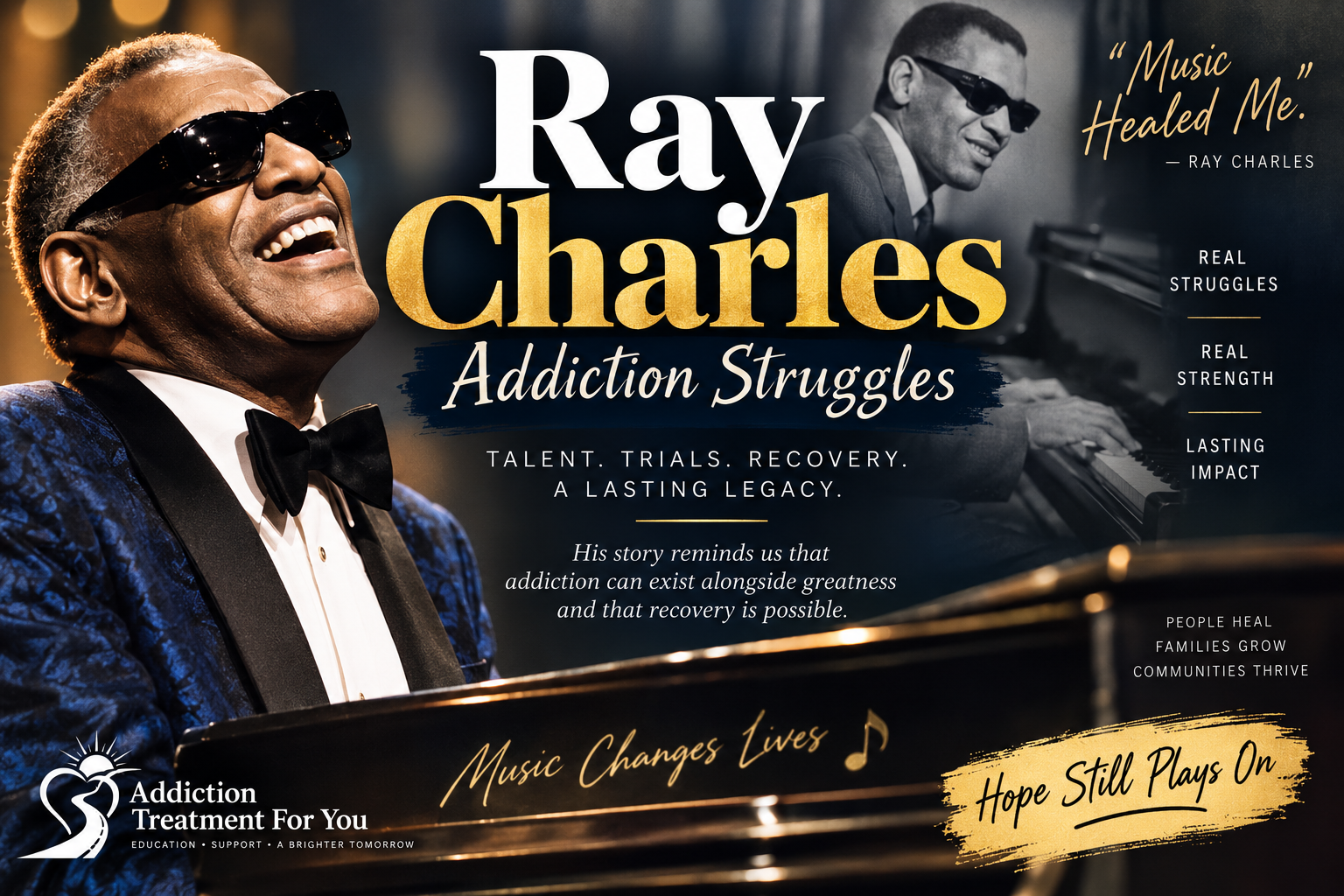
Ray Charles was one of the most influential musicians of the 20th century, blending gospel, blues, jazz, R&B, rock, and country into a distinctive sound that helped shape soul music. Behind his extraordinary career, however, was a long struggle with heroin. His experience demonstrates how substance use disorder can exist alongside talent and professional success—and why recovery often requires more than determination alone.
Ray Charles’ Struggle With Heroin
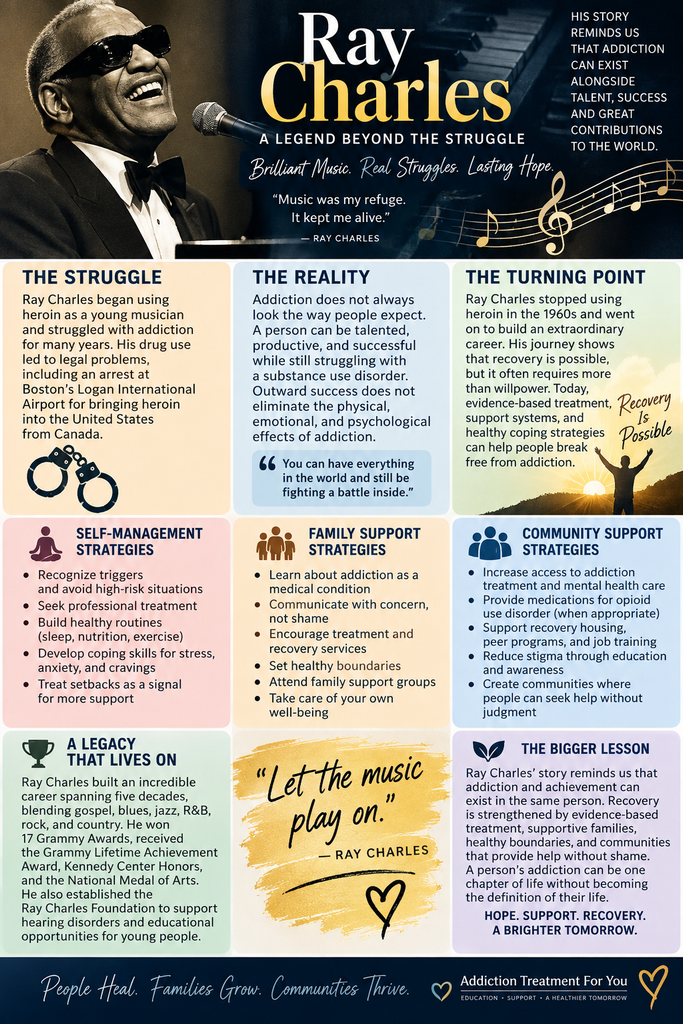
Charles began using heroin as a young musician and continued for many years. His drug use eventually brought serious legal consequences. The Smithsonian notes that he was arrested at Boston’s Logan International Airport for bringing heroin into the United States from Canada.
His story is important because addiction does not necessarily look the way people expect. A person may continue working, achieving goals, earning money, or maintaining a public image while experiencing a serious substance use disorder. Outward success does not eliminate the physical and psychological effects of addiction.
Charles ultimately stopped using heroin in the 1960s. His recovery should not be interpreted as evidence that everyone can simply decide to quit. Opioid addiction can involve powerful cravings, withdrawal, changes in behavior, and a high risk of returning to use. Today, evidence-based treatment may include medications for opioid use disorder, behavioral therapies, medical care, peer support, and long-term recovery services.
Self-Management Strategies
Recovery requires developing healthier ways of responding to cravings, stress, emotional pain, and environments associated with previous drug use. A person’s recovery plan should be individualized rather than based solely on another person’s success story.
- Recognize triggers. Identify people, environments, emotions, and situations associated with substance use.
- Seek professional treatment. Medical and behavioral-health professionals can evaluate withdrawal risks, co-occurring conditions, and appropriate treatment options.
- Build structure. Consistent sleep, meals, exercise, work, recreation, and appointments can reduce periods of instability.
- Develop coping skills. Learn alternatives for managing anxiety, grief, loneliness, anger, boredom, and stress.
- Prepare for cravings. Have specific people to contact and places to go when cravings become intense.
- Treat setbacks as signals for more support. A return to use does not erase previous progress; it indicates that the recovery plan may need to be strengthened or changed.
Family Support Strategies
Families frequently want to rescue someone they love from addiction, but support is different from taking responsibility for another person’s recovery.
Families can learn about substance use disorders so they understand that addiction involves biological, psychological, and social factors. Communication should emphasize concern rather than humiliation: describing specific behaviors and consequences is generally more constructive than calling someone weak or irresponsible.
Healthy boundaries are equally important. Families can encourage treatment, help locate services, attend appropriate family programs, and support healthy behavior without providing money or protection that unintentionally makes continued substance use easier.
Family members also deserve support for themselves. Counseling, education, and peer-support groups can help relatives cope with fear, anger, grief, and uncertainty while maintaining their own well-being.
Community Support Strategies
Recovery becomes more achievable when people have access to effective services and supportive environments. Communities can reduce barriers by providing affordable addiction treatment, medications for opioid use disorder, mental-health services, recovery housing, peer-support programs, transportation, education, and employment assistance.
Communities can also reduce stigma. Describing addiction as a moral failure may discourage people from disclosing their struggles or seeking care. Recovery-oriented communities recognize that people can experience addiction without losing their dignity, abilities, or potential.
Understanding Ray Charles Beyond Addiction
Ray Charles should not be defined solely by his heroin use. He built a remarkable career spanning approximately five decades and received numerous honors, including 17 Grammy Awards, the Grammy Lifetime Achievement Award, Kennedy Center Honors, and the National Medal of Arts.
His later life also included philanthropy. In 1986, he established what became the Ray Charles Foundation with a $1 million personal endowment, supporting work involving hearing disorders and educational opportunities for young people.
Conclusion
Ray Charles’ experience reminds us that addiction and achievement can exist in the same person. Fame, talent, intelligence, and financial success do not provide immunity from substance use disorders.
His journey also offers a broader recovery lesson: a person’s addiction may be one chapter of life without becoming the definition of that life. Modern recovery is strengthened by evidence-based treatment, personal coping strategies, supportive families, healthy boundaries, and communities that provide treatment without shame. The goal is not simply to stop a substance—it is to create a life in which recovery can be sustained.
Frequently Asked Questions
Here are some common questions:
1. Did Ray Charles struggle with addiction?
Yes. Ray Charles had a long history of heroin use during his career. His experience is an example of how a person can be highly talented and professionally successful while also living with a serious substance-use problem.
2. What drug was Ray Charles addicted to?
Charles primarily struggled with heroin, an opioid. His heroin use continued for years and eventually contributed to legal problems.
3. When did Ray Charles begin using heroin?
Charles began using heroin when he was a young musician. His addiction continued through part of his rise to international fame.
4. Did Ray Charles ever get arrested because of drugs?
Yes. One notable incident occurred at Boston’s Logan International Airport, where Charles was arrested after bringing heroin into the United States from Canada. Smithsonian Magazine
5. Did Ray Charles overcome heroin addiction?
Yes. Charles stopped using heroin in the 1960s. His story is often discussed as an example of recovery, although his experience should not be interpreted as a universal model for overcoming opioid addiction.
6. Did willpower alone help Ray Charles recover?
It would be misleading to reduce his recovery to willpower. Addiction is influenced by biological, psychological, behavioral, and environmental factors. Modern opioid-use-disorder treatment can include medications, counseling, behavioral therapies, peer support, and continuing medical care.
7. How could Ray Charles remain successful while experiencing addiction?
Substance use disorders do not always prevent someone from working or achieving professional success. Charles maintained an extraordinary music career despite his struggles. His official biography describes a career spanning about 50 years and recognizes him as a pioneer of soul music.
8. What can people in recovery learn from his experience?
One important lesson is that addiction does not define the entirety of a person’s identity. Helpful self-management strategies today include recognizing triggers, developing healthy routines, managing stress, seeking professional treatment, creating a relapse-prevention plan, and maintaining supportive relationships.
9. How can families support someone experiencing addiction?
Families can learn about substance use disorders, encourage professional treatment, communicate without shaming, establish healthy boundaries, avoid enabling harmful behavior, and seek support for themselves. Families can provide support, but they cannot take responsibility for another person’s recovery.
10. How can communities support addiction recovery?
Communities can improve access to addiction and mental-health treatment, medications for opioid use disorder when appropriate, peer-recovery services, recovery housing, employment assistance, transportation, and other practical resources. Reducing stigma can also make it easier for people to seek help.
11. Should Ray Charles be defined by his addiction?
No single part of his history captures his entire life. Charles became one of the most influential figures in American popular music, combining gospel, blues, jazz, R&B, rock, and country. His honors included 17 Grammy Awards, a Grammy Lifetime Achievement Award, Kennedy Center Honors, and the National Medal of Arts.
12. Did Ray Charles help others later in life?
Yes. In 1986, Charles established the Robinson Foundation for Hearing Disorders with a $1 million personal endowment. It later became the Ray Charles Foundation and supports hearing-related causes and educational opportunities for young people.
13. What is the biggest lesson from Ray Charles’ addiction journey?
His life illustrates that addiction can coexist with extraordinary ability and achievement, while recovery can open the door to many more years of meaningful life. Modern recovery is strongest when people have access to evidence-based treatment, healthy coping strategies, supportive relationships, and communities that replace stigma with appropriate care.
Video: