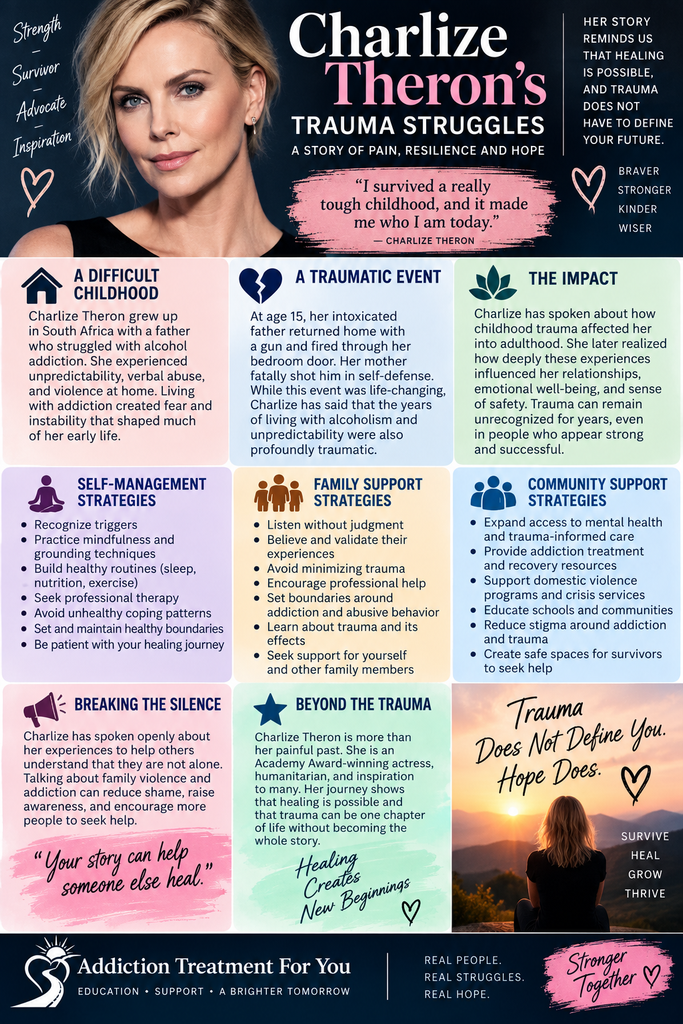
Charlize Theron is known worldwide as an Academy Award-winning actress, but behind her successful career is a childhood marked by alcoholism, domestic violence, fear, and loss. Theron has spoken publicly about growing up in South Africa with a father who struggled with alcohol and about how those experiences affected her long after childhood. Her story provides an opportunity to understand how childhood trauma can follow someone into adulthood—and how therapy, supportive relationships, self-awareness, and community resources can contribute to healing.
Growing Up With Alcoholism and Unpredictability
Theron has described her father as an alcoholic and has emphasized that the ongoing unpredictability of living with addiction affected her deeply. She recalled not knowing what kind of environment she would encounter at home and described alcohol-related behavior, verbal abuse, threats, and violence as becoming normalized during childhood.
This distinction matters when discussing trauma. Trauma is not always limited to one catastrophic event. Repeated exposure to fear, instability, threatening behavior, and substance misuse can influence how a child learns to understand safety, relationships, and emotional regulation.
The Night That Changed Her Family
When Theron was 15, an especially violent incident occurred at the family’s home. According to Theron’s account, her intoxicated father returned home with a gun while she and her mother were in her bedroom. He fired through the bedroom door without striking them. Theron’s mother then fatally shot him in what Theron has described as self-defense.
Although this event understandably receives considerable attention, Theron has stressed that the years of instability surrounding her father’s alcoholism were also profoundly important. She has described the day-to-day unpredictability of living with addiction as something that remained with her.
Recognizing Trauma Years Later
People do not always understand the effects of childhood trauma while they are experiencing it. Survival may require concentrating on getting through each day rather than processing what is happening.
Theron has said that she did not fully understand how some childhood experiences had affected her until adulthood. She described entering therapy in her mid-30s while dealing with difficulties in a relationship and discovering that she carried significant trauma connected with growing up in South Africa during apartheid.
Her experience illustrates an important point: seeking therapy years after an event does not mean the experience suddenly became significant. Sometimes adulthood provides the perspective and safety needed to recognize patterns that began much earlier.
Self-Management Strategies for Trauma
Healing from trauma is individual, and Theron’s experience should not be treated as a treatment plan for everyone. However, trauma-informed self-management can help people understand their reactions and develop healthier ways of coping.
- Recognize triggers. Certain arguments, sounds, situations, substances, or relationship dynamics may activate memories or strong emotional reactions.
- Create predictable routines. Regular sleep, meals, exercise, and daily structure can provide stability after growing up with unpredictability.
- Practice grounding techniques. Breathing exercises, mindfulness, movement, and focusing on the immediate environment may help during periods of emotional distress.
- Challenge unhealthy coping patterns. Avoidance, isolation, substance use, or constantly suppressing emotions can provide temporary relief without addressing underlying trauma.
- Consider professional therapy. Trauma-informed counseling can help people safely explore past experiences and understand how they influence present relationships and behavior.
- Develop healthy boundaries. Survivors can learn that protecting their emotional and physical safety is appropriate rather than selfish.
Family Support Strategies
Trauma affects families differently. Some relatives want to discuss what happened, while others may avoid the subject entirely. Support should respect the survivor’s needs rather than pressure someone to disclose painful experiences.
Families can help by:
- Listening without judgment or interrogation.
- Believing a person’s description of their experiences.
- Avoiding statements that minimize abuse, addiction, or violence.
- Encouraging professional help without forcing disclosure.
- Establishing boundaries around substance misuse and abusive behavior.
- Learning about trauma and its possible long-term effects.
- Seeking counseling or support for themselves when family trauma has affected multiple generations.
Theron’s reflections are particularly relevant to families affected by addiction. Children may absorb much more of the fear and instability surrounding substance misuse than adults realize.
Community Support Strategies
Theron has noted that when she was growing up, meaningful support for families dealing with alcoholism was difficult to access in her environment, and cultural attitudes could normalize men’s heavy drinking.
Communities can respond differently today by creating environments where people can acknowledge addiction, trauma, and domestic violence without shame.
- Expand access to affordable mental-health and trauma-informed services.
- Provide addiction treatment and recovery resources for individuals and families.
- Educate schools about recognizing children experiencing violence or instability at home.
- Support domestic-violence programs, shelters, crisis services, and safety planning.
- Provide peer-support groups for families affected by addiction.
- Teach communities that domestic violence and substance use disorders should not be hidden or normalized.
- Create safe opportunities for survivors to seek assistance without judgment.
Breaking the Silence Around Family Trauma
One of the most meaningful aspects of Theron’s public discussion has been her willingness to speak about domestic violence rather than allowing shame to define the experience. She has explained that discussing family violence can help people recognize that others have experienced similar situations.
That message can be especially important for children raised around addiction. They may believe they need to protect the family’s reputation, keep secrets, or pretend everything is normal. Breaking that silence with a trusted professional or supportive person can be an important part of healing.
Understanding Charlize Theron Beyond Her Trauma
Charlize Theron’s childhood experiences are part of her story, but they should not become her entire identity. Her public reflections demonstrate that outward achievement does not tell us everything about someone’s internal experiences.
Her journey also reminds us that trauma can remain unrecognized for years. People may build careers, relationships, and families while still carrying survival responses learned much earlier in life.
Conclusion
Charlize Theron’s story illustrates how addiction can affect far more than the person using alcohol or drugs. Children and partners may live with uncertainty, fear, disrupted relationships, and emotional consequences that continue long after the immediate crisis ends.
Healing does not require erasing the past. It can involve understanding what happened, recognizing how it affected you, developing healthier coping skills, establishing boundaries, seeking appropriate professional support, and building relationships where safety replaces unpredictability.
For families affected by addiction and trauma, one lesson is particularly important: the person struggling with substance use needs help, but the family living around the addiction may need healing and support too.
Frequently Asked Questions
Here are some common questions:
1. Did Charlize Theron experience childhood trauma?
Yes. Charlize Theron has publicly discussed growing up in South Africa in a home affected by her father’s alcoholism, verbal abuse, threats, and domestic violence. She has described the unpredictability surrounding his alcohol use as a significant part of her childhood.
2. What happened to Charlize Theron’s father?
When Theron was 15, she said her intoxicated father came home armed and threatened her and her mother. He fired through a bedroom door, but neither was hit. Theron’s mother then fatally shot him. Theron has consistently described her mother’s actions as self-defense.
3. How did her father’s alcoholism affect her childhood?
Theron has explained that the ongoing uncertainty of living with someone affected by alcoholism was extremely difficult. Children living in unpredictable homes may become highly alert to changes in mood, conflict, or potential danger because they are continually trying to determine whether they are safe.
4. Was the shooting the only source of her trauma?
No. Theron has emphasized that the everyday experience of living with alcoholism and unpredictability was also traumatic. This illustrates why trauma does not always originate from one event; chronic exposure to instability and violence can also have lasting effects.
5. Did Charlize Theron seek therapy?
Yes. Theron has publicly discussed going to therapy as an adult and discovering that experiences from her childhood and upbringing had affected her in ways she had not fully recognized earlier.
6. Can childhood trauma affect someone years later?
Yes. Childhood trauma can influence emotional regulation, relationships, trust, responses to stress, and feelings of safety later in life. However, responses vary considerably, and experiencing trauma does not mean someone will inevitably develop a mental health disorder.
7. How can someone manage the effects of childhood trauma?
Helpful self-management strategies may include:
- Recognizing emotional and environmental triggers.
- Developing consistent sleep, exercise, and daily routines.
- Practicing grounding, mindfulness, or relaxation techniques.
- Establishing healthy interpersonal boundaries.
- Avoiding alcohol or drugs as methods of coping with distress.
- Seeking trauma-informed professional counseling when needed.
- Building supportive and trustworthy relationships.
8. How can families support someone who has experienced trauma?
Families can listen without judgment, respect the person’s boundaries, avoid minimizing painful experiences, and encourage professional support when appropriate. Family members should avoid pressuring survivors to discuss traumatic events before they are ready.
9. How does addiction affect other family members?
Substance use disorders can affect the entire family system. Children and partners may experience uncertainty, conflict, financial problems, disrupted relationships, fear, or exposure to unsafe behavior. This is why addiction treatment often benefits from addressing the needs of family members as well as those of the person using substances.
10. Can someone heal from childhood trauma?
Many people experience significant improvement with appropriate support. Healing does not necessarily mean forgetting what happened. It can involve understanding trauma responses, developing coping skills, processing experiences safely, strengthening relationships, and learning to experience greater stability in the present.
11. What role can communities play in trauma recovery?
Communities can improve access to trauma-informed mental health care, addiction treatment, domestic violence services, crisis resources, peer-support programs, and family education. Schools and healthcare professionals can also help identify families experiencing violence or substance-related instability and connect them with appropriate services.
12. Why has Charlize Theron spoken publicly about her childhood?
Theron has explained that she does not feel ashamed to discuss what happened and has connected speaking openly about domestic violence with helping others recognize that they are not alone. Her public discussion also challenges the secrecy that can surround alcoholism and violence within families.
13. Does professional success mean someone has overcome all effects of trauma?
Not necessarily. People can be successful professionally while continuing to process difficult experiences privately. External accomplishments alone cannot tell us how someone is coping emotionally.
14. What is an important lesson from Charlize Theron’s experience?
Her story demonstrates that the effects of addiction can extend beyond the individual using alcohol or drugs. Children and other family members may carry the consequences of instability for years. Recovery therefore includes not only helping the person with a substance use disorder but also recognizing and supporting family members affected by it.
15. What is the broader message about trauma and recovery?
A traumatic childhood can become an important part of someone’s history without determining their entire future. Trauma-informed therapy, self-awareness, healthy boundaries, supportive relationships, and accessible community resources can help people build safer and healthier lives.
Video: