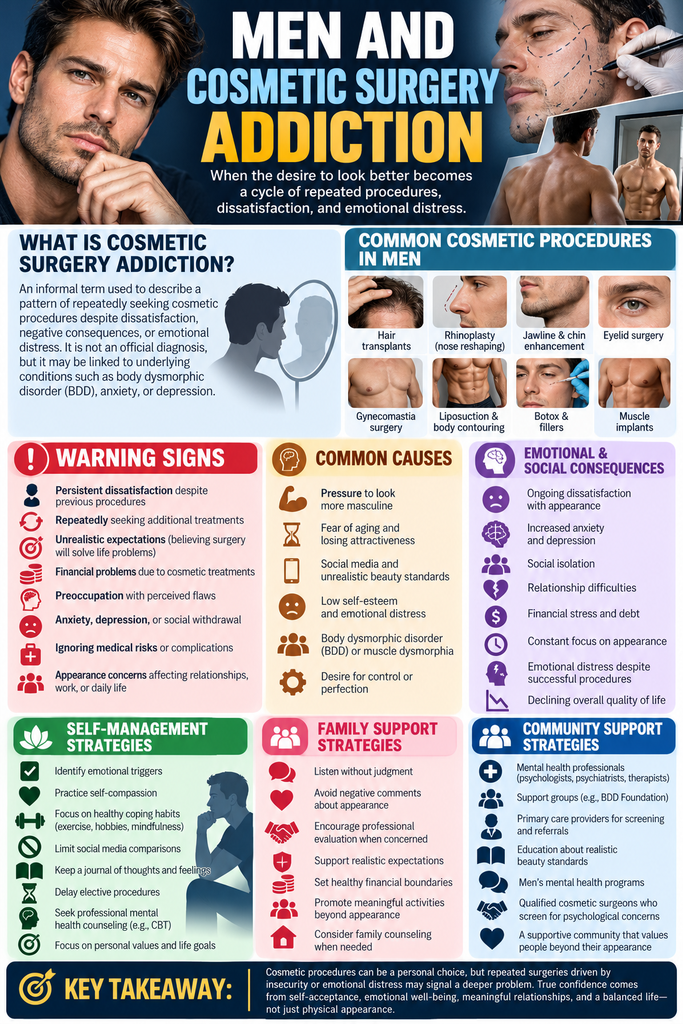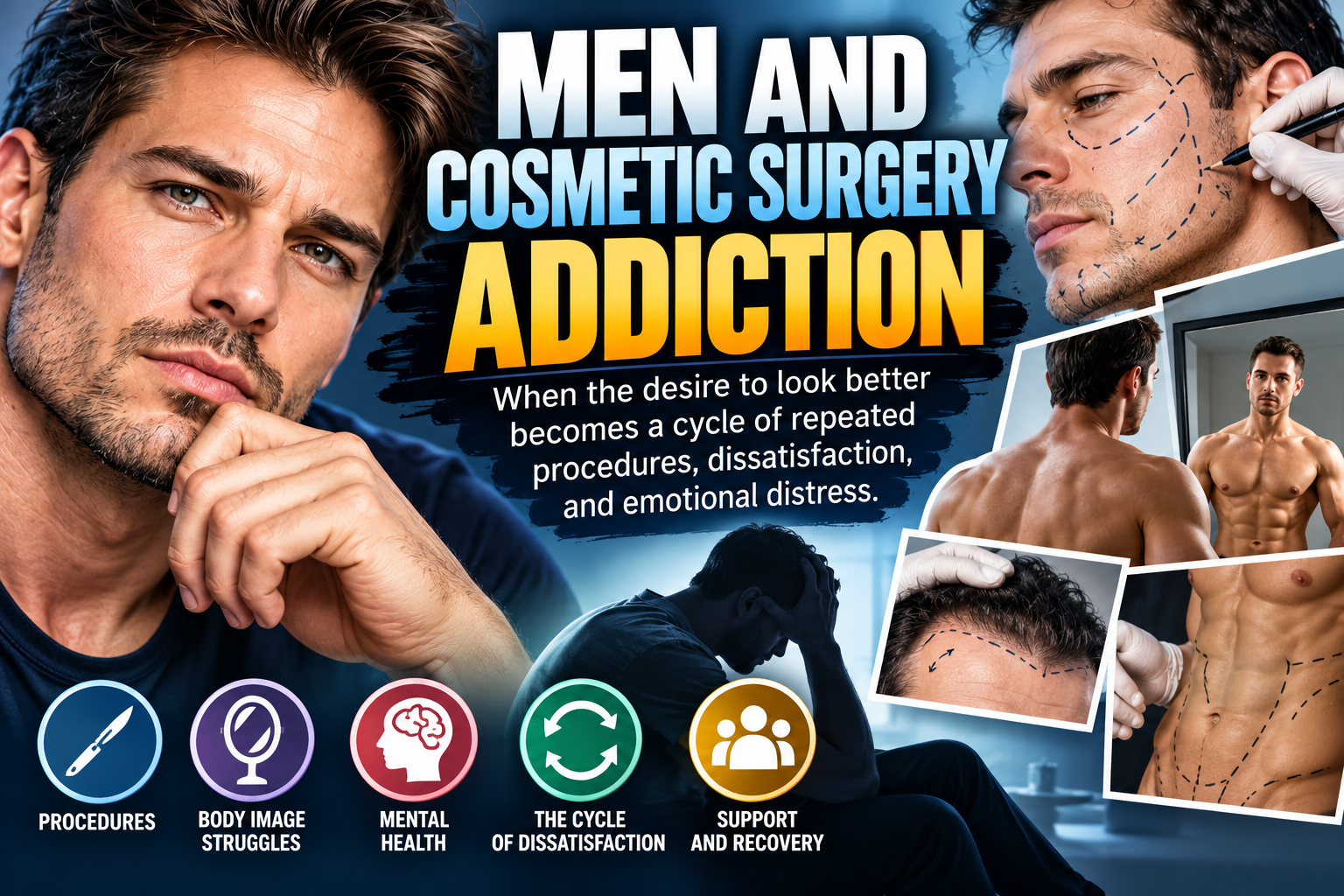
Cosmetic surgery is no longer associated primarily with women. More men are exploring procedures to improve their appearance, maintain a youthful look, and feel more confident. From hair transplants and liposuction to facial fillers, jawline enhancements, and muscle implants, cosmetic treatments have become more socially acceptable among men.
However, for some men, the desire to improve their appearance can develop into a persistent cycle of dissatisfaction and repeated cosmetic procedures. What begins as an effort to improve confidence may become an unhealthy preoccupation with perceived physical imperfections.
Although the term cosmetic surgery addiction is frequently used to describe this pattern, it is not an officially recognized psychiatric diagnosis. In some cases, compulsive cosmetic behaviors may be associated with body dysmorphic disorder (BDD), anxiety, depression, or underlying self-esteem difficulties.
Understanding why some men become preoccupied with cosmetic procedures is essential for promoting emotional well-being, healthy decision-making, and appropriate mental health treatment.
This article explores the psychological factors contributing to compulsive cosmetic surgery behaviors in men and discusses practical self-management, family, and community support strategies.
Understanding Cosmetic Surgery Addiction in Men
Cosmetic surgery addiction is an informal term used to describe a pattern of repeatedly pursuing cosmetic procedures despite dissatisfaction, distress, or negative consequences.
Unlike substance use disorders, cosmetic surgery addiction is not classified as a distinct disorder in the DSM-5-TR. Nevertheless, some men may experience compulsive appearance-related behaviors that significantly interfere with their emotional health, finances, relationships, and daily functioning.
Men experiencing these difficulties may believe that changing a particular physical feature will finally make them feel attractive, successful, masculine, or socially accepted.
Unfortunately, when underlying psychological concerns remain untreated, satisfaction from a cosmetic procedure may be temporary.
Common cosmetic procedures men may pursue
- Hair transplantation and hair restoration treatments.
- Rhinoplasty to change the shape of the nose.
- Liposuction and body contouring.
- Jawline and chin augmentation.
- Facial fillers and Botox injections.
- Gynecomastia surgery to reduce enlarged male breast tissue.
- Eyelid surgery and facial rejuvenation.
- Pectoral or other muscle implants.
Undergoing one or several of these procedures does not automatically indicate addiction or a mental health disorder.
The primary concern arises when appearance-related distress, compulsive behaviors, or unrealistic expectations interfere with a person’s overall well-being.
Why Some Men Develop Compulsive Cosmetic Surgery Behaviors
Men face unique social and cultural expectations surrounding masculinity, attractiveness, physical strength, and aging.
These pressures may influence how men perceive their appearance and whether they seek cosmetic treatments.
1. Pressure to maintain a masculine appearance
Society often links masculinity to muscular development, a defined jawline, physical fitness, and a youthful appearance.
Some men may feel inadequate when their bodies do not match these expectations.
For individuals with significant body image concerns, cosmetic procedures may appear to offer a solution to feelings of insecurity.
2. Fear of aging and losing attractiveness
Hair loss, wrinkles, changes in body composition, and other age-related physical changes can affect self-confidence.
Some men pursue cosmetic procedures to maintain a youthful appearance, particularly in social or professional environments where they perceive appearance as important.
When fear of aging becomes excessive, repeated treatments may develop into an unhealthy coping pattern.
3. Social media and unrealistic beauty standards
Social media platforms frequently showcase muscular physiques, symmetrical facial features, and edited images of male celebrities and influencers.
Constant exposure to these images can encourage unrealistic comparisons.
Men who repeatedly compare themselves with idealized appearances may become increasingly dissatisfied with their natural features.
4. Low self-esteem and emotional distress
Some individuals seek cosmetic procedures hoping to improve confidence, overcome rejection, or feel more socially accepted.
However, cosmetic changes cannot reliably resolve underlying depression, anxiety, loneliness, or emotional trauma.
Without addressing these psychological concerns, dissatisfaction may persist despite successful procedures.
5. Body dysmorphic disorder
Body dysmorphic disorder is characterized by persistent preoccupation with perceived physical defects that others may not notice or consider minor.
Men with BDD may become excessively focused on their hairline, skin, nose, jawline, muscularity, or other physical features.
They may repeatedly check mirrors, compare their appearance with others, seek reassurance, or pursue cosmetic treatments.
BDD can also involve muscle dysmorphia, a form of the disorder in which individuals believe they are insufficiently muscular despite having substantial muscle development.
Warning Signs of Cosmetic Surgery-Related Compulsive Behaviors
Recognizing unhealthy patterns is an important step toward seeking appropriate support.
Common warning signs include:
- Persistent dissatisfaction: Feeling unhappy with appearance despite previous cosmetic procedures.
- Repeated procedures: Seeking additional treatments without clear medical or aesthetic goals.
- Unrealistic expectations: Believing cosmetic surgery will completely transform relationships, career success, or happiness.
- Financial consequences: Accumulating debt or sacrificing essential expenses to pay for procedures.
- Emotional distress: Experiencing significant anxiety, shame, or depression related to perceived imperfections.
- Social withdrawal: Avoiding relationships, work, or social activities because of appearance concerns.
- Compulsive mirror checking: Frequently examining physical features or repeatedly seeking reassurance.
- Ignoring medical risks: Pursuing additional procedures despite complications or professional recommendations against them.
These warning signs should encourage compassionate evaluation rather than judgment.
The Emotional and Psychological Consequences
For men struggling with compulsive cosmetic behaviors, the emotional consequences may extend far beyond physical appearance.
Repeated dissatisfaction can create a cycle in which an individual seeks a procedure, experiences temporary relief, and later becomes concerned about another perceived imperfection.
This pattern may contribute to anxiety, depression, social isolation, and difficulties maintaining relationships.
Financial stress may also develop when cosmetic procedures become increasingly expensive.
Some men may experience shame or embarrassment about their appearance concerns because traditional masculine expectations discourage openly discussing emotional vulnerability.
Consequently, they may delay seeking professional mental health care.
Recognizing that body image concerns affect men as well as women is essential for reducing stigma and encouraging treatment.
Self-Management Strategies: Breaking the Cycle of Appearance Dissatisfaction
Self-management strategies can help men develop healthier attitudes toward their appearance, recognize emotional triggers, and reduce compulsive behaviors.
These approaches are most effective when combined with professional treatment if significant psychological distress or BDD symptoms are present.
Practical self-management strategies
- Identify emotional triggers: Recognize situations involving rejection, social comparison, aging concerns, or stress that increase dissatisfaction with appearance.
- Practice self-compassion: Challenge negative self-talk and recognize that physical imperfections are part of normal human variation.
- Limit appearance comparisons: Reduce exposure to unrealistic social media images and heavily edited photographs.
- Delay elective procedures: Establish a thoughtful waiting period before scheduling additional cosmetic treatments.
- Keep an emotional journal: Document thoughts, feelings, and circumstances associated with the desire for cosmetic surgery.
- Develop healthy coping mechanisms: Participate in hobbies, exercise, mindfulness, and activities that provide satisfaction beyond appearance.
- Strengthen personal identity: Focus on relationships, accomplishments, values, and meaningful life goals.
- Seek mental health counseling: Consider cognitive behavioral therapy when persistent appearance concerns interfere with daily functioning.
The importance of cognitive behavioral therapy
Cognitive behavioral therapy (CBT) is an evidence-based treatment for body dysmorphic disorder.
CBT helps individuals identify distorted beliefs about appearance, reduce compulsive checking and reassurance-seeking behaviors, and develop healthier responses to emotional distress.
For individuals with BDD, treatment may also include selective serotonin reuptake inhibitors (SSRIs), prescribed and monitored by a qualified healthcare professional.
The goal is not to eliminate interest in personal appearance but to prevent appearance concerns from controlling emotional well-being and everyday life.
Family Support Strategies: Helping Men Without Shame or Judgment
Family members and romantic partners may feel confused, frustrated, or concerned when a loved one repeatedly seeks cosmetic procedures.
Some may struggle to understand why the individual remains dissatisfied despite previous treatments.
However, criticism or ridicule may increase shame and discourage honest communication.
Supportive family involvement can encourage healthier coping strategies and professional treatment.
Ways families can provide support
- Listen without judgment: Allow the individual to discuss appearance concerns without criticism.
- Avoid negative comments: Don’t mock physical features or past cosmetic procedures.
- Recognize emotional distress: Pay attention to anxiety, depression, social withdrawal, and excessive appearance-related behaviors.
- Encourage professional counseling: Suggest mental health evaluation when appearance concerns become persistent or disruptive.
- Support realistic expectations: Discuss the limitations and potential risks of cosmetic procedures without dismissing personal preferences.
- Set financial boundaries: Avoid enabling financially harmful decisions while staying compassionate.
- Promote meaningful activities: Encourage hobbies, friendships, exercise, and experiences unrelated to physical appearance.
- Consider family counseling: Seek professional support when appearance concerns contribute to ongoing relationship conflicts.
Families should avoid repeatedly reassuring someone about specific physical features if reassurance has become a compulsive behavior. A mental health professional can help relatives learn supportive responses that do not reinforce the cycle of anxiety.
Community Support Strategies: Reducing Stigma and Encouraging Recovery
Community support can help men feel less isolated and more comfortable discussing body image concerns.
Because cosmetic surgery-related distress is sometimes viewed as a problem affecting primarily women, men may be reluctant to acknowledge their struggles.
Public education and accessible mental health resources can help challenge these stereotypes.
Community resources and support options
- Mental health professionals: Psychologists, psychiatrists, and therapists can evaluate appearance-related distress and provide evidence-based treatment.
- Body dysmorphic disorder organizations: The International OCD Foundation and BDD Foundation offer educational materials and treatment resources.
- Peer support groups: Provide opportunities to discuss body image struggles and recovery experiences in a supportive environment.
- Primary care providers: Can screen for anxiety, depression, and BDD symptoms and coordinate appropriate referrals.
- Qualified cosmetic surgeons: Can assess surgical expectations, explain risks, and recommend psychological evaluation when indicated.
- Men’s mental health programs: Encourage emotional openness, healthy coping skills, and early intervention.
- Community education campaigns: Promote realistic beauty standards and challenge stigma surrounding men’s mental health.
Support groups and professional counseling may be particularly helpful for men who feel embarrassed discussing their appearance concerns with friends or family.
The Role of Healthcare Professionals in Identifying Cosmetic Surgery-Related Distress
Healthcare professionals have an important role in recognizing psychological concerns that may influence cosmetic surgery decisions.
A comprehensive evaluation should consider the patient’s medical history, previous procedures, emotional well-being, expectations, and potential psychiatric symptoms.
For men requesting repeated procedures, clinicians should assess whether appearance-related concerns are proportionate to the physical findings and whether those concerns interfere with daily functioning.
Important clinical considerations
- Assess the patient’s reasons for seeking cosmetic procedures.
- Review previous cosmetic treatments and complications.
- Evaluate expectations regarding physical and emotional outcomes.
- Screen for body dysmorphic disorder when clinically indicated.
- Assess for depression, anxiety, and associated psychological distress.
- Consider validated screening tools, such as the Body Dysmorphic Disorder Questionnaire (BDDQ), as part of a broader assessment.
- Discuss the potential risks and limitations of repeated procedures.
- Coordinate referrals to mental health specialists when appropriate.
When BDD is suspected, additional elective cosmetic procedures should generally be deferred until appropriate psychological assessment and treatment planning have occurred.
The goal is to protect patient safety while respecting autonomy and supporting informed medical decisions.
Recovery: Learning to Value More Than Physical Appearance
Recovery from compulsive appearance-related behaviors involves developing a healthier relationship with the body and reducing the emotional importance placed on perceived imperfections.
For some men, this process includes recognizing that cosmetic surgery cannot guarantee happiness, acceptance, romantic success, or professional achievement.
Others may need to address underlying anxiety, depression, trauma, or body dysmorphic disorder.
Recovery doesn’t necessarily mean rejecting all cosmetic procedures. Instead, it means making thoughtful decisions without letting appearance-related fears or compulsions dominate everyday life.
Meaningful progress may include:
- Spending less time worrying about perceived physical flaws.
- Reducing mirror checking and reassurance-seeking behaviors.
- Becoming more comfortable participating in social activities.
- Improving relationships and emotional communication.
- Making informed decisions about elective procedures.
- Developing confidence based on personal values rather than appearance.
- Maintaining realistic expectations about aging and physical changes.
With appropriate treatment and support, individuals can experience significant improvement in body image distress and overall quality of life.
Conclusion: Moving Beyond the Mirror
Men experiencing compulsive cosmetic surgery behaviors may face significant emotional, psychological, financial, and social challenges.
Although cosmetic procedures can be a reasonable personal choice, repeated treatments may become problematic when driven by persistent dissatisfaction, unrealistic expectations, or untreated psychological distress.
Understanding the relationship between masculinity, social pressure, body image, and mental health can help reduce stigma and encourage men to seek support.
Self-management strategies such as identifying emotional triggers, practicing self-compassion, and limiting harmful comparisons can help individuals develop healthier coping skills.
Family members can encourage men through compassionate communication, realistic expectations, and healthy boundaries, while community organizations and healthcare professionals can provide education, counseling, and evidence-based treatment.
The most important message is that a man’s value is not determined by his jawline, muscularity, hairline, or physical appearance. True confidence develops through self-acceptance, emotional resilience, meaningful relationships, and personal growth.
Frequently Asked Questions and Answers
Understanding Cosmetic Surgery Addiction in Men
1. What is cosmetic surgery addiction in men?
Cosmetic surgery addiction is an informal term describing a pattern in which a man repeatedly seeks cosmetic procedures despite persistent dissatisfaction, emotional distress, or harmful consequences. Although not a formally recognized addiction disorder, this behavior may reflect underlying psychological concerns that require professional evaluation.
2. Why do some men become preoccupied with cosmetic surgery?
Some men experience pressure to maintain a youthful, muscular, or traditionally masculine appearance. Social media, concerns about aging, relationship difficulties, and unrealistic beauty standards may contribute to dissatisfaction. For certain individuals, cosmetic procedures become a way to manage insecurity or emotional distress.
3. What cosmetic procedures are most commonly sought by men?
Common procedures include:
- Hair transplantation and hair restoration.
- Rhinoplasty or nose reshaping.
- Liposuction and body contouring.
- Jawline and chin augmentation.
- Botox injections and facial fillers.
- Gynecomastia surgery.
- Eyelid surgery.
- Pectoral and other muscle implants.
Undergoing multiple cosmetic procedures does not automatically indicate addiction or a mental health disorder.
4. Is cosmetic surgery addiction considered a mental illness?
Cosmetic surgery addiction is not classified as a separate mental disorder in the DSM-5-TR. However, persistent appearance-related preoccupation and repetitive behaviors may be symptoms of body dysmorphic disorder or another mental health condition. A comprehensive psychological assessment is necessary to determine whether a diagnosable disorder is present.
5. Can men develop body dysmorphic disorder?
Yes. Body dysmorphic disorder affects people of all genders. Men may become excessively concerned about their hairline, facial features, skin, muscularity, or body proportions. These concerns can cause significant anxiety, repetitive checking behaviors, social avoidance, and impairment in daily functioning.
Warning Signs and Psychological Causes
6. What are the warning signs of compulsive cosmetic surgery behaviors?
Warning signs may include:
- Persistent dissatisfaction despite previous procedures.
- Repeatedly requesting additional cosmetic treatments.
- Believing surgery will resolve personal or relationship problems.
- Excessive mirror checking or appearance comparisons.
- Spending beyond financial means on cosmetic procedures.
- Experiencing significant anxiety about perceived imperfections.
- Avoiding social activities because of appearance concerns.
- Continuing procedures despite medical complications or psychological distress.
These behaviors may indicate a need for mental health evaluation.
7. Why are some men never satisfied with cosmetic surgery results?
Some men have unrealistic expectations about how cosmetic procedures will affect their happiness, attractiveness, or relationships. Individuals with BDD may remain preoccupied with perceived imperfections even after successful surgery. In some cases, their attention shifts to another physical feature, creating a cycle of dissatisfaction.
8. Can low self-esteem contribute to repeated cosmetic procedures?
Yes. Some men may believe that changing their physical appearance will improve confidence, social acceptance, or romantic relationships. Although cosmetic procedures can improve satisfaction with particular features, they do not necessarily resolve underlying self-esteem difficulties or emotional distress.
9. How does social media influence cosmetic surgery decisions among men?
Social media frequently promotes idealized male appearances, including muscular physiques, defined jawlines, clear skin, and youthful features. Constant comparison with edited photographs and influencers may increase body dissatisfaction and encourage unrealistic expectations about cosmetic procedures.
10. What is muscle dysmorphia, and how does it affect men?
Muscle dysmorphia is a form of body dysmorphic disorder in which individuals believe they are insufficiently muscular or physically developed, even when they have substantial muscle mass. It may involve excessive exercise, restrictive eating, compulsive body checking, and sometimes the use of appearance-enhancing substances. Some affected individuals may also seek cosmetic procedures to alter their physique.
Emotional and Physical Consequences
11. Can repeated cosmetic surgery lead to depression or anxiety?
Repeated procedures may contribute to emotional distress when expectations are not met, complications occur, or dissatisfaction persists. However, depression and anxiety may also exist before cosmetic surgery. Mental health evaluation can help identify these concerns and guide appropriate treatment.
12. What are the physical risks of undergoing multiple cosmetic procedures?
Repeated cosmetic procedures may increase exposure to surgical and anesthesia-related risks, including infection, bleeding, scarring, nerve injury, poor wound healing, and dissatisfaction with results. Risks depend on the procedure, medical history, and previous operations. Revision surgeries can be particularly challenging because of altered anatomy and scar tissue.
13. Can cosmetic surgery become a coping mechanism for emotional trauma?
Some individuals may pursue cosmetic procedures hoping to regain confidence, control, or a sense of personal identity following stressful experiences. However, surgery is not a treatment for psychological trauma. When trauma-related symptoms are present, evidence-based mental health care may be more appropriate.
14. How can compulsive cosmetic surgery behaviors affect relationships?
Persistent appearance concerns may contribute to financial disagreements, emotional withdrawal, reassurance-seeking behaviors, and relationship conflict. Partners and family members may struggle to understand why someone remains dissatisfied despite previous procedures.
15. Can cosmetic surgery-related behaviors cause financial problems?
Yes. Repeated elective procedures can become expensive, particularly when they involve revision surgery, travel, or ongoing treatments. Financial difficulties may arise when individuals use credit, accumulate debt, or sacrifice essential expenses to pursue additional procedures.
Self-Management and Treatment Strategies
16. How can men stop compulsively seeking cosmetic procedures?
Helpful strategies include identifying emotional triggers, delaying nonurgent procedures, reducing appearance comparisons, developing healthy coping mechanisms, and seeking psychological counseling. When significant distress or BDD symptoms are present, professional treatment is recommended rather than relying on self-management alone.
17. What is the best treatment for body dysmorphic disorder?
Evidence-based treatments include cognitive behavioral therapy (CBT) specifically adapted for BDD and selective serotonin reuptake inhibitors (SSRIs), when clinically indicated. CBT helps individuals challenge unhelpful appearance-related beliefs and reduce repetitive behaviors such as mirror checking and reassurance seeking.
18. Can cognitive behavioral therapy help men struggling with cosmetic surgery-related distress?
Yes. CBT can help men recognize distorted appearance-related thoughts, develop healthier coping strategies, and reduce compulsive behaviors. For individuals with BDD, specialized CBT often includes exposure and response prevention techniques.
19. Should men avoid cosmetic surgery completely during recovery?
Not necessarily in every situation. However, when BDD is suspected, or appearance concerns cause significant impairment, elective cosmetic procedures should generally be deferred until appropriate psychological evaluation and treatment planning occur. Decisions should be individualized through collaboration between qualified healthcare and mental health professionals.
20. How can men improve their self-esteem without cosmetic procedures?
Men can strengthen self-esteem by focusing on personal achievements, meaningful relationships, emotional well-being, physical health, and activities unrelated to appearance. Counseling, mindfulness, self-compassion, and reducing harmful social comparisons may also help.
Family and Community Support
21. How can families support a man struggling with compulsive cosmetic surgery behaviors?
Families can help by listening without judgment, acknowledging emotional distress, encouraging professional counseling, and establishing healthy boundaries. Support should focus on psychological well-being rather than criticizing appearance or attempting to control personal decisions.
22. What should partners avoid saying to someone struggling with body image concerns?
Partners should avoid ridicule, insults, and dismissive statements such as “You’re just being vain” or “There’s nothing wrong with you, so stop worrying.” Instead, they can acknowledge the distress and encourage appropriate support without repeatedly reinforcing compulsive reassurance-seeking behaviors.
23. Can family therapy help men experiencing cosmetic surgery-related distress?
Yes. Family therapy may improve communication, reduce conflict, establish appropriate boundaries, and help relatives understand body image disorders. It can be particularly helpful when repeated cosmetic procedures create financial stress or relationship difficulties.
24. What community resources are available for men with body dysmorphic disorder?
Helpful resources include the International OCD Foundation, the Body Dysmorphic Disorder Foundation, licensed mental health professionals, primary care providers, and peer support groups. These resources can provide education, treatment referrals, and support for individuals and families.
25. How can healthcare professionals identify men at risk for problematic cosmetic surgery behaviors?
Healthcare professionals can evaluate patients’ motivations, expectations, previous procedures, emotional distress, and functional impairment. Screening tools such as the Body Dysmorphic Disorder Questionnaire (BDDQ) may help identify patients requiring further psychological assessment. Screening results should not be treated as a definitive diagnosis.
Recovery and Long-Term Emotional Well-Being
26. Can men recover from body dysmorphic disorder and compulsive appearance-related behaviors?
Yes. Many individuals improve significantly with appropriate psychological treatment, medication when indicated, and ongoing support. Recovery may involve reducing obsessive appearance concerns, limiting compulsive behaviors, and improving relationships and daily functioning.
27. How long does recovery from compulsive cosmetic surgery behaviors take?
Recovery varies depending on the underlying psychological concerns, symptom severity, treatment engagement, and available support. Some individuals experience improvement over several months, while others benefit from longer-term treatment and relapse-prevention strategies.
28. What are healthy alternatives to repeated cosmetic procedures?
Healthy alternatives may include:
- Practicing self-compassion and realistic self-acceptance.
- Participating in enjoyable physical activities.
- Developing hobbies and meaningful interests.
- Reducing social media comparisons.
- Building supportive relationships.
- Practicing mindfulness and stress management.
- Seeking mental health counseling.
- Focusing on personal values and accomplishments.
29. Why is men’s mental health awareness important in addressing cosmetic surgery-related distress?
Men may experience stigma when discussing insecurity, body dissatisfaction, or emotional vulnerability. Increasing awareness helps normalize conversations about men’s mental health, encourages early intervention, and reduces the likelihood that psychological concerns will go untreated.
30. What is the most important message for men struggling with cosmetic surgery-related distress?
The most important message is that physical appearance does not determine personal worth, masculinity, or success. Cosmetic procedures may change physical features, but lasting emotional well-being often requires healthy self-esteem, meaningful relationships, realistic expectations, and psychological support.
Video: