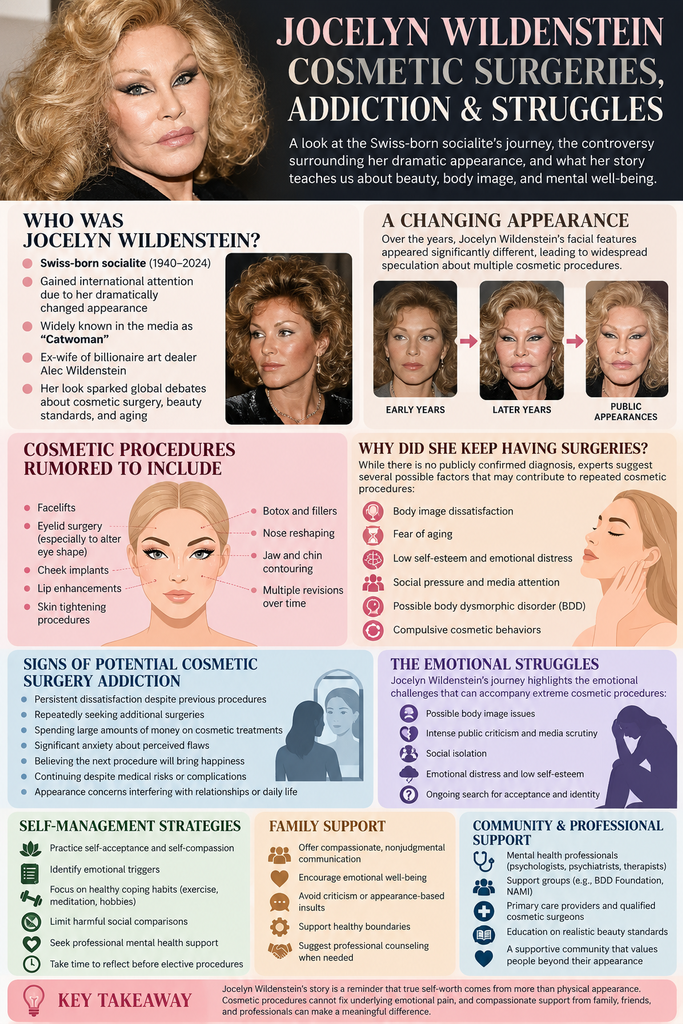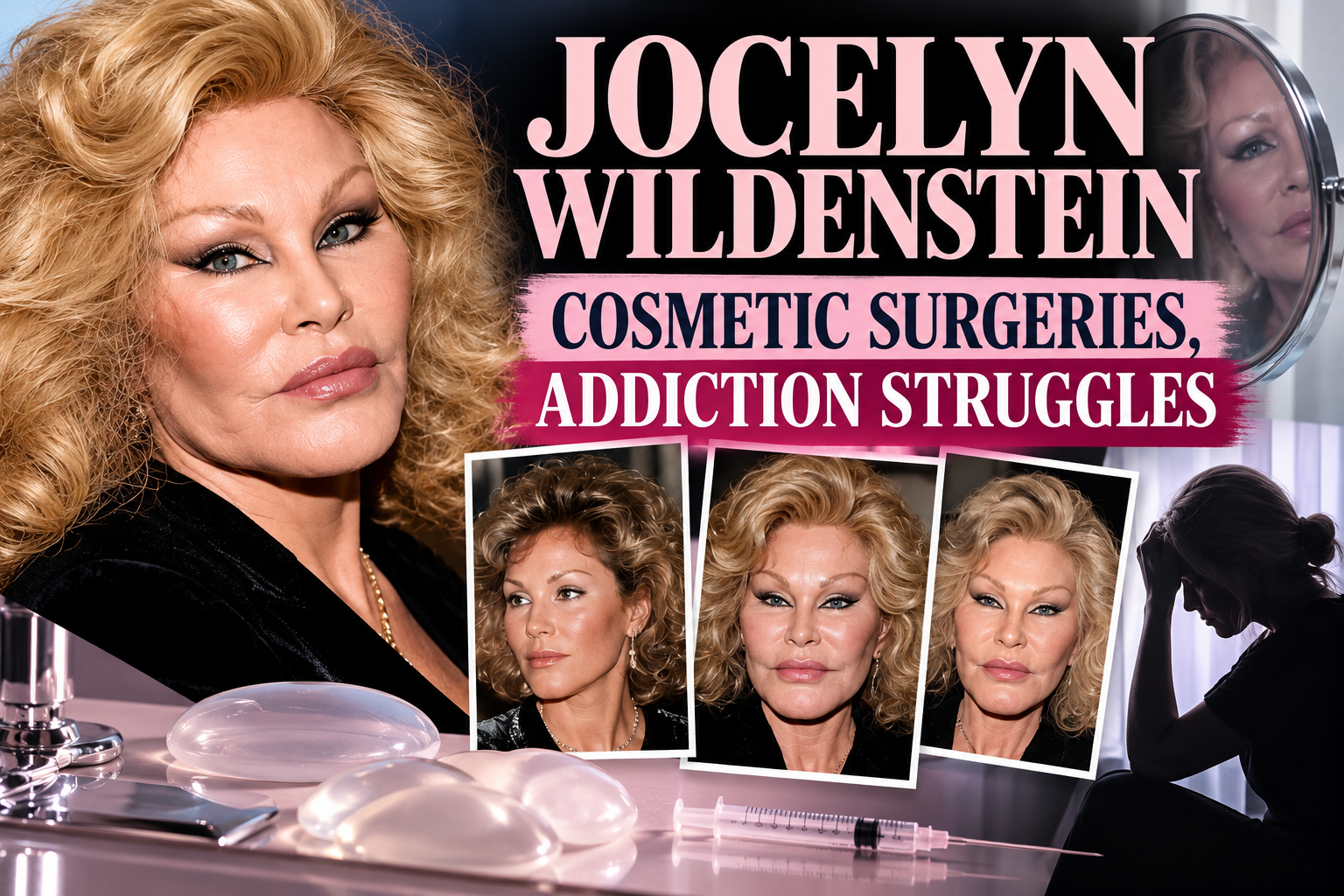
Jocelyn Wildenstein, the Swiss-born socialite who became internationally recognized for her dramatically altered face, drew decades of public attention because of her cosmetic procedures. Often referred to by the media as “Catwoman,” Wildenstein became a controversial figure in conversations about beauty standards, aging, plastic surgery, and psychological well-being.
Her appearance sparked widespread speculation about cosmetic surgery addiction and body dysmorphic disorder (BDD). However, no publicly established clinical diagnosis confirms that Wildenstein experienced either condition. She also disputed aspects of the media’s portrayal of her appearance and cosmetic surgery history.
Wildenstein’s story provides an opportunity to examine how cosmetic procedures can intersect with self-image, emotional distress, social pressure, and compulsive behaviors. It also highlights the importance of self-management, family involvement, and community resources in helping individuals develop a healthier relationship with their appearance.
Jocelyn Wildenstein’s Journey: Beauty, Identity, and Public Scrutiny
Born in Switzerland in 1940, Jocelyn Wildenstein became a prominent New York socialite through her marriage to billionaire art dealer Alec Wildenstein. Over time, her distinctive appearance drew intense media coverage.
People frequently attributed her changing appearance to multiple cosmetic procedures, particularly around her eyes, cheeks, and facial contours. Wildenstein, however, challenged claims about the extent of her surgical history and maintained that some of her facial characteristics were natural.
The media often portrayed her as an example of cosmetic surgery taken to extremes. This attention sometimes overshadowed her personal identity, relationships, and experiences.
Wildenstein died on December 31, 2024, at age 84.
Her story raises important questions about how society defines beauty and how repeated cosmetic procedures may influence psychological well-being.
It is essential to distinguish between documented aspects of her life and speculation about her mental health. Undergoing multiple cosmetic procedures does not automatically indicate addiction or a psychiatric disorder.
Understanding Cosmetic Surgery Addiction and Compulsive Cosmetic Behaviors
The phrase “cosmetic surgery addiction” is commonly used to describe a pattern in which someone repeatedly seeks cosmetic procedures despite dissatisfaction, emotional distress, or negative consequences.
However, cosmetic surgery addiction is not recognized as a distinct diagnosis in the DSM-5-TR.
Some individuals who repeatedly pursue cosmetic procedures may experience underlying psychological difficulties, including body dysmorphic disorder, anxiety, depression, or problems with self-esteem.
Body dysmorphic disorder is characterized by excessive preoccupation with perceived physical flaws that others may not notice or consider minor. Individuals may engage in repetitive behaviors, such as mirror checking, seeking reassurance, comparing appearances, or pursuing cosmetic treatments.
Warning signs of potentially problematic cosmetic surgery behaviors
- Persistent dissatisfaction with appearance despite previous procedures.
- Repeatedly seeking additional surgeries to correct perceived imperfections.
- Spending excessive amounts of money on cosmetic treatments despite financial consequences.
- Experiencing significant anxiety or emotional distress about minor or imagined flaws.
- Believing that the next procedure will finally bring happiness or confidence.
- Avoiding social situations because of dissatisfaction with appearance.
- Continuing to pursue procedures despite significant medical complications.
- Allowing appearance concerns to interfere with relationships, work, or everyday functioning.
These behaviors deserve compassionate evaluation, not criticism. Not everyone who undergoes repeated cosmetic surgery has a mental health condition.
Psychological Factors That May Influence Repeated Cosmetic Procedures
Several psychological and social factors can contribute to persistent dissatisfaction with physical appearance.
1. Body image dissatisfaction
Some individuals develop unrealistic expectations about how their appearance should look. Even after achieving a desired cosmetic result, they may continue focusing on perceived imperfections.
2. Fear of aging
Society often associates youthfulness with attractiveness, success, and social acceptance. Fear of aging may encourage some individuals to pursue repeated cosmetic interventions.
3. Emotional distress and low self-esteem
People experiencing insecurity, rejection, relationship difficulties, or emotional trauma may sometimes view cosmetic procedures as a way to regain confidence or control.
4. Social pressure and media influence
Celebrities and public figures frequently face intense scrutiny regarding their physical appearance. Social media, beauty filters, and unrealistic beauty standards can reinforce dissatisfaction.
5. Body dysmorphic disorder
For individuals with BDD, cosmetic procedures often fail to resolve the underlying psychological distress because the central problem involves perception and preoccupation rather than the physical feature itself.
These factors are general clinical considerations and should not be interpreted as confirmed explanations for Wildenstein’s personal decisions.
Self-Management Strategies: Developing a Healthier Relationship With Appearance
Individuals who feel compelled to pursue repeated cosmetic procedures can benefit from learning to recognize emotional triggers, challenge unrealistic expectations, and strengthen their self-worth.
Effective self-management involves developing coping skills that address psychological distress rather than relying exclusively on physical changes.
Practical self-management strategies
- Identify emotional triggers: Recognize whether stress, loneliness, rejection, aging concerns, or social comparison increases the desire for cosmetic procedures.
- Practice self-acceptance: Focus on personal strengths, accomplishments, relationships, and qualities unrelated to appearance.
- Limit harmful social comparisons: Reduce exposure to unrealistic beauty standards, heavily edited photographs, and appearance-focused social media content.
- Keep a reflection journal: Document thoughts, emotions, and circumstances that trigger dissatisfaction with appearance.
- Delay nonurgent cosmetic decisions: Establish a reflection period before scheduling additional elective procedures.
- Seek psychological counseling: Consider cognitive behavioral therapy (CBT), particularly when body dysmorphic symptoms are present.
- Develop healthy coping mechanisms: Use exercise, meditation, creative activities, and meaningful social connections to manage emotional distress.
- Set realistic expectations: Understand that cosmetic surgery cannot guarantee happiness, improved relationships, or lasting self-confidence.
For individuals with suspected BDD, evidence-based treatment often includes CBT specifically adapted for BDD and, when appropriate, medication such as a selective serotonin reuptake inhibitor (SSRI).
Professional mental health assessment is particularly important before additional elective procedures when appearance-related distress is persistent or significantly affects daily functioning.
Family Support Strategies: Encouraging Understanding Without Judgment
Families can play an important role when a loved one becomes excessively preoccupied with appearance or repeatedly seeks cosmetic procedures.
Criticism, ridicule, or arguments about physical appearance may increase shame and emotional distress.
Instead, family members can encourage supportive conversations that emphasize emotional well-being.
Ways families can provide meaningful support
- Practice compassionate communication: Listen to concerns without dismissing or criticizing the person’s feelings.
- Avoid appearance-based insults: Refrain from making negative comments about previous surgeries or physical changes.
- Encourage professional evaluation: Recommend mental health counseling when appearance concerns become persistent or distressing.
- Recognize emotional triggers: Help identify whether relationship problems, anxiety, or other stressors influence cosmetic decisions.
- Support healthy boundaries: Avoid financially enabling harmful patterns while maintaining empathy and respect.
- Celebrate nonphysical qualities: Reinforce personal achievements, kindness, creativity, and meaningful relationships.
- Participate in family counseling: Consider therapy when disagreements about cosmetic procedures create ongoing conflict.
- Promote realistic expectations: Encourage thoughtful discussions about the risks, benefits, and limitations of cosmetic treatments.
Family support should focus on understanding the person’s emotional experiences rather than controlling their decisions.
Adults retain the right to make informed decisions about their bodies, even when relatives disagree with their choices.
Community Support Strategies: Building Awareness and Access to Care
Community resources can help individuals struggling with body image concerns, appearance-related anxiety, or compulsive cosmetic behaviors.
Healthcare professionals, mental health organizations, and peer support networks can provide education, emotional support, and referrals for treatment.
Community resources and support options
- Mental health professionals: Psychologists, psychiatrists, and therapists can evaluate body image concerns and provide evidence-based treatment.
- Body dysmorphic disorder support organizations: Organizations such as the BDD Foundation offer education and resources.
- National Alliance on Mental Illness (NAMI): Provides mental health education, family support, and connections to community services.
- Peer support groups: Offer opportunities to discuss body image struggles in a supportive, nonjudgmental environment.
- Primary care providers: Can identify underlying psychological concerns and coordinate referrals.
- Qualified cosmetic surgeons: Should provide realistic counseling about surgical risks, outcomes, and whether further procedures are appropriate.
- Community education programs: Can promote healthy body image, media literacy, and awareness of unrealistic beauty expectations.
Collaboration between medical professionals and mental health specialists is especially valuable when a patient requests repeated cosmetic procedures while experiencing significant emotional distress.
The Role of Healthcare Professionals in Preventing Harm
Healthcare providers have an ethical responsibility to evaluate the physical and psychological factors that influence requests for elective cosmetic surgery.
A thorough assessment should explore the patient’s expectations, motivations, previous procedures, emotional well-being, and ability to provide informed consent.
When clinically indicated, screening for body dysmorphic disorder may help identify patients who would benefit from psychological evaluation before undergoing additional procedures.
Important clinical considerations include:
- Reviewing previous cosmetic procedures and complications.
- Assessing expectations regarding surgical outcomes.
- Screening for significant appearance-related distress and functional impairment.
- Evaluating for depression, anxiety, and possible BDD.
- Discussing realistic benefits, limitations, and potential complications.
- Coordinating mental health referrals when appropriate.
- Avoiding unnecessary procedures when psychological distress is unlikely to improve through surgery.
The goal is not to discourage all cosmetic procedures. Rather, it is to ensure that decisions are informed, medically appropriate, and consistent with the patient’s overall well-being.
Lessons From Jocelyn Wildenstein’s Story
Jocelyn Wildenstein’s public image illustrates the complicated relationship between personal identity, beauty expectations, cosmetic medicine, and media attention.
Although journalists frequently characterized her appearance as the result of extensive cosmetic surgery, Wildenstein challenged that narrative. In interviews, she attributed some of her distinctive facial features to genetics and disputed claims about her procedures.
Her experience offers several broader lessons about emotional well-being.
- Beauty does not determine personal worth. Confidence and self-esteem can develop through relationships, accomplishments, and personal growth.
- Cosmetic procedures cannot treat underlying psychological disorders. Individuals experiencing BDD or severe appearance-related distress may require specialized mental health treatment.
- Public criticism can contribute to stigma. Mocking someone’s appearance can discourage honest discussions about emotional struggles.
- Family support matters. Compassionate communication and healthy boundaries can help individuals seek appropriate care.
- Mental health screening promotes safer decisions. Identifying unrealistic expectations or psychological distress before elective procedures can help prevent harm.
Most importantly, Wildenstein’s story reminds us that people deserve to be understood beyond their physical appearance.
Conclusion: Finding Self-Worth Beyond Physical Appearance
Jocelyn Wildenstein’s cosmetic surgery controversy continues to generate conversations about beauty standards, aging, psychological well-being, and the potential risks associated with repeated cosmetic procedures.
Although her personal experience should not be labeled a confirmed cosmetic surgery addiction, the public discussion surrounding her appearance creates an opportunity to educate others about body image dissatisfaction, body dysmorphic disorder, and compulsive appearance-related behaviors.
For individuals struggling with these concerns, recovery and emotional healing may involve recognizing unhealthy thought patterns, developing self-compassion, seeking professional mental health care, and establishing realistic expectations about cosmetic treatments.
Families can contribute through understanding, encouragement, and respectful communication, while community organizations and healthcare professionals can provide education and access to evidence-based treatment.
The most important lesson is that lasting self-worth comes from more than physical appearance. True emotional well-being means accepting personal imperfections, building meaningful relationships, and recognizing that beauty standards can’t measure a person’s value.
Frequently Asked Questions and Answers
Jocelyn Wildenstein’s Cosmetic Surgery Journey
1. Who was Jocelyn Wildenstein?
Jocelyn Wildenstein was a Swiss-born American socialite who gained international attention for her distinctive facial appearance, extravagant lifestyle, and highly publicized divorce from billionaire art dealer Alec Wildenstein. Her appearance made her a frequent subject of media coverage and public discussions about cosmetic surgery, aging, and beauty standards.
2. Why was Jocelyn Wildenstein called “Catwoman”?
The media nicknamed Wildenstein “Catwoman” because of her distinctive facial features, particularly her almond-shaped eyes and prominent cheekbones. Her appearance was frequently compared to feline characteristics. However, this nickname was a media label, not a medical description, and it contributed to sensationalized coverage of her personal life.
3. Did Jocelyn Wildenstein undergo multiple cosmetic surgeries?
Wildenstein’s changing appearance was widely associated with cosmetic procedures. However, she disputed claims about the extent of her surgical history and attributed some of her facial characteristics to genetics. No independent source has established the precise number and types of procedures she underwent.
4. Was Jocelyn Wildenstein addicted to cosmetic surgery?
There is no publicly confirmed medical diagnosis establishing that Jocelyn Wildenstein experienced cosmetic surgery addiction. Although media reports frequently described her appearance as the result of excessive cosmetic procedures, repeated surgery alone does not prove addiction or a psychiatric disorder.
5. Did Jocelyn Wildenstein have body dysmorphic disorder?
There is no verified public diagnosis indicating that Wildenstein had body dysmorphic disorder (BDD). BDD is a psychiatric condition involving persistent preoccupation with perceived appearance flaws, often accompanied by repetitive behaviors and significant distress. A diagnosis requires a professional clinical assessment, not judgments based on photographs or physical appearance.
Understanding Cosmetic Surgery Addiction and Body Image
6. What is cosmetic surgery addiction?
Cosmetic surgery addiction is an informal term describing a pattern of repeatedly seeking cosmetic procedures despite emotional, financial, or physical consequences. It is not a separately recognized psychiatric diagnosis in the DSM-5-TR. Some individuals exhibiting these behaviors may have underlying psychological conditions, including body dysmorphic disorder, anxiety, or depression.
7. What are the warning signs of compulsive cosmetic surgery behaviors?
Warning signs may include:
- Persistent dissatisfaction despite previous procedures.
- Frequently seeking new surgeries to correct perceived imperfections.
- Believing another procedure will finally create happiness.
- Spending beyond financial means on cosmetic treatments.
- Experiencing severe anxiety about physical appearance.
- Continuing to pursue procedures despite medical complications.
- Allowing appearance concerns to interfere with relationships and daily activities.
These behaviors warrant further evaluation, but none alone establishes a diagnosis.
8. Can cosmetic surgery become a way to cope with emotional distress?
Yes. Some individuals pursue cosmetic procedures hoping to improve confidence, overcome rejection, reduce insecurity, or regain a sense of control. Although procedures may improve satisfaction with a specific feature, they do not necessarily resolve underlying psychological distress.
9. Why might someone continue seeking cosmetic surgery despite previous procedures?
Possible explanations include unrealistic expectations, dissatisfaction with surgical outcomes, social pressure, fear of aging, or underlying body image disturbances. For people with BDD, concern may shift to another physical feature even after a technically successful procedure.
10. Can cosmetic surgery worsen body dysmorphic disorder?
Yes. Research indicates that cosmetic procedures frequently fail to relieve BDD symptoms and may sometimes intensify appearance-related distress. Mental health treatment is generally recommended before considering elective procedures when BDD is suspected.
Self-Management and Mental Health Recovery
11. How can someone overcome compulsive cosmetic surgery behaviors?
Treatment begins with understanding the emotional and psychological factors driving repeated requests for cosmetic procedures. Helpful strategies include identifying triggers, delaying elective procedures, developing self-compassion, reducing appearance comparisons, and seeking professional mental health assessment.
12. What treatments are available for body dysmorphic disorder?
Evidence-based treatments include cognitive behavioral therapy specifically adapted for BDD, often incorporating exposure and response prevention, and medications such as selective serotonin reuptake inhibitors (SSRIs). Treatment may also address coexisting depression, anxiety, and social isolation.
13. Can someone recover from body dysmorphic disorder?
Yes. Many individuals experience meaningful improvement with appropriate psychological treatment, medication when indicated, and ongoing support. Recovery may involve reducing appearance-related obsessions, limiting compulsive checking or reassurance seeking, and improving daily functioning.
14. How can individuals develop healthier self-esteem without cosmetic surgery?
Individuals can build healthier self-esteem through meaningful relationships, personal achievements, physical activity, creative interests, mindfulness, and self-compassion. Counseling can help individuals challenge negative beliefs about appearance and recognize their value beyond physical attractiveness.
15. Does social media contribute to cosmetic surgery dissatisfaction?
Social media can contribute to unrealistic beauty expectations through edited photographs, filters, celebrity images, and constant appearance comparisons. Individuals already struggling with body image concerns may benefit from reducing exposure to content that increases dissatisfaction or anxiety.
Family and Community Support
16. How can families help someone struggling with repeated cosmetic procedures?
Families can provide support by listening without judgment, avoiding negative comments about appearance, encouraging professional counseling, and maintaining healthy financial and emotional boundaries. Compassionate communication is generally more productive than criticism or confrontation.
17. What should family members avoid saying to someone with body image concerns?
Family members should avoid statements that ridicule appearance, accuse the person of vanity, or dismiss their emotional distress. Instead, they can acknowledge the person’s feelings while encouraging them to evaluate the underlying concerns.
18. Can family therapy help someone experiencing cosmetic surgery-related distress?
Yes. Family therapy may improve communication, address relationship conflicts, establish healthy boundaries, and help relatives understand body image disorders. Family involvement can complement individual treatment when appropriate.
19. What community resources are available for people struggling with body image concerns?
Resources include the International OCD Foundation, the Body Dysmorphic Disorder Foundation, licensed mental health professionals, primary care providers, and specialized support groups. These resources provide education, treatment information, and guidance for individuals and families.
20. Should cosmetic surgeons screen patients for psychological concerns?
Yes. When patients report significant appearance-related distress, unrealistic expectations, or repeated dissatisfaction, screening for BDD and other mental health conditions is appropriate. Referring patients for psychological assessment can support safer, more informed treatment decisions.
Lessons From Jocelyn Wildenstein’s Story
21. Did media attention influence Jocelyn Wildenstein’s public image?
Yes. Her distinctive appearance became a major focus of tabloid coverage, often overshadowing other aspects of her personal life. Her story demonstrates how public scrutiny and sensationalized reporting can shape perceptions of people whose appearances differ from conventional beauty standards.
22. Did Jocelyn Wildenstein regret her cosmetic procedures?
Her personal feelings cannot be reduced to a simple conclusion. Wildenstein publicly defended her appearance and challenged reports about her cosmetic surgery history. Insufficient evidence suggests she regretted all or most of the procedures attributed to her.
23. What can we learn about addiction and mental health from Jocelyn Wildenstein’s story?
Her story encourages discussion about the relationship between beauty expectations, identity, emotional well-being, and repeated cosmetic procedures. It also demonstrates why clinicians and the public should avoid diagnosing psychiatric conditions based solely on someone’s appearance.
24. Can someone undergo multiple cosmetic surgeries without having an addiction?
Absolutely. Individuals may undergo multiple procedures for reconstructive, medical, aesthetic, or personal reasons without experiencing compulsive behaviors or psychological disorders. The number of procedures alone does not determine whether a mental health condition exists.
25. What is the most important message from Jocelyn Wildenstein’s cosmetic surgery journey?
The most important lesson is that self-worth should not depend exclusively on physical appearance. Her experience highlights the need for compassion, realistic beauty expectations, mental health awareness, and respect for personal autonomy.
Video: