Alcohol and cocaine can cause powerful cravings that make recovery challenging and increase the risk of relapse. When combined, they produce cocaethylene, a toxic substance that increases cardiovascular risks and other serious health complications. Stress, emotional distress, and social triggers can intensify cravings, but recovery is possible. Understanding these triggers and using effective self-management techniques, family support, and community resources can help individuals manage cravings, prevent relapse, and build healthier, substance-free lives.
Understanding Alcohol and Cocaine Cravings
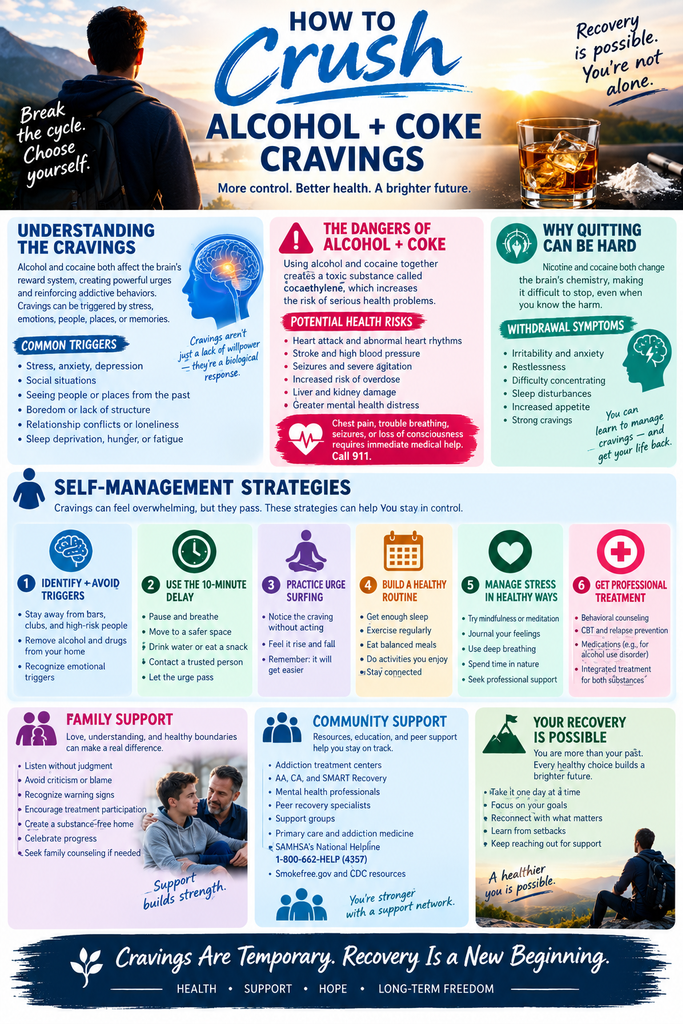
Cravings are intense urges or desires to use a substance. They can develop through changes in the brain’s reward system, learned associations, and emotional or environmental triggers.
Alcohol and cocaine both influence dopamine signaling, although they act through different mechanisms.
Cocaine blocks dopamine reuptake, producing a rapid increase in dopamine activity. Alcohol affects several neurotransmitter systems, including GABA and glutamate, while also influencing reward pathways.
Repeated exposure can strengthen associations between substance use and particular environments, emotions, people, or activities.
For example, someone who regularly drinks alcohol while using cocaine may eventually experience cocaine cravings whenever they consume alcohol.
Common triggers for alcohol and cocaine cravings
- Stress, anxiety, depression, or emotional distress.
- Social gatherings where alcohol or drugs are present.
- Seeing people associated with previous substance use.
- Visiting bars, clubs, or familiar locations.
- Relationship conflicts or loneliness.
- Boredom and lack of daily structure.
- Exposure to drug-related conversations or social media content.
- Celebrations or situations associated with previous substance use.
- Sleep deprivation, hunger, or physical exhaustion.
Recognizing these triggers is an important first step toward developing an effective relapse-prevention plan.
Why Alcohol and Cocaine Are a Dangerous Combination
Combining alcohol and cocaine creates additional health risks beyond those associated with either substance alone.
When alcohol and cocaine are used together, the liver can produce cocaethylene, an active metabolite associated with increased cardiovascular toxicity.
Cocaethylene can remain active longer than cocaine and may contribute to serious medical complications.
Potential health consequences include:
- Cardiac arrhythmias: Abnormal heart rhythms that can become life-threatening.
- Heart attack: Increased cardiovascular stress and reduced oxygen delivery to heart tissue.
- Stroke: Cocaine-associated vasoconstriction and blood pressure changes can increase cerebrovascular risk.
- Seizures: Cocaine toxicity can lower the seizure threshold.
- Severe agitation: Stimulant effects may contribute to anxiety, paranoia, and behavioral disturbances.
- Impaired judgment: Alcohol intoxication may increase risky decisions and substance consumption.
- Overdose: Combined toxicity can produce unpredictable and potentially fatal complications.
Alcohol may also reduce a person’s ability to recognize cocaine-related warning signs, increasing the likelihood of continued use despite dangerous symptoms.
Chest pain, severe headache, seizures, fainting, extreme agitation, or difficulty breathing after alcohol and cocaine use requires immediate emergency medical evaluation.
Why Cravings Can Feel So Powerful
Cravings are not simply a lack of willpower. They involve biological, psychological, and environmental processes that develop through repeated substance exposure.
Over time, the brain learns to associate certain cues with the anticipated effects of alcohol or cocaine.
These associations can become strong enough that exposure to a familiar trigger produces an urge to use, even after a period of abstinence.
Cravings may also intensify when individuals experience emotional distress or struggle to manage uncomfortable feelings.
For someone who previously used alcohol and cocaine together, drinking may become a particularly powerful trigger for cocaine use.
This is why addressing both substances in treatment is often essential for successful recovery.
Self-Management Strategies: How to Reduce Alcohol and Cocaine Cravings
Managing cravings requires preparation, self-awareness, and consistent practice.
While cravings can be uncomfortable, they often fluctuate in intensity and can decrease without substance use.
Developing practical coping strategies can help individuals respond to urges without acting on them.
1. Identify and avoid high-risk triggers
Recognize situations that increase the desire to drink or use cocaine.
Helpful strategies include:
- Avoiding bars, clubs, and environments associated with previous substance use.
- Limiting contact with individuals who encourage drinking or cocaine use.
- Removing alcohol, cocaine, and drug-related supplies from the home when safe.
- Recognizing emotional triggers such as stress, loneliness, or anger.
- Developing alternative activities for high-risk situations.
Avoiding alcohol can be particularly important for individuals whose cocaine use is strongly associated with drinking.
2. Practice the 10-minute delay technique
Cravings can feel urgent, but the intensity often changes over time.
When an urge develops, commit to waiting at least 10 minutes before deciding.
During this period:
- Move away from the triggering environment.
- Take slow, comfortable breaths.
- Drink water or eat a healthy snack.
- Contact a trusted support person.
- Engage in a distracting activity.
- Remind yourself why recovery matters.
The goal is to create distance between the craving and the decision to use.
Repeat the delay as needed, and seek additional support if the urge remains strong.
3. Use urge surfing to manage cravings
Urge surfing is a mindfulness-based technique that encourages individuals to observe cravings without acting on them.
Instead of trying to suppress the urge, acknowledge it and notice how its intensity changes.
For example, someone experiencing a cocaine craving might recognize physical tension, racing thoughts, or restlessness.
By observing these sensations without judgment, the individual can learn that cravings do not automatically require a behavioral response.
4. Maintain a structured daily routine
Unstructured time can increase boredom and exposure to triggers.
A consistent routine may help reduce stress and create opportunities for healthier activities.
Consider:
- Maintaining regular sleep and wake times.
- Eating balanced meals.
- Participating in physical activity.
- Scheduling work, education, or volunteer activities.
- Practicing relaxation exercises.
- Attending recovery meetings.
- Spending time with supportive friends and family.
Healthy routines cannot eliminate cravings entirely, but they can reduce vulnerability to relapse.
5. Use healthy alternatives to manage stress
Many individuals use alcohol or cocaine to cope with difficult emotions.
Developing healthier stress-management skills is essential for long-term recovery.
Helpful alternatives include exercise, journaling, meditation, counseling, creative hobbies, spending time outdoors, and participating in meaningful social activities.
The goal is to build coping strategies that provide emotional relief without exposing the individual to substance-related harm.
6. Seek evidence-based addiction treatment
Professional treatment can help individuals understand the psychological and behavioral factors contributing to cravings.
Evidence-based approaches include:
- Cognitive behavioral therapy (CBT): Helps identify high-risk thoughts and situations and develop coping skills.
- Contingency management: Uses structured positive reinforcement to encourage abstinence and treatment participation, with particularly strong evidence for stimulant use disorders.
- Motivational interviewing: Helps individuals explore personal reasons for change.
- Relapse-prevention counseling: Helps create individualized plans for managing triggers.
- Medication treatment for alcohol use disorder: Naltrexone and acamprosate can help reduce alcohol-related relapse risk when clinically appropriate.
- Integrated treatment: Addresses alcohol and cocaine use together, along with coexisting mental health concerns.
There is currently no FDA-approved medication specifically for cocaine use disorder, although clinicians may consider certain off-label treatments in selected circumstances.
The Importance of Medical Safety During Alcohol Withdrawal
Individuals who drink heavily or regularly may develop physical dependence on alcohol.
Abruptly stopping alcohol after prolonged heavy use can cause dangerous withdrawal symptoms, including seizures and delirium tremens.
Warning signs may include tremors, sweating, nausea, rapid heartbeat, anxiety, hallucinations, or confusion.
People with a history of withdrawal seizures, delirium tremens, heavy daily drinking, or significant medical illness should seek medical assessment before attempting to stop alcohol independently.
Alcohol withdrawal can be life-threatening and may require medically supervised treatment.
Cocaine withdrawal is usually not associated with the same type of medically dangerous withdrawal syndrome, but it can cause severe fatigue, depression, intense cravings, sleep disturbances, and, in some cases, suicidal thoughts that require prompt evaluation.
Family Support Strategies: Helping a Loved One Manage Cravings
Family members often want to help but may feel uncertain about how to respond when someone experiences intense alcohol or cocaine cravings.
Supportive communication, realistic expectations, and healthy boundaries can strengthen recovery.
Practical family support strategies
- Listen without judgment: Encourage honest conversations about cravings and emotional struggles.
- Recognize warning signs: Pay attention to increased isolation, changes in behavior, or renewed contact with substance-using peers.
- Avoid enabling substance use: Establish clear boundaries around money, transportation, and access to substances.
- Encourage treatment participation: Support attendance at counseling, medical appointments, and recovery meetings.
- Create a substance-free environment: Reduce exposure to alcohol and drugs in shared spaces when possible.
- Develop a crisis plan: Know whom to contact during relapse, overdose, or a mental health emergency.
- Celebrate progress: Recognize positive changes without expecting perfection.
- Seek family counseling: Address communication difficulties, emotional stress, and relationship conflicts.
Families should understand that relapse can occur during recovery and does not mean treatment is hopeless.
A return to substance use should prompt reassessment of triggers, treatment needs, and safety planning.
Community Support Strategies: Building a Strong Recovery Network
Recovery can be difficult when individuals feel isolated or lack access to supportive relationships.
Community resources provide education, encouragement, accountability, and access to professional treatment.
Helpful community resources
- Addiction treatment centers: Offer outpatient, intensive outpatient, residential, and medically supervised withdrawal services.
- Alcoholics Anonymous (AA): Provides peer support for individuals seeking recovery from alcohol use.
- Cocaine Anonymous (CA): Offers peer support for individuals recovering from cocaine and other substance use.
- SMART Recovery: Provides practical, evidence-informed tools for managing urges and changing addictive behaviors.
- Peer recovery specialists: Offer encouragement and guidance based on lived recovery experience.
- Mental health professionals: Address anxiety, depression, trauma, and other conditions that may contribute to substance use.
- Primary care and addiction medicine providers: Assess medical risks and coordinate treatment.
- Family support organizations: Provide education and assistance for loved ones affected by substance use disorders.
In the United States, individuals can contact SAMHSA’s National Helpline at 1-800-662-HELP (4357) for treatment referrals and information.
Developing a Personalized Relapse-Prevention Plan
A relapse-prevention plan helps individuals recognize warning signs and respond before cravings escalate.
An effective plan should identify personal triggers, coping strategies, supportive contacts, and emergency resources.
Five steps to strengthen relapse prevention
- Recognize early warning signs: Identify changes in mood, thinking, routines, or social behavior that increase relapse risk.
- Develop immediate coping responses: Practice urge surfing, delay techniques, and distraction strategies.
- Maintain supportive relationships: Stay connected with recovery peers, family members, and healthcare professionals.
- Address mental health needs: Seek treatment for anxiety, depression, trauma, or other coexisting conditions.
- Review and adjust the plan: Work with treatment providers to strengthen strategies after setbacks or changes in circumstances.
For individuals with a history of combining alcohol and cocaine, avoiding alcohol may be an important component of preventing cocaine relapse.
What to Do When Cravings Become Overwhelming
Sometimes cravings become so intense that usual coping strategies feel insufficient.
In these moments, focus on immediate safety and connection.
- Leave environments where alcohol or cocaine is available.
- Contact a trusted recovery partner, sponsor, counselor, or family member.
- Attend a recovery meeting or contact a treatment program.
- Avoid driving or making major decisions while intoxicated.
- Seek urgent professional assistance if relapse feels imminent and safety is at risk.
- Call 911 for suspected overdose, seizures, chest pain, or other medical emergencies.
Because illicit cocaine can be contaminated with fentanyl, individuals who may be exposed should have access to naloxone and overdose-response education. Naloxone reverses opioid overdose, not cocaine toxicity itself, but can be lifesaving when opioids are involved.
If severe depression or suicidal thoughts develop, call or text 988 in the United States for immediate crisis support.
Conclusion: Cravings Do Not Have to Control Your Future
Alcohol and cocaine cravings can be intense, but they do not have to determine a person’s actions or future.
Understanding how cravings develop, recognizing high-risk triggers, and practicing evidence-based coping strategies can help individuals interrupt the cycle of substance use.
Self-management techniques such as urge surfing, structured routines, trigger avoidance, and stress reduction can support recovery. Professional addiction treatment provides additional tools, including behavioral therapies and medications for alcohol use disorder when appropriate.
Family members can strengthen recovery through compassionate communication, healthy boundaries, and encouragement, while community organizations provide essential resources and ongoing support.
The goal is not to eliminate every craving immediately. It is to develop the confidence, skills, and support needed to experience cravings without returning to substance use.
Frequently Asked Questions and Answers
Understanding Alcohol and Cocaine Cravings
1. Why are alcohol and cocaine cravings so powerful?
Alcohol and cocaine both affect the brain’s reward system, particularly dopamine signaling. Repeated substance use can strengthen associations between certain environments, emotions, and the anticipated effects of these drugs. These learned connections can trigger intense cravings even after someone has stopped using substances.
2. Why do people frequently use alcohol and cocaine together?
Some individuals combine alcohol and cocaine because cocaine can temporarily counteract feelings of alcohol-related sedation, while alcohol may reduce some of the uncomfortable effects associated with cocaine. However, this combination can increase consumption, impair judgment, and create serious cardiovascular and neurological risks.
3. What happens when alcohol and cocaine are combined?
When alcohol and cocaine are consumed together, the body can produce cocaethylene, an active metabolite associated with increased cardiovascular toxicity. Combining these substances increases the risk of abnormal heart rhythms, heart attack, stroke, seizures, and potentially fatal complications.
4. Can drinking alcohol trigger cocaine cravings?
Yes. For individuals who regularly used cocaine while drinking, alcohol can become a powerful conditioned trigger. Even a small amount of alcohol may weaken judgment and reactivate associations with cocaine use. Avoiding alcohol may therefore be an important part of preventing cocaine relapse.
5. How long do alcohol and cocaine cravings last?
Individual craving episodes may last several minutes or longer, and their intensity often fluctuates. Cravings can recur over weeks or months, particularly when triggered by stress or familiar environments. The frequency and severity generally change over time, especially with sustained recovery and appropriate treatment.
Recognizing Craving Triggers and Warning Signs
6. What are the most common triggers for alcohol and cocaine cravings?
Common triggers include:
- Stress, anxiety, depression, or anger.
- Social gatherings involving alcohol or drugs.
- Visiting bars, clubs, or familiar substance-use locations.
- Contact with people associated with previous drug use.
- Relationship conflicts or loneliness.
- Boredom and lack of daily structure.
- Sleep deprivation or physical exhaustion.
- Celebrations and emotionally significant events.
Recognizing personal triggers allows individuals to develop strategies before cravings become overwhelming.
7. What are the warning signs that someone may be close to relapsing?
Warning signs may include increased isolation, skipping treatment appointments, romanticizing previous substance use, contacting former drug-using acquaintances, changes in sleep patterns, and returning to high-risk environments.
These behaviors do not necessarily mean relapse will occur, but they may indicate a need for additional support.
8. Can stress increase alcohol and cocaine cravings?
Yes. Stress activates physiological and psychological responses that can increase vulnerability to substance use. Individuals who previously relied on alcohol or cocaine to manage uncomfortable emotions may experience stronger cravings during stressful situations.
9. Can depression or anxiety make cravings worse?
Yes. Depression and anxiety may increase the desire to use substances for temporary emotional relief. However, alcohol and cocaine can worsen mood symptoms over time. Treating coexisting mental health conditions is an important part of comprehensive addiction care.
10. Why do cravings sometimes return after months of sobriety?
Cravings can reappear because learned associations between substances and certain situations may persist long after physical withdrawal has resolved. Familiar environments, emotional stress, or unexpected reminders can reactivate these associations.
Self-Management Strategies for Cravings
11. What is the fastest way to manage an alcohol or cocaine craving?
One practical approach is to leave the triggering environment, delay acting on the urge, and contact a supportive person. Drinking water, taking a short walk, or engaging in a distracting activity may also help.
No single technique eliminates every craving immediately, but combining several coping strategies can reduce the likelihood of acting on an urge.
12. What is the 10-minute delay technique?
The 10-minute delay technique involves committing to wait at least 10 minutes before responding to a craving. During this period, the individual practices relaxation, changes environments, or engages in a healthy activity.
The goal is to interrupt the automatic connection between craving and substance use. Repeat the delay if the urge continues.
13. What is urge surfing, and how does it help?
Urge surfing is a mindfulness technique that involves observing a craving without acting on it. People acknowledge physical sensations, thoughts, and emotions while letting the urge change naturally.
This approach teaches that cravings can be experienced without requiring substance use.
14. Can exercise reduce alcohol and cocaine cravings?
Physical activity may temporarily reduce stress, improve mood, and provide a healthy distraction from cravings. Walking, stretching, and other appropriate activities can support recovery.
However, individuals experiencing chest pain, palpitations, or other possible cocaine-related cardiovascular symptoms should seek medical evaluation rather than exercise.
15. What daily habits can help prevent cravings?
Helpful habits include:
- Maintaining regular sleep schedules.
- Eating balanced meals.
- Participating in appropriate physical activity.
- Attending recovery meetings.
- Practicing mindfulness or meditation.
- Avoiding high-risk environments.
- Developing meaningful hobbies.
- Maintaining contact with supportive individuals.
- Following prescribed addiction treatment.
A structured routine can reduce trigger exposure and strengthen long-term recovery.
Addiction Treatment and Medication Options
16. What treatments are most effective for cocaine use disorder?
Contingency management has particularly strong evidence for treating stimulant use disorders, including cocaine use disorder. Cognitive behavioral therapy, community reinforcement approaches, and other structured behavioral treatments can also help.
Treatment should address coexisting alcohol use disorder and mental health concerns when present.
17. Are medications available to reduce alcohol cravings?
Yes. FDA-approved medications for alcohol use disorder include naltrexone, acamprosate, and disulfiram.
Naltrexone may help reduce heavy drinking and alcohol cravings, while acamprosate supports maintenance of abstinence. Disulfiram produces an unpleasant reaction when alcohol is consumed and is generally used as a deterrent rather than a direct anti-craving medication.
Medication selection depends on individual medical circumstances and treatment goals.
18. Is there medication specifically approved for cocaine cravings?
There is currently no FDA-approved medication specifically for cocaine use disorder. However, clinicians may consider certain off-label medications in selected patients based on emerging evidence and individual needs.
Behavioral treatments, particularly contingency management, remain central to cocaine use disorder treatment.
19. Can cognitive behavioral therapy help prevent relapse?
Yes. Cognitive behavioral therapy helps individuals identify high-risk situations, challenge substance-related thinking patterns, and develop practical coping strategies.
CBT can also help address stress, negative emotions, and learned behaviors associated with alcohol and cocaine use.
20. Is detoxification enough to overcome alcohol and cocaine addiction?
No. Withdrawal management addresses acute physical and psychological symptoms but does not, by itself, treat the underlying substance use disorder.
Long-term recovery often requires behavioral treatment, medication for alcohol use disorder when appropriate, relapse-prevention planning, and ongoing support.
Important: Abrupt alcohol cessation after prolonged heavy use can cause life-threatening withdrawal, including seizures and delirium tremens. Individuals at risk should seek medical assessment before stopping alcohol.
Family Support and Recovery
21. How can family members help someone experiencing intense cravings?
Families can support someone by listening without judgment, encouraging treatment participation, helping identify triggers, and, when possible, creating a substance-free environment.
Maintaining realistic expectations and healthy boundaries can also support recovery.
22. What should families avoid saying to someone struggling with addiction?
Families should avoid statements that shame, ridicule, or blame the individual, such as “You have no willpower” or “Why can’t you just stop?”
Instead, supportive communication should emphasize concern, encouragement, accountability, and access to appropriate treatment.
23. Should families remove alcohol from the home?
For individuals whose drinking triggers cocaine cravings, maintaining an alcohol-free home may be beneficial. Family members should discuss reasonable boundaries and work collaboratively to reduce exposure to high-risk situations.
24. Can family therapy improve addiction recovery outcomes?
Family therapy may improve communication, reduce relationship conflict, strengthen support systems, and help relatives establish healthy boundaries.
It can also provide education about addiction, relapse warning signs, and effective ways to respond to cravings.
25. What should family members do if their loved one relapses?
Families should prioritize immediate safety, avoid confrontation during intoxication, and encourage prompt contact with treatment providers.
A return to substance use may indicate the need to adjust treatment or strengthen relapse-prevention strategies.
Chest pain, seizures, severe confusion, or suspected overdose require emergency medical attention.
Community Support and Recovery Resources
26. What support groups can help with alcohol and cocaine addiction?
Helpful recovery communities include:
- Alcoholics Anonymous (AA).
- Cocaine Anonymous (CA).
- SMART Recovery.
- Peer recovery support programs.
- Community addiction treatment organizations.
- Professionally facilitated recovery groups.
Different programs offer different approaches, allowing individuals to select support that aligns with their needs and preferences.
27. How can peer recovery specialists help manage cravings?
Peer recovery specialists use their lived experience of recovery to provide encouragement, practical guidance, and connections to treatment resources.
They may help individuals develop coping strategies, navigate community services, and maintain motivation during challenging periods.
28. Where can someone find professional help for alcohol and cocaine addiction?
In the United States, individuals can contact SAMHSA’s National Helpline at 1-800-662-HELP (4357) for confidential treatment referrals and information.
The FindTreatment.gov website also helps individuals locate substance use disorder treatment services.
29. What should someone do when cravings become overwhelming?
When cravings feel difficult to manage, individuals should leave high-risk environments, contact a trusted support person, and reach out to their treatment provider or recovery network.
If they are intoxicated, they should avoid driving and seek assistance.
If there is an immediate medical emergency, call 911. For severe emotional distress or suicidal thoughts in the United States, call or text 988.
30. Can someone recover from both alcohol and cocaine addiction?
Yes. Recovery from co-occurring alcohol and cocaine use disorders is possible.
Effective treatment may include behavioral therapy, medications for alcohol use disorder, integrated mental health care, family involvement, peer support, and ongoing relapse-prevention strategies.
Recovery is individualized, and some people need multiple treatment adjustments to achieve sustained improvement.
Video: