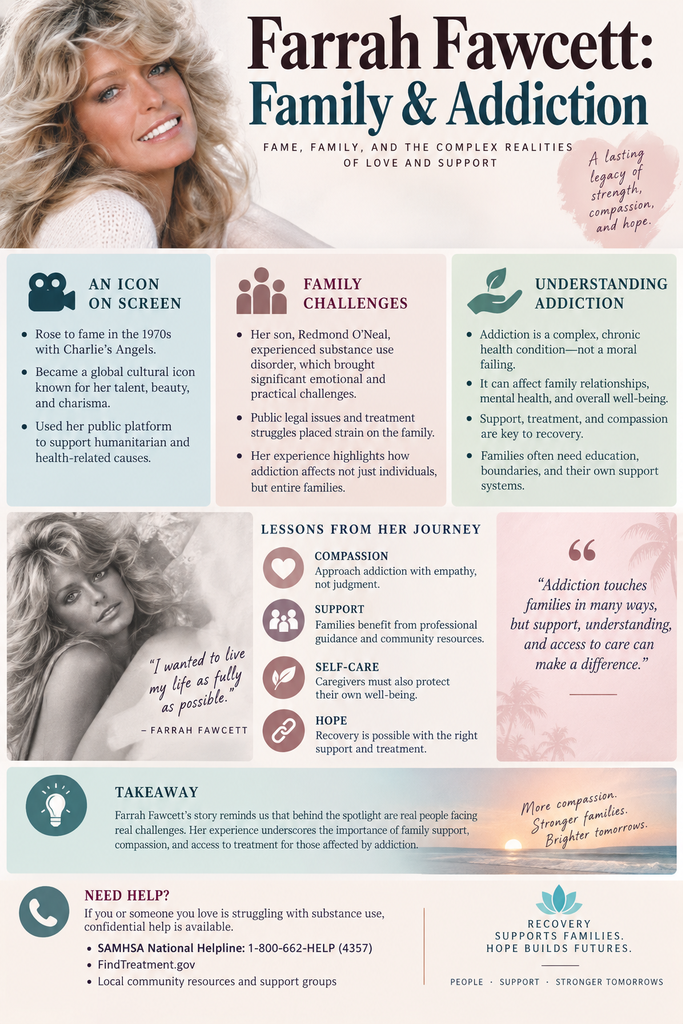
Farrah Fawcett became a Hollywood icon through her role in Charlie’s Angels, her memorable smile, and her successful acting career. Behind her public image, however, she experienced significant personal challenges, including complicated family relationships, her son’s substance use disorder, and her own battle with cancer.
Although Fawcett was surrounded by addiction-related challenges within her family, there is no well-established public evidence confirming that she personally had a substance use disorder. Her story provides an opportunity to explore how addiction affects families, how chronic illness complicates pain management, and why emotional support is essential during difficult life experiences.
By examining Fawcett’s journey, we can better understand the importance of self-management, family involvement, and community resources in helping individuals navigate addiction, serious illness, and emotional distress.
1. Farrah Fawcett: Fame, Personal Challenges, and Family Addiction
Farrah Fawcett rose to international fame during the 1970s, becoming one of television’s most recognizable actresses. Despite her professional success, her personal life attracted considerable media attention.
Her longtime relationship with actor Ryan O’Neal was complicated by relationship difficulties and family challenges. Their son, Redmond O’Neal, experienced substance use problems that resulted in legal difficulties and treatment attempts.
Redmond’s addiction became a significant part of the family’s public story. His struggles illustrate how substance use disorders can affect parents, relationships, and the broader family system.
During Fawcett’s final illness, her son was incarcerated. Reports from the time describe the emotional difficulty surrounding his circumstances and his mother’s declining health.
Understanding Addiction Within Families
When a family member develops a substance use disorder, the consequences can extend beyond the individual experiencing addiction.
Common family challenges include:
- Emotional distress: Parents and loved ones may experience fear, frustration, sadness, and uncertainty about the future.
- Relationship difficulties: Substance use can contribute to communication problems, broken trust, and family conflict.
- Financial strain: Treatment expenses, legal difficulties, and disrupted employment may affect household stability.
- Caregiver exhaustion: Family members may neglect their own physical and emotional needs while attempting to help a loved one.
- Unhealthy relationship patterns: Some families struggle to distinguish supportive behavior from actions that unintentionally reinforce harmful substance use.
Fawcett’s family circumstances highlight the importance of recognizing addiction as a health condition that can affect an entire family.
Family members need education, emotional support, and access to appropriate treatment resources, not blame or judgment.
2. Farrah Fawcett’s Cancer Battle and the Importance of Pain Management
In September 2006, Fawcett was diagnosed with anal cancer. After undergoing treatment, she experienced a recurrence of the disease, which eventually spread to her liver.
She documented her experience in Farrah’s Story, a television documentary that provided viewers with an intimate look at her medical treatments, physical suffering, and emotional challenges.
During her illness, Fawcett received medications to manage symptoms and treatment-related pain. Her medical care included intensive cancer treatments that significantly affected her physical health and quality of life.
She died on June 25, 2009, at age 62.
Does Using Prescription Pain Medication Mean Someone Has an Addiction?
No. Prescription pain medications, including opioids, may be medically appropriate for individuals experiencing severe cancer-related pain.
It is important to distinguish among three different concepts:
Physical dependence: The body adapts to repeated medication exposure, potentially causing withdrawal symptoms when the medication is abruptly discontinued.
Tolerance: A medication’s effects may decrease with repeated exposure, although worsening pain can also reflect disease progression.
Addiction: Opioid use disorder involves a problematic pattern of opioid use that causes clinically significant impairment or distress.
Physical dependence and tolerance can occur during appropriate medical treatment without indicating addiction.
There is no established evidence that Fawcett’s medically supervised pain treatment constituted an opioid use disorder.
Her experience illustrates why patients with serious illnesses deserve effective pain management without automatically being labeled as having an addiction.
3. Self-Management Strategies: Protecting Physical and Emotional Health
Although Fawcett’s personal circumstances were unique, her experience offers an opportunity to discuss strategies that help individuals manage chronic illness, family stress, and substance use-related challenges.
Self-management involves developing healthy routines, recognizing emotional triggers, seeking appropriate treatment, and maintaining a sense of personal control during difficult circumstances.
Practical Self-Management Strategies
1. Recognize emotional stressors.
Serious illness and family addiction can contribute to anxiety, sadness, frustration, and emotional exhaustion.
Helpful strategies include:
- Identifying situations that increase emotional distress.
- Practicing mindfulness, breathing exercises, or relaxation techniques.
- Keeping a journal to process difficult emotions.
- Seeking professional counseling when stress becomes overwhelming.
2. Develop healthy coping mechanisms.
Some individuals turn to alcohol, prescription medications, or other substances when attempting to cope with emotional pain.
Healthier alternatives may include:
- Participating in enjoyable hobbies and creative activities.
- Maintaining meaningful relationships.
- Engaging in gentle physical activity when medically appropriate.
- Establishing consistent sleep and nutrition routines.
- Using relaxation techniques to manage stress.
3. Follow an individualized medical treatment plan.
Patients managing chronic pain or serious illness should work closely with healthcare professionals to establish appropriate treatment goals.
Important considerations include:
- Taking medications according to prescribed instructions.
- Discussing side effects and concerns with healthcare providers.
- Avoiding the use of alcohol or nonprescribed sedatives with opioid medications.
- Considering nonpharmacological pain-management approaches when appropriate.
- Reporting uncontrolled pain rather than independently increasing medication doses.
Patients with cancer-related pain should not abruptly discontinue prescribed opioids without medical guidance.
4. Establish healthy emotional boundaries.
Supporting a family member experiencing addiction does not require accepting harmful behavior or sacrificing personal well-being.
Individuals can express compassion while establishing boundaries that protect their physical, emotional, and financial health.
4. Family Support Strategies: Helping Loved Ones Without Enabling Addiction
Fawcett’s family circumstances demonstrate how addiction can intersect with relationships, caregiving responsibilities, and serious medical conditions.
When someone develops a substance use disorder, family members may feel responsible for preventing every negative consequence.
However, recovery cannot be controlled by another person’s efforts alone.
Families can provide meaningful support while encouraging personal responsibility and professional treatment.
How Families Can Support Addiction Recovery
Encourage treatment without shame.
Family members should approach substance use disorders as treatable health conditions rather than moral failures.
Supportive communication may include:
- Expressing concern without using threatening or judgmental language.
- Encouraging an assessment by an addiction treatment professional.
- Offering assistance with transportation or treatment appointments.
- Recognizing improvements without expecting immediate or perfect recovery.
Set realistic boundaries.
Healthy boundaries protect relationships and encourage accountability.
Examples include:
- Refusing to provide money that may be used to purchase substances.
- Establishing expectations regarding safety within the home.
- Avoiding arguments when a loved one is intoxicated.
- Supporting treatment while declining to conceal harmful behavior.
Participate in family counseling.
Family therapy can help relatives understand substance use disorders and develop healthier communication patterns.
It may also address unresolved conflicts, caregiver stress, and relationship difficulties.
Recognize caregiver burnout.
Parents and partners may become physically and emotionally exhausted while supporting someone experiencing addiction.
Family members should maintain their own medical appointments, friendships, hobbies, and emotional support systems.
Prepare for emergencies.
Families affected by opioid use should learn how to recognize an overdose and administer naloxone.
Naloxone can reverse an opioid overdose, but emergency medical assistance is still necessary.
5. Community Support Strategies: Building a Network of Care
Addiction recovery and serious illness management often require more than individual determination or family involvement.
Community resources can provide professional treatment, emotional support, practical assistance, and opportunities for long-term stability.
Fawcett’s experience with cancer also demonstrates the value of supportive relationships and patient advocacy.
Her close friend Alana Stewart helped document her medical journey and supported her during treatment. Their work eventually became Farrah’s Story, which brought public attention to the realities of living with cancer.
Community Resources That Can Make a Difference
1. Addiction treatment programs
Comprehensive addiction treatment may include:
- Medical assessment and withdrawal management when necessary.
- Medications for opioid or alcohol use disorder when appropriate.
- Individual and group counseling.
- Treatment for co-occurring mental health conditions.
- Continuing care and relapse prevention planning.
2. Peer recovery support
Peer recovery specialists provide guidance based on their lived experience with substance use disorders and recovery.
They can help individuals navigate treatment options, establish recovery goals, and connect with community resources.
3. Family support organizations
Programs such as Al-Anon, Nar-Anon, and SMART Recovery Family & Friends provide opportunities for families to learn coping strategies and connect with others experiencing similar challenges.
4. Integrated medical and behavioral healthcare
Patients experiencing addiction alongside cancer, chronic pain, or another serious medical condition benefit from coordinated healthcare.
An integrated approach may involve primary care providers, addiction specialists, mental health professionals, pain management clinicians, and palliative care teams.
5. Community education and stigma reduction
Public education can help individuals recognize substance use disorders, understand treatment options, and seek assistance earlier.
Communities can also improve access to treatment by expanding affordable healthcare, transportation services, recovery housing, and family counseling.
6. Understanding the Relationship Between Chronic Pain and Addiction
One important lesson from Fawcett’s medical journey is the need to distinguish legitimate pain treatment from problematic substance use.
Individuals experiencing severe pain may require medications that carry risks of tolerance, physical dependence, and addiction.
However, these risks do not mean that every patient receiving opioid therapy will develop a substance use disorder.
Untreated pain can also have serious consequences, including sleep disruption, reduced mobility, emotional distress, and diminished quality of life.
Strategies for Managing Pain Safely
Healthcare professionals and patients can work together to:
- Establish realistic pain-management goals.
- Assess pain severity and its effects on daily functioning.
- Select appropriate medications based on individual medical needs.
- Monitor medication effectiveness and adverse effects.
- Consider physical therapy, psychological support, or other complementary approaches when appropriate.
- Reassess treatment when pain worsens or medication-related concerns develop.
For individuals with both cancer-related pain and opioid use disorder, treatment should address both conditions rather than withholding necessary pain relief.
A compassionate, individualized approach helps protect patient safety while preserving dignity and quality of life.
7. Lessons From Farrah Fawcett’s Journey
Farrah Fawcett’s experiences illustrate the emotional challenges that can arise when serious illness, family addiction, and public scrutiny intersect.
Although her story should not be characterized as a confirmed personal addiction recovery journey, it offers several important lessons about supporting individuals and families facing difficult circumstances.
Key Takeaways
Addiction affects the entire family. Parents, partners, children, and other relatives may experience emotional and practical consequences when someone develops a substance use disorder.
Compassion and boundaries can coexist. Families can provide love and encouragement while maintaining expectations that protect everyone’s well-being.
Pain treatment should not be confused with addiction. Individuals experiencing cancer-related pain deserve appropriate medical care without unnecessary stigma.
Professional support matters. Addiction treatment, mental healthcare, and family counseling can provide tools that individuals may struggle to develop independently.
Community involvement strengthens support systems. Recovery organizations, healthcare services, and peer support programs can reduce isolation and improve access to care.
Personal dignity should remain a priority. Whether someone is experiencing addiction, chronic illness, or emotional distress, respectful and individualized care is essential.
Conclusion
Farrah Fawcett’s life was marked by professional success, complicated family circumstances, and a highly publicized battle with cancer. Although there is no well-established evidence that she personally experienced a substance use disorder, addiction-related challenges within her family were part of her broader life story.
Her experiences highlight the importance of compassionate family involvement, appropriate medical care, healthy boundaries, and community support.
For individuals and families affected by addiction, the central message is that recovery requires more than individual determination. It benefits from evidence-based treatment, supportive relationships, and access to resources that address physical, emotional, and social needs.
Whether someone is navigating addiction, supporting a loved one, or managing a serious illness, no one should have to face these challenges without appropriate care and support.
Frequently Asked Questions
Here are some common questions:
1. Did Farrah Fawcett struggle with addiction?
There is no well-established public evidence that Farrah Fawcett personally experienced a substance use disorder. However, addiction affected her family, particularly her son, Redmond O’Neal, who struggled with substance use and experienced legal difficulties. Her family’s experiences highlight the emotional challenges that parents and loved ones may face when supporting someone with addiction.
2. How did addiction affect Farrah Fawcett’s family?
Fawcett’s son, Redmond O’Neal, experienced substance use problems that contributed to legal difficulties and treatment attempts. His struggles brought emotional challenges to the family, particularly during Fawcett’s battle with cancer. Her experience illustrates how addiction can affect family relationships, emotional well-being, and the ability to provide support during difficult circumstances.
3. What substances did Farrah Fawcett’s son struggle with?
Redmond O’Neal has publicly experienced problems involving heroin and methamphetamine, among other substances. His substance use was associated with repeated legal difficulties and treatment attempts. His experiences demonstrate the importance of comprehensive addiction treatment, mental healthcare, and ongoing recovery support.
4. Did Farrah Fawcett use prescription pain medications during her cancer treatment?
Fawcett received medical treatment for anal cancer, including medications to manage pain and treatment-related symptoms. However, receiving prescription pain medication does not automatically indicate addiction. Patients experiencing severe cancer-related pain may require opioid medications as part of appropriate medical care.
5. What is the difference between physical dependence and addiction?
Physical dependence occurs when the body adapts to repeated exposure to a medication, potentially causing withdrawal symptoms if it is abruptly discontinued.
Addiction, clinically diagnosed as a substance use disorder, involves a problematic pattern of substance use that causes significant impairment or distress.
A patient can develop physical dependence on prescribed pain medication without having an addiction.
6. How can parents support an adult child struggling with addiction?
Parents can provide emotional encouragement while maintaining healthy boundaries and supporting professional treatment.
Helpful strategies include:
- Encouraging an evaluation by an addiction treatment specialist.
- Communicating without blame, threats, or judgment.
- Offering assistance with treatment appointments and recovery resources.
- Establishing boundaries that protect family safety and financial stability.
- Participating in family counseling or support groups.
- Recognizing that recovery is a process that cannot be controlled by another person.
Parents should also prioritize their own emotional and physical well-being.
7. Can family stress contribute to substance use problems?
Yes. Chronic family conflict, emotional distress, trauma, and other stressful experiences can increase vulnerability to problematic substance use in some individuals.
However, addiction develops through a complex interaction of genetic, biological, psychological, and environmental factors.
Family stress alone does not cause addiction, and parents should not automatically be blamed for a child’s substance use disorder.
8. What role does family support play in addiction recovery?
Family support can help individuals remain engaged in treatment, develop healthier coping strategies, and rebuild relationships.
Supportive family members may provide encouragement, transportation to treatment appointments, assistance with daily responsibilities, and emotional stability.
Family counseling can also help relatives improve communication, establish boundaries, and address relationship difficulties.
However, family support does not guarantee recovery, and individuals may achieve meaningful recovery even when family involvement is limited or unavailable.
9. How can families avoid enabling addiction?
Families can support recovery without participating in behaviors that increase substance-related harm.
Healthy strategies include setting clear boundaries, avoiding financial assistance that may be used to buy substances, and refusing to cover up dangerous behavior.
Families can also encourage treatment, provide access to overdose prevention resources, and maintain supportive communication.
The goal is to promote safety and recovery without abandoning or shaming the individual experiencing addiction.
10. How did Farrah Fawcett cope with her cancer diagnosis?
Fawcett underwent medical treatment after being diagnosed with anal cancer in 2006. She received treatment in the United States and Germany and documented portions of her experience in the television documentary Farrah’s Story.
Her journey demonstrated the importance of medical care, personal advocacy, emotional support, and maintaining meaningful relationships during serious illness.
11. Can chronic pain increase the risk of addiction?
Chronic pain and substance use disorders can coexist, but experiencing chronic pain does not automatically lead to addiction.
Certain medications used to treat pain, particularly opioids, carry risks of physical dependence, tolerance, and opioid use disorder.
Healthcare professionals should assess individual risk factors, monitor treatment effectiveness, and develop personalized pain-management plans.
For patients with cancer-related pain, adequate symptom control remains an essential component of compassionate medical care.
12. How can families manage emotional exhaustion when supporting someone with addiction?
Supporting a loved one with addiction can contribute to chronic stress, anxiety, sleep difficulties, and caregiver burnout.
Families can protect their emotional health by:
- Participating in individual or family counseling.
- Establishing realistic expectations about recovery.
- Maintaining friendships and personal interests.
- Practicing healthy sleep, nutrition, and exercise habits.
- Seeking support from others who understand addiction-related challenges.
- Recognizing when additional professional assistance is necessary.
Family members deserve support for their own well-being, regardless of whether their loved one is ready to enter treatment.
13. What community resources are available for families affected by addiction?
Several organizations provide education, treatment referrals, and emotional support for individuals and families affected by substance use disorders.
SAMHSA’s National Helpline: 1-800-662-HELP (4357) provides confidential treatment referrals and information.
Al-Anon and Nar-Anon: Offer peer support for family members and friends affected by another person’s alcohol or drug use.
SMART Recovery Family & Friends: Provides practical strategies for coping with a loved one’s addictive behaviors while maintaining personal well-being.
FindTreatment.gov: Helps individuals locate substance use and mental health treatment services in their communities.
14. What can Farrah Fawcett’s story teach us about addiction and family relationships?
Fawcett’s experiences demonstrate that addiction can affect families regardless of fame, financial resources, or social status.
Her family’s challenges highlight the importance of compassionate communication, healthy boundaries, professional treatment, and community support.
Her cancer journey also emphasizes the need to distinguish medically appropriate pain management from substance use disorders.
Together, these experiences illustrate why families benefit from comprehensive healthcare and emotional support during difficult circumstances.
15. What is the most important lesson from Farrah Fawcett’s family experiences?
Addiction affects more than the individual experiencing the disorder, and family members need support, education, and compassion as well.
Families can encourage recovery by promoting access to evidence-based treatment, maintaining healthy boundaries, and supporting their loved ones without sacrificing their own well-being.
Farrah Fawcett’s story reminds us that serious illness, family challenges, and addiction-related difficulties deserve understanding rather than judgment.
Recovery is possible, and supportive relationships, professional treatment, and community resources can help individuals and families move toward healthier futures.
Video: