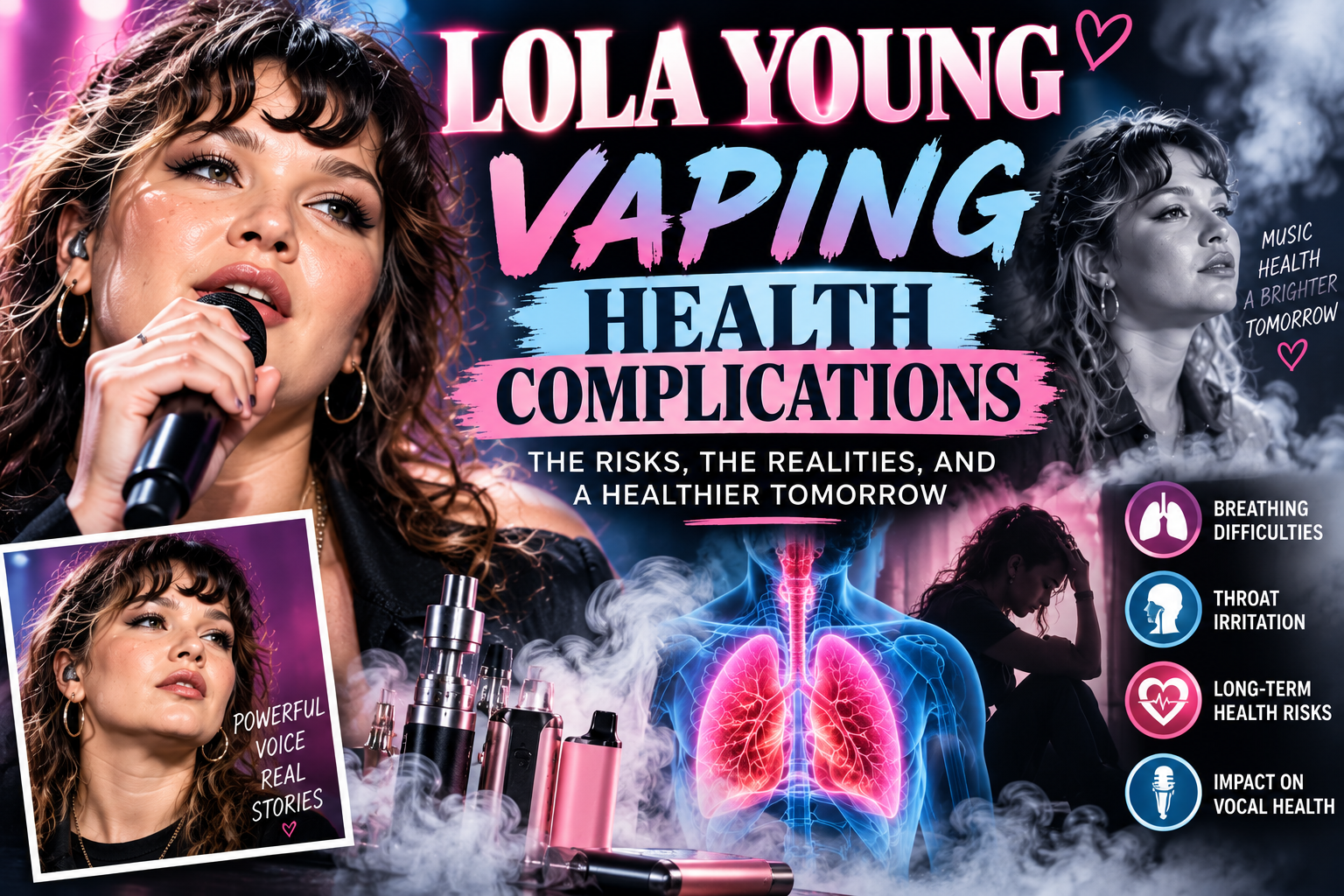
Lola Young is a British singer-songwriter recognized for her powerful vocals, emotionally honest lyrics, and willingness to discuss personal struggles. Her growing popularity has also drawn attention to the pressures young performers face as they manage their physical and emotional health.
Vaping has become a significant public health concern, particularly among young adults who may underestimate the risks associated with electronic cigarettes. For singers, vaping raises additional concerns because respiratory health, breath control, and vocal function are essential to their careers.
Public discussion connecting Lola Young with vaping offers an opportunity to explore nicotine dependence, potential respiratory complications, and the importance of healthier coping strategies. However, it is important not to assume that Young has a vaping-related illness or nicotine addiction without verified medical information.
This article examines the general health risks associated with vaping, how nicotine dependence can develop, and how self-management, family involvement, and community resources can support individuals seeking to protect their health.
Lola Young’s Journey: Music, Personal Challenges, and Public Attention
Lola Young has gained international recognition for her distinctive musical style, emotionally expressive performances, and songs that explore relationships, vulnerability, and personal experiences.
Like many performers, she works in an environment where touring schedules, public expectations, and professional responsibilities may create considerable stress.
Young has publicly discussed aspects of her personal health and well-being. However, those disclosures should not automatically be connected to vaping or interpreted as evidence of nicotine dependence.
A person’s public image, appearance, or performance difficulties cannot establish the presence of a vaping-related medical condition.
Her story offers a broader opportunity to discuss why protecting respiratory health matters so much for singers and others whose careers depend on healthy lung and vocal function.
Lola Young’s Public Warning About Vaping
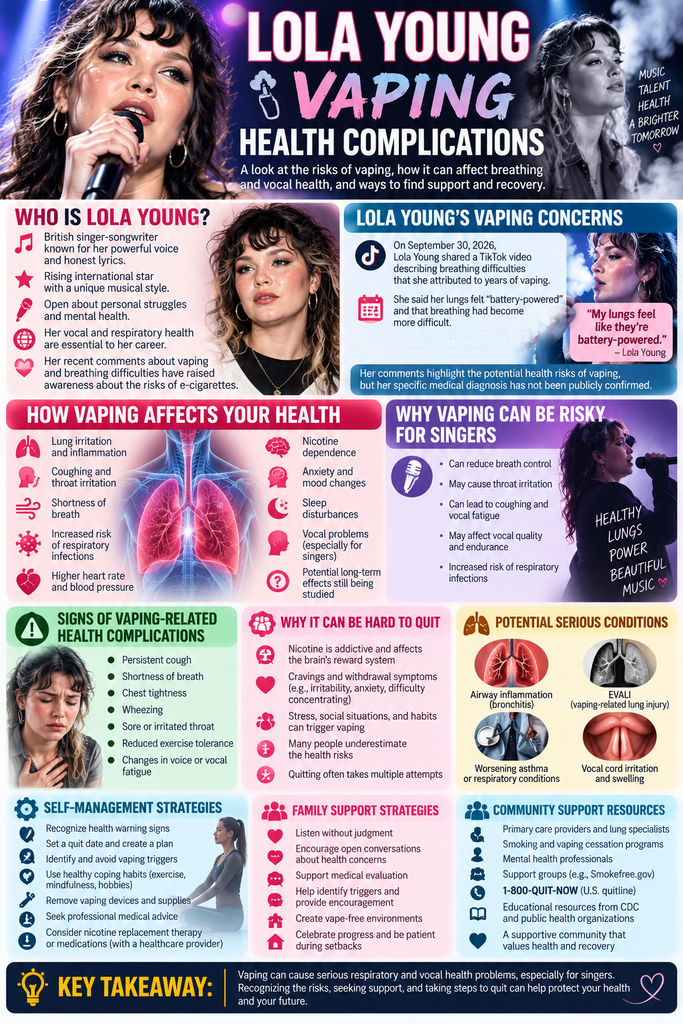
On September 30, 2026, Young shared a TikTok video describing breathing difficulties that she personally attributed to years of vaping.
She explained that she had previously dismissed warnings about the potential effects of vaping but was now noticing changes in her breathing. She described her lungs as feeling battery-powered and said breathing had become physically demanding.
Despite expressing concern about these symptoms, Young jokingly suggested that she might postpone quitting vaping until much later in life. Her remarks attracted attention from fans and health commentators.
Her comments illustrate an important challenge in nicotine dependence: recognizing possible harm does not always lead immediately to behavior change.
Although Young associated her breathing symptoms with vaping, the specific medical cause of her symptoms has not been publicly established. Shortness of breath can have several causes and warrants clinical evaluation.
Understanding the Health Risks of Vaping
Electronic cigarettes heat liquids into an aerosol that users inhale. Many vaping products contain nicotine, flavoring chemicals, and other substances that may affect respiratory and cardiovascular health.
Although nicotine vaping generally exposes users to fewer toxic chemicals than combustible cigarette smoking, vaping is not harmless.
Potential health complications include:
- Respiratory irritation: Coughing, throat irritation, wheezing, and breathing discomfort.
- Nicotine dependence: Repeated nicotine exposure can produce cravings, tolerance, and withdrawal symptoms.
- Cardiovascular effects: Nicotine can increase heart rate and blood pressure.
- Airway inflammation: Vaping aerosols may irritate respiratory tissues and contribute to inflammation.
- Sleep disturbances: Nicotine’s stimulant effects may interfere with sleep quality.
- Anxiety and mood changes: Nicotine withdrawal can cause irritability, restlessness, and difficulty concentrating.
- Potential vocal difficulties: Throat irritation and breathing problems may interfere with vocal performance.
Long-term health effects remain under investigation, particularly because vaping products vary in composition and patterns of use.
Why Vaping Can Be Especially Concerning for Singers
Singing requires coordinated respiratory control, healthy vocal folds, and efficient airflow.
Professional singers rely on their lungs and respiratory muscles to sustain notes, regulate volume, and maintain vocal endurance.
Vaping-related irritation or respiratory symptoms may interfere with these functions.
Potential effects on vocal performance
- Reduced breath control during singing.
- Throat irritation and coughing.
- Difficulty sustaining longer vocal phrases.
- Increased vocal fatigue.
- Greater effort required during performances.
- Potential changes in vocal comfort or quality.
Vocal coach Lizzii Hills told BBC Newsbeat that vaping can affect the lungs, airways, and throat, potentially making singing more physically demanding.
For performers like Lola Young, respiratory symptoms may affect both physical comfort and professional performance.
Nicotine Dependence: Why Quitting Can Be Difficult
Nicotine affects the brain’s reward pathways by increasing dopamine signaling, which reinforces use and contributes to dependence.
Repeated exposure can produce neuroadaptations that make stopping difficult, even when someone recognizes the potential health consequences.
Withdrawal symptoms may include irritability, anxiety, difficulty concentrating, increased appetite, sleep disturbances, and strong cravings.
Stress, social situations, boredom, and established routines can also trigger vaping urges.
Young’s comments about continuing to vape despite concerns about her breathing highlight the importance of understanding how challenging behavior change can be. However, her statements alone do not establish a clinical diagnosis of nicotine use disorder.
Self-Management Strategies: Taking Steps Toward Vaping Cessation
Individuals concerned about vaping-related symptoms can begin by identifying triggers, assessing nicotine use, and developing a realistic cessation plan.
Practical self-management strategies
- Recognize health warning signs: Watch for coughing, wheezing, chest discomfort, or changes in breathing.
- Seek medical evaluation: Have persistent respiratory symptoms assessed rather than assuming vaping is the only cause.
- Identify vaping triggers: Recognize situations involving stress, boredom, social pressure, or emotional distress.
- Set a quit date: Establish a realistic plan for reducing and ultimately stopping nicotine use.
- Remove vaping supplies: Reduce access to devices and products that trigger habitual use.
- Practice craving-management techniques: Use brief walks, mindfulness, relaxation exercises, and other healthy distractions.
- Track progress: Monitor cravings, withdrawal symptoms, vaping frequency, and improvements in daily functioning.
- Seek professional treatment: Discuss behavioral counseling and appropriate cessation medications with a healthcare professional.
For adults, nicotine replacement therapy, varenicline, or bupropion may be considered depending on clinical circumstances. These medications have established roles in smoking cessation, but their use specifically for vaping cessation requires individualized assessment; some uses may be off-label.
New or significant shortness of breath should never be dismissed as a normal consequence of vaping. Severe breathing difficulty, chest pain, blue lips, confusion, or fainting requires emergency medical attention.
Family Support Strategies: Encouraging Healthier Choices
Family members and loved ones can play an important role in helping someone recognize vaping-related health concerns and prepare for cessation.
Because nicotine dependence can involve withdrawal symptoms and repeated quit attempts, compassionate communication is more effective than shame or criticism.
Ways families can provide support
- Listen without judgment: Encourage open discussions about vaping habits and health concerns.
- Express concern respectfully: Focus on respiratory symptoms and overall well-being rather than blaming the individual.
- Encourage medical evaluation: Support appointments with primary care providers or respiratory specialists.
- Help identify triggers: Recognize stressful situations or routines that encourage vaping.
- Support cessation goals: Celebrate progress and encourage continued efforts after setbacks.
- Create vape-free environments: Establish healthy boundaries around vaping in shared spaces.
- Promote healthy coping activities: Encourage exercise, relaxation, hobbies, and meaningful social interactions.
- Respect personal autonomy: Offer assistance without attempting to control the individual’s decisions.
Family support is especially valuable when nicotine withdrawal contributes to irritability, anxiety, or frustration.
Community Support Strategies: Accessing Resources for Vaping Cessation
Community resources can provide education, treatment, and ongoing encouragement for individuals attempting to stop vaping.
Healthcare providers, public health organizations, and behavioral health professionals can help people understand nicotine dependence and develop individualized cessation plans.
Helpful community resources
- Primary care providers: Evaluate respiratory symptoms, assess nicotine dependence, and recommend treatment.
- Pulmonologists: Investigate persistent or unexplained breathing difficulties.
- Smoking and vaping cessation programs: Provide structured counseling and behavioral support.
- Mental health professionals: Address anxiety, stress, depression, or other conditions that may complicate cessation.
- Nicotine cessation support groups: Offer encouragement and accountability.
- Smokefree.gov: Provides free cessation information and digital tools.
- CDC Tobacco Prevention and Control: Offers educational resources about nicotine and tobacco-related health risks.
- Quitlines: In the United States, 1-800-QUIT-NOW connects callers with state-based cessation support.
Community education also helps challenge the misconception that vaping is completely safe because it does not involve burning tobacco.
The Role of Healthcare Professionals
Healthcare professionals should assess respiratory symptoms, nicotine exposure, and relevant medical history when patients report vaping-related health concerns.
A thorough clinical evaluation may include:
- Reviewing vaping frequency, duration, and product ingredients.
- Assessing nicotine concentration and dependence symptoms.
- Evaluating coughing, wheezing, dyspnea, and exercise tolerance.
- Screening for asthma and other respiratory conditions.
- Considering pulmonary function testing or imaging when clinically indicated.
- Assessing coexisting tobacco, cannabis, or other substance use.
- Discussing evidence-based nicotine cessation strategies.
- Coordinating mental health or addiction medicine referrals when appropriate.
For professional singers, collaborating with an otolaryngologist or voice specialist may help when vocal changes accompany respiratory symptoms.
Lessons From Lola Young’s Experience
Lola Young’s willingness to discuss her breathing difficulties publicly highlights several important health messages.
First, vaping-related concerns should not be ignored simply because electronic cigarettes are perceived as less harmful than conventional cigarettes.
Second, nicotine dependence can make quitting difficult, even when individuals recognize possible negative consequences.
Third, respiratory health is especially important for people whose careers depend on sustained breathing and vocal performance.
Finally, public figures discussing their experiences can encourage conversations about nicotine dependence and the importance of seeking medical advice.
Her experience also shows that acknowledging a health concern and being ready to change a behavior can happen at different times.
Conclusion: Protecting Respiratory Health and Supporting Recovery
Lola Young’s recent comments about vaping and breathing difficulties have drawn attention to the potential health consequences of electronic cigarette use.
Although public reporting has not medically confirmed the cause of her symptoms, her experience reinforces the importance of recognizing respiratory warning signs and seeking appropriate evaluation.
For individuals struggling with nicotine dependence, self-management strategies such as identifying triggers, establishing cessation goals, and developing healthier coping mechanisms can support meaningful behavior change.
Family members can encourage them through compassionate communication and practical help, while healthcare professionals and community organizations can provide evidence-based treatment and ongoing support.
The most important lesson is that protecting respiratory health should take priority over maintaining a harmful habit. Recognizing symptoms, seeking medical care, and accessing supportive cessation resources can help individuals move toward healthier lives.
Frequently Asked Questions and Answers
Lola Young’s Vaping and Health Concerns
1. Who is Lola Young?
Lola Young is a British singer-songwriter known for her powerful vocals, emotionally expressive music, and songs such as Messy. Her growing international popularity has drawn attention to her music career and sparked public discussion about personal well-being.
2. Has Lola Young experienced health complications from vaping?
Young has been associated with public discussion about vaping and breathing concerns. However, a specific vaping-related medical diagnosis has not been independently established in the information available here. Breathing symptoms can have multiple causes, and a medical evaluation is necessary to determine whether vaping contributed to them.
3. Can vaping cause breathing difficulties?
Yes. Vaping aerosols can irritate the respiratory tract and may contribute to coughing, wheezing, chest discomfort, and shortness of breath. Don’t ignore these symptoms, especially if they persist or worsen.
4. Why is vaping especially concerning for professional singers like Lola Young?
Professional singers depend on healthy lungs, airways, and vocal folds for breath control, vocal endurance, and performance quality. Vaping-related throat irritation, coughing, or breathing difficulties may interfere with singing and increase vocal fatigue.
5. Does Lola Young have nicotine addiction?
A clinical diagnosis of nicotine dependence cannot be established solely from public comments about vaping. However, frequent nicotine vaping can produce physical dependence, cravings, withdrawal symptoms, and difficulty stopping despite recognizing potential health consequences.
Understanding Vaping-Related Health Complications
6. What happens to the lungs when someone vapes?
Electronic cigarettes heat liquids into aerosols that may contain nicotine, ultrafine particles, volatile organic compounds, metals, and other potentially harmful substances. Inhaling these aerosols can irritate respiratory tissues and trigger inflammatory responses. Long-term effects are still being studied.
7. Can vaping permanently damage the lungs?
Vaping may contribute to respiratory injury, and some severe lung injuries can leave lasting impairment. However, the extent of permanent damage varies depending on the exposure, underlying health conditions, and type of injury. Not everyone who vapes develops permanent lung damage.
8. What are the early warning signs of vaping-related respiratory problems?
Common symptoms that warrant attention include:
- Persistent coughing or throat irritation.
- Wheezing or noisy breathing.
- Shortness of breath during ordinary activities.
- Chest tightness or discomfort.
- Reduced exercise tolerance.
- Increased mucus production.
- Unexplained breathing difficulties.
Persistent symptoms should be evaluated by a healthcare professional.
9. Can vaping cause lung inflammation?
Yes. Certain substances in vaping aerosols can irritate airway tissues and contribute to inflammatory responses. Vaping may worsen symptoms in individuals with asthma or other respiratory conditions. The effects depend on product composition, exposure, and individual susceptibility.
10. What is EVALI, and how is it related to vaping?
EVALI stands for e-cigarette or vaping product use-associated lung injury. It is a potentially serious condition associated with vaping exposure. The major U.S. outbreak in 2019–2020 was strongly linked to vitamin E acetate in some THC-containing vaping products. EVALI should not be confused with every instance of coughing or respiratory irritation from nicotine vaping.
Vaping and Vocal Health
11. Can vaping damage the vocal cords?
Vaping may irritate the throat and larynx, potentially contributing to coughing, discomfort, and voice changes. However, research directly examining long-term vocal fold damage from vaping remains limited. An otolaryngologist should evaluate persistent hoarseness, particularly for professional singers.
12. Can vaping affect singing ability?
Yes. Respiratory irritation, coughing, and breathing discomfort may interfere with breath control, sustained notes, and vocal endurance. These effects can be particularly concerning for singers who perform regularly.
13. Can vaping cause someone to lose their voice?
Vaping-related irritation may contribute to hoarseness or voice fatigue, but sudden or persistent voice loss can have many causes, including infection, vocal overuse, reflux, and vocal fold disorders. Vaping should not automatically be assumed to be the cause.
14. Will a singer’s voice improve after quitting vaping?
Some individuals may notice improved throat comfort, reduced coughing, or easier breathing after stopping vaping. However, the degree and timing of improvement vary. Persistent vocal symptoms require professional assessment, not just cessation.
15. How can singers protect their vocal health?
Helpful strategies include:
- Avoiding vaping and smoking.
- Maintaining adequate hydration.
- Allowing appropriate vocal rest.
- Using healthy vocal techniques.
- Managing respiratory allergies and reflux when present.
- Avoiding excessive shouting or vocal strain.
- Seeking medical evaluation for persistent hoarseness.
- Working with qualified vocal coaches or voice specialists.
Nicotine Dependence and Quitting Vaping
16. Why is vaping difficult to quit?
Many vaping products contain nicotine, which acts on the brain’s reward pathways and can cause dependence. Repeated use may produce cravings, tolerance, and withdrawal symptoms. Stress, boredom, social environments, and established routines can reinforce vaping behavior.
17. What are the symptoms of nicotine withdrawal?
Common withdrawal symptoms include irritability, anxiety, restlessness, difficulty concentrating, sleep disturbances, increased appetite, and nicotine cravings. Symptoms often begin within the first day after stopping and are commonly most intense during the first several days, although some may persist longer.
18. Can vaping worsen anxiety or depression?
Nicotine use and withdrawal can affect mood, anxiety, and stress responses. Although some people experience temporary relief after vaping, this may partly reflect the reversal of nicotine withdrawal. The relationship between vaping and mental health is complex, and vaping should not be considered an effective treatment for anxiety or depression.
19. What treatments can help someone stop vaping?
Behavioral counseling, structured quit plans, trigger management, and ongoing support can improve cessation efforts. For adults with nicotine dependence, clinicians may consider nicotine replacement therapy, varenicline, or bupropion based on individual circumstances. Medication evidence and regulatory approvals differ between cigarette smoking cessation and vaping cessation, so treatment should be individualized.
20. Is quitting vaping beneficial even after years of use?
Yes. Stopping vaping eliminates continued exposure to its aerosols and can help reduce nicotine dependence. Some individuals experience improvements in respiratory irritation and other symptoms. However, persistent breathing problems still require evaluation because not all symptoms are caused by vaping.
Self-Management Strategies
21. What self-management strategies can help someone quit vaping?
Effective strategies may include:
- Identifying emotional and environmental triggers.
- Setting a realistic quit date.
- Removing vaping devices and supplies.
- Practicing mindfulness and stress management.
- Developing alternative activities during cravings.
- Tracking nicotine use and withdrawal symptoms.
- Seeking professional cessation counseling.
- Creating a relapse-prevention plan.
22. How can someone manage vaping cravings?
People can often manage cravings by delaying use, changing environments, taking a short walk, practicing controlled breathing when medically appropriate, drinking water, or contacting a supportive person. Evidence-based cessation medications may also help reduce cravings.
23. Can exercise help during vaping cessation?
Regular physical activity may help manage stress, improve mood, and temporarily reduce nicotine cravings. However, people with unexplained shortness of breath, chest discomfort, or reduced exercise tolerance should seek medical guidance before starting strenuous exercise.
24. What should someone do if they develop breathing problems while vaping?
They should stop vaping and seek medical evaluation, particularly if symptoms persist or worsen. Severe shortness of breath, chest pain, fainting, confusion, or blue lips require emergency medical attention. Healthcare professionals may assess oxygen levels, respiratory function, and possible alternative causes.
Family and Community Support
25. How can family members help someone struggling with vaping dependence?
Families can encourage them by listening without judgment, helping them identify triggers, supporting their cessation goals, and creating a vape-free environment. Compassionate communication is especially important when withdrawal symptoms cause irritability or frustration.
26. What should families avoid when helping someone quit vaping?
Families should avoid shaming, threatening, ridiculing, or constantly criticizing the individual. These approaches may increase stress and discourage honest communication. Supportive encouragement, realistic expectations, and healthy boundaries are generally more helpful.
27. Can counseling help someone overcome nicotine dependence?
Yes. Behavioral counseling can help individuals identify triggers, develop coping skills, manage cravings, and prevent relapse. Counseling may be particularly valuable when nicotine use is associated with anxiety, depression, or other emotional difficulties.
28. What community resources are available for vaping cessation?
Helpful resources include the Centers for Disease Control and Prevention (CDC), Smokefree.gov, healthcare professionals, local tobacco treatment programs, and nicotine cessation support groups.
In the United States, individuals can also call 1-800-QUIT-NOW for free, state-based cessation assistance.
29. Can someone relapse after successfully quitting vaping?
Yes. Nicotine cravings may return during stressful situations or exposure to familiar triggers. A return to vaping does not mean that future cessation attempts will fail. Reviewing triggers, strengthening coping strategies, and adjusting treatment can support renewed progress.
30. What is the most important lesson from discussions about Lola Young and vaping?
The most important lesson is that respiratory symptoms deserve attention, especially for individuals whose careers depend on healthy breathing and vocal function.
Vaping is not harmless, and nicotine dependence can make quitting challenging. Early symptom recognition, appropriate medical evaluation, evidence-based cessation treatment, and supportive relationships can help protect long-term health.
Video: