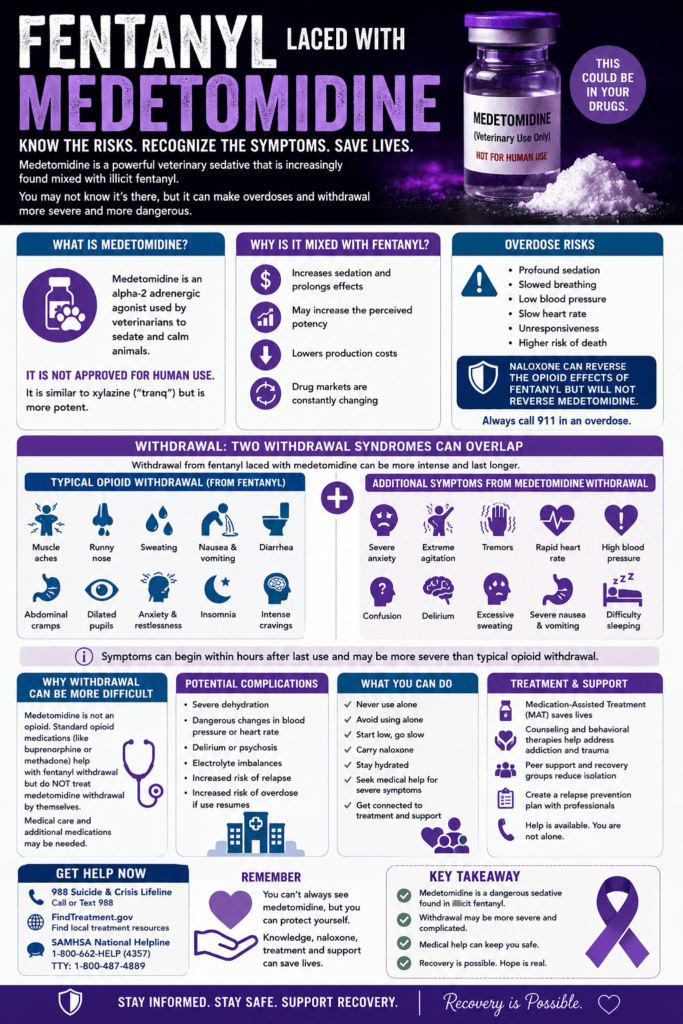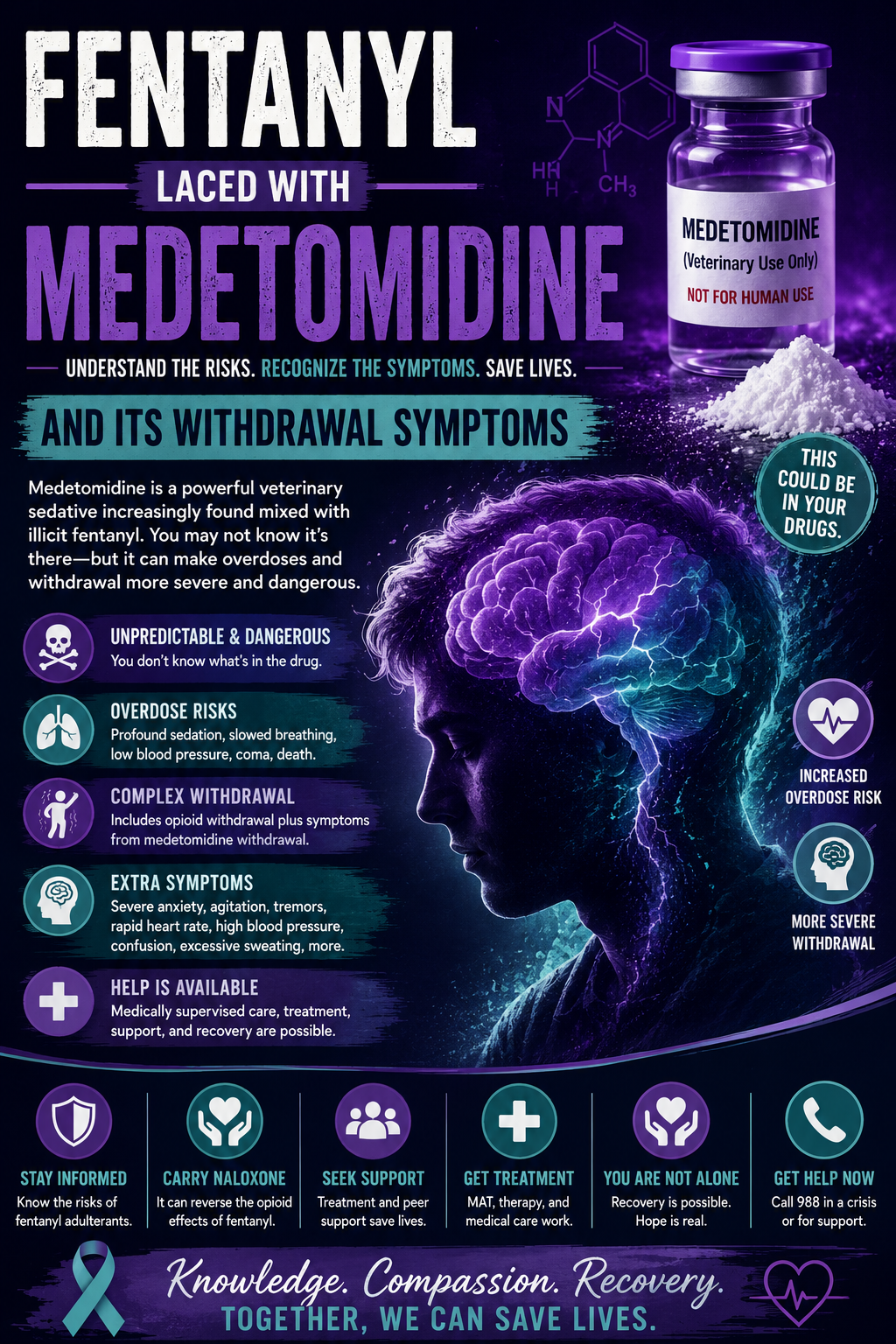
The illicit drug supply continues to evolve, creating new dangers for individuals with opioid use disorder and for the healthcare professionals who treat them. One emerging concern is the presence of medetomidine, a potent veterinary sedative, mixed with illegally manufactured fentanyl. Like xylazine, medetomidine is an alpha-2 adrenergic agonist that is not approved for human use, yet it has increasingly been identified in overdose cases in several regions of the United States. Because users are typically unaware that medetomidine has been added to fentanyl, they may experience more severe overdoses and a withdrawal syndrome that extends beyond traditional opioid withdrawal. While medications such as buprenorphine and methadone remain essential for treating opioid use disorder, medetomidine can produce additional symptoms—including severe agitation, rapid heart rate, high blood pressure, tremors, and confusion—that often require specialized medical management. Understanding the risks associated with fentanyl contaminated with medetomidine is essential for individuals, families, healthcare providers, and communities as they work together to improve overdose prevention, ensure safe withdrawal management, and support long-term recovery.
Fentanyl Laced with Medetomidine and Its Withdrawal Symptoms
Medetomidine is an emerging veterinary sedative that is increasingly being found mixed with illegally manufactured fentanyl in parts of the United States. Similar to xylazine (“tranq”) but substantially more potent, medetomidine is not approved for human use. Its growing presence in the illicit drug supply has created new challenges for overdose treatment, withdrawal management, and addiction recovery. Health authorities, including the Centers for Disease Control and Prevention (CDC), have warned that medetomidine can produce severe withdrawal symptoms that differ from typical opioid withdrawal and may require intensive medical care.
What Is Medetomidine?
Medetomidine is an alpha-2 adrenergic agonist used by veterinarians to provide sedation, pain relief, and muscle relaxation in animals. It is chemically related to xylazine but is considerably more potent. Drug-checking programs and public health laboratories have detected medetomidine mixed with fentanyl in several U.S. cities, often without the knowledge of the person using the drug.
Why Is It Mixed with Fentanyl?
The exact reasons vary, but investigators believe traffickers may add medetomidine to:
- Prolong sedation and intoxication
- Increase the perceived potency of fentanyl
- Reduce production costs
- Replace or supplement xylazine as drug markets evolve
Because the illicit drug supply is unpredictable, users typically do not know when medetomidine is present.
How Does Medetomidine Affect the Body?
When combined with fentanyl, medetomidine can produce:
- Profound sedation
- Extreme drowsiness
- Slowed breathing
- Slow heart rate (bradycardia)
- Low blood pressure
- Reduced alertness or unconsciousness
- Increased overdose severity
Although medetomidine itself is not an opioid, fentanyl usually is. Therefore, overdose patients should still receive naloxone, which can reverse the opioid effects and restore breathing, even though it does not reverse medetomidine’s sedative effects. Additional emergency medical care is often necessary.
Why Is Withdrawal More Difficult?
Withdrawal from fentanyl alone is already physically and emotionally challenging. When medetomidine is also present, people may experience two overlapping withdrawal syndromes:
- Opioid withdrawal from fentanyl
- Alpha-2 agonist withdrawal from medetomidine
This combination can make symptoms more severe and less responsive to standard opioid withdrawal medications alone. Reports from hospitals have shown an increase in intensive care admissions among affected patients.
Common Withdrawal Symptoms
Individuals exposed to fentanyl adulterated with medetomidine may experience:
Typical opioid withdrawal symptoms:
- Muscle aches
- Runny nose
- Sweating
- Yawning
- Nausea and vomiting
- Diarrhea
- Abdominal cramps
- Dilated pupils
- Intense cravings
- Anxiety
- Restlessness
- Insomnia
Additional symptoms associated with medetomidine withdrawal:
- Severe anxiety
- Extreme agitation
- Marked tremors
- Rapid heart rate (tachycardia)
- High blood pressure (hypertension)
- Confusion
- Delirium
- Fluctuating consciousness
- Severe nausea and vomiting
- Excessive sweating
These symptoms can begin within hours after the last use and may progress rapidly.
Why Standard Treatment May Not Be Enough
Traditional opioid withdrawal treatment—such as Buprenorphine or Methadone—remains essential for treating fentanyl withdrawal. However, these medications do not treat medetomidine withdrawal by themselves.
Clinicians may need additional medications and intensive monitoring to manage severe autonomic symptoms such as dangerous elevations in blood pressure, heart rate, agitation, or delirium. Treatment recommendations continue to evolve as experience with medetomidine increases.
Medical Risks During Withdrawal
Potential complications include:
- Severe dehydration
- Cardiac complications from extreme blood pressure or heart rate changes
- Delirium requiring hospitalization
- Electrolyte abnormalities
- Increased relapse risk
- Increased overdose risk if drug use resumes after detoxification
These risks make medically supervised withdrawal much safer than attempting to detox alone.
Current Public Health Response
Healthcare systems are responding by:
- Expanding drug surveillance and testing
- Updating emergency department protocols
- Educating clinicians about medetomidine
- Increasing harm-reduction outreach
- Developing new clinical guidance for withdrawal management
The CDC issued a national health advisory in 2026 warning clinicians about the increasing presence of medetomidine in the illegal fentanyl supply and its association with severe withdrawal syndromes.
Conclusion
The emergence of medetomidine in the illicit fentanyl supply represents a significant new challenge in addiction medicine. This powerful veterinary sedative can intensify overdoses and produce a distinct, potentially life-threatening withdrawal syndrome that extends beyond typical opioid withdrawal. Because people usually do not know when medetomidine is present, every use of illicit fentanyl carries additional unpredictability and risk. Prompt recognition, medically supervised withdrawal, evidence-based treatment for opioid use disorder, harm-reduction strategies, and ongoing recovery support are essential to improving outcomes as the illicit drug supply continues to evolve.
Self-Management Strategies to Understand Fentanyl Laced with Medetomidine and Its Withdrawal Symptoms
The emergence of fentanyl adulterated with medetomidine presents new challenges for individuals living with opioid use disorder. Medetomidine is a powerful veterinary sedative that is not approved for human use and has increasingly been detected in the illicit fentanyl supply. Because most people do not know when medetomidine is present, withdrawal can involve both opioid withdrawal and withdrawal from an alpha-2 adrenergic agonist, making symptoms more severe and sometimes requiring intensive medical treatment. Understanding these risks and adopting effective self-management strategies can improve safety, support recovery, and encourage timely access to professional care.
1. Learn About the Changing Drug Supply
Stay informed about emerging substances such as medetomidine that may be mixed with fentanyl. Understanding that illicit drugs often contain unexpected additives reinforces the importance of avoiding assumptions about drug contents and recognizing that withdrawal symptoms may differ from previous experiences.
2. Recognize Early Withdrawal Symptoms
Become familiar with common opioid withdrawal symptoms, including muscle aches, sweating, nausea, vomiting, diarrhea, anxiety, insomnia, yawning, and cravings. Also recognize that medetomidine exposure may contribute to severe agitation, tremors, rapid heart rate, high blood pressure, confusion, or extreme anxiety. Prompt recognition allows individuals to seek medical care before symptoms worsen.
3. Do Not Attempt Severe Withdrawal Alone
Because withdrawal from fentanyl mixed with medetomidine can become medically complicated, avoid attempting detoxification without professional guidance. Medically supervised withdrawal provides monitoring, supportive care, medications, and rapid intervention if serious complications develop.
4. Seek Immediate Medical Evaluation for Severe Symptoms
If withdrawal includes chest pain, severe confusion, hallucinations, uncontrolled vomiting, dehydration, difficulty breathing, seizures, or significant changes in heart rate or blood pressure, seek emergency medical care immediately. These symptoms require prompt evaluation and treatment.
5. Participate in Medication-Assisted Treatment
Evidence-based medications for opioid use disorder, such as buprenorphine or methadone, can reduce opioid withdrawal symptoms and cravings. Although these medications do not directly treat medetomidine withdrawal, they remain an essential part of comprehensive treatment and should be started or continued under medical supervision.
6. Stay Hydrated and Maintain Nutrition
Withdrawal often causes sweating, vomiting, and diarrhea, increasing the risk of dehydration. Drink fluids regularly, use electrolyte replacement solutions if recommended, and eat small, nutritious meals as tolerated to support recovery and reduce complications.
7. Avoid Using Additional Substances to Self-Treat
Do not use alcohol, benzodiazepines, stimulants, or other non-prescribed substances in an attempt to manage withdrawal symptoms. Mixing substances can increase the risk of overdose, respiratory depression, impaired judgment, and additional medical complications.
8. Develop a Personal Safety Plan
Work with your healthcare provider to create a recovery plan that includes emergency contacts, treatment providers, local emergency departments, transportation options, and steps to take if withdrawal symptoms become severe. Share the plan with trusted family members or friends.
9. Carry Naloxone and Know How to Use It
Because fentanyl remains an opioid, naloxone can reverse opioid-induced respiratory depression during an overdose. While naloxone does not reverse the sedative effects of medetomidine, it can restore breathing impaired by fentanyl and may save a life until emergency medical services arrive. Individuals with opioid use disorder and their loved ones should know how to recognize an overdose and administer naloxone.
10. Build a Strong Recovery Support Network
Recovery is strengthened through connection with healthcare providers, counselors, peer recovery specialists, support groups, family members, and trusted friends. Having supportive individuals available during withdrawal and recovery reduces isolation and encourages continued treatment engagement.
11. Practice Healthy Stress Management
Recovery from opioid use disorder involves learning healthier ways to manage emotional distress. Practice deep breathing, mindfulness, gentle physical activity as tolerated, journaling, relaxation techniques, spiritual practices if meaningful, and other healthy coping skills that reduce stress without relying on substances.
12. Commit to Long-Term Recovery
Withdrawal is only the beginning of recovery. Continue attending counseling, addiction treatment, peer support meetings, follow-up medical appointments, and relapse prevention programs. Developing healthy routines, setting realistic goals, and maintaining ongoing treatment significantly improve long-term recovery outcomes.
Conclusion
Fentanyl contaminated with medetomidine represents an evolving public health threat because it can produce more complex withdrawal symptoms than fentanyl alone. Understanding the risks associated with this combination enables individuals to recognize early warning signs, seek timely medical care, and avoid potentially dangerous attempts at self-detoxification. Through education, medically supervised withdrawal, medication-assisted treatment, healthy coping strategies, overdose preparedness, and ongoing recovery support, individuals can safely navigate withdrawal and reduce the risk of relapse or serious medical complications. Although recovery may be challenging, evidence-based treatment and strong support systems provide a pathway toward lasting health, resilience, and long-term sobriety.
Family Support Strategies to Understand Fentanyl Laced with Medetomidine and Its Withdrawal Symptoms
The increasing presence of medetomidine in the illicit fentanyl supply has created new challenges for individuals with opioid use disorder and their families. Medetomidine is a potent veterinary sedative that is not approved for human use and may be unknowingly mixed with fentanyl. This combination can lead to more severe overdoses and a complicated withdrawal syndrome involving both opioid withdrawal and withdrawal from an alpha-2 adrenergic agonist. Families who understand these risks are better prepared to support their loved ones, recognize medical emergencies, and encourage evidence-based treatment while maintaining healthy boundaries.
1. Learn About Medetomidine and Fentanyl
Educate yourself about the dangers of fentanyl contaminated with medetomidine. Understanding that illicit drugs may contain unknown substances helps families recognize why withdrawal symptoms may be more severe than expected and why professional medical care is often necessary.
2. Recognize Withdrawal Symptoms
Become familiar with both opioid withdrawal symptoms and the additional symptoms that may occur with medetomidine exposure. Warning signs may include severe anxiety, agitation, tremors, rapid heart rate, high blood pressure, excessive sweating, confusion, hallucinations, nausea, vomiting, diarrhea, insomnia, and intense drug cravings. Early recognition allows families to seek medical attention promptly.
3. Encourage Medically Supervised Withdrawal
Support your loved one in seeking professional detoxification rather than attempting withdrawal alone. Medical supervision provides monitoring, medications, hydration, and treatment for complications that may arise during withdrawal from fentanyl mixed with medetomidine.
4. Prepare for Medical Emergencies
Families should know when to seek emergency medical care. Difficulty breathing, unresponsiveness, seizures, severe confusion, chest pain, hallucinations, uncontrolled vomiting, or signs of dehydration require immediate medical evaluation. Keep emergency phone numbers readily available and do not hesitate to call emergency services when safety is at risk.
5. Keep Naloxone Available
Because fentanyl remains an opioid, families should have naloxone readily available and know how to administer it during an opioid overdose. Although naloxone does not reverse the sedative effects of medetomidine, it can reverse opioid-induced respiratory depression caused by fentanyl and improve the chances of survival while waiting for emergency medical services.
6. Encourage Medication-Assisted Treatment
Support participation in evidence-based treatment programs that offer medications such as buprenorphine or methadone for opioid use disorder. These medications help reduce opioid withdrawal symptoms and cravings while supporting long-term recovery, even though additional medical care may be needed for medetomidine-related symptoms.
7. Provide Emotional Support Without Judgment
Recovery is often accompanied by fear, frustration, and emotional distress. Listen with empathy, avoid blaming or criticizing your loved one, and encourage honest communication. Compassionate support helps build trust and increases the likelihood that individuals will remain engaged in treatment.
8. Help Maintain a Safe Recovery Environment
Create a calm and supportive home environment by reducing unnecessary stress, encouraging healthy routines, and, when appropriate, removing alcohol and other non-prescribed substances from the home. A stable environment supports physical healing and emotional recovery.
9. Support Healthy Daily Habits
Encourage adequate hydration, balanced nutrition, regular sleep, gentle physical activity as tolerated, and attendance at medical appointments. Withdrawal can place significant stress on the body, making healthy routines especially important during recovery.
10. Participate in Family Education and Counseling
Family counseling and educational programs help loved ones better understand addiction, trauma, relapse prevention, and the evolving risks associated with fentanyl adulterants such as medetomidine. Learning together strengthens communication and prepares families to respond effectively to challenges during recovery.
11. Encourage Ongoing Recovery Support
Recovery extends beyond detoxification. Encourage continued participation in counseling, peer recovery groups, behavioral therapy, relapse prevention programs, and follow-up medical care. Long-term support significantly improves recovery outcomes.
12. Care for Your Own Well-Being
Supporting someone with opioid use disorder can be emotionally demanding. Family members should seek their own counseling, caregiver support groups, stress-management techniques, and opportunities for self-care. Maintaining your own physical and emotional health allows you to provide more consistent and effective support while preventing caregiver burnout.
Conclusion
Families are essential partners in helping individuals recover from fentanyl use complicated by medetomidine exposure. By learning about the changing illicit drug supply, recognizing severe withdrawal symptoms, encouraging medically supervised treatment, keeping naloxone available, and providing compassionate support, families can improve safety and strengthen long-term recovery. While withdrawal from fentanyl contaminated with medetomidine may be more complex than traditional opioid withdrawal, early medical intervention, evidence-based treatment, and strong family involvement can reduce complications, lower relapse risk, and foster hope. Through education, healthy boundaries, and ongoing support, families can play a vital role in helping their loved ones achieve lasting recovery and improved quality of life.
Community Resource Strategies to Understand Fentanyl Laced with Medetomidine and Its Withdrawal Symptoms
The emergence of medetomidine in the illicit fentanyl supply has created a growing public health concern because it can increase the severity of overdoses and produce a more complicated withdrawal syndrome than fentanyl alone. Since most individuals are unaware that medetomidine has been added to illicit fentanyl, communities play a critical role in providing education, early detection, evidence-based treatment, and harm reduction services. Community resources help individuals and families understand the risks of this evolving drug supply while improving access to lifesaving care and long-term recovery support.
1. Utilize Addiction Treatment Centers
Community addiction treatment programs provide comprehensive care for opioid use disorder through medical evaluations, medication-assisted treatment (MAT), counseling, behavioral therapies, and relapse prevention planning. Treatment centers that recognize emerging drug contaminants such as medetomidine are better equipped to manage complex withdrawal symptoms safely.
2. Seek Medically Supervised Detoxification Programs
Withdrawal from fentanyl mixed with medetomidine may involve severe agitation, rapid heart rate, high blood pressure, confusion, and other complications that require medical monitoring. Community detoxification facilities and hospital-based withdrawal management programs provide continuous observation, supportive care, hydration, medications, and emergency interventions when necessary.
3. Access Community Mental Health Services
Many individuals recovering from opioid use disorder also experience anxiety, depression, trauma, or other mental health conditions. Community mental health centers provide integrated treatment that addresses both addiction and co-occurring mental health disorders, improving overall recovery outcomes.
4. Participate in Harm Reduction Programs
Community harm reduction organizations provide education about the changing drug supply, overdose prevention, safer-use education, naloxone distribution, and referrals to treatment. These programs help reduce overdose deaths while encouraging individuals to engage in healthcare services without judgment.
5. Learn How to Use Naloxone
Community organizations, pharmacies, health departments, and emergency medical services frequently offer naloxone training. Although naloxone does not reverse the effects of medetomidine, it remains highly effective for reversing the opioid effects of fentanyl and restoring breathing during an overdose. Widespread availability of naloxone saves lives while emergency medical services respond.
6. Utilize Emergency Medical Services
Individuals experiencing severe withdrawal symptoms, overdose, difficulty breathing, chest pain, seizures, hallucinations, severe confusion, or altered consciousness should seek immediate emergency medical care. Emergency departments and emergency medical services are equipped to stabilize life-threatening complications associated with fentanyl and medetomidine exposure.
7. Participate in Peer Recovery Programs
Peer recovery specialists and recovery community organizations provide mentorship, encouragement, and practical guidance from individuals with lived experience. Peer support helps reduce isolation, promotes treatment engagement, and encourages long-term recovery after detoxification.
8. Attend Community Education Programs
Hospitals, public health departments, universities, and nonprofit organizations frequently provide educational workshops on emerging drug threats, overdose prevention, addiction treatment, and harm reduction. Community education helps individuals and families stay informed about substances such as medetomidine and their associated risks.
9. Strengthen Collaboration Among Healthcare Providers
Community healthcare systems should encourage communication among emergency departments, addiction specialists, primary care providers, behavioral health professionals, pharmacists, and public health agencies. Coordinated care improves recognition of medetomidine exposure, enhances withdrawal management, and supports continuity of treatment.
10. Support Public Health Surveillance
Local and state public health agencies monitor emerging substances entering the illicit drug supply through laboratory testing and overdose surveillance. Reporting unusual withdrawal patterns and participating in community awareness initiatives help healthcare professionals identify new drug trends and improve clinical responses.
11. Advocate for Expanded Access to Evidence-Based Treatment
Communities can improve recovery outcomes by supporting policies that increase access to medication-assisted treatment, behavioral healthcare, mobile treatment services, telehealth, recovery housing, transportation assistance, and affordable addiction treatment. Reducing barriers to care allows more individuals to receive timely treatment.
12. Reduce Stigma Through Community Awareness
Public education campaigns that explain addiction as a chronic medical condition and highlight the dangers of adulterated fentanyl encourage earlier treatment seeking and reduce discrimination. Communities that promote compassion and evidence-based care create environments where individuals feel safer asking for help before a crisis develops.
Conclusion
The growing presence of medetomidine in the illicit fentanyl supply highlights the importance of strong community partnerships in preventing overdose, managing complex withdrawal, and supporting long-term recovery. Community addiction treatment centers, medically supervised detoxification programs, mental health services, harm reduction organizations, peer recovery groups, emergency medical services, and public health agencies each play essential roles in responding to this evolving public health threat. Through education, naloxone distribution, integrated healthcare, surveillance, and stigma reduction, communities can improve awareness, strengthen access to treatment, and reduce preventable deaths. By working together, healthcare professionals, families, community organizations, and public health leaders can help individuals safely navigate withdrawal, engage in evidence-based treatment, and build healthier, substance-free lives despite the increasing complexity of the illicit drug supply.
Frequently Asked Questions
Here are some common questions:
1. What is medetomidine?
Medetomidine is a potent veterinary sedative and pain-relieving medication used primarily in animals. It belongs to a class of drugs called alpha-2 adrenergic agonists and is not approved for human use. Recently, it has been identified as an adulterant in some illicit fentanyl supplies.
2. Why is medetomidine being mixed with fentanyl?
The exact reason is unknown, but experts believe it may be added to increase sedation, prolong the effects of fentanyl, reduce production costs, or replace other adulterants such as xylazine. Because the illicit drug supply is unpredictable, people using fentanyl often have no way of knowing medetomidine is present.
3. Why is fentanyl laced with medetomidine especially dangerous?
Combining fentanyl with medetomidine can increase the risk of profound sedation, slowed breathing, low blood pressure, slowed heart rate, loss of consciousness, and fatal overdose. It can also create a more complicated withdrawal syndrome that requires specialized medical treatment.
4. Can naloxone reverse an overdose involving medetomidine?
Naloxone should always be given if an opioid overdose is suspected because it can reverse the effects of fentanyl and restore breathing. However, naloxone does not reverse the sedative effects of medetomidine. Even if the person wakes up after naloxone, emergency medical care is still essential because medetomidine can continue to cause serious sedation and cardiovascular effects.
5. What are the symptoms of fentanyl withdrawal?
Typical opioid withdrawal symptoms include:
- Muscle aches
- Sweating
- Runny nose
- Yawning
- Nausea and vomiting
- Diarrhea
- Abdominal cramps
- Anxiety
- Restlessness
- Insomnia
- Intense drug cravings
Although these symptoms are rarely life-threatening by themselves, they can be extremely uncomfortable and increase the risk of relapse.
6. How does medetomidine affect withdrawal?
Medetomidine can cause withdrawal symptoms that occur alongside opioid withdrawal, making the overall experience more severe. Individuals may experience:
- Severe anxiety
- Extreme agitation
- Tremors
- Rapid heart rate
- High blood pressure
- Excessive sweating
- Confusion
- Delirium
- Severe nausea and vomiting
- Difficulty sleeping
These symptoms may require hospital-based treatment and close medical monitoring.
7. Can buprenorphine or methadone treat withdrawal from medetomidine?
Buprenorphine and methadone are highly effective treatments for opioid withdrawal and opioid use disorder, but they do not directly treat withdrawal caused by medetomidine. Additional medications, supportive care, and monitoring may be necessary to manage symptoms related to medetomidine exposure.
8. Should someone try to detox at home?
Self-detoxification is not recommended, especially if medetomidine exposure is suspected. Withdrawal can become medically complicated and may involve serious cardiovascular or neurological symptoms. Medically supervised withdrawal is the safest option.
9. When should emergency medical care be sought?
Immediate medical attention is needed if a person experiences:
- Difficulty breathing
- Chest pain
- Seizures
- Severe confusion or hallucinations
- Unresponsiveness
- Persistent vomiting with signs of dehydration
- Severe agitation that cannot be controlled
- Loss of consciousness
These symptoms may indicate a medical emergency requiring hospital treatment.
10. How can individuals reduce the risk of overdose?
The safest way to avoid overdose is to avoid using illicit fentanyl. For people who continue to use drugs, harm reduction measures include carrying naloxone, avoiding using alone, using small test amounts when possible, informing someone who can call for help, and seeking treatment for opioid use disorder. These strategies reduce—but do not eliminate—the risk of overdose.
11. What treatments are available for opioid use disorder?
Evidence-based treatment includes:
- Medication-assisted treatment (MAT) with buprenorphine, methadone, or extended-release naltrexone (when appropriate)
- Individual and group counseling
- Behavioral therapies
- Peer recovery support
- Relapse prevention planning
- Treatment of co-occurring mental health conditions
Long-term recovery is most successful when medications are combined with counseling and ongoing support.
12. Where can individuals and families find help?
Help is available through addiction treatment programs, behavioral health clinics, hospitals, primary care providers, peer recovery organizations, and community mental health centers. In the United States, the 988 Suicide & Crisis Lifeline provides immediate support for mental health crises, while the SAMHSA National Helpline (1-800-662-HELP [4357]) offers confidential, 24-hour referrals to substance use and mental health treatment services. Seeking help early can reduce the risk of overdose, improve withdrawal management, and support long-term recovery.
Conclusion
The emergence of medetomidine in the illicit fentanyl supply represents a significant and evolving challenge in addiction medicine and public health. This dangerous combination can increase the severity of overdoses and produce a complex withdrawal syndrome that involves both opioid withdrawal and withdrawal from a potent veterinary sedative. Because individuals rarely know when medetomidine is present, every use of illicit fentanyl carries additional uncertainty and medical risk. Successfully managing withdrawal often requires medically supervised care, evidence-based treatment for opioid use disorder, careful monitoring for cardiovascular and neurological complications, and ongoing behavioral health support. Families, healthcare professionals, harm reduction organizations, and community agencies all play critical roles in recognizing symptoms, promoting early intervention, and connecting individuals with lifesaving treatment. Continued public health surveillance, clinician education, and community awareness are essential as the illicit drug supply changes. Through coordinated, evidence-based care and compassionate support, individuals affected by fentanyl contaminated with medetomidine can safely navigate withdrawal, reduce the risk of relapse and overdose, and build a strong foundation for lasting recovery and improved quality of life.
Video: Why Fentanyl Plus Medetomidine Is a Death Sentence #overdose #warning