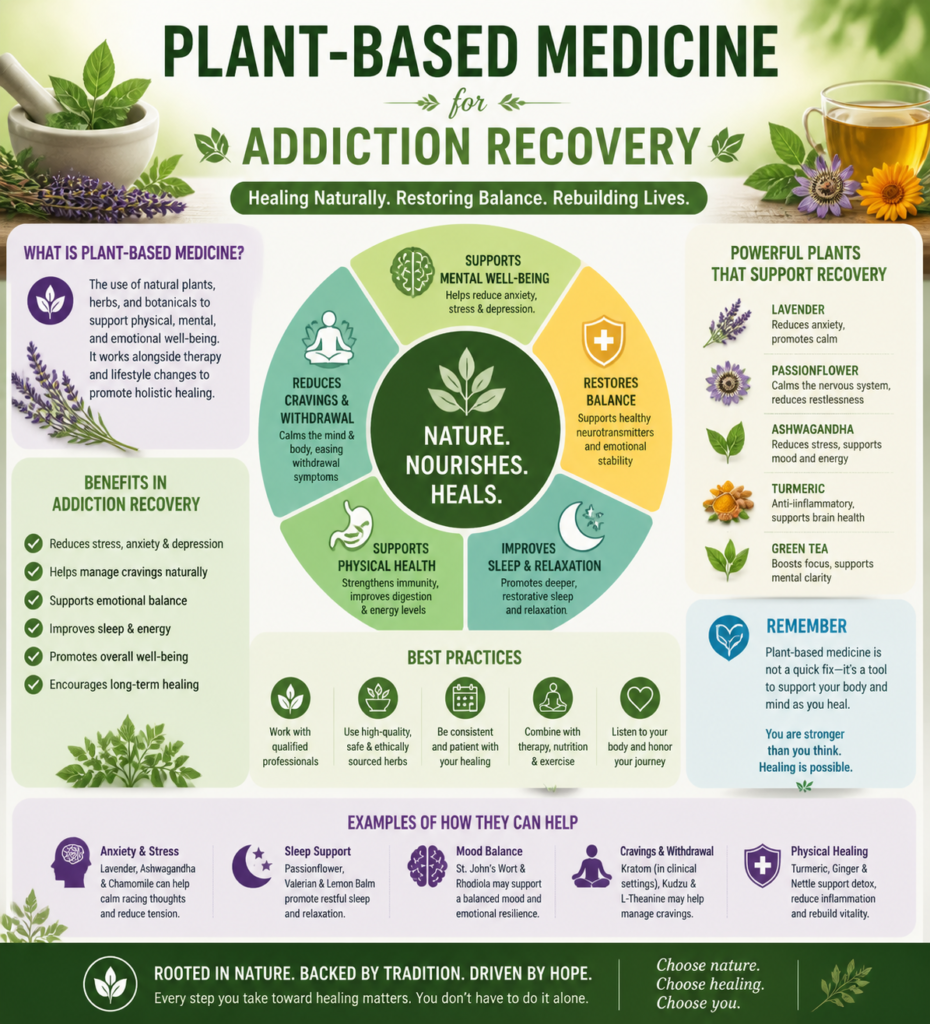
Addiction is a complex condition that affects a person’s physical health, emotional well-being, and overall quality of life. Although evidence-based treatments such as behavioral therapy and medication remain the foundation of addiction care, interest has grown in plant-based medicine as a complementary approach to recovery. Plant-derived therapies, including certain herbs, botanical extracts, and essential oils, may help support wellness by promoting relaxation, improving sleep, reducing stress, or easing some symptoms associated with recovery. While research on many of these therapies is still evolving and they are not substitutes for proven addiction treatments, they may serve as supportive tools when used under the guidance of a qualified healthcare professional. As interest in integrative and holistic healthcare continues to expand, plant-based medicine is increasingly being explored as one component of a comprehensive recovery plan that supports long-term sobriety, overall health, and emotional resilience.
Plant-Based Medicine for Addiction Recovery: A Natural Path to Healing
Addiction recovery is a complex process that involves not only overcoming the physical dependence on substances but also addressing the psychological, emotional, and spiritual aspects of healing. While traditional treatment methods, such as therapy and medication, have been proven effective, plant-based medicine offers a complementary or alternative approach that focuses on the healing properties of nature. Utilizing plant-based remedies, including herbs, essential oils, and medicinal plants, is gaining recognition as a holistic and supportive treatment for addiction recovery.
The Role of Plant-Based Medicine in Addiction Recovery
Plant-based medicine involves using natural remedies from plants—such as herbs, plant extracts, and essential oils—to help alleviate addiction symptoms and support the body’s natural healing processes. These plant-based therapies work in various ways:
- Reducing cravings: Certain herbs and plants can help curb cravings for addictive substances, making it easier for individuals to maintain sobriety.
- Supporting detoxification: Many plant-based medicines are known for their detoxifying properties, helping the body to cleanse itself from the harmful substances accumulated during addiction.
- Promoting emotional well-being: Plants like adaptogens, known for their ability to reduce stress and improve mood, support the mental health component of recovery.
- Rebalancing the body: Medicinal plants can help restore balance, promote healthy sleep, and reduce anxiety, all of which are critical to the recovery process.
Common Plant-Based Remedies Used in Addiction Recovery
Several plant-based remedies have shown promise in supporting addiction recovery. While research is still ongoing, many individuals have found relief using these natural options:
1. Kudzu Root
- Use: Kudzu is an herb traditionally used in Chinese medicine to treat alcohol dependence.
- How it helps: Studies suggest that kudzu root can reduce alcohol cravings and limit the amount of alcohol consumed. It may also reduce the desire for addictive substances by affecting the brain’s receptors related to alcohol addiction.
2. St. John’s Wort
- Use: St. John’s Wort is a well-known herb used to treat depression and anxiety.
- How it helps: Many people in recovery experience mood disturbances, and St. John’s Wort can help alleviate these symptoms. It supports emotional well-being, combats stress, and provides a sense of calm, all of which are essential for maintaining sobriety.
3. Milk Thistle
- Use: Known for its liver-protecting properties, milk thistle has been used for centuries to treat liver diseases and support detoxification.
- How it helps: Addiction often takes a toll on the liver, and milk thistle can support liver function, aiding in the detox process during recovery from alcohol or drug dependence.
4. Valerian Root
- Use: Valerian root is widely used for its calming effects and ability to improve sleep.
- How it helps: Recovery often disrupts sleep patterns due to anxiety or withdrawal symptoms. Valerian root helps promote restful sleep and reduces the intensity of withdrawal symptoms like insomnia and nervous tension.
5. Ashwagandha
- Use: Ashwagandha is an adaptogenic herb that helps the body adapt to stress and reduce anxiety.
- How it helps: By lowering cortisol levels and supporting the adrenal glands, ashwagandha helps individuals cope with stress without resorting to addictive behaviors.
Benefits of Integrating Plant-Based Medicine in Addiction Recovery
The use of plant-based remedies as part of addiction recovery offers several benefits, including:
- Fewer side effects: Unlike some pharmaceutical drugs, plant-based medicines often have fewer and less severe side effects, making them a safer option for long-term use.
- Holistic healing: These remedies focus on healing the mind, body, and spirit, addressing the root causes of addiction rather than just the symptoms.
- Empowerment: Incorporating plant-based treatments empowers individuals to take control of their healing journey by making more natural choices.
- Sustainability: Many plant-based remedies are sustainable and can be grown at home, offering an affordable and accessible option for individuals in recovery.
Challenges and Considerations
While plant-based medicine shows promise, it is important to approach it with caution:
- Lack of regulation: Many plant-based remedies are not regulated or standardized, so quality and potency can vary widely.
- Potential interactions: Herbal remedies can interact with prescription medications or other treatments, so it’s essential that individuals consult a healthcare professional before integrating them into their recovery plan.
- Not a substitute for professional care: While plant-based remedies can be beneficial, they should not be seen as a replacement for professional addiction treatment, therapy, or support groups. They work best as part of a comprehensive recovery program.
Final Thoughts
Plant-based medicine offers a promising and holistic approach to addiction recovery. By incorporating nature’s healing power through herbs, plants, and natural remedies, individuals in recovery can support their physical and emotional well-being in a gentle yet effective way. However, it is crucial to combine these remedies with professional care and guidance for the best outcomes. When used responsibly and with proper medical supervision, plant-based medicine can be a valuable ally on the road to recovery.
Self-Management Strategies to Understand Plant-Based Medicine for Addiction Recovery
Addiction recovery is a multifaceted journey, requiring not only the cessation of substance use but also the development of long-term strategies to maintain sobriety and improve overall well-being. Plant-based medicine offers a natural and complementary approach to recovery, providing a range of benefits that can support both the body and mind. To fully understand and integrate plant-based medicine into the recovery process, self-management strategies are crucial. These strategies empower individuals to take control of their healing, make informed decisions, and maximize the benefits of plant-based treatments.
What is Self-Management in Addiction Recovery?
Self-management refers to the ability to independently manage one’s own recovery journey, including emotional regulation, lifestyle choices, and adherence to treatment plans. When it comes to plant-based medicine, self-management involves:
- Researching plant-based remedies and their potential benefits
- Incorporating natural remedies into daily life without solely relying on them
- Monitoring the effectiveness of treatments and adjusting as needed
- Building a routine that incorporates plant-based medicine into a balanced lifestyle
By using self-management strategies, individuals can take ownership of their recovery process and make plant-based treatments work synergistically with other recovery methods.
Self-Management Strategies for Plant-Based Medicine in Recovery
Integrating plant-based medicine into addiction recovery requires thoughtful, deliberate action. Below are self-management strategies to help individuals effectively use plant-based remedies while staying focused on long-term sobriety:
1. Educate Yourself on Plant-Based Remedies
Understanding the properties and effects of plant-based medicine is essential for using it effectively.
- Research herbs, plants, and essential oils that support detoxification, reduce cravings, and improve emotional well-being.
- Learn about their specific benefits for addiction recovery, such as reducing withdrawal symptoms or anxiety.
- Familiarize yourself with the safe dosages and potential side effects to avoid misuse or negative interactions with other medications.
Taking the time to learn about plant-based remedies helps ensure you are using them correctly and for the right reasons.
2. Set Clear Goals and Expectations
Effective self-management includes setting clear, realistic goals for how plant-based medicine can fit into your recovery plan.
- Determine specific goals for using plant-based remedies, such as reducing alcohol cravings or improving sleep.
- Track progress by noting changes in mood, cravings, or physical symptoms when using plant-based treatments.
- Set achievable time frames for evaluating the effectiveness of different remedies.
Having a clear plan in place helps keep you on track and ensures that the plant-based treatments support your overall recovery objectives.
3. Monitor and Adjust Plant-Based Treatments
Self-management in addiction recovery is an ongoing process of trial and adjustment. Regularly monitor your progress and make adjustments as needed.
- Keep a journal of your experiences with plant-based remedies to identify what works best for you.
- Track physical and emotional responses to different treatments, such as changes in energy, mood, or cravings.
- If necessary, consult with a healthcare professional to adjust dosages or try different plant-based treatments.
Being proactive about monitoring your experience ensures that the remedies are serving your recovery needs.
4. Integrate Plant-Based Medicine into a Holistic Lifestyle
Plant-based medicine is most effective when it is part of a holistic approach to addiction recovery.
- Incorporate healthy habits such as regular exercise, proper nutrition, and mindfulness practices.
- Use plant-based remedies alongside therapy, support groups, and self-care routines to address both mind and body.
- Avoid over-reliance on plant-based medicine alone—consider it a supportive tool rather than a complete solution.
By integrating plant-based medicine into a broader wellness routine, you enhance its effectiveness and create a balanced path to recovery.
5. Cultivate Mindfulness and Emotional Awareness
Addiction often stems from an inability to manage stress, emotions, and triggers. Practicing mindfulness is a powerful self-management strategy that can enhance the effects of plant-based medicine.
- Use mindfulness techniques such as meditation, breathing exercises, or journaling to increase emotional awareness.
- Learn to recognize triggers and cravings before they lead to relapse, and use plant-based remedies as part of your coping mechanisms.
- Embrace self-compassion by acknowledging the challenges of recovery and recognizing the small victories along the way.
Mindfulness helps create a deeper connection with your recovery process and strengthens your ability to manage emotions naturally.
The Role of Self-Management in Sustainable Recovery
By embracing self-management strategies, individuals can actively participate in their recovery while using plant-based medicine as a supportive tool. Self-management allows individuals to:
- Maximize the benefits of plant-based remedies by using them with purpose and intention.
- Adapt treatments to fit personal needs, goals, and progress to achieve better long-term outcomes.
- Build resilience and emotional strength, which are essential for maintaining sobriety and personal growth.
Integrating plant-based medicine into recovery isn’t just about using herbs or supplements—it’s about empowering yourself to take control of your healing process and cultivating long-lasting health through thoughtful self-care strategies.
Final Thoughts
Plant-based medicine can be a valuable ally in addiction recovery, offering natural support for detoxification, cravings, emotional well-being, and overall health. However, it requires active self-management to use it effectively. By educating yourself, setting clear goals, monitoring your progress, and integrating plant-based remedies into a holistic lifestyle, you can maximize their benefits and enhance your recovery journey. With a balanced approach,
Family Support Strategies to Understand Plant-Based Medicine for Addiction Recovery
Addiction recovery is often seen as a deeply personal journey, but the support of loved ones, especially family, plays a crucial role in an individual’s healing process. When plant-based medicine is incorporated into addiction recovery, family members may find themselves in a unique position to help the individual navigate this natural treatment option. Understanding how to support someone with plant-based remedies while maintaining healthy boundaries and providing emotional support is essential to the treatment’s effectiveness.
In this blog, we will explore family support strategies that can help both the individual in recovery and their loved ones understand and integrate plant-based medicine into the healing process.
The Role of Family in Plant-Based Medicine Recovery
Family members have an important part to play when plant-based remedies are part of an addiction recovery plan. Their support can help ensure that the individual remains committed to their treatment, stays safe, and integrates these remedies into their daily life in a meaningful way.
Key roles family members can play in supporting plant-based medicine recovery include:
- Encouragement: Providing emotional and practical encouragement to stay committed to the plant-based approach.
- Education: Understanding the benefits, risks, and dosages of plant-based treatments to support informed decisions.
- Monitoring progress: Helping the individual track changes in their symptoms or recovery journey and adjusting treatment as needed.
Family support is vital not just for emotional well-being but also for helping the individual stay aligned with their goals as they integrate plant-based remedies.
1. Educating the Family About Plant-Based Medicine
A critical aspect of supporting someone using plant-based medicine is understanding the remedies and their role in addiction recovery. Family members should actively educate themselves about the plants and herbs being used, their potential benefits, and any risks.
Consider these strategies:
- Research together: Family members can support the individual by researching the plant-based remedies being used, learning about their properties, and understanding how they aid recovery.
- Consult healthcare professionals: Family members should encourage consultations with healthcare providers to ensure that plant-based remedies do not interact negatively with any other treatments or medications the individual may be using.
- Attend recovery-related events: Participating in conferences, workshops, or therapy sessions that cover plant-based medicine can help family members better understand the recovery process.
By becoming knowledgeable about plant-based medicine, families can reduce fears or misconceptions and confidently support their loved one’s recovery.
2. Creating a Supportive Environment for Plant-Based Treatments
For plant-based medicine to be effective, the individual must have a safe and supportive environment. Family members can play a pivotal role in creating this environment by establishing routines, promoting healthy habits, and minimizing stressors.
Here’s how families can help:
- Maintain a routine: Consistent routines foster stability and support recovery. Family members can help by encouraging regular use of plant-based remedies, meals, exercise, and sleep.
- Offer emotional support: Emotional stability is crucial in recovery, so family members should be there to listen, offer comfort, and praise the individual’s progress.
- Reduce stress: Minimize conflicts or triggers at home that could lead to relapse or disrupt recovery.
By creating a positive and predictable environment, family members help to reinforce the effects of plant-based treatments and the recovery process as a whole.
3. Monitoring Progress and Providing Encouragement
As plant-based remedies are integrated into the recovery process, family members should actively monitor progress and offer consistent encouragement. This will ensure that the person in recovery feels supported, motivated, and empowered.
Consider these strategies for monitoring progress:
- Track changes: Family members can help track progress in physical and emotional health by documenting symptoms, cravings, and improvements.
- Encourage self-reflection: Encourage open discussions about how the person feels, both emotionally and physically, after using plant-based treatments.
- Celebrate milestones: Recognizing progress, no matter how small, is an essential part of recovery. Family members can celebrate milestones, such as staying sober for a certain period or successfully managing withdrawal symptoms.
Positive reinforcement from family members can help the individual in recovery stay motivated and reinforce the value of plant-based medicine as part of their overall healing journey.
4. Supporting Emotional Well-being and Managing Expectations
Plant-based medicine in addiction recovery is not a quick fix; it’s a gradual and ongoing process that requires emotional resilience and patience. Family members can be most effective when they manage their own expectations and offer support without pressure.
How families can help manage expectations:
- Set realistic goals: Family members should encourage the individual to set attainable goals that align with their recovery timeline. This helps prevent feelings of discouragement if progress is slow.
- Avoid enabling behaviors: While offering emotional support, family members must avoid enabling behaviors that might make it easier for the individual to fall back into old habits.
- Understand setbacks: Relapses or setbacks may occur, and family members should be ready to offer compassion and support rather than judgment. This helps foster a sense of safety in the recovery process.
By focusing on emotional well-being, families create a nurturing atmosphere in which plant-based medicine can contribute positively to recovery.
5. Encouraging Holistic Healing with Plant-Based Medicine
Plant-based medicine works best as part of a holistic approach to addiction recovery, which includes physical, emotional, and spiritual healing. Family members can encourage a balanced approach by supporting:
- Mind-body connection: Encourage mindfulness practices, yoga, meditation, and relaxation techniques to complement the effects of plant-based medicine.
- Nutrition and exercise: Family members can promote a healthy diet and regular exercise as essential components of recovery.
- Spiritual growth: If applicable, supporting involvement in spiritual practices or community-based recovery programs can further enhance healing.
A holistic approach fosters a comprehensive healing process, with plant-based medicine acting as one of several supportive tools in overcoming addiction.
Conclusion
Supporting someone who is using plant-based medicine in addiction recovery is an important role for family members. Through education, emotional support, progress monitoring, and encouragement of holistic healing, families can ensure that plant-based treatments are effectively integrated into the recovery process. By approaching this natural treatment option with patience, understanding, and a focus on long-term well-being, families become essential partners in the journey to sobriety and a healthier life.
Community Resource Strategies to Understand Plant-Based Medicine for Addiction Recovery
Addiction recovery is a challenging journey, but with the right support and resources, individuals can find healing and sustainable sobriety. Plant-based medicine has become an increasingly popular complementary treatment for addiction recovery, offering natural solutions to detox, reduce cravings, and support emotional well-being. However, understanding and integrating plant-based medicine into the recovery process requires access to community resources that provide education, support, and sustainable practices. In this blog, we will explore community resource strategies to help individuals understand and make the most of plant-based medicine on their recovery journey.
The Role of Community Resources in Addiction Recovery
Community resources play a significant role in making recovery more accessible and effective. In the context of plant-based medicine, these resources can provide critical support through:
- Education: Offering workshops, classes, and resources on the benefits of plant-based remedies for addiction.
- Support networks: Connecting individuals with support groups, recovery communities, and peer mentoring programs.
- Access to professional guidance: Ensuring that individuals have access to healthcare professionals who are knowledgeable about plant-based medicine and addiction recovery.
- Practical tools and supplies: Providing access to plant-based remedies, supplements, and other natural treatments that support the recovery process.
By leveraging community resources, individuals can gain a comprehensive understanding of plant-based medicine and how it can support their recovery goals.
1. Educational Workshops and Seminars on Plant-Based Medicine
One of the most important ways the community can support addiction recovery with plant-based medicine is through education. Many individuals may be unfamiliar with the benefits or proper use of plant-based remedies, so it’s essential to provide opportunities for learning and exploration.
Community strategies for providing education include:
- Hosting educational workshops on the healing properties of plants, herbs, and essential oils used in addiction recovery.
- Organizing seminars with experts in the field of natural healing, where individuals can learn about the safe use of plant-based medicine, potential side effects, and its role in long-term recovery.
- Creating informational materials such as pamphlets, articles, and online resources to inform individuals about plant-based options like herbal remedies, teas, tinctures, and supplements.
These resources help individuals gain knowledge and confidence in using plant-based medicine as a part of their recovery program.
2. Peer Support and Mentorship in Plant-Based Healing
Support groups and peer networks are essential in addiction recovery, as they provide a space for individuals to share experiences, challenges, and successes. When it comes to plant-based medicine, peer support can help individuals navigate their healing process while learning from others who have used these remedies.
Community strategies for providing peer support include:
- Facilitating support groups where individuals can discuss their experiences with plant-based treatments and recovery.
- Pairing individuals with mentors who have successfully integrated plant-based remedies into their recovery journey. These mentors can share practical advice and offer emotional support.
- Creating online communities or forums where people in recovery can share plant-based remedy experiences, discuss their progress, and offer encouragement.
This support network helps individuals feel less isolated and provides a platform for shared learning and personal growth throughout their recovery.
3. Access to Healthcare Professionals and Integrative Medicine Practitioners
While plant-based medicine can be highly effective, it’s important to integrate it with professional care. Community resources can connect individuals with healthcare professionals who specialize in integrative medicine—the combination of conventional and alternative treatments to address addiction.
Here are ways the community can support access to healthcare professionals:
- Partnering with holistic healthcare practitioners, such as naturopaths, herbalists, and integrative doctors, who can guide individuals in the proper use of plant-based medicine.
- Offering health consultations for individuals to discuss how plant-based remedies might complement traditional treatment plans, ensuring there are no negative interactions with medications.
- Providing access to addiction recovery centers that incorporate plant-based medicine into their treatment protocols, ensuring individuals have access to both conventional and natural healing methods.
Working with healthcare professionals ensures that plant-based medicine is used safely and effectively, while also addressing any potential concerns.
4. Access to Plant-Based Medicine Resources and Supplies
For individuals committed to integrating plant-based medicine into their recovery process, access to the right resources is key. Community-based programs can offer the necessary tools and supplies to make plant-based remedies more accessible.
Community strategies for providing plant-based supplies include:
- Establishing community gardens or cooperative spaces where individuals can grow their own medicinal plants, such as kudzu, St. John’s Wort, or milk thistle.
- Providing access to local herb shops or pharmacies that sell quality herbs, tinctures, and essential oils for addiction recovery.
- Setting up resource exchanges where individuals can trade or donate plant-based products, such as homemade tinctures or herbal teas, fostering a spirit of community support.
By providing access to these resources, communities make plant-based remedies more affordable and available, allowing individuals to continue their recovery process with the right support.
5. Encouraging a Holistic, Community-Based Approach
While plant-based medicine can play an essential role in addiction recovery, it’s most effective when combined with holistic healing practices. Communities can encourage individuals to take a comprehensive approach to recovery that incorporates emotional, physical, and spiritual well-being.
Here’s how the community can encourage a holistic approach:
- Integrating yoga, meditation, and mindfulness into addiction recovery programs to support emotional and mental health.
- Promoting healthy eating habits by providing access to nutrition workshops or healthy food programs that complement plant-based healing.
- Encouraging participation in spiritual or community-based recovery programs, which can help individuals rebuild their sense of purpose and community connection.
A holistic community approach helps individuals develop a more balanced and sustainable recovery plan, where plant-based medicine is just one of many tools they use to heal.
Conclusion
Community resources are essential for helping individuals understand and integrate plant-based medicine into their addiction recovery journey. Through education, peer support, professional guidance, and access to the right resources, communities can provide a comprehensive approach to healing. Plant-based medicine, when used responsibly and as part of a holistic recovery plan, offers significant benefits that can support long-term sobriety and well-being. By fostering a community that values natural healing and recovery, individuals can feel empowered to take control of their journey and move towards a healthier, more fulfilling life.
Frequently Asked Questions
Here are some common questions:
1. What is plant-based medicine for addiction recovery?
Plant-based medicine involves using natural remedies from herbs, plants, and botanical substances to support the recovery process from addiction. It works in conjunction with traditional treatment methods like therapy and medical interventions to help detoxify the body, reduce cravings, manage withdrawal symptoms, and promote emotional and mental well-being. Common plant-based remedies include herbs like St. John’s Wort, kudzu, ashwagandha, and milk thistle.
2. How does plant-based medicine support addiction recovery?
Plant-based medicine supports recovery in several ways:
- Reducing cravings: Certain plants can help reduce the desire for addictive substances.
- Detoxifying the body: Plants like milk thistle support liver health and help detoxify the body of harmful substances.
- Managing withdrawal symptoms: Herbs such as kudzu can alleviate withdrawal symptoms, easing the transition from addiction.
- Promoting emotional balance: Adaptogenic herbs like ashwagandha help reduce stress and improve mood, supporting emotional stability during recovery.
3. Can plant-based medicine replace traditional addiction treatments?
While plant-based remedies offer significant benefits, they should not replace traditional addiction treatments like therapy, counseling, or medical supervision. Plant-based medicine works best as a complementary treatment to enhance the overall recovery process. It’s crucial to use plant-based treatments under the guidance of healthcare professionals to avoid any interactions with other medications or treatments.
4. What are some common plant-based remedies used for addiction recovery?
Several plant-based remedies have been traditionally used to help with addiction recovery. Some common examples include:
- Kudzu root: Known for reducing alcohol cravings.
- St. John’s Wort: Used to support mental well-being, alleviating depression and anxiety.
- Ashwagandha: An adaptogen that reduces stress and improves mood.
- Milk thistle: Helps detoxify the liver and support overall body recovery.
- Lavender and Passionflower: Known for their calming properties, helping with anxiety and stress.
5. Are there any risks or side effects to using plant-based medicine for addiction recovery?
Plant-based remedies are generally considered safe when used correctly, but they may cause side effects or interact with other medications. It’s important to:
- Consult a healthcare professional before using plant-based medicine, especially if you’re taking prescription medications or have underlying health conditions.
- Ensure quality sourcing: Use only high-quality herbs from reputable suppliers to avoid contamination or inconsistent potency.
- Monitor for side effects: Common side effects might include digestive discomfort, allergic reactions, or drowsiness, depending on the herb or plant used.
6. How do I know which plant-based remedies are right for me?
The right plant-based remedies depend on your specific needs, the substances you are recovering from, and your overall health. Working with a healthcare provider who is knowledgeable about both addiction recovery and plant-based medicine is crucial. They can help tailor a treatment plan that integrates plant-based remedies safely and effectively with other aspects of your recovery process.
7. How long does it take to see results from plant-based medicine?
The effectiveness of plant-based remedies can vary depending on the individual and the plant used. Some people may notice improvements in mood, energy, or cravings within a few weeks, while others may need longer. Consistency is key to seeing the full benefits, as many plant-based treatments work gradually to support long-term recovery. Always track your progress and adjust the treatment as needed in consultation with a healthcare professional.
8. Can plant-based medicine help with mental health issues during addiction recovery?
Yes, plant-based medicine can be beneficial for managing mental health issues commonly experienced during addiction recovery, such as anxiety, depression, and stress. Herbs like St. John’s Wort and passionflower can help elevate mood, reduce anxiety, and improve overall emotional well-being. Using these remedies in conjunction with therapy or counseling can help address the mental and emotional aspects of addiction.
9. Are there specific plant-based treatments for withdrawal symptoms?
Yes, certain plant-based remedies can help alleviate withdrawal symptoms:
- Kudzu root: Known to help reduce cravings and ease alcohol withdrawal symptoms.
- Lemon balm: Often used for calming the nervous system and reducing withdrawal anxiety.
- Valerian root: Helps promote relaxation and sleep during withdrawal from substances that disrupt sleep patterns.
These remedies can ease the discomfort associated with withdrawal but should be used under medical supervision for safety.
10. Where can I find plant-based remedies for addiction recovery?
Plant-based remedies can be found at health food stores, online herbal suppliers, or in natural remedy shops. When purchasing, it’s essential to look for reputable sources that sell high-quality, organic, and properly sourced herbs. If you’re unsure about where to begin, speak with a healthcare professional or herbalist who can recommend trusted suppliers and dosages.
Conclusion
Plant-based medicine presents an exciting and holistic approach to addiction recovery, offering individuals a natural way to heal physically, emotionally, and mentally. Whether used to support detoxification, reduce cravings, or improve emotional resilience, these remedies can play a valuable role in the recovery process. However, it’s essential to use plant-based treatments as part of a broader recovery plan, integrating them with professional care and support. With ongoing research and the growing acceptance of natural healing methods, plant-based medicine holds the potential to provide a more balanced and sustainable path to overcoming addiction, empowering individuals to reclaim their lives and embrace long-lasting recovery.
Video: Plant Medicine for Recovery