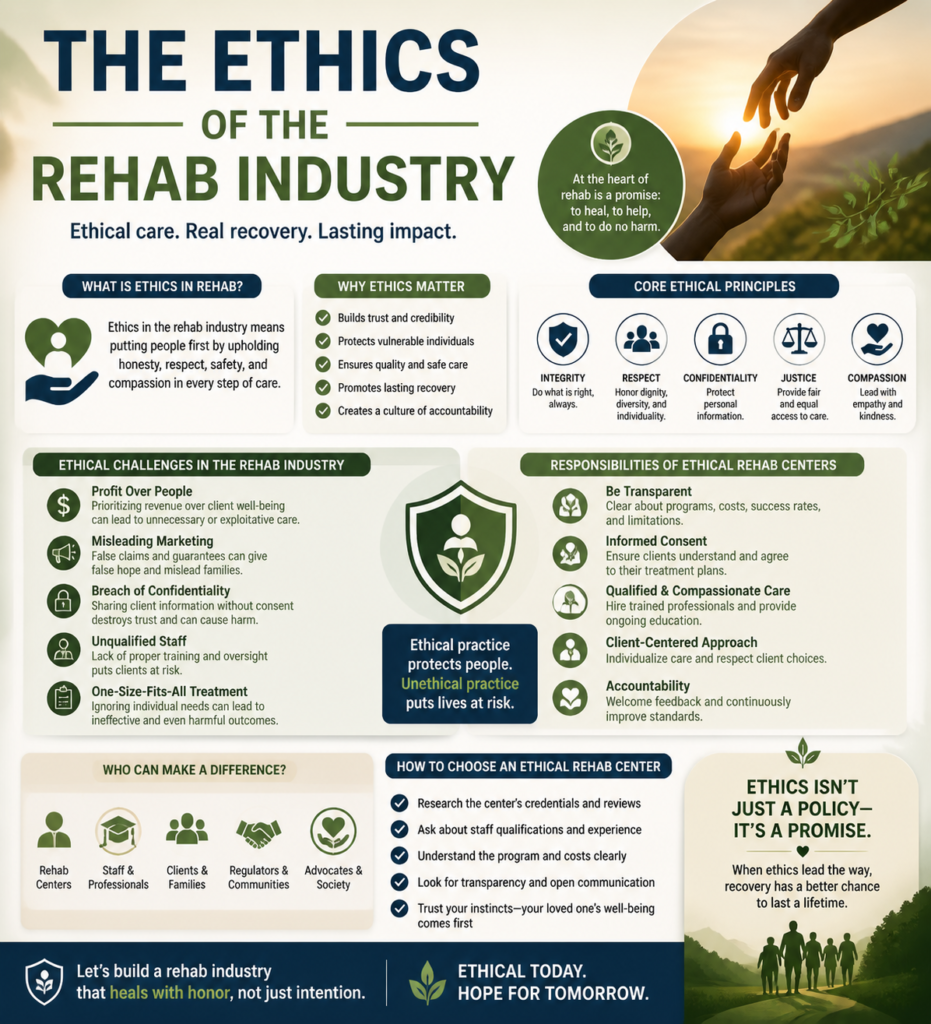
The rehab industry plays a critical role in the recovery process for individuals battling addiction. With thousands of rehab centers worldwide, offering a range of services from detox to long-term care, the industry’s influence on addiction treatment cannot be overstated. However, alongside its immense potential for healing, the rehab industry faces significant ethical challenges. The balance between profit-making and providing effective, compassionate care is delicate, and questions about transparency, pricing, and patient-centered care continue to be raised. As the demand for addiction treatment grows, it becomes crucial to examine the ethical implications of rehab practices, ensuring that centers remain focused on recovery and well-being rather than solely financial gain.
The Ethics of the Rehab Industry: Navigating Care, Profit, and Responsibility
The rehabilitation industry plays a vital role in addressing the global challenges of addiction and mental health. Rehab centers provide critical services to individuals struggling with substance abuse, offering a pathway to recovery and healing. However, the ethics of the rehab industry have come under scrutiny as debates persist about the balance between providing compassionate care and running a profitable business. This blog explores the ethical dilemmas faced by rehab centers, examining the challenges of profit-driven motives, the quality of care, and the impact on vulnerable individuals seeking help.
The Business of Rehab: Profit vs. Patient Care
At the heart of the ethical debate in the rehab industry is the tension between profit and patient care. Many rehab centers are privately owned, and like any business, they must generate revenue to stay operational. However, this often leads to concerns about whether profit motives compromise the quality of care.
Some ethical questions include:
- Are rehab centers prioritizing financial gain over patients’ well-being?
- For example, charging high fees for treatment or offering unnecessary services to increase revenue can lead to exploitation of vulnerable individuals seeking help.
- Are patients receiving the right level of care?
- In some cases, rehab centers may offer short-term solutions or minimal care to maximize profits, neglecting the need for long-term recovery programs and comprehensive treatment plans.
Rehab centers must strike a balance between running a sustainable business and maintaining their primary focus on patient well-being and recovery outcomes.
Profit-Driven Models: Ethical Concerns and Challenges
While the rehab industry provides a crucial service, the business models that many centers rely on can create conflicts of interest and ethical challenges. For instance:
1. High Treatment Costs
- Problem: Many rehab centers charge exorbitant fees for treatment, which can be inaccessible to people without adequate insurance or financial resources.
- Ethical concern: When addiction recovery becomes a privilege of the wealthy, it raises questions about the accessibility and fairness of treatment.
2. Overcharging for Services
- Problem: Some rehab centers offer “luxury” treatment options with inflated prices, using high-end amenities to appeal to wealthier clients.
- Ethical concern: These centers may promise lavish accommodations, detoxification programs, or therapies that are unnecessary, misleading patients into thinking that expensive treatment is more effective.
3. Length of Stay and Unnecessary Treatment
- Problem: Some centers extend treatment times or offer unnecessary services to increase revenue.
- Ethical concern: When rehab centers push for longer stays without clear therapeutic need, it raises questions about whether these decisions are in the patient’s best interest or driven by financial incentives.
Ethical Issues in Marketing and Advertising
Rehab centers often engage in aggressive marketing to attract clients, which can lead to misleading advertising practices. Ethical concerns about marketing strategies include:
- Exaggerated promises: Some centers advertise unrealistic recovery success rates or claim to have “the ultimate cure,” which can mislead individuals seeking help.
- Targeting vulnerable populations: Marketing strategies may target individuals who are desperate for help, making them more susceptible to exploitation.
- Lack of transparency: Not providing clear, honest information about the services, success rates, or potential risks involved in treatment.
Rehab centers must uphold transparency and honesty in their marketing materials to avoid exploiting individuals at their most vulnerable.
The Role of Insurance Companies in Rehab Accessibility
The role of insurance companies in addiction treatment also presents ethical challenges. Many rehab centers depend on insurance to cover the cost of treatment, but issues often arise regarding:
1. Insurance Limitations
- Problem: Insurance companies may offer limited coverage for addiction treatment, covering only basic services or a limited number of rehab sessions.
- Ethical concern: This may lead to patients being pushed out of treatment before they’re fully ready or properly supported, hindering their chances of long-term recovery.
2. High Co-pays and Out-of-Pocket Costs
- Problem: Even if a rehab center accepts insurance, high co-pays and out-of-pocket expenses can still make treatment inaccessible to many people.
- Ethical concern: Insurance companies and rehab centers must work together to ensure that addiction treatment is affordable and accessible, especially for those without significant financial means.
The Need for Ethical Standards and Accountability
To address ethical concerns in the rehab industry, stronger standards and regulations must be in place to ensure that rehab centers prioritize patients’ well-being above all else. Ethical guidelines should include:
- Transparency in pricing: Clear communication about treatment costs, services provided, and insurance coverage options.
- Focus on patient outcomes: Rehabilitation should provide holistic care encompassing physical, emotional, and psychological support to support sustainable recovery.
- Regulation and oversight: More government regulations and industry oversight can help prevent exploitative practices and ensure ethical standards are maintained.
- Education and training: Ongoing education for rehab center staff on ethical considerations and best practices for addiction treatment.
Conclusion
The rehab industry plays a vital role in helping individuals overcome addiction and rebuild their lives, but the ethical concerns surrounding it cannot be overlooked. From profit-driven models to misleading advertising and high costs, rehab centers must navigate the fine line between providing compassionate care and maintaining financial sustainability. By focusing on transparency, accessibility, and patient-centered care, the industry can address these ethical challenges and continue to help those in need. Ethical practices not only enhance patient outcomes but also contribute to the long-term success and reputation of rehab centers, ensuring that they remain a trusted resource for individuals seeking recovery.
Self-Management Strategies to Understand the Ethics of the Rehab Industry
The ethics of the rehab industry have become an increasingly important topic of discussion as the sector faces challenges around balancing profitability and patient care. For individuals navigating addiction recovery, understanding the ethical dynamics within rehab centers can help them make informed decisions about treatment options and advocate for their own well-being. Self-management strategies play a crucial role in this process, empowering individuals to take control of their recovery journey while ensuring they receive ethical and appropriate care.
In this blog, we will explore self-management strategies that help individuals understand and navigate the ethical complexities of the rehab industry. These strategies focus on raising awareness, advocating for personal needs, and fostering informed decision-making during the recovery process.
What is Self-Management in the Context of Addiction Recovery?
Self-management in addiction recovery refers to the ability to take responsibility for one’s own recovery journey. This includes:
- Making informed decisions about treatment options.
- Setting personal recovery goals and sticking to them.
- Monitoring progress and making adjustments when necessary.
- Advocating for one’s needs to ensure that treatment is ethical and aligned with personal recovery objectives.
When it comes to navigating the ethical issues in the rehab industry, self-management involves understanding rehab centers’ ethical standards, evaluating treatment options, and ensuring care is delivered in ways that support long-term well-being.
1. Educate Yourself About the Ethics of the Rehab Industry
The first step in self-managing your recovery process is educating yourself about the rehab industry and its ethical practices. Understanding how rehab centers operate and the potential ethical concerns can help you make more informed choices about where to seek treatment.
Key areas to explore include:
- Pricing transparency: Research typical rehab treatment costs and ensure you understand what you’re being charged for.
- Treatment modalities: Familiarize yourself with different types of treatments available (inpatient, outpatient, holistic) and whether the rehab center offers evidence-based therapies.
- Staff qualifications: Learn about the qualifications and ethical standards of staff members, including therapists, counselors, and medical professionals.
- Insurance practices: Understand how insurance coverage works within the rehab industry and what is and isn’t covered under your policy.
By gaining knowledge about the ethical standards within the industry, you can evaluate whether a rehab center is genuinely focused on your well-being or driven by profit.
2. Advocate for Transparency in Treatment Plans and Pricing
One of the key aspects of self-management is advocating for yourself and ensuring you receive transparent, honest care. When it comes to addiction treatment, this includes:
- Asking questions about treatment costs: Don’t hesitate to ask about the full cost of treatment upfront. Inquire about any hidden fees, co-pays, or additional charges for services.
- Request clear treatment plans: Ask the rehab center to provide a detailed plan outlining the therapies, duration, and program goals.
- Ensuring quality care: Advocate for a treatment plan tailored to your needs, rather than accepting a generic, one-size-fits-all approach.
Ensuring transparency will help you avoid exploitation and ensure the center prioritizes your recovery over profit.
3. Set Personal Boundaries and Expectations
Self-management also involves setting boundaries and having realistic expectations regarding your treatment and interactions with the rehab center. This can help protect you from being taken advantage of in an industry that may sometimes prioritize profit over patient care.
Key strategies include:
- Understanding what’s included in the treatment program: Be clear about what services are included and what may incur additional costs, such as group therapy, one-on-one counseling, or aftercare programs.
- Setting personal recovery goals: Be clear about what you want to achieve in rehab and ensure that the program aligns with those goals. This could include addressing mental health, building coping skills, or working on a specific addiction issue.
- Recognizing unethical practices: Trust your instincts and set boundaries if you feel that something is unethical, such as being pushed to stay longer in treatment for financial reasons or being misled about success rates.
Setting boundaries helps you take control of your treatment and ensure that your rehab experience remains aligned with your recovery goals.
4. Monitor Progress and Evaluate Care
Self-management involves regularly monitoring your progress and evaluating the care you’re receiving. In a rehab setting, this means:
- Tracking improvements in recovery: Regularly assess whether the treatment is helping you meet your goals. Are you feeling healthier, more stable, and equipped with the tools you need for long-term sobriety?
- Evaluating the ethical practices of the center: Pay attention to how the rehab center operates, including whether they are transparent, respectful, and focused on your well-being. If something feels off or unethical, don’t be afraid to bring it up or seek alternatives.
- Seeking outside opinions: If you’re unsure about your treatment plan, consider seeking a second opinion from an independent healthcare professional or addiction specialist.
By consistently evaluating both your personal progress and the ethical standards of your treatment, you can make adjustments when needed to stay on track.
5. Stay Engaged and Informed During Treatment
Staying engaged and informed throughout your rehab experience is crucial to ensuring ethical standards are upheld and that you receive the best possible care. This includes:
- Being an active participant in your treatment: Engage fully in therapies, counseling sessions, and recovery activities. Ask questions and actively work towards your recovery goals.
- Staying informed about industry trends: Addiction treatment is a dynamic field. Stay informed about emerging trends, evidence-based therapies, and ethical standards in the rehab industry to ensure your treatment remains current and effective.
- Regularly communicate with your support system: ensure you maintain open lines of communication with family members, counselors, or mentors who can help you navigate any ethical concerns you encounter during your recovery.
By staying engaged and informed, you can make confident decisions about your treatment and ensure that ethical standards are consistently met.
Conclusion
Navigating the ethical complexities of the rehab industry requires a combination of knowledge, self-advocacy, and ongoing self-management. By educating yourself about the ethical practices of rehab centers, advocating for transparency, setting clear goals, and monitoring progress, you can ensure that your treatment aligns with your recovery needs and values. Self-management helps you take control of your recovery journey while ensuring that you receive the care and respect you deserve. In doing so, you can confidently navigate the rehab industry with a focus on long-term sobriety and personal growth.
Family Support Strategies to Understand the Ethics of the Rehab Industry
The ethics of the rehab industry are a significant concern for families whose loved ones are struggling with addiction. While rehab centers provide essential services for recovery, ethical dilemmas surrounding patient care, profit-driven models, and transparency in treatment can complicate the process. For families supporting a loved one through rehab, understanding these ethical issues is crucial to ensuring that the care they receive aligns with their values and needs. In this blog, we’ll explore family support strategies that help families understand and navigate the ethical complexities of the rehab industry.
Why Family Support is Crucial in Navigating Rehab Ethics
Family members often serve as advocates for their loved ones during treatment, and their support is vital in ensuring that ethical practices are upheld. While rehab centers may prioritize profits, families can act as a check and balance, ensuring that the individual’s needs are met ethically and with respect. Here’s why family involvement is important in the rehab industry:
- Ensuring Transparency: Families can help ensure that treatment plans, costs, and success rates are clearly communicated, avoiding hidden fees or false promises.
- Monitoring the Well-being of the Patient: Families are best positioned to observe their loved one’s physical and emotional well-being and to spot any unethical practices or mistreatment.
- Advocating for the Right Care: Families play a crucial role in advocating for appropriate treatment, ensuring that the rehab center provides the necessary therapies and support, rather than focusing on profit-driven services.
Understanding the ethical standards in the rehab industry enables families to actively support their loved ones and protect them from potentially exploitative practices.
1. Educating Yourself About the Rehab Industry’s Ethical Standards
The first step for families seeking to understand the ethics of the rehab industry is to educate themselves. Knowledge is power, and being well-informed about the ethical issues surrounding rehab centers will help families make the right decisions for their loved one.
Key strategies include:
- Researching the rehab industry: Families should familiarize themselves with the common ethical concerns in rehab centers, such as profit-driven models, high treatment costs, or aggressive marketing tactics.
- Understanding patient rights: It’s important to learn about patients’ rights in rehab, including the rights to informed consent, privacy, and fair treatment.
- Reviewing treatment options: Understand the different types of treatment (inpatient, outpatient, and holistic therapies) and the ethical guidelines that apply to each.
By gaining knowledge about the ethical issues in rehab, families can better evaluate which centers prioritize patient care over profit.
2. Asking the Right Questions About Treatment Practices and Costs
Families need to ask questions to ensure the rehab center they are considering adheres to ethical practices. Many rehab centers may not openly disclose important details, so it’s essential for family members to take an active role in seeking transparency.
Effective questions to ask include:
- What is the treatment philosophy? Understand the rehab center’s treatment approach and make sure it aligns with evidence-based practices.
- What does the cost cover? Ensure the center provides a clear breakdown of treatment costs and does not use hidden fees or upselling tactics.
- What are the qualifications of the staff? Ensure that the staff are qualified and experienced in addiction treatment and adhere to ethical standards.
- What is the center’s success rate?: Be cautious of rehab centers that provide unrealistic success rates or make exaggerated claims about their treatment outcomes.
By asking these questions, families can help ensure that their loved one is not only receiving appropriate care but that the rehab center is operating with ethical integrity.
3. Advocating for Your Loved One’s Best Interests
Advocating for a loved one’s well-being during rehab means ensuring that their treatment aligns with their individual needs and recovery goals. This is especially important when considering the ethics of profit-driven rehab centers, where the focus may shift away from individualized care.
Key strategies include:
- Ensuring a personalized treatment plan: Families should advocate for treatment plans tailored to the individual’s needs rather than generalized or one-size-fits-all approaches.
- Monitoring treatment progress: Stay involved by requesting regular updates and ensuring the treatment plan is being followed.
- Addressing ethical concerns: If a family member notices unethical behavior (such as unnecessary treatments, inflated costs, or lack of transparency), they should feel empowered to speak up and address the issue with the rehab center.
When families advocate for their loved ones, they help ensure that ethical standards are upheld and that their loved one’s needs are being prioritized.
4. Fostering Open Communication with the Rehab Center
Strong communication with the rehab center is essential in maintaining ethical standards and ensuring that families are fully aware of the treatment process. Families should be proactive in fostering open lines of communication with both the staff and their loved one.
Ways to facilitate open communication include:
- Regular family meetings: Ask if the rehab center offers family meetings or check-ins where families can discuss their loved one’s progress and raise any concerns.
- Clear feedback channels: Ensure that the rehab center provides a transparent way for families to give feedback or ask questions.
- Encouraging your loved one to speak up: Make sure they feel comfortable sharing their treatment experience and expressing any concerns.
Open communication ensures that families are involved in the recovery process and can advocate for ethical treatment throughout the rehab journey.
5. Setting Realistic Expectations and Managing the Recovery Timeline
The rehab industry often promises quick fixes or miracle cures, which can lead to unrealistic expectations. Families must help manage their loved one’s expectations by focusing on long-term recovery and understanding that rehab is just the beginning of the journey.
Self-management strategies include:
- Understanding the recovery timeline: Recovery is a process that takes time and commitment. Families should help their loved one set realistic, long-term goals for sobriety and emotional health.
- Being patient with progress: Rehab may not solve all issues immediately. Families should encourage their loved one to remain patient and committed to the long-term recovery process.
By maintaining realistic expectations, families can avoid being misled by unethical marketing practices or false promises from rehab centers.
Conclusion
Understanding the ethics of the rehab industry is crucial for families supporting a loved one through addiction recovery. By educating themselves, advocating for transparent practices, and fostering open communication, families can ensure that their loved one receives the best possible care while also navigating the complexities of the rehab industry. Family involvement in maintaining ethical standards ensures the focus remains on long-term recovery, helping individuals heal while upholding dignity and respect throughout the process.
Community Strategies to Understand the Ethics of the Rehab Industry
The rehab industry plays a critical role in addressing the challenges of addiction recovery, providing individuals with the support and resources they need to regain control of their lives. However, the ethics of the industry remain a subject of significant concern. From profit-driven practices to issues of transparency and accessibility, understanding the ethical dynamics of rehab centers is essential for anyone navigating addiction recovery. In this blog, we will explore strategies for drawing conclusions that help individuals and families critically assess the ethics of rehab centers and ensure that treatment aligns with their needs and values.
Why Understanding the Ethics of the Rehab Industry is Important
The ethics of the rehab industry shape the experience of individuals in treatment. Understanding these ethical dynamics ensures that patients receive the best possible care while also protecting them from exploitative or misleading practices. Here’s why it’s so important:
- Patient-Centered Care: Ethical rehab centers prioritize individualized care, ensuring each patient receives treatment tailored to their needs.
- Transparency and Trust: Understanding the ethical practices of rehab centers fosters trust between patients, families, and staff. It ensures that individuals are not being misled by unrealistic promises or hidden fees.
- Long-Term Success: Ethical practices in rehab not only lead to better treatment outcomes but also foster sustainable recovery, helping individuals build a strong foundation for lifelong sobriety.
Understanding the ethics of the rehab industry enables individuals to make informed decisions about their treatment, advocate for their well-being, and find programs that truly prioritize recovery.
Community Strategies for Evaluating Rehab Centers
Evaluating the ethics of a rehab center requires a thoughtful, thorough approach. Families and individuals seeking treatment must look beyond the glossy brochures and marketing materials to ensure that the rehab center’s practices align with their values. Here are several key conclusion strategies to help guide the decision-making process:
1. Research Rehab Centers Thoroughly
Before committing to a rehab program, conduct comprehensive research to ensure the center upholds ethical practices. Look for:
- Accreditation and Licensing: Ensure the rehab center is accredited by recognized accrediting bodies and adheres to industry standards.
- Reviews and Testimonials: Read reviews from former patients and their families to understand the center’s reputation and whether it has consistently provided quality care.
- Transparent Pricing: Evaluate the pricing structure and make sure there are no hidden fees. Ethical centers should provide clear, upfront cost breakdowns.
2. Ask About Treatment Approaches and Success Rates
To ensure ethical care, ask about the rehab center’s treatment approaches and success rates:
- Evidence-Based Treatments: Ensure that the center uses scientifically proven treatment methods, such as cognitive-behavioral therapy (CBT) and medication-assisted treatment (MAT), rather than relying on unproven or questionable practices.
- Success Metrics: Ask about the center’s success rates and recovery statistics. Ethical rehab centers should provide realistic, transparent information about their outcomes without exaggeration.
3. Focus on Patient Autonomy and Informed Consent
An ethical rehab center respects the autonomy of its patients and provides informed consent:
- Patient-Centered Approach: Ask about the extent of patients’ involvement in developing their treatment plans. Ethical rehab centers prioritize collaboration with patients, ensuring that they are part of the decision-making process.
- Informed Consent: Patients should be fully informed about their treatment options, including the risks and benefits of various therapies. Ethical centers make sure that patients understand their rights and can make informed decisions about their recovery.
4. Review the Rehab Center’s Transparency and Communication
An ethical rehab center should be transparent in all aspects of treatment:
- Open Communication: Ethical centers maintain clear communication with patients and their families throughout treatment. There should be no ambiguity about services provided, treatment goals, or progress.
- Clear Expectations: The center should set clear expectations about the recovery process, including the length of treatment, therapies offered, and the likelihood of success. Unrealistic promises or guarantees of “quick fixes” should be red flags.
5. Seek Independent Verification of the Rehab Center’s Practices
Don’t hesitate to seek independent verification of a rehab center’s practices:
- Third-Party Reviews: Look for reviews and reports from independent sources, such as government agencies, addiction advocacy organizations, or medical professionals.
- Regulatory Oversight: Ensure the center is regularly inspected and regulated by state or national authorities. Ethical centers comply with health and safety standards and undergo routine audits.
Conclusion: The Role of Ethical Rehab Centers in Long-Term Recovery
Ethics play a critical role in determining the quality of care provided in addiction treatment. By prioritizing transparency, patient-centered care, and evidence-based practices, rehab centers can ensure that individuals in recovery receive the best possible support without being exploited for profit. The strategies discussed above will help individuals and families evaluate rehab centers and make decisions that are aligned with their values and recovery goals.
Understanding the ethical practices of a rehab center ensures that patients are not only treated with respect and dignity but also provided with the tools and support necessary for long-term recovery. Ultimately, ethical practices in rehab contribute to better treatment outcomes, increased trust, and a healthier, more sustainable recovery journey. Families and individuals can play an active role in promoting ethical standards by remaining informed, asking questions, and advocating for treatment that truly prioritizes patient well-being.
Frequently Asked Questions
Here are some common questions:
1. What are the main ethical concerns in the rehab industry?
The main ethical concerns in the rehab industry revolve around the balance between profit and patient care. Some centers prioritize revenue over providing the highest quality care, leading to issues like:
- High treatment costs that make recovery inaccessible to many individuals.
- Aggressive marketing tactics that may mislead individuals seeking help.
- Inadequate patient care, such as overcharging for services or offering unnecessary treatments to increase profits.
2. How can I determine if a rehab center is ethical?
To assess the ethics of a rehab center, consider the following:
- Transparency: The center should clearly outline treatment costs, services provided, and success rates. Ethical centers should not hide fees or exaggerate their success rates.
- Accreditation and Licensing: Ensure the rehab center is accredited by recognized regulatory bodies and adheres to industry standards.
- Patient-Centered Care: Ethical rehab centers offer individualized treatment plans and prioritize patient well-being over profit.
- Informed Consent: The center should ensure patients fully understand their treatment options, including risks, benefits, and alternatives.
3. Are there rehab centers that focus on profit over patient care?
Yes, unfortunately, some rehab centers focus primarily on making a profit, sometimes at the expense of patient care. These centers may:
- Charge exorbitant fees without offering additional value.
- Push for longer treatment durations or unnecessary services to maximize revenue.
- Use manipulative advertising tactics that promise unrealistic results to attract patients.
These practices are unethical because they exploit vulnerable individuals seeking help for addiction.
4. How do insurance companies influence the ethics of rehab centers?
Insurance companies play a significant role in addiction treatment by determining which services are covered, how long a person can stay in treatment, and which therapies are allowed. The ethical challenges here include:
- Limited coverage: Some insurance companies may limit access to necessary treatments, such as detox or long-term therapy, making it harder for individuals to get the care they need.
- High co-pays: Even when insurance is used, high out-of-pocket costs can prevent individuals from accessing care, especially for low-income patients.
- Preference for cost-effective treatments: Insurance policies may push for cheaper treatment options that may not always align with the most effective or ethical approaches to recovery.
Ethical rehab centers should work with insurance companies to ensure patients receive the care they need, without compromising their well-being for financial reasons.
5. What are the ethical issues around marketing in the rehab industry?
Marketing in the rehab industry can sometimes cross ethical boundaries. Some rehab centers use tactics that prioritize attracting clients over providing transparent, truthful information. Key concerns include:
- Exaggerated claims: Some centers promise “guaranteed success rates” or “miracle cures,” which can mislead desperate individuals seeking help.
- Aggressive marketing: Certain centers may target vulnerable populations, such as those recently discharged from a hospital or those who are incarcerated, with high-pressure tactics.
- Lack of transparency: Centers may downplay the risks or limitations of their treatments to persuade individuals to enroll.
Ethical rehab centers should prioritize honest, clear communication about treatment and success rates without resorting to manipulative tactics.
6. How do profit-driven models affect the quality of addiction treatment?
In rehab centers that are heavily profit-driven, the focus can shift from providing the best care to increasing revenue. This can affect the quality of treatment in several ways:
- Cutting corners: Profit-driven centers may hire less qualified staff or provide lower-quality services to reduce costs.
- Overcharging: Some centers may charge high fees for nonessential services or overprice them compared to industry standards.
- Extended stays for financial gain: Centers might recommend extended treatment plans or unnecessary services to increase revenue, even if they aren’t in the patient’s best interest.
To avoid these issues, patients and their families should be vigilant about evaluating the transparency, quality, and appropriateness of the treatments being offered.
7. Can ethical rehab centers still be profitable?
Yes, ethical rehab centers can be profitable while still prioritizing patient care. The key to balancing profit and ethics lies in:
- Sustainable practices: Centers can offer high-quality care without sacrificing profitability by focusing on long-term recovery and patient outcomes, which ultimately lead to positive word-of-mouth and long-term success.
- Efficient business models: Running an efficient, well-managed rehab center can help maintain affordability without compromising care.
- Public and private partnerships: By collaborating with insurance companies, government programs, and charitable organizations, ethical centers can increase accessibility and reduce costs without sacrificing quality.
Ethical rehab centers demonstrate that it’s possible to be both compassionate and profitable by keeping patient outcomes at the forefront of their mission.
8. How can patients and families protect themselves from unethical rehab practices?
To protect themselves from unethical rehab practices, patients and their families should:
- Research the rehab center thoroughly: look for reviews, success stories, and complaints. Verify their accreditation and licensing.
- Ask detailed questions: Inquire about pricing, success rates, treatment options, and what’s included in the treatment plan.
- Get second opinions: Consult with healthcare professionals or other rehab centers for additional perspectives on the recommended treatment.
- Trust your instincts: If something feels off about a rehab center, such as vague promises or high-pressure sales tactics, consider looking for alternatives.
By being informed and asking the right questions, patients and families can avoid unethical centers and find quality treatment options.
9. What is the role of regulation and oversight in ensuring ethical practices?
Regulation and oversight by government agencies and professional organizations are essential for ensuring that rehab centers operate ethically. This includes:
- Licensing and accreditation: Rehab centers must meet minimum standards to operate legally and ethically.
- Regular inspections: Government and independent organizations can conduct periodic reviews to ensure centers comply with ethical standards and provide safe, effective treatment.
- Accountability: Ethical guidelines and regulatory frameworks help hold centers accountable for their practices and ensure they prioritize patient care over profits.
Increased regulation and oversight help ensure that the rehab industry as a whole maintains ethical practices and continues to provide quality care.
10. How can the rehab industry improve its ethical standards?
To improve ethical standards across the rehab industry, the following actions are needed:
- Greater transparency: Rehab centers must provide clear, honest information about costs, treatment methods, and success rates.
- Stronger regulation: More stringent regulations and oversight will help ensure that centers adhere to ethical guidelines and provide the best possible care.
- Patient advocacy: Encouraging rehab centers to implement more patient-centered approaches, where care is tailored to individual needs and recovery goals, rather than financial interests.
- Ethical training: Ongoing training for rehab professionals on ethics, patient care, and transparency can help improve industry standards.
By focusing on these areas, the rehab industry can better align with ethical principles and provide higher-quality care for individuals in need.
Conclusion
The ethics of the rehab industry are essential in ensuring that individuals struggling with addiction receive the care and support they need to recover successfully. By focusing on transparency, evidence-based practices, and patient-centered care, rehab centers can address the ethical challenges inherent in addiction treatment. As consumers, it is vital for individuals and families to be informed and advocate for ethical standards in treatment, ensuring that care is not compromised for profit. By fostering a commitment to ethical practices, the rehab industry can continue to provide life-changing support to those in need while maintaining integrity and accountability.
Video: This one mistake costs addicts thousands in fake treatment #AddictionTreatment #Scam #recovery