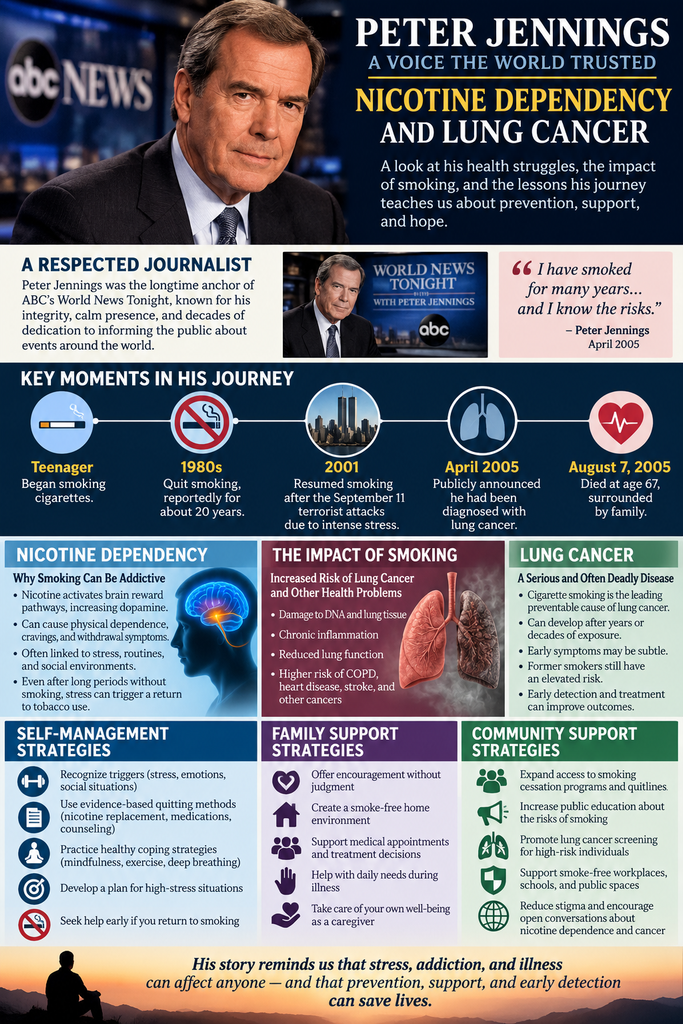
Peter Jennings was one of America’s most respected television journalists, known for his calm reporting, distinctive voice, and decades of dedication to delivering important news to millions of viewers. As the longtime anchor of ABC’s World News Tonight, Jennings covered major historical events, international conflicts, political developments, and human-interest stories. However, behind his successful broadcasting career was a serious health struggle involving cigarette smoking, nicotine dependence, and lung cancer.
Jennings began smoking as a teenager and struggled with tobacco use for many years. Although he reportedly stopped smoking for approximately two decades, he resumed smoking following the September 11, 2001, terrorist attacks. In April 2005, he publicly announced that he had been diagnosed with lung cancer. Just four months later, on August 7, 2005, Jennings died at age 67.
His experience illustrates how nicotine dependence can persist long after someone stops smoking and how intense stress may trigger a return to tobacco use.
Peter Jennings’ story provides valuable lessons about the dangers of long-term cigarette exposure, the challenges of maintaining smoking cessation, and the importance of self-management, family encouragement, and community support.
Peter Jennings’ Early Smoking History and Nicotine Dependency
Peter Jennings began smoking cigarettes at a young age, during a period when tobacco use was widely accepted in professional and social environments.
As his journalism career developed, he worked in demanding newsrooms, traveled internationally, and covered events requiring long hours, quick decisions, and emotional resilience.
Although the precise reasons behind his smoking cannot be fully established, the pressures associated with broadcast journalism provide useful context for understanding how stress and nicotine dependence can interact.
Factors associated with nicotine dependence
- Early tobacco exposure: Starting smoking during adolescence increases the likelihood of developing nicotine dependence.
- Workplace stress: Demanding professional responsibilities can create situations in which individuals use cigarettes to manage stress.
- Habit formation: Smoking may become associated with coffee breaks, work routines, and social interactions.
- Brain reward pathways: Nicotine stimulates dopamine signaling, reinforcing repeated tobacco use.
- Withdrawal symptoms: Irritability, anxiety, restlessness, and cravings can make quitting difficult.
- Environmental triggers: Exposure to smoking-related reminders can reactivate cravings even after prolonged abstinence.
Nicotine dependence is a chronic, relapsing condition influenced by biological, psychological, behavioral, and environmental factors.
Jennings’ experience demonstrates that professional achievement and personal determination do not necessarily protect someone from the challenges of addiction.
Quitting Smoking and Returning to Cigarettes After September 11
One of the most significant aspects of Jennings’ tobacco history was his reported return to smoking after approximately 20 years without cigarettes.
Following the September 11, 2001, terrorist attacks, Jennings spent extensive hours covering the tragedy and its aftermath. During this stressful period, he reportedly resumed smoking.
His experience illustrates how major emotional events can reactivate previously established addictive behaviors.
Why can stress trigger a return to smoking?
Stress activates physiological and psychological responses that can increase vulnerability to substance use.
Potential contributing factors include:
- Increased anxiety and emotional distress.
- Reappearance of previously learned smoking behaviors.
- Exposure to environmental reminders associated with tobacco use.
- Disrupted sleep and daily routines.
- Reduced attention to personal health during demanding circumstances.
- A desire for immediate relief from uncomfortable emotions.
Nicotine may temporarily reduce withdrawal-related discomfort, but continued tobacco use reinforces dependence and does not provide a healthy long-term solution to stress.
Lessons from Jennings’ return to smoking
His experience highlights several important principles:
- Long periods without smoking do not always eliminate vulnerability to cravings.
- Major life events can create new relapse risks.
- Emotional stress requires healthy coping strategies.
- Continuing support may be beneficial even after years of successful smoking cessation.
- Returning to smoking should prompt renewed treatment and support rather than shame or blame.
A return to smoking does not mean that previous efforts were wasted. It demonstrates the importance of recognizing triggers and strengthening recovery strategies.
Peter Jennings’ Lung Cancer Diagnosis and Final Months
On April 5, 2005, Peter Jennings publicly announced that he had been diagnosed with lung cancer.
In a recorded message to ABC viewers, he acknowledged his history of smoking and expressed his intention to continue working when possible while receiving treatment.
His announcement brought national attention to the relationship between cigarette smoking and lung cancer.
Despite treatment, Jennings’ health deteriorated. He died on August 7, 2005, surrounded by family.
His death deeply affected colleagues, viewers, and the journalism community.
Understanding the connection between smoking and lung cancer
Cigarette smoke contains numerous carcinogenic chemicals that can damage DNA and disrupt normal cellular processes.
Long-term smoking increases the risk of:
- Lung cancer and other tobacco-associated malignancies.
- Chronic obstructive pulmonary disease (COPD).
- Coronary artery disease and heart attacks.
- Stroke and peripheral vascular disease.
- Chronic respiratory inflammation.
- Reduced lung function and impaired oxygen exchange.
Lung cancer can develop after years or decades of tobacco exposure, including in people who previously stopped smoking.
Although quitting substantially reduces future cancer risk, it does not immediately eliminate damage associated with earlier exposure.
Jennings’ experience emphasizes the importance of smoking prevention, sustained cessation, and appropriate medical evaluation.
Self-Management Strategies: Overcoming Nicotine Dependency
Peter Jennings’ experience highlights the importance of maintaining smoking cessation, particularly during periods of emotional distress.
Modern healthcare offers effective strategies to help individuals stop smoking and manage the risk of returning to tobacco use.
Recognizing personal smoking triggers
Understanding why someone wants to smoke is an important part of developing a successful cessation plan.
Common triggers include:
- Emotional stress, anxiety, or depression.
- Workplace pressure and demanding responsibilities.
- Traumatic experiences or major life changes.
- Exposure to people who smoke.
- Alcohol consumption or established social routines.
- Fatigue, loneliness, and boredom.
Individuals can benefit from keeping a journal to identify cravings, emotional responses, and situations associated with tobacco use.
Developing healthier coping mechanisms
Rather than relying on cigarettes to manage stress, individuals can practice healthier alternatives.
Recommended strategies include:
- Mindfulness and meditation: Practice techniques that reduce emotional reactivity and improve awareness of cravings.
- Physical activity: Engage in regular walking, stretching, swimming, or other appropriate exercise.
- Deep breathing: Use controlled breathing exercises to manage anxiety and restlessness.
- Behavioral counseling: Consider cognitive behavioral therapy or tobacco cessation counseling.
- Healthy routines: Maintain consistent sleep, balanced nutrition, and regular physical activity.
- Social connection: Speak with trusted friends, family members, or support groups during stressful periods.
Using evidence-based smoking cessation treatments
Several FDA-approved medications can help manage nicotine withdrawal and cravings.
Treatment options include:
- Nicotine replacement therapy, including patches, gum, and lozenges.
- Prescription varenicline to reduce nicotine cravings and smoking satisfaction.
- Prescription bupropion SR to help manage withdrawal symptoms.
- Combination nicotine replacement therapy, such as a patch with short-acting gum or lozenges, when appropriate.
- Individual or group behavioral counseling.
A healthcare professional can help determine the safest and most effective treatment based on medical history, medications, and individual preferences.
Preventing a return to smoking
Jennings’ reported return to smoking after September 11 demonstrates the importance of preparing for unexpected stressful situations.
Long-term cessation strategies include:
- Develop a written plan for responding to strong cravings.
- Identify emotional warning signs before they become overwhelming.
- Maintain access to supportive people and cessation resources.
- Avoid assuming that one cigarette is harmless.
- Seek help promptly if smoking resumes.
- Reassess treatment when major life changes occur.
A single lapse does not need to become a permanent return to smoking. Early intervention can help individuals resume their cessation efforts.
Family Support Strategies: Encouraging Recovery and Managing Lung Cancer
Family support can significantly influence a person’s motivation, emotional well-being, and ability to maintain smoking cessation.
Although Jennings’ family provided support during his illness, the following strategies are general recommendations rather than a description of his family’s private experiences.
Providing emotional support without judgment
Nicotine dependence can be difficult to overcome, even for individuals who have successfully stopped smoking for many years.
Families can help by:
- Listening without criticism or blame.
- Encouraging open discussions about cravings and stress.
- Recognizing progress and celebrating milestones.
- Avoiding guilt-based conversations about smoking.
- Supporting participation in counseling or cessation programs.
- Offering reassurance following setbacks.
Creating a supportive, smoke-free environment
A smoke-free home reduces environmental triggers and protects family members from secondhand smoke.
Helpful strategies include:
- Remove cigarettes, ashtrays, and smoking-related items.
- Establish smoke-free rules for homes and vehicles.
- Plan activities that do not involve tobacco.
- Encourage family members who smoke to seek cessation support.
- Develop shared routines that promote relaxation and healthy living.
Supporting someone diagnosed with lung cancer
A lung cancer diagnosis can create fear, uncertainty, emotional distress, and significant changes in daily life.
Family members can provide practical assistance by:
- Accompanying patients to oncology appointments when requested.
- Helping manage treatment schedules and medications.
- Assisting with transportation, meals, and household responsibilities.
- Encouraging communication about symptoms and treatment side effects.
- Respecting the patient’s decisions and personal preferences.
- Seeking caregiver support when emotional or physical demands become overwhelming.
Families should also understand that palliative care can be introduced alongside cancer treatment to improve comfort, symptom control, and quality of life.
Community Support Strategies: Preventing Tobacco-Related Diseases
Peter Jennings’ public disclosure of his lung cancer diagnosis helped bring national attention to smoking-related health risks.
ABC News reported that calls to smoking cessation quitlines doubled in the days following his announcement. His openness helped encourage public discussion about tobacco dependence and lung cancer.
Expanding access to smoking cessation programs
Communities can support tobacco recovery by making evidence-based services more accessible.
Important initiatives include:
- Free smoking cessation counseling and support groups.
- Tobacco quitlines and virtual cessation programs.
- Affordable nicotine replacement therapy.
- Insurance coverage for cessation medications.
- Workplace tobacco cessation programs.
- Programs addressing stress, trauma, and nicotine dependence together.
Increasing lung cancer awareness
Public health campaigns can educate communities about the long-term consequences of smoking.
Educational priorities include:
- Recognizing the health risks associated with cigarette smoking.
- Understanding that former smokers may retain an elevated lung cancer risk.
- Identifying persistent cough, coughing up blood, unexplained weight loss, and other symptoms requiring medical evaluation.
- Promoting appropriate lung cancer screening.
- Reducing stigma toward people with tobacco-related illnesses.
- Encouraging smoking prevention among adolescents and young adults.
Promoting lung cancer screening
According to the U.S. Preventive Services Task Force, annual low-dose CT screening is recommended for adults who meet all three criteria:
- Are between 50 and 80 years old.
- Have at least a 20-pack-year smoking history.
- Currently smoke or quit within the past 15 years.
Community resources for tobacco cessation and lung cancer
National Tobacco Quitline: 1-800-QUIT-NOW (1-800-784-8669) provides access to state smoking cessation programs.
American Cancer Society: Offers cancer education, treatment information, and support for patients and caregivers.
American Lung Association: Provides tobacco cessation programs, lung cancer education, and respiratory health resources.
Smokefree.gov: Offers personalized quit plans, educational tools, and smoking cessation support.
Lessons From Peter Jennings’ Journey
Peter Jennings’ experience demonstrates that nicotine dependence can affect anyone, regardless of professional achievement, education, or public recognition.
His story provides several important lessons:
- Addiction can remain a lifelong vulnerability: Even after many years without cigarettes, stressful events can reactivate smoking behaviors.
- Stress management is essential: Developing healthy coping mechanisms can reduce the risk of returning to tobacco use.
- Quitting provides lasting benefits: Smoking cessation reduces the risk of numerous diseases, although some risks remain elevated for years.
- Lung cancer can develop after smoking cessation: Previous tobacco exposure may contribute to cancer risk decades later.
- Family involvement strengthens support: Encouragement and practical assistance can improve the experience of quitting and coping with illness.
- Community education saves lives: Public awareness, screening, and accessible cessation treatment help reduce tobacco-related harm.
Jennings’ willingness to publicly acknowledge his smoking history and lung cancer diagnosis also helped challenge the stigma associated with tobacco-related illness.
His experience reminds us that people facing nicotine dependence deserve compassion, effective treatment, and continued support.
The Importance of Early Detection and Modern Lung Cancer Treatment
Since Jennings’ death in 2005, significant advances have improved the diagnosis and treatment of lung cancer.
Modern medical care may include:
- Low-dose CT screening for eligible high-risk individuals.
- Advanced imaging and minimally invasive diagnostic procedures.
- Molecular testing to identify actionable cancer mutations.
- Targeted therapies for selected cancer types.
- Immunotherapy to help the immune system recognize and attack cancer cells.
- Surgery, radiation therapy, and chemotherapy when appropriate.
- Integrated supportive and palliative care.
These developments have improved treatment options and outcomes for some patients. However, treatment effectiveness depends on cancer type, stage, molecular characteristics, overall health, and other factors.
Prevention, smoking cessation, and early detection remain essential components of reducing lung cancer deaths.
Conclusion: Peter Jennings’ Legacy and the Importance of Nicotine Recovery
Peter Jennings dedicated his professional life to informing the public about important events around the world. Yet one of his most personal and meaningful messages came when he publicly acknowledged his lung cancer diagnosis and history of cigarette smoking.
His experience demonstrates that nicotine dependence can remain challenging even after decades of successful smoking cessation. Emotional stress, traumatic events, and established behavioral patterns can increase vulnerability to returning to tobacco use.
Through self-management, individuals can recognize triggers, develop healthy coping mechanisms, and seek evidence-based cessation treatments. Families can provide emotional encouragement, maintain smoke-free environments, and support loved ones facing lung cancer. Communities can expand prevention programs, improve access to healthcare, and promote early detection through appropriate screening.
Peter Jennings’ story reminds us that quitting smoking is not simply about stopping a behavior. It is about protecting long-term health, preparing for life’s challenges, and building a support system that makes lasting recovery possible.
His legacy extends beyond journalism. By openly discussing his illness, Jennings helped raise awareness about tobacco-related disease and encouraged others to consider the importance of protecting their health.
Quitting smoking today cannot change yesterday’s exposure, but it can help protect tomorrow’s health.
Frequently asked questions and answers
1. Who was Peter Jennings?
Peter Jennings was a Canadian-born American television journalist best known as the longtime anchor of ABC’s World News Tonight. He became one of America’s most respected news broadcasters, covering major international events, political developments, and historical tragedies. His career spanned several decades before his death from lung cancer in 2005.
2. Did Peter Jennings have a nicotine addiction?
Peter Jennings had a long history of cigarette smoking and publicly acknowledged his struggles with tobacco use. He began smoking as a teenager and reportedly quit for approximately 20 years before returning to cigarettes following the September 11, 2001, terrorist attacks. His experience illustrates how nicotine dependence and smoking-related behaviors can remain difficult to manage even after years without tobacco.
3. When was Peter Jennings diagnosed with lung cancer?
Peter Jennings publicly announced his lung cancer diagnosis on April 5, 2005. He shared the news with ABC viewers and acknowledged his history of smoking. His announcement brought widespread attention to the relationship between tobacco use and lung cancer.
4. Did smoking contribute to Peter Jennings’ lung cancer?
Cigarette smoking is the leading risk factor for lung cancer, and Jennings had a substantial smoking history. Although the precise contribution of smoking to an individual’s cancer cannot always be established, his tobacco exposure was a significant risk factor. Cigarette smoke contains carcinogens that damage DNA and increase the likelihood of malignant cell growth.
5. Why did Peter Jennings start smoking again after quitting?
Jennings reportedly resumed smoking following the September 11 terrorist attacks in 2001. The intense demands of covering the tragedy coincided with his return to cigarettes. His experience demonstrates how stressful events can trigger previously established smoking behaviors, even after many years of abstinence.
6. How old was Peter Jennings when he died?
Peter Jennings died on August 7, 2005, at age 67, approximately four months after publicly announcing his lung cancer diagnosis. His death highlighted the serious consequences of lung cancer and the importance of tobacco prevention and cessation.
7. What are the warning signs of lung cancer?
Lung cancer may develop without noticeable symptoms during its early stages. As the disease progresses, symptoms may include:
- Persistent or worsening cough.
- Coughing up blood.
- Chest pain.
- Shortness of breath.
- Unexplained weight loss.
- Persistent fatigue.
- Recurrent respiratory infections.
Anyone experiencing these symptoms should seek medical evaluation, especially individuals with a history of tobacco exposure.
8. Can someone develop lung cancer after quitting smoking?
Yes. Former smokers can develop lung cancer years or decades after quitting because previous tobacco exposure may have caused lasting cellular damage. However, stopping smoking significantly reduces future lung cancer risk compared with continuing to smoke. The risk generally decreases over time, so quitting is beneficial at any age.
9. What treatment did Peter Jennings receive for lung cancer?
Jennings underwent chemotherapy following his diagnosis in April 2005. He initially hoped to continue broadcasting when his health permitted. However, his illness progressed, and he did not return to anchoring World News Tonight. He died approximately four months after announcing his diagnosis.
10. Could Peter Jennings’ lung cancer have been prevented?
Avoiding cigarette smoking significantly reduces the risk of lung cancer, but it cannot guarantee prevention. Jennings’ long smoking history increased his risk. Other factors, including environmental exposures and genetic susceptibility, can also contribute to lung cancer. His experience emphasizes the importance of tobacco prevention and early smoking cessation.
11. How does nicotine addiction affect the brain?
Nicotine activates receptors in the brain that stimulate dopamine release, reinforcing pleasurable or rewarding sensations. Repeated nicotine exposure produces neurological adaptations that contribute to dependence. When someone stops smoking, withdrawal symptoms such as irritability, anxiety, difficulty concentrating, and cravings can occur.
12. What are the most effective ways to quit smoking?
Combining behavioral counseling with FDA-approved smoking cessation medication is generally more effective than relying on willpower alone. Helpful approaches include nicotine replacement therapy, varenicline, bupropion SR, stress-management techniques, and structured cessation programs. Treatment should be individualized based on medical history and personal preferences.
13. How can family members support someone struggling with nicotine dependency?
Families can provide encouragement without criticism, help identify smoking triggers, and support participation in cessation programs. Creating a smoke-free home, celebrating progress, and offering assistance during stressful periods can strengthen recovery. Compassionate communication is particularly important when someone experiences a setback.
14. How can communities help prevent nicotine addiction and lung cancer?
Communities can reduce tobacco-related harm by expanding access to affordable cessation treatment, promoting smoke-free environments, educating young people about tobacco risks, and supporting lung cancer screening. Public health campaigns and accessible healthcare services can encourage early intervention and reduce stigma.
15. Who should receive lung cancer screening?
The U.S. Preventive Services Task Force recommends annual low-dose CT screening for adults ages 50–80 who have at least a 20-pack-year smoking history and currently smoke or quit within the past 15 years. Other professional organizations may recommend broader eligibility. Individuals should discuss their risks and screening options with their healthcare providers.
16. Can stress cause someone to start smoking again after many years?
Yes. Stressful or traumatic events can reactivate learned smoking behaviors and increase cravings, even after prolonged abstinence. Jennings’ reported return to smoking following September 11 illustrates this vulnerability. Stress-management skills, counseling, and a plan for responding to cravings can help protect long-term cessation.
17. Does quitting smoking improve health even after decades of tobacco use?
Yes. Quitting smoking reduces the risk of cardiovascular disease, respiratory illness, and several cancers. Some health improvements begin within days or weeks, while long-term cancer risk reductions develop over years. Although previous tobacco exposure cannot be erased, quitting remains beneficial at virtually any age.
18. Did Peter Jennings’ family become involved in lung cancer awareness?
Yes. His daughter, Elizabeth Jennings, later participated in public discussions about lung cancer awareness and her father’s legacy. In a 2010 ABC News interview, she reflected on his illness and the importance of increasing public understanding of lung cancer.
19. What resources are available for people trying to quit smoking?
Individuals seeking help can access free or low-cost services through the National Tobacco Quitline at 1-800-QUIT-NOW (1-800-784-8669). Additional educational and cessation resources are available through
20. What is the most important lesson from Peter Jennings’ nicotine dependency and lung cancer journey?
Peter Jennings’ experience demonstrates that nicotine dependence can remain challenging even after years without smoking. His story emphasizes the importance of stress management, sustained smoking cessation, family encouragement, and accessible community resources. It also reminds us that early detection and preventive healthcare can improve outcomes.
Video: