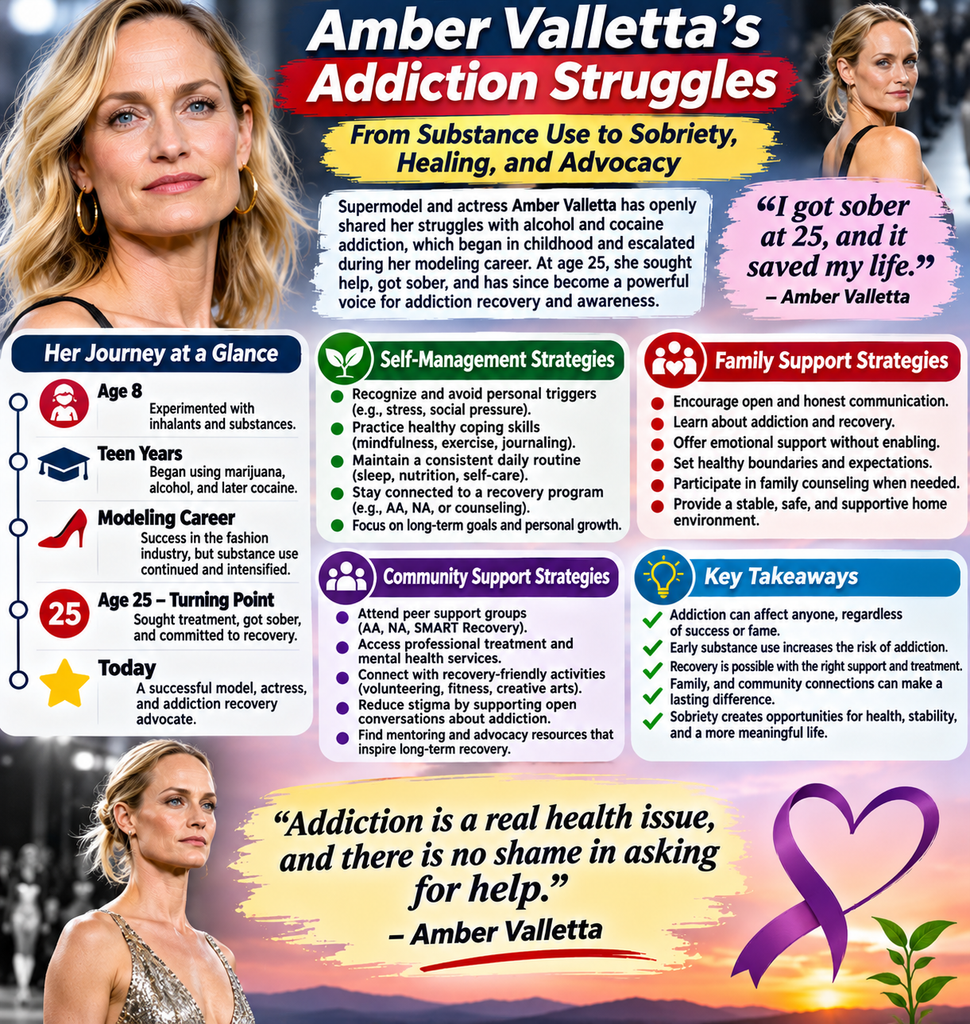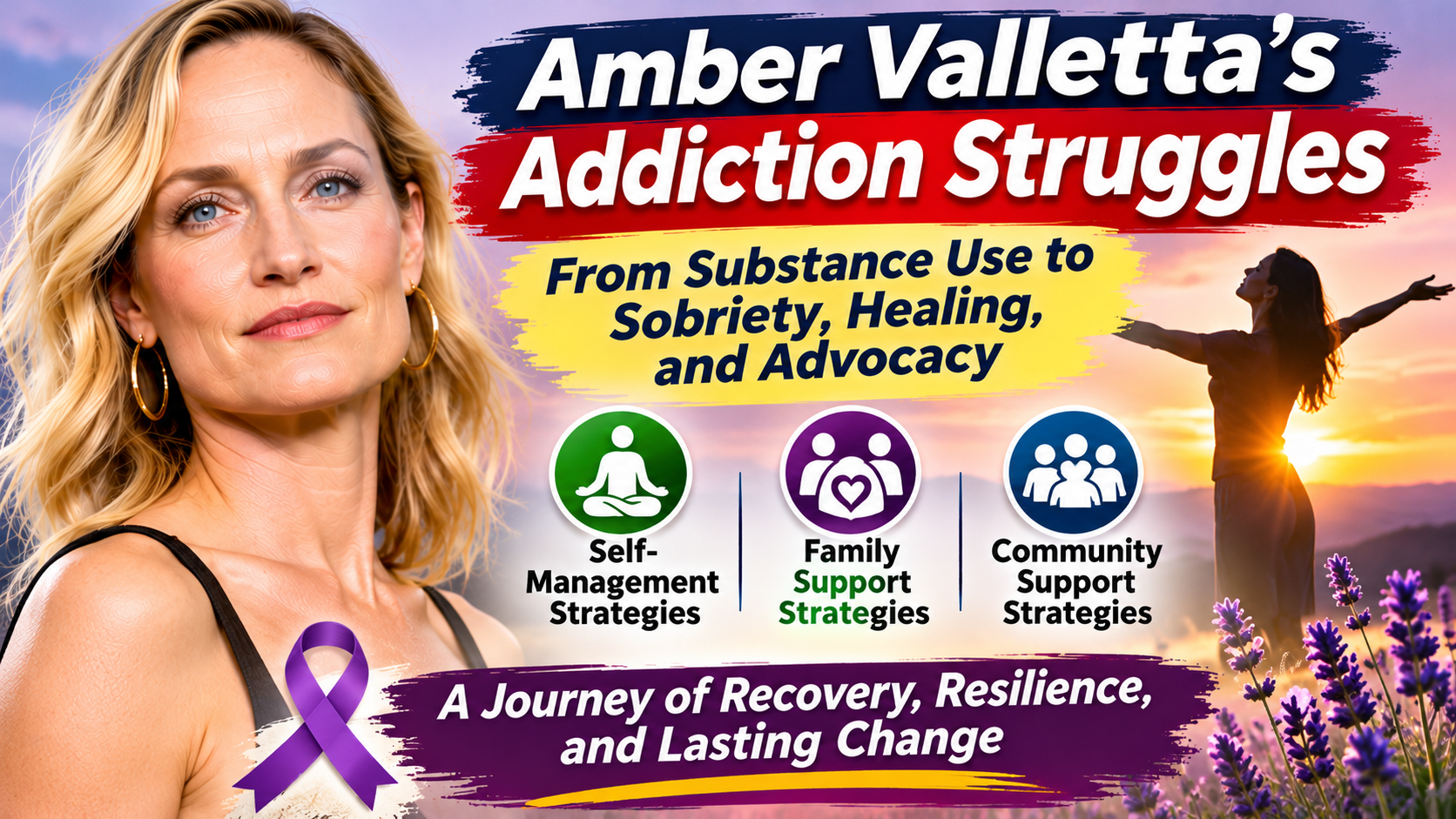
Can someone appear to have everything—beauty, fame, financial success, and a thriving career—while privately struggling with addiction?
For internationally recognized supermodel and actress Amber Valletta, the answer is yes.
Valletta became one of the most recognizable faces in fashion during the 1990s, appearing on major magazine covers and working with prestigious designers. Behind her professional achievements, however, she was experiencing serious problems involving alcohol, cocaine, and other substances.
Her struggles began during childhood, progressed during her modeling career, and eventually threatened her health, relationships, and professional future.
At age 25, Valletta made a life-changing decision to seek help and pursue sobriety. Years later, she began speaking publicly about her experiences, encouraging others to recognize addiction as a treatable medical condition rather than a personal weakness.
Her journey offers important lessons about emotional self-management, the influence of family relationships, the value of professional treatment, and the importance of community support.
Amber Valletta’s story reminds us that addiction can exist behind even the most successful public image—and that recovery becomes possible when individuals receive compassionate, effective support.
Amber Valletta’s Early Life and the Beginning of Addiction
Amber Valletta was born on February 9, 1974, in Phoenix, Arizona, and grew up in Tulsa, Oklahoma.
She began modeling as a teenager and quickly developed a successful international career. By her late teens, she was traveling internationally and working in the competitive fashion industry.
However, her experiences with substance use began long before she became famous.
During a 2014 presentation for MindBodyGreen, Valletta disclosed that she had experimented with inhaling household substances at approximately eight years old. She later used marijuana and eventually began using cocaine and alcohol.
Valletta described experiencing emotional discomfort and difficulty managing her feelings. Substance use became a way of temporarily escaping those experiences.
She also acknowledged a family history of addiction, which she believed contributed to her vulnerability.
Understanding Early Substance Use
Childhood exposure to substances is particularly concerning because the brain continues developing throughout adolescence and early adulthood.
Early substance use is associated with an increased risk of later substance use disorders, although not everyone who experiments with substances develops addiction.
Potential contributing factors include:
- Genetic vulnerability and family history of addiction.
- Emotional distress and difficulty regulating feelings.
- Early exposure to alcohol or drugs.
- Peer influence and social environments.
- Childhood adversity or chronic stress.
- Limited access to healthy coping skills.
- Easy availability of substances.
These factors can interact, but none alone determines whether someone will develop addiction.
Valletta’s experiences show why early prevention, supportive parenting, and mental health education matter.
Fame, Fashion, and the Escalation of Substance Use
During the 1990s, Valletta became one of the world’s most successful models.
She appeared in major fashion campaigns, worked with internationally recognized designers, and achieved financial success at a young age.
Despite these accomplishments, her substance use continued.
Valletta described an industry environment in which alcohol and drugs were readily accessible and sometimes socially accepted.
She later recalled arriving at a major professional photo shoot while intoxicated, despite having a substantial financial contract at stake.
Her substance use also affected important family experiences, including time spent with a seriously ill relative.
In a 2014 CBS News interview, she discussed the emotional isolation and self-destructive behavior that accompanied her addiction. CBS News
How Addiction Can Affect Professional Success
Substance use disorders can interfere with judgment, relationships, and responsibilities even when someone appears outwardly successful.
Potential consequences include:
- Impaired concentration and decision-making.
- Increased risk of accidents and medical complications.
- Difficulty maintaining professional commitments.
- Emotional instability and social isolation.
- Financial problems despite substantial earnings.
- Damaged trust within personal relationships.
- Increased risk of overdose or other substance-related emergencies.
Valletta has emphasized that she does not blame the fashion industry for causing her addiction. Rather, she recognized that the environment increased her access to substances while she was already vulnerable.
This distinction is important because addiction develops through interactions among biological, psychological, behavioral, and environmental factors.
The Turning Point: Seeking Sobriety at Age 25
By age 25, Valletta recognized that her substance use had become dangerous.
Despite her professional accomplishments, she experienced profound emotional distress and feared that continuing to use drugs and alcohol could cost her life.
She recalled a frightening period of cocaine use that involved severe sleep deprivation and a hospital visit.
The experience helped her recognize that she needed help.
Valletta subsequently pursued treatment and recovery support.
In her 2014 public presentation, she explained that recovery required acknowledging she could not manage addiction through willpower alone.
She credited the willingness to accept help, participate in recovery programs, and connect with supportive people as important elements of her sobriety. ABC News+1
Lessons From Her Turning Point
Valletta’s decision to seek help highlights several important principles:
- Recognizing the seriousness of addiction can motivate treatment.
- Professional success does not eliminate the need for healthcare.
- Asking for help demonstrates self-awareness rather than weakness.
- Addiction recovery often requires ongoing support.
- Individuals can rebuild meaningful lives after severe substance-related problems.
- Recovery may begin before every area of life has been damaged.
Her experience reinforces the importance of early intervention and access to compassionate treatment.
Self-Management Strategies for Addiction Recovery
Self-management involves learning to recognize cravings, regulate emotions, manage stress, and maintain healthy behaviors that support recovery.
Valletta has publicly discussed the importance of accountability, humility, recovery programs, and acknowledging emotional difficulties.
The following strategies combine lessons from her experiences with broader evidence-informed addiction treatment approaches.
Recognizing Emotional Triggers
Valletta described using substances to escape uncomfortable feelings.
This pattern illustrates how emotional distress can contribute to substance use.
Common triggers include anxiety, loneliness, insecurity, relationship conflict, stress, and exposure to environments associated with previous drug use.
Helpful self-management strategies include:
- Keeping a journal to identify emotions and cravings.
- Recognizing situations associated with previous substance use.
- Practicing mindfulness and breathing exercises.
- Developing healthy responses to stress.
- Avoiding high-risk environments when appropriate.
- Contacting a counselor or trusted support person when cravings increase.
Developing Healthy Daily Routines
Consistent routines can support emotional stability and reduce exposure to high-risk situations.
Helpful habits include:
- Maintaining regular sleep and wake times.
- Participating in physical activity.
- Eating balanced meals and staying hydrated.
- Scheduling recovery meetings and counseling appointments.
- Practicing meditation or relaxation techniques.
- Maintaining meaningful hobbies and interests.
- Setting realistic personal and professional goals.
Valletta has also described the importance of meditation and self-awareness in her broader approach to well-being.
Seeking Professional Addiction Treatment
Evidence-based addiction treatment should be individualized according to the substances involved, medical history, and co-occurring mental health conditions.
Treatment options may include:
- Cognitive behavioral therapy (CBT): Helps identify and modify thoughts and behaviors associated with substance use.
- Motivational interviewing: Strengthens motivation for behavioral change.
- Contingency management: Uses positive reinforcement to encourage treatment participation and substance-free behaviors, particularly for stimulant use disorders.
- Medication for alcohol use disorder: Naltrexone and acamprosate may benefit appropriate patients.
- Relapse prevention counseling: Helps individuals develop strategies for managing cravings and high-risk situations.
- Integrated mental health treatment: Addresses co-occurring depression, anxiety, trauma, and other psychological concerns.
There is currently no FDA-approved medication specifically for cocaine use disorder, although behavioral treatments can be effective.
Individuals with significant alcohol dependence should seek medical guidance before stopping abruptly because alcohol withdrawal can be life-threatening.
Building a Relapse Prevention Plan
A personalized relapse prevention plan can help individuals recognize warning signs and respond before substance use occurs.
An effective plan should include:
- Personal triggers and high-risk situations.
- Early warning signs of emotional distress.
- Healthy coping strategies.
- Trusted people to contact during cravings.
- Professional treatment and recovery resources.
- Steps to take following a return to substance use.
- Emergency contacts when immediate assistance is necessary.
Key lesson: Long-term recovery is strengthened when individuals combine self-awareness, healthy routines, professional treatment, and reliable social support.
Family Support Strategies: Compassion, Communication, and Healthy Boundaries
Family relationships can significantly influence addiction recovery.
In her 2014 CBS News interview, Valletta recalled that her mother directly confronted her about substance use when others had been reluctant to address the problem.
She also discussed how recovery influenced her approach to parenting her son, Auden.
Valletta emphasized the importance of honest communication about addiction while recognizing that children need opportunities to develop independence. CBS News
Encouraging Open and Honest Communication
Families can support recovery by creating an environment where individuals feel comfortable discussing emotional difficulties and substance use.
Helpful approaches include:
- Listening without immediately criticizing or blaming.
- Expressing concern through respectful conversations.
- Encouraging professional treatment.
- Recognizing positive changes and recovery milestones.
- Avoiding stigmatizing labels.
- Supporting honest discussions about cravings and relapse risks.
Establishing Healthy Boundaries
Compassionate family support should include boundaries that protect everyone involved.
Examples include:
- Refusing to provide money that directly supports substance use.
- Avoiding repeated concealment of harmful behaviors.
- Establishing expectations for respectful communication.
- Protecting children from unsafe situations.
- Seeking professional assistance when family conflict escalates.
- Recognizing that loved ones cannot control another person’s recovery.
Healthy boundaries promote safety and accountability rather than punishment.
Participating in Family Counseling
Family therapy can help address communication difficulties, damaged trust, and emotional distress.
Potential benefits include:
- Improved understanding of substance use disorders.
- Stronger communication skills.
- Reduced family conflict.
- Healthier boundaries.
- Better emotional support.
- Increased awareness of relapse warning signs.
Family members may also benefit from individual counseling, regardless of whether the person experiencing addiction is currently participating in treatment.
Supporting Children Through Addiction Education
Valletta has discussed the importance of being honest with her son about her addiction history.
Her experiences highlight the value of age-appropriate education and open communication.
Families can help children by:
- Explaining addiction using developmentally appropriate language.
- Discussing the risks of alcohol and drug use.
- Encouraging children to ask questions without fear.
- Modeling healthy emotional coping strategies.
- Maintaining consistent household routines.
- Seeking professional support when children experience emotional distress.
A family history of addiction may increase vulnerability, but it does not mean a child will inevitably develop a substance use disorder.
Community Support Strategies: Building Connections That Strengthen Recovery
Community support can reduce isolation, increase treatment engagement, and provide practical assistance throughout recovery.
Valletta has credited recovery programs and supportive relationships with helping her maintain sobriety.
She has also spoken publicly about addiction to encourage others to seek help and challenge stigma.
Peer Recovery Support Groups
Mutual-support organizations provide opportunities to connect with people who understand addiction.
Examples include:
- Alcoholics Anonymous (AA): Peer support for individuals recovering from alcohol problems.
- Narcotics Anonymous (NA): Mutual support for individuals recovering from drug addiction.
- SMART Recovery: A secular approach emphasizing coping skills and self-management.
- Recovery Dharma: A peer-led program incorporating mindfulness and Buddhist-inspired practices.
- Women for Sobriety: A recovery organization focused on supporting women with alcohol and substance-related problems.
These programs offer different approaches, allowing individuals to choose support that aligns with their preferences and beliefs.
Community Mental Health and Addiction Services
Local treatment organizations may provide outpatient counseling, intensive outpatient programs, residential treatment, psychiatric services, and recovery case management.
Community programs can also address practical barriers involving transportation, housing, employment, and healthcare access.
Mentorship and Recovery Advocacy
People with lived recovery experience can provide valuable encouragement and practical guidance to others.
Valletta’s decision to publicly discuss her addiction in 2014 helped challenge the misconception that successful individuals are immune to substance use disorders.
In subsequent interviews, she continued emphasizing the importance of honesty, accountability, and compassion.
In a 2020 interview with PORTER, she described maintaining sobriety for approximately 25 years and explained how recovery remained central to her personal well-being. PORTER
Recovery-Friendly Community Activities
Meaningful activities can help individuals establish healthier identities and social connections.
Examples include:
- Volunteering and community service.
- Recreational sports and fitness programs.
- Creative arts and educational workshops.
- Meditation and mindfulness groups.
- Alcohol-free social gatherings.
- Peer mentoring and recovery community organizations.
These activities can complement professional treatment by reducing isolation and encouraging personal growth.
Amber Valletta’s Advocacy: Breaking the Stigma Surrounding Addiction
One of Valletta’s most important contributions to addiction awareness has been her willingness to discuss experiences she previously kept private.
During her 2014 MindBodyGreen presentation, she openly identified herself as someone living with addiction and explained why she wanted to share her story.
Her message emphasized that addiction should not be hidden because of shame.
She also challenged the misconception that individuals can always overcome addiction through determination alone.
Her advocacy offers several important lessons:
- Addiction is a treatable health condition, not simply a lack of discipline.
- Shame and stigma may discourage individuals from seeking help.
- Public discussions can increase awareness and understanding.
- Recovery stories can encourage others to pursue treatment.
- Compassion and accountability can coexist.
- People with lived experience can become effective recovery advocates.
Her openness has helped demonstrate that discussing addiction can be an important part of reducing stigma and encouraging treatment engagement.
Challenges and Barriers to Long-Term Recovery
Although Valletta has described decades of sobriety, her experiences illustrate challenges that may affect individuals throughout recovery.
Shame and Fear of Judgment
People experiencing addiction may feel embarrassed about their substance use or fear professional and social consequences.
These concerns can delay treatment and increase isolation.
Reducing stigma requires supportive conversations, confidential healthcare services, and education about addiction.
Emotional Distress and Self-Medication
Individuals may use substances to escape anxiety, loneliness, or emotional discomfort.
Effective treatment often includes developing healthier emotional regulation skills and addressing co-occurring mental health conditions.
High-Pressure Professional Environments
Demanding careers may involve irregular schedules, travel, social pressure, and easy access to alcohol or drugs.
Recovery planning should consider these environmental risks and provide practical coping strategies.
Maintaining Recovery Over Time
Long-term recovery may require continued attention to emotional health, relationships, and lifestyle changes.
People can benefit from maintaining supportive connections even after years of abstinence.
Important Lessons From Amber Valletta’s Recovery Journey
Valletta’s experiences provide valuable lessons for individuals, families, healthcare professionals, and communities.
- Addiction does not discriminate. Wealth, beauty, fame, and professional success do not prevent substance use disorders.
- Early substance exposure matters. Childhood experimentation may increase vulnerability to later addiction.
- Emotional health deserves attention. Substance use may become a way of coping with difficult feelings.
- Asking for help is a strength. Recovery often requires support beyond personal determination.
- Family communication is important. Honest conversations and healthy boundaries can encourage treatment.
- Community support strengthens recovery. Peer groups, counselors, and recovery organizations can reduce isolation.
- Shame should not prevent treatment. Addiction is a medical condition deserving compassionate care.
- Long-term recovery is possible. Individuals can rebuild their health, relationships, and personal goals.
- Recovery advocacy can help others. Sharing lived experiences responsibly can reduce stigma and encourage hope.
Resources for Individuals and Families Affected by Addiction
SAMHSA National Helpline
1-800-662-HELP (4357)
Free, confidential treatment information and referrals, available 24/7.SAMHSA National Helpline
FindTreatment.gov
Locate substance use and mental health treatment providers throughout the United States. Find addiction treatment
Narcotics Anonymous
Peer recovery support for individuals experiencing drug addiction. Find NA meetings
SMART Recovery
Mutual-support meetings emphasizing practical recovery and coping skills. Explore SMART Recovery
988 Suicide & Crisis Lifeline
Call or text 988 for immediate emotional support during a mental health or substance-related crisis. Access 988 crisis support
Conclusion: Amber Valletta’s Journey Demonstrates the Power of Recovery and Connection
Amber Valletta’s experiences with drug and alcohol addiction demonstrate that substance use disorders can affect individuals regardless of their public image, professional accomplishments, or financial success.
Her struggles began during childhood, intensified during her modeling career, and eventually threatened her health and personal well-being.
At age 25, she recognized the seriousness of her addiction and sought help.
Her subsequent recovery and willingness to discuss her experiences publicly have helped challenge stigma and encourage conversations about addiction as a treatable medical condition.
For individuals experiencing addiction, her journey emphasizes the importance of recognizing emotional triggers, seeking professional treatment, developing healthy routines, and maintaining supportive relationships.
For families, her experiences highlight the value of compassionate communication, appropriate boundaries, and addiction education.
For communities, her advocacy demonstrates how peer support, accessible treatment, and public awareness can create environments where individuals feel safer seeking help.
Amber Valletta’s story reminds us that recovery is not defined by fame, success, or perfection. It is built through self-awareness, meaningful support, personal accountability, and the willingness to pursue a healthier life.
Recovery is possible, and understanding addiction can save lives.
Frequently Asked Questions and Answers
Understanding Amber Valletta’s Addiction Journey
1. Who is Amber Valletta, and why is her addiction story important?
Amber Valletta is an internationally recognized American supermodel, actress, and recovery advocate.
She became famous during the 1990s through major fashion campaigns, magazine covers, and later film and television appearances.
Despite her professional success, Valletta struggled with alcohol and drug addiction. Her decision to publicly discuss her experiences has helped challenge misconceptions about addiction and demonstrate that recovery is possible.
2. What substances did Amber Valletta struggle with?
Valletta has publicly discussed using alcohol, marijuana, cocaine, and inhalants during different periods of her life.
She has described her substance use as beginning during childhood and escalating as she grew older.
Her experiences illustrate how early substance exposure, emotional difficulties, and environmental influences can contribute to addiction vulnerability.
3. At what age did Amber Valletta begin experimenting with drugs?
Valletta revealed that she began experimenting with inhalants at approximately eight years old.
During adolescence, she progressed to marijuana and other substances. As her modeling career developed, alcohol and cocaine became significant problems.
Early substance use is associated with increased risk of later substance use disorders, although it does not mean addiction is inevitable.
4. Did Amber Valletta’s modeling career contribute to her addiction?
Valletta has described how alcohol and drugs were accessible in the fashion industry during her early career.
The pressures of modeling, international travel, social events, and demanding professional schedules may create challenges for individuals vulnerable to substance use.
However, Valletta has emphasized that she does not blame the fashion industry for her addiction.
Her experiences highlight the interaction between personal vulnerability and environmental influences.
5. How did addiction affect Amber Valletta’s personal and professional life?
Valletta described experiencing emotional distress, impaired judgment, and dangerous substance-related behaviors despite maintaining a successful modeling career.
She has recalled attending professional commitments while intoxicated and struggling to remain emotionally present during important family experiences.
Her story demonstrates that someone may appear outwardly successful while experiencing serious addiction-related problems.
6. What motivated Amber Valletta to seek addiction treatment?
By her mid-twenties, Valletta recognized that her substance use had become dangerous.
She described frightening experiences involving cocaine, severe sleep deprivation, and concerns about her physical and emotional well-being.
These experiences contributed to her decision to seek help and pursue recovery.
7. At what age did Amber Valletta become sober?
Valletta has publicly stated that she became sober at age 25, around 1999.
She later described how accepting help, participating in recovery programs, and maintaining supportive relationships contributed to her sobriety.
Her experiences demonstrate that individuals can rebuild meaningful lives after serious substance-related difficulties.
8. Has Amber Valletta maintained long-term sobriety?
Valletta has publicly described maintaining sobriety for more than 25 years.
In a November 2026 interview with The Wall Street Journal, she again discussed her long-term sobriety, daily meditation, and the need for greater access to addiction support. The Wall Street Journal
Her experience demonstrates that sustained recovery is possible, although ongoing self-awareness and support may remain important.
9. Did Amber Valletta experience relapses after becoming sober?
Valletta has not publicly described a specific relapse in the interviews reviewed for this article.
She has emphasized that maintaining sobriety requires continued attention and accountability.
The absence of a publicly reported relapse should not be interpreted as complete knowledge of someone’s private medical or recovery history.
Self-Management and Relapse Prevention
10. What self-management strategies helped Amber Valletta maintain sobriety?
Valletta has credited self-reflection, asking for help, recovery programs, spirituality, and supportive relationships.
She has also discussed the importance of meditation and maintaining emotional awareness.
General recovery strategies include:
- Recognizing emotional and environmental triggers.
- Developing healthy daily routines.
- Practicing meditation and stress management.
- Maintaining regular contact with supportive people.
- Participating in recovery programs or counseling.
- Establishing realistic personal goals.
- Seeking help when cravings or emotional distress increase.
11. Why is emotional self-awareness important in addiction recovery?
Emotional self-awareness helps individuals recognize feelings that may increase their desire to use substances.
Valletta described using drugs and alcohol partly to escape uncomfortable emotions.
Learning to identify anxiety, insecurity, loneliness, and stress can help individuals develop healthier coping responses.
Cognitive behavioral therapy, mindfulness, and counseling may improve emotional regulation and reduce vulnerability to relapse.
12. How can individuals manage cravings for cocaine or alcohol?
Cravings can be managed through behavioral strategies and appropriate treatment.
Helpful approaches include:
- Identifying situations associated with previous substance use.
- Practicing urge surfing, a mindfulness technique for observing cravings without acting on them.
- Removing oneself from high-risk environments.
- Contacting a trusted recovery support person.
- Participating in counseling or peer support meetings.
- Maintaining regular sleep, nutrition, and physical activity.
- Seeking medical evaluation when cravings become difficult to manage.
Medications such as naltrexone and acamprosate may help selected individuals with alcohol use disorder. There is currently no FDA-approved medication specifically for cocaine use disorder, although contingency management and other behavioral therapies can be effective.
13. Why is professional addiction treatment important?
Professional treatment addresses the medical, psychological, and behavioral factors contributing to substance use disorders.
Evidence-based approaches may include cognitive behavioral therapy, motivational interviewing, contingency management, medication for alcohol use disorder, and integrated mental health services.
Treatment should be individualized according to the substances involved, medical history, withdrawal risk, and personal recovery goals.
14. Can meditation and mindfulness support long-term sobriety?
Yes. Meditation and mindfulness can help some individuals improve emotional regulation, manage stress, and respond more effectively to cravings.
Valletta has discussed meditation as an important part of her daily routine.
However, meditation should complement rather than replace professional treatment when a substance use disorder requires clinical care.
Family Support and Relationships
15. How did Amber Valletta’s family influence her understanding of addiction?
Valletta has discussed a family history of substance-related problems and her belief that genetic vulnerability contributed to her addiction.
She has also described how her substance use affected relationships with people she loved.
Her experiences illustrate that addiction can influence entire families, not just the person using substances.
16. How can families support someone struggling with addiction?
Families can help by providing compassionate encouragement while maintaining appropriate boundaries.
Helpful strategies include:
- Learning about addiction as a treatable medical condition.
- Encouraging professional treatment without judgment.
- Listening to emotional concerns.
- Avoiding financial or behavioral enabling.
- Establishing clear expectations for safety and communication.
- Participating in family counseling when appropriate.
- Recognizing progress without demanding perfection.
Family members should also prioritize their own emotional and physical well-being.
17. What is the difference between supporting and enabling someone with addiction?
Supporting means encouraging treatment, healthy decisions, and personal accountability.
Enabling may involve repeatedly concealing harmful behavior, providing money that supports substance use, or preventing reasonable consequences.
Healthy family support balances compassion with clear boundaries and safety.
18. How can parents prevent early substance use in children?
Parents can reduce risk by creating supportive environments and providing age-appropriate substance use education.
Recommended strategies include:
- Discussing the risks of alcohol, inhalants, and other drugs early.
- Maintaining open, nonjudgmental communication.
- Recognizing behavioral or emotional changes.
- Supporting healthy friendships and activities.
- Modeling appropriate coping strategies.
- Addressing anxiety, depression, or trauma when present.
- Seeking professional evaluation when substance use is suspected.
A family history of addiction may increase vulnerability, but it does not determine a child’s future.
Community Support and Addiction Advocacy
19. How has Amber Valletta advocated for addiction awareness?
Valletta publicly discussed her addiction history during a 2014 MindBodyGreen presentation.
She explained that she wanted others experiencing addiction to recognize that they were not alone and could seek help without shame.
She has also participated in recovery advocacy, including sharing her experiences with young people receiving treatment. ABC News+1
20. What role do peer support groups play in addiction recovery?
Peer support groups provide opportunities to connect with people who understand addiction and recovery challenges.
Potential benefits include emotional encouragement, accountability, reduced isolation, shared coping strategies, and stronger recovery-focused relationships.
Programs such as Alcoholics Anonymous, Narcotics Anonymous, SMART Recovery, and Recovery Dharma offer different approaches.
Peer support can complement professional treatment.
21. What community resources are available for individuals and families affected by addiction?
SAMHSA National Helpline
1-800-662-HELP (4357)
Free, confidential treatment referrals and information available 24/7.SAMHSA resources
Narcotics Anonymous
Peer recovery support for individuals experiencing drug addiction. Find NA meetings
SMART Recovery
Mutual-support meetings emphasizing practical coping skills and self-management.Explore SMART Recovery
FindTreatment.gov
A resource for locating substance use and mental health treatment providers. Find addiction treatment
Lessons From Amber Valletta’s Recovery Journey
22. Why is Amber Valletta’s story important for addiction education?
Valletta’s experiences challenge the misconception that addiction only affects individuals experiencing poverty, unemployment, or visible social difficulties.
Her story demonstrates that substance use disorders can occur alongside professional success and financial security.
It also highlights the importance of recognizing emotional distress, seeking treatment, and reducing stigma.
23. What can healthcare professionals learn from Amber Valletta’s experiences?
Her story emphasizes the importance of screening for substance use disorders without relying on stereotypes.
Healthcare professionals should consider:
- Early substance exposure and family history.
- Emotional distress and co-occurring mental health conditions.
- Substance use despite outward professional success.
- Barriers created by shame and stigma.
- The need for individualized treatment.
- The value of family and community support.
- Long-term recovery monitoring and relapse prevention.
Validated screening tools, such as AUDIT-C for alcohol use and appropriate drug-use screening instruments, can support early identification.
24. Can someone recover from addiction after years of substance use?
Yes. Many individuals achieve sustained recovery after prolonged substance use.
Recovery may involve professional treatment, peer support, lifestyle changes, and ongoing attention to emotional well-being.
Valletta’s publicly described decades of sobriety demonstrate that meaningful recovery is possible even after serious substance-related difficulties.
25. What is the most important message from Amber Valletta’s addiction journey?
Valletta’s experiences demonstrate that addiction can affect anyone and that seeking help is an important step toward recovery.
Her story emphasizes the importance of recognizing harmful substance use, accepting professional and peer support, maintaining personal accountability, and developing healthier coping strategies.
Recovery is not defined by perfection. It is strengthened through self-awareness, compassionate support, appropriate treatment, and continued commitment to well-being.
Video: