Can you heal from the emotional pain of divorce without turning to alcohol for comfort?
Divorce is one of life’s most challenging transitions. Whether a marriage ends after years of conflict, infidelity, emotional disconnection, or changing priorities, the experience can leave individuals struggling with grief, loneliness, anger, anxiety, and uncertainty about the future.
For some people, alcohol becomes an appealing escape from these painful emotions. A glass of wine after a difficult conversation or several drinks to fall asleep may seem harmless initially. However, relying on alcohol to manage emotional distress can gradually develop into unhealthy drinking patterns or alcohol use disorder.
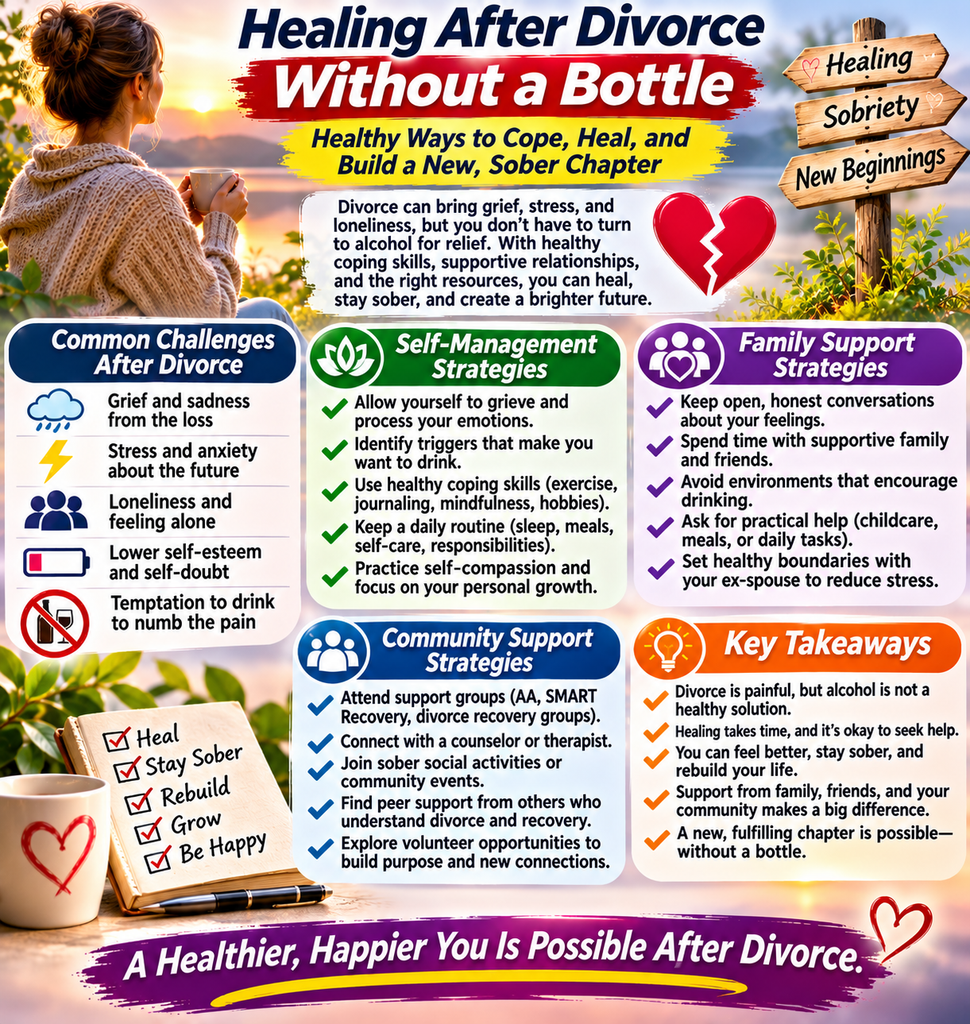
Healing after divorce without a bottle means learning to process emotional pain rather than numbing it. It involves rebuilding self-confidence, establishing healthy boundaries, developing emotional resilience, and creating a meaningful life beyond the marriage.
Through self-management strategies, family encouragement, professional counseling, and community support, individuals can navigate divorce while protecting their emotional health and sobriety.
The end of a marriage may close an important chapter, but it can also become an opportunity for personal growth, self-discovery, and lasting recovery.
Understanding the Emotional Impact of Divorce
Divorce is more than a legal separation. It often involves losing companionship, shared routines, financial stability, family traditions, and expectations for the future.
Even when divorce is necessary or mutually agreed upon, individuals may experience grief over the life they imagined.
Common Emotional Responses to Divorce
- Grief and sadness: Mourning the loss of a relationship and shared dreams.
- Anger and resentment: Feeling betrayed, rejected, or misunderstood.
- Loneliness: Adjusting to living alone or losing daily companionship.
- Anxiety: Worrying about finances, parenting responsibilities, or the future.
- Guilt and self-blame: Questioning personal decisions or perceived failures.
- Low self-esteem: Struggling with rejection or changes in personal identity.
- Emotional exhaustion: Feeling overwhelmed by legal, financial, and family responsibilities.
These reactions are common, but their intensity and duration vary.
Some individuals experience relief, renewed independence, or a mixture of positive and negative emotions.
Healing begins with acknowledging these feelings rather than suppressing them.
Why Alcohol Can Become a Coping Mechanism After Divorce
Alcohol temporarily affects brain systems involved in stress, reward, and emotional regulation.
For someone experiencing divorce-related distress, drinking may initially create feelings of relaxation or emotional numbness.
However, these effects are temporary.
As alcohol wears off, anxiety, sleep disturbances, and emotional discomfort may worsen.
Repeatedly using alcohol to escape difficult emotions can reinforce a cycle of drinking and distress.
Warning Signs of Alcohol-Related Coping
- Drinking alone to manage sadness or loneliness.
- Increasing alcohol consumption after separation.
- Using alcohol to fall asleep.
- Drinking before or after difficult conversations with a former spouse.
- Feeling unable to relax without alcohol.
- Neglecting work, parenting, or financial responsibilities.
- Experiencing guilt about drinking but continuing anyway.
- Hiding alcohol consumption from family or friends.
Not everyone who drinks after divorce develops alcohol use disorder. However, using alcohol as a primary coping strategy can increase the risk of problematic drinking.
Recognizing these patterns early can help prevent additional emotional and physical harm.
The Connection Between Divorce, Stress, and Addiction
Divorce can activate the body’s stress response, particularly when the separation involves conflict, financial uncertainty, or changes in parenting arrangements.
Chronic stress can influence sleep, concentration, emotional regulation, and decision-making.
For individuals with a history of alcohol use disorder, these changes may increase relapse vulnerability.
How Divorce-Related Stress Can Affect Recovery
- Increased anxiety may intensify alcohol cravings.
- Loneliness may encourage isolation and unhealthy coping behaviors.
- Sleep deprivation may reduce emotional resilience.
- Financial pressure may contribute to persistent worry.
- Relationship conflict may trigger anger or impulsive decisions.
- Changes in daily routines may disrupt recovery activities.
Individuals experiencing both divorce-related distress and alcohol problems may benefit from integrated treatment addressing emotional health and substance use together.
Self-Management Strategies: Healing Without Alcohol
Self-management involves developing practical skills to process emotions, manage stress, and make healthy decisions during difficult life transitions.
Allow Yourself to Grieve
Divorce often involves multiple losses, including companionship, shared goals, and a familiar sense of identity.
Trying to avoid grief through alcohol may delay emotional processing and create additional difficulties.
Healthy grieving strategies include:
- Acknowledging sadness without judging yourself.
- Writing about emotions and experiences.
- Allowing time for reflection.
- Speaking with trusted friends or counselors.
- Accepting that healing may involve emotional setbacks.
- Recognizing that grief does not follow a predictable timeline.
Healing does not require forgetting the relationship. It involves gradually learning how to live meaningfully after it ends.
Identify Emotional Drinking Triggers
Certain situations may increase the desire to drink.
Common divorce-related triggers include:
- Receiving upsetting messages from a former spouse.
- Spending evenings alone.
- Attending events previously enjoyed as a couple.
- Experiencing custody-related disagreements.
- Seeing a former partner begin another relationship.
- Facing financial uncertainty.
- Feeling rejected or questioning self-worth.
A trigger journal can help identify patterns between emotions, situations, and cravings.
Individuals can then develop healthier responses before these situations become overwhelming.
Replace Drinking With Healthy Coping Strategies
Alcohol may provide temporary emotional relief, but healthier coping strategies can support long-term well-being.
Practical alternatives include:
- Taking daily walks or exercising.
- Practicing mindfulness and meditation.
- Listening to calming music.
- Reading or engaging in creative hobbies.
- Spending time outdoors.
- Participating in volunteer activities.
- Maintaining contact with supportive friends.
- Attending counseling or recovery meetings.
The goal is not to eliminate difficult emotions but to develop the ability to experience them without relying on alcohol.
Establish a New Daily Routine
Divorce often disrupts familiar schedules and household responsibilities.
Creating a predictable routine can help restore stability.
Consider:
- Maintaining consistent sleep and wake times.
- Planning balanced meals.
- Scheduling regular physical activity.
- Setting aside time for emotional reflection.
- Continuing professional responsibilities.
- Establishing manageable financial goals.
- Scheduling social activities.
- Attending therapy or recovery meetings.
Small, consistent habits can help individuals regain confidence and a sense of control.
Practice Self-Compassion
Divorce can trigger harsh self-criticism.
Individuals may blame themselves for the marriage ending or believe they have failed personally.
Self-compassion involves recognizing that painful experiences do not determine personal worth.
Helpful practices include:
- Challenging negative self-talk.
- Recognizing personal strengths.
- Setting realistic expectations.
- Avoiding comparisons with others.
- Celebrating small accomplishments.
- Allowing time for emotional recovery.
Self-compassion does not mean avoiding accountability. It means learning from experiences without allowing shame to define the future.
Professional Treatment: When Divorce and Alcohol Problems Overlap
Some individuals may find that self-management strategies alone are insufficient.
Professional support is especially important when drinking increases, cravings become difficult to manage, or emotional distress interferes with daily functioning.
Evidence-Based Treatment Options
Cognitive Behavioral Therapy (CBT)
CBT helps individuals identify negative thought patterns and develop healthier coping behaviors.
For someone experiencing divorce, CBT may address beliefs such as “I will always be alone” or “I cannot handle this without drinking.”
Motivational Interviewing
Motivational interviewing helps individuals explore their reasons for changing alcohol-related behaviors and strengthen personal motivation for recovery.
Medication for Alcohol Use Disorder
Medications such as naltrexone and acamprosate may help appropriate individuals reduce alcohol consumption or maintain abstinence.
Medication selection should consider medical history, treatment goals, and potential contraindications.
Grief and Adjustment Counseling
Counseling can help individuals process relationship loss, manage uncertainty, and develop a healthier identity after divorce.
Integrated Mental Health Treatment
Individuals experiencing depression, anxiety, trauma-related symptoms, or alcohol use disorder may benefit from coordinated mental health and addiction treatment.
Important: People who drink heavily and regularly may experience dangerous withdrawal symptoms if they suddenly stop. Medical guidance is recommended before abrupt alcohol cessation when physical dependence is possible.
Family Support Strategies: Healing Relationships and Protecting Emotional Well-Being
Divorce can affect parents, children, siblings, and extended family members.
Family support can reduce isolation and help individuals maintain emotional stability during separation.
Encourage Open Communication
Supportive family members can provide opportunities for honest conversations without criticism or judgment.
Helpful approaches include:
- Listening without immediately offering solutions.
- Acknowledging feelings of sadness, anger, or uncertainty.
- Encouraging professional counseling when appropriate.
- Avoiding pressure to recover emotionally on a specific timeline.
- Respecting privacy and personal boundaries.
- Offering practical assistance with everyday responsibilities.
Avoid Encouraging Alcohol as Emotional Relief
Well-intentioned relatives may suggest drinking as a way to relax or forget about divorce-related problems.
However, encouraging alcohol use can be harmful when someone is vulnerable to problematic drinking.
Instead, families can suggest:
- Sharing a meal together.
- Going for a walk.
- Watching a movie.
- Participating in hobbies.
- Attending community activities.
- Practicing relaxation exercises.
- Spending time in supportive conversation.
Support Children During Divorce
Children may experience sadness, confusion, anxiety, or concerns about family stability.
Parents and caregivers can help by:
- Providing age-appropriate explanations.
- Reassuring children that the divorce is not their fault.
- Maintaining predictable routines.
- Avoiding negative discussions about the other parent in front of children.
- Encouraging emotional expression.
- Avoiding using children as messengers or emotional confidants.
- Seeking counseling when emotional difficulties persist.
Parents should avoid drinking while responsible for children’s safety or transportation.
Establish Healthy Boundaries With a Former Spouse
Maintaining appropriate boundaries can reduce emotional conflict and support recovery.
Examples include:
- Limiting communication to necessary topics when conflict is high.
- Using respectful, concise messages.
- Avoiding conversations while intoxicated.
- Establishing clear co-parenting expectations.
- Seeking mediation when appropriate and safe.
- Avoiding repeated arguments that intensify emotional distress.
When a relationship involves abuse or coercive control, safety planning and specialized professional support should take priority over mediation or direct negotiation.
Community Support Strategies: Building a New Life Beyond Divorce
Community support can help individuals reconnect socially, develop healthier routines, and reduce isolation.
Divorce may change friendship networks and social activities, making new connections especially valuable.
Join Peer Recovery Support Groups
Individuals concerned about alcohol use may benefit from mutual-support organizations.
Options include:
- Alcoholics Anonymous (AA): Peer support for individuals seeking recovery from alcohol problems.
- SMART Recovery: Evidence-informed tools for managing addictive behaviors.
- Recovery Dharma: Mindfulness-based peer recovery support.
- LifeRing Secular Recovery: A secular mutual-support approach.
- Women for Sobriety: Recovery support focused on women.
These groups can complement professional treatment.
Participate in Divorce Recovery Support Groups
Divorce recovery groups provide opportunities to connect with people experiencing similar emotional challenges.
Potential benefits include:
- Reduced loneliness.
- Shared coping strategies.
- Emotional validation.
- Improved confidence.
- Opportunities to establish new friendships.
- Greater understanding of the adjustment process.
Support groups may be available through community centers, counseling organizations, religious institutions, or online platforms.
Reconnect With Community Activities
Meaningful social activities can help individuals rebuild a sense of identity outside marriage.
Examples include:
- Volunteer organizations.
- Fitness classes.
- Art or music workshops.
- Book clubs.
- Recreational sports.
- Educational courses.
- Community gardening.
- Spiritual or faith-based activities.
Participation should reflect personal interests rather than pressure to socialize before feeling ready.
Managing Loneliness Without Alcohol
Loneliness is a common emotional challenge after divorce, particularly when someone is adjusting to living alone.
Alcohol may appear to provide temporary comfort, but drinking can worsen sleep quality, mood, and isolation.
Healthy Ways to Manage Loneliness
- Schedule regular contact with supportive friends.
- Join community groups based on shared interests.
- Establish enjoyable evening routines.
- Spend time outdoors.
- Consider volunteering.
- Practice mindfulness.
- Seek counseling when loneliness becomes persistent or overwhelming.
- Maintain meaningful connections with family members.
Learning to enjoy time alone can be an important part of emotional recovery.
However, independence does not require isolation.
Rebuilding Self-Esteem and Personal Identity After Divorce
Marriage often becomes part of an individual’s identity.
After divorce, people may struggle with questions about their future, personal worth, and ability to form healthy relationships.
Rebuilding self-esteem involves recognizing that identity extends beyond marital status.
Strategies for Rediscovering Yourself
- Identify personal values and interests.
- Reconnect with hobbies that were previously neglected.
- Set achievable personal goals.
- Develop new skills.
- Strengthen friendships.
- Establish financial independence when possible.
- Recognize personal accomplishments.
- Explore future goals without rushing major decisions.
Recovery becomes more meaningful when individuals begin building a life they value rather than focusing exclusively on what they have lost.
Dating After Divorce While Protecting Sobriety
Returning to dating can create both excitement and anxiety.
Individuals recovering from alcohol problems may encounter social environments where drinking is common.
Healthy dating strategies include:
- Choosing alcohol-free activities.
- Communicating personal boundaries.
- Avoiding pressure to drink.
- Recognizing emotional vulnerability.
- Maintaining recovery routines.
- Moving at a comfortable pace.
- Seeking support when relationship stress increases cravings.
Dating should not become a substitute for processing unresolved grief or rebuilding personal confidence.
What to Do When Divorce Triggers Alcohol Cravings
Divorce-related stress can produce intense cravings, particularly for individuals with a history of alcohol use disorder.
A structured response can help prevent impulsive drinking.
A Five-Step Craving Response Plan
- Recognize the trigger. Identify the emotion or event contributing to the urge to drink.
- Pause and regulate. Practice slow breathing, grounding, or mindfulness.
- Change the environment. Move away from alcohol or stressful situations when possible.
- Reach out for support. Contact a counselor, trusted friend, or recovery peer.
- Choose a healthy action. Take a walk, attend a meeting, journal, or participate in another meaningful activity.
If cravings persist or alcohol use resumes, individuals should seek professional support and reassess their recovery plan.
Important Lessons About Healing After Divorce Without Alcohol
Divorce can create emotional pain, but alcohol is not necessary for healing.
Important lessons include:
- Grief is a natural response to relationship loss. Emotional pain does not mean personal failure.
- Alcohol can delay healthy coping. Drinking may temporarily numb feelings while creating additional problems.
- Self-management strengthens resilience. Healthy routines and coping strategies support emotional stability.
- Family support matters. Compassionate communication and boundaries can reduce isolation.
- Community connections encourage growth. Support groups and social activities provide opportunities for meaningful relationships.
- Professional treatment can help. Counseling and addiction treatment are valuable when emotional distress or drinking becomes difficult to manage.
- Healing takes time. Recovery does not follow a fixed schedule.
- A meaningful future remains possible. Divorce can become a turning point for personal growth and renewed independence.
Resources for Divorce-Related Emotional Distress and Alcohol Recovery
SAMHSA National Helpline
1-800-662-HELP (4357)
Free, confidential treatment information and referrals, available 24/7.SAMHSA resources
FindTreatment.gov
Locate mental health and substance use treatment services. Find treatment providers
Alcoholics Anonymous
Peer support for individuals seeking recovery from alcohol problems. Find AA meetings
SMART Recovery
Mutual-support meetings focused on practical coping and recovery skills. Explore SMART Recovery
988 Suicide & Crisis Lifeline
Call or text 988 for immediate emotional support during a mental health crisis.988 crisis support
Conclusion: Healing After Divorce Begins With Choosing Yourself
Divorce can be one of life’s most painful experiences, but it does not have to lead to unhealthy drinking or addiction.
Healing after divorce without a bottle means acknowledging emotional pain, developing healthier coping strategies, and creating a future that is not defined by the end of a marriage.
Self-management strategies such as journaling, exercise, mindfulness, and maintaining daily routines can help individuals manage grief and stress.
Family support can provide emotional encouragement, practical assistance, and a sense of stability.
Community resources, including counseling services, divorce recovery groups, and addiction support programs, can help individuals rebuild meaningful relationships and maintain sobriety.
Most importantly, healing requires patience, self-compassion, and the willingness to seek help when needed.
The end of a marriage does not mean the end of happiness, personal growth, or meaningful relationships.
You do not need alcohol to escape the pain of divorce. With time, support, and healthy coping skills, you can move through that pain and create a fulfilling new chapter.
Your next chapter deserves clarity, healing, and hope—not another bottle.
Frequently Asked Questions and Answers
Understanding Divorce, Emotional Pain, and Alcohol Use
1. Why is divorce emotionally difficult for many people?
Divorce often involves losing companionship, familiar routines, shared financial responsibilities, and expectations about the future.
Individuals may experience grief, sadness, anger, guilt, anxiety, or loneliness. Even when divorce is mutually agreed upon, the transition can be emotionally challenging.
These feelings are normal responses to major life changes, although persistent or severe symptoms may require professional support.
2. Why do some people turn to alcohol after divorce?
Alcohol may temporarily reduce feelings of emotional discomfort, making it seem like an effective way to cope with sadness, rejection, or loneliness.
However, drinking does not resolve the underlying causes of emotional pain.
Repeatedly using alcohol to manage distress can reinforce unhealthy coping patterns and increase the risk of problematic drinking.
3. Can divorce increase the risk of alcohol addiction?
Divorce-related stress may contribute to increased alcohol consumption in some individuals, particularly those with existing risk factors.
Potential contributors include:
- Chronic stress and anxiety.
- Loneliness and social isolation.
- Financial uncertainty.
- Depression or unresolved trauma.
- Previous alcohol-related problems.
- Family history of substance use disorders.
- Reduced access to supportive relationships.
Divorce does not automatically cause addiction, but it may create circumstances that increase vulnerability.
4. What are warning signs of unhealthy drinking after divorce?
Warning signs may include:
- Drinking alone to cope with sadness.
- Increasing alcohol consumption.
- Using alcohol to fall asleep.
- Hiding drinking from family or friends.
- Missing work or parenting responsibilities.
- Feeling unable to relax without alcohol.
- Experiencing cravings or difficulty limiting drinking.
- Continuing to drink despite negative consequences.
Recognizing these patterns early can help individuals seek appropriate support.
5. Can alcohol make divorce-related depression or anxiety worse?
Yes. Although alcohol may initially create feelings of relaxation, it can disrupt sleep, impair emotional regulation, and worsen anxiety or depressive symptoms.
Heavy drinking may also increase impulsivity and contribute to interpersonal conflict.
Individuals experiencing persistent depression, anxiety, or problematic alcohol use should consider professional evaluation.
Self-Management Strategies for Healing Without Alcohol
6. How can someone cope with divorce without drinking alcohol?
Healthy coping strategies can help individuals process emotions while maintaining physical and psychological well-being.
Helpful approaches include:
- Journaling about feelings.
- Practicing mindfulness and meditation.
- Exercising regularly.
- Maintaining consistent sleep routines.
- Spending time outdoors.
- Reconnecting with supportive friends.
- Participating in meaningful hobbies.
- Seeking professional counseling.
The goal is to develop sustainable ways to manage emotional pain rather than temporarily escape it.
7. Why is grieving important after divorce?
Divorce often involves mourning the loss of a relationship, shared dreams, and a familiar way of life.
Allowing yourself to experience grief can support emotional adjustment and help you understand what the relationship meant to you.
Avoiding painful emotions through alcohol may interfere with developing healthier coping skills.
Grief does not follow a predictable timeline, and individuals may experience both sadness and relief during recovery.
8. How can someone manage loneliness after divorce without alcohol?
Loneliness can be managed by gradually rebuilding meaningful social connections and developing enjoyable independent routines.
Strategies include:
- Scheduling regular contact with friends.
- Joining hobby or recreational groups.
- Volunteering.
- Attending community events.
- Participating in counseling or support groups.
- Developing new interests.
- Creating relaxing evening routines.
Learning to enjoy personal independence can strengthen confidence, but maintaining supportive relationships remains important.
9. What are healthy alternatives to drinking when feeling overwhelmed?
Healthy alternatives include taking a walk, practicing deep breathing, calling a trusted friend, listening to music, exercising, or engaging in a creative activity.
Some individuals benefit from grounding techniques, such as identifying five things they can see, four they can feel, three they can hear, two they can smell, and one they can taste.
These strategies can reduce immediate emotional intensity and create time to make healthier decisions.
10. How can someone rebuild self-esteem after divorce?
Divorce may lead individuals to question their personal worth, attractiveness, or ability to maintain relationships.
Rebuilding self-esteem involves recognizing that marital status does not determine individual value.
Helpful strategies include:
- Identifying personal strengths.
- Challenging negative self-talk.
- Setting achievable goals.
- Reconnecting with neglected interests.
- Celebrating personal accomplishments.
- Practicing self-compassion.
- Developing financial and emotional independence.
Counseling may help individuals address persistent feelings of shame or rejection.
11. Why are daily routines important during divorce recovery?
Divorce can disrupt sleep schedules, household responsibilities, social activities, and emotional stability.
A consistent daily routine can provide structure during an uncertain period.
Regular meals, adequate sleep, exercise, scheduled social contact, and counseling appointments can support emotional regulation and reduce opportunities for unhealthy coping behaviors.
12. How can someone manage alcohol cravings triggered by divorce-related stress?
Cravings may occur after difficult conversations, custody disagreements, loneliness, or upsetting memories.
Helpful strategies include:
- Identifying the emotional trigger.
- Practicing urge surfing or mindfulness.
- Moving away from alcohol-related environments.
- Contacting a recovery support person.
- Participating in physical activity.
- Attending a recovery meeting.
- Using a written relapse prevention plan.
Persistent cravings may require additional professional treatment.
Family Support and Healthy Relationships
13. How can family members support someone healing from divorce without alcohol?
Family members can provide encouragement, emotional understanding, and practical assistance.
Supportive behaviors include:
- Listening without judgment.
- Avoiding criticism or blame.
- Encouraging healthy coping activities.
- Respecting personal boundaries.
- Offering help with childcare or daily responsibilities.
- Avoiding suggestions that alcohol will relieve emotional pain.
- Encouraging professional treatment when appropriate.
Families should recognize that emotional healing takes time.
14. What should family members avoid saying to someone experiencing divorce?
Comments that minimize emotional pain or encourage unhealthy coping can be harmful.
Examples include:
- “Just get over it.”
- “You should be happy you’re single.”
- “Have a few drinks and forget about it.”
- “You should already be dating again.”
- “The divorce was entirely your fault.”
- “You need to stop feeling sorry for yourself.”
More helpful responses acknowledge the individual’s emotions and offer support without imposing expectations.
15. How can divorced parents protect their children’s emotional well-being?
Children may experience confusion, sadness, anxiety, or concerns about changes in family relationships.
Parents can help by:
- Providing age-appropriate explanations.
- Reassuring children that the divorce is not their fault.
- Maintaining predictable routines.
- Avoiding arguments in front of children.
- Supporting healthy relationships with safe caregivers.
- Encouraging children to express feelings.
- Seeking counseling when emotional difficulties persist.
Children should not be expected to manage their parents’ emotional distress or substance use.
16. How can someone establish healthy boundaries with a former spouse?
Healthy boundaries can reduce conflict and support emotional recovery.
Examples include:
- Communicating respectfully.
- Limiting unnecessary contact when conflict is high.
- Establishing clear co-parenting expectations.
- Avoiding arguments while emotionally overwhelmed.
- Not using alcohol before difficult conversations.
- Seeking professional mediation when appropriate and safe.
When abuse or coercive control is present, specialized safety planning may be more appropriate than mediation.
17. Can family counseling help after divorce?
Yes. Family counseling may help individuals improve communication, manage conflict, and support children through family transitions.
Counseling can also address unhealthy relationship patterns and substance-related concerns.
Family therapy may be particularly beneficial when divorce involves significant parenting disagreements or emotional distress.
Community Support and Professional Treatment
18. How can divorce recovery support groups help?
Divorce recovery groups provide opportunities to connect with individuals experiencing similar life transitions.
Potential benefits include:
- Reduced loneliness.
- Emotional validation.
- Shared coping strategies.
- Increased confidence.
- Improved social connections.
- Greater understanding of grief and adjustment.
Support groups may be available through counseling organizations, community centers, religious institutions, and online platforms.
19. What addiction recovery programs can help someone struggling with alcohol after divorce?
Several organizations provide peer support for individuals experiencing alcohol-related difficulties.
Options include:
- Alcoholics Anonymous (AA): Peer support for alcohol recovery.
- SMART Recovery: Practical coping strategies and self-management tools.
- Recovery Dharma: Mindfulness-based recovery support.
- LifeRing Secular Recovery: Peer support emphasizing personal recovery planning.
- Women for Sobriety: Recovery support designed for women.
Individuals can choose programs that align with their beliefs, preferences, and recovery goals.
20. When should someone seek professional counseling after divorce?
Professional counseling may be beneficial when emotional distress interferes with daily functioning or relationships.
Reasons to seek support include:
- Persistent sadness or anxiety.
- Difficulty sleeping or concentrating.
- Increased alcohol consumption.
- Social withdrawal.
- Repeated conflict with a former spouse.
- Difficulty managing parenting responsibilities.
- Persistent feelings of hopelessness.
- Difficulty adjusting to independent living.
Counseling can help individuals process grief, develop coping skills, and address alcohol-related concerns.
21. What treatments are available for alcohol use disorder after divorce?
Evidence-based treatments may include:
- Cognitive behavioral therapy (CBT): Helps change thoughts and behaviors contributing to drinking.
- Motivational interviewing: Strengthens motivation for healthier decisions.
- Medication treatment: Naltrexone and acamprosate may help appropriate individuals reduce drinking or maintain abstinence.
- Relapse prevention counseling: Helps identify triggers and develop coping plans.
- Integrated mental health treatment: Addresses alcohol problems alongside depression, anxiety, or trauma-related symptoms.
Treatment should be individualized according to medical history, alcohol consumption patterns, and personal recovery goals.
People with significant alcohol dependence should seek medical guidance before stopping abruptly because withdrawal can be life-threatening.
Rebuilding Life and Preventing Relapse
22. How can someone prevent alcohol relapse during a difficult divorce?
Relapse prevention involves identifying triggers, maintaining supportive relationships, and developing practical coping strategies.
Helpful approaches include:
- Attending recovery meetings.
- Maintaining counseling appointments.
- Avoiding high-risk drinking environments.
- Creating a written relapse prevention plan.
- Developing healthy sleep and exercise routines.
- Seeking help during emotional crises.
- Establishing boundaries with a former spouse.
- Recognizing early warning signs of increased cravings.
A return to drinking should prompt timely reassessment and support rather than shame.
23. Is it healthy to start dating immediately after divorce?
There is no universal timeline for beginning another relationship.
Some individuals feel ready relatively quickly, while others benefit from additional time to process grief and rebuild confidence.
For individuals recovering from alcohol problems, dating may introduce emotional stress or drinking-related social expectations.
Healthy dating involves emotional readiness, clear boundaries, honest communication, and continued attention to recovery.
24. How long does emotional healing after divorce take?
There is no fixed timeline for recovering emotionally from divorce.
Healing depends on factors such as relationship history, available support, financial stability, parenting responsibilities, mental health, and individual coping skills.
Some people improve within months, while others need longer to adjust.
Progress may involve setbacks, and emotional recovery does not need to follow a predictable schedule.
25. What is the most important lesson about healing after divorce without a bottle?
The most important lesson is that emotional pain can be processed without relying on alcohol.
Divorce may create grief, loneliness, and uncertainty, but individuals can develop healthier coping strategies and rebuild meaningful lives.
Self-management strengthens emotional resilience, family support provides encouragement, and community resources offer opportunities for connection and professional assistance.
Healing is not about forgetting the past. It is about developing the skills, relationships, and confidence needed to create a healthier future.
Resources for Divorce Recovery and Alcohol Support
SAMHSA National Helpline
1-800-662-HELP (4357)
Free, confidential treatment referrals and information, available 24/7.SAMHSA National Helpline
FindTreatment.gov
Locate mental health and substance use treatment providers. Find treatment services
Alcoholics Anonymous
Peer support meetings for individuals seeking recovery from alcohol problems. Find AA meetings
SMART Recovery
Mutual-support meetings emphasizing practical recovery and coping skills. Explore SMART Recovery
988 Suicide & Crisis Lifeline
Call or text 988 for immediate emotional support during a mental health crisis.988 crisis support
Video: