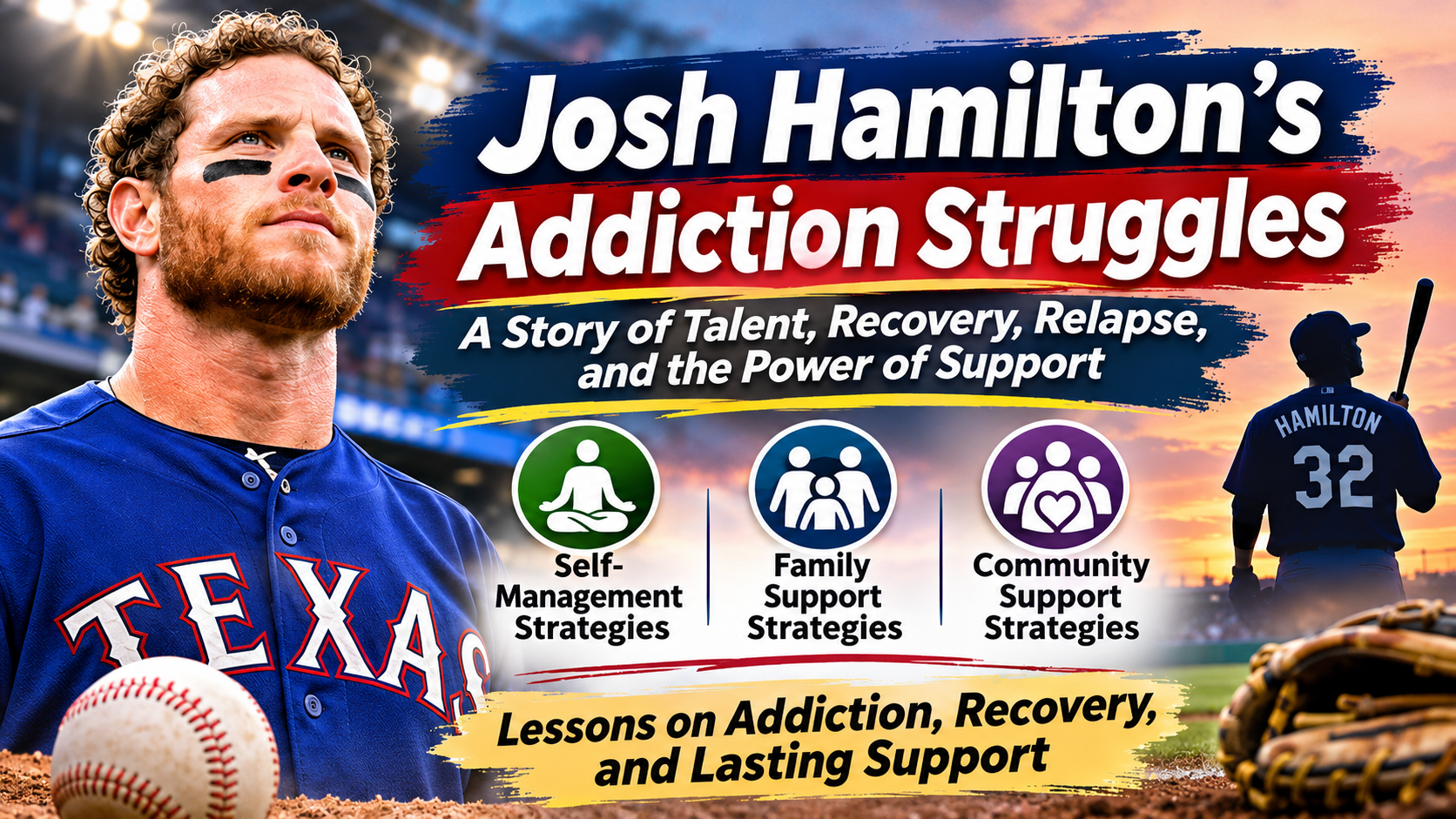
Can someone achieve extraordinary professional success while continuing to struggle with addiction?
The story of Josh Hamilton demonstrates how substance use disorders can affect individuals regardless of their talent, accomplishments, financial security, or public recognition.
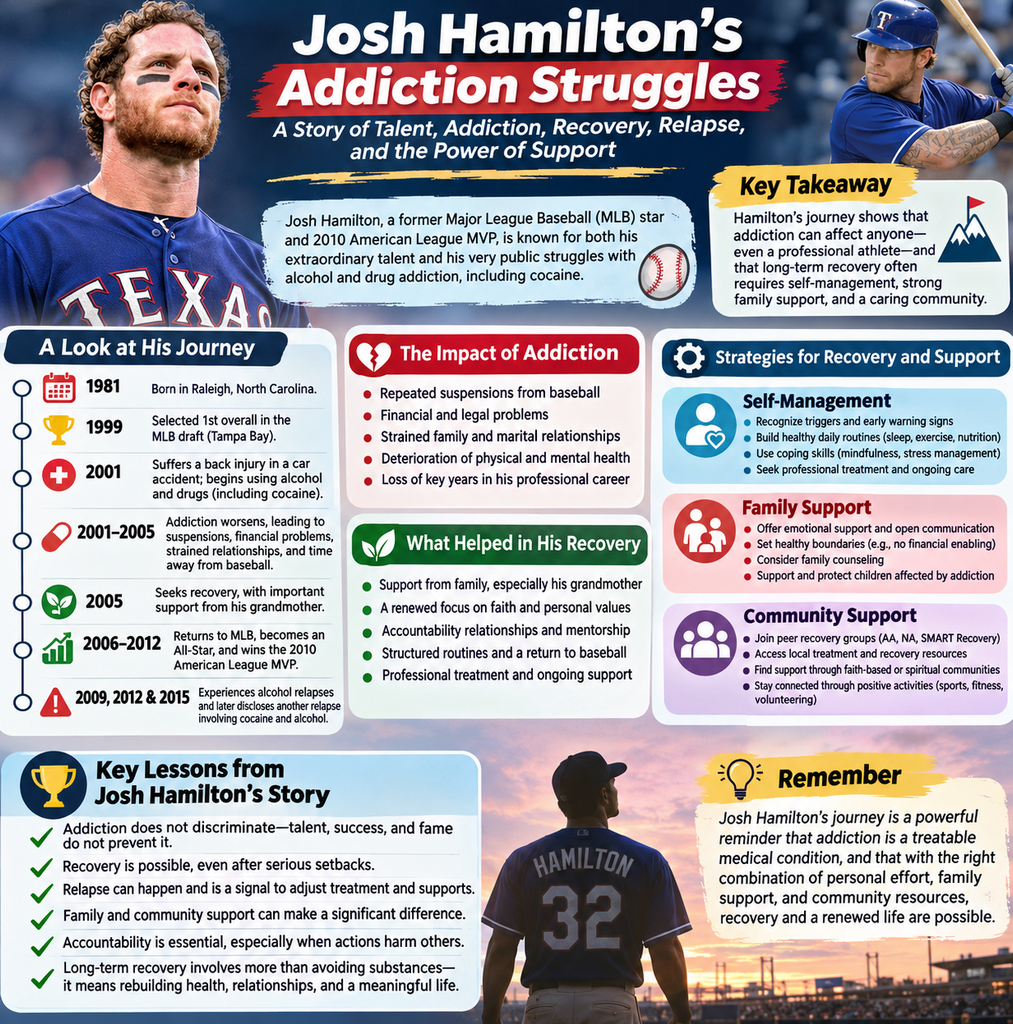
Hamilton, a former Major League Baseball (MLB) star, became widely recognized for his remarkable athletic abilities and his struggles with alcohol and drug addiction. His journey includes periods of recovery, professional triumph, relapse, and personal challenges.
Once considered one of baseball’s most promising young players, Hamilton experienced addiction-related setbacks that interrupted his career and affected his relationships. Despite these difficulties, he returned to professional baseball, became an American League Most Valuable Player (MVP), and inspired conversations about addiction and recovery.
However, his story also illustrates an important reality: Professional success does not eliminate addiction, and recovery often requires ongoing treatment, accountability, and emotional support.
Understanding Hamilton’s experiences offers valuable lessons about addiction as a chronic, treatable medical condition and the importance of self-management, family involvement, and community resources.
Josh Hamilton’s Early Life and the Beginning of Addiction
Josh Hamilton was born on May 21, 1981, in Raleigh, North Carolina. His exceptional baseball abilities became apparent during adolescence, earning him national recognition as one of the country’s most promising young athletes.
In 1999, the Tampa Bay Devil Rays selected Hamilton as the first overall pick in the MLB draft. His future appeared exceptionally bright.
However, his career took a dramatic turn in 2001 following a motor vehicle accident that resulted in a back injury. During his recovery, Hamilton experienced greater isolation from his family and increased exposure to social environments involving alcohol and drugs.
He began experimenting with alcohol and cocaine, eventually developing serious problems involving cocaine, crack cocaine, and alcohol.
His addiction contributed to:
- Repeated suspensions from professional baseball.
- Financial instability despite receiving a substantial signing bonus.
- Strained family relationships and marital difficulties.
- Deteriorating physical and psychological health.
- Repeated attempts at rehabilitation followed by substance use recurrence.
- Loss of professional opportunities during critical years of his athletic development.
Hamilton was effectively absent from professional baseball for several years because of substance-related problems. His experiences illustrate how addiction can progressively disrupt multiple areas of life. Los Angeles Times+1
The Turning Point: Seeking Recovery and Rebuilding His Life
By 2005, Hamilton’s addiction had seriously affected his health, relationships, and career.
A significant turning point occurred when he sought refuge at his grandmother Mary Holt’s home in North Carolina.
His grandmother offered emotional support while establishing firm boundaries concerning continued drug use. Hamilton later described this period as an important influence in his decision to pursue recovery.
His recovery efforts included reconnecting with supportive people, strengthening his spiritual beliefs, establishing routines, and returning to baseball training.
In 2006, Major League Baseball reinstated Hamilton, allowing him to resume his professional career.
His comeback eventually led to remarkable accomplishments:
- 2007: Made his MLB debut with the Cincinnati Reds.
- 2008: Became an All-Star with the Texas Rangers.
- 2010: Won the American League MVP award.
- 2010–2011: Helped the Texas Rangers reach consecutive World Series.
- 2008–2012: Earned five consecutive All-Star selections.
These achievements demonstrated that individuals experiencing addiction can regain important aspects of their lives and careers.
However, his recovery journey was not without setbacks. Los Angeles Times+1
Understanding Hamilton’s Relapses
Despite his accomplishments, Hamilton experienced publicly documented alcohol relapses in 2009 and 2012. In 2015, he disclosed another relapse involving cocaine and alcohol.
His experiences demonstrate that addiction recovery does not always follow a predictable or uninterrupted path.
Relapse can occur even after years of progress, particularly when individuals encounter emotional distress, environmental triggers, changes in routines, or reduced access to supportive relationships.
Important lessons from Hamilton’s experiences include:
- Recovery requires ongoing attention, even during periods of personal success.
- Addiction can affect people who appear physically healthy and professionally accomplished.
- Stress, isolation, and exposure to substances can increase relapse vulnerability.
- Accountability and supportive relationships can strengthen recovery efforts.
- A relapse should prompt reassessment and treatment adjustments rather than shame or abandonment.
A return to substance use does not erase previous recovery achievements. However, it may create serious medical and personal risks that require prompt intervention.
Hamilton’s public experiences highlight the importance of sustained treatment and relapse prevention, not relying solely on determination or willpower. MLB.com+1
Self-Management Strategies for Addiction Recovery
Self-management involves developing practical skills to recognize cravings, manage emotional challenges, maintain healthy routines, and seek help before problems escalate.
Although Hamilton publicly described using faith, accountability partners, and structured activities, the following are broader evidence-informed recovery strategies rather than a description of his complete personal treatment plan.
Recognizing Triggers and Warning Signs
Triggers are internal or external experiences that increase the desire to use alcohol or drugs.
Common triggers include emotional distress, boredom, social isolation, conflict, exposure to substances, and environments associated with previous drug use.
Practical strategies:
- Keep a journal to track cravings, emotions, and triggering situations.
- Recognize early warning signs, including secrecy, withdrawing from supportive relationships, and increased substance-related thoughts.
- Develop alternative responses to stress, including exercise, meditation, and relaxation techniques.
- Avoid high-risk environments when possible.
- Contact a counselor, sponsor, or trusted support person when cravings intensify.
Establishing Healthy Daily Routines
Structured routines can reduce unplanned exposure to triggers and strengthen emotional stability.
For athletes and other individuals with demanding careers, injuries, retirement, and major lifestyle changes can disrupt established routines.
Helpful habits include:
- Maintaining consistent sleep and wake times.
- Participating in regular physical activity.
- Eating balanced meals and staying hydrated.
- Scheduling counseling appointments and recovery meetings.
- Practicing mindfulness or relaxation exercises.
- Setting realistic personal and professional goals.
Seeking Professional Addiction Treatment
Addiction treatment should be individualized according to the substances involved, the severity of the disorder, co-occurring mental health conditions, and the person’s recovery goals.
Evidence-based interventions may include:
- Cognitive behavioral therapy (CBT): Helps identify and modify thoughts and behaviors associated with substance use.
- Motivational interviewing: Supports individuals in exploring personal reasons for change.
- Contingency management: Uses structured positive reinforcement to encourage treatment engagement and substance-free behaviors, particularly for stimulant use disorders.
- Medication treatment for alcohol use disorder: Naltrexone and acamprosate are options for appropriate patients.
- Relapse prevention counseling: Develops coping strategies and action plans for high-risk situations.
- Integrated mental health care: Addresses anxiety, depression, trauma, or other co-occurring conditions.
There is currently no FDA-approved medication specifically for cocaine use disorder, although behavioral interventions can be effective.
Individuals with alcohol dependence may require medically supervised withdrawal because abrupt cessation can produce dangerous complications.
Developing a Personalized Relapse Prevention Plan
A written plan can help individuals respond quickly when cravings or emotional difficulties emerge.
An effective plan should identify:
- Personal triggers and early warning signs.
- Coping techniques for immediate cravings.
- Trusted individuals who can provide assistance.
- Professional treatment contacts.
- Steps for returning to care after substance use.
- Emergency resources when safety becomes a concern.
Key message: Recovery becomes more sustainable when individuals combine personal responsibility with appropriate treatment and reliable support systems.
Family Support Strategies: Helping Without Enabling Addiction
Family relationships can significantly influence addiction recovery.
Hamilton’s experiences illustrate how substance use disorders may affect spouses, children, parents, and extended family members.
His grandmother’s willingness to provide support while maintaining boundaries is one example of how families can balance compassion with accountability.
Providing Emotional Support
Family members can encourage recovery by creating an environment where individuals feel comfortable discussing their struggles.
Helpful approaches include:
- Listening without immediately criticizing or assigning blame.
- Encouraging honest conversations about cravings and emotional distress.
- Recognizing progress without expecting perfection.
- Supporting professional treatment and counseling.
- Avoiding stigmatizing language that portrays addiction as a character defect.
Establishing Healthy Boundaries
Compassion does not require accepting harmful behavior.
Families should establish boundaries that protect their emotional, physical, and financial well-being.
Examples include:
- Refusing to provide money that may support substance use.
- Declining to conceal harmful behaviors or their consequences.
- Establishing clear expectations regarding safety and respectful communication.
- Protecting children from unsafe situations.
- Seeking professional guidance when substance use creates repeated family conflict.
Boundaries should be realistic, consistent, and focused on safety rather than punishment.
Participating in Family Counseling
Family therapy can help address damaged trust, communication difficulties, and emotional distress.
Potential benefits include improved communication, stronger problem-solving skills, reduced conflict, and greater understanding of addiction.
Family members may also benefit from independent counseling, even when the person experiencing addiction declines treatment.
Supporting Children Affected by Addiction
Children living in families affected by substance use disorders may experience uncertainty, anxiety, guilt, and difficulty understanding changes in adult behavior.
Caregivers can help by:
- Providing age-appropriate explanations about addiction.
- Reassuring children that they did not cause the substance use.
- Maintaining consistent routines and stable caregiving.
- Encouraging children to express their feelings.
- Seeking pediatric mental health support when necessary.
Family support should never require someone to remain in an abusive or unsafe relationship.
Community Support Strategies: Building a Recovery Network
Community resources play an important role in helping individuals maintain recovery and rebuild meaningful lives.
Hamilton’s publicly documented recovery efforts included faith-based support, mentoring, and accountability relationships. These experiences highlight the potential value of supportive communities.
Peer Recovery Support Groups
Peer support groups provide opportunities to connect with others who understand addiction and recovery challenges.
Examples include:
- Alcoholics Anonymous (AA): A mutual-support fellowship for individuals seeking recovery from alcohol problems.
- Narcotics Anonymous (NA): Peer support for individuals recovering from drug addiction.
- SMART Recovery: A secular program emphasizing evidence-informed coping and self-management skills.
- Recovery Dharma: A peer-led approach incorporating Buddhist-inspired mindfulness practices.
- Celebrate Recovery: A Christian-oriented recovery support program.
Different programs work for different individuals. Peer support can complement, but should not automatically replace, professional treatment.
Community-Based Treatment Services
Local addiction treatment organizations may provide outpatient counseling, intensive outpatient programs, residential treatment, medication management, and recovery case management.
Community organizations can also address practical barriers such as transportation, employment, housing, and access to affordable healthcare.
Faith-Based and Spiritual Support
Hamilton has publicly discussed the importance of his Christian faith during recovery.
For individuals who value spirituality, faith communities may provide emotional encouragement, mentorship, purpose, and meaningful social connections.
However, spiritual practices should be viewed as optional supports rather than substitutes for evidence-based addiction treatment.
Sports and Recreational Recovery Programs
Structured physical activities can help individuals develop healthier routines and reconnect with supportive social networks.
Examples include recreational sports leagues, fitness programs, outdoor activities, volunteering, and mentorship programs.
These activities may improve mood, reduce isolation, and create opportunities for personal growth.
Community recovery efforts are strongest when individuals can access several forms of support suited to their circumstances.
Challenges and Barriers to Long-Term Recovery
Hamilton’s experiences also highlight several challenges that may complicate recovery.
Public Pressure and Stigma
As a professional athlete, Hamilton experienced intense public attention surrounding his substance use and relapses.
Public criticism can increase feelings of shame, anxiety, and isolation, potentially discouraging individuals from seeking assistance.
Reducing stigma requires recognizing that substance use disorders are medical conditions influenced by biological, psychological, and environmental factors.
Injuries and Career Transitions
Athletic injuries and changes in professional identity can create emotional challenges.
For individuals accustomed to structured training and competition, losing access to familiar routines may increase stress and vulnerability.
Mental health support, meaningful activities, and a sense of purpose outside professional achievement can be particularly valuable during these transitions.
Relationship and Legal Consequences
Hamilton’s life also included serious legal and family difficulties beyond his substance use history. In 2022, he pleaded guilty to unlawful restraint arising from a 2019 incident involving his daughter.
This part of his history is important because addiction does not excuse abusive behavior or eliminate personal accountability. Recovery support and compassion must coexist with appropriate consequences, protection of affected family members, and attention to their emotional well-being.
The Challenge of Maintaining Recovery
Addiction recovery may involve changes in social relationships, lifestyle, emotional regulation, and personal identity.
Some individuals require continuing treatment and support over many years.
The objective is not simply avoiding substances but developing a healthier, safer, and more fulfilling life.
Important Lessons From Josh Hamilton’s Journey
Hamilton’s experiences provide several broader lessons about addiction, recovery, and personal accountability.
- Addiction does not discriminate. Professional achievement, financial success, and athletic ability do not prevent substance use disorders.
- Recovery is possible. Individuals can rebuild important aspects of their lives after experiencing serious addiction-related consequences.
- Relapse is a warning sign, not proof of failure. Recurrence of substance use indicates a need to reassess risks, supports, and treatment.
- Family support matters. Compassionate communication, healthy boundaries, and professional guidance can help families navigate addiction.
- Community connections strengthen recovery. Peer groups, mentors, counselors, and recovery organizations can reduce isolation.
- Accountability remains essential. Addiction treatment does not replace responsibility for actions that harm others.
- Recovery is more than sobriety. Long-term well-being involves physical health, emotional stability, healthy relationships, and meaningful personal goals.
9. Resources for Individuals and Families
People experiencing addiction do not have to navigate recovery alone.
SAMHSA National Helpline
1-800-662-HELP (4357)
Free, confidential treatment referrals and information, available 24/7 in English and Spanish.SAMHSA resources
FindTreatment.gov
A confidential resource for locating substance use and mental health treatment services across the United States. Find treatment services
SMART Recovery
Offers free mutual-support meetings and practical tools for managing addictive behaviors. Explore SMART Recovery
988 Suicide & Crisis Lifeline
Call or text 988 for immediate emotional support during a mental health or substance-related crisis.988 crisis support
Conclusion: Understanding Addiction Beyond Athletic Success
Josh Hamilton’s story is a complicated account of extraordinary athletic achievement, substance use disorders, recovery efforts, relapse, and serious personal consequences.
His return to Major League Baseball after years of addiction-related setbacks demonstrated the possibility of rebuilding a career. However, his subsequent struggles also revealed that professional success and public recognition cannot guarantee sustained recovery.
His experiences reinforce the importance of evidence-based treatment, emotional self-management, supportive family relationships, community resources, and personal accountability.
For individuals experiencing addiction, recovery may involve repeated efforts, treatment adjustments, and difficult decisions. For families, supporting recovery means offering encouragement while maintaining boundaries and protecting everyone affected.
Ultimately, Hamilton’s journey reminds us that recovery requires more than overcoming substance use. It involves rebuilding health, restoring stability, accepting responsibility, and creating a meaningful life beyond addiction.
Understanding addiction can save lives, and access to compassionate, effective treatment can make recovery possible.
Frequently Asked Questions and Answers
Understanding Josh Hamilton’s Addiction Journey
1. Who is Josh Hamilton, and why is his addiction story significant?
Josh Hamilton is a former Major League Baseball player who became one of the sport’s most celebrated athletes despite experiencing serious struggles with alcohol and drug addiction.
Hamilton was selected first overall in the 1999 MLB draft and later won the 2010 American League Most Valuable Player award with the Texas Rangers.
His experiences demonstrate that addiction can affect anyone, regardless of talent, financial success, professional achievement, or public recognition.
2. What substances did Josh Hamilton struggle with?
Hamilton publicly acknowledged problems involving alcohol, cocaine, and crack cocaine. His substance use contributed to professional suspensions, interrupted career development, damaged relationships, and repeated attempts to achieve sustained recovery.
His experiences illustrate how substance use disorders can affect physical health, emotional well-being, and everyday functioning.
3. When did Josh Hamilton’s addiction problems begin?
Hamilton’s substance-related difficulties emerged in the early 2000s, after he was selected by the Tampa Bay Devil Rays.
Following a 2001 automobile accident and subsequent injury, his lifestyle and social environment changed. He began using alcohol and drugs, and his substance use escalated.
Although these events preceded his addiction, no single injury or experience can fully explain why someone develops a substance use disorder.
4. How did addiction affect Josh Hamilton’s baseball career?
Hamilton’s addiction contributed to repeated disciplinary suspensions and several years away from professional baseball.
His struggles affected his physical conditioning, financial stability, personal relationships, and opportunities to advance his career.
After pursuing recovery, Hamilton returned to professional baseball and made his MLB debut with the Cincinnati Reds in 2007.
5. How did Josh Hamilton overcome his addiction?
Hamilton described receiving significant support from his grandmother, strengthening his Christian faith, and developing accountability relationships.
These influences helped him pursue recovery and return to baseball.
However, his later relapses demonstrate that recovery was not a single completed event. Addiction often requires ongoing attention, treatment, and relapse prevention.
6. Did Josh Hamilton experience relapses after becoming sober?
Yes. Hamilton experienced publicly documented alcohol relapses in 2009 and 2012. In 2015, he disclosed another relapse involving alcohol and cocaine.
These episodes demonstrate that individuals may experience substance use recurrence even after achieving substantial personal and professional success.
A relapse does not mean recovery is impossible, but it signals the importance of reassessing treatment needs, triggers, and support systems.
Self-Management and Relapse Prevention
7. What were the major triggers associated with Hamilton’s addiction?
Hamilton described isolation, disrupted routines, and withdrawing from his support network as factors that increased his vulnerability to substance use.
Other common addiction triggers include:
- Emotional stress, anxiety, and depression.
- Exposure to alcohol or drugs.
- Relationship difficulties and interpersonal conflict.
- Physical injuries and changes in daily activities.
- Social isolation and lack of accountability.
- Overconfidence about managing substance use without support.
Recognizing personal triggers allows individuals to develop healthier coping strategies before cravings become overwhelming. Los Angeles Times+1
8. What self-management strategies can individuals learn from Hamilton’s experiences?
Several evidence-informed strategies can help people manage addiction and reduce relapse risk:
- Identify triggers: Recognize situations, emotions, and environments associated with cravings.
- Establish routines: Maintain regular sleep, exercise, nutrition, and meaningful activities.
- Practice stress management: Use mindfulness, relaxation exercises, and healthy coping techniques.
- Seek professional treatment: Participate in counseling and appropriate addiction treatment programs.
- Develop accountability: Maintain regular communication with trusted support people.
- Create a relapse prevention plan: Identify warning signs and specific actions to take when cravings increase.
These are general recovery recommendations, not a verified list of Hamilton’s personal treatment methods.
9. Why is professional treatment important in addiction recovery?
Professional addiction treatment addresses the psychological, behavioral, and medical factors contributing to substance use disorders.
Treatment may include cognitive behavioral therapy (CBT), motivational interviewing, contingency management, medication for alcohol use disorder, and integrated mental health care.
Treatment is especially important when someone experiences repeated relapses, significant cravings, or co-occurring mental health conditions.
10. Can someone relapse after years of sobriety?
Yes. Substance use disorders can involve periods of remission followed by recurrence.
Stress, exposure to substances, changing environments, and interruptions in treatment or recovery support can increase relapse risk.
A relapse should encourage prompt reassessment and additional support rather than shame. However, relapse is not inevitable, and many individuals achieve sustained recovery.
11. What should someone do immediately after a relapse?
The priority is safety and reconnecting with treatment.
Recommended actions include:
- Contacting a healthcare professional or addiction counselor.
- Informing a trusted support person.
- Identifying circumstances that contributed to substance use.
- Avoiding further exposure to substances.
- Revising the relapse prevention plan.
- Seeking emergency medical care if overdose, severe withdrawal, or another urgent medical problem is suspected.
After a period of abstinence, reduced drug tolerance can increase overdose risk if a person returns to previous doses.
Family Support and Relationships
12. How did Josh Hamilton’s family support his recovery?
Hamilton frequently acknowledged the importance of his grandmother, Mary Holt, who provided him with shelter and encouragement during a particularly difficult period in 2005.
She also established boundaries concerning drug use in her home.
Hamilton’s family experiences demonstrate that emotional support and accountability can coexist during addiction recovery. Los Angeles Times+1
13. How can families help someone struggling with addiction?
Families can provide meaningful support through compassion, communication, and appropriate boundaries.
Helpful strategies include:
- Learning about substance use disorders.
- Encouraging professional treatment without judgment.
- Listening to concerns and emotional difficulties.
- Avoiding financial or behavioral enabling.
- Participating in family counseling when appropriate.
- Recognizing recovery progress.
- Protecting their own emotional and physical well-being.
Family members cannot control another person’s recovery, but they can support healthier decisions and access to treatment.
14. What is the difference between supporting and enabling someone with addiction?
Supporting means encouraging recovery while maintaining healthy boundaries.
Examples include helping someone locate treatment, providing transportation to counseling, and offering emotional encouragement.
Enabling may involve repeatedly concealing harmful behavior, providing money used to purchase substances, or shielding someone from reasonable consequences.
Effective family support balances compassion with accountability.
15. Did addiction affect Josh Hamilton’s marriage and family relationships?
Hamilton’s substance use history was associated with significant relationship difficulties. He and his former wife, Katie, experienced marital challenges, and divorce proceedings were reported in 2015.
His family history also includes a separate serious legal matter. In 2022, Hamilton pleaded guilty to misdemeanor unlawful restraint involving his daughter following a 2019 incident. The plea agreement included counseling and parenting requirements.
It is important not to assume that addiction caused this incident. Substance use disorders do not excuse violence or abusive behavior, and the safety of affected family members must remain a priority. ABC News+1
16. How can children be supported when a parent struggles with addiction?
Children may experience confusion, anxiety, guilt, and emotional insecurity when addiction affects family life.
Parents and caregivers can help by:
- Providing age-appropriate explanations about addiction.
- Reassuring children that they did not cause the problem.
- Maintaining predictable routines.
- Encouraging healthy emotional expression.
- Offering access to counseling when needed.
- Prioritizing safety and protection from harmful behavior.
Children should never be expected to manage a parent’s addiction or take responsibility for their recovery.
Community Support and Recovery Resources
17. What role did accountability partners play in Hamilton’s recovery?
Hamilton worked with designated accountability partners during portions of his baseball career.
These individuals provided companionship, encouragement, and assistance navigating situations involving alcohol or other potential triggers.
Accountability relationships can be valuable, but they work best alongside appropriate professional treatment rather than as substitutes for medical care. Los Angeles Times+1
18. How did faith influence Josh Hamilton’s recovery?
Hamilton publicly described his Christian faith as an important source of strength and motivation during recovery.
His spiritual beliefs helped him develop a sense of purpose and connect with supportive people.
Faith-based programs may benefit individuals who value spirituality, but religious participation is not required for recovery. Evidence-based addiction treatment is appropriate regardless of religious beliefs.
19. What community resources can help individuals with addiction?
Several organizations provide treatment referrals, peer support, and recovery education.
- SAMHSA National Helpline: 1-800-662-HELP (4357), offering confidential treatment information and referrals.
- Alcoholics Anonymous: AA meetings and resources
- Narcotics Anonymous: NA recovery support
- SMART Recovery: Evidence-informed peer support
- FindTreatment.gov: Find addiction treatment services
These resources can help individuals and families identify appropriate services based on their circumstances.
20. Why are peer recovery groups beneficial?
Peer support groups provide opportunities to connect with people who have experienced similar challenges.
Potential benefits include reduced isolation, encouragement, accountability, shared coping strategies, and stronger social connections.
Peer support may complement professional treatment and help individuals maintain recovery over time.
Lessons From Hamilton’s Story
21. Why are professional athletes vulnerable to addiction?
Athletes may encounter several factors that increase vulnerability to substance use, including injuries, performance pressure, career uncertainty, travel, chronic pain, and mental health challenges.
Athletic success does not protect someone from developing a substance use disorder.
Sports organizations can help by providing confidential treatment, mental health services, education, and supportive environments.
22. Does Josh Hamilton’s baseball success mean he recovered completely?
No. Hamilton’s achievements demonstrate that individuals can rebuild meaningful aspects of their lives after addiction-related setbacks.
However, his documented relapses show that professional accomplishments do not necessarily indicate sustained remission.
His current recovery status should not be assumed without reliable, recent public information.
23. What is the most important lesson from Josh Hamilton’s addiction struggles?
Hamilton’s experiences illustrate that addiction can affect even highly accomplished individuals and that recovery often requires sustained effort, supportive relationships, and appropriate treatment.
His journey also emphasizes that personal accountability remains essential, particularly when actions harm others.
Recovery is not simply about stopping substance use. It is about improving health, rebuilding stability, developing healthy relationships, and making responsible choices.
24. Can someone with repeated relapses still achieve long-term recovery?
Yes. Many people achieve sustained recovery after experiencing multiple episodes of substance use recurrence.
Effective approaches may include:
- Reassessing treatment needs.
- Increasing counseling or recovery support.
- Addressing co-occurring mental health conditions.
- Using appropriate medications when indicated.
- Strengthening relapse prevention strategies.
- Building stable family and community relationships.
Repeated relapse should not be interpreted as proof that treatment cannot work.
25. How can Josh Hamilton’s story help reduce addiction stigma?
Hamilton’s experiences challenge the misconception that addiction only affects people who lack motivation, discipline, or professional ambition.
Substance use disorders involve complex interactions among brain function, genetics, mental health, environment, and behavior.
Recognizing addiction as a treatable medical condition can encourage individuals to seek help earlier.
At the same time, reducing stigma does not mean minimizing harmful actions or removing personal responsibility.
Video: