Can someone achieve extraordinary professional success while privately struggling with alcohol addiction?
For award-winning actress Edie Falco, the journey toward sobriety began long before she became a household name through her unforgettable performances in The Sopranos and Nurse Jackie.
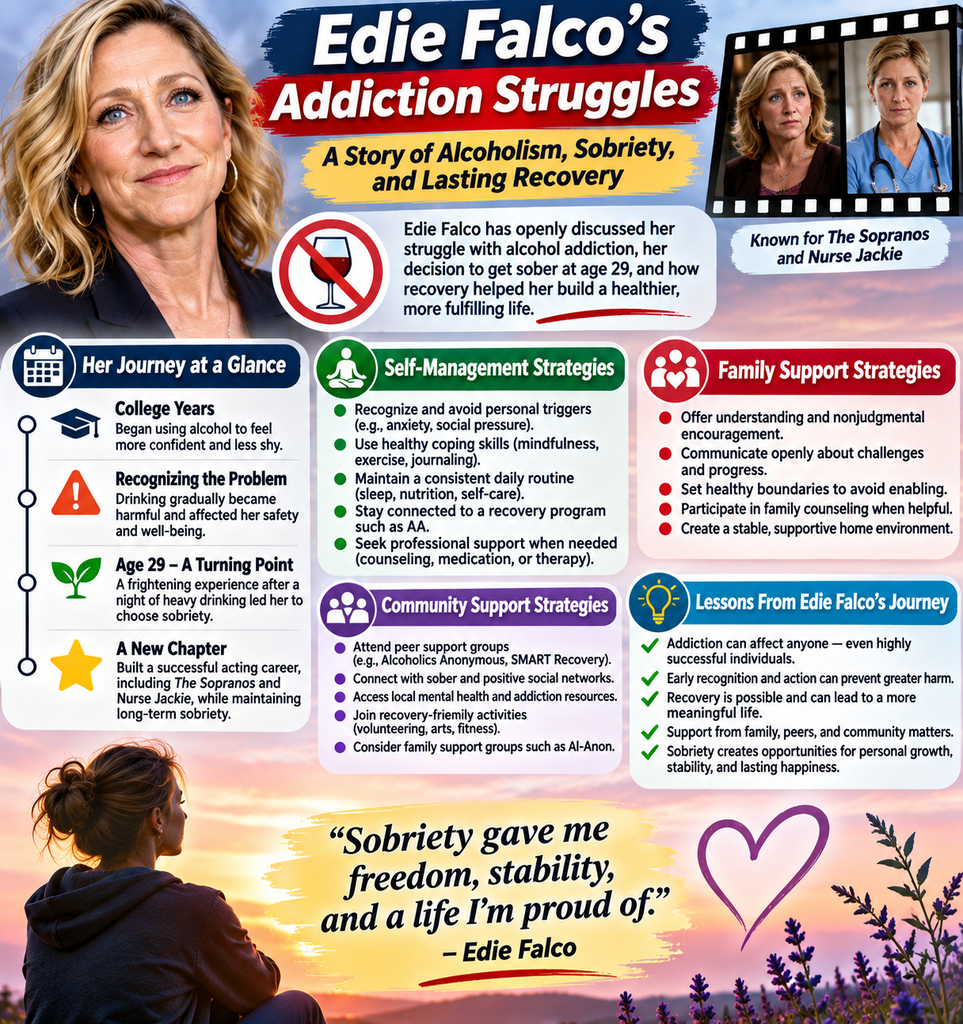
Falco has openly discussed her past struggles with alcohol, the emotional challenges surrounding her drinking, and her decision to embrace sobriety in her twenties. Her experiences demonstrate that addiction can affect individuals regardless of talent, ambition, or professional success.
Unlike many celebrity addiction stories centered on repeated public relapses, Falco’s journey emphasizes the importance of recognizing harmful drinking patterns early, seeking support, and developing a lifestyle that protects long-term sobriety.
Her story also offers valuable lessons about self-awareness, emotional resilience, family relationships, and the importance of supportive recovery communities.
Understanding Edie Falco’s experiences can help individuals and families recognize that recovery is not simply about giving up alcohol. It is about building a healthier, more meaningful life.
Edie Falco’s Early Life and the Beginning of Alcohol Addiction
Edie Falco was born on July 5, 1963, in Brooklyn, New York. She developed an interest in acting at a young age and eventually studied theater at the State University of New York at Purchase.
Although she possessed considerable acting talent, Falco has described herself as shy and uncomfortable in certain social situations.
During college, she discovered that drinking alcohol temporarily reduced her inhibitions and made social interactions feel easier.
What initially seemed like a solution to her insecurity gradually became a serious problem.
In a 2021 interview with The Guardian, Falco explained that alcohol initially felt liberating but ultimately created additional difficulties in her life. The Guardian+1
Her experiences illustrate how alcohol may become a form of emotional self-medication.
Individuals who rely on alcohol to manage shyness, anxiety, or uncomfortable emotions may gradually develop unhealthy drinking patterns.
Common warning signs include:
- Drinking to feel more confident in social situations.
- Using alcohol to escape stress or uncomfortable emotions.
- Increasing alcohol consumption over time.
- Experiencing blackouts or memory gaps.
- Continuing to drink despite negative consequences.
- Feeling unable to relax or socialize without alcohol.
- Neglecting personal safety while intoxicated.
Not everyone who drinks to manage anxiety develops alcohol use disorder. However, repeated reliance on alcohol for emotional relief can increase the risk of problematic use.
The Turning Point: Choosing Sobriety at Age 29
Falco’s decision to stop drinking came after a frightening experience during her late twenties.
After a night of heavy alcohol consumption, she returned to her New York apartment and later discovered that she had left her apartment door open throughout the night.
She also recalled being disoriented while attempting to enter her building.
The experience made her recognize how seriously drinking had compromised her judgment and personal safety.
At age 29, around 1992, Falco decided to stop drinking.
In later interviews, she described the experience as a decisive moment that helped her recognize the need for change. Los Angeles Times+1
What Can We Learn From Her Decision?
Falco’s turning point demonstrates several important recovery principles:
- Recognizing the consequences of substance use can motivate change.
- Individuals do not need to lose everything before seeking help.
- Personal safety concerns may reveal the severity of alcohol-related problems.
- Support from people who have experienced addiction can encourage recovery.
- Early intervention may prevent additional physical, psychological, and social harm.
Importantly, people with significant physical alcohol dependence should seek medical guidance before abruptly stopping drinking because withdrawal can cause seizures, delirium, and other life-threatening complications.
How Sobriety Changed Edie Falco’s Life and Career
Falco became sober several years before achieving widespread fame.
Her breakthrough performance as Carmela Soprano in HBO’s The Sopranos began in 1999. She later starred as Jackie Peyton in Showtime’s Nurse Jackie, a character experiencing prescription drug addiction.
Her acting accomplishments include multiple Emmy Awards and Golden Globe recognition.
Although sobriety cannot be credited as the sole cause of her professional achievements, Falco has described how recovery helped her build a more stable and satisfying personal life.
In interviews, she has expressed appreciation for ordinary routines, parenting, and the peacefulness of a life no longer centered on alcohol.
Her experiences highlight several potential benefits of recovery:
- Improved emotional stability and self-awareness.
- Greater ability to maintain personal commitments.
- More consistent daily routines.
- Increased opportunities for healthy relationships.
- Reduced alcohol-related safety risks.
- Greater freedom to pursue meaningful goals.
- Improved overall quality of life.
Falco’s story demonstrates that a fulfilling life in recovery does not have to revolve around dramatic achievements. Everyday stability and emotional well-being are equally meaningful.
Self-Management Strategies for Long-Term Sobriety
Self-management involves developing practical skills to recognize triggers, regulate emotions, maintain healthy behaviors, and seek assistance when needed.
Falco has publicly discussed the importance of sobriety, self-awareness, and 12-step recovery programs.
The following strategies combine lessons from her experiences with broader evidence-based approaches to alcohol addiction treatment.
Recognizing Emotional Triggers
Falco’s description of using alcohol to overcome shyness illustrates how uncomfortable emotions can contribute to drinking.
Individuals may use alcohol to temporarily manage anxiety, loneliness, insecurity, or social pressure.
Helpful strategies include:
- Identifying situations that increase the desire to drink.
- Keeping a journal of emotions, cravings, and coping responses.
- Practicing breathing exercises and mindfulness.
- Developing healthier ways to manage social anxiety.
- Avoiding high-risk drinking environments when necessary.
- Discussing persistent emotional difficulties with a mental health professional.
Developing Healthy Daily Routines
Consistent routines can support physical health, emotional stability, and recovery.
Helpful habits include:
- Maintaining regular sleep schedules.
- Participating in physical activity.
- Eating balanced meals and staying hydrated.
- Scheduling enjoyable alcohol-free activities.
- Practicing relaxation and stress-management techniques.
- Maintaining contact with supportive friends and family.
- Setting realistic personal and professional goals.
Participating in Recovery Programs
Falco has spoken positively about Alcoholics Anonymous and other 12-step programs.
She has described the value of connecting with individuals who understand addiction and can provide encouragement during difficult periods. The Independent+1
Mutual-support groups can help individuals develop accountability, emotional connections, and practical coping strategies.
Seeking Professional Treatment
Evidence-based treatment for alcohol use disorder may include:
- Cognitive behavioral therapy (CBT): Helps identify and change thoughts and behaviors associated with drinking.
- Motivational interviewing: Strengthens personal motivation for behavior change.
- Medication treatment: Naltrexone and acamprosate may help appropriate patients reduce drinking or maintain abstinence.
- Relapse prevention therapy: Teaches strategies for managing cravings and high-risk situations.
- Integrated mental health treatment: Addresses co-occurring anxiety, depression, trauma, or other psychological concerns.
Treatment should be individualized according to medical history, alcohol consumption, withdrawal risk, personal preferences, and recovery goals.
Creating a Relapse Prevention Plan
A written relapse prevention plan can help individuals recognize warning signs and respond before substance use occurs.
An effective plan may include:
- Personal emotional and environmental triggers.
- Early warning signs of increased relapse vulnerability.
- Healthy alternatives to drinking.
- Trusted individuals to contact during cravings.
- Scheduled counseling or support group meetings.
- Emergency resources when immediate assistance is necessary.
Key lesson: Long-term sobriety is supported by consistent self-awareness, healthy routines, and a willingness to seek help.
Family Support Strategies: Building Understanding and Healthy Relationships
Family members can play an important role in addiction recovery by providing encouragement, understanding, and emotional stability.
Falco has acknowledged that addiction has affected people close to her, including friends and family members.
Her experiences have helped her recognize the emotional difficulties faced by people who love someone struggling with addiction. LAist+1
Encouraging Open Communication
Families can create supportive environments by encouraging honest conversations about alcohol use and emotional difficulties.
Helpful approaches include:
- Listening without immediately criticizing or blaming.
- Expressing concern using respectful language.
- Encouraging professional treatment when appropriate.
- Recognizing progress and healthy behavioral changes.
- Avoiding stigmatizing labels or assumptions.
- Allowing individuals to discuss cravings without fear of humiliation.
Establishing Healthy Boundaries
Supporting someone with addiction does not require accepting harmful behavior.
Family members can establish boundaries that protect their emotional, financial, and physical well-being.
Examples include:
- Refusing to participate in alcohol-related behaviors that create safety risks.
- Avoiding financial assistance that directly supports harmful drinking.
- Establishing expectations for respectful communication.
- Protecting children from unsafe situations.
- Seeking professional guidance when family conflict becomes overwhelming.
Participating in Family Counseling
Family therapy can help individuals address communication problems, damaged trust, and emotional distress.
Potential benefits include improved conflict resolution, healthier boundaries, stronger emotional connections, and better understanding of substance use disorders.
Supporting Children and Family Stability
Falco has spoken about the importance of her children and the satisfaction she finds in everyday family life.
Her experiences offer an opportunity to discuss how stable routines and emotionally supportive environments can strengthen recovery.
Families can promote stability by:
- Maintaining predictable household routines.
- Encouraging healthy emotional expression.
- Spending meaningful time together.
- Addressing family stress without relying on alcohol.
- Seeking counseling when family members experience emotional difficulties.
These recommendations are general family recovery strategies, not claims about specific interventions used in Falco’s household.
Community Support Strategies: The Importance of Connection
Recovery can be strengthened when individuals have access to supportive communities, professional resources, and meaningful social relationships.
Falco has repeatedly emphasized the value of 12-step programs and the support she received from people who understood addiction.
In a 2023 interview, she described reaching out to friends who had already become sober and learning from their experiences. Bustle
Alcoholics Anonymous and Peer Support
Alcoholics Anonymous provides mutual support for individuals seeking recovery from alcohol problems.
Potential benefits include:
- Connecting with people who share similar experiences.
- Developing accountability relationships.
- Receiving encouragement during difficult periods.
- Learning practical strategies for maintaining sobriety.
- Reducing isolation and shame.
- Building a supportive alcohol-free social network.
Other options include SMART Recovery, LifeRing Secular Recovery, and Women for Sobriety.
Community Mental Health Resources
Local mental health and addiction treatment organizations can provide counseling, psychiatric evaluations, medication management, and recovery support services.
These resources are especially important for individuals experiencing alcohol use disorder alongside anxiety, depression, or trauma-related symptoms.
Recovery-Friendly Social Activities
Community activities can help individuals build meaningful connections without relying on alcohol.
Examples include:
- Volunteer organizations and community service.
- Fitness and recreational programs.
- Creative arts and theater groups.
- Meditation and mindfulness classes.
- Alcohol-free social gatherings.
- Peer mentoring and recovery community organizations.
Family Recovery Support Groups
Family members may benefit from organizations such as Al-Anon, which provides mutual support for people affected by another person’s drinking.
Falco has publicly encouraged family members to consider Al-Anon when struggling with the emotional consequences of a loved one’s addiction. SUCCESS
Edie Falco’s Role in Nurse Jackie: Understanding Addiction Through Storytelling
One of Falco’s most significant contributions to public conversations about addiction came through her portrayal of Jackie Peyton in Nurse Jackie.
The fictional character is a highly skilled emergency department nurse who struggles with prescription opioid addiction while attempting to maintain her professional and personal responsibilities.
Falco has explained that her personal experiences with alcohol addiction and her relationships with people affected by substance use helped her understand the emotional complexity of the character.
She also expressed concern that the series should portray addiction realistically rather than minimize its consequences. Television Academy+1
Important Lessons From Nurse Jackie
The series illustrates several addiction-related challenges:
- High-functioning addiction: Someone may maintain employment and professional responsibilities while experiencing serious substance-related problems.
- Secrecy and denial: Fear of consequences can lead individuals to conceal their substance use.
- Relationship difficulties: Addiction may damage trust and create emotional distress within families.
- Relapse vulnerability: Periods of abstinence do not eliminate the need for continued recovery support.
- Professional consequences: Substance use can compromise judgment, safety, and workplace responsibilities.
- Treatment engagement: Recovery requires acknowledging problems and accepting appropriate assistance.
It is important to distinguish Falco’s personal history of alcohol addiction from the fictional opioid addiction portrayed by Jackie Peyton.
The character’s relapses and drug-related behaviors should not be attributed to Falco herself.
Challenges and Barriers to Long-Term Recovery
Although Falco has described maintaining sobriety for decades, her experiences highlight challenges that many individuals encounter during addiction recovery.
Social Anxiety and Emotional Insecurity
Individuals who previously relied on alcohol for confidence may struggle with social interactions after stopping drinking.
Counseling, gradual exposure to social situations, and healthy coping techniques can help build confidence without alcohol.
Social Pressure and Drinking Culture
Alcohol is commonly present at celebrations, professional gatherings, and social events.
Individuals pursuing sobriety may benefit from preparing responses to offers of alcohol, choosing supportive environments, and developing alcohol-free friendships.
Fear of Judgment
Addiction stigma may discourage people from discussing their drinking or seeking treatment.
Educational efforts can help communities recognize that alcohol use disorder is a treatable medical condition rather than a personal weakness.
Maintaining Recovery Over Time
Long-term recovery may require ongoing attention to emotional health, relationships, lifestyle changes, and relapse prevention.
People benefit from recognizing that seeking additional support is a sign of self-awareness, not failure.
Important Lessons From Edie Falco’s Recovery Journey
Falco’s experiences provide valuable insights for individuals, families, healthcare professionals, and communities.
- Recognize harmful patterns early. Individuals do not need to experience catastrophic consequences before seeking treatment.
- Understand the emotional reasons behind drinking. Anxiety, insecurity, and emotional distress may contribute to unhealthy alcohol use.
- Recovery is possible. People can build meaningful and successful lives after experiencing alcohol addiction.
- Peer support matters. Connecting with others who understand addiction can strengthen motivation and reduce isolation.
- Family relationships deserve attention. Compassionate communication and healthy boundaries can support recovery.
- Professional treatment is valuable. Counseling, medication when appropriate, and ongoing monitoring can improve outcomes.
- Sobriety can create opportunities for personal growth. Recovery may improve emotional stability, relationships, and overall quality of life.
- Recovery is an ongoing process. Long-term well-being benefits from continued self-awareness and supportive relationships.
Resources for Individuals and Families Affected by Alcohol Addiction
SAMHSA National Helpline
1-800-662-HELP (4357)
Confidential treatment referrals and information available 24 hours a day.SAMHSA National Helpline
Alcoholics Anonymous
Peer support meetings for individuals seeking recovery from alcohol problems. Find AA meetings
Al-Anon Family Groups
Support for families and friends affected by someone else’s drinking. Explore Al-Anon resources
SMART Recovery
Free mutual-support meetings emphasizing coping skills and self-management.Explore SMART Recovery
FindTreatment.gov
Locate mental health and substance use treatment providers in the United States. Find treatment services
Conclusion: Edie Falco’s Journey Demonstrates the Power of Sobriety and Support
Edie Falco’s experiences with alcohol addiction offer a meaningful example of personal transformation, self-awareness, and the value of sustained recovery.
Her decision to stop drinking at age 29 marked an important turning point, allowing her to pursue a life no longer centered on alcohol.
Through her openness about alcoholism, involvement in 12-step recovery, and portrayal of addiction in Nurse Jackie, Falco has helped encourage greater understanding of substance use disorders.
Her story reinforces the importance of recognizing harmful drinking patterns, addressing underlying emotional difficulties, maintaining supportive relationships, and accessing professional treatment when needed.
For individuals experiencing addiction, recovery can begin with acknowledging the problem and seeking assistance. For families, compassion, healthy boundaries, and education can help create a supportive environment.
Edie Falco’s journey reminds us that sobriety is not about losing something important. It can be about rediscovering confidence, emotional freedom, meaningful relationships, and a healthier future.
Recovery is possible, and every step toward lasting well-being matters.
Frequently Asked Questions and Answers
Understanding Edie Falco’s Addiction Journey
1. Who is Edie Falco, and why is her addiction story important?
Edie Falco is an award-winning American actress best known for her performances in The Sopranos and Nurse Jackie.
Falco has openly discussed her history of alcohol addiction and her decision to stop drinking at age 29. Her experiences demonstrate that addiction can affect talented, successful individuals and that long-term sobriety is possible.
2. What type of addiction did Edie Falco struggle with?
Falco has primarily discussed her struggles with alcohol. She has described using alcohol to manage shyness and social discomfort.
She has also acknowledged past recreational exposure to cocaine, but her publicly discussed recovery journey has focused on alcoholism. The Guardian+1
3. When did Edie Falco begin drinking alcohol?
Falco began drinking during college while studying acting at the State University of New York at Purchase.
She has explained that she was naturally shy and initially found that alcohol made her feel more comfortable and confident in social situations.
Over time, drinking became increasingly problematic.
4. Why did Edie Falco develop problems with alcohol?
Falco has connected her early drinking to shyness, insecurity, and the temporary confidence she experienced after consuming alcohol.
Alcohol can temporarily reduce social inhibitions, making it appealing to individuals experiencing anxiety or emotional discomfort.
However, repeated reliance on alcohol to manage emotions can reinforce unhealthy drinking behaviors and increase the risk of alcohol use disorder.
5. At what age did Edie Falco become sober?
Falco stopped drinking at age 29, around 1992.
She made this decision several years before becoming widely recognized for her acting career.
Her experience demonstrates that individuals can make meaningful recovery changes before achieving professional or financial success.
6. What motivated Edie Falco to stop drinking?
Falco described waking up after a night of heavy drinking and discovering that she had left her apartment door open overnight.
The experience made her recognize how drinking had compromised her judgment and personal safety.
She identified this incident as an important turning point in her decision to stop drinking. The Guardian+1
7. Did Edie Falco attend rehabilitation or addiction treatment?
Falco has publicly discussed participating in 12-step recovery programs and receiving support from people who understood addiction.
However, the details of any formal residential rehabilitation or specific medical treatment are not fully established in the interviews cited here.
Her experience illustrates the potential benefits of peer recovery support, while professional treatment remains important for many individuals with alcohol use disorder.
8. Has Edie Falco experienced a relapse?
Falco has publicly described maintaining sobriety since age 29.
The interviews reviewed do not establish a subsequent alcohol relapse. However, her current personal recovery status should not be assumed beyond what she has publicly disclosed.
It is important to distinguish her personal history from the fictional relapses portrayed by her character in Nurse Jackie.
Self-Management and Long-Term Sobriety
9. What self-management strategies can individuals learn from Edie Falco’s recovery?
Falco’s experiences highlight the importance of self-awareness, recognizing harmful behaviors, and developing supportive relationships.
Evidence-informed strategies include:
- Identifying emotional and environmental drinking triggers.
- Developing healthier coping mechanisms for anxiety and stress.
- Maintaining consistent sleep, exercise, and nutrition routines.
- Attending counseling or peer recovery meetings.
- Building relationships with people who support sobriety.
- Creating a personalized relapse prevention plan.
- Seeking professional assistance when cravings or emotional difficulties increase.
These strategies are general recommendations and should not all be attributed to Falco’s personal recovery practices.
10. How can someone overcome the urge to drink in social situations?
Individuals who previously relied on alcohol for confidence may benefit from learning alternative ways to manage social anxiety.
Helpful strategies include practicing relaxation exercises, preparing alcohol-free drink choices, attending social events with supportive friends, and gradually building confidence in situations that previously involved drinking.
Cognitive behavioral therapy can also help individuals challenge negative thoughts and develop healthier responses to anxiety.
11. Why is recognizing emotional triggers important in addiction recovery?
Emotional triggers can increase cravings and encourage a return to harmful drinking patterns.
Common triggers include:
- Anxiety and social insecurity.
- Loneliness or emotional isolation.
- Work-related stress.
- Relationship conflicts.
- Depression or emotional exhaustion.
- Exposure to environments associated with drinking.
Recognizing these triggers allows individuals to develop coping strategies before cravings become overwhelming.
12. What role does mindfulness play in maintaining sobriety?
Mindfulness encourages individuals to observe thoughts, emotions, and cravings without immediately reacting.
Techniques such as breathing exercises, meditation, and grounding activities may help reduce stress and improve emotional regulation.
Mindfulness can complement addiction treatment, although it should not replace evidence-based care when professional intervention is needed.
13. Can someone maintain sobriety for decades?
Yes. Many individuals achieve long-term recovery from alcohol use disorder.
Sustained sobriety may be supported by healthy routines, peer connections, professional treatment, emotional self-awareness, and ongoing attention to relapse risks.
Falco’s publicly described decades of sobriety provide an example of the possibility of long-term recovery.
14. What treatments are available for alcohol use disorder?
Evidence-based treatment options include:
- Cognitive behavioral therapy (CBT): Helps identify and change drinking-related thoughts and behaviors.
- Motivational interviewing: Strengthens motivation for behavioral change.
- Medication treatment: Naltrexone and acamprosate can be appropriate for certain individuals.
- Relapse prevention counseling: Helps develop strategies for managing cravings and high-risk situations.
- Mutual-support programs: Provide peer encouragement and accountability.
- Integrated mental health treatment: Addresses co-occurring anxiety, depression, or trauma-related concerns.
People with significant physical alcohol dependence should seek medical guidance before abruptly stopping drinking because withdrawal can be dangerous.
Family Support and Relationships
15. How did family relationships influence Edie Falco’s understanding of addiction?
Falco has spoken about addiction affecting people she loves, not just herself.
These experiences have contributed to her understanding of the emotional difficulties families face when someone struggles with substance use.
She has discussed the challenge of caring deeply for someone while recognizing that another person’s recovery cannot be controlled. LAist
16. How can families support someone recovering from alcohol addiction?
Families can provide encouragement while maintaining realistic expectations and healthy boundaries.
Helpful approaches include:
- Listening without judgment or criticism.
- Encouraging counseling and addiction treatment.
- Avoiding behaviors that enable harmful drinking.
- Creating a stable and supportive home environment.
- Recognizing positive behavioral changes.
- Participating in family counseling when appropriate.
- Respecting the individual’s responsibility for recovery.
Family members should also protect their own emotional and physical well-being.
17. What is the difference between supporting and enabling someone with addiction?
Supporting recovery means encouraging healthy decisions, treatment participation, and personal accountability.
Enabling may involve repeatedly concealing harmful drinking, providing money that supports substance use, or preventing someone from experiencing reasonable consequences.
Families can remain compassionate while establishing boundaries that protect everyone involved.
18. How can children be supported when a parent struggles with alcohol addiction?
Children may experience anxiety, confusion, guilt, or emotional insecurity when a parent has alcohol-related problems.
Caregivers can help by providing age-appropriate explanations, maintaining consistent routines, encouraging emotional expression, and seeking counseling when necessary.
Children should be reassured that they are not responsible for a parent’s drinking or recovery.
Community Support and Addiction Awareness
19. How did Alcoholics Anonymous influence Edie Falco’s recovery?
Falco has discussed the importance of 12-step recovery programs in her life.
She has described how connecting with people who understand addiction helped her navigate sobriety and cope with the emotional challenges of loving others affected by substance use.
Her experiences illustrate the potential value of mutual-support groups and recovery communities. Fresh Air Archive
20. What community resources are available for individuals struggling with alcoholism?
Several organizations provide treatment information, counseling referrals, and peer support.
- Alcoholics Anonymous (AA): Find AA meetings
- SMART Recovery: Explore recovery meetings
- Al-Anon Family Groups: Family support resources
- SAMHSA National Helpline: 1-800-662-HELP (4357).
- FindTreatment.gov: Find addiction treatment providers
Community resources can help individuals develop stronger support networks and access appropriate treatment services.
21. How does Edie Falco’s role in Nurse Jackie relate to her addiction experiences?
In Nurse Jackie, Falco portrayed Jackie Peyton, an emergency department nurse struggling with prescription opioid addiction.
Falco has explained that her own experiences with alcoholism and her relationships with people affected by addiction influenced how seriously she approached the subject.
She wanted the series to portray the consequences of addiction realistically rather than treating substance use as merely entertaining.
Important distinction: Jackie Peyton’s opioid addiction and relapses are fictional and should not be confused with Falco’s personal history. The Guardian+1
22. How has Edie Falco helped raise awareness about addiction?
Falco has contributed to addiction awareness by openly discussing her struggles with alcohol and emphasizing the importance of realistic portrayals of substance use disorders.
Through interviews and her work on Nurse Jackie, she has encouraged conversations about recovery, relapse, family relationships, and the serious consequences of addiction.
Her openness can help challenge stigma and encourage individuals to seek support.
Lessons From Edie Falco’s Recovery Journey
23. What are the most important lessons from Edie Falco’s addiction struggles?
Falco’s experiences offer several important recovery lessons:
- Addiction can affect anyone, regardless of professional success.
- Alcohol may temporarily relieve emotional discomfort while creating additional problems.
- Recognizing harmful drinking patterns early can prevent further consequences.
- Long-term sobriety is possible.
- Peer recovery groups can provide meaningful emotional support.
- Healthy relationships and boundaries are important.
- Seeking professional treatment is a constructive step toward recovery.
- A fulfilling life can develop without alcohol.
24. Can someone recover from alcoholism without losing their career or family?
Yes. Individuals do not have to experience severe professional, financial, or relationship losses before pursuing recovery.
Early recognition and treatment can help prevent additional harm.
Falco’s decision to stop drinking before achieving widespread fame demonstrates that recovery can become an important foundation for personal and professional growth.
However, recovery experiences vary, and not everyone follows the same path.
25. What message does Edie Falco’s sobriety journey offer to individuals and families?
Falco’s experiences demonstrate that acknowledging harmful alcohol use and accepting support can lead to meaningful personal change.
Her journey emphasizes that sobriety is not simply the absence of alcohol. It can involve developing emotional stability, strengthening relationships, improving personal safety, and discovering healthier ways to navigate life’s challenges.
Recovery is possible, and individuals do not have to face addiction alone.
Video: