The holiday season is often associated with family gatherings, celebrations, traditions, and social connections. However, for individuals recovering from alcohol addiction, the holidays can also bring unexpected challenges.
From office parties and family dinners to New Year’s celebrations, alcohol is frequently present during seasonal festivities. Friends, relatives, and coworkers may encourage drinking without recognizing the emotional pressure this creates for someone pursuing sobriety.
For individuals recovering from alcohol use disorder (AUD), these situations may trigger cravings, anxiety, fear of judgment, or concerns about relapse.
Even people who simply want to reduce their alcohol consumption may feel uncomfortable explaining their decision not to drink.
Handling holiday drinking pressure requires more than saying no to alcohol. It involves emotional preparation, healthy boundaries, supportive relationships, and practical coping strategies.
Understanding how to manage these situations can help individuals protect their recovery while maintaining meaningful connections with family, friends, and their communities.
Understanding Holiday Drinking Pressure
Holiday drinking pressure occurs when individuals feel encouraged, expected, or obligated to consume alcohol during seasonal celebrations.
This pressure may be direct, such as someone repeatedly offering a drink, or indirect, such as attending an event where drinking is treated as an essential part of the celebration.
For individuals recovering from alcohol addiction, these situations may increase emotional discomfort and relapse vulnerability.
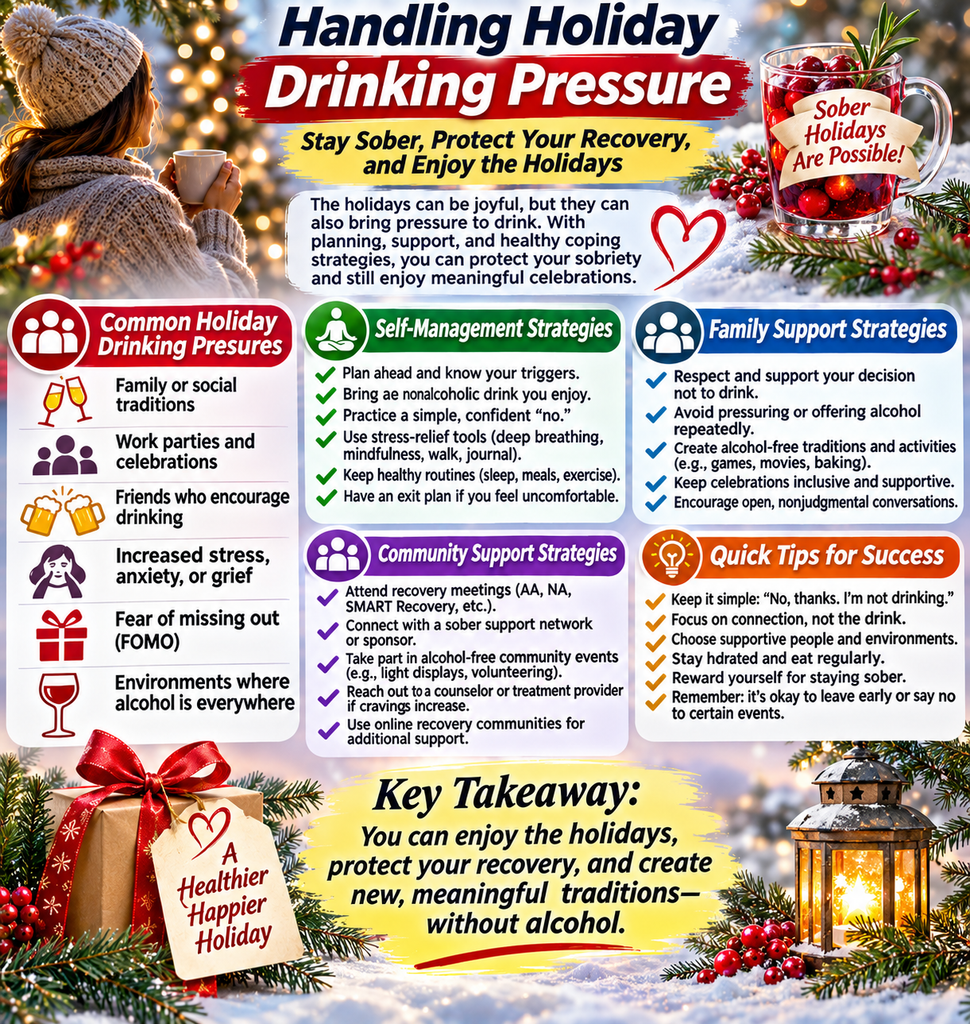
Common Sources of Holiday Drinking Pressure
- Family traditions: Alcohol may be associated with longstanding holiday customs.
- Workplace celebrations: Employees may feel pressured to participate in drinking-related activities.
- Social expectations: Friends may assume that everyone wants to drink.
- Emotional stress: Family conflicts, financial concerns, and holiday responsibilities can increase distress.
- Loneliness and grief: Holidays may intensify feelings of isolation or memories of loved ones.
- Fear of missing out: Individuals may worry that refusing alcohol will make them feel excluded.
- Past drinking habits: Familiar locations, people, or celebrations may trigger cravings.
Recognizing these influences allows individuals to prepare healthier responses before entering potentially challenging situations.
Why the Holidays Can Increase Relapse Vulnerability
The holiday season often disrupts normal routines and introduces additional emotional demands.
For individuals recovering from alcohol use disorder, changes in sleep, social activities, stress levels, and recovery meeting attendance may increase vulnerability to cravings.
Emotional and Psychological Triggers
Holiday celebrations can bring together conflicting emotions, including happiness, sadness, anxiety, and frustration.
Some individuals may experience:
- Increased stress from financial responsibilities.
- Anxiety about family expectations.
- Grief associated with missing loved ones.
- Loneliness during celebrations.
- Emotional exhaustion from social obligations.
- Memories of previous alcohol-related experiences.
Alcohol may appear to offer temporary relief from these feelings, but drinking can worsen emotional regulation, sleep quality, and judgment.
Environmental Triggers
Being around alcohol can activate memories and learned associations connected with previous drinking.
Examples include:
- Visiting bars or restaurants associated with past alcohol use.
- Attending parties where heavy drinking is common.
- Seeing familiar alcoholic beverages.
- Participating in traditions previously centered on drinking.
- Spending time with people who encourage excessive alcohol consumption.
Not everyone experiences the same triggers. Identifying personal vulnerabilities is an important part of relapse prevention.
Self-Management Strategies for Handling Holiday Drinking Pressure
Self-management involves recognizing emotional triggers, preparing responses to social pressure, and developing healthy coping skills.
These strategies can help individuals maintain sobriety while participating in meaningful holiday activities.
Prepare Before Attending Holiday Events
Planning ahead can reduce anxiety and improve confidence.
Before attending a gathering, individuals should consider whether alcohol will be present, who will attend, and what situations might create discomfort.
Practical preparation strategies include:
- Identify potential drinking triggers before the event.
- Decide how long to stay.
- Bring a preferred nonalcoholic beverage.
- Arrange independent transportation.
- Inform a trusted friend about sobriety goals.
- Identify a quiet space for taking breaks.
- Prepare an exit plan if cravings become overwhelming.
Remember that attending every holiday gathering is not necessary.
Protecting recovery is a valid reason to decline an invitation.
Practice Saying No to Alcohol
One of the most effective ways to manage social drinking pressure is to prepare simple, confident responses.
Examples include:
- “No thanks, I’m not drinking tonight.”
- “I’m taking a break from alcohol.”
- “I’m happy with what I’m drinking.”
- “I’m focusing on my health.”
- “I have an early morning tomorrow.”
- “I appreciate the offer, but I’ll pass.”
People do not owe others a detailed explanation of their recovery history.
If someone continues pressuring them, repeating a clear boundary or leaving the conversation may be appropriate.
Use Healthy Stress-Management Techniques
Stress can increase cravings and make emotional regulation more difficult.
Healthy coping techniques include:
- Practicing slow breathing exercises.
- Taking short walks outdoors.
- Listening to relaxing music.
- Using mindfulness or meditation.
- Writing in a journal.
- Engaging in physical activity.
- Speaking with a trusted recovery support person.
These techniques can help individuals manage uncomfortable emotions without relying on alcohol.
Maintain Healthy Daily Routines
Holiday schedules often involve late nights, irregular meals, and reduced physical activity.
Maintaining familiar routines can help protect emotional stability.
Important habits include consistent sleep, regular meals, hydration, exercise, and continued participation in treatment or recovery meetings.
Avoiding excessive exhaustion and hunger may also improve an individual’s ability to manage stressful situations.
Develop a Holiday Relapse Prevention Plan
A written relapse prevention plan can provide guidance when cravings or social pressure increase.
An effective plan should identify:
- Personal holiday drinking triggers.
- Early warning signs of increased cravings.
- Healthy coping strategies.
- Trusted people available for immediate support.
- Recovery meetings and treatment contacts.
- Transportation and exit arrangements.
- Steps to take if alcohol use occurs.
Key message: Successful holiday recovery planning focuses on preparation, flexibility, and asking for help when needed.
Family Support Strategies: Creating Alcohol-Free and Recovery-Friendly Celebrations
Family members can significantly influence how comfortable someone feels maintaining sobriety during the holidays.
Supportive relatives can help reduce pressure by respecting personal boundaries and offering inclusive celebrations.
Respect the Decision Not to Drink
Families should avoid questioning, teasing, or criticizing someone who declines alcohol.
Helpful approaches include:
- Accepting “no thank you” without further discussion.
- Avoiding repeated offers of alcoholic beverages.
- Not making sobriety the center of attention.
- Providing appealing nonalcoholic drink options.
- Respecting the individual’s privacy about treatment and recovery.
- Recognizing that alcohol-free participation is equally meaningful.
Create Inclusive Holiday Traditions
Families can develop celebrations that do not revolve around alcohol.
Examples include:
- Preparing holiday meals together.
- Hosting family game nights.
- Decorating the home.
- Watching holiday movies.
- Participating in outdoor winter activities.
- Volunteering at community events.
- Organizing alcohol-free holiday gatherings.
These activities encourage connection while reducing unnecessary exposure to drinking pressure.
Establish Healthy Family Boundaries
Some individuals may experience significant stress when interacting with relatives who drink heavily or dismiss their recovery goals.
Families can help by establishing expectations concerning respectful behavior and personal safety.
Examples include:
- Avoiding arguments about someone’s sobriety.
- Not pressuring individuals to attend alcohol-centered events.
- Respecting decisions to leave gatherings early.
- Establishing alcohol-free spaces when mutually agreed upon.
- Protecting children from unsafe drinking-related situations.
- Seeking family counseling when substance use contributes to ongoing conflict.
Support Without Controlling Recovery
Family members may want to protect a loved one from every possible trigger.
However, excessive monitoring or controlling behavior can create additional stress.
Supportive families focus on encouragement, communication, and collaboration rather than surveillance or punishment.
The individual in recovery should remain actively involved in decisions about their own boundaries and support needs.
Community Support Strategies: Building a Sober Holiday Network
Community resources can help individuals maintain social connections and access support throughout the holiday season.
Recovery communities are particularly valuable when family gatherings become stressful or when individuals experience loneliness.
Attend Peer Recovery Meetings
Mutual-support groups provide opportunities to connect with people who understand the challenges of addiction recovery.
Examples include:
- Alcoholics Anonymous (AA): Offers peer support for people seeking recovery from alcohol problems.
- SMART Recovery: Provides practical tools for managing cravings and addictive behaviors.
- Recovery Dharma: Incorporates mindfulness and peer support.
- LifeRing Secular Recovery: Emphasizes personal recovery planning and mutual encouragement.
- Women for Sobriety: Provides recovery support focused on women.
Some recovery organizations offer additional meetings during major holidays, although schedules vary by location.
Participate in Alcohol-Free Community Events
Many communities organize seasonal activities that do not require alcohol consumption.
Examples include:
- Holiday light displays.
- Community concerts.
- Volunteer opportunities.
- Religious or spiritual celebrations.
- Winter festivals.
- Craft workshops.
- Fitness and recreational events.
- Recovery community holiday gatherings.
These activities can create positive experiences while supporting healthier social connections.
Seek Professional Support When Needed
Individuals experiencing increased cravings, anxiety, or relapse concerns may benefit from additional counseling during the holidays.
Treatment professionals can help identify triggers, adjust recovery plans, and address co-occurring mental health symptoms.
Evidence-based treatment for alcohol use disorder may include cognitive behavioral therapy, motivational interviewing, and medications such as naltrexone or acamprosate when clinically appropriate.
People with significant alcohol dependence should seek medical advice before abruptly stopping drinking because alcohol withdrawal can cause serious complications.
Handling Common Holiday Drinking Scenarios
Understanding how to respond to specific situations can make holiday gatherings less stressful.
| Holiday situation | Healthy response |
|---|---|
| A relative repeatedly offers alcohol. | Politely decline, repeat the boundary, and change the subject. |
| A coworker insists on buying a drink. | Request a nonalcoholic beverage without explaining personal details. |
| Everyone is drinking at a party. | Focus on conversation, activities, or supportive guests. |
| A family argument creates cravings. | Take a break, practice grounding techniques, or leave if needed. |
| Someone questions your sobriety. | Explain that the decision is personal and not open for debate. |
| You feel overwhelmed or tempted to drink. | Contact a recovery support person and consider leaving the event. |
| A celebration becomes unsafe. | Leave promptly and arrange safe transportation. |
These responses can be adapted to individual preferences, relationships, and recovery needs.
Supporting Individuals in Early Recovery During the Holidays
Early recovery can be particularly challenging because individuals may still be developing coping skills and adjusting to life without alcohol.
Holiday celebrations may involve unfamiliar expectations, social pressure, and increased exposure to drinking environments.
Strategies for Early Recovery
- Prioritize recovery meetings and counseling appointments.
- Consider avoiding events centered on heavy drinking.
- Attend gatherings with a trusted sober companion.
- Keep celebrations short when necessary.
- Maintain regular contact with treatment providers.
- Create new alcohol-free holiday traditions.
- Develop a clear plan for managing unexpected cravings.
- Recognize that declining invitations is acceptable.
Individuals in early recovery should avoid comparing their progress with others.
Recovery needs vary, and strategies that work for one person may not be appropriate for another.
What to Do if a Holiday Relapse Occurs
Despite careful planning, some individuals may experience a return to alcohol use during the holidays.
A relapse should be taken seriously, but it does not mean that all previous recovery progress has been lost.
Recommended Steps After a Relapse
- Prioritize immediate safety. Avoid driving and seek emergency medical assistance if severe intoxication or other dangerous symptoms occur.
- Contact a trusted support person. Avoid withdrawing because of shame or embarrassment.
- Reconnect with professional treatment. Discuss the episode with a healthcare provider or addiction counselor.
- Identify contributing factors. Review emotional triggers, environmental pressures, and disruptions in routines.
- Adjust the recovery plan. Increase support or modify treatment when appropriate.
- Resume healthy routines. Return to regular meals, sleep, counseling, and recovery activities.
Individuals who have been drinking heavily and regularly should not attempt abrupt withdrawal without medical guidance.
Relapse prevention is most effective when individuals receive timely support rather than punishment or humiliation.
Important Lessons About Holiday Drinking Pressure
Handling holiday drinking pressure involves more than avoiding alcoholic beverages. It requires developing confidence, emotional awareness, and supportive relationships.
Important lessons include:
- Sobriety is a personal decision. No one is obligated to drink to satisfy social expectations.
- Preparation reduces vulnerability. Planning ahead can make difficult situations easier to navigate.
- Healthy boundaries protect recovery. Individuals have the right to decline alcohol and leave uncomfortable environments.
- Family support matters. Respectful communication and inclusive celebrations can reduce pressure to drink.
- Community connections strengthen recovery. Peer groups and alcohol-free activities can reduce isolation.
- Professional treatment remains important. Increased cravings or emotional distress may require additional clinical support.
- Recovery deserves priority. Maintaining sobriety is more important than attending every celebration.
Resources for Managing Holiday Drinking Pressure
SAMHSA National Helpline
1-800-662-HELP (4357)
Confidential substance use treatment referrals and information, available 24 hours a day.SAMHSA National Helpline
Alcoholics Anonymous
Peer recovery meetings, including online options and some holiday-specific gatherings. Find AA meetings
SMART Recovery
Mutual-support meetings and tools for managing addictive behaviors. Explore SMART Recovery
FindTreatment.gov
Locate substance use and mental health treatment providers throughout the United States. Find treatment services
988 Suicide & Crisis Lifeline
Call or text 988 for immediate emotional support during a mental health or substance-related crisis.988 crisis support
Conclusion: Celebrating the Holidays Without Sacrificing Sobriety
The holiday season should be an opportunity for connection, gratitude, and meaningful experiences—not a source of pressure to consume alcohol.
For individuals recovering from alcohol addiction, managing holiday drinking pressure may require preparation, emotional awareness, healthy boundaries, and ongoing support.
Self-management strategies such as identifying triggers, practicing refusal skills, maintaining routines, and developing relapse prevention plans can strengthen confidence during social gatherings.
Families can help by respecting sobriety decisions, offering alcohol-free alternatives, and creating inclusive celebrations.
Communities can contribute by providing accessible recovery meetings, mental health services, and social opportunities that do not revolve around alcohol.
Most importantly, individuals should remember that they do not need to compromise their health or recovery to meet someone else’s expectations.
The most meaningful holiday celebrations are not defined by what is in your glass. They are defined by the connections, memories, and moments of well-being you create.
Sobriety is worth protecting, and every alcohol-free celebration can become another opportunity for personal growth.
Frequently Asked Questions and Answers
Understanding Holiday Drinking Pressure
1. What is holiday drinking pressure?
Holiday drinking pressure occurs when individuals feel encouraged, expected, or obligated to consume alcohol during seasonal celebrations.
This pressure may come from family members, friends, coworkers, or social traditions that associate drinking with having fun.
For individuals recovering from alcohol use disorder (AUD), these situations may trigger cravings, anxiety, or concerns about relapse.
2. Why is it difficult to avoid alcohol during the holidays?
Alcohol is frequently present at family dinners, office parties, New Year’s celebrations, and other seasonal gatherings.
Individuals may experience difficulty refusing alcohol because they fear disappointing others, appearing different, or missing out on social experiences.
Holiday stress, emotional exhaustion, and disruptions in daily routines can also make it harder to maintain recovery.
3. Can holiday celebrations increase the risk of alcohol relapse?
Yes. Holiday celebrations may increase relapse vulnerability for some individuals, particularly when they involve alcohol exposure, emotional stress, and reduced access to familiar recovery routines.
Common contributing factors include:
- Family conflicts and emotional tension.
- Financial stress.
- Loneliness or grief.
- Social pressure to drink.
- Exposure to alcohol-related environments.
- Disrupted sleep and meal schedules.
- Missed counseling appointments or recovery meetings.
However, relapse is not inevitable. Planning ahead and maintaining supportive connections can help reduce risk.
4. Why do people pressure others to drink during holiday gatherings?
Some individuals associate alcohol with relaxation, celebration, or social connection.
Others may not understand addiction recovery or may assume that refusing alcohol is a temporary preference.
Drinking pressure can also result from longstanding family traditions, cultural expectations, or discomfort when someone chooses not to participate.
Regardless of the reason, everyone has the right to decline alcohol without explaining their decision.
5. Is it acceptable to avoid holiday gatherings where alcohol is served?
Absolutely. Individuals recovering from alcohol addiction should prioritize their health and recovery.
Declining invitations, attending only part of an event, or choosing alcohol-free activities can be appropriate strategies.
Recovery does not require avoiding every social gathering, but individuals should make decisions based on their personal triggers, recovery stability, and comfort level.
Self-Management Strategies for Holiday Sobriety
6. How can someone prepare for a holiday party without drinking?
Planning ahead can reduce anxiety and improve confidence.
Helpful strategies include:
- Ask whether alcohol will be served.
- Bring a preferred nonalcoholic beverage.
- Practice responses to offers of alcohol.
- Arrange independent transportation.
- Attend with a supportive friend.
- Decide how long to stay.
- Identify a quiet place to take breaks.
- Have an exit plan if cravings increase.
Preparation helps individuals maintain control over their participation.
7. What are effective ways to say no when someone offers alcohol?
Simple, confident responses are often effective.
Examples include:
- “No thanks, I’m not drinking tonight.”
- “I’m happy with my drink.”
- “I’m taking a break from alcohol.”
- “I’m focusing on my health.”
- “I appreciate the offer, but I’ll pass.”
- “I’m enjoying the evening without alcohol.”
Individuals do not need to disclose their addiction history or explain their sobriety decisions.
8. What should someone do if a friend or family member repeatedly pressures them to drink?
Repeated pressure should be addressed with clear boundaries.
An individual might say, “I’ve already said no, and I need you to respect my decision.”
If the pressure continues, changing the subject, moving to another conversation, or leaving the event may be appropriate.
Protecting recovery is more important than avoiding temporary social discomfort.
9. How can someone manage alcohol cravings during holiday celebrations?
Cravings are temporary experiences that can often be managed through behavioral coping strategies.
Helpful approaches include:
- Moving away from alcohol-related triggers.
- Practicing slow breathing or grounding exercises.
- Drinking water or a preferred alcohol-free beverage.
- Taking a short walk.
- Contacting a recovery support person.
- Practicing urge surfing to observe cravings without acting on them.
- Leaving the event if cravings become difficult to manage.
Persistent or intense cravings may indicate a need for additional professional support.
10. What is urge surfing, and how can it help with alcohol cravings?
Urge surfing is a mindfulness-based technique that encourages individuals to observe cravings without immediately responding to them.
Rather than fighting the craving, the person notices how it changes over time.
A simple approach is to recognize the urge, notice physical sensations, breathe slowly, and let the craving rise and fall without drinking.
The technique may help some individuals reduce impulsive responses to cravings.
11. How can stress management help prevent holiday drinking?
Stress can increase emotional discomfort and trigger urges to drink.
Healthy stress-management techniques include:
- Mindfulness and meditation.
- Physical activity.
- Journaling.
- Deep breathing exercises.
- Maintaining consistent sleep schedules.
- Spending time outdoors.
- Speaking with supportive friends.
- Participating in enjoyable alcohol-free activities.
These strategies can complement professional addiction treatment.
12. Why is maintaining a routine important during the holidays?
Holiday schedules may disrupt sleep, nutrition, exercise, counseling appointments, and recovery meetings.
These changes can contribute to emotional exhaustion and increased vulnerability to cravings.
Maintaining familiar routines can support physical health, emotional stability, and recovery.
Individuals should prioritize adequate rest, regular meals, hydration, and continued engagement in treatment.
13. Should someone bring their own nonalcoholic drinks to holiday parties?
Yes. Bringing a preferred alcohol-free beverage can make social gatherings more comfortable.
Options include sparkling water, flavored seltzer, herbal tea, and festive mocktails.
However, beverages marketed as alcohol-free may contain small amounts of alcohol. Individuals who find the taste, smell, or presentation of alcoholic drinks triggering may prefer alternatives that do not resemble alcohol.
Family Support and Healthy Boundaries
14. How can families support someone maintaining sobriety during the holidays?
Families can create supportive environments by respecting an individual’s decision not to drink.
Helpful strategies include:
- Avoiding repeated offers of alcohol.
- Providing appealing nonalcoholic beverages.
- Planning activities that do not revolve around drinking.
- Respecting privacy about addiction treatment.
- Encouraging open, nonjudgmental communication.
- Supporting attendance at recovery meetings.
- Accepting decisions to leave gatherings early.
Family members should avoid treating sobriety as an inconvenience or a topic for public discussion without permission.
15. What should families avoid saying to someone in alcohol recovery?
Comments that minimize addiction or question sobriety can create unnecessary pressure.
Examples include:
- “One drink won’t hurt.”
- “It’s the holidays. You should celebrate.”
- “You used to drink with us.”
- “Can’t you control yourself now?”
- “You’re making everyone uncomfortable.”
- “You don’t have a problem anymore.”
Instead, families can offer encouragement and respect personal boundaries.
16. How can families create alcohol-free holiday traditions?
Alcohol-free traditions can strengthen relationships and make celebrations more inclusive.
Examples include:
- Holiday movie nights.
- Family cooking or baking activities.
- Board games and trivia competitions.
- Decorating the home together.
- Visiting holiday light displays.
- Outdoor walks or winter activities.
- Community volunteering.
- Alcohol-free holiday brunches.
These activities emphasize connection and shared experiences rather than alcohol consumption.
17. What if family gatherings trigger anxiety, grief, or emotional distress?
Family gatherings may bring up difficult memories, unresolved conflicts, or feelings of loss.
Individuals can protect their emotional well-being by setting boundaries, limiting time at gatherings, taking breaks, and seeking support.
Counseling may be particularly helpful when family interactions trigger intense anxiety or trauma-related symptoms.
Attending a gathering is not an obligation when doing so threatens personal safety or recovery stability.
18. How can someone explain sobriety to children during the holidays?
Parents and caregivers can use simple, age-appropriate explanations.
For example, a parent might explain that some adults choose not to drink alcohol because they want to stay healthy or because alcohol has caused problems in the past.
Children should understand that they are not responsible for an adult’s drinking or recovery.
Families can also model healthy celebrations that emphasize relationships, activities, and emotional connection.
Community Support and Recovery Resources
19. How can recovery support groups help during the holidays?
Recovery support groups provide opportunities to connect with others who understand alcohol-related challenges.
Groups such as Alcoholics Anonymous, SMART Recovery, and Recovery Dharma may offer encouragement, accountability, and practical coping strategies.
Some organizations provide additional holiday meetings or online support options.
Maintaining these connections can reduce isolation and help individuals manage holiday stress.
20. Are there alcohol-free holiday events for people in recovery?
Yes. Many communities offer activities that do not require alcohol consumption.
Examples include holiday markets, community concerts, volunteer opportunities, religious celebrations, fitness events, and recovery organization gatherings.
Alcohol-free social activities can help individuals build meaningful connections while reducing exposure to drinking pressure.
21. When should someone seek professional help for holiday drinking pressure?
Professional assistance may be appropriate when an individual experiences:
- Persistent or intense alcohol cravings.
- Repeated difficulty refusing alcohol.
- Increased drinking after a period of abstinence.
- Anxiety or depression interfering with daily functioning.
- Withdrawal symptoms.
- Difficulty maintaining recovery routines.
- Repeated alcohol-related conflicts or safety concerns.
Evidence-based treatment may include counseling, cognitive behavioral therapy, relapse prevention interventions, and medications for alcohol use disorder when appropriate.
Important: People with significant physical alcohol dependence should not abruptly stop drinking without medical guidance because withdrawal can cause seizures and other life-threatening complications.
22. What resources are available for individuals struggling with alcohol during the holidays?
SAMHSA National Helpline
1-800-662-HELP (4357)
Free, confidential treatment information and referrals, available 24 hours a day.SAMHSA National Helpline
Alcoholics Anonymous
Peer recovery support meetings, including online options. Find AA meetings
SMART Recovery
Mutual-support meetings and practical tools for managing addictive behaviors. Explore SMART Recovery
FindTreatment.gov
Locate substance use and mental health treatment providers in the United States. Find treatment services
988 Suicide & Crisis Lifeline
Call or text 988 for immediate emotional support during a mental health or substance-related crisis.988 crisis support
Relapse Prevention and Long-Term Recovery
23. What should someone do if they drink alcohol after a period of sobriety?
A return to drinking should be addressed promptly and without unnecessary shame.
Recommended steps include:
- Prioritizing immediate physical safety.
- Avoiding driving or other potentially dangerous activities.
- Contacting a trusted recovery support person.
- Reconnecting with a healthcare professional or addiction counselor.
- Identifying circumstances that contributed to drinking.
- Revising the relapse prevention plan.
- Resuming healthy recovery routines.
A return to alcohol use does not erase previous recovery progress, but it may indicate a need for additional treatment or support.
24. How can someone build confidence in maintaining sobriety during future holidays?
Confidence develops through preparation, experience, and supportive relationships.
Helpful strategies include practicing refusal skills, attending alcohol-free activities, maintaining recovery connections, and recognizing successful experiences.
Individuals can also reflect on difficult situations and identify what strategies worked well.
Recovery confidence grows when people develop realistic expectations and learn how to respond effectively to challenges.
25. What is the most important lesson about handling holiday drinking pressure?
The most important lesson is that individuals do not have to consume alcohol to participate in meaningful holiday celebrations.
Sobriety can be protected through self-management, healthy boundaries, supportive family relationships, and community resources.
People have the right to decline alcohol, avoid uncomfortable situations, and prioritize their recovery without guilt.
The holidays can still be joyful, meaningful, and socially fulfilling without drinking.
Video: