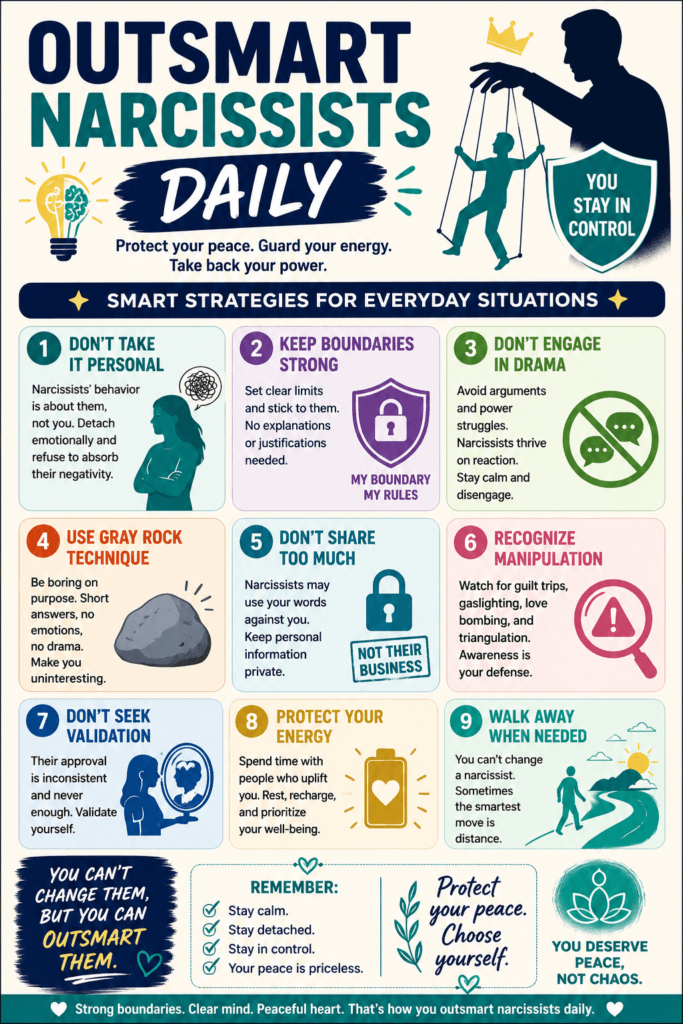
Narcissists can be tricky to spot, and even tougher to deal with once you’ve realized what’s happening. From family gatherings to workplace meetings, finding yourself in a power struggle or tangled in manipulation with a narcissist is more common than most folks think. I’ve been on the receiving end of narcissistic games a few times, and I know how draining it can be. Learning how to hold your ground, protect your peace, and outsmart their tactics turns everyday situations into a lot less hassle. If you’re curious about practical ways to manage interactions with narcissists, this guide covers my favorite approaches and tips for navigating those everyday challenges.
Understanding Narcissistic Behavior in Daily Life
Narcissism tends to show up in more places than you’d expect, from the neighbor who always one-ups your stories to the coworker who takes credit for your ideas. The core traits of narcissism—like the need for attention, lack of empathy, and a hunger for control—aren’t just movie tropes. Recognizing these signs early gives you a better shot at sidestepping their mind games and shielding yourself from frustration.
The term “narcissist” gets thrown around a lot, but it actually describes individuals who consistently put their own needs above those of others, often by manipulating situations or people. Narcissists aren’t always obvious. Some are charming and smooth, while others use guilt, blame, or subtle putdowns to get what they want. Over time, these patterns can chip away at your self-confidence and lead to confusion or resentment.
Narcissistic behavior can surface in personal relationships, at work, or even when dealing with service providers. Some research from the American Psychiatric Association shows that over 6% of the population may have narcissistic personality disorder, but plenty more people display narcissistic traits. Knowing this helps set realistic expectations, so you don’t blame yourself for their behavior or take unnecessary responsibility for someone else’s actions.
Understanding how these behaviors manifest in daily life makes it easier to notice subtle cues. Examples include monopolizing conversations, never admitting fault, or seeming incapable of celebrating anyone’s success but their own. In family settings, this could mean being consistently guilt-tripped. At work, a narcissist might undermine your achievements or shift blame to your shoulders when things go wrong.
Spotting Narcissist Tactics: The Everyday Playbook
Narcissists use several tried-and-true tactics to twist situations in their favor. Once you spot these moves, you’re halfway to avoiding their traps:
- Gaslighting: Making you question your own reality, memories, or sanity. A narcissist might dismiss your feelings, saying things like “You’re overreacting” when you try to stand up for yourself.
- Projection: Blaming you for things they are actually doing themselves. For example, they accuse you of lying while regularly telling untruths.
- Love Bombing: Showering you with attention or praise, then withdrawing it to maintain control. This rollercoaster of warmth and distance keeps you off balance.
- Stonewalling: Refusing to communicate, shutting down conversations until they get their way. Silence becomes the weapon of choice when confronted with boundaries.
- Triangulation: Involving others to create confusion, competition, or jealousy. Bringing a third party into disputes to stir the pot is a classic narcissist move.
Spotting these tactics gets easier with practice. I like to keep a little note in my phone or journal when something feels “off,” just to see if patterns pop up. If you can see the game, you can play it smarter. Noting repeated gaslighting or stonewalling helps you gain clarity and trust your own recollection of events.
Practical Strategies for Outsmarting Narcissists
When it comes to handling narcissists, I use a few go-to strategies that keep things in perspective and keep me from feeling steamrolled or manipulated:
- Set and Stick to Boundaries: Be clear about what you will and won’t tolerate. If someone tries to push past your limit, repeat your boundary calmly and don’t get roped into endless debates. This sends the message that your boundaries aren’t up for negotiation.
- Keep Your Cool: Narcissists love a reaction; anger, frustration, or tears all feed into their sense of power. Practice slow breathing or picture a mental “shield” if conversations get heated. Staying calm is really important, even if it feels tough in the moment.
- Use the “Gray Rock” Technique: Make yourself less interesting by offering bland, short replies. Don’t share personal feelings or stories that can be used against you later. The less you reveal, the less ammunition they have.
- Limit Personal Sharing: Narcissists can turn sensitive information or vulnerabilities into leverage. Keep casual conversations friendly, but don’t overshare about struggles or successes.
- Document Interactions: Especially at work, jotting down what was said and when can really help if things turn uncomfortable or you need to involve a manager or HR. Written records protect you from gaslighting and help you recall details under stress.
Mix and match these strategies depending on the situation. At home, I lean on boundaries and gray rock. In professional settings, documentation and sticking to the facts keep things cleaner and safer for everyone involved.
An extra tip I’ve found helpful: Practice saying “No” with confidence. People with narcissistic tendencies often push until you cave. A firm, respectful “No” tells them you mean business.
Common Situations and How to Outsmart the Narcissist
Different environments call for different responses, so I’ve broken down some of the most common scenarios and how I handle them:
Family Gatherings
Family-related narcissism can get really tangled. Try steering clear of topics that usually spark drama or set clear time limits for phone calls or visits. If someone tries to bait you into an argument, redirect the conversation or step outside for a breather. I’ve found having an exit plan or a “phone buddy” to text makes dealing with holiday dinners a lot less stressful. Prepping in advance lets you maintain your peace while still being present for important occasions.
Workplace Scenarios
Narcissists at work thrive on attention or undermining others. Stick to professional communication, use email to confirm agreements, and avoid gossip. If you spot credit-stealing or subtle sabotage, collect examples and find a trusted colleague or manager for backup. The key is to act quickly before things spiral out of control. Keeping a written log of interactions, agreements, and incidents can protect you from misunderstandings later on.
Friendship Circles
Friendships with narcissists often get lopsided as they take up space with drama or demands. I set recurring “self-care” days where I check in with myself about whether these friendships feel energizing or draining. If someone never shows up for you but always expects help, consider dialing down the contact or scaling back your emotional investment. Sometimes, friendships shift naturally as you prioritize your own needs and well-being.
Social circles influenced by narcissists can feel exhausting. Stumbling upon mutual friends who recognize these patterns can give you solidarity and understanding. Have honest conversations with these friends to make sure your experience isn’t isolated or imagined.
Challenges to Outsmarting Narcissists, and How to Overcome Them
Even with strong skills, dealing with narcissists isn’t always a smooth ride. There are common pitfalls I’ve run into and a few ways that help me stay on track:
- Feeling Guilty: Narcissists push guilt when you enforce boundaries. It’s okay to put yourself first, even if someone tries to make you feel bad about it. Remind yourself that everyone deserves respect, including you.
- Getting Drawn Back In: Sometimes, after pulling away, narcissists ramp up the charm or try new tactics. Staying mindful of the bigger picture—your happiness and health—makes it easier to resist.
- Fear of Conflict: Confrontation can feel intimidating, but preparation goes a long way. Before tough conversations, I jot down a few “anchor statements,” short, direct lines I can lean on if things get tense. This keeps me centered and minimizes self-doubt.
- Isolation or Gaslighting: Narcissists may try to isolate you or make you second-guess yourself. Building a support network and trusting your gut is really important here.
Techniques for Tough Moments
In those especially challenging situations, like when you’re being publicly criticized or privately manipulated, having a few short responses ready can be a lifesaver. I use phrases like “That’s not how I remember it,” “I don’t agree with that,” or simply “I need time to think about this.” Short, neutral responses can defuse intensity and give you a moment to regroup and decide your next step.
Advanced Tips: Keeping Your Confidence and Sanity
Narcissists are pros at creating confusion and self-doubt. Protecting your confidence is super important. Here’s what helps me:
Self-Check: I do a mental scan after every tough interaction, just checking if I’m feeling off, confused, or anxious. Recognizing these feelings early gives you clues about who or what is triggering them, allowing you to take wise action before things get overwhelming.
Keep Trusted Support Nearby: Regularly talking to a good friend, therapist, or peer who understands narcissistic personalities helps you clarify what’s “you” and what’s manipulation. Group chats or forums can be a really useful sounding board. Hearing relatable stories from others can validate your experience and offer solutions you hadn’t considered.
Develop Your Own Validation: Narcissists rarely give real validation or encouragement, so practicing self-acknowledgment is key. I keep a list of things I’m proud of and revisit it after challenging days. This small habit helps bring a sense of stability and reinforces self-worth, no matter what the narcissist may say or do.
Distance Yourself When Needed: Sometimes, the healthiest thing is to put more space between you and the narcissist. Even temporarily limiting interaction can help reset your boundaries and perspective. Use your own emotional barometer as a guide; if frequent contact leaves you drained, it may be time to step back for a while.
Frequently Asked Questions
Here are some of the most common questions I hear from others dealing with narcissists and what’s worked for me:
Question: How can I avoid getting sucked into pointless arguments with narcissists?
Answer: Stick to your boundaries and use short, neutral responses. You don’t owe anyone a lengthy explanation or defense. Sometimes, silence says more than words and lets the other person know where you stand.
Question: Is it possible to have a healthy relationship with a narcissist?
Answer: Healthy relationships require empathy and respect; traits narcissists struggle with. You can have an “okay” relationship if you limit your expectations, set boundaries, and take care of yourself, but a deep, mutual connection is pretty rare.
Question: What if the narcissist doesn’t back off?
Answer: Document what’s happening and consider getting outside support; this could be HR at work, a therapist, or even legal help in extreme cases. You are not alone in handling tough situations, and reaching out for help is wise, not weak.
Quick List: Skills for Outsmarting Narcissists Every Day
- Recognize manipulation tactics early
- Set clear communication boundaries
- Don’t overshare personal information
- Keep your cool under pressure
- Build and lean on your support system
- Document tricky interactions, especially at work
Everyday situations with narcissists get easier when you know what to look for and have practical tools to protect yourself. It takes some trial and error, but your peace of mind is worth the effort. Staying one step ahead, valuing your own experience, and reaching out for support are all really important when it comes to outsmarting narcissists. Whether at home, at work, or anywhere in between, these strategies make a meaningful difference in protecting your well-being and confidence. Remember, setting limits and asking for support shows strength—not weakness.
Video: The Boundary Setting Trick Narcissists Hate #narcissist #toxic #psychology