I know firsthand how overwhelming it can feel trying to tell the difference between teen anxiety and panic, especially when those feelings get intense and confusing. Recovery is possible for both, but the approach and coping tools can look a bit different. If you or someone you care about is struggling, having a clear guide can make the whole recovery process easier to understand and navigate. I’ve put together this practical guide to help you sort through the essentials and find strategies that truly work.
Understanding Teen Anxiety vs. Panic Attacks
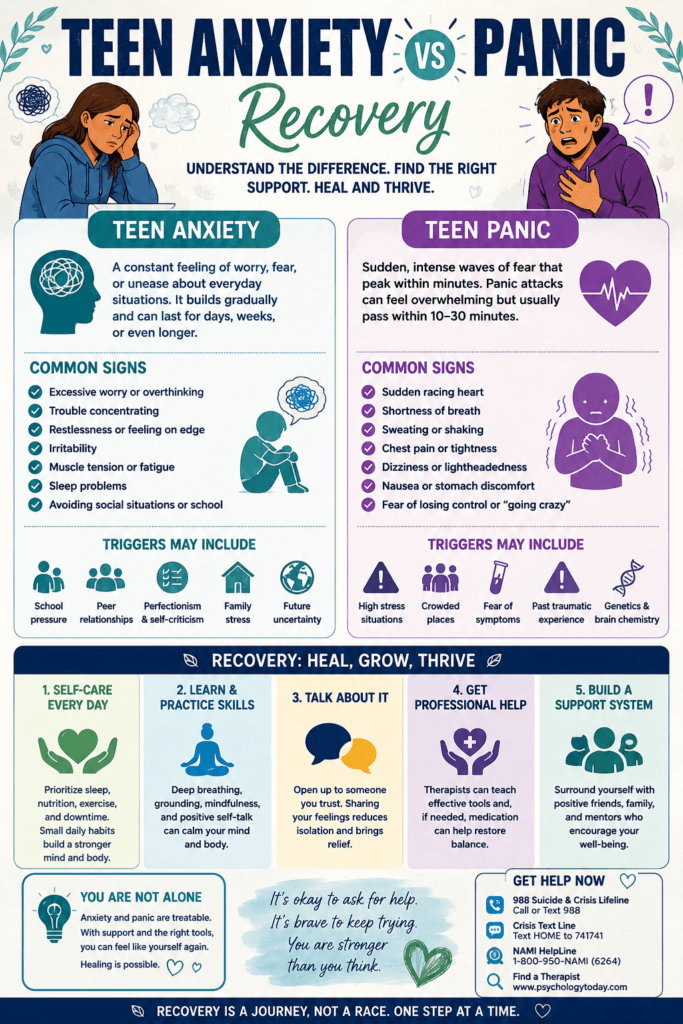
Anxiety and panic attacks show up in teens in different ways, and knowing what sets each one apart is important for choosing the right support and resources. Anxiety tends to build up over time and hang around for days or even weeks. Panic attacks, on the other hand, are short and sudden bursts of intense fear that can leave a teen feeling out of control.
With anxiety, you might feel tense, restless, or constantly worried about school, friendships, or the future. Panic attacks come on quickly. You might get a racing heart, dizziness, or sudden chills, sometimes even feeling like you can’t breathe. Teens often think something is physically wrong with them during a panic attack. That can make things even scarier. Both can be really tough, but nobody has to deal with this alone.
Main Signs: Anxiety vs. Panic in Teens
- Anxiety: Worries that don’t go away, trouble sleeping, feeling on edge, and headaches or stomachaches without a clear cause.
- Panic Attacks: Sudden, intense fear with symptoms like a pounding heart, sweating, chest pain, numbness, or feeling detached from reality. Attacks usually peak within ten minutes and then slowly fade.
Sometimes, repeated panic attacks can lead to more anxiety because you start worrying about the next attack. The good news is, recognizing these patterns is a big step toward recovery.
Starting Recovery: Practical Steps That Work
Jumpstarting the recovery process might feel overwhelming, but breaking it down into smaller steps really helps. Here are some recommendations for teens and the people supporting them:
- Talk to Someone You Trust: Whether it’s a counselor, family member, or teacher, sharing what you’re experiencing lifts some of the burden right away.
- Get a Professional Perspective: A mental health professional can help with a proper diagnosis. This is helpful since anxiety and panic have overlapping symptoms, and getting the right guidance can speed things up.
- Track When and Where: Keeping a simple journal of when episodes happen and what’s going on helps you spot patterns. Apps work great for those who are more digitally minded.
- Practice Simple Breathing: Try slow, deep breaths during anxious or panicky moments. Breathing exercises are basic, but they help ground you and slow down racing thoughts.
- Focus on Routine: Sticking to regular sleep and meal times, and even a daily walk, can help keep your body and mind balanced. When things get unpredictable, routines are actually comforting.
Challenges Teens Face with Anxiety and Panic
- Stigma: Worrying about what friends and classmates might think makes it easy to feel alone, but lots of teens are dealing with the same feelings.
- Keeping Up in School: Anxiety and panic can reduce concentration and energy, making homework and tests more challenging.
- Rumination: Getting stuck in loops of negative thinking keeps anxious thoughts lingering longer than you want.
- Physical Symptoms: Headaches, tiredness, and stomach problems can make it hard to tell if it’s anxiety or something else.
None of these challenges are permanent or impossible to manage. The more you check out how symptoms work, the easier it becomes to find a recovery plan that fits.
Tools That Make a Difference
- Grounding Techniques: Name five things you see, four things you can touch, three things you hear—this is called the 5-4-3-2-1 exercise, and it really works during a panic episode.
- Physical Movement: A walk outside, stretching, or even bouncing a ball can use up extra energy that anxiety builds up.
- Mindfulness and Meditation: Apps like Calm or Headspace offer short, guided meditations that are worth trying even if you just have five minutes a day.
- CBT Worksheets: Cognitive Behavioral Therapy worksheets, such as tracking and writing down anxious thoughts, help challenge those negative patterns.
Grounding Techniques
Grounding means focusing your mind on the present, so anxious thoughts don’t run wild. My favorite tool is the 5-4-3-2-1 technique. Look around and name five things you can see, four things you can feel, three things you can hear, two things you can smell, and one thing you can taste. It can be surprising how quickly this brings you back to the moment and out of your head.
Physical Movement
Anxiety adds up to a lot of energy, and if you’re not moving, it just sits there and makes you uncomfortable. Even a slow walk or a set of jumping jacks can settle nerves and lower stress hormones.
Mindfulness and Meditation
Mindfulness is about noticing your thoughts without judging them and letting them pass. Guided apps make it easy and break things down into daily routines that fit perfectly before bed or in the morning before school. Try out different meditations and find what gives you a boost.
CBT Worksheets and Apps
CBT is one of the most studied methods for helping with anxiety and panic. There are free and low-cost worksheets online, plus apps that guide you step by step in challenging anxious thoughts and working through triggers. These tools help teens identify their patterns and learn new ways to respond when worries come up.
What to Watch Out For: Triggers and Red Flags
- Overload: Too much on your plate—like a busy schedule, long study hours, and not enough downtime—can trigger anxiety or panic.
- Avoidance: Wanting to skip school, friends, or favorite activities because of anxiety. While avoidance feels safer at first, it often lets anxiety stick around longer.
- Isolation: Pulling away from friends and support can make recovery harder. Staying connected matters even if it sometimes feels tough.
Avoiding triggers is tempting, but that keeps the cycle of anxiety or panic going. Taking small steps and celebrating victories, no matter how small, makes it easier to stay motivated.
Tips for Parents and Supporters
- Listen Without Judging: Being open and supportive helps teens feel safe enough to talk about what’s going on.
- Normalize the Experience: Remind teens that anxiety and panic are popular struggles, and many people figure out ways to manage them.
- Encourage Small Wins: Each time a teen faces a trigger and makes it through, it is a step forward worth celebrating.
- Stay Consistent: Keeping up with daily routines and gentle reminders helps stop things from feeling overwhelming.
FAQs About Teen Anxiety and Panic Recovery
Question: Are anxiety and panic attacks the same thing?
Answer: Not quite. Anxiety lasts longer and builds over time, while panic attacks are sudden and end fairly quickly. They sometimes overlap, but lots of teens experience only one or the other.
Question: What causes panic attacks in teens?
Answer: Panic attacks can be triggered by stress, traumatic events, or even genetics. Sometimes there’s no clear cause at all, and that’s common, too.
Question: Do I need medication to recover from anxiety or panic?
Answer: Not always. Many teens bounce back with coping skills, therapy, and support. Sometimes, a professional suggests medication for a while, especially if symptoms make daily life really tough.
Question: How long does recovery take?
Answer: Recovery isn’t instant. Some teens feel better in weeks, while others need a few months or more. Staying patient and regular with coping skills makes a real difference.
Keeping Up Progress on the Road to Recovery
Staying patient matters, but progress shows up in small ways—fewer anxious thoughts, shorter panic episodes, and picking up old interests. I always remind teens (and myself) that setbacks are just part of the adventure. Celebrate every win, no matter the size, and keep reaching out for support when things get tough. Breaking big goals into smaller steps makes recovery feel a lot more manageable and less overwhelming. The more you make use of these strategies, the easier it gets to keep moving forward and regain confidence.
Video: How to Tell If Your Teen Is Experiencing Anxiety or a Panic Attack #TeenAnxiety #MentalHealth