Dealing with depression can feel overwhelming and isolating, especially when you are unsure which type of support may be most helpful. Therapy is often one of the first treatment options recommended, but many people wonder whether it can actually resolve depression or simply make the symptoms easier to manage. Understanding what therapy can and cannot do can help set realistic expectations. By looking at clinical knowledge, professional perspectives, and the experiences of people who have received therapy, we can better understand how counseling may support recovery and improve emotional well-being.
Understanding Depression and How Therapy Works
Depression isn’t simply feeling sad or down for a couple of days. It’s a pretty serious mental health condition that sticks around for weeks or months, sometimes longer. It shows up as a mix of symptoms, such as feeling hopeless, losing interest in things you used to enjoy, changes in sleep or appetite, and trouble focusing. If you’ve experienced depression, you know it isn’t just a “bad mood.”
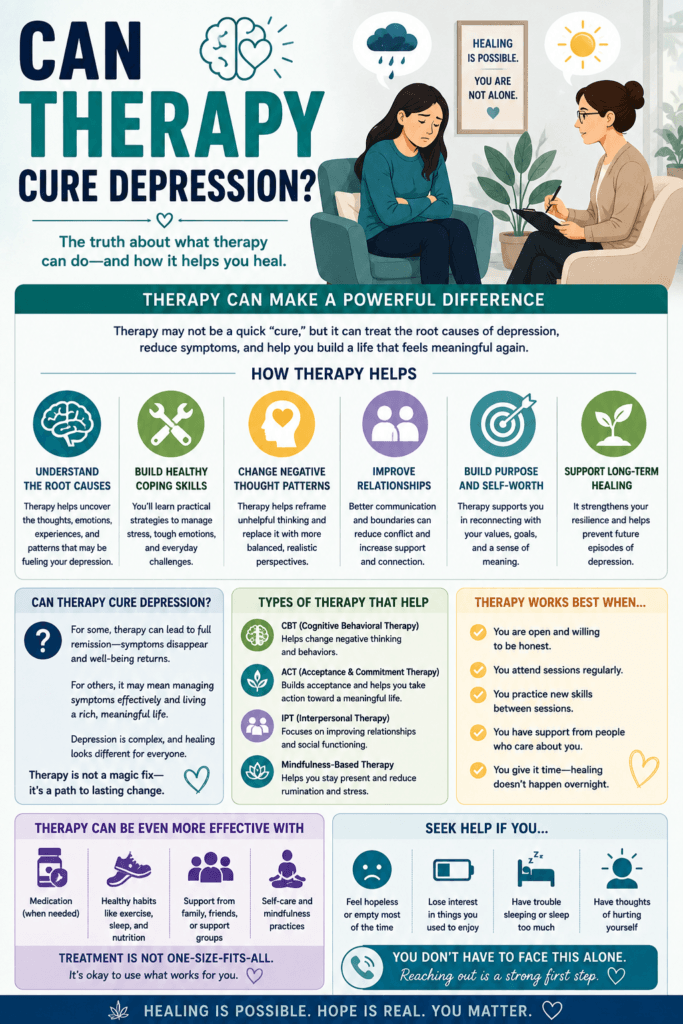
Therapy is a proven way to address mental health conditions, and depression is high up on that list. The goal of therapy isn’t just to talk about your problems. Instead, you work with a trained mental health professional who helps you understand how your thoughts, feelings, and behaviors connect and then find ways to handle tough moments and boost your overall mood.
The big question is whether therapy can completely cure depression or simply help keep it under control. Different people have different experiences here, and a lot depends on the type of depression, the therapy approach, and personal factors like health history or lifestyle. It’s a genuinely personal experience, and understanding both therapy’s strengths and limitations can help set realistic expectations.
Types of Therapy for Depression
There’s no single way to tackle depression in therapy. Here are a few of the more common approaches therapists use:
- Cognitive Behavioral Therapy (CBT): Probably the most well-known type, CBT is all about spotting negative thought patterns and learning how to flip them around. It’s structured, usually goal-focused, and pretty hands-on with homework exercises.
- Interpersonal Therapy (IPT): IPT helps people improve relationships and deal with life transitions, which can reduce depression symptoms over time. It’s especially helpful if relationship challenges trigger or worsen your depression.
- Psychodynamic Therapy: This approach explores unconscious thoughts and unresolved past issues that may be shaping your mood. It’s a bit more open-ended, but it helps some people get to the root of their depression.
- Behavioral Activation: This practical method helps people return to routines and activities that can boost mood, even when it’s hard at first. By gently reintroducing enjoyable or meaningful tasks, it aims to challenge the withdrawal that often comes with depression.
- Mindfulness-Based Cognitive Therapy (MBCT): MBCT combines mindfulness (being present in the moment) with techniques from CBT. It’s especially effective for preventing depression from coming back.
Each approach has research backing its effectiveness, so it’s more about finding the one that fits you best. Many therapists actually mix and match these techniques to suit each person. Sometimes, switching between these approaches or blending elements from a few of them can offer the most support.
What Therapy Can and Can’t Do for Depression
Therapy is a powerful tool for treating depression, but there are a few things to keep in mind. First off, therapy can absolutely help you manage symptoms, understand triggers, and build healthier coping skills. People often notice improvements after just a few sessions, while bigger changes take longer. Some people experience a big decrease in depression symptoms (sometimes called “remission”), while others still have ups and downs but feel a lot more in control.
As for a “cure,” it’s a bit more complicated. Depression can come in waves, and many people will experience more than one episode during their life, even after successful therapy. It’s kind of like managing a chronic health condition: you can get it under control and enjoy long periods of feeling good, but you might need to keep working at it, like tuning up a car over time instead of buying a brand-new one.
If your depression is sparked by a specific situation (like grief or a tough breakup), therapy might help you work through it and eventually feel back to “normal,” sometimes with no further depression. For many folks, though, ongoing stressful situations, genetics, or certain health problems can trigger new episodes, so having ongoing support can be really helpful.
Steps for Getting the Most Out of Therapy
When you start therapy for depression, there are a few steps that can help set you up for a better experience and better results:
- Find the Right Therapist: You want someone you actually feel comfortable talking to. If you don’t feel like you “click” after a few visits, it’s okay to try someone new.
- Set Realistic Goals: Therapy isn’t a magic wand. It’s more of a process. Talk with your therapist about what you hope to get out of it and how you’ll know things are improving.
- Stick With It: Sometimes therapy can feel uncomfortable (in a positive way). People often face tough memories or try out new habits, and change takes time. Most improvements start to show after a few months, but everyone’s pace is different.
- Practice Skills Between Sessions: Therapy often involves “homework.” These are things to try or practice in daily life. The more you do these, the more likely you’ll notice improvements.
- Stay Open: Sometimes depression is linked to physical health, so checking in with a doctor can be smart too, especially if things aren’t improving.
Committing to these steps gives therapy a better shot at helping you make meaningful progress. Maintaining realistic expectations and communicating honestly with your therapist can only make things smoother.
Common Barriers People Face in Therapy
Even the best therapy plan can run into some bumps. Here are a few obstacles I’ve seen and heard about, with ideas to work around them:
- Stigma: Some folks worry about what others might think or feel embarrassed. Remember, mental health care is health care, just like seeing a doctor for your body.
- Access: Cost, time, and availability can make finding therapy harder. If cost is an issue, look for therapists who offer sliding scales, or check for community resources or teletherapy options that are more affordable and convenient.
- Motivation: Depression itself can drain your motivation to even get out of bed, let alone make therapy appointments. Let the therapist know, and try to do things in small steps; sometimes just getting started is the hardest part.
- Hopelessness: Depression is famous for making you believe nothing will change. Take it one day at a time and talk to your therapist about these feelings. They’re used to hearing them and can help you work through it.
Addressing these barriers with patience and small adjustments can make therapy more accessible and successful in the long run.
Medication and Therapy: Do You Need Both?
One big question that pops up is whether you need to take medication as well as therapy, or if therapy alone will do the trick. According to the National Institute of Mental Health, people with severe or long-lasting depression often respond best to a combination of therapy and medication. For some, therapy is enough, especially if symptoms are mild to moderate. Other people might start with medication to help stabilize mood and follow up with therapy for bigger change. It’s all about what works best for your own situation, and talking with both your therapist and doctor will help you sort that out.
Everyday Tips That Complement Therapy
While therapy is a solid foundation, a few everyday habits can actually give a boost to your progress and keep depression in check. These aren’t replacements for professional care, but they work nicely alongside it:
- Getting some movement every day, even a short walk, can make a difference.
- Try to keep a regular sleep schedule.
- Staying connected with friends or family, even if it’s just a quick text.
- Eating regular meals with a bit of protein and veggies.
- Practicing mindfulness, breathing exercises, or writing down your thoughts.
- Picking up hobbies or following interests, even in small doses, can bring positive moments into your day.
Lots of people find that adding these small habits to their routine helps them bounce back from low points and boosts their progress in therapy. You can always adjust these habits to your comfort level, and remember that progress comes from small, consistent steps.
When to Look for More Help
Sometimes, therapy alone isn’t enough, especially if you’re having thoughts of hurting yourself or can’t function in day-to-day life. If you ever reach this point, it’s really important to let someone know immediately and seek medical help, whether that means calling a helpline, seeing your doctor, or telling a trusted adult or friend. Extra support, whether it’s medication, a different kind of therapy, or even a brief stay in hospital, can get you to a safer, more manageable place.
Frequently Asked Questions
It’s totally normal to have questions when looking at therapy for depression, so here are a few I get asked a lot:
Question: How long does therapy take to start working for depression?
Answer: For some people, small improvements show up in a few weeks. Most folks notice big changes after about three months, but it varies a lot.
Question: Can I stop medication if therapy is working?
Answer: Don’t stop medication suddenly without checking in with your doctor. You and your care team can figure out the best timing and plan for any changes.
Question: What if therapy doesn’t seem to help?
Answer: It happens sometimes. Let your therapist know and ask about other approaches, such as group therapy, or even about seeing a different therapist. It can take time to find the right fit.
Takeaway
Therapy gives you space to understand depression and pick up new ways to manage it. While it doesn’t always “cure” depression in the permanent sense, many people get long-lasting relief and learn tools that can keep symptoms from taking over. Pairing therapy with healthy habits, medication when needed, and patience with the process makes the biggest difference over time.
If you’re starting therapy or thinking about it, know that improvement is possible, even if it takes a bit of trial and error to find what works best for you. The most important thing is taking that first step towards feeling better.
Video: Can Therapy Cure Depression